South Carolina Amended Order Establishing Heirs
Overview of this form
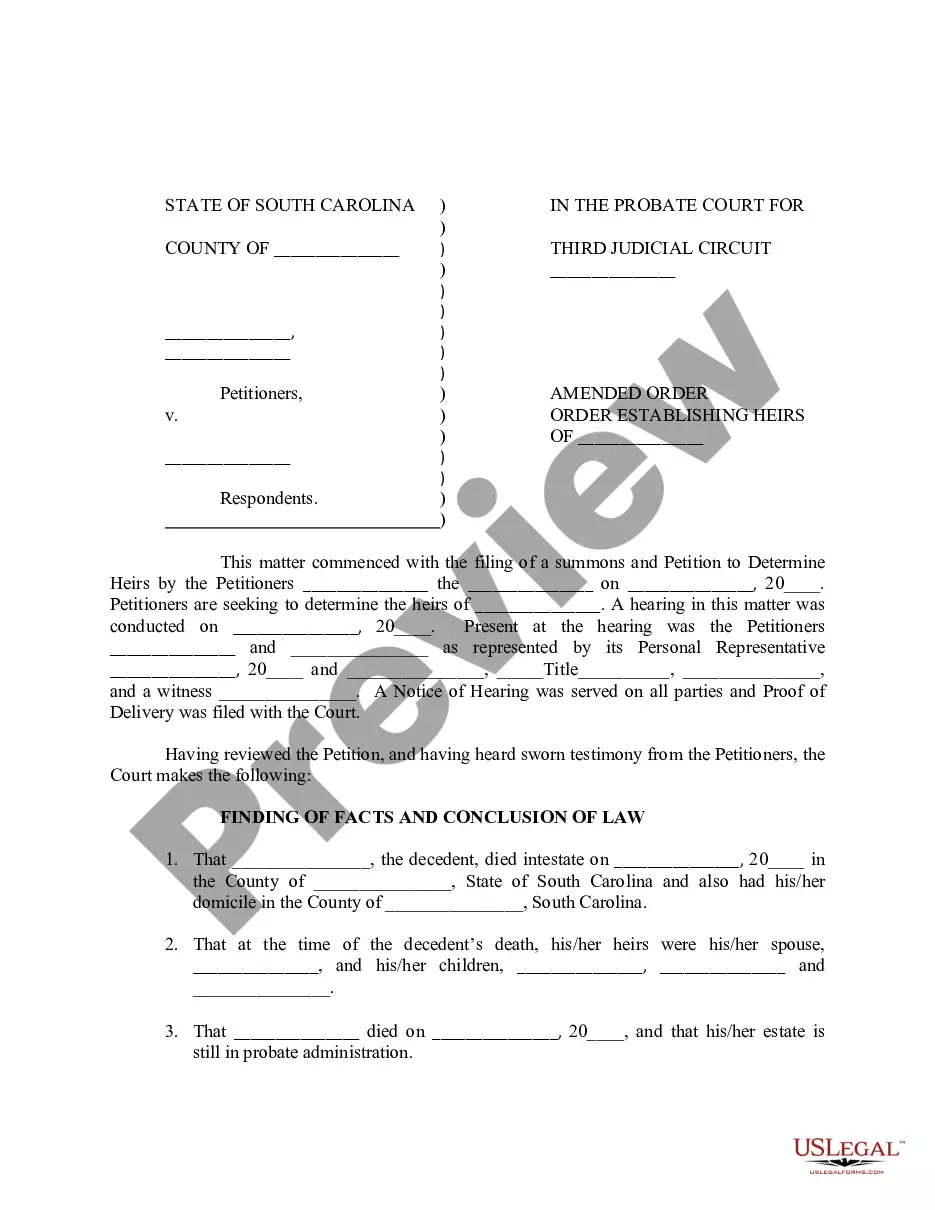
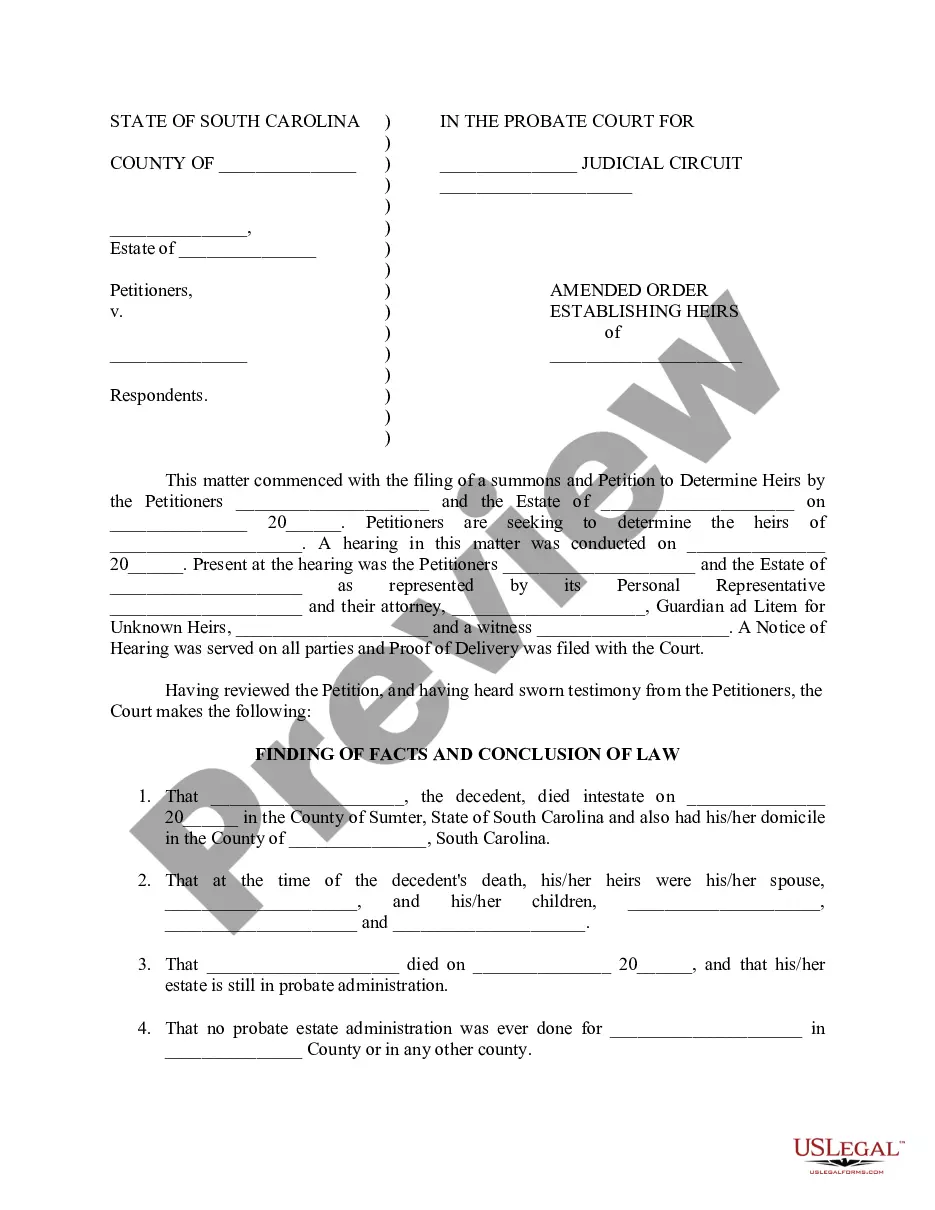
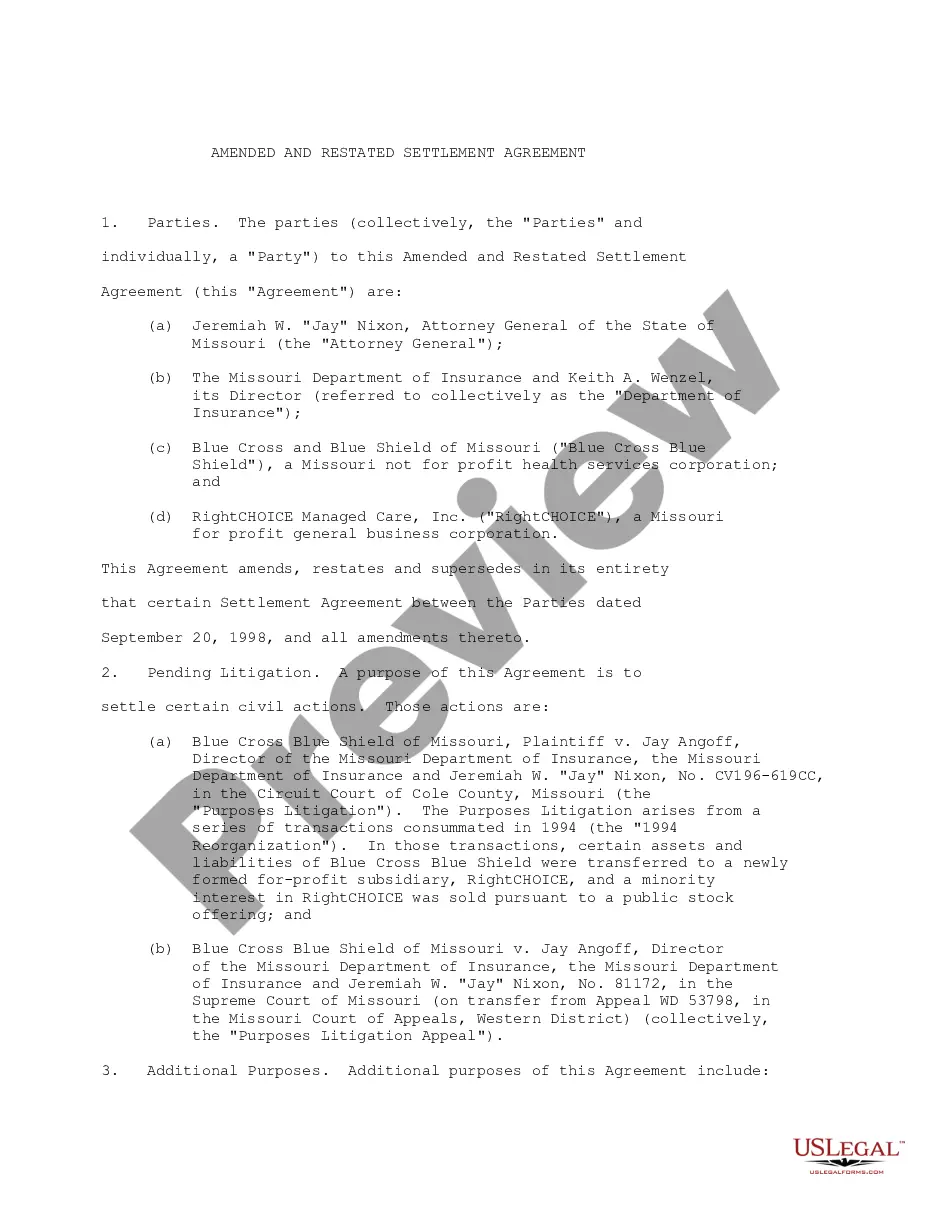
The Amended Order Establishing Heirs is a legal document issued by the probate court that modifies an existing order to accurately determine the heirs of a decedent's estate. Unlike a first order, this amended order is utilized when changes need to be made after initial findings regarding heirs have been reported. This form ensures that the legal successors of the decedent are correctly identified and entitled to the estate assets in accordance with South Carolina law.
Key parts of this document
- The title of the court and case details.
- Identification of petitioners and respondents involved in the case.
- Findings of facts regarding the decedentâs death and heirship.
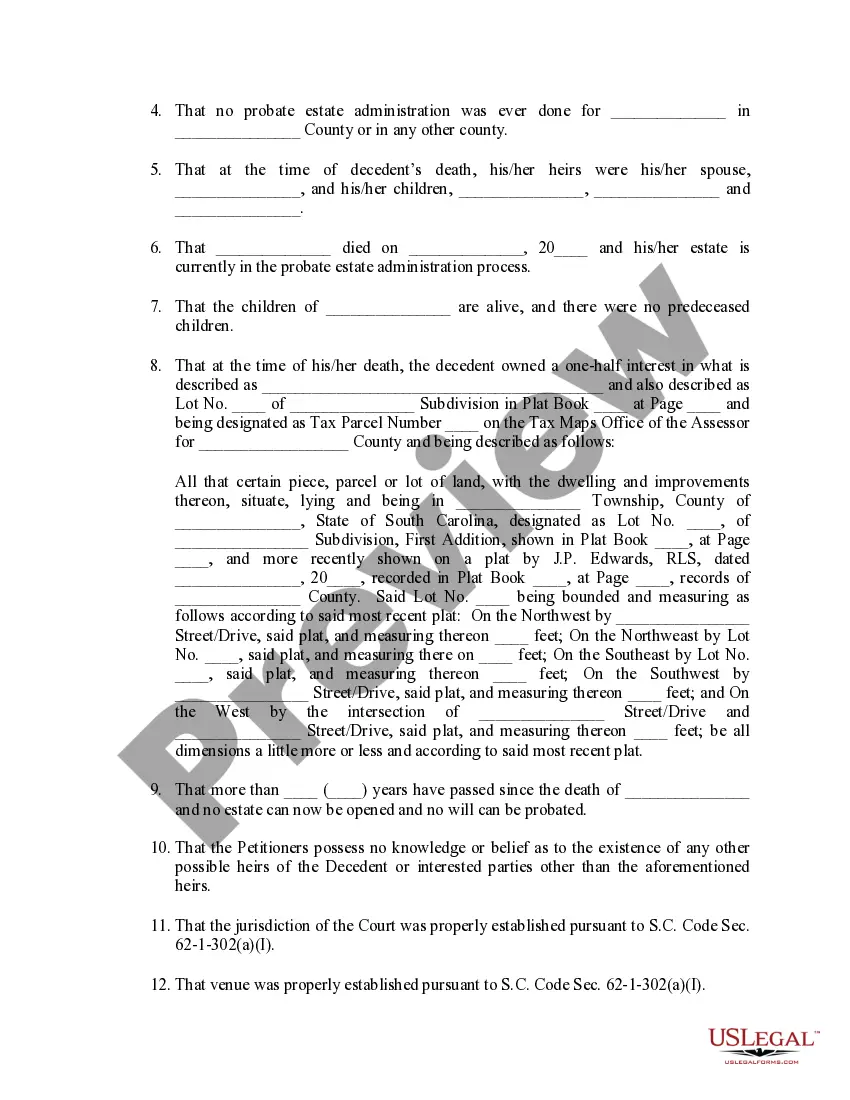
- Details about the property in question, including legal descriptions.
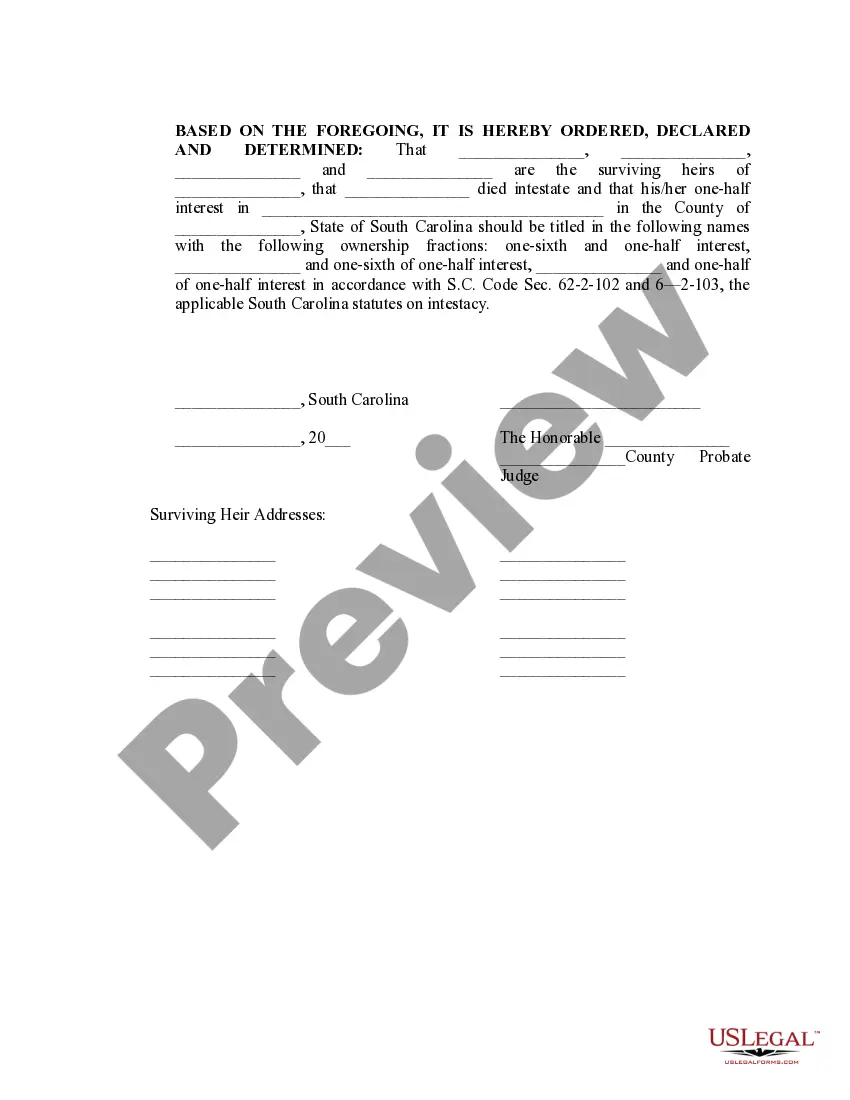
- Conclusions of law that establish the legal heirs and their interests.
- Signatures of the probate judge and necessary parties.
Situations where this form applies
This form should be used when there has been a previous court order determining heirs, but new information surfaces that requires modification of that order. For example, if a previously unknown heir comes forward or if there are corrections needed regarding the property details, the Amended Order Establishing Heirs ensures that the estate is distributed according to the updated findings.
Who can use this document
- Individuals who are petitioners seeking to amend a previous probate order.
- Heirs or prospective heirs requiring updated legal documentation for an estate.
- Legal representatives or personal representatives managing estate affairs.
- Probate courts looking for documentation that reflects new heirship findings.
Completing this form step by step
- Identify all petitioners and respondents involved in the heir determination process.
- Provide details regarding the decedent, including full name, date of death, and domicile.
- List all identified heirs and their relationship to the decedent, including any relevant heirs who were previously undocumented.
- Include a detailed property description, referencing tax parcel numbers and legal boundaries.
- Finalize the document with signatures from the probation court and involved parties.
Does this form need to be notarized?
This form does not typically require notarization unless specified by local law. It is advisable to check with the probate court for any specific requirements regarding notarization to ensure the form's acceptance.
Get your form ready online
Our built-in tools help you complete, sign, share, and store your documents in one place.
Make edits, fill in missing information, and update formatting in US Legal Forms—just like you would in MS Word.
Download a copy, print it, send it by email, or mail it via USPS—whatever works best for your next step.
Sign and collect signatures with our SignNow integration. Send to multiple recipients, set reminders, and more. Go Premium to unlock E-Sign.
If this form requires notarization, complete it online through a secure video call—no need to meet a notary in person or wait for an appointment.
We protect your documents and personal data by following strict security and privacy standards.

Make edits, fill in missing information, and update formatting in US Legal Forms—just like you would in MS Word.

Download a copy, print it, send it by email, or mail it via USPS—whatever works best for your next step.

Sign and collect signatures with our SignNow integration. Send to multiple recipients, set reminders, and more. Go Premium to unlock E-Sign.

If this form requires notarization, complete it online through a secure video call—no need to meet a notary in person or wait for an appointment.

We protect your documents and personal data by following strict security and privacy standards.
Avoid these common issues
- Failing to include all heirs or misidentifying their relationships.
- Providing incomplete or incorrect property descriptions.
- Not filing the amended order in a timely manner after new information is obtained.
- Neglecting to verify that the order complies with South Carolina's legal standards.
Benefits of using this form online
- Convenience of instant access and downloading from anywhere.
- Editability enables users to customize the document to fit their specific circumstances.
- Reliability, ensuring that the form is drafted in accordance with legal standards reviewed by licensed attorneys.
Looking for another form?


Form popularity
FAQ
In most cases, a deceased person's heirs-at-law are determined by the intestacy laws of the state in which she lived at the time of her death. But the intestacy laws of another state might apply if she owned real estate or tangible personal property there.
An heir is a person who is legally entitled to collect an inheritance, when a deceased person did not formalize a last will and testament. Generally speaking, heirs who inherit the property are children, descendants or other close relatives of the decedent.
As an heir, you are entitled to a copy of the Will, whether you are named as a beneficiary or not. If there is a probate estate, then you should receive a copy of the Will. If you do not, you can always get it from the court. If there is no probate estate, then the Will is not going to do anything.
Heirs who inherit property are typically children, descendants, or other close relatives of the decedent. Spouses typically are not legally considered to be heirs, as they are instead entitled to properties via marital or community property laws.
Quitclaim Deed. A quitclaim deed transfers an owner's interest in real property whatever that interest may be to the buyer. Forced Sale. Tax Sale. Suit to Quiet Title. Transfer by Agreement.