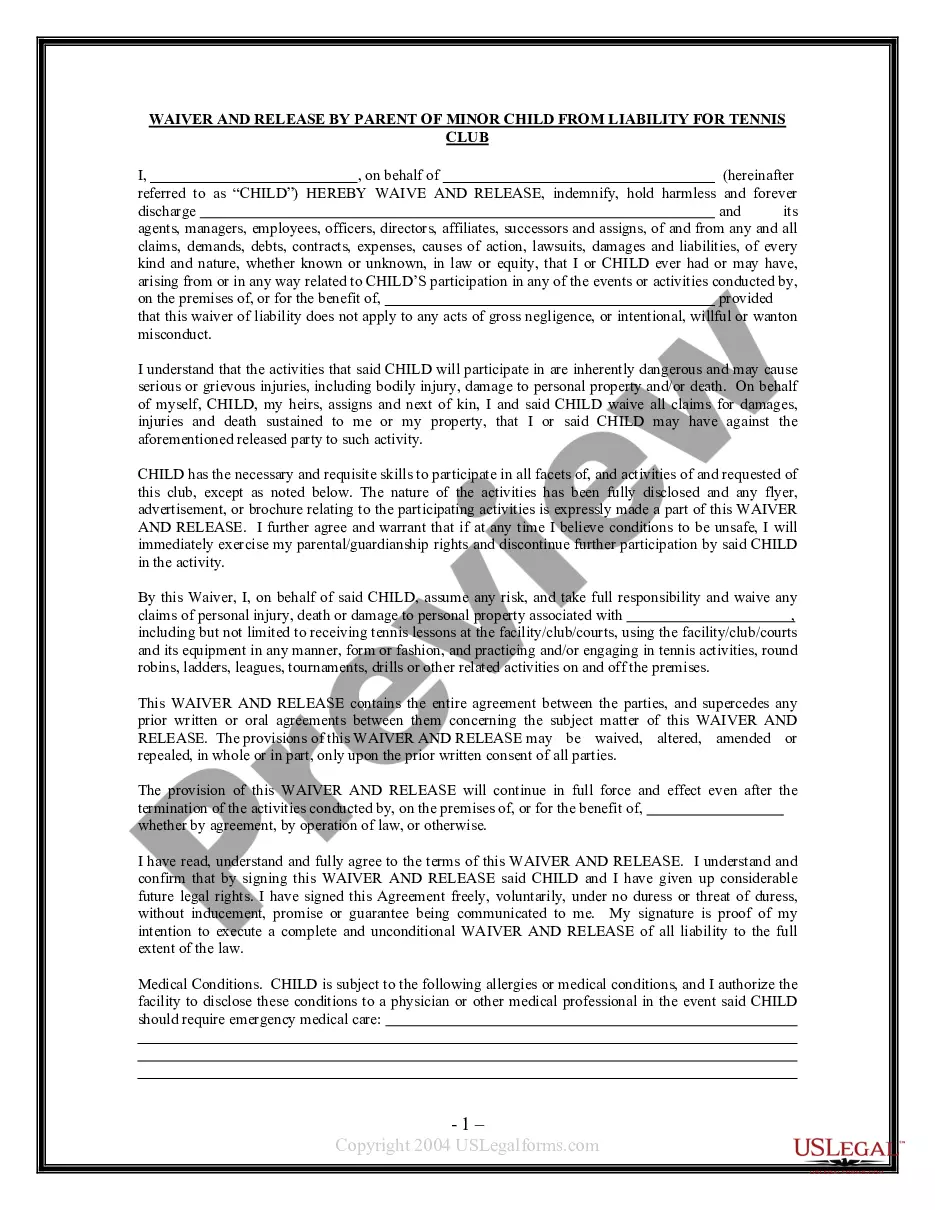
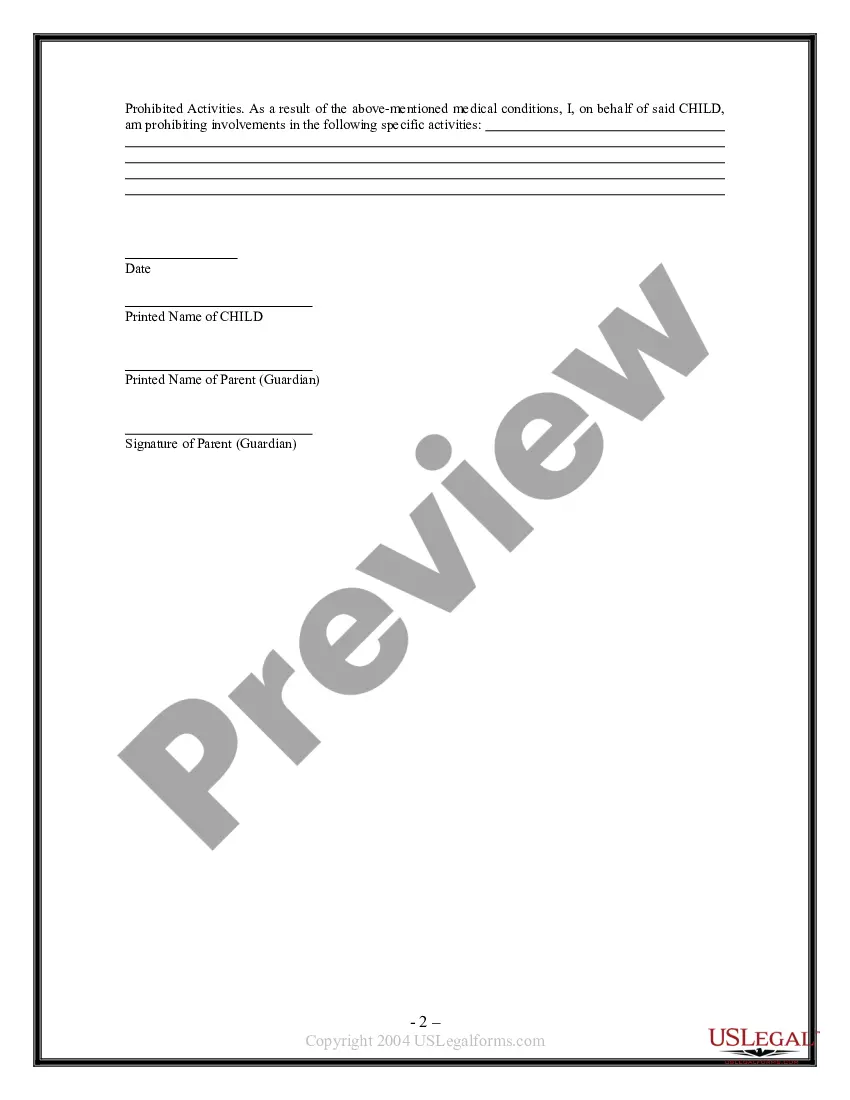
This form allows a parent or guardian to release a tennis club facility from liability for injuries which may be incurred by a minor child while on the premises, taking part in activities, etc.
Rhode Island Waiver and Release From Liability For Minor Child for Tennis Club
Category:
State:
Multi-State
Control #:
US-WAV-47M
Format:
Word;
Rich Text
Instant download
Description
Free preview
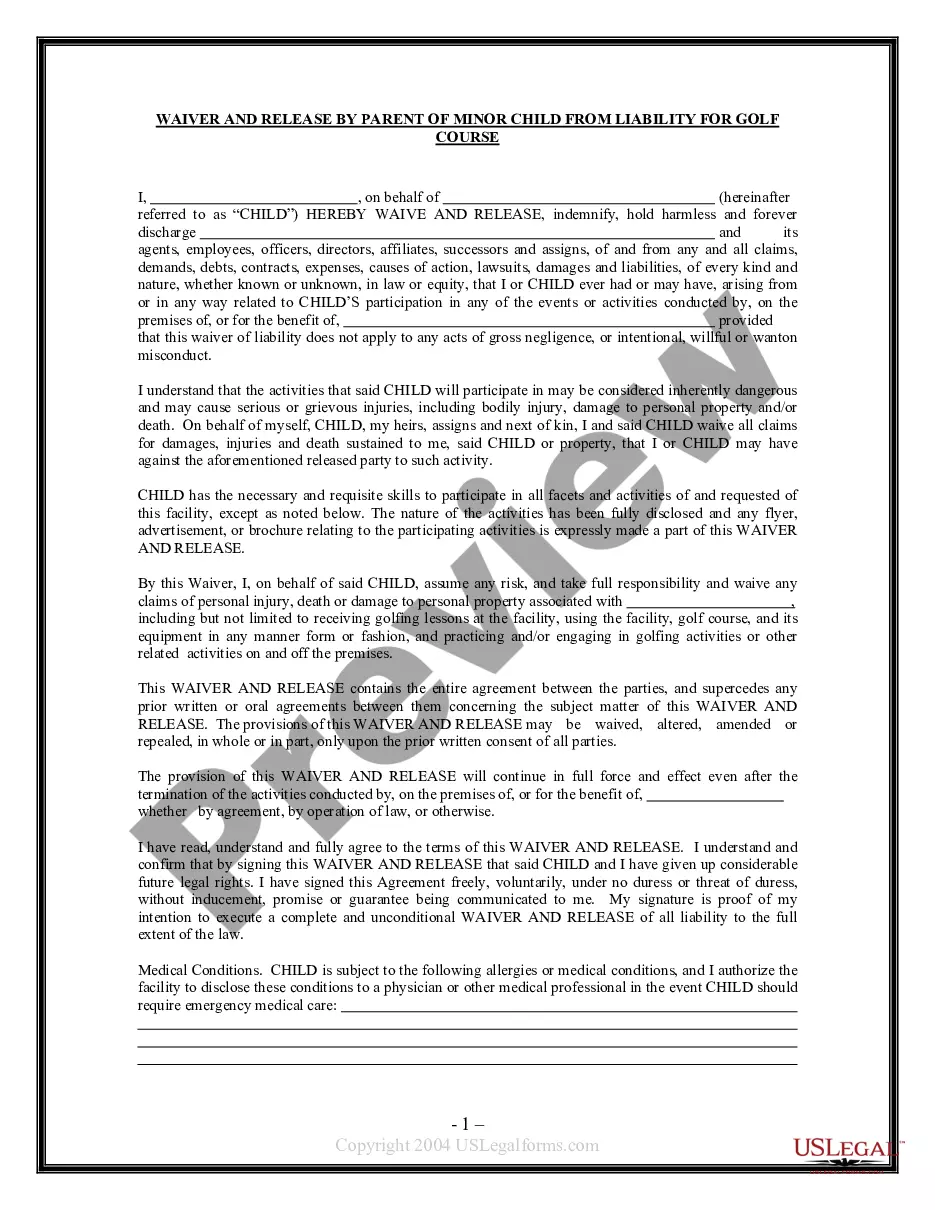
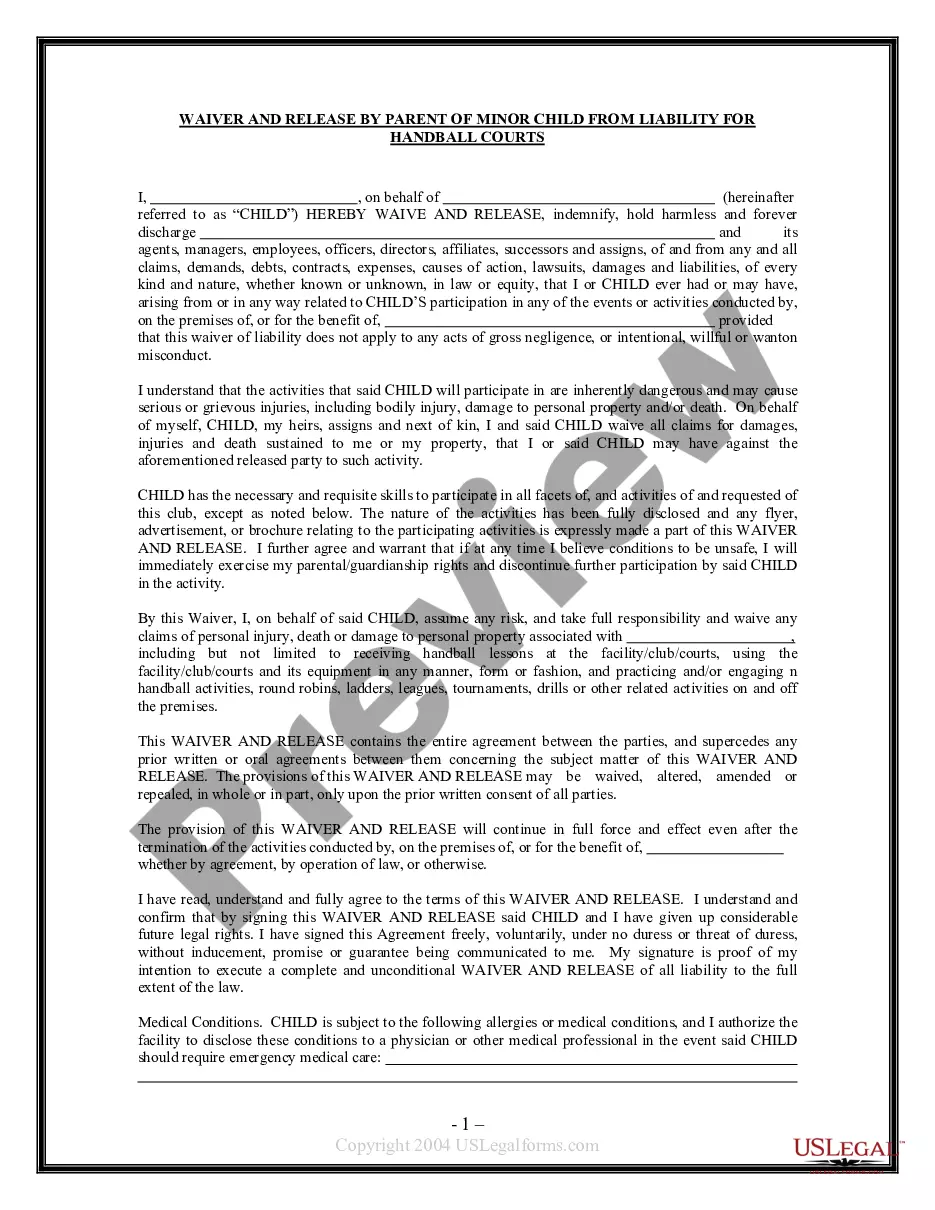
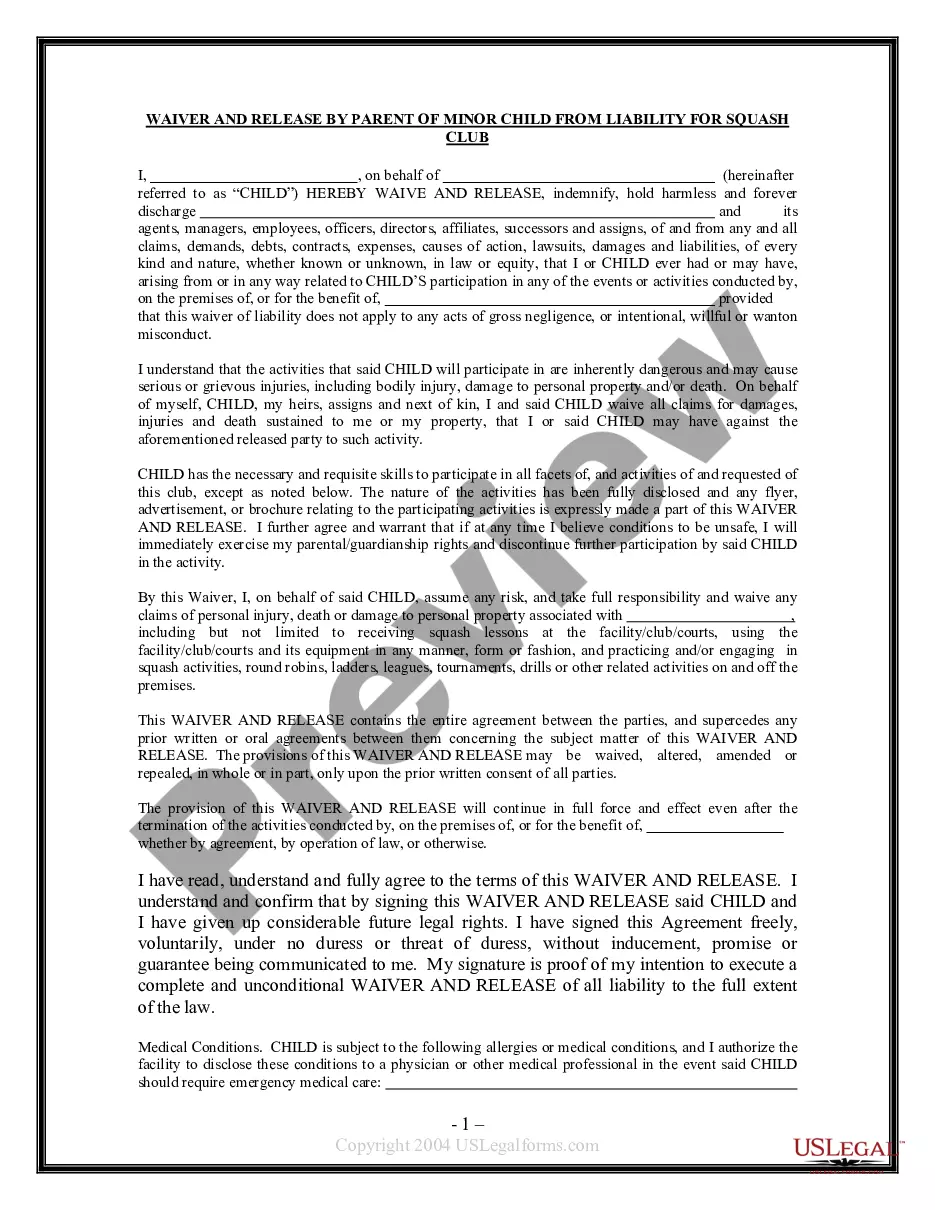
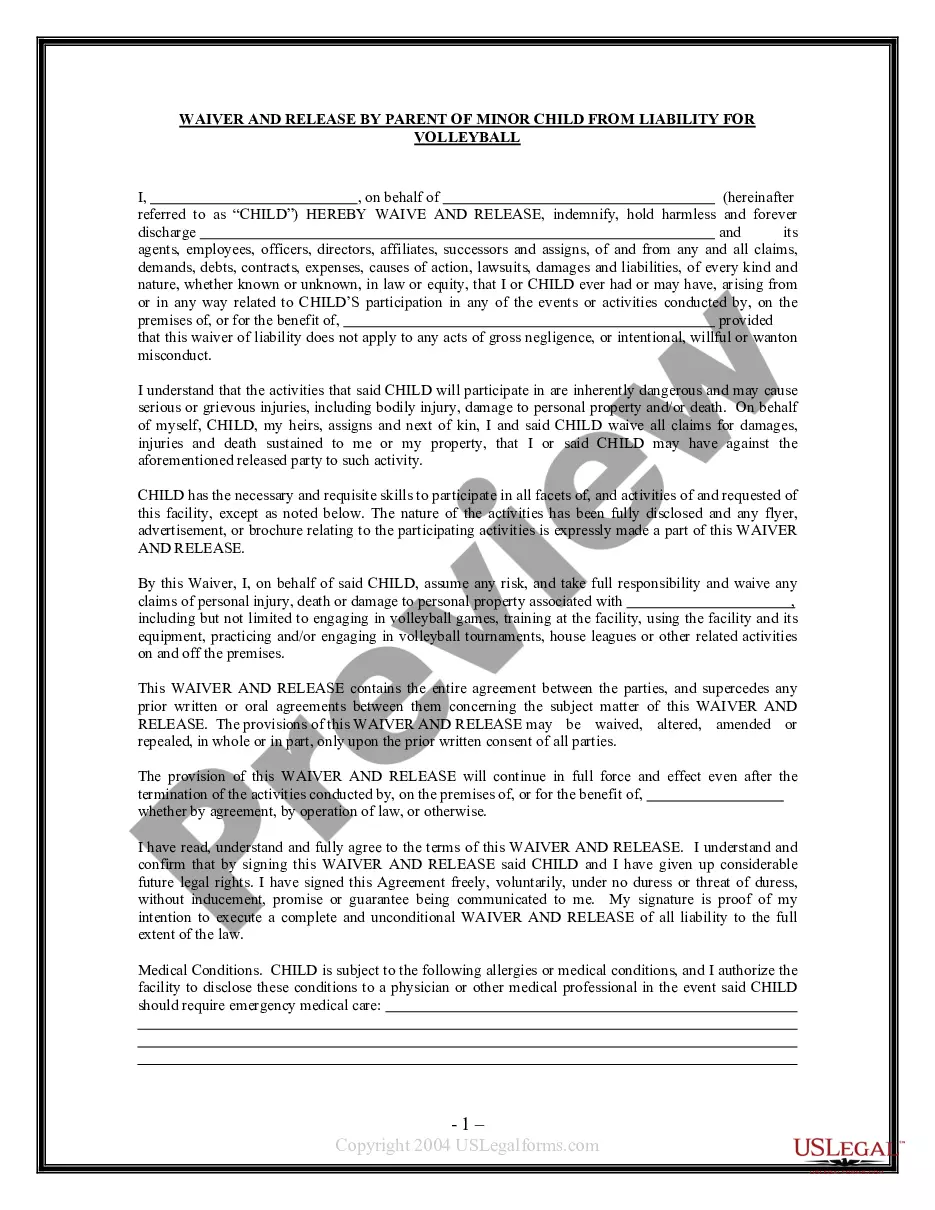
How to fill out Waiver And Release From Liability For Minor Child For Tennis Club?
Are you presently in the position where you need documents for either business or personal purposes every day? There are numerous legitimate document templates available online, but finding forms you can trust is not simple.
US Legal Forms provides thousands of form templates, including the Rhode Island Waiver and Release From Liability For Minor Child for Tennis Club, which are designed to comply with state and federal requirements.
If you are already familiar with the US Legal Forms website and have an account, simply Log In. After that, you can download the Rhode Island Waiver and Release From Liability For Minor Child for Tennis Club template.
Choose a convenient paper format and download your copy.
Access all the document templates you have purchased in the My documents menu. You can obtain an additional copy of the Rhode Island Waiver and Release From Liability For Minor Child for Tennis Club at any time, if needed. Click on the desired form to download or print the template. Use US Legal Forms, one of the largest collections of legal forms, to save time and avoid mistakes. The service offers properly crafted legal document templates that you can use for various purposes. Create an account on US Legal Forms and start making your life a bit easier.
- If you do not have an account and wish to start using US Legal Forms, follow these steps.
- Find the form you need and ensure it is for the correct city/state.
- Utilize the Review button to check the form.
- Read the description to ensure you have selected the correct document.
- If the form is not what you are looking for, use the Search field to locate the form that meets your needs and requirements.
- Once you find the correct form, click on Purchase now.
- Select the payment plan you want, fill out the necessary information to create your account, and pay for the order using your PayPal or credit card.
Form popularity
FAQ
A hold harmless agreement is a legal document that protects one party from legal liability due to injuries or damages incurred during an activity. In the context of youth sports, including tennis clubs, it ensures that parents accept the risks involved in their child's participation. This agreement often accompanies the Rhode Island Waiver and Release From Liability For Minor Child for Tennis Club, providing an added layer of protection for both the club and the participants. Using platforms like uslegalforms can help you create a comprehensive and compliant agreement.
Not necessarily. In Rhode Island, a waiver and release from liability for a minor child is often enforceable, provided it meets specific legal requirements. Courts typically consider factors like clarity, voluntary agreement, and the activity's inherent risks. Therefore, when using a Rhode Island Waiver and Release From Liability For Minor Child for Tennis Club, ensure it is clearly written and appropriately signed.
Waivers are usually not enforceable against minors, which includes the Rhode Island Waiver and Release From Liability For Minor Child for Tennis Club. Courts often protect minors from contracts that could be detrimental to their interests. This protection serves as a safeguard for children participating in activities. Therefore, it is advisable for organizations to obtain parental consent to ensure proper legal coverage.
Signatures from minors are generally not considered legally binding. This means that any waiver, like the Rhode Island Waiver and Release From Liability For Minor Child for Tennis Club, may not be enforceable if signed solely by a minor. Parents or guardians usually need to provide consent on behalf of their children. This is an important consideration for clubs when creating policies involving minors.
A waiver of liability, such as the Rhode Island Waiver and Release From Liability For Minor Child for Tennis Club, can limit liability but typically cannot waive all responsibility. Courts may not enforce waivers that attempt to release parties from gross negligence or willful misconduct. It's essential for organizations to draft waivers carefully to ensure they meet legal standards. Consulting with a legal professional can be beneficial in this process.
Yes, waiver forms can be legally binding when they are properly constructed and signed by adults. The Rhode Island Waiver and Release From Liability For Minor Child for Tennis Club must include clear language about the risks involved and the rights being waived. However, the enforceability may vary based on state laws and specific circumstances. Always consult a legal expert to ensure compliance.
In general, waivers signed by minors, including the Rhode Island Waiver and Release From Liability For Minor Child for Tennis Club, are not legally binding. Courts typically view minors as lacking the capacity to enter into contracts. Therefore, when a minor signs a waiver, it may not hold up in court. It's crucial for guardians to understand this aspect when enrolling their children in activities.