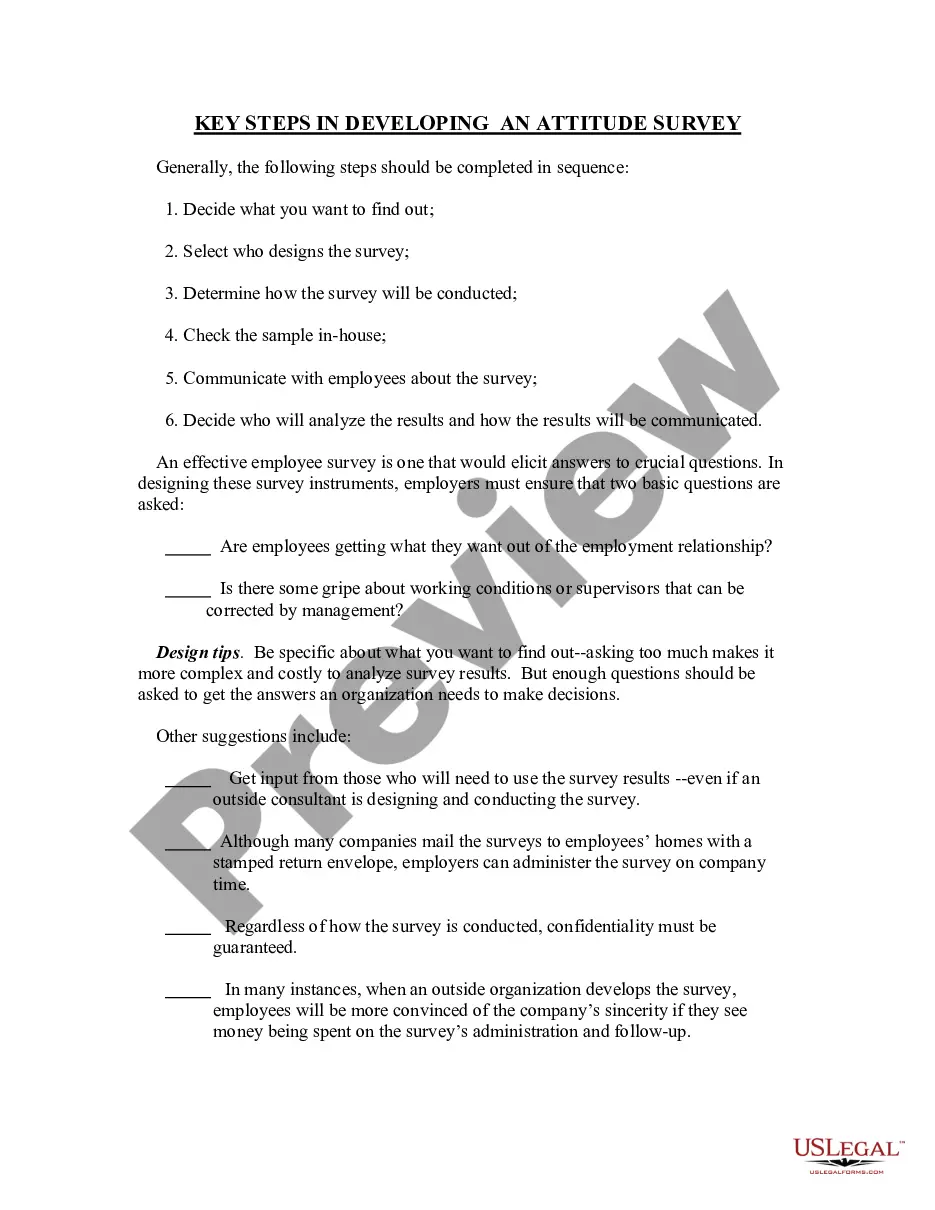
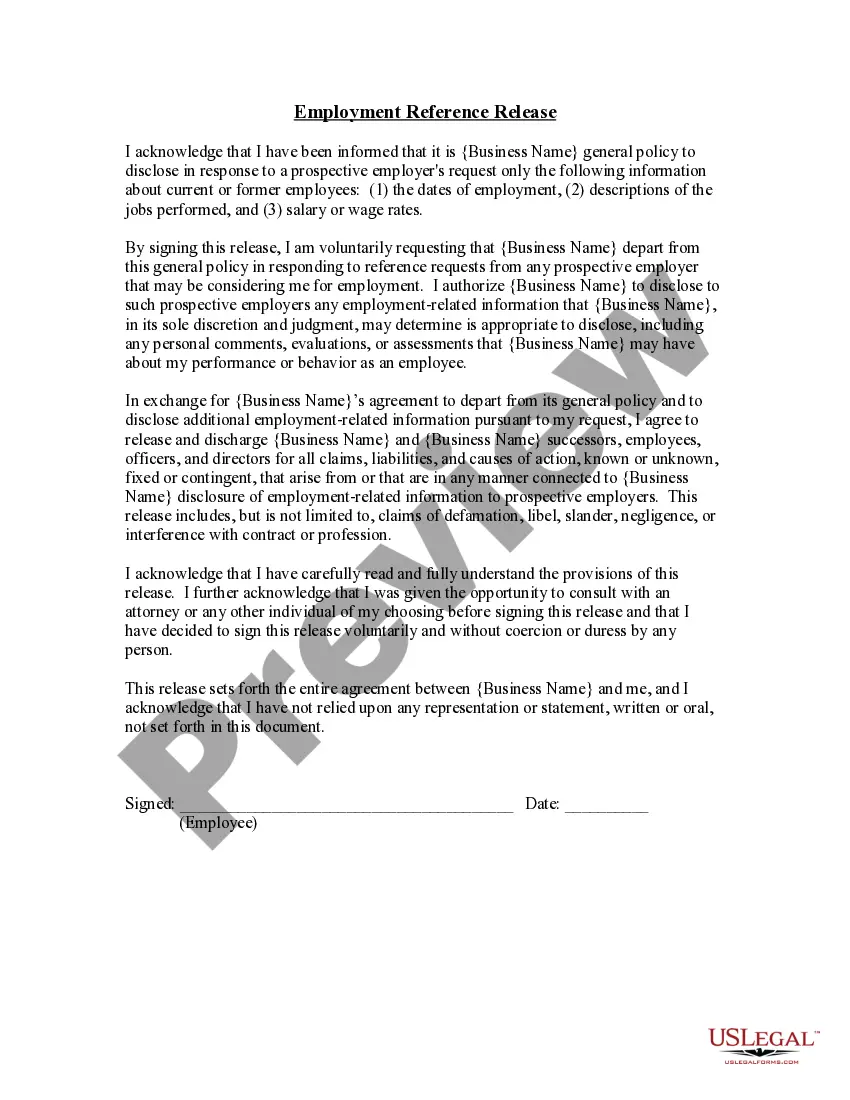
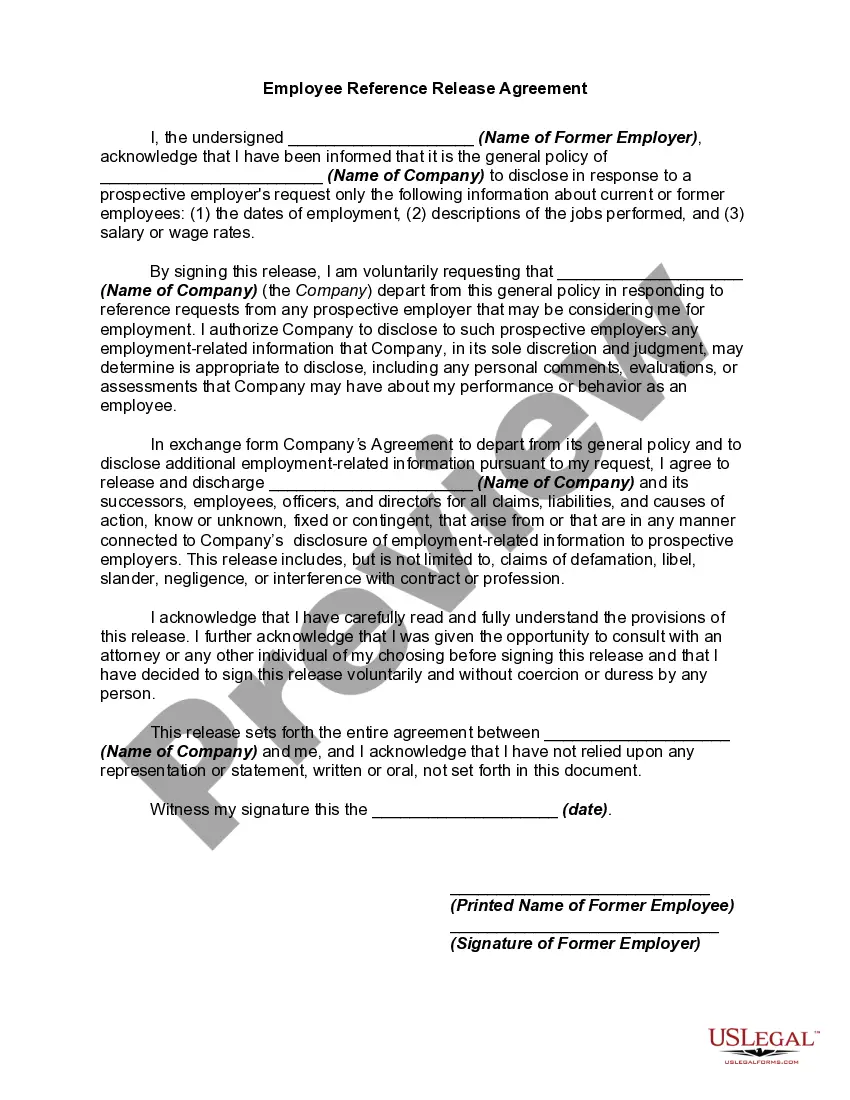
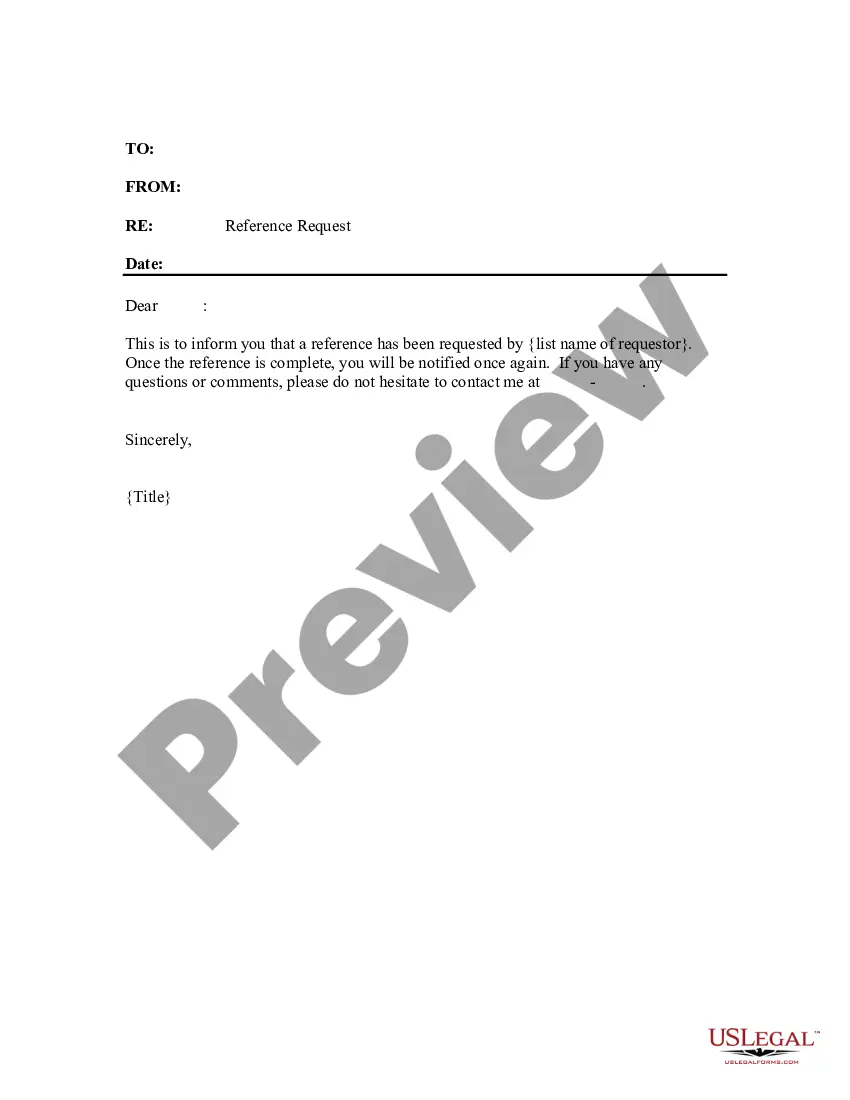
Rhode Island Employment Reference Release
Description
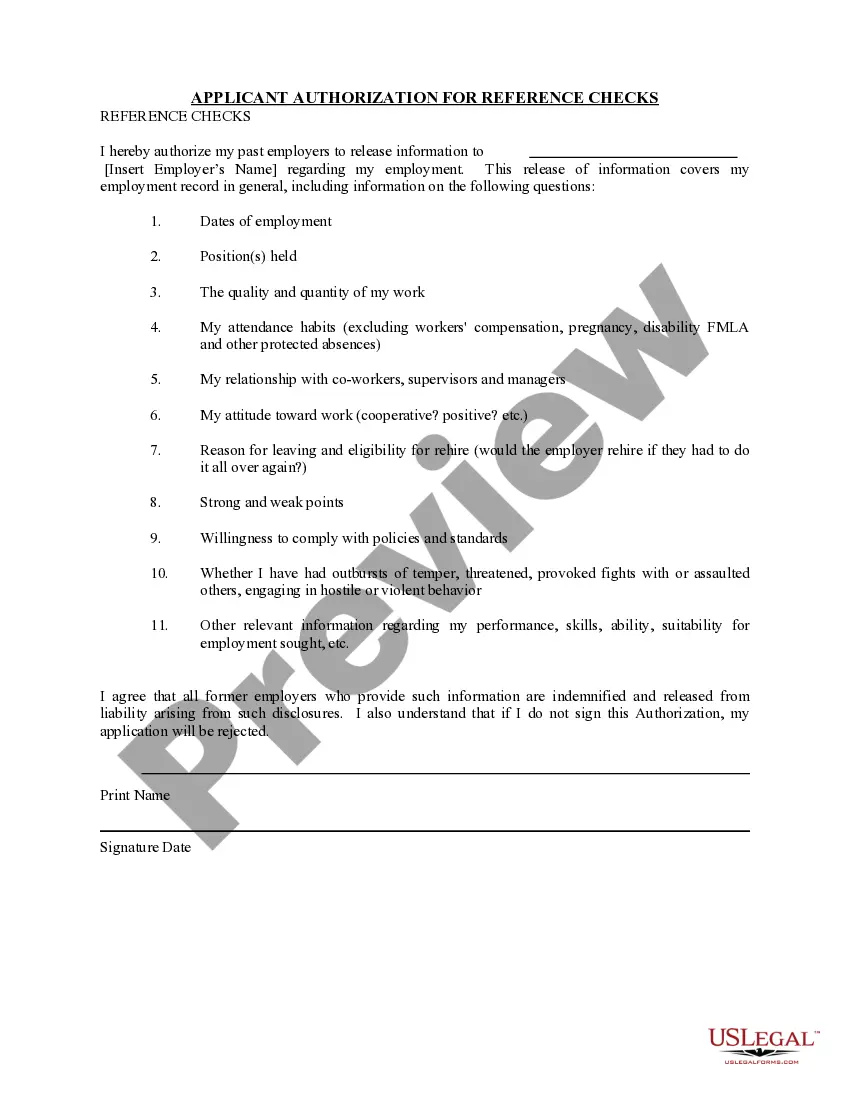
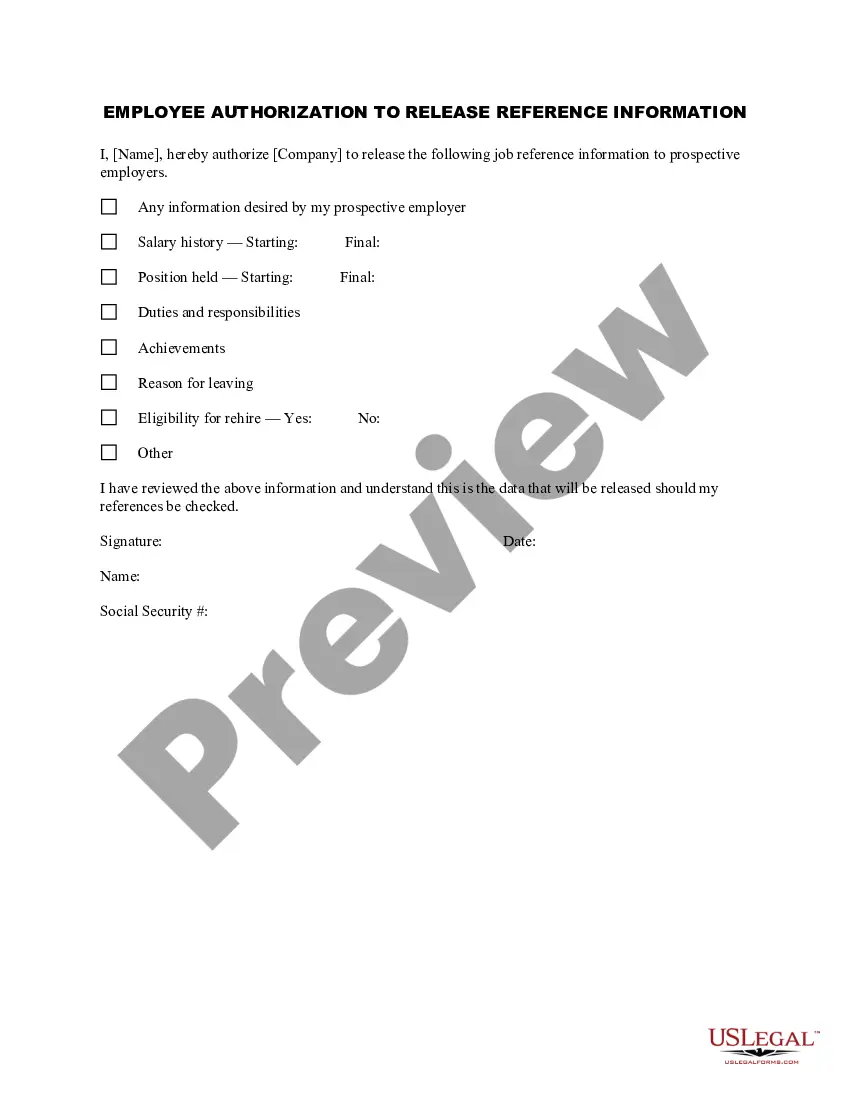
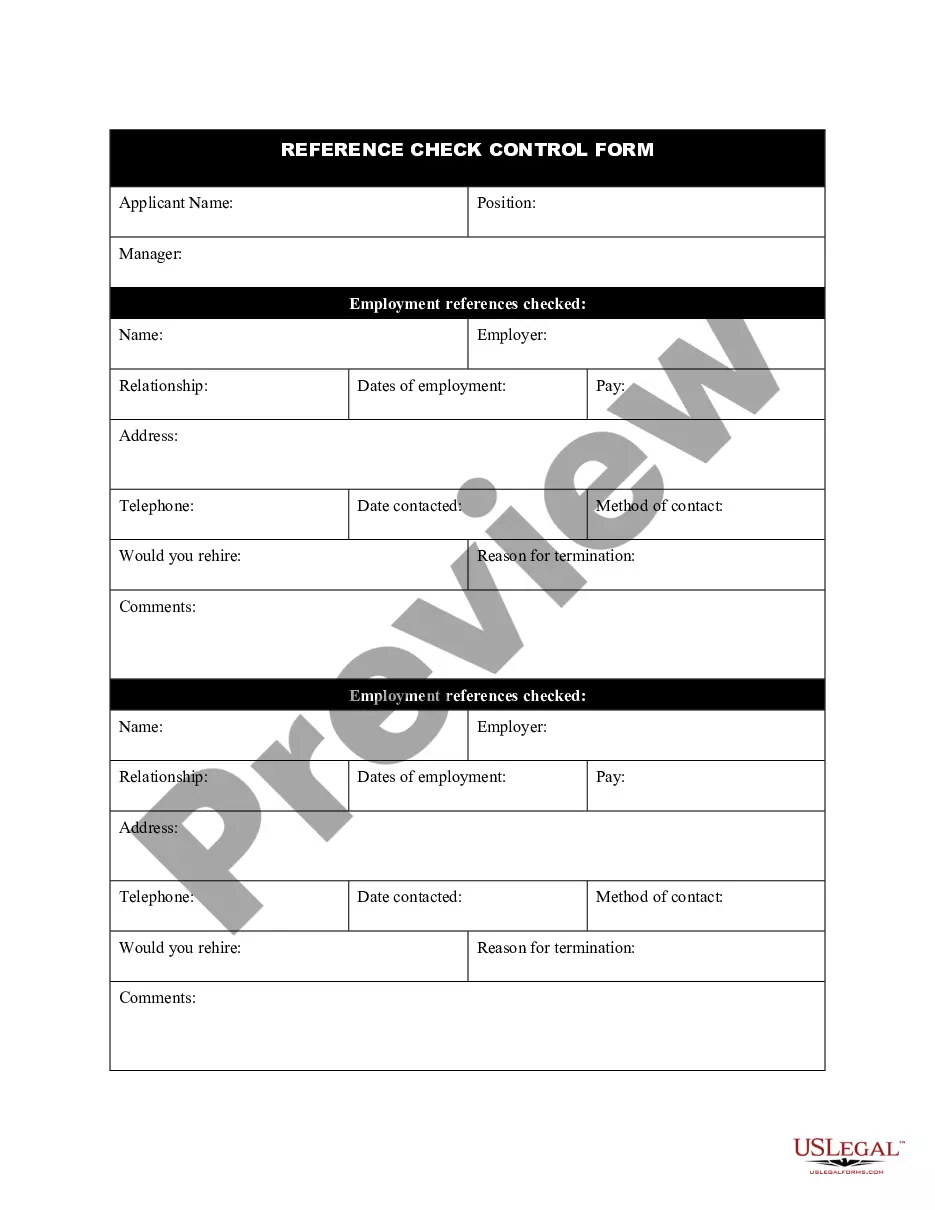
Get your form ready online
Our built-in tools help you complete, sign, share, and store your documents in one place.
Make edits, fill in missing information, and update formatting in US Legal Forms—just like you would in MS Word.
Download a copy, print it, send it by email, or mail it via USPS—whatever works best for your next step.
Sign and collect signatures with our SignNow integration. Send to multiple recipients, set reminders, and more. Go Premium to unlock E-Sign.
If this form requires notarization, complete it online through a secure video call—no need to meet a notary in person or wait for an appointment.
We protect your documents and personal data by following strict security and privacy standards.

Make edits, fill in missing information, and update formatting in US Legal Forms—just like you would in MS Word.

Download a copy, print it, send it by email, or mail it via USPS—whatever works best for your next step.

Sign and collect signatures with our SignNow integration. Send to multiple recipients, set reminders, and more. Go Premium to unlock E-Sign.

If this form requires notarization, complete it online through a secure video call—no need to meet a notary in person or wait for an appointment.

We protect your documents and personal data by following strict security and privacy standards.
Looking for another form?






How to fill out Employment Reference Release?
US Legal Forms - one of the largest collections of legal documents in the United States - offers a variety of legal form templates you can download or print.
By using the website, you can access countless forms for business and personal purposes, categorized by types, states, or keywords.
You can quickly find the latest versions of forms similar to the Rhode Island Employment Reference Release within minutes.
Read the summary of the form to verify that you've chosen the right one.
If the form does not meet your requirements, utilize the Search bar at the top of the page to find the appropriate one.
- If you already have a monthly subscription, Log In to download the Rhode Island Employment Reference Release from your US Legal Forms library.
- The Download button will appear on every form you view.
- You can access all previously downloaded forms in the My documents section of your account.
- If this is your first time using US Legal Forms, here are simple steps to get started.
- Ensure you have selected the correct form for your city/county.
- Click the Preview button to review the form’s details.
Form popularity
FAQ
To request a copy of your reference, you will need to make a subject access request in writing to your new employer. They will then consider if any exemptions apply and if they can release the information to you.
Your employer doesn't usually have to give you a reference unless: your contract says they will. you have written proof they've agreed to give you a reference - like an email.
Can I see the reference that my previous employer wrote? Your previous or current employer do not have to automatically show you a reference they have written about you. Once you start a job with a new employer, you can ask them for a copy of any reference they have been given from your previous employer.
Typically, employers are allowed to share general information regarding your tenure with their companiesthings like your dates of employment, job title, and responsibilities, all which serve to confirm your employment and validate the things you likely provided on your resume for potential employers.
There are no federal laws restricting what information an employer can disclose about former employees. Check with your state department of labor for restrictions on employer disclosures in your state.
Providing a Reference Many employers will release only basic information when contacted for a reference to protect themselves from lawsuits. They usually confirm employment dates and job responsibilities, salary history, and might include information about whether you were dismissed or chose to leave on your own.
Typically, employers are allowed to share general information regarding your tenure with their companiesthings like your dates of employment, job title, and responsibilities, all which serve to confirm your employment and validate the things you likely provided on your resume for potential employers.
Many people think of them as an afterthought or are convinced that it's illegal for their previous company to say anything about employees other than to confirm their dates of service and job title. In fact, companies and individuals can say anything they want to in a reference check, as long as it's true.
Check your own references. If you have a friend who owns a business or has an office number, ask him to call your former employers. Ask your friend to contact each one of your former employers to request verification of employment dates, rehire eligibility and job performance.
Employers are not prohibited by law from disclosing to a potential employer - who calls for a reference about a former employee - the reasons that the employee left, as long as the information they share is truthful.