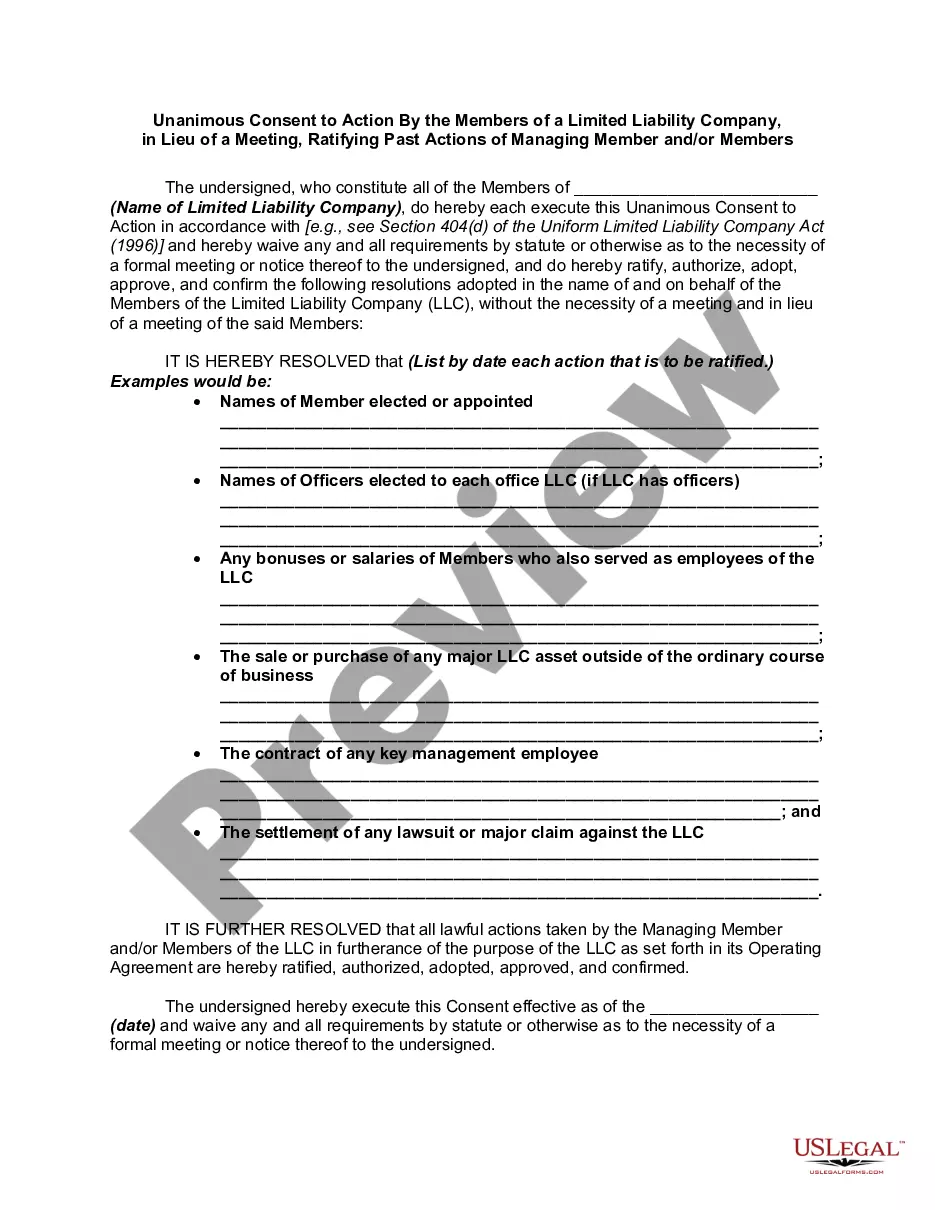
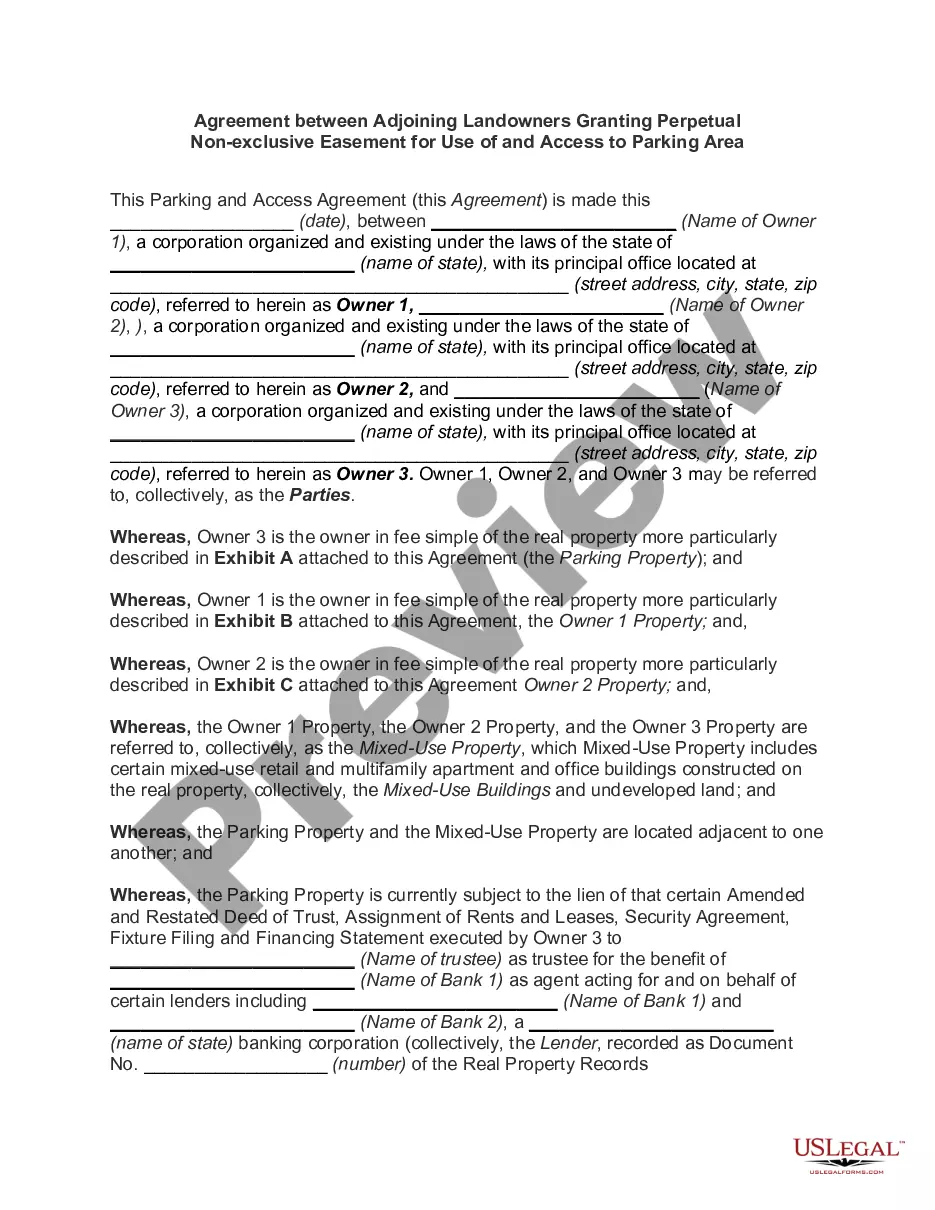
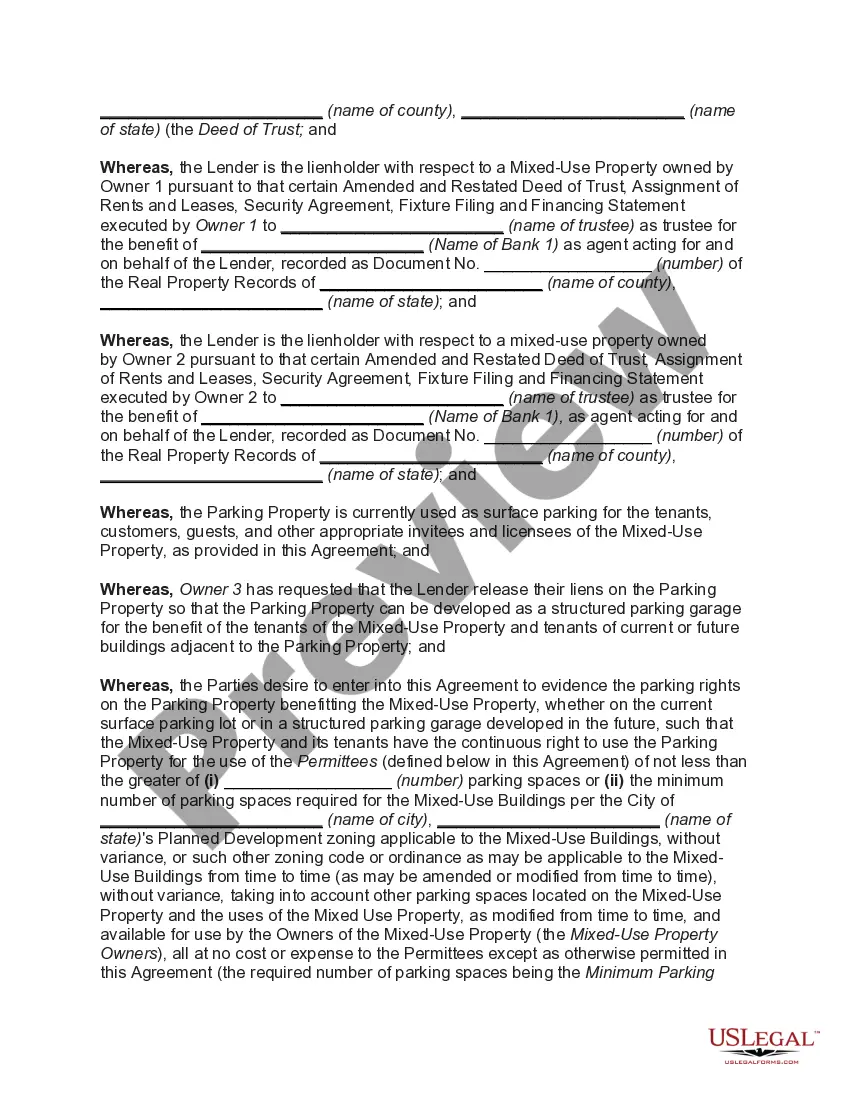
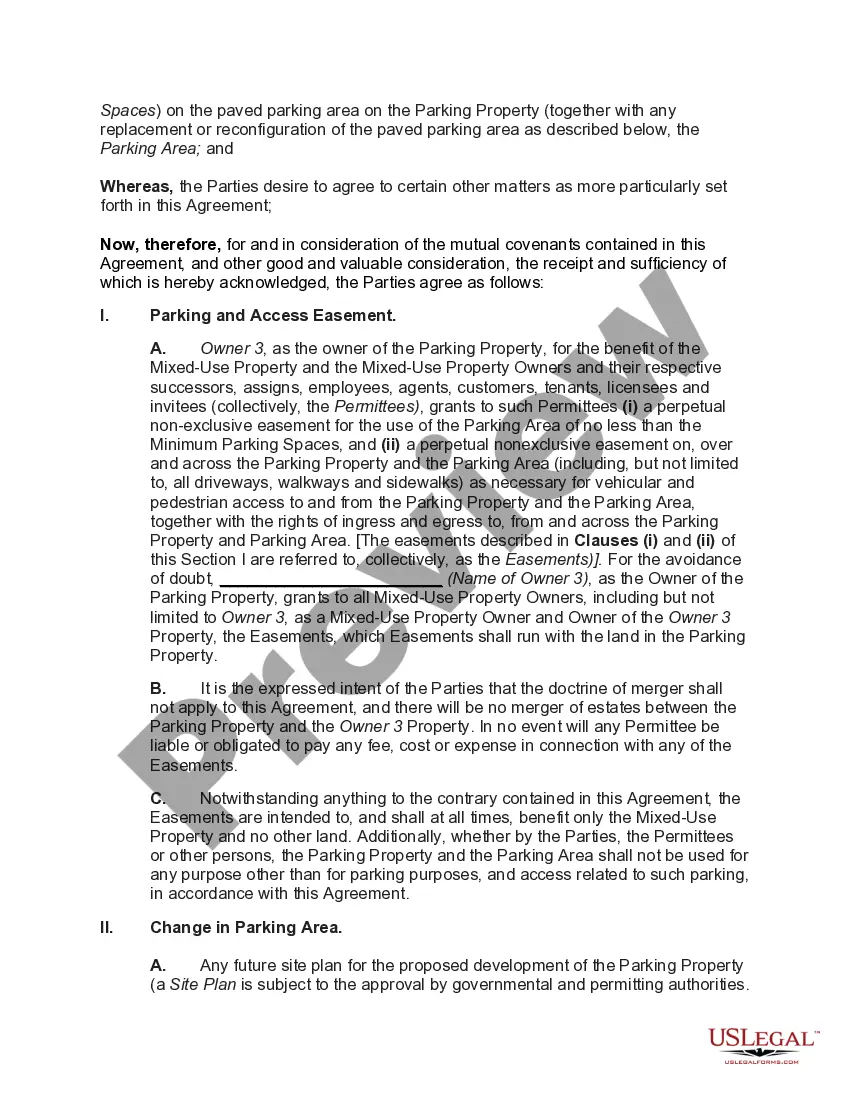
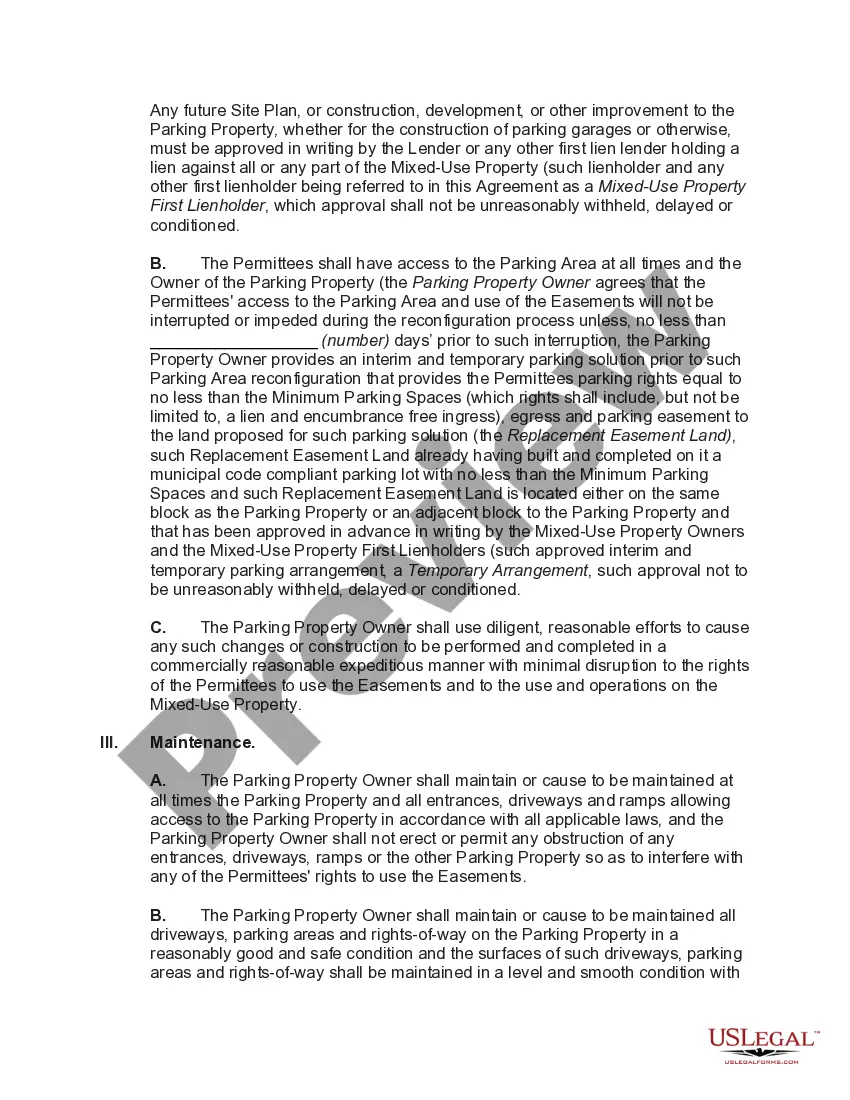
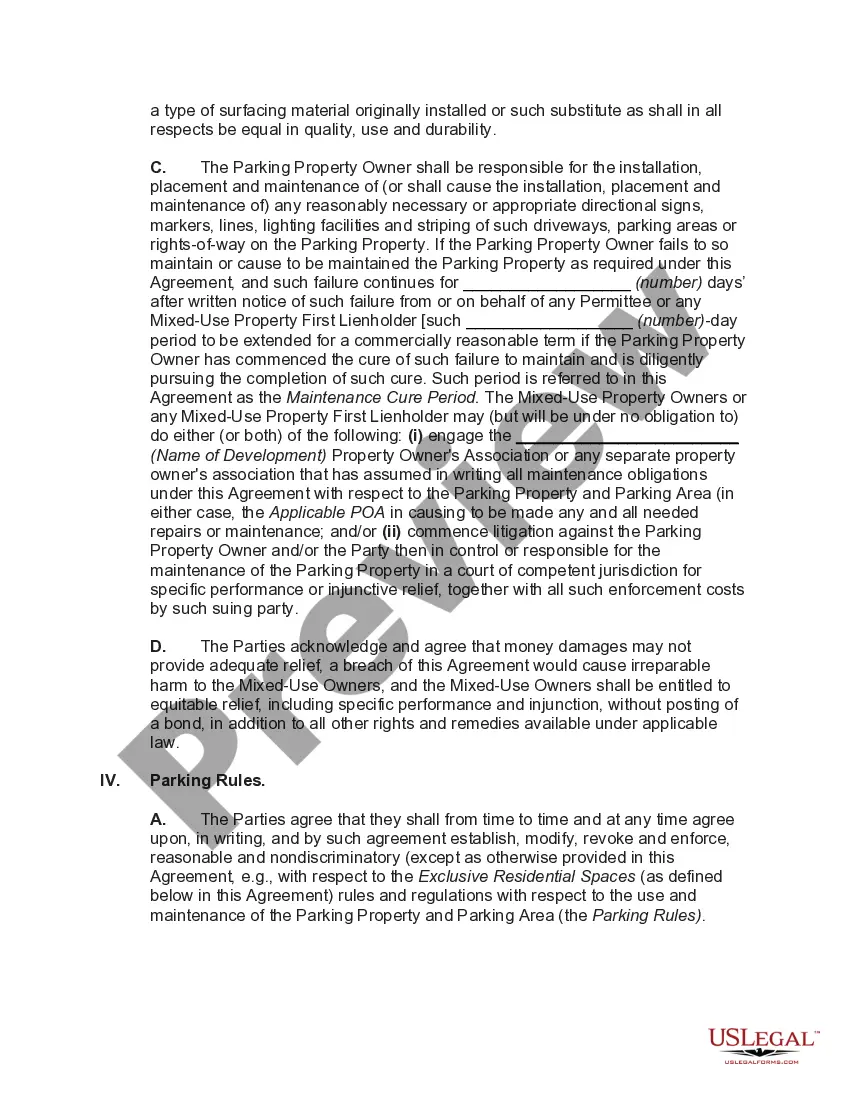
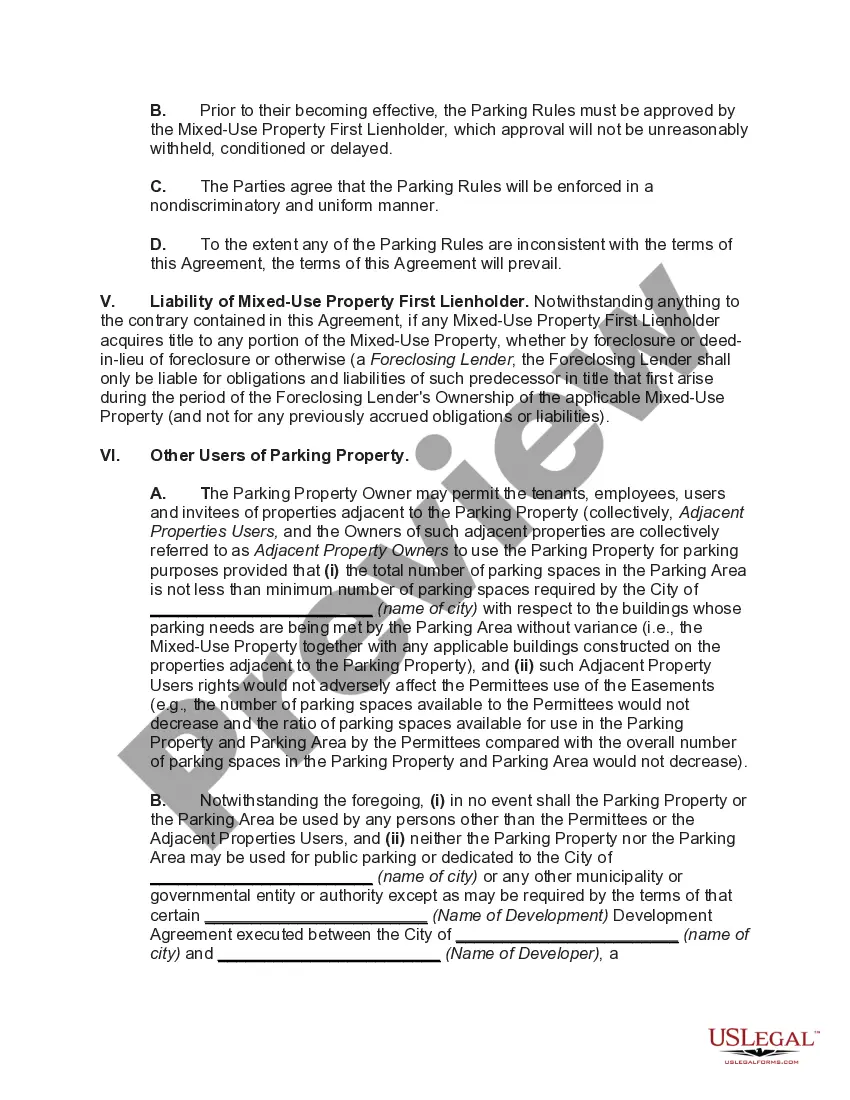
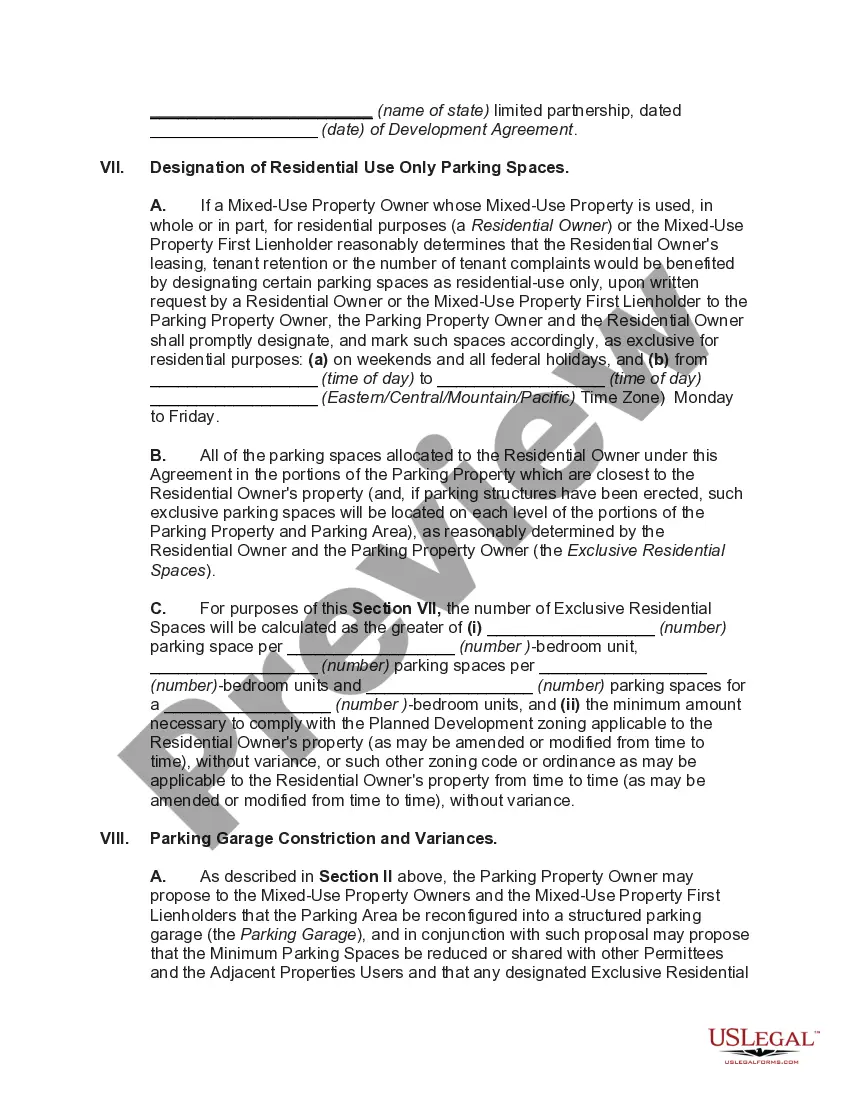
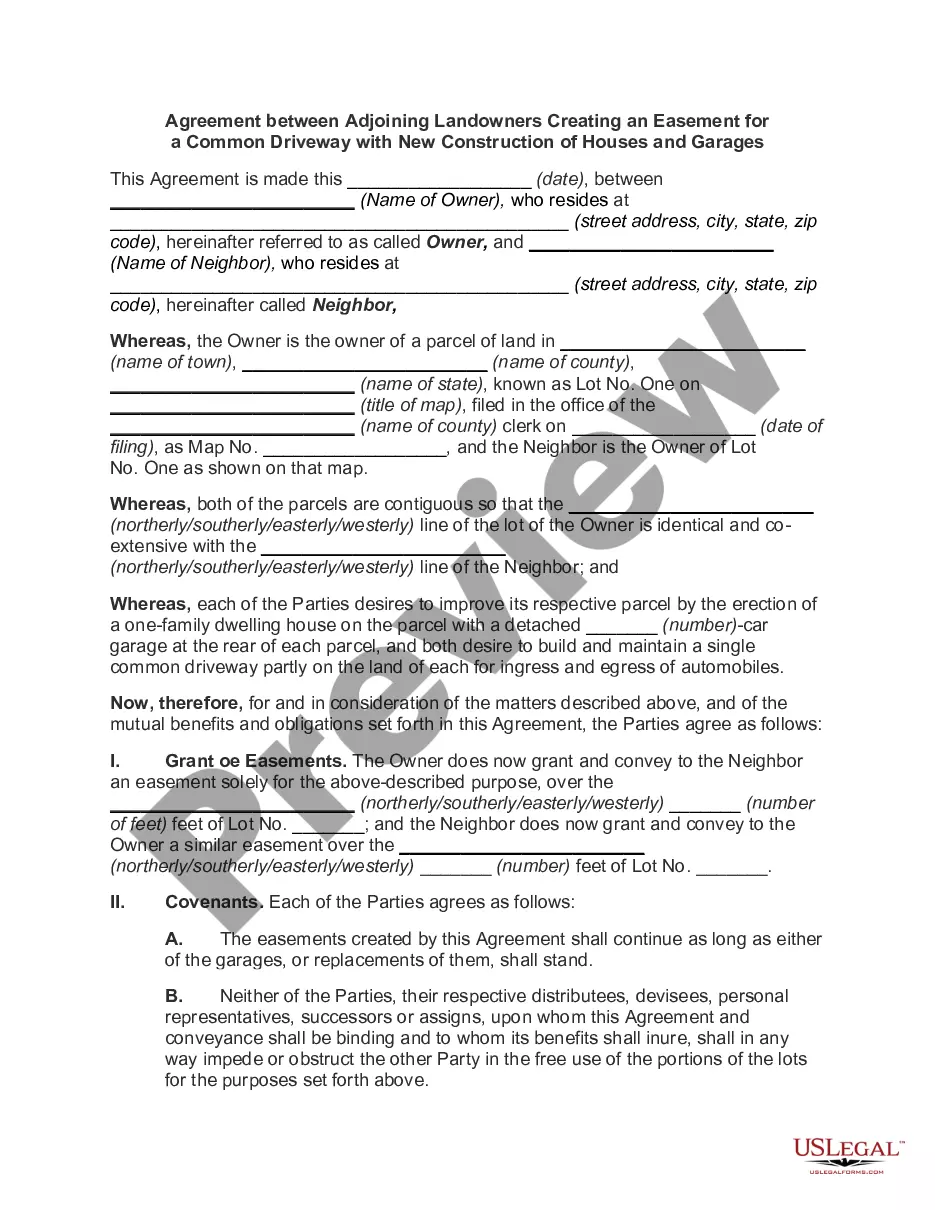
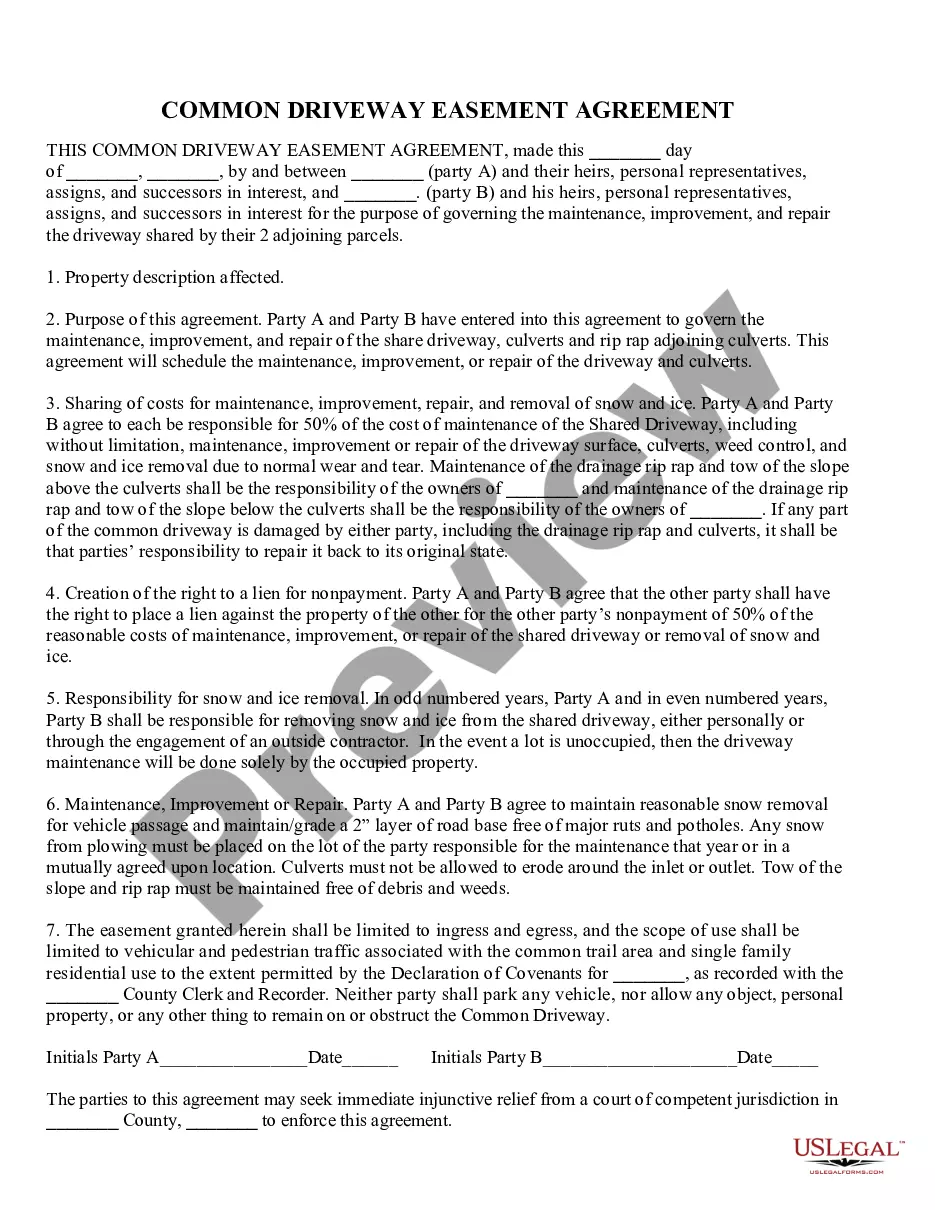
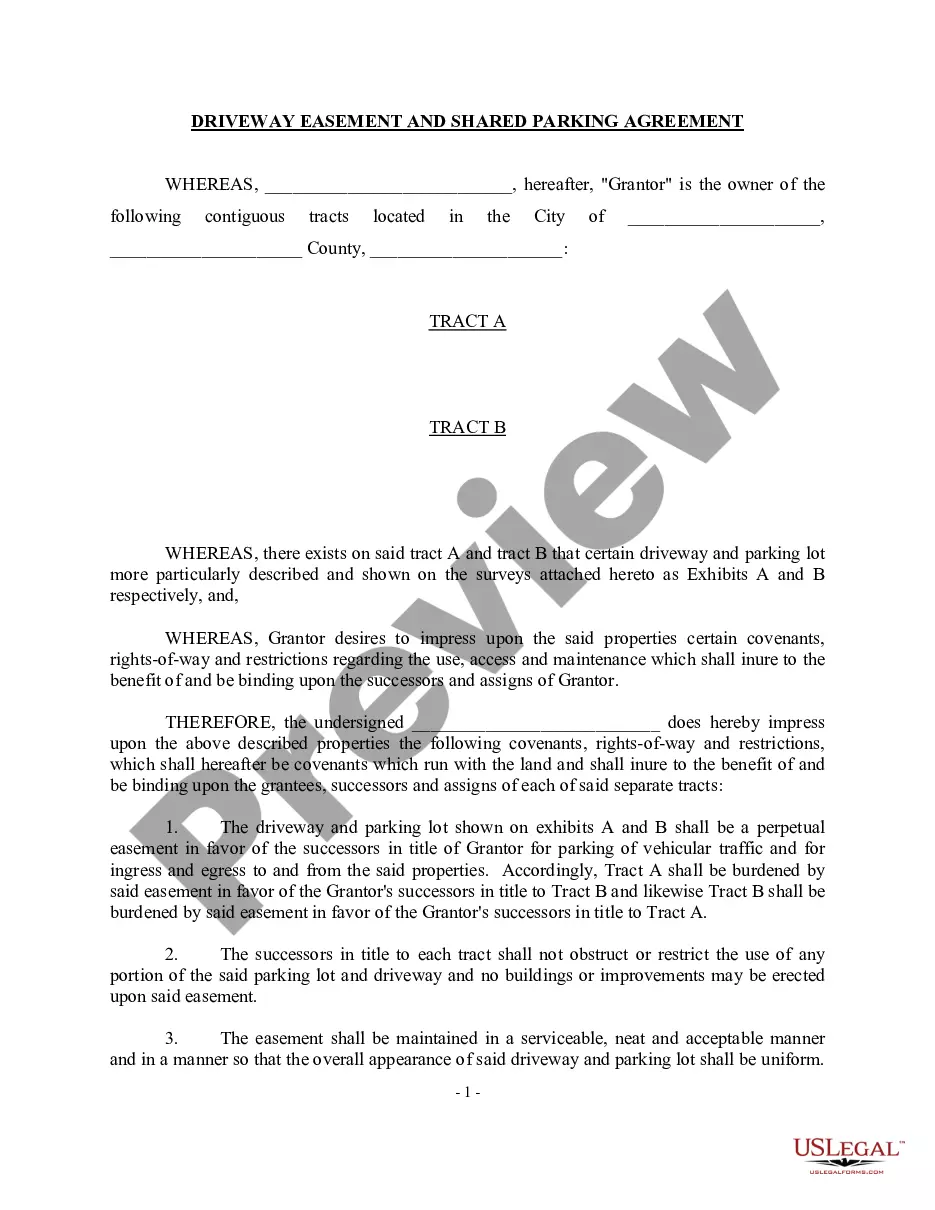
Rhode Island Agreement between Adjoining Landowners Granting Perpetual Non-exclusive Easement for Use of and Access to Parking Area
Description
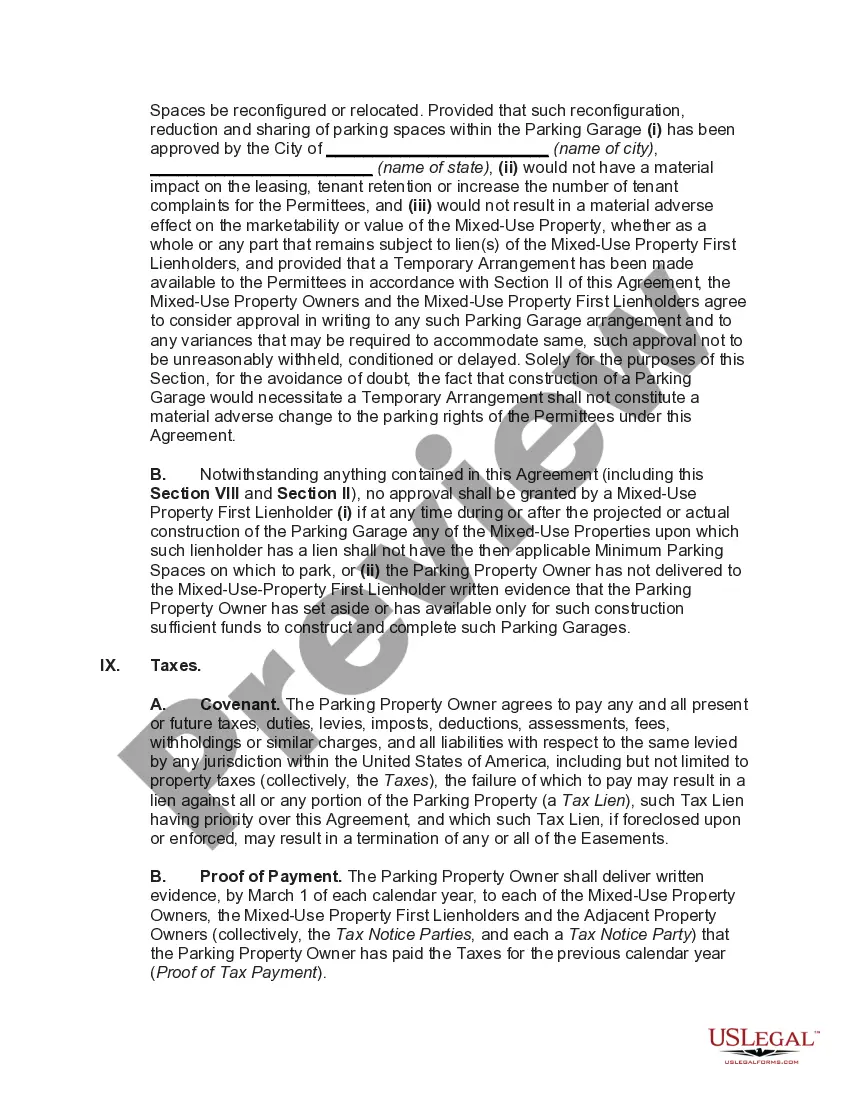
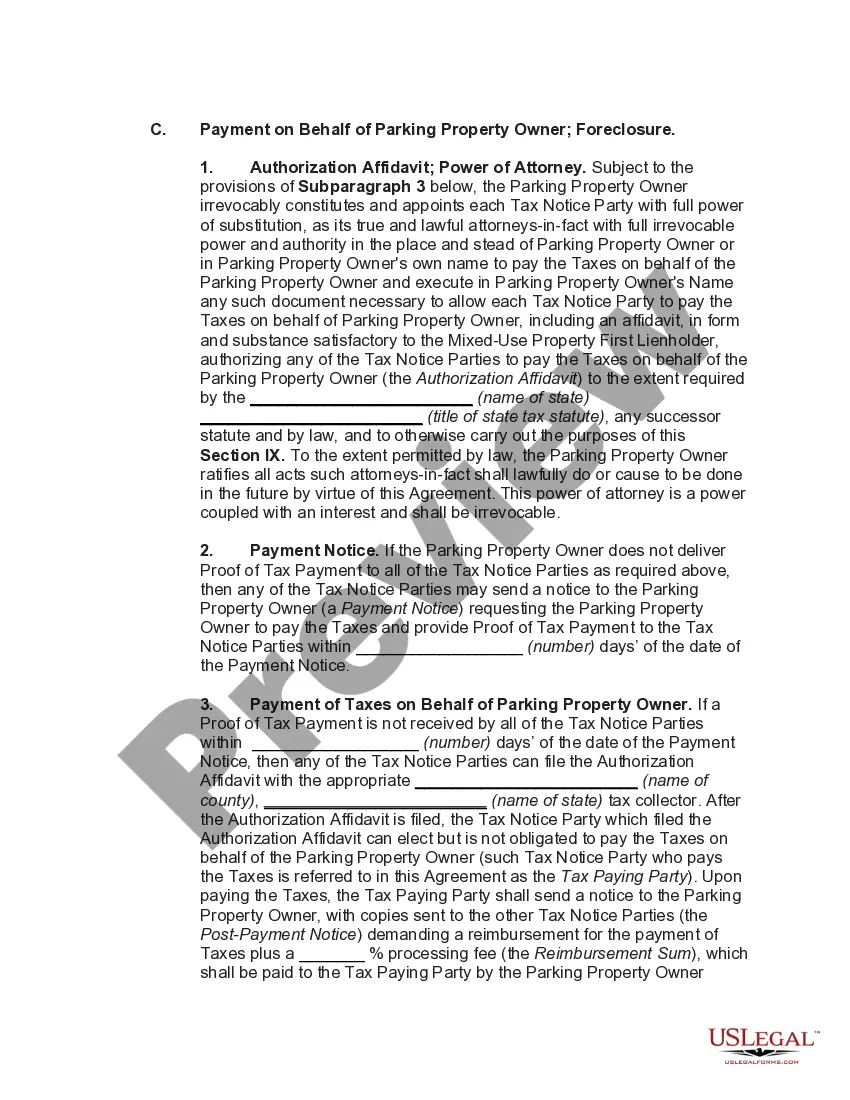
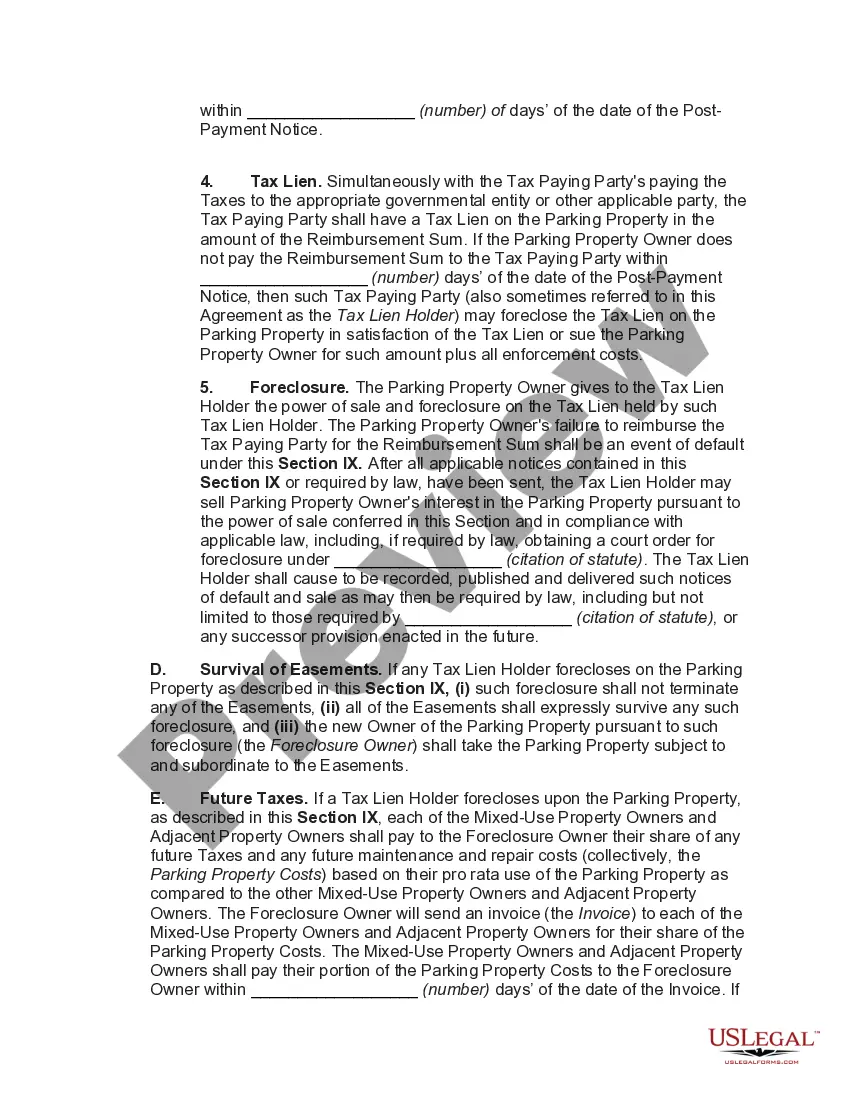

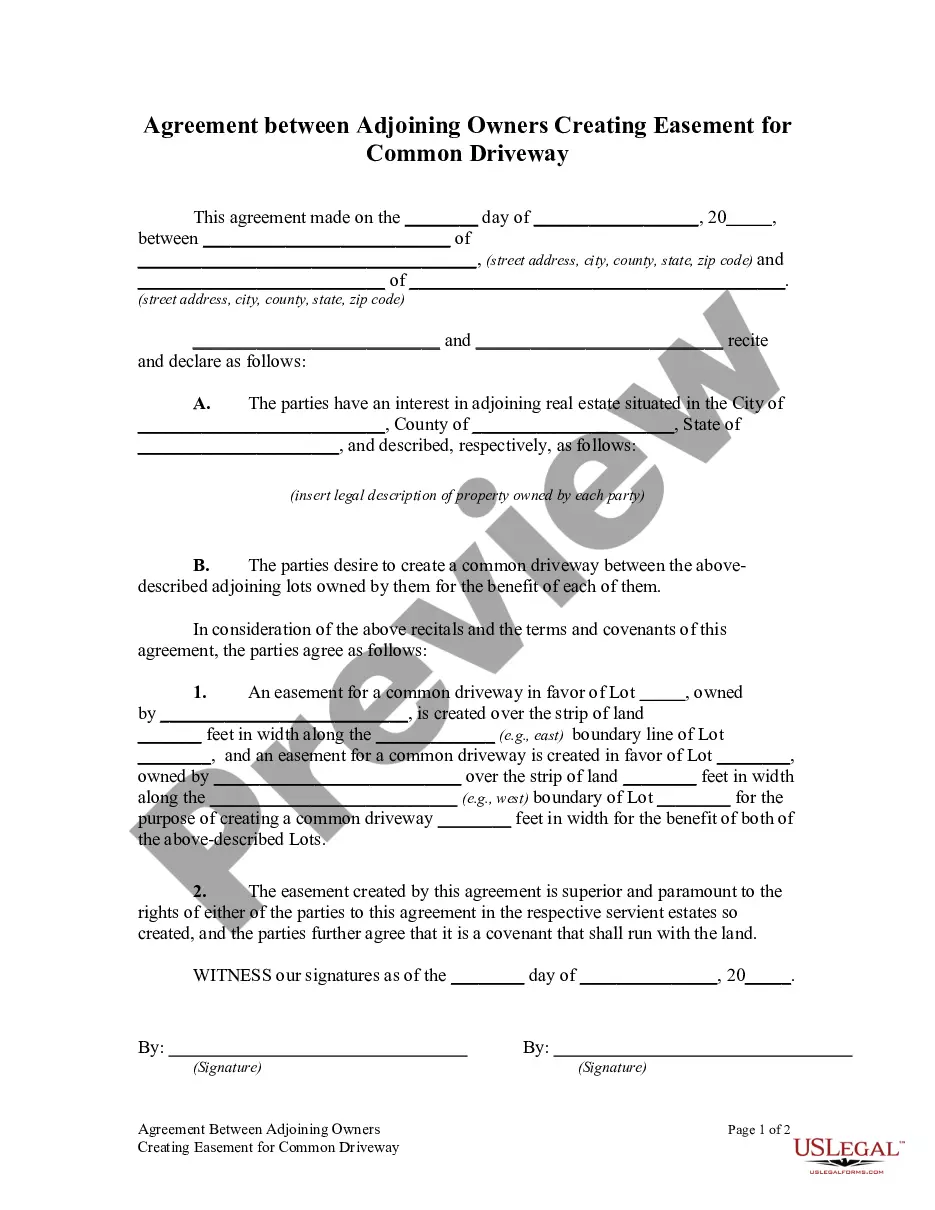
Get your form ready online
Our built-in tools help you complete, sign, share, and store your documents in one place.
Make edits, fill in missing information, and update formatting in US Legal Forms—just like you would in MS Word.
Download a copy, print it, send it by email, or mail it via USPS—whatever works best for your next step.
Sign and collect signatures with our SignNow integration. Send to multiple recipients, set reminders, and more. Go Premium to unlock E-Sign.
If this form requires notarization, complete it online through a secure video call—no need to meet a notary in person or wait for an appointment.
We protect your documents and personal data by following strict security and privacy standards.

Make edits, fill in missing information, and update formatting in US Legal Forms—just like you would in MS Word.

Download a copy, print it, send it by email, or mail it via USPS—whatever works best for your next step.

Sign and collect signatures with our SignNow integration. Send to multiple recipients, set reminders, and more. Go Premium to unlock E-Sign.

If this form requires notarization, complete it online through a secure video call—no need to meet a notary in person or wait for an appointment.

We protect your documents and personal data by following strict security and privacy standards.
Looking for another form?





How to fill out Agreement Between Adjoining Landowners Granting Perpetual Non-exclusive Easement For Use Of And Access To Parking Area?
If you need to comprehensive, obtain, or print out legal papers layouts, use US Legal Forms, the largest collection of legal forms, that can be found on the Internet. Use the site`s basic and handy lookup to obtain the documents you will need. Different layouts for organization and specific purposes are categorized by classes and suggests, or search phrases. Use US Legal Forms to obtain the Rhode Island Agreement between Adjoining Landowners Granting Perpetual Non-exclusive Easement for Use of and Access to Parking Area in just a couple of mouse clicks.
When you are currently a US Legal Forms customer, log in to your account and click on the Acquire button to get the Rhode Island Agreement between Adjoining Landowners Granting Perpetual Non-exclusive Easement for Use of and Access to Parking Area. You can even access forms you formerly delivered electronically in the My Forms tab of your respective account.
If you use US Legal Forms for the first time, refer to the instructions under:
- Step 1. Be sure you have chosen the shape to the proper town/country.
- Step 2. Make use of the Preview method to look over the form`s content. Don`t neglect to see the information.
- Step 3. When you are not satisfied together with the kind, use the Search industry towards the top of the display screen to discover other models of your legal kind design.
- Step 4. When you have identified the shape you will need, click the Get now button. Select the pricing prepare you favor and put your qualifications to sign up on an account.
- Step 5. Procedure the financial transaction. You should use your charge card or PayPal account to perform the financial transaction.
- Step 6. Choose the format of your legal kind and obtain it on your gadget.
- Step 7. Complete, edit and print out or sign the Rhode Island Agreement between Adjoining Landowners Granting Perpetual Non-exclusive Easement for Use of and Access to Parking Area.
Each legal papers design you get is your own permanently. You might have acces to each and every kind you delivered electronically within your acccount. Go through the My Forms section and choose a kind to print out or obtain once more.
Contend and obtain, and print out the Rhode Island Agreement between Adjoining Landowners Granting Perpetual Non-exclusive Easement for Use of and Access to Parking Area with US Legal Forms. There are many skilled and state-distinct forms you can utilize for the organization or specific demands.
Form popularity
FAQ
An easement is defined as the grant of a nonpossessory property interest that grants the easement holder permission to use another person's land.
Conveyance is the act of transferring property from one party to another. The term is commonly used in real estate transactions when buyers and sellers transfer ownership of land, building, or home. A conveyance is done using an instrument of conveyance?a legal document such as a contract, lease, title, or deed.
Easement By Necessity This is a court order that grants an owner access to their property through an easement. To win an easement by necessity filing, you must prove, usually with the help of a deed and title search, that your landlocked property and the neighboring property were at one time owned by the same person.
An express easement is created by a written agreement between landowners granting or reserving an easement. Express easements must be signed by both parties and are typically recorded with the deeds to each property.
An easement usually is written so that it lasts forever. This is known as a perpetual easement. Where state law allows, an easement may be written for a specified period of years; this is known as a term easement. Only gifts of perpetual easement, however, can qualify a donor for income- and estate-tax benefits.
An easement is the right to use another person's property for a specific and limited purpose. An easement appurtenant is a specific type of easement where two properties are linked together as servient tenement and dominant tenement estates.
Exclusive means that only one party or perhaps a limited number of parties can use that easement. Non-exclusive means that a number of different parties can use the easement. Non-exclusive can also mean that additional parties could be granted the right to use that same easement in the future.
An easement written in a deed is called an: easement by grant. An easement by grant is generally written into and created in a deed.