In a charitable lead trust, the lifetime payments go to the charity and the remainder returns to the donor or to the donor's estate or other beneficiaries. A donor transfers property to the lead trust, which pays a percentage of the value of the trust assets, usually for a term of years, to the charity. Unlike a charitable remainder trust, a charitable lead annuity trust creates no income tax deduction to the donor, but the income earned in the trust is not attributed to donor. The trust itself is taxed according to trust rates. The trust receives an income tax deduction for the income paid to charity.
Rhode Island Charitable Inter Vivos Lead Annuity Trust
Instant download
Description
Free preview


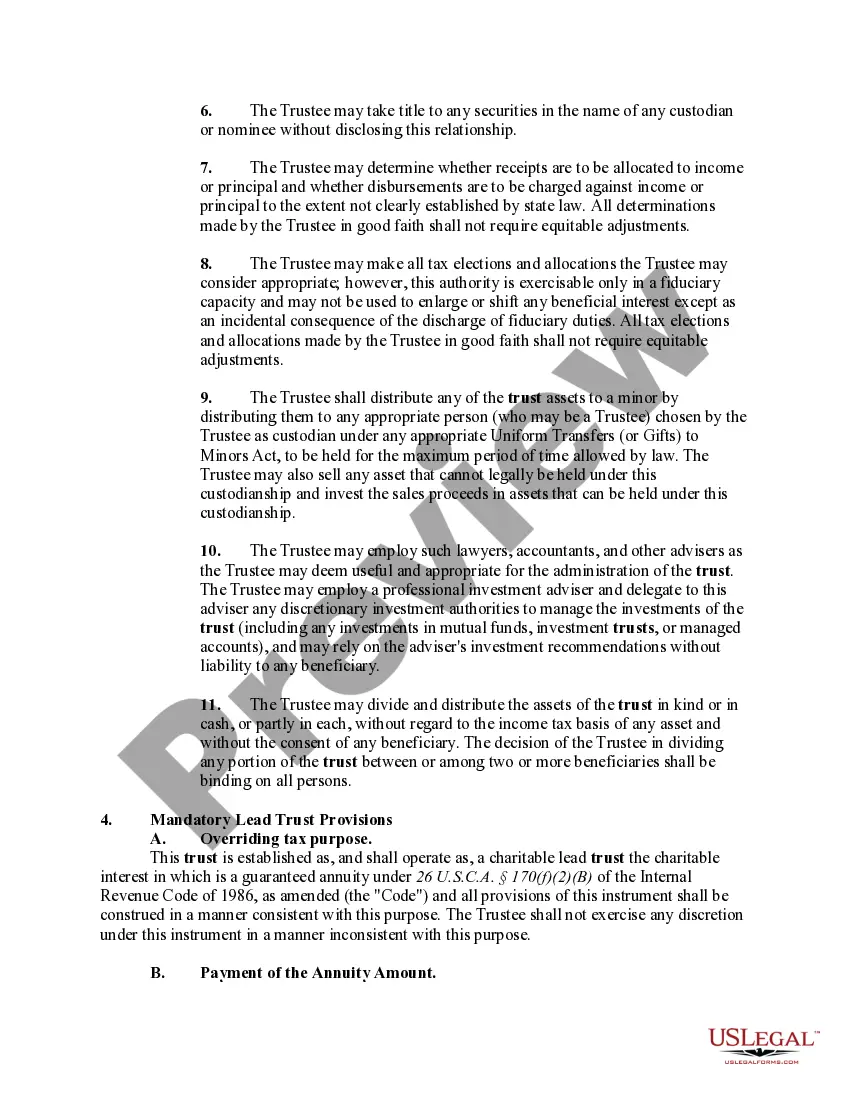
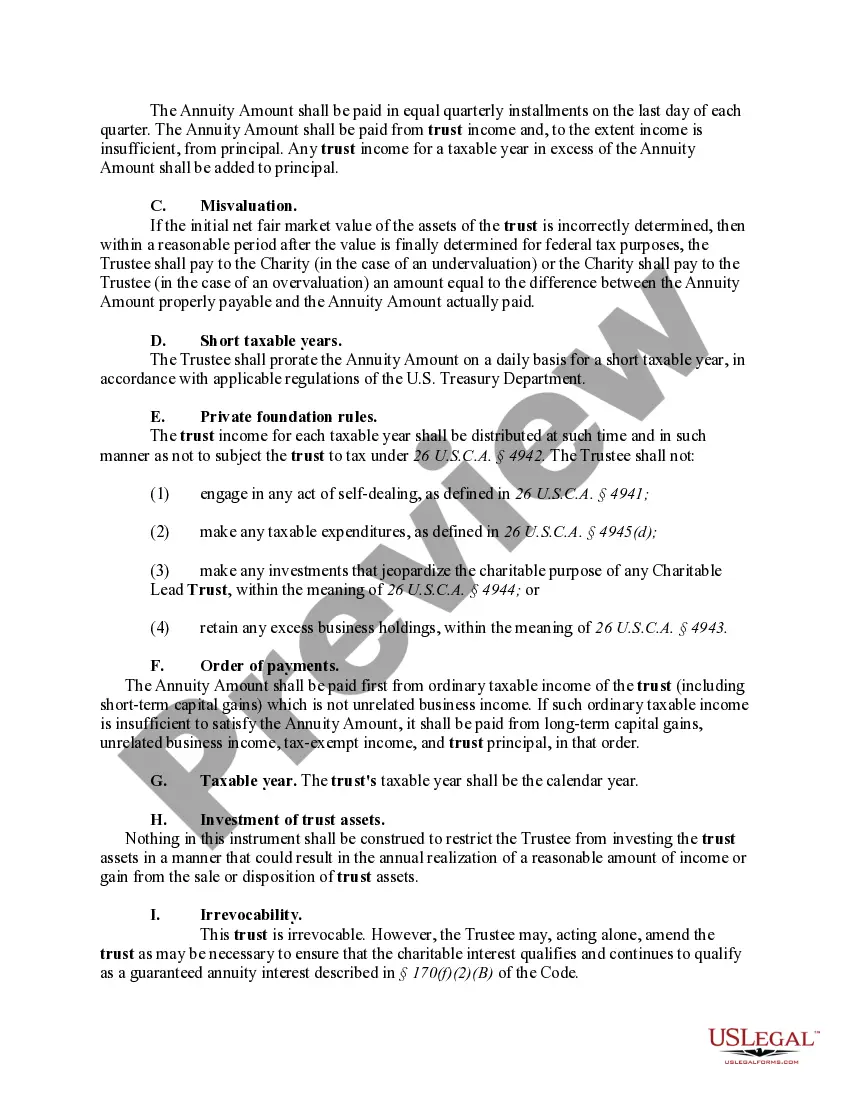

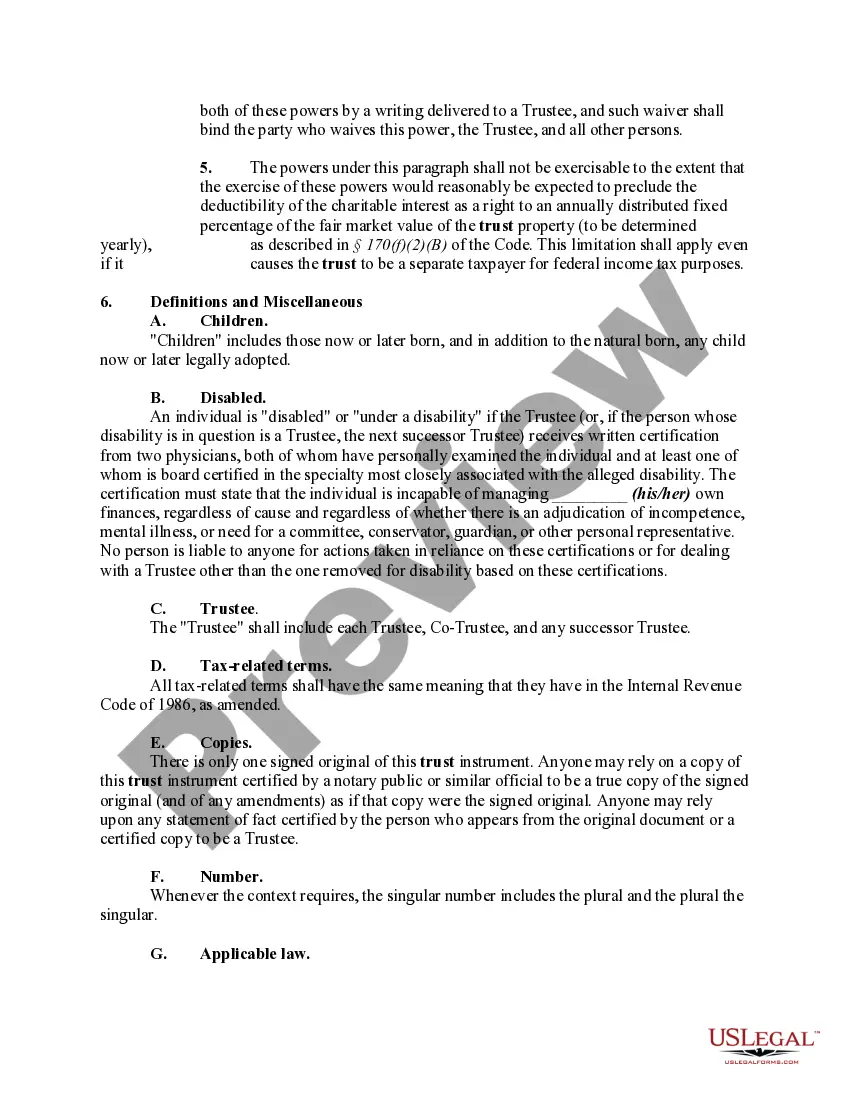


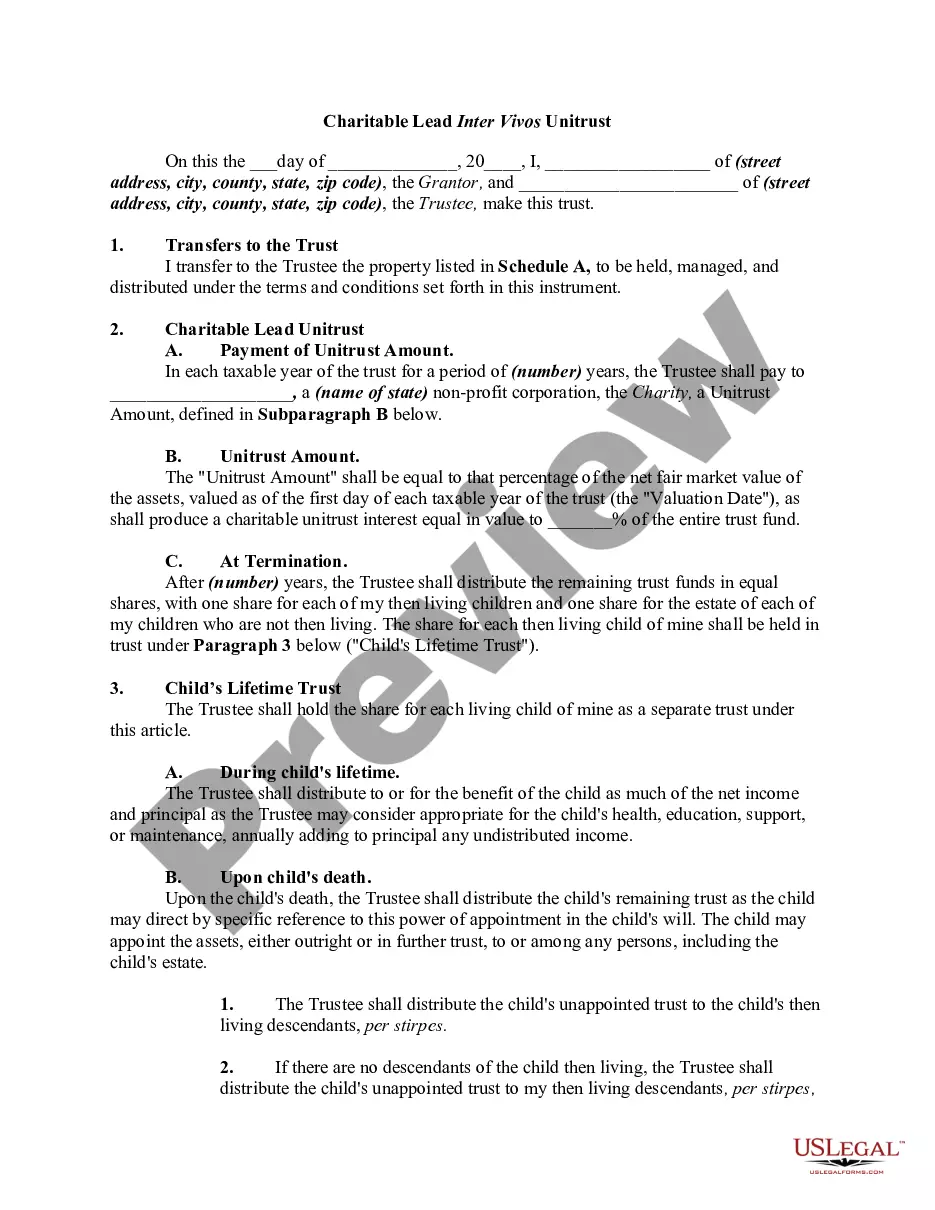
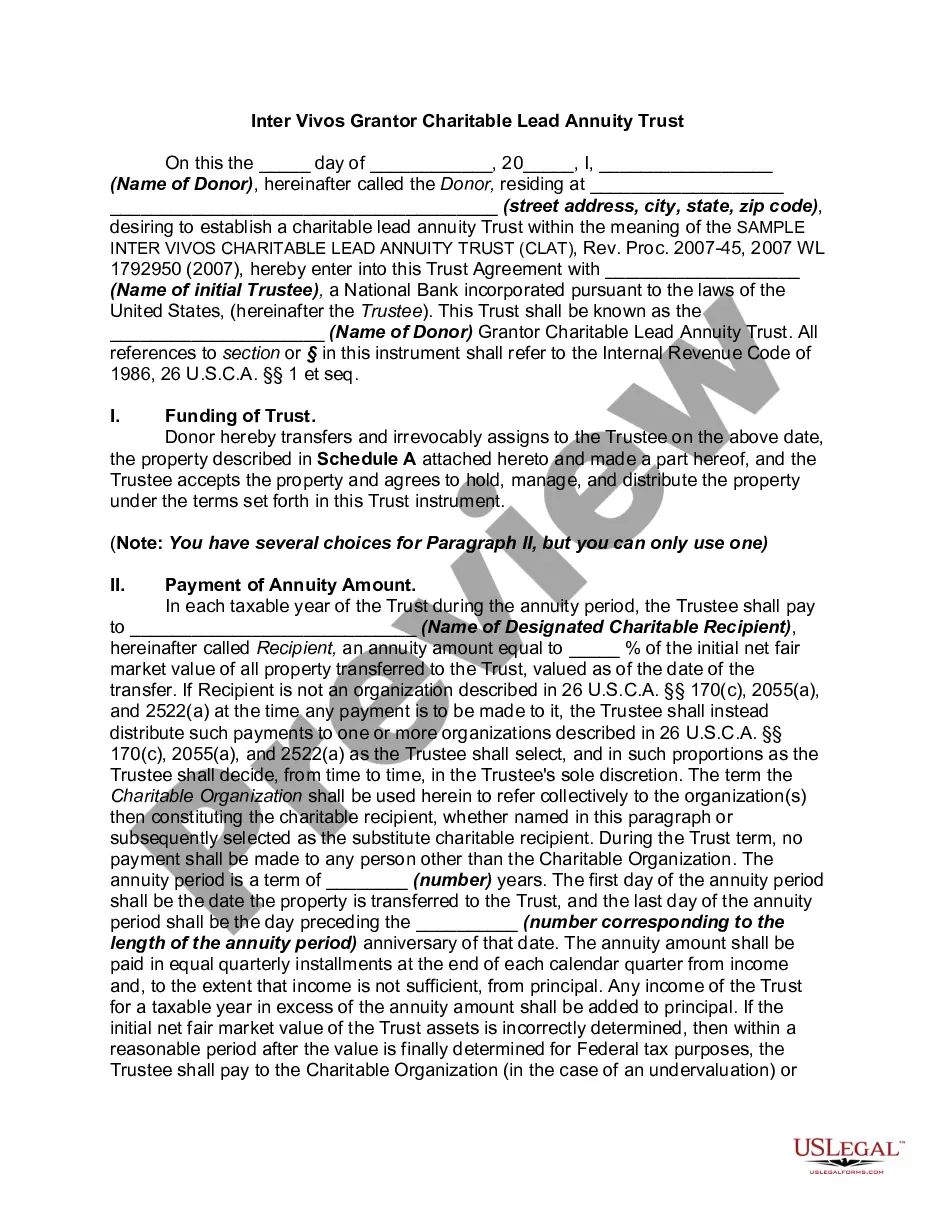
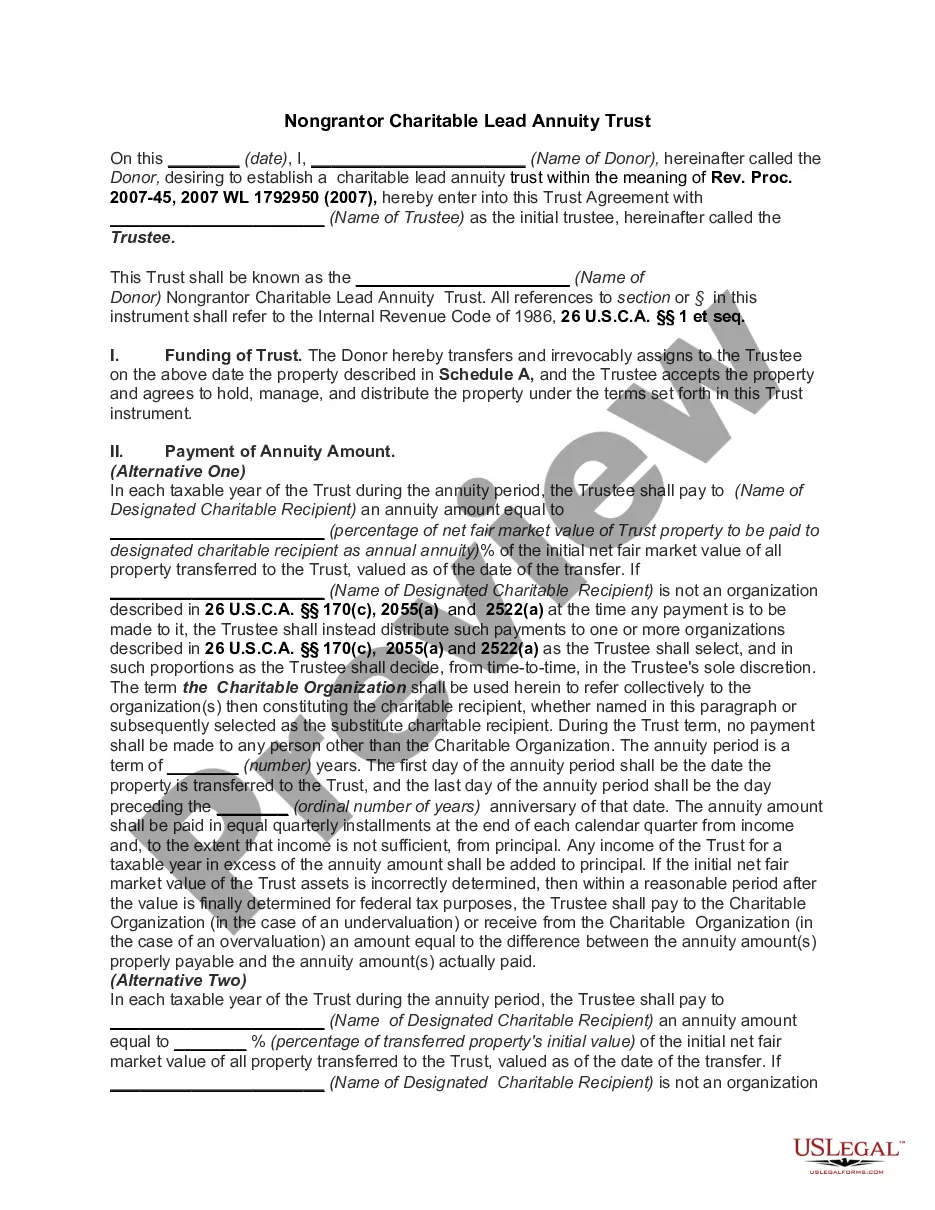







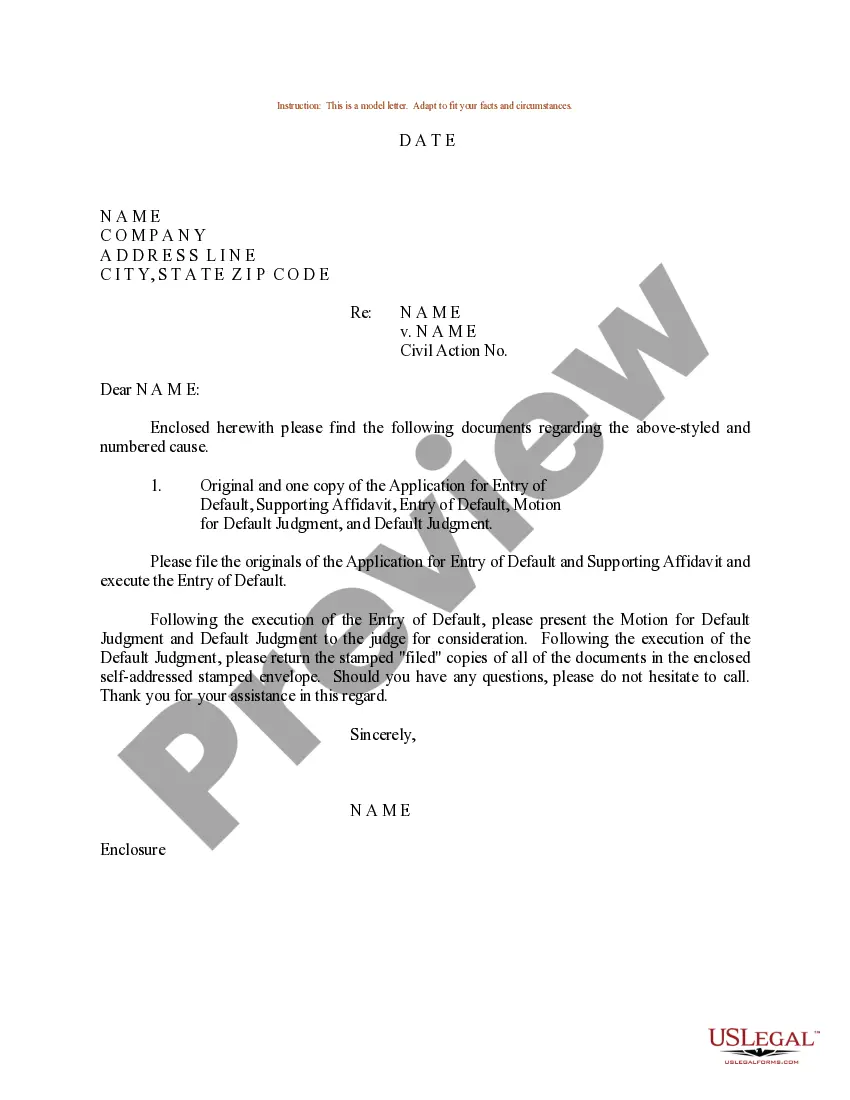

How to fill out Charitable Inter Vivos Lead Annuity Trust?
US Legal Forms - one of the largest collections of legal documents in America - offers a vast selection of legal file templates that you can obtain or print.
By utilizing the website, you can discover thousands of forms for business and personal purposes, organized by categories, states, or keywords.
You can find the latest versions of documents such as the Rhode Island Charitable Inter Vivos Lead Annuity Trust in no time.
Read the form description to confirm you have chosen the right form.
If the form does not meet your needs, use the Search field at the top of the screen to find one that does.
- If you already have a subscription, Log In and download the Rhode Island Charitable Inter Vivos Lead Annuity Trust from the US Legal Forms library.
- The Download button will appear on every form you view.
- You can access all previously downloaded forms in the My documents section of your account.
- To use US Legal Forms for the first time, here are simple instructions to get you started.
- Ensure you have selected the correct form for your area/state.
- Click on the Preview button to review the form's content.
Form popularity
FAQ
A charitable remainder trust allows you to receive payments during your lifetime, with the remaining assets going to a charity afterward. On the other hand, a charitable lead trust, such as the Rhode Island Charitable Inter Vivos Lead Annuity Trust, makes payments to charity for a specific period before the remaining assets transfer to non-charitable beneficiaries. Understanding these differences can help you make better planning decisions for your charitable giving.
The form you file for a trust depends on the type of trust you have established. For instance, revocable and irrevocable trusts often have different reporting requirements. If you are creating a Rhode Island Charitable Inter Vivos Lead Annuity Trust, you might have distinct forms to complete, including IRS Form 5227 for reporting income and gifts to charity. Consulting with a legal expert can help clarify the correct forms needed.
You can use a charitable trust to give to your favorite charities while receiving financial benefits such as potential tax deductions. The Rhode Island Charitable Inter Vivos Lead Annuity Trust allows you to make systematic payments to a charity while retaining some benefits during your lifetime. Utilizing platforms like uslegalforms can simplify the process of creating and managing your trust.
A charitable remainder trust typically files IRS Form 5227, which is specifically used to report the trust's income and charitable distributions. This form helps ensure compliance with federal regulations while allowing donors to maintain control over the trust's assets. If you're considering the Rhode Island Charitable Inter Vivos Lead Annuity Trust, it's important to be aware of your filing obligations to avoid penalties.
The form of trust refers to the legal structure that governs how the trust operates. It can vary widely based on specific needs and goals. For instance, a Rhode Island Charitable Inter Vivos Lead Annuity Trust enables individuals to support charitable organizations while potentially receiving tax benefits. Understanding the various forms of trust can help you decide which option best suits your financial and philanthropic goals.
The form for a charitable trust typically includes specific information about the trust creator, beneficiaries, and the charitable purposes. In the case of a Rhode Island Charitable Inter Vivos Lead Annuity Trust, the trust usually outlines how the annuity payments will be distributed to charity during the trust's term. You can find customizable forms on platforms like uslegalforms to streamline setting up your trust.
A Charitable Remainder Annuity Trust (CRAT) provides fixed payments to beneficiaries based on the initial value of the donated assets, offering predictability. In contrast, a Charitable Remainder Unitrust (CRUT) provides variable income based on the trust's current value, which can fluctuate. Understanding these differences is crucial when considering the Rhode Island Charitable Inter Vivos Lead Annuity Trust for your financial legacy.
A charitable gift annuity offers a fixed income for life in exchange for a charitable donation, which is simpler to set up. In contrast, a charitable remainder annuity trust (CRAT) like the Rhode Island Charitable Inter Vivos Lead Annuity Trust provides income for a set period or the lifetime of one or more beneficiaries. This distinction can greatly impact your estate planning strategy.
Advised Fund (DAF) provides immediate tax benefits while allowing donors to recommend grants over time, making it flexible. In contrast, a Charitable Remainder Trust (CRT) like the Rhode Island Charitable Inter Vivos Lead Annuity Trust requires set distributions, ensuring the charity receives income first. Both have unique advantages depending on your philanthropic goals.
The primary difference lies in their structure and benefits. A Charitable Remainder Trust (CRT) allows for more flexibility in terms of asset distribution and is often more complex compared to a charitable gift annuity. The Rhode Island Charitable Inter Vivos Lead Annuity Trust specifically serves as a direct means for income distribution to charities first, benefiting the donor’s estate later.