This form is a sample letter in Word format covering the subject matter of the title of the form.
Rhode Island Sample Letter to Judge regarding Agreed Order
Instant download
Description

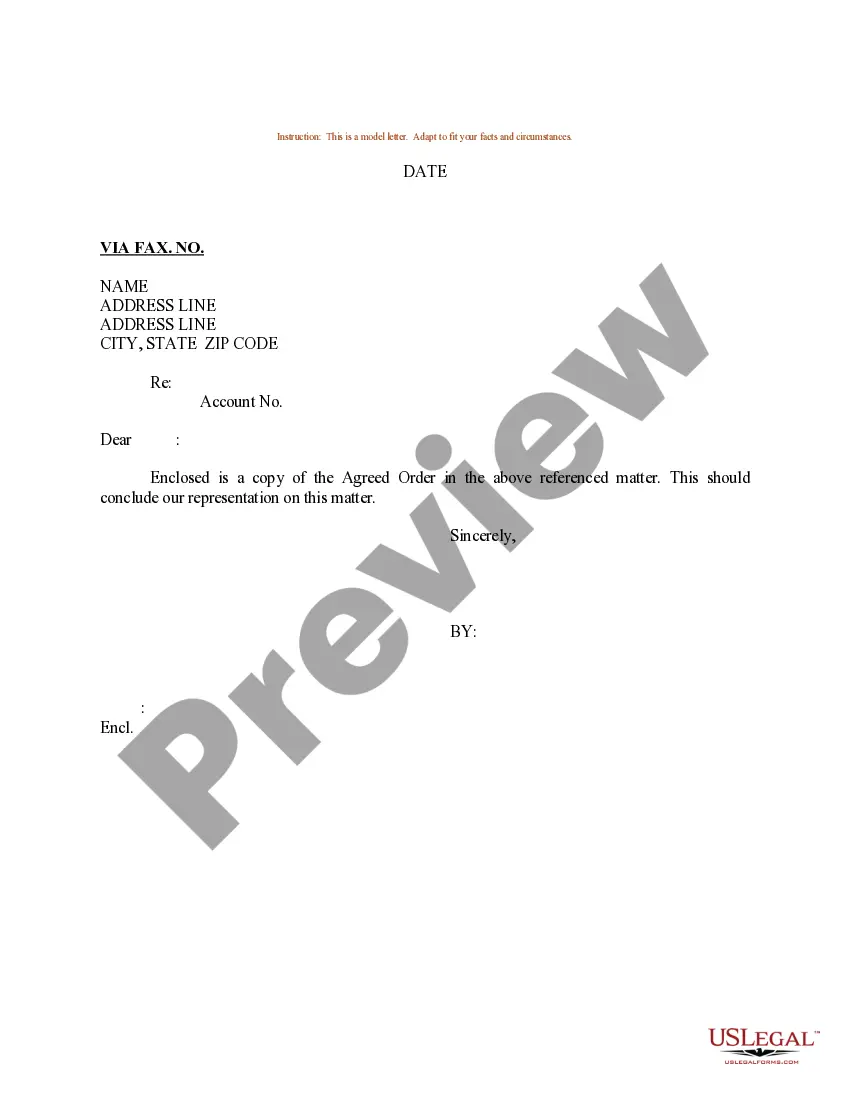

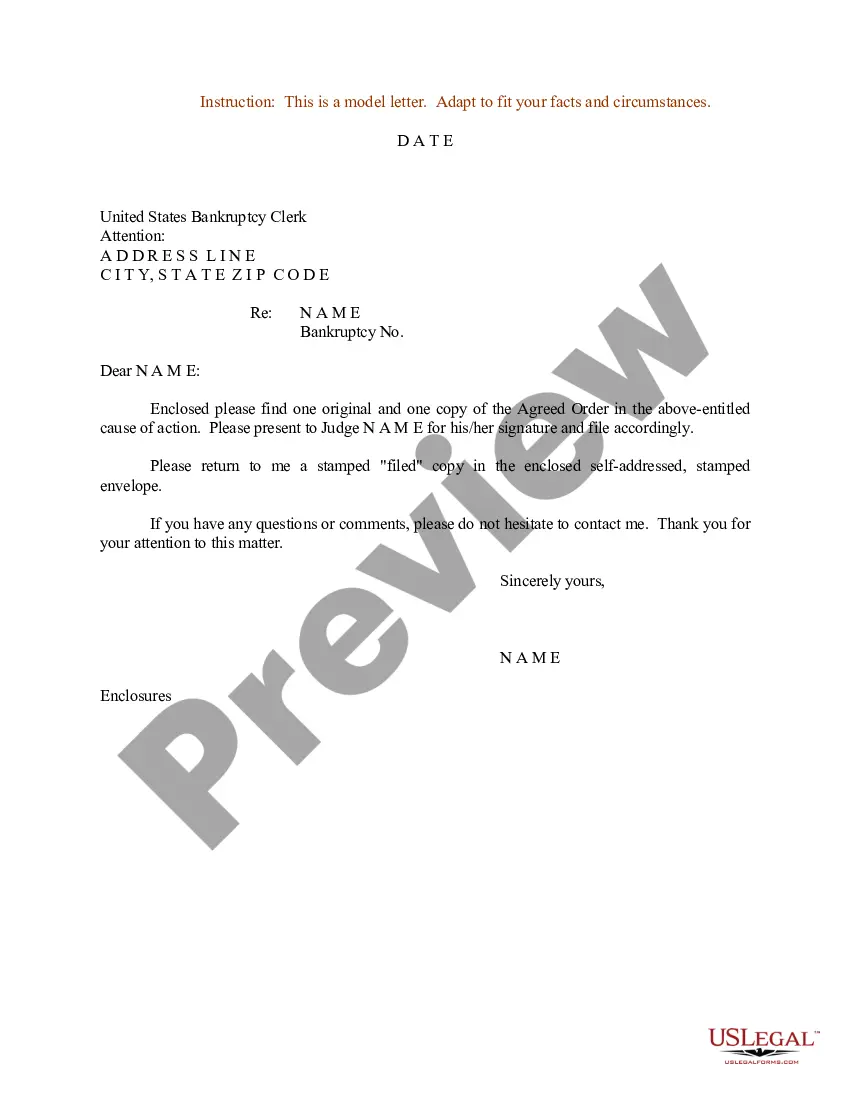
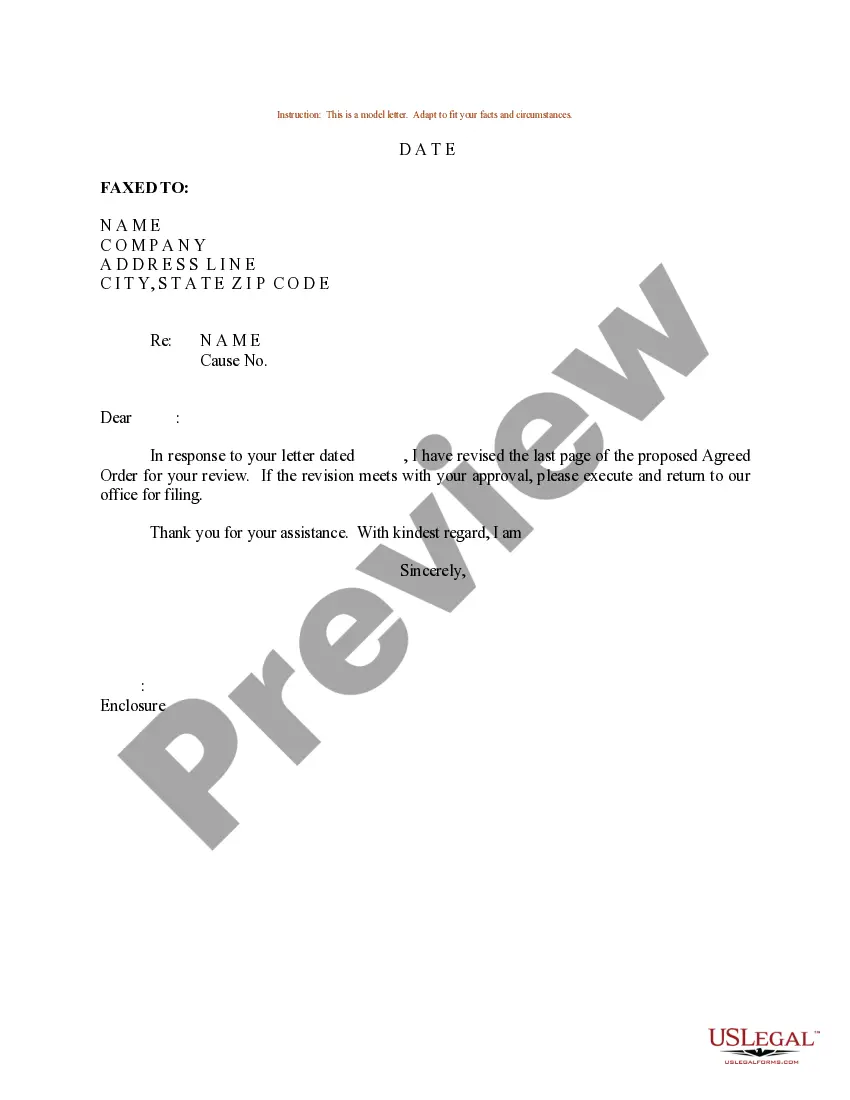

How to fill out Sample Letter To Judge Regarding Agreed Order?
It is feasible to spend hours on the Internet looking for the valid document template that meets the federal and state requirements you need.
US Legal Forms offers thousands of legal templates that can be reviewed by experts.
You can easily download or print the Rhode Island Sample Letter to Judge regarding Agreed Order from my service.
Review the form description to confirm you have chosen the right form. If available, use the Preview option to look through the document template as well. If you wish to find another version of your form, use the Search field to locate the template that meets your needs. Once you have identified the template you want, click Acquire now to proceed. Choose the payment plan you prefer, enter your credentials, and register for an account on US Legal Forms. Complete the transaction. You can use your credit card or PayPal account to pay for the legal form. Select the format of your document and download it to your device. Make edits to the document if necessary. You can complete, modify, sign, and print the Rhode Island Sample Letter to Judge regarding Agreed Order. Download and print thousands of document templates using the US Legal Forms website, which provides the largest collection of legal forms. Utilize professional and state-specific templates to address your business or personal needs.
- If you possess a US Legal Forms account, you can Log In and click the Obtain option.
- Then, you can complete, modify, print, or sign the Rhode Island Sample Letter to Judge regarding Agreed Order.
- Every legal document template you acquire is yours permanently.
- To obtain an additional copy of any acquired form, visit the My documents tab and click the corresponding option.
- If you are using the US Legal Forms website for the first time, follow the simple instructions below.
- First, ensure that you have selected the correct document template for your region/area of interest.
Form popularity
FAQ
To write an impactful letter to a judge, start with a clear purpose and maintain a respectful tone throughout your message. Use concise language to express your points, and include any supporting evidence or personal stories that may strengthen your case. A well-structured letter that aligns with formal guidelines will capture the judge's attention. Utilizing a Rhode Island Sample Letter to Judge regarding Agreed Order can provide a template that enhances the effectiveness of your communication.
You can send a letter directly to a judge, but it is important to follow the court's rules and procedures. Typically, letters should be submitted through the court clerk to ensure they are properly filed and considered. Direct communication with a judge outside of formal proceedings may not be appropriate, as it can be seen as an attempt to influence the case. Using a Rhode Island Sample Letter to Judge regarding Agreed Order can help you ensure that your letter meets the necessary standards.
Rule 7 in Rhode Island pertains to the requirements for pleadings and motions in civil procedure. It specifies how parties must submit their documents to the court and outlines the necessary information for each filing. This rule ensures that all parties have access to relevant information, promoting fairness in legal proceedings. If you're drafting documents related to an agreed order, a Rhode Island Sample Letter to Judge regarding Agreed Order can help you comply with these requirements.
To write a letter to a judge on behalf of someone, start by addressing the judge properly. Clearly state the purpose of the letter and introduce yourself, explaining your relationship to the person you are representing. Use a respectful tone throughout the letter and ensure that your points are organized and relevant to the case. For a structured approach, consider using a Rhode Island Sample Letter to Judge regarding Agreed Order to guide your writing.
You should not attempt to elicit sympathy from the judge. The judge will not feel sorry for you for committing the crime, he or she will feel sympathy for the victim (in the case that there was one). Playing the pity card will simply come across as a ploy to get off easy. If you can help yourself, don't cry.
You simply write the letter and address to the judge, at his court. It's best to keep such a letter concise, like no more than one page, and when addressing it, it should be directed to ?The Honorable So-and-So, Judge,? at the court address, the proper salutation being either ?Dear Judge So-and...
You should start your letter by addressing it to the court (for example, ?Dear Judge Jones?). Rather than use the generic term ?Sentencing Judge,? try to find the specific name of the judge that is sentencing the defendant. If you cannot find the name, address the letter to ?Honorable Judge.?
You should start your letter by addressing it to the court (for example, ?Dear Judge Jones?). Rather than use the generic term ?Sentencing Judge,? try to find the specific name of the judge that is sentencing the defendant. If you cannot find the name, address the letter to ?Honorable Judge.?
Remember that judges read hundreds of letters. The easier you make it for the judge to read, the most likely the judge will be able to focus on the message you are trying to convey. For most people, a typed letter is more legible than a handwritten one.
These letters can be a very important part of the sentencing process because they help the judge get to know the person they are sentencing in ways other than just the facts of the offense: The letter should be addressed to the Judge, but mailed to the defendant's attorney.