Rhode Island Tenant's Maintenance Repair Request Form
What is this form?
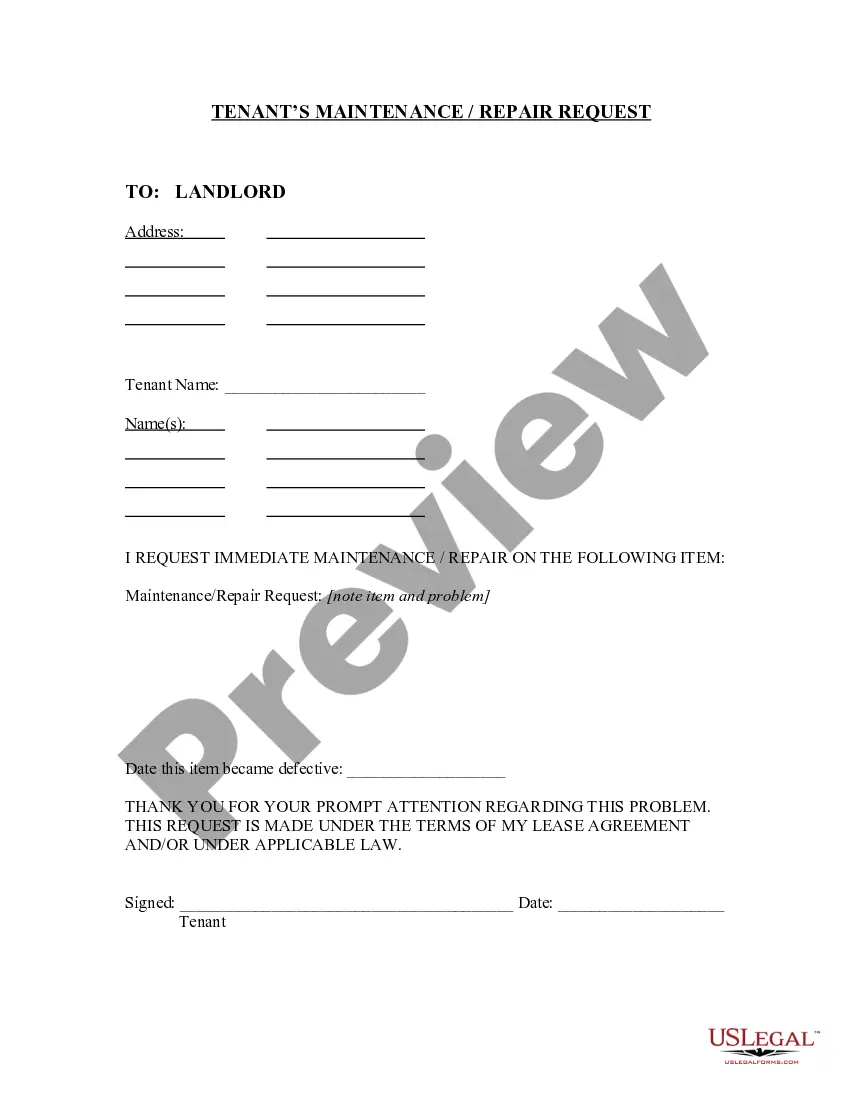
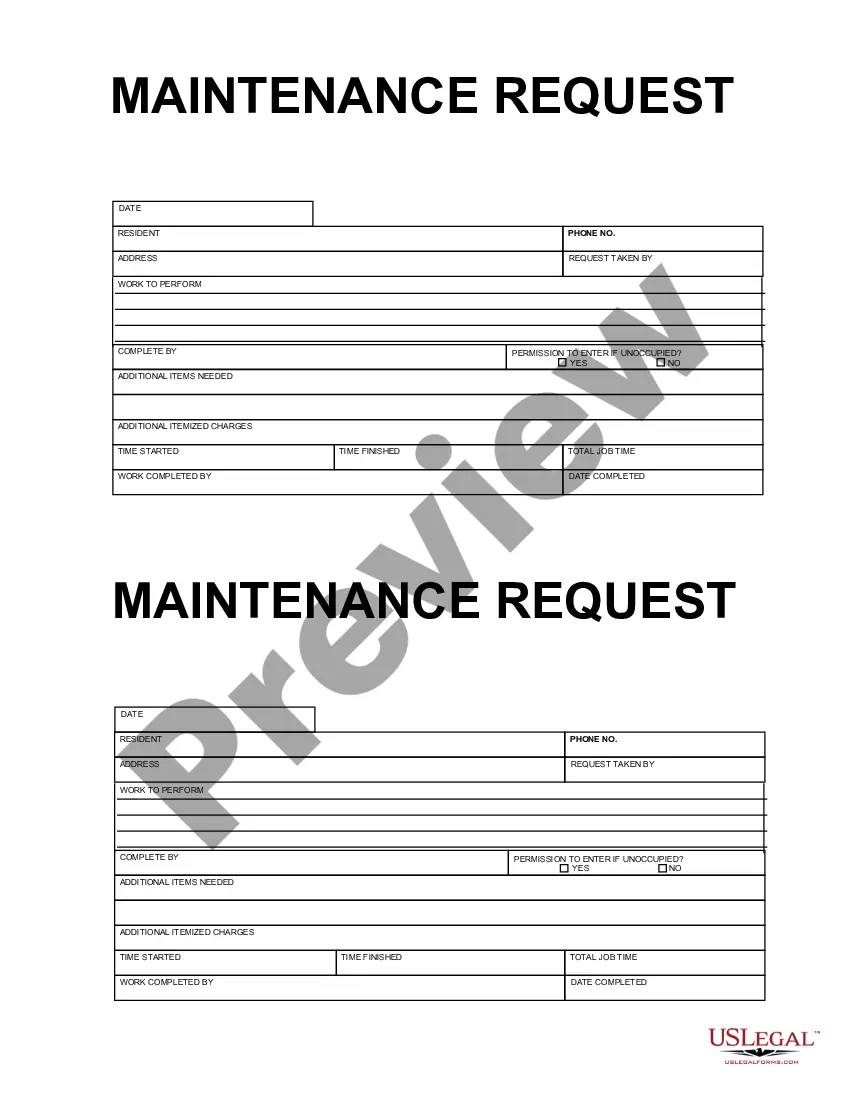
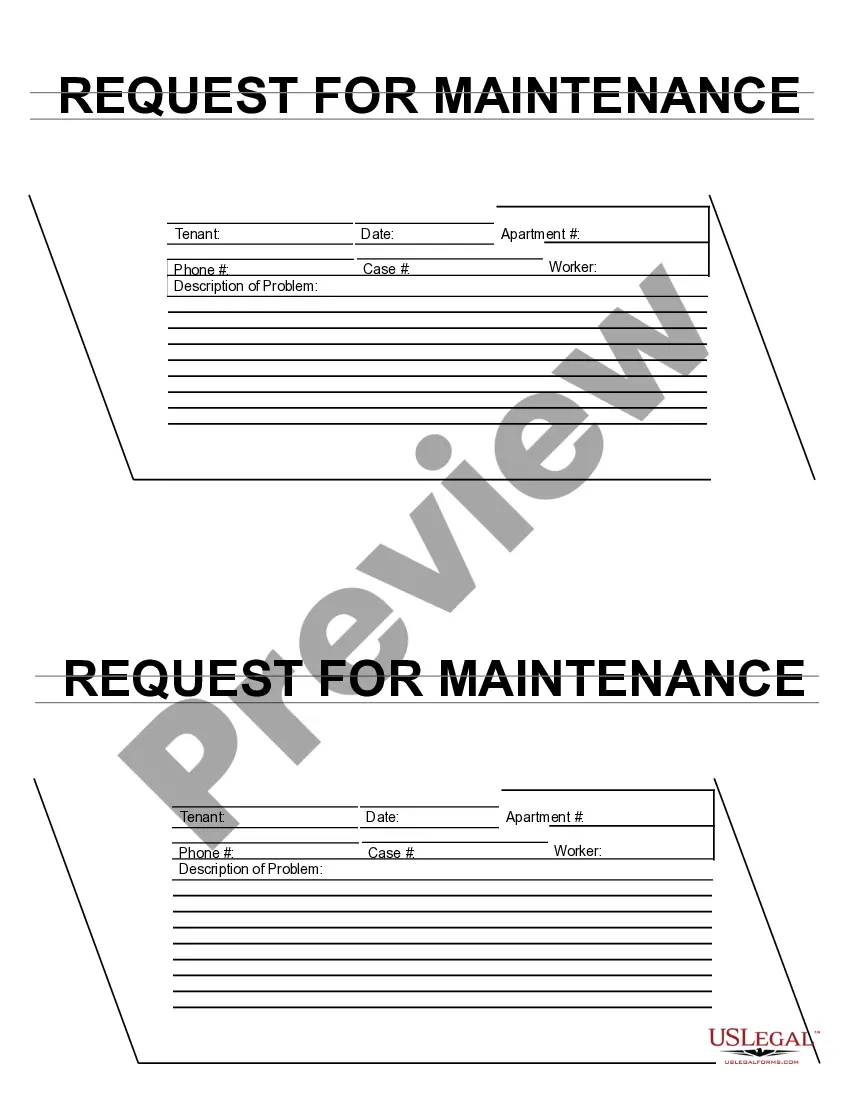
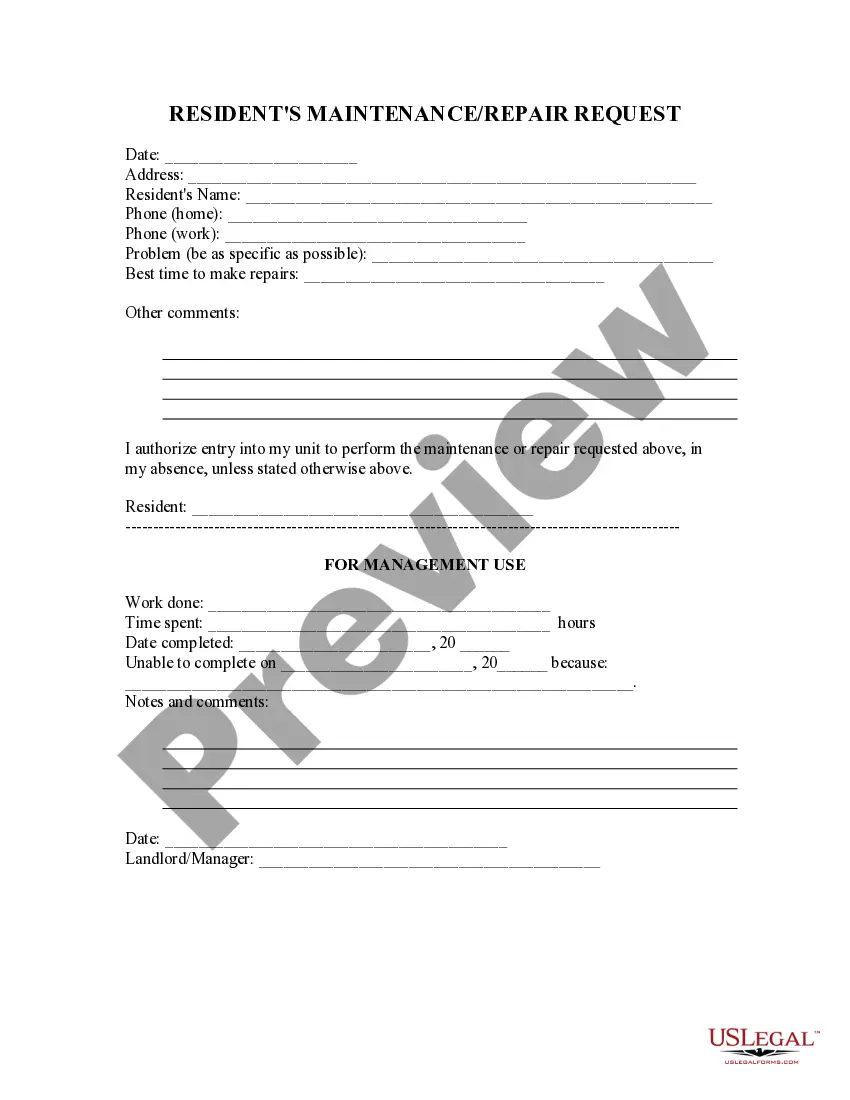
A Tenant's Maintenance Repair Request Form is a legal document that allows tenants to formally notify their landlord about needed repairs or maintenance in their rented premises. This form is designed to ensure that tenants fulfill their responsibilities under their lease agreement while providing a clear record of the request. Unlike informal communication, this form complies with applicable state laws and establishes a legal basis for the request, helping to ensure landlords address the issues promptly.
Key components of this form
- Tenant's signature: verifies the request's authenticity.
- Date of request: indicates when the repair issue was reported.
- Property details: specifies the address of the leased premises.
- Detailed description of needed repairs: outlines the issues requiring attention.
When to use this document
This form should be used when a tenant identifies maintenance issues within their rented property that require the landlord's attention. Common scenarios include problems such as leaks, broken appliances, heating or cooling issues, and general wear and tear that affects livability. It establishes a formal notice to the landlord, which can be helpful if disputes arise regarding repairs.
Who should use this form
- Residential tenants who need to report repair issues to their landlords.
- Tenants under lease agreements requiring formal repair notices.
- Individuals seeking to document their requests for maintenance or repairs legally.
How to complete this form
- Identify the parties involved: Enter the tenant's name and landlord's contact information.
- Specify the property: Include the address of the leased premises that need repairs.
- Detail the repairs needed: Clearly describe what maintenance or repairs are required.
- Sign and date the form: The tenant must sign and date the request to make it legally binding.
Does this document require notarization?
This form usually doesn’t need to be notarized. However, local laws or specific transactions may require it. Our online notarization service, powered by Notarize, lets you complete it remotely through a secure video session, available 24/7.
Get your form ready online
Our built-in tools help you complete, sign, share, and store your documents in one place.
Make edits, fill in missing information, and update formatting in US Legal Forms—just like you would in MS Word.
Download a copy, print it, send it by email, or mail it via USPS—whatever works best for your next step.
Sign and collect signatures with our SignNow integration. Send to multiple recipients, set reminders, and more. Go Premium to unlock E-Sign.
If this form requires notarization, complete it online through a secure video call—no need to meet a notary in person or wait for an appointment.
We protect your documents and personal data by following strict security and privacy standards.

Make edits, fill in missing information, and update formatting in US Legal Forms—just like you would in MS Word.

Download a copy, print it, send it by email, or mail it via USPS—whatever works best for your next step.

Sign and collect signatures with our SignNow integration. Send to multiple recipients, set reminders, and more. Go Premium to unlock E-Sign.

If this form requires notarization, complete it online through a secure video call—no need to meet a notary in person or wait for an appointment.

We protect your documents and personal data by following strict security and privacy standards.
Typical mistakes to avoid
- Failing to provide a clear description of the needed repairs.
- Not including the date of the request.
- Leaving the signature field blank.
- Not giving a complete address for the leased property.
Why use this form online
- Convenience: Download the form instantly without the need to visit an office.
- Editability: Customize the form to fit your specific repair needs easily.
- Reliability: Ensure compliance with legal standards and statutory requirements.
Legal use & context
- This form serves as a formal record of requests for maintenance or repairs, helping enforce tenant rights.
- Landlords may be legally obligated to address repair issues to maintain habitable living conditions.
Quick recap
- A Tenant's Maintenance Repair Request Form is essential for documenting repair issues.
- This form helps ensure timely resolution of maintenance problems by formally notifying landlords.
- Completing the form correctly is crucial for legal enforcement of tenant rights.
Looking for another form?

Form popularity
FAQ
Routine maintenance includes monthly costs associated with maintaining the exterior curb appeal and interior common areas of the property if it applies. The property owner should include landscaping, regular exterior and interior cleaning, garbage and recycling collection to his monthly maintenance costs as well.
The living space is safe and meets minimum housing, fire, building, and health standards; the heating, wiring, and plumbing work; the structure of the building is maintained including windows, doors, walls, roofs, ceilings, floors, and stairs; the fridge and stove work; and.
Your landlord is always responsible for repairs to: the property's structure and exterior. basins, sinks, baths and other sanitary fittings including pipes and drains. heating and hot water.
Complying with all state and local health and building codes. Maintaining structural components and a reasonably weather-protected unit. Providing the necessary heat, electric, and hot and cold water facilities. Making any requested repairs promptly.
Following building and housing codes. Keeping the unit safe and sanitary. Disposing of garbage. Maintaining plumbing fixtures. Properly operating all plumbing and electric fixtures. Maintaining appliances supplied by the landlord. Not damaging the unit.
Keep your rental unit as clean and safe as the condition of the premises permits. Dispose of garbage, rubbish, and other waste in a clean and safe manner. Keep plumbing fixtures as clean as their condition permits.
Let you landlord know the exact problem; also let him know what needs to be done about the situation. If you just tell your landlord that your apartment is feeling drafty, some landlords may not even recognize this as a repair request. Instead, give your landlord specifics.
A burst water service or a serious water service leak. A blocked or broken toilet. A serious roof leak. A gas leak. A dangerous electrical fault. Flooding or serious flood damage. Serious storm or fire damage.