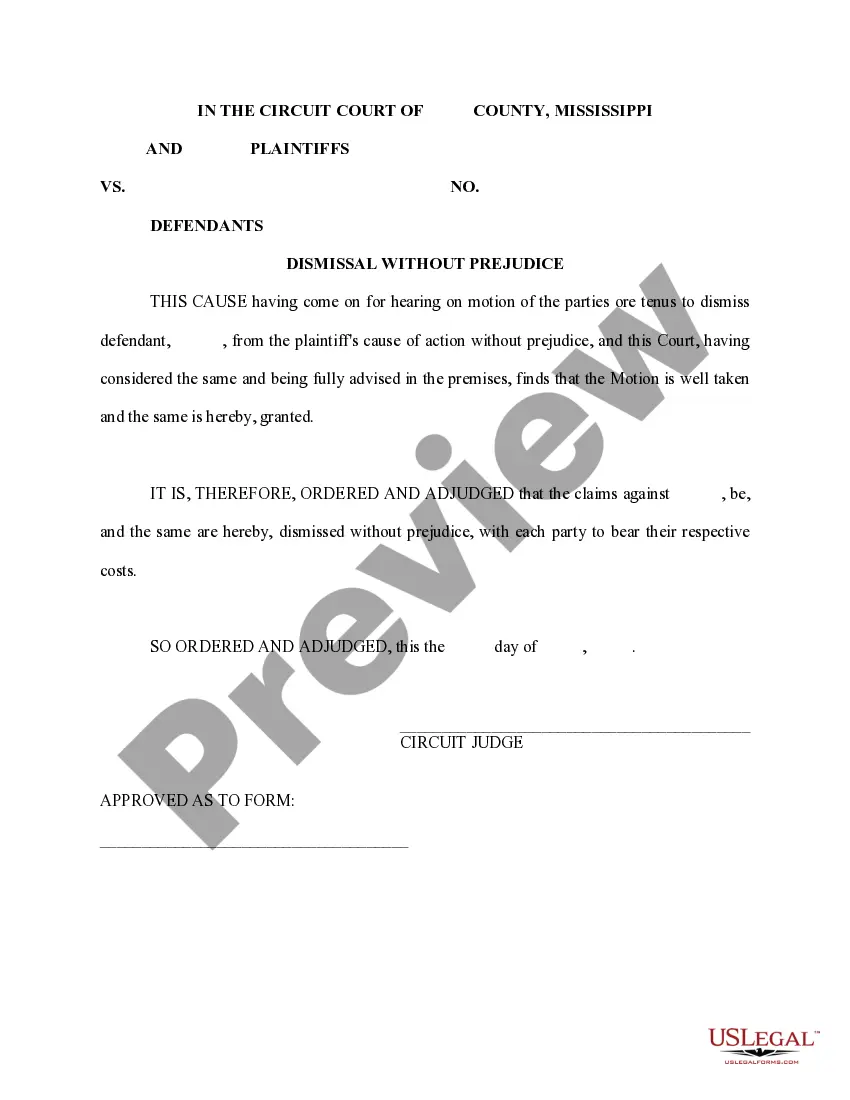
Mississippi Appellee's Brief
What is this form?
The Appellee's Brief is a crucial document in the appeal process, specifically designed for the party who is responding to the appeal. This form helps outline your arguments and counter the points made by the appellant. Unlike the appellant's brief, which initiates the appeal, the appellee's brief provides a defense against the claims made in the appeal, ensuring that your side is clearly represented in court.
What’s included in this form
- Case caption: Includes the case number and the names of the parties involved.
- Statement of the case: Summarizes the facts and decisions made in the lower court.
- Argument section: Detailed legal arguments supporting the appellee's position.
- Conclusion: A request for the court to uphold the decision made by the lower court.
- Signature line: Indicates the attorney or party submitting the brief.

When this form is needed
This form should be used when you, as the appellee, wish to formally respond to an appeal filed against a decision you were involved in. It is essential to submit the appellee's brief within the period specified by the court rules, often shortly after receiving the appellant's brief. Utilizing this form ensures that your arguments are documented and considered during the appeal process.
Who can use this document
- Individuals or parties involved in a legal case who have received an appeal.
- Attorneys representing clients in appellate court cases.
- Anyone seeking to preserve a lower court's decision against an appeal.
Instructions for completing this form
- Begin with the case caption: include the necessary identifying information.
- Summarize the key facts and decisions from the lower court in the statement of the case.
- Draft your legal arguments: clearly state why the lower court's decision should be upheld.
- Conclude your brief with a request for the court's ruling in favor of the appellee.
- Sign the form, including your name and title or your attorney's information if applicable.
Is notarization required?
This form does not typically require notarization unless specified by local law. Ensure that you verify your local rules regarding notarization to confirm this requirement.
Get your form ready online
Our built-in tools help you complete, sign, share, and store your documents in one place.
Make edits, fill in missing information, and update formatting in US Legal Forms—just like you would in MS Word.
Download a copy, print it, send it by email, or mail it via USPS—whatever works best for your next step.
Sign and collect signatures with our SignNow integration. Send to multiple recipients, set reminders, and more. Go Premium to unlock E-Sign.
If this form requires notarization, complete it online through a secure video call—no need to meet a notary in person or wait for an appointment.
We protect your documents and personal data by following strict security and privacy standards.

Make edits, fill in missing information, and update formatting in US Legal Forms—just like you would in MS Word.

Download a copy, print it, send it by email, or mail it via USPS—whatever works best for your next step.

Sign and collect signatures with our SignNow integration. Send to multiple recipients, set reminders, and more. Go Premium to unlock E-Sign.

If this form requires notarization, complete it online through a secure video call—no need to meet a notary in person or wait for an appointment.

We protect your documents and personal data by following strict security and privacy standards.
Typical mistakes to avoid
- Failing to address all points raised in the appellant's brief.
- Missing the deadline for submission of the brief.
- Omitting the case citation or necessary signatures.
Benefits of completing this form online
- Convenient access: Download and complete the form at any time.
- Editability: Easily modify the document to suit your specific case details.
- Reliability: Forms are drafted by licensed attorneys ensuring legal compliance.
Quick recap
- The Appellee's Brief is crucial for defending a lower court's decision during an appeal.
- Understanding the structure and components of the brief is essential for effective legal arguments.
- Completing the brief accurately can significantly impact the appeal's outcome.
Looking for another form?


Form popularity
FAQ
The technical legal word for the people who are part of a court case and have a right to ask the court to make a decision on a dispute. At the trial level, the parties are typically called the plaintiff or petitioner and the defendant or respondent. On appeal, parties are called the appellant and appellee.
The appellee's brief is the appellee's written response to the appellant's opening brief. The appellee's brief responds to the arguments raised in the opening brief and tries to convince the Supreme Court that the Superior Court decision was correct.
(In the trial court, the first name listed is the plaintiff, the party bringing the suit. The name following the "v" is the defendant. If the case is appealed, as in this example, the name of the petitioner (appellant) is usually listed first, and the name of the respondent (appellee) is listed second.
The party that appeals a ruling (regardless of whether it's the plaintiff or defendant) is called the appellant. The other party responding to the appeal is called the appellee. Counterclaims. If a defendant is sued by a plaintiff, the defendant can turn around and assert a claim against the plaintiff.
The party who appeals a lower court's decision in a higher court. The appellant seeks reversal or modification of the decision. By contrast, the appellee is the party against whom the appeal is filed.
The technical legal word for the people who are part of a court case and have a right to ask the court to make a decision on a dispute. At the trial level, the parties are typically called the plaintiff or petitioner and the defendant or respondent. On appeal, parties are called the appellant and appellee.
An appellant is a party (usually the primary applicant) who disagrees with a decision made by the organization and submits an appeal.For more information, see Appeals Against Multiple Decisions. A respondent is a party who responds to an appeal made by an appellant and who defends the decision that led to the appeal.
(In the trial court, the first name listed is the plaintiff, the party bringing the suit. The name following the "v" is the defendant. If the case is appealed, as in this example, the name of the petitioner (appellant) is usually listed first, and the name of the respondent (appellee) is listed second.