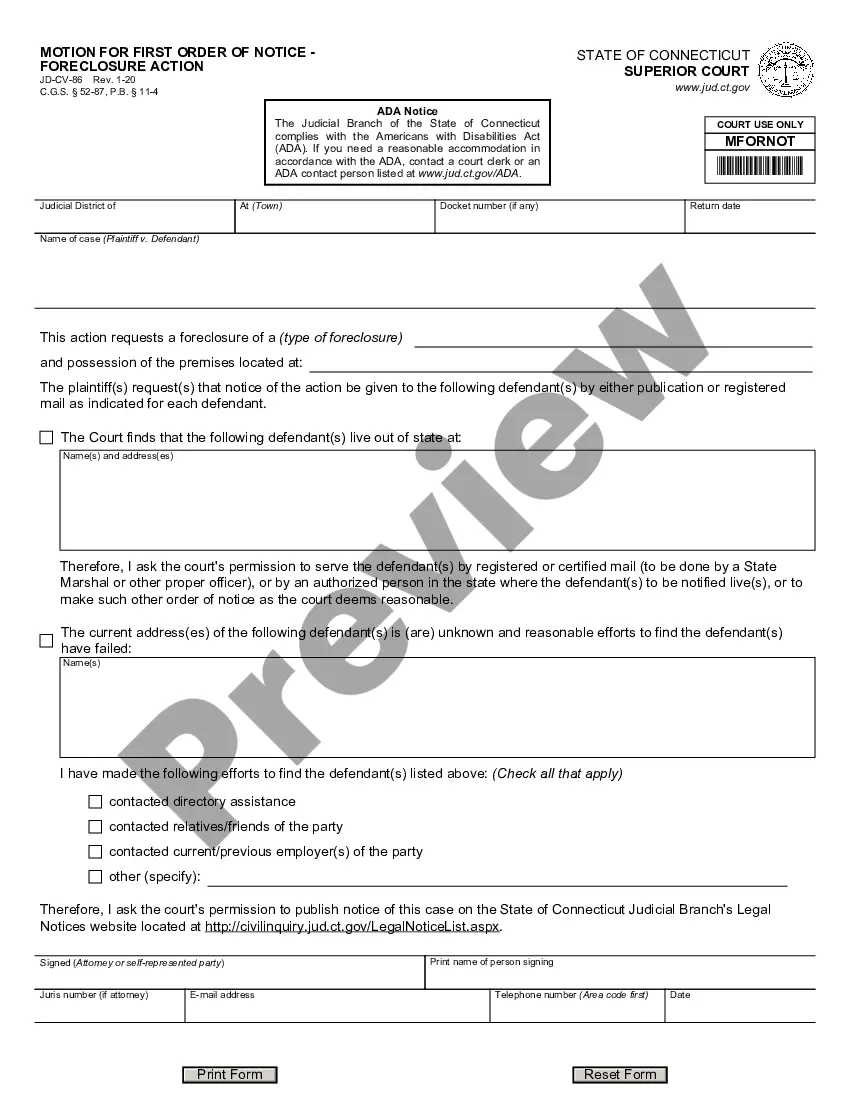
Mississippi Brief of Appellee / Claimant
What is this form?
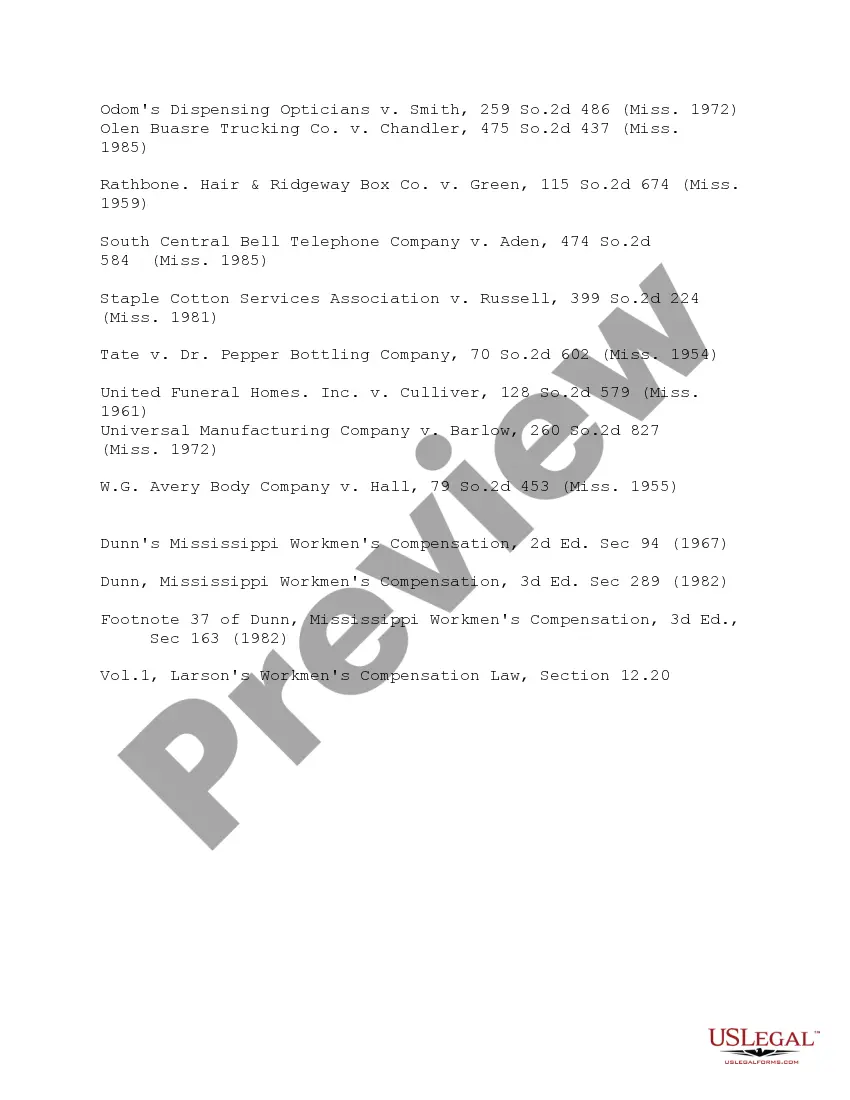
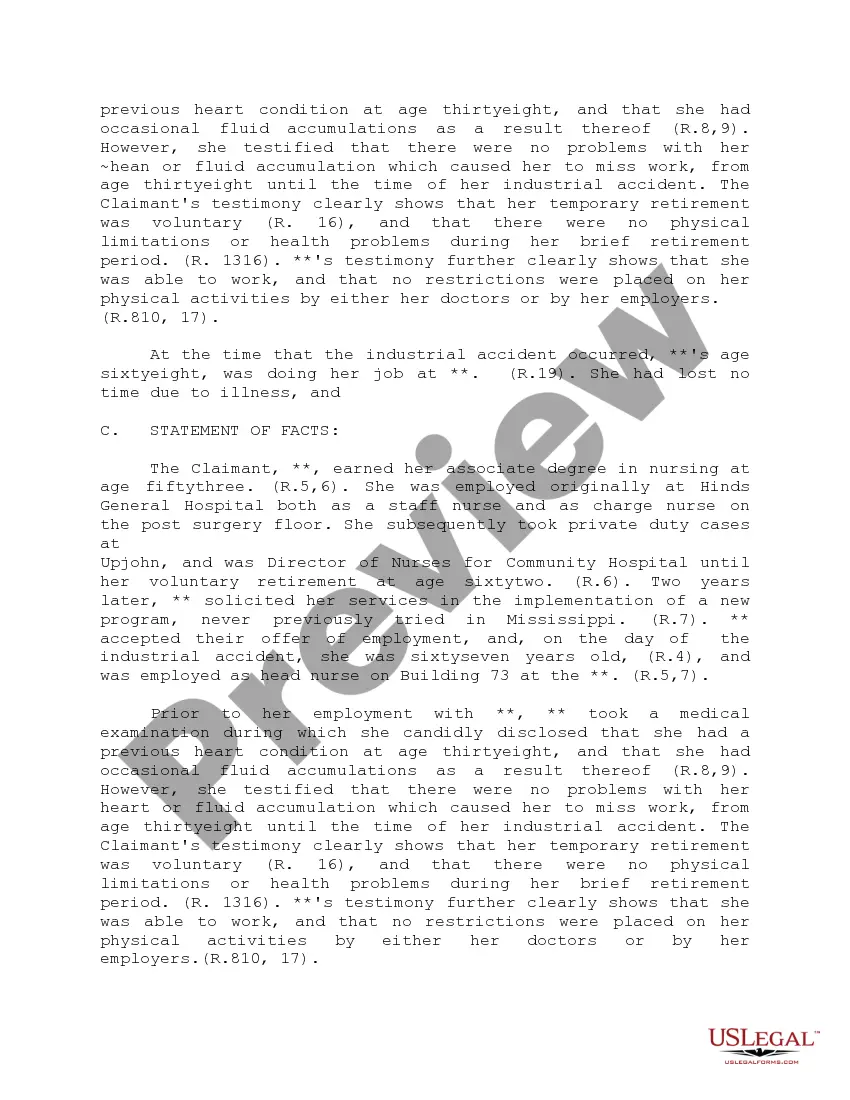
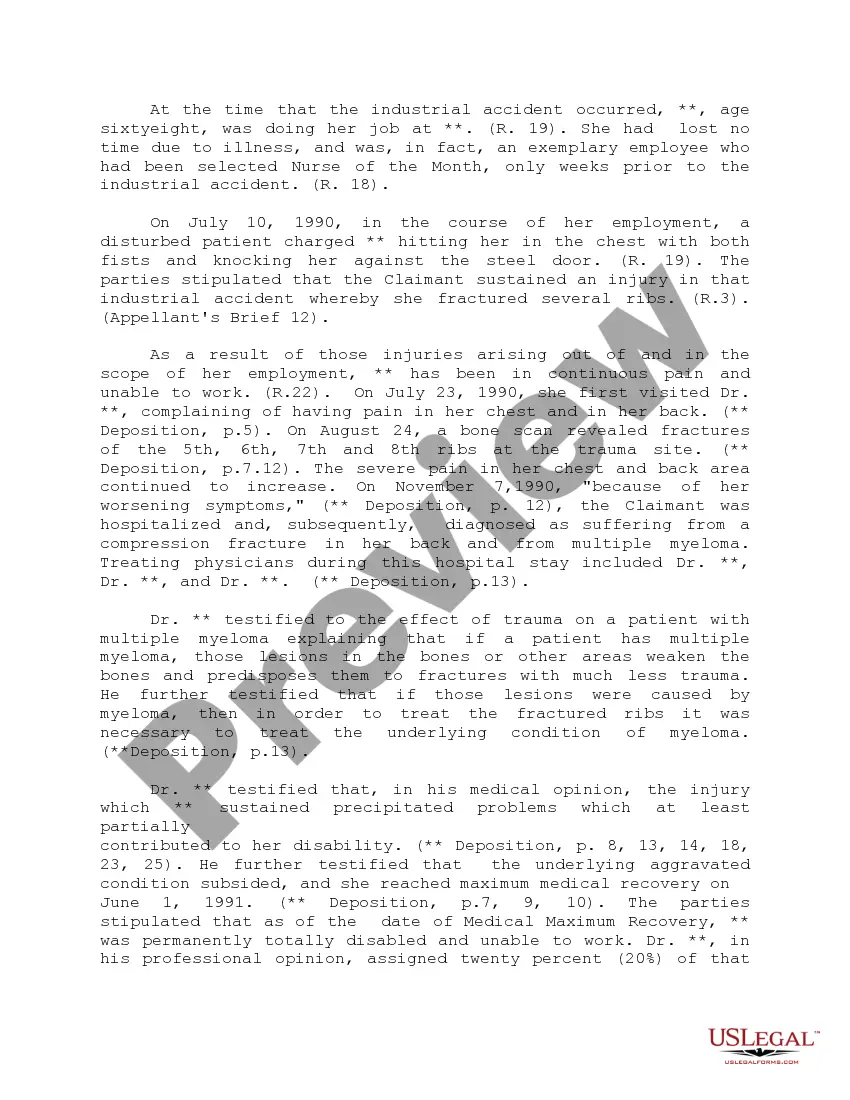
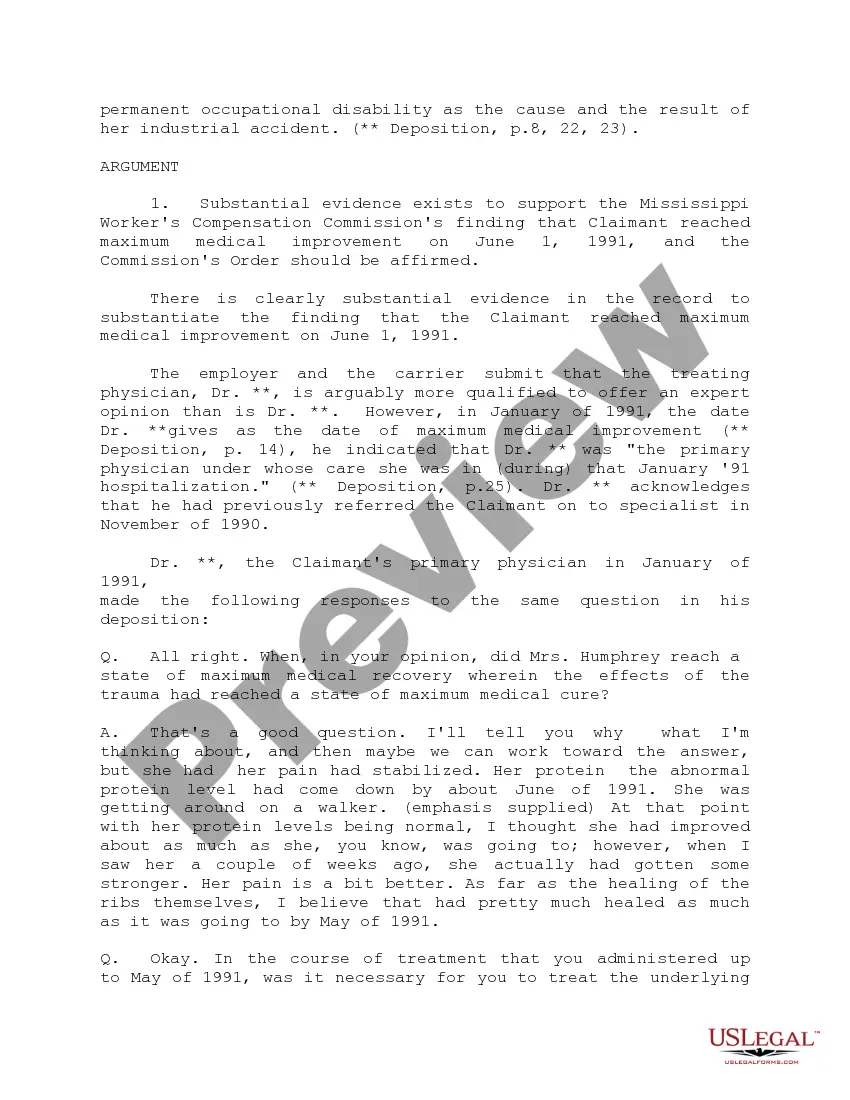
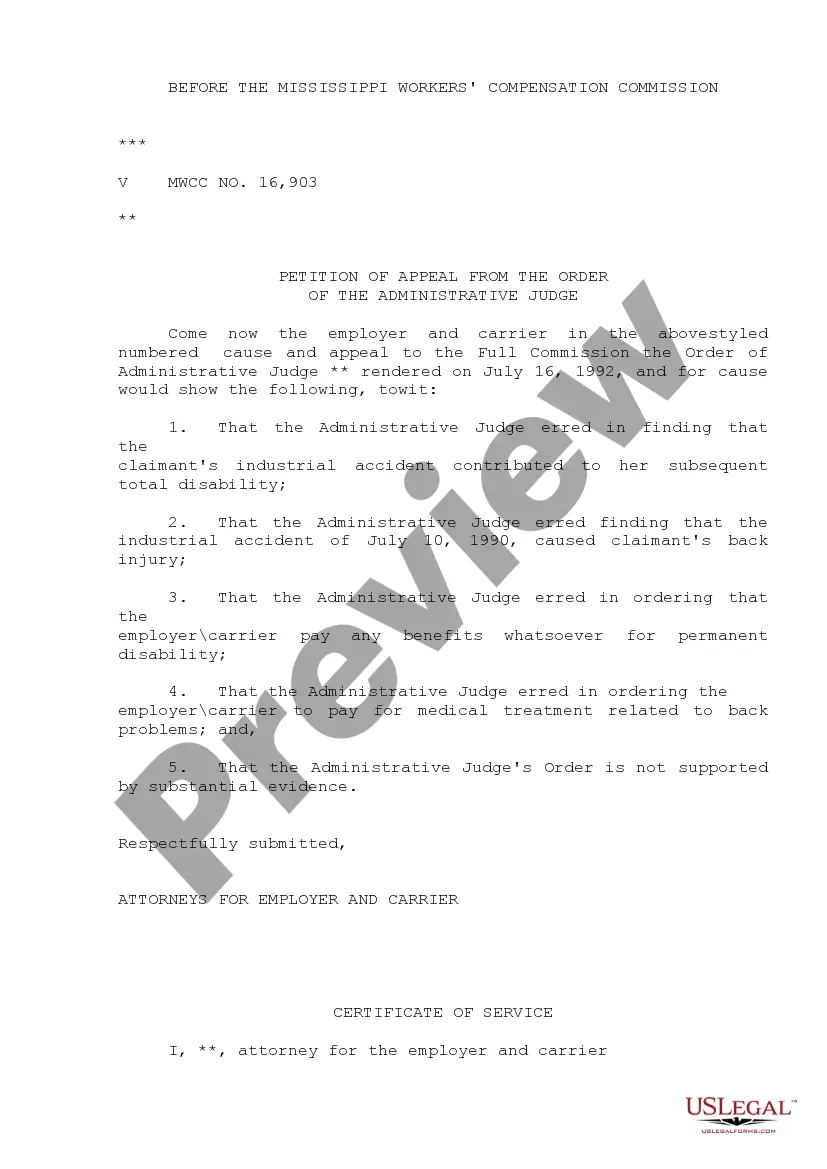
The Brief of Appellee/Claimant is a legal document used in a worker's compensation cause of action. This form is essential for individuals appealing a decision made by the Workers Compensation Commission regarding their benefits or disability claims. It serves as a structured argument to support the appellant's position, providing a clear layout for presenting facts, legal authority, and supporting evidence related to the case.
Key parts of this document
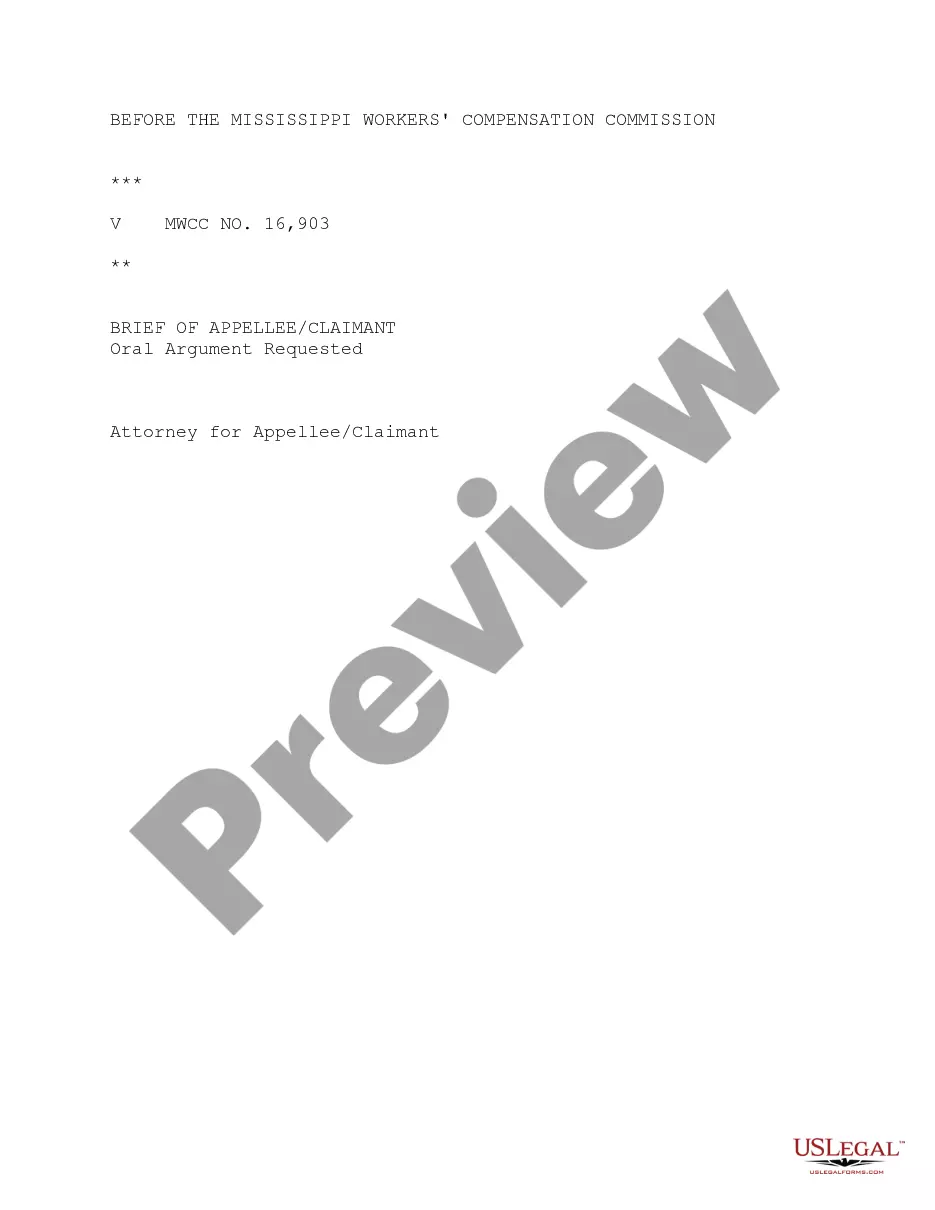
- Table of Contents: An organized overview of the document structure.
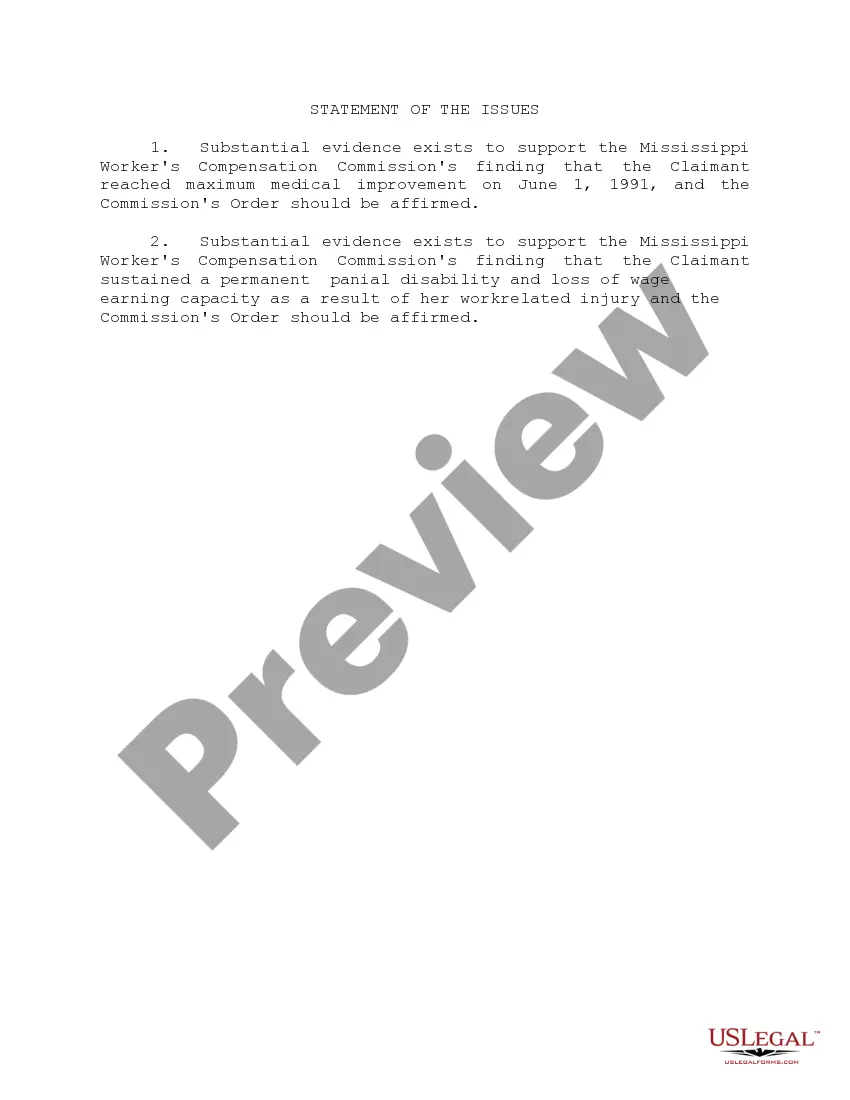
- Statement of Issues: A clear definition of contested points that the appeal addresses.
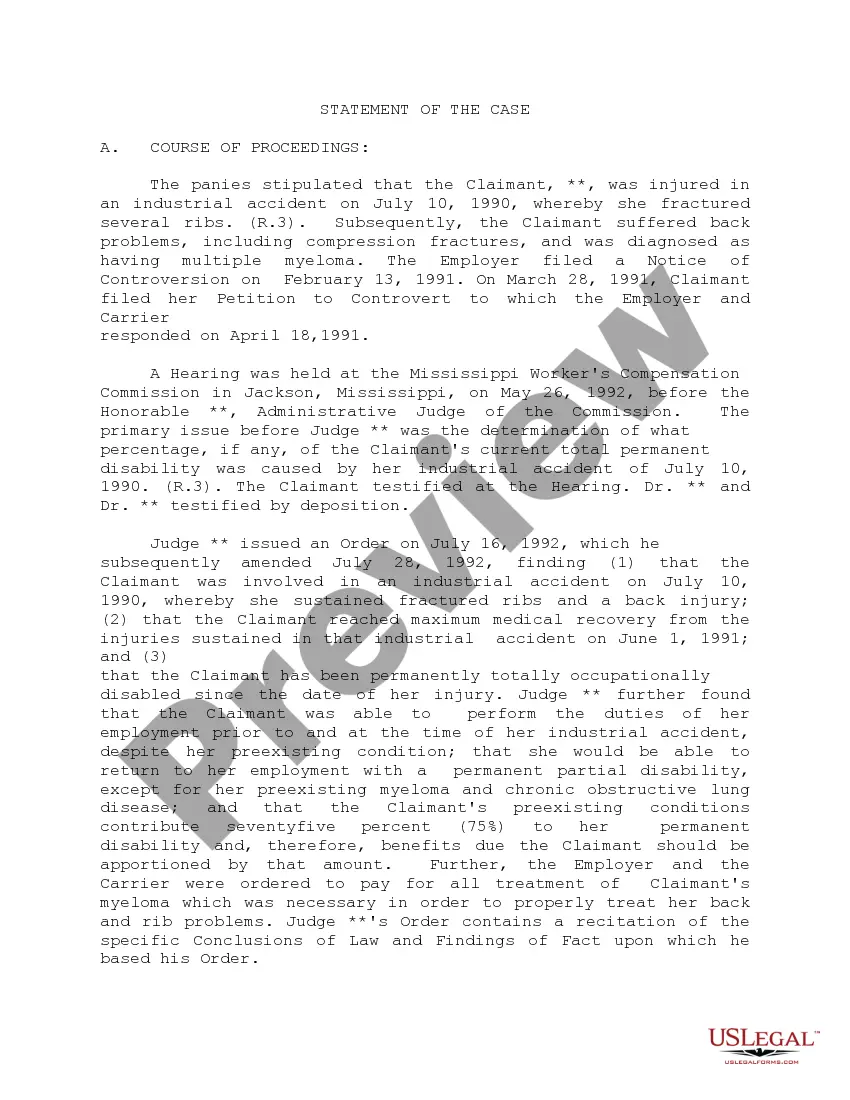
- Statement of the Case: A comprehensive summary of the proceedings leading to the appeal.
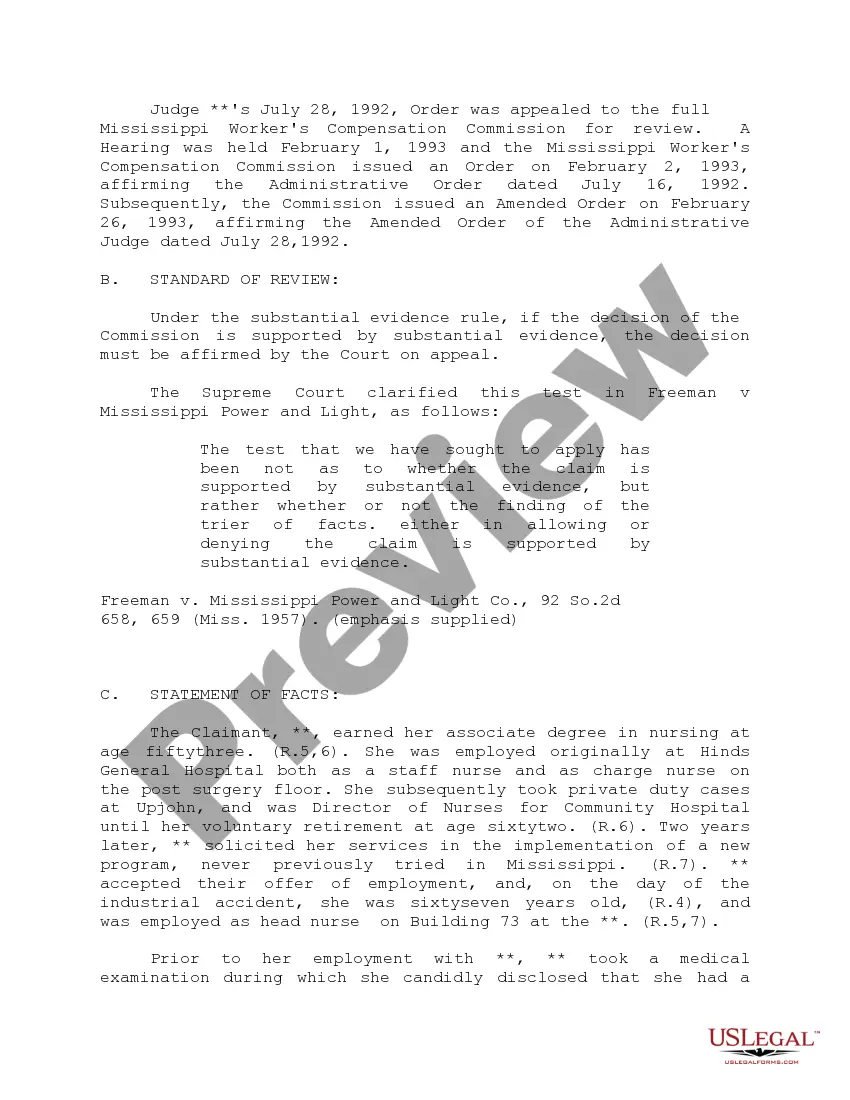
- Standard of Review: Legal principles governing how the appeal will be evaluated.
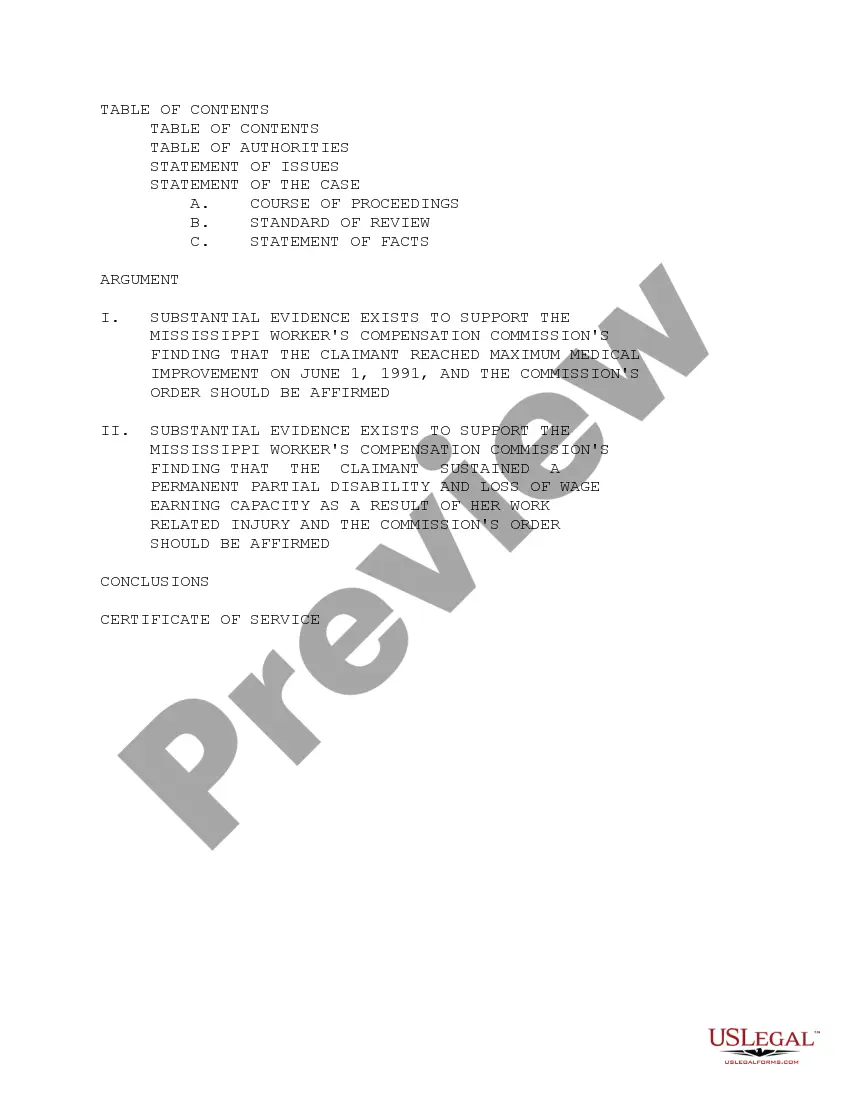
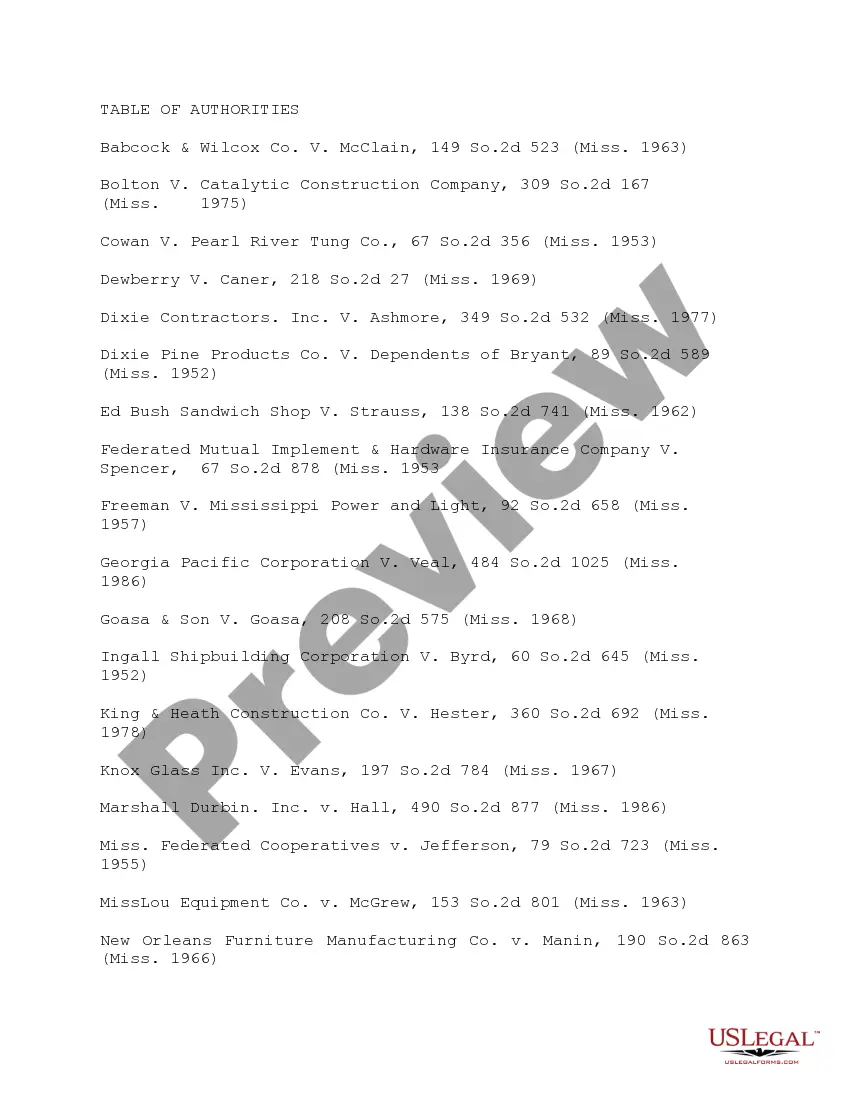
- Argument: Detailed presentation of evidence and legal reasoning supporting the appeal.
- Certificate of Service: Verification that the brief has been delivered to relevant parties.


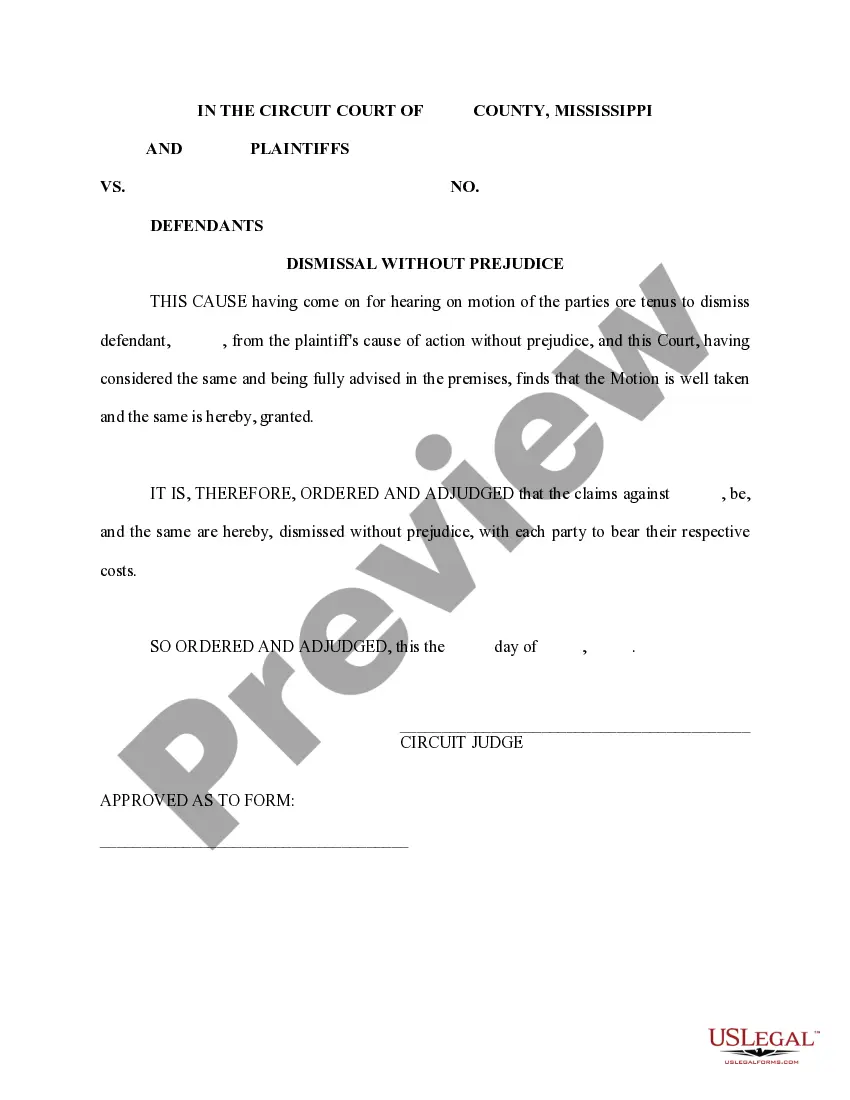
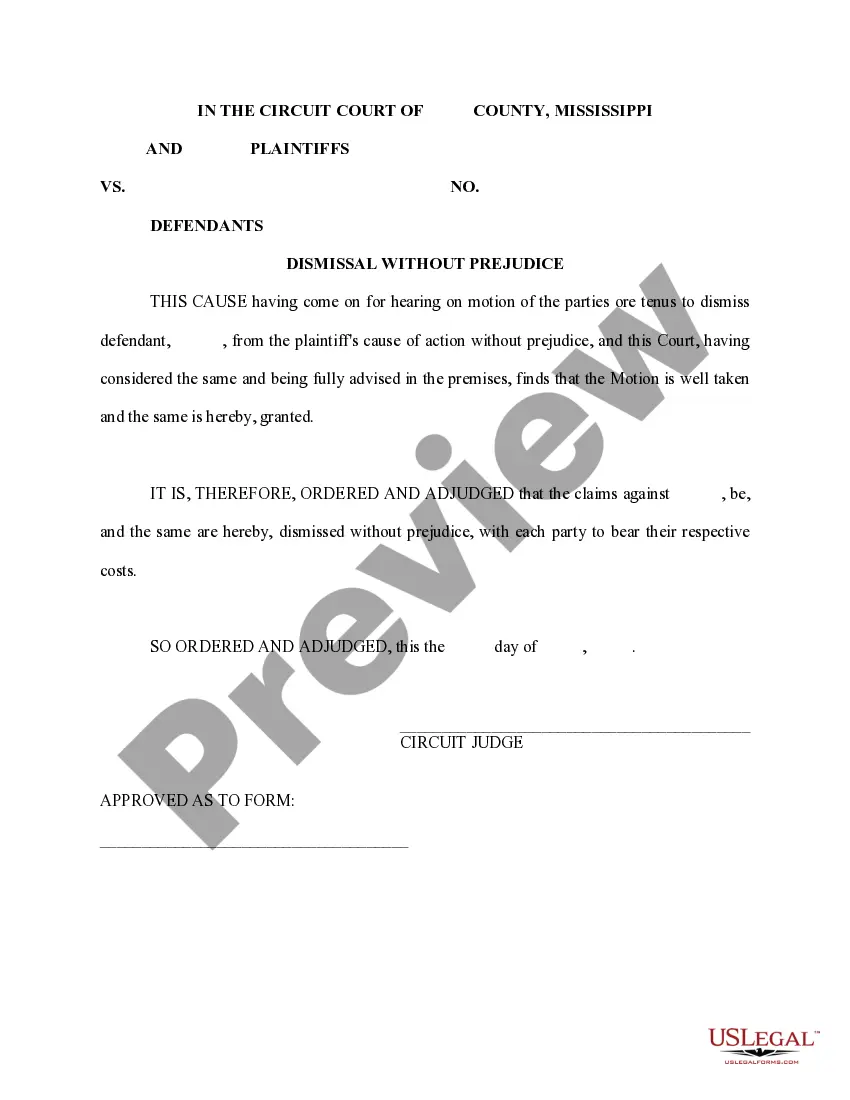
Situations where this form applies
This form should be used when an individual who has filed a worker's compensation claim receives an adverse decision from the Workers Compensation Commission and wishes to appeal that decision. It is particularly important in situations where the claimant's eligibility for benefits, the extent of their disability, or the compensation awarded is contested.
Who this form is for
- Individuals appealing a decision made by the Workers Compensation Commission regarding their worker's compensation claim.
- Claimants seeking to present their case clearly to support their appeal.
- Legal representatives assisting clients in navigating the worker's compensation appeals process.
Steps to complete this form
- Identify the parties involved in the appeal, including the claimant and the opposing party.
- Fill out the Statement of Issues section with clear, concise questions derived from the contested decision.
- Draft the Statement of the Case, summarizing the proceedings and context leading to the appeal.
- Present your Argument, including relevant evidence and legal precedent to support your claims.
- Complete the Certificate of Service by documenting how and when you provided copies to all involved parties.
Notarization requirements for this form
Notarization is not commonly needed for this form. However, certain documents or local rules may make it necessary. Our notarization service, powered by Notarize, allows you to finalize it securely online anytime, day or night.
Get your form ready online
Our built-in tools help you complete, sign, share, and store your documents in one place.
Make edits, fill in missing information, and update formatting in US Legal Forms—just like you would in MS Word.
Download a copy, print it, send it by email, or mail it via USPS—whatever works best for your next step.
Sign and collect signatures with our SignNow integration. Send to multiple recipients, set reminders, and more. Go Premium to unlock E-Sign.
If this form requires notarization, complete it online through a secure video call—no need to meet a notary in person or wait for an appointment.
We protect your documents and personal data by following strict security and privacy standards.

Make edits, fill in missing information, and update formatting in US Legal Forms—just like you would in MS Word.

Download a copy, print it, send it by email, or mail it via USPS—whatever works best for your next step.

Sign and collect signatures with our SignNow integration. Send to multiple recipients, set reminders, and more. Go Premium to unlock E-Sign.

If this form requires notarization, complete it online through a secure video call—no need to meet a notary in person or wait for an appointment.

We protect your documents and personal data by following strict security and privacy standards.
Typical mistakes to avoid
- Failing to clearly state the issues being appealed, which may lead to dismissal of the case.
- Omitting key evidence or legal arguments that support the appellant's position.
- Not adhering to the required format or specific instructions provided by the Workers Compensation Commission.
Why complete this form online
- Convenience of drafting and editing the document without the need for physical paperwork.
- Access to legally reviewed templates that ensure compliance with procedural standards.
- Secure storage and retrieval options for easy management of legal documents.
Quick recap
- The Brief of Appellee/Claimant is essential for appealing a worker's compensation decision.
- Clear organization and thoroughness in completing the form are crucial for a successful appeal.
- Review state-specific requirements to ensure compliance with local regulations.
Looking for another form?
Form popularity
FAQ
The technical legal word for the people who are part of a court case and have a right to ask the court to make a decision on a dispute. At the trial level, the parties are typically called the plaintiff or petitioner and the defendant or respondent. On appeal, parties are called the appellant and appellee.
The appellee's brief is the appellee's written response to the appellant's opening brief. The appellee's brief responds to the arguments raised in the opening brief and tries to convince the Supreme Court that the Superior Court decision was correct.
(In the trial court, the first name listed is the plaintiff, the party bringing the suit. The name following the "v" is the defendant. If the case is appealed, as in this example, the name of the petitioner (appellant) is usually listed first, and the name of the respondent (appellee) is listed second.
The party that appeals a ruling (regardless of whether it's the plaintiff or defendant) is called the appellant. The other party responding to the appeal is called the appellee. Counterclaims. If a defendant is sued by a plaintiff, the defendant can turn around and assert a claim against the plaintiff.
The party who appeals a lower court's decision in a higher court. The appellant seeks reversal or modification of the decision. By contrast, the appellee is the party against whom the appeal is filed.
The technical legal word for the people who are part of a court case and have a right to ask the court to make a decision on a dispute. At the trial level, the parties are typically called the plaintiff or petitioner and the defendant or respondent. On appeal, parties are called the appellant and appellee.
An appellant is a party (usually the primary applicant) who disagrees with a decision made by the organization and submits an appeal.For more information, see Appeals Against Multiple Decisions. A respondent is a party who responds to an appeal made by an appellant and who defends the decision that led to the appeal.
(In the trial court, the first name listed is the plaintiff, the party bringing the suit. The name following the "v" is the defendant. If the case is appealed, as in this example, the name of the petitioner (appellant) is usually listed first, and the name of the respondent (appellee) is listed second.