Rhode Island Mutual Wills or Last Will and Testaments for Man and Woman living together, not Married with Minor Children
What is this form?
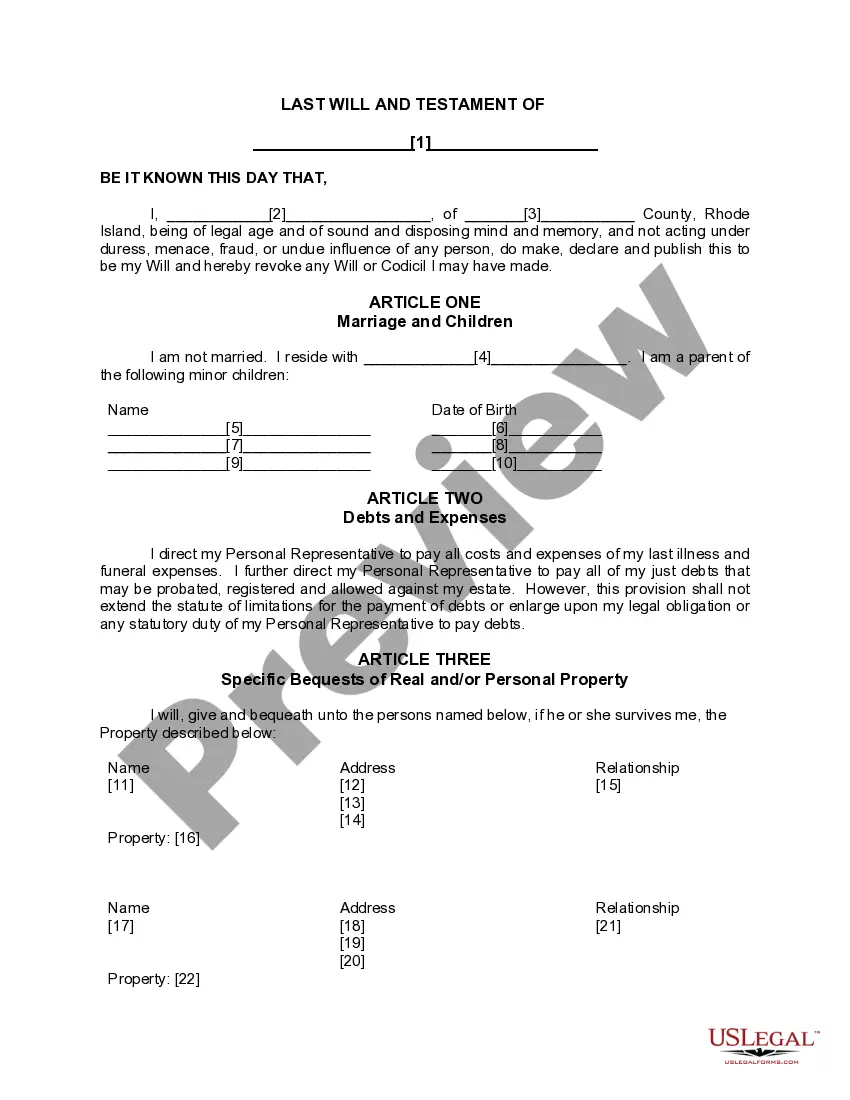
This form package includes mutual wills for a man and woman living together who are not married but have minor children. The purpose of these wills is to ensure that each partner can designate the other as a beneficiary, along with identifying whom their property will go to in the event of their death. This structure is particularly important for non-married couples with shared assets and children, as it provides a legal mechanism to define inheritance and guardianship, similar to traditional last wills and testaments.
What’s included in this form
- Mutual Wills: These wills are designed to support non-married couples and provide for each other's needs.
- Minor Children: Special considerations are made for minor children, including naming guardians and specifying distributions.
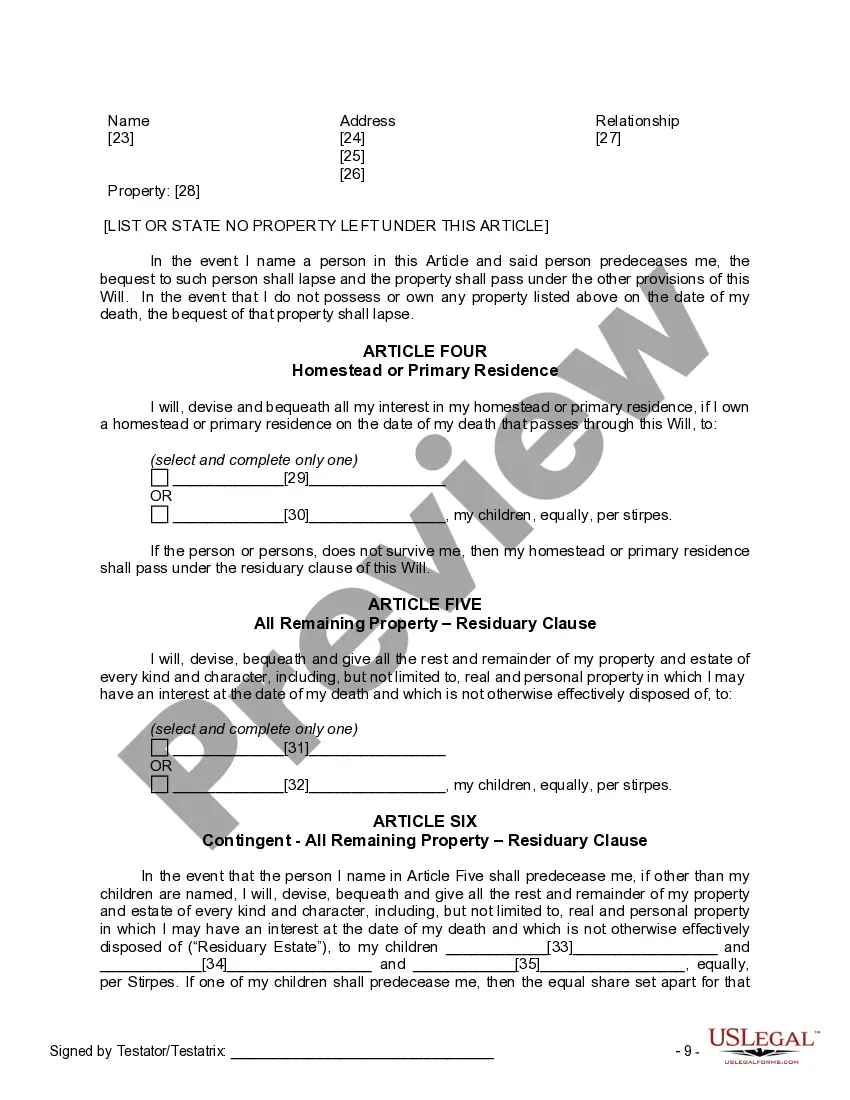
- Property Designations: Detailed instructions on how to allocate specific properties and assets are included.
- Signature Requirements: The wills must be signed in front of witnesses, and a self-proving affidavit may be included for ease of probate.
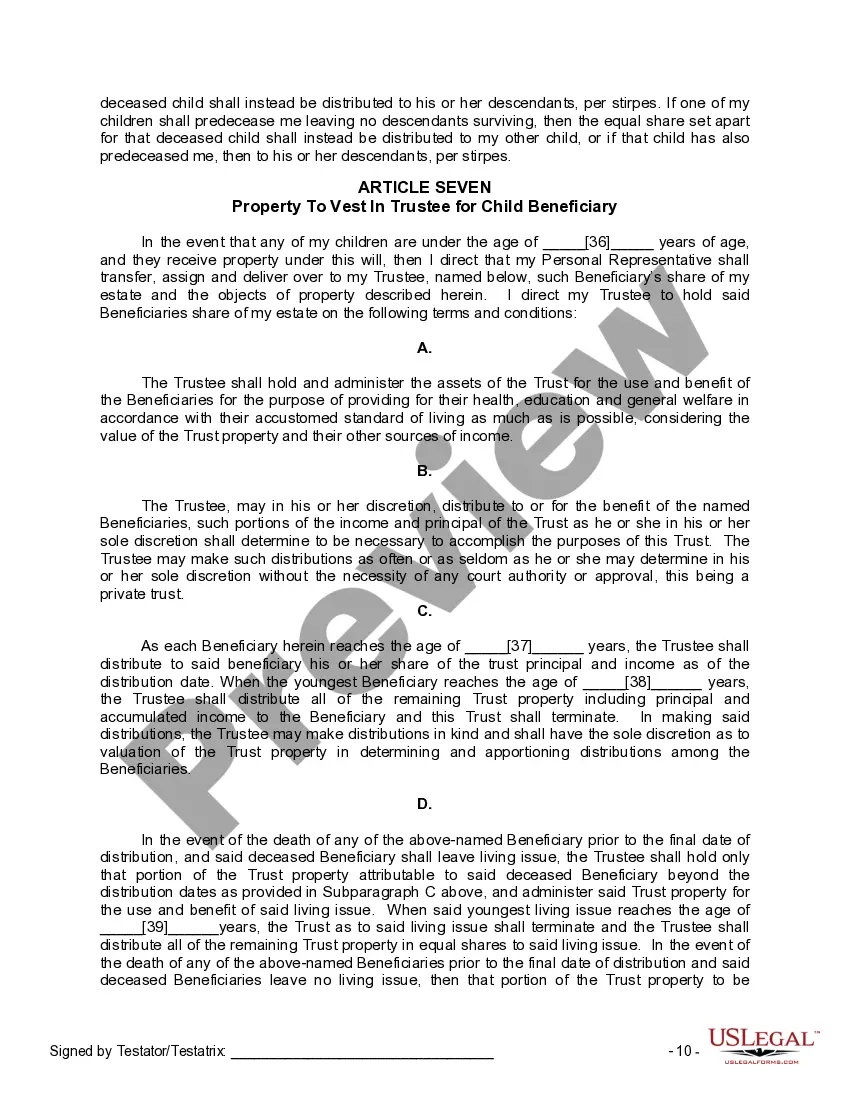
- Trustee and Guardian Designation: Opportunities to appoint guardians for minor children and trustees for managing assets are provided.



Situations where this form applies
This form is appropriate when couples who are cohabitating but not married want to outline their intentions regarding property, guardianship, and other vital decisions in the event of death. It is also suitable when both partners share financial responsibilities and want to ensure that their assets are managed and distributed according to their wishes while providing for their childrenâs future welfare.
Intended users of this form
This form is intended for:
- Cohabitating couples who are not legally married.
- Couples with minor children wanting defined guardianship and asset distribution.
- Individuals seeking to ensure their partner is supported after their death.
- Those looking for a straightforward method to comply with estate planning needs.
Instructions for completing this form
To complete this form:
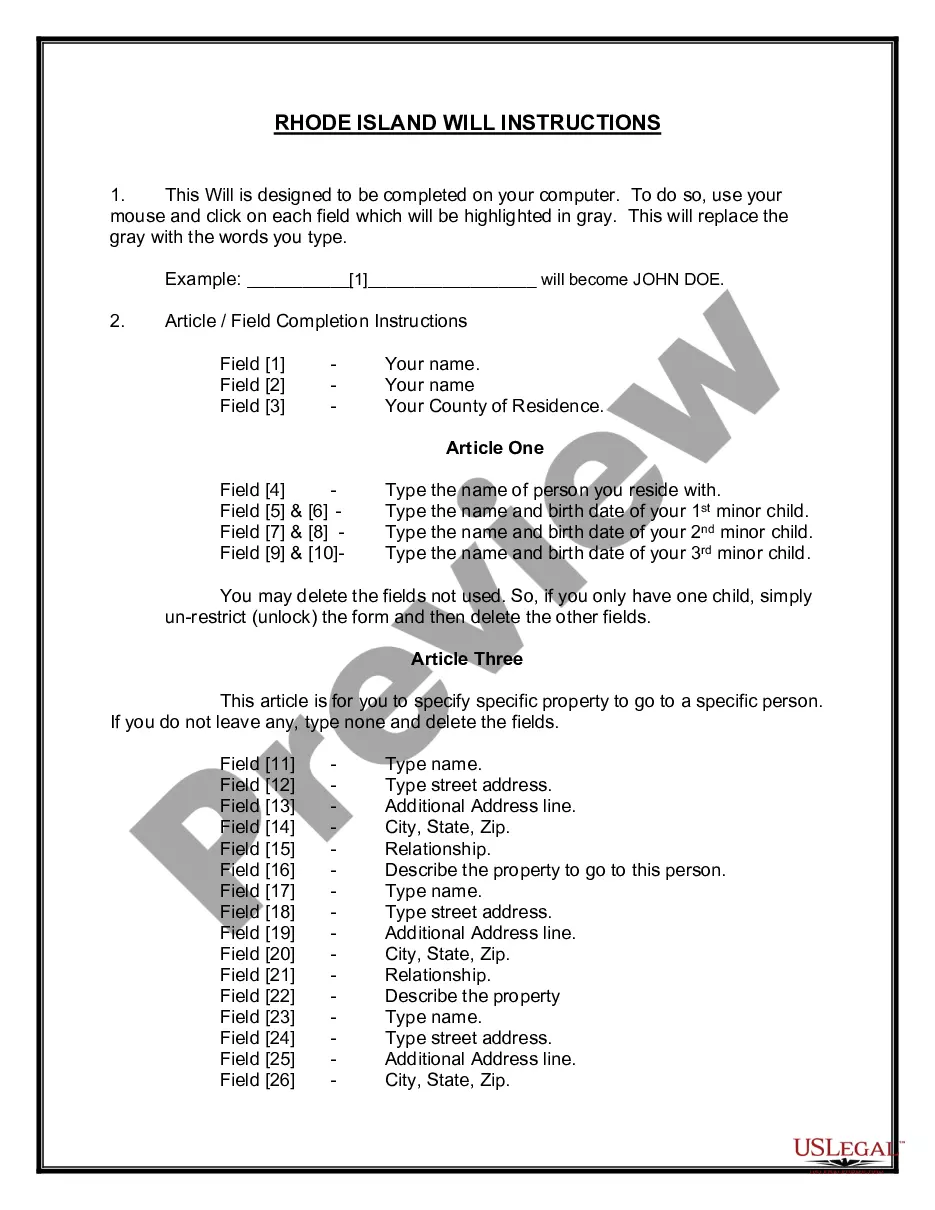
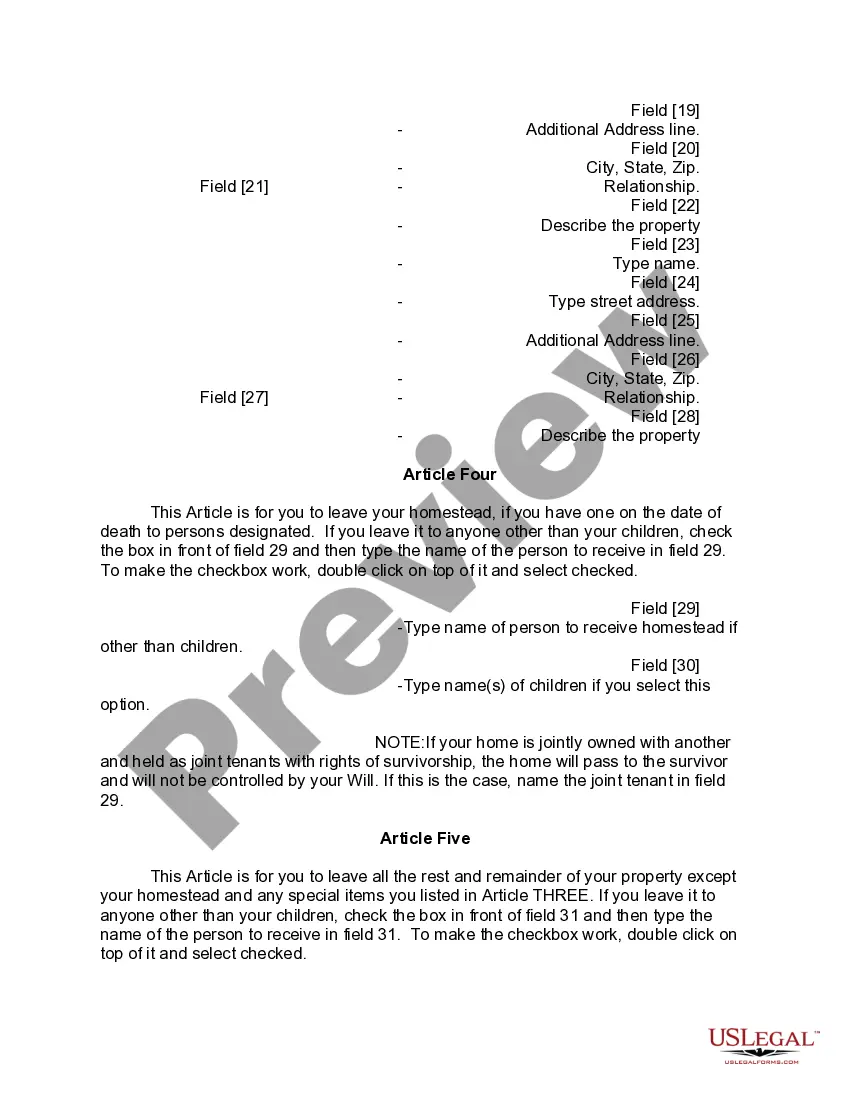
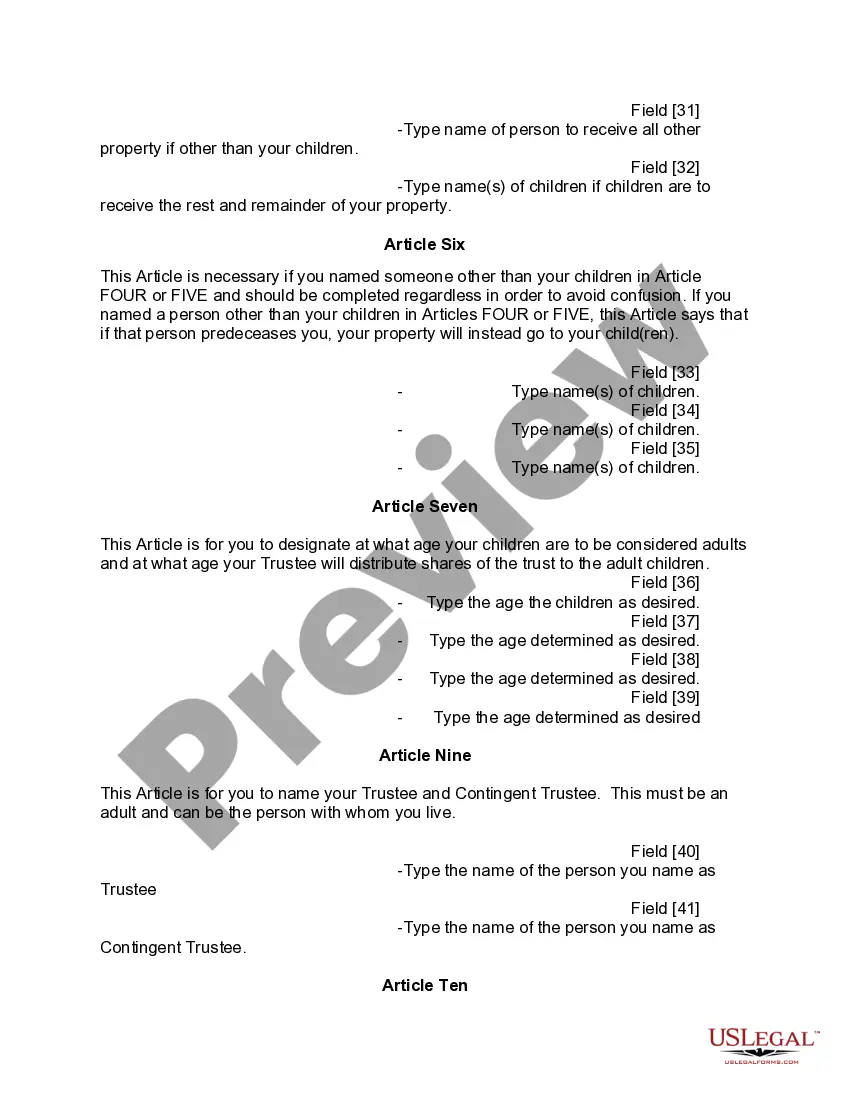
- Fill in personal details, including names and dates of birth for yourself, your partner, and any minor children.
- Designate specific properties and assets to be inherited by your partner or other individuals.
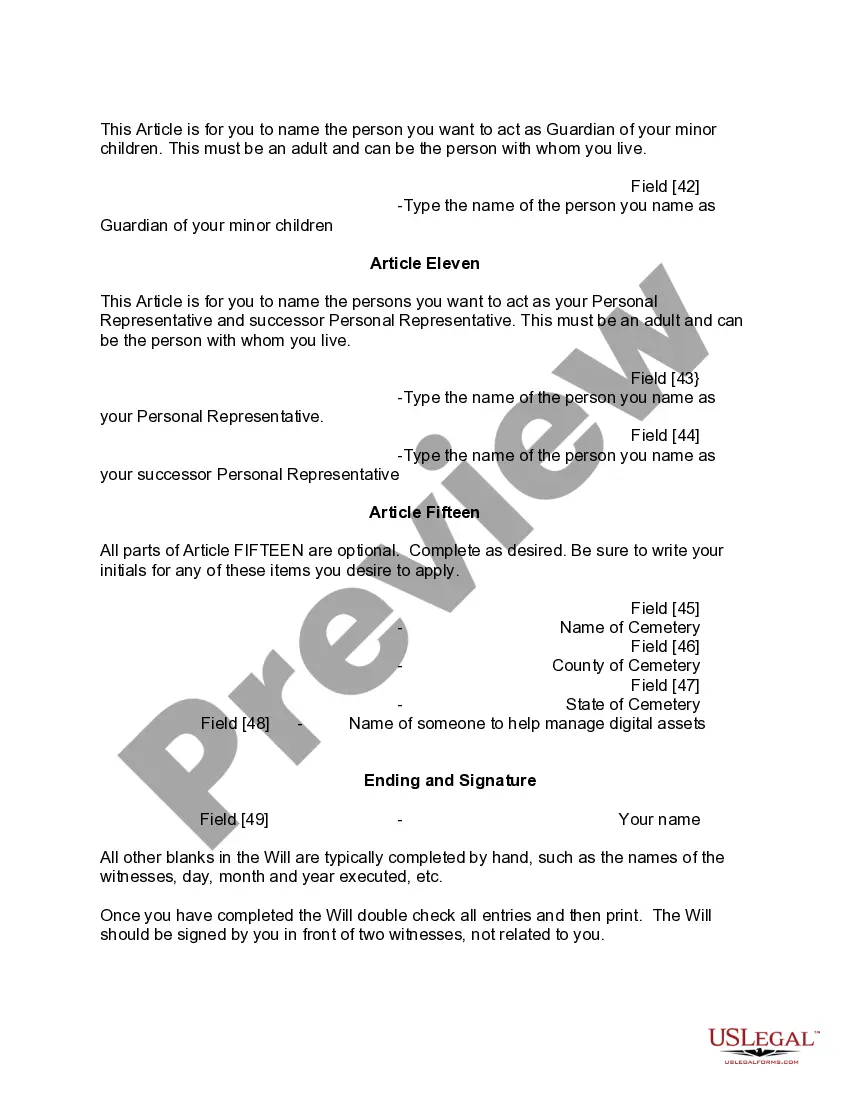
- Identify a guardian for your minor children and name a trustee if necessary.
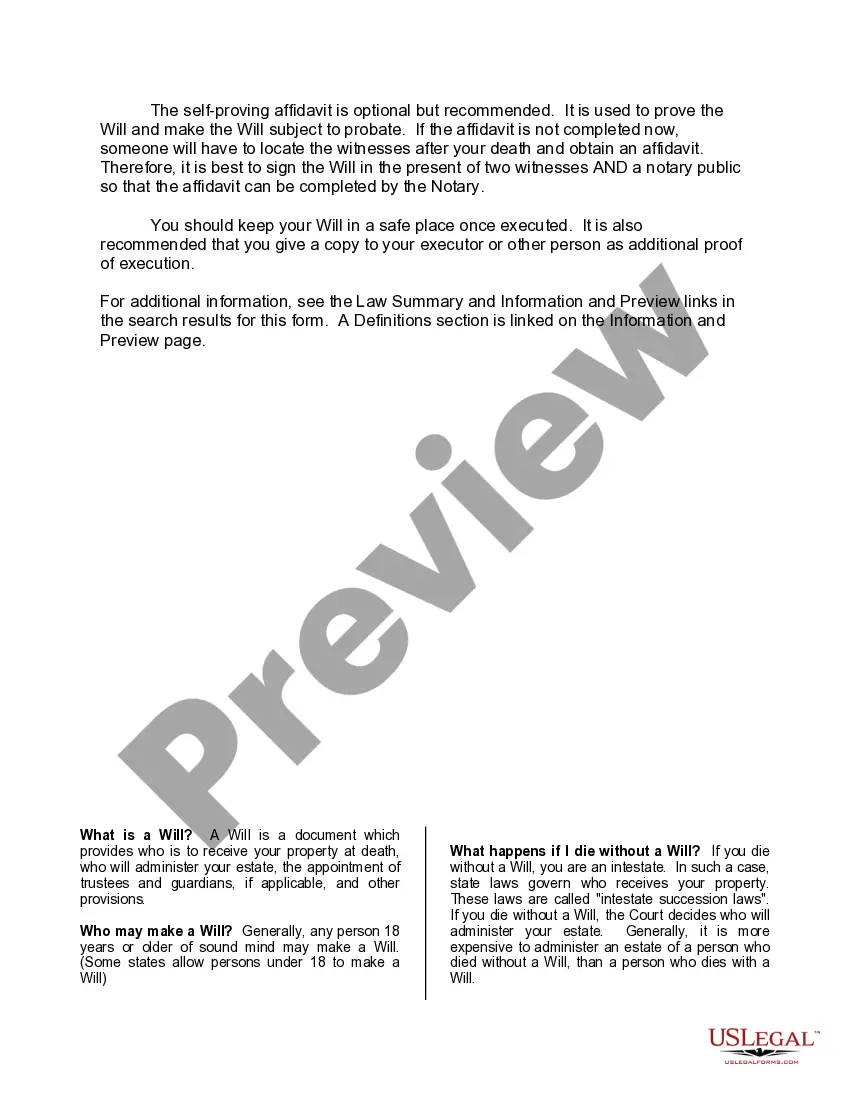
- Ensure that the document is signed in the presence of two witnesses and a notary public if utilizing a self-proving affidavit.
- Review the completed will for accuracy before printing it for signatures.
Does this document require notarization?
Yes, this form must be notarized to be legally valid if you choose to include a self-proving affidavit. This affidavit helps streamline the probate process by confirming the authenticity of the signatures and the sound mind of the testator without needing witnesses to testify later. US Legal Forms provides integrated online notarization services, allowing for secure video calls with a notary 24/7.
Get your form ready online
Our built-in tools help you complete, sign, share, and store your documents in one place.
Make edits, fill in missing information, and update formatting in US Legal Forms—just like you would in MS Word.
Download a copy, print it, send it by email, or mail it via USPS—whatever works best for your next step.
Sign and collect signatures with our SignNow integration. Send to multiple recipients, set reminders, and more. Go Premium to unlock E-Sign.
If this form requires notarization, complete it online through a secure video call—no need to meet a notary in person or wait for an appointment.
We protect your documents and personal data by following strict security and privacy standards.

Make edits, fill in missing information, and update formatting in US Legal Forms—just like you would in MS Word.

Download a copy, print it, send it by email, or mail it via USPS—whatever works best for your next step.

Sign and collect signatures with our SignNow integration. Send to multiple recipients, set reminders, and more. Go Premium to unlock E-Sign.

If this form requires notarization, complete it online through a secure video call—no need to meet a notary in person or wait for an appointment.

We protect your documents and personal data by following strict security and privacy standards.
Typical mistakes to avoid
- Forgetting to include specific property distributions can lead to misunderstandings.
- Neglecting to sign the will in front of required witnesses will invalidate it.
- Failing to update the wills after significant life changes (e.g., birth of a child, change of address).
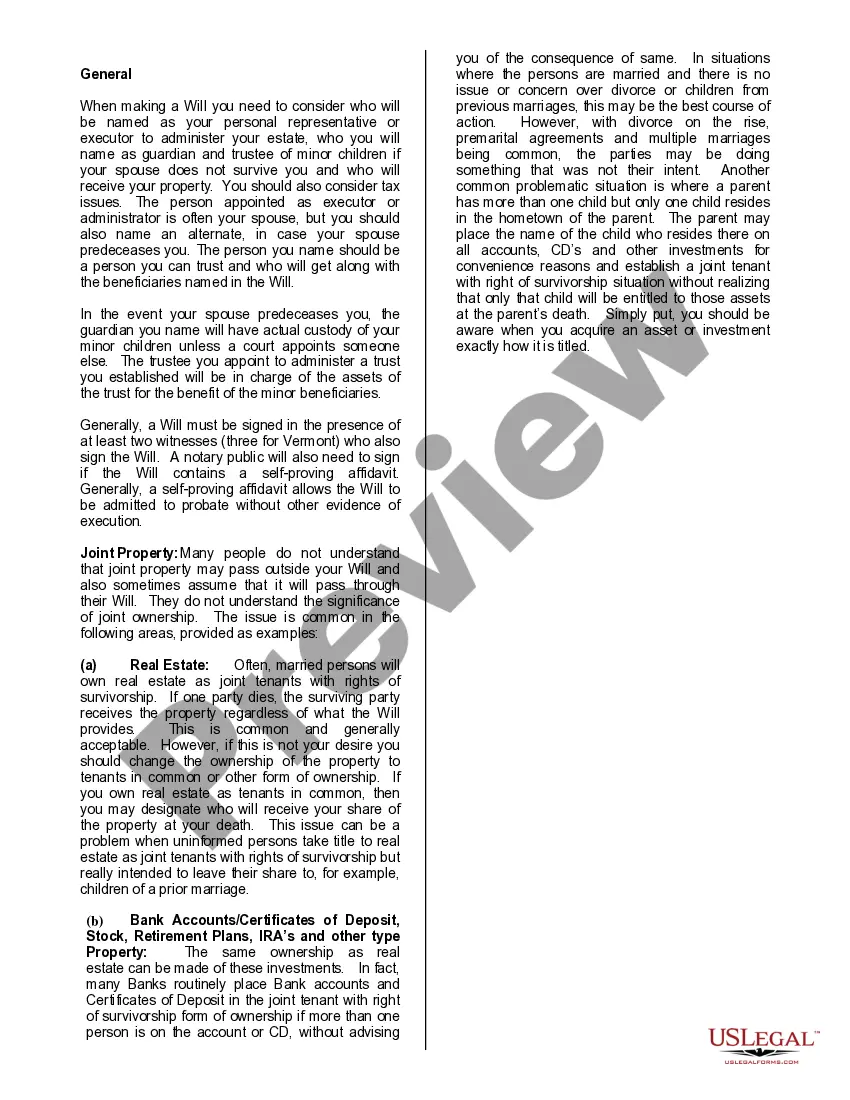
- Not considering the implications of joint ownership of property when drafting the will.
Benefits of using this form online
- Easy access to professionally drafted legal documents tailored for non-married couples.
- Flexibility in editing the document to suit personal circumstances before finalization.
- Security in knowing that the wills are created in compliance with Rhode Island state laws.
- Convenience of completing the forms at your own pace online without the need for in-person consultations.
Legal use & context
- The Mutual Wills are legally binding documents that dictate how property will be distributed after death.
- They provide clear guidance for guardianship of minor children, minimizing potential disputes.
- Ensures that the wishes of both parties are respected and upheld in accordance with state law.
Quick recap
- This form is essential for unmarried couples with children who wish to secure their family's future.
- Completing this form helps to clarify property distribution and guardianship, reducing conflicts among family members.
- It requires notarization for validity, reinforcing the importance of following legal procedures.
Looking for another form?
Form popularity
FAQ
Age: The testator must be at least 18 years old. Capacity: The testator must be of sane mind. Signature: The will must be signed by the testator or by someone else in the testator's name in his presence, by his express direction.
Include personal identifying information. Include a statement about your age and mental status. Designate an executor. Decide who will take care of your children. Choose your beneficiaries. List your funeral details. Sign and date your Last Will and Testament.
You don't need a lawyer to create a will if you have a straightforward financial situation.You can use online templates or software to write a will yourself. In order to legalize the will, it needs to be signed and dated by you and at least two other witnesses.
For example, California requires that all sections of the will necessary to make the will valid must be written entirely by hand and that the person writing the will must sign it. If these state rules aren't followed, the holographic will won't be valid.
Contrary to popular belief, you do not need to have an attorney draft a will for you. Anyone can write this document on their own, and as long as it meets all of the legal requirements of the state, courts will recognize one you wrote yourself.
Create the initial document. Start by titling the document Last Will and Testament" and including your full legal name and address. Designate an executor. Appoint a guardian. Name the beneficiaries. Designate the assets. Ask witnesses to sign your will. Store your will in a safe place.
Create the initial document. Start by titling the document Last Will and Testament" and including your full legal name and address. Designate an executor. Appoint a guardian. Name the beneficiaries. Designate the assets. Ask witnesses to sign your will. Store your will in a safe place.
Contrary to popular belief, you do not need to have an attorney draft a will for you. Anyone can write this document on their own, and as long as it meets all of the legal requirements of the state, courts will recognize one you wrote yourself.
Find an online template or service. Make a list of your assets. Be specific about who gets what. If you have minor children, choose a guardian. Give instructions for your pet. Choose an executor. Name a 'residuary beneficiary' List your funeral preferences.