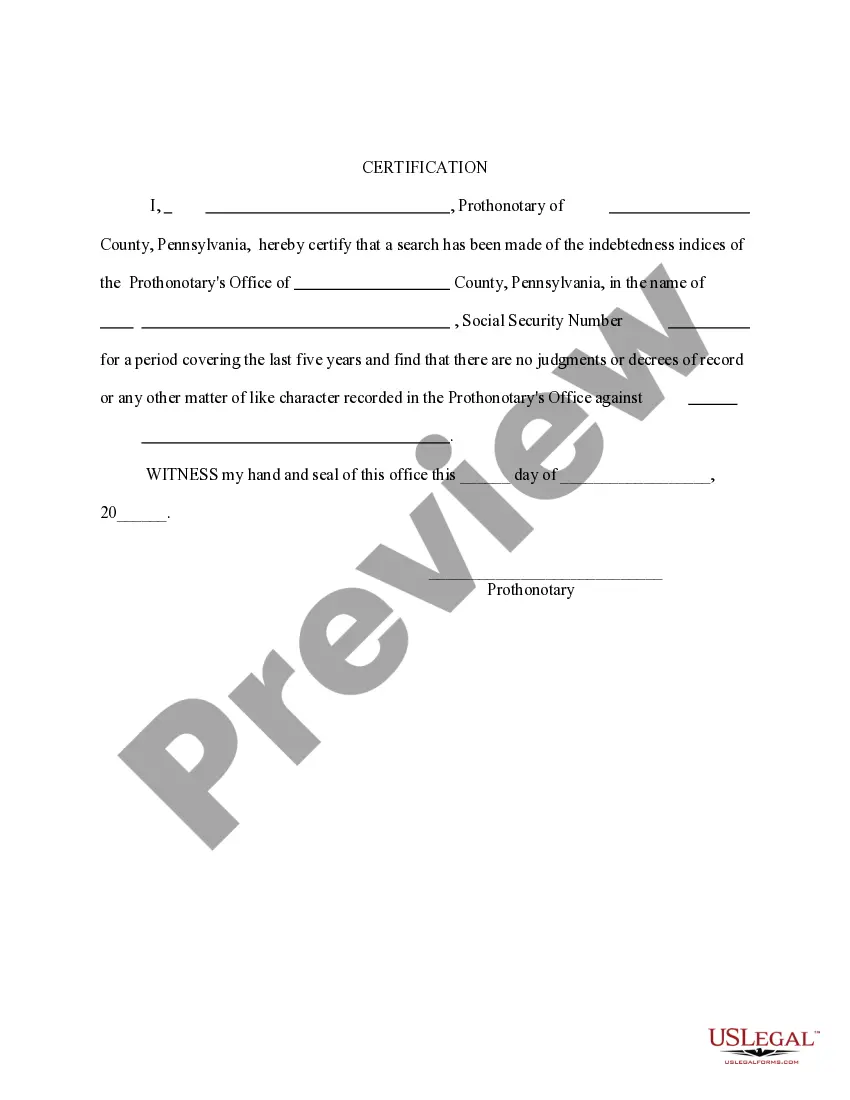
Pennsylvania Prothonotary Certification - Family Name Change
Overview of this form
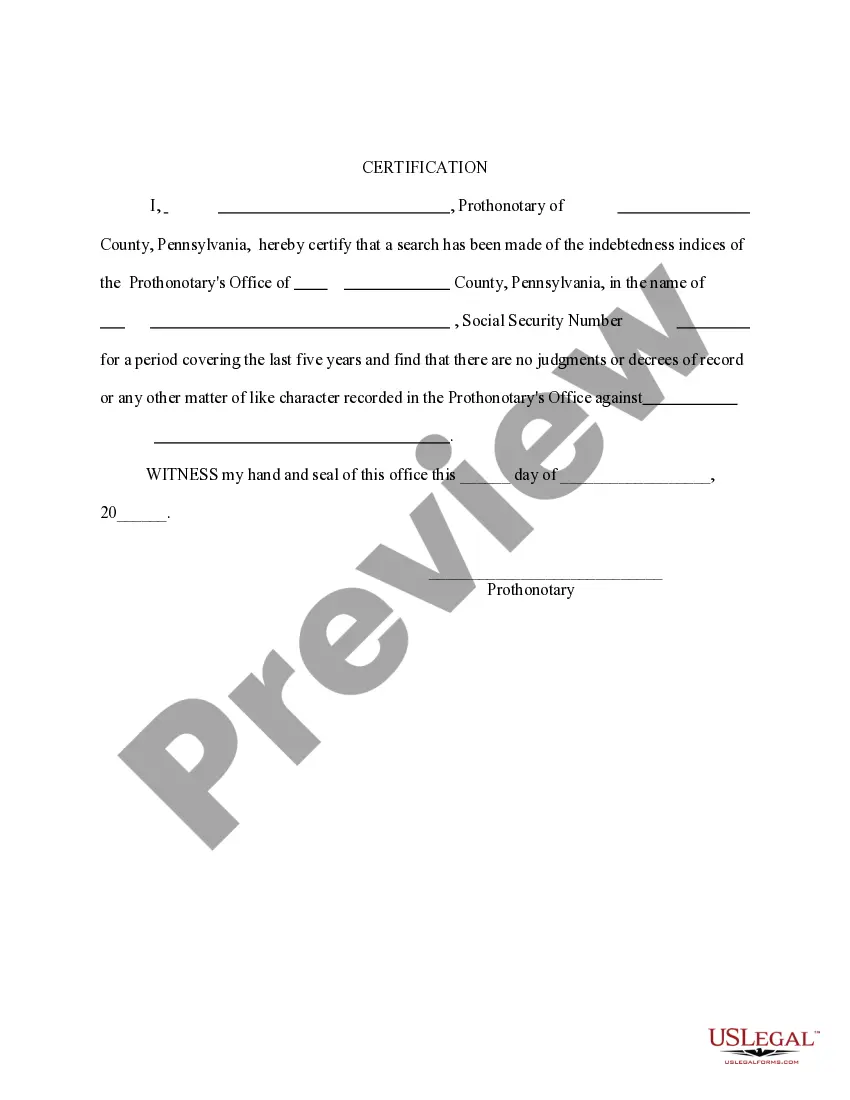
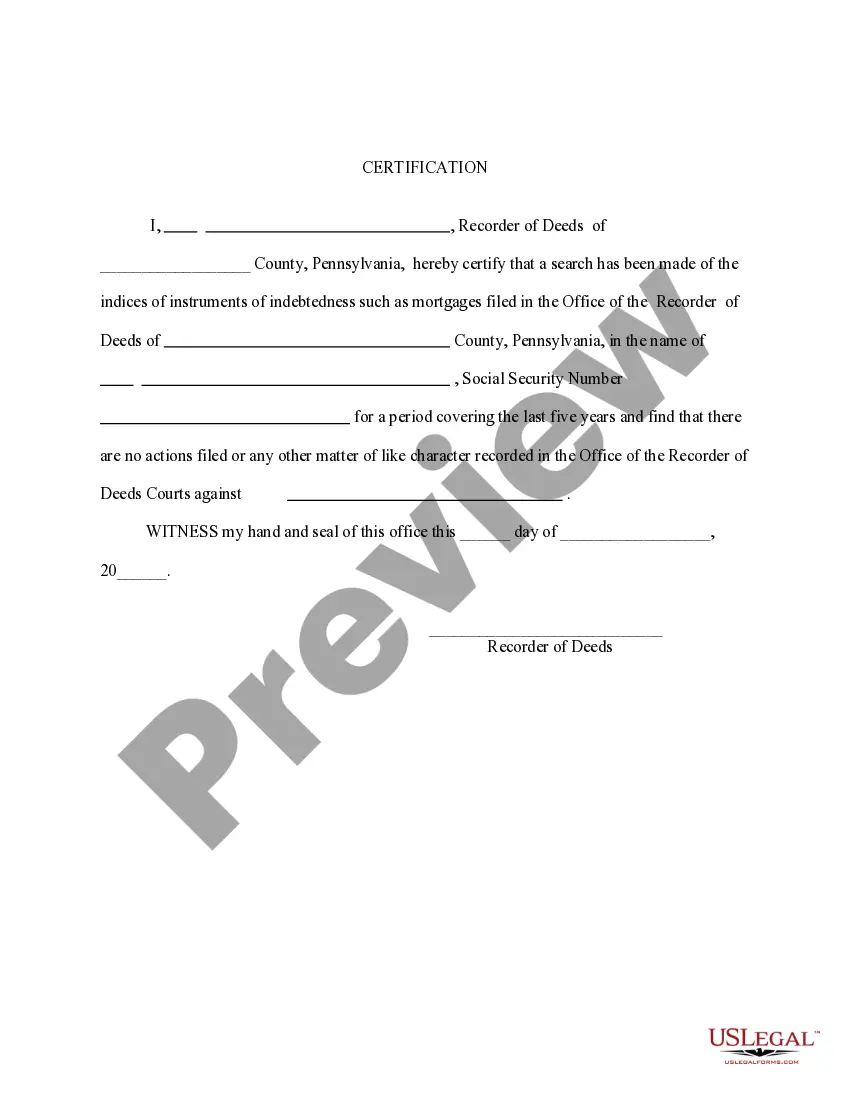
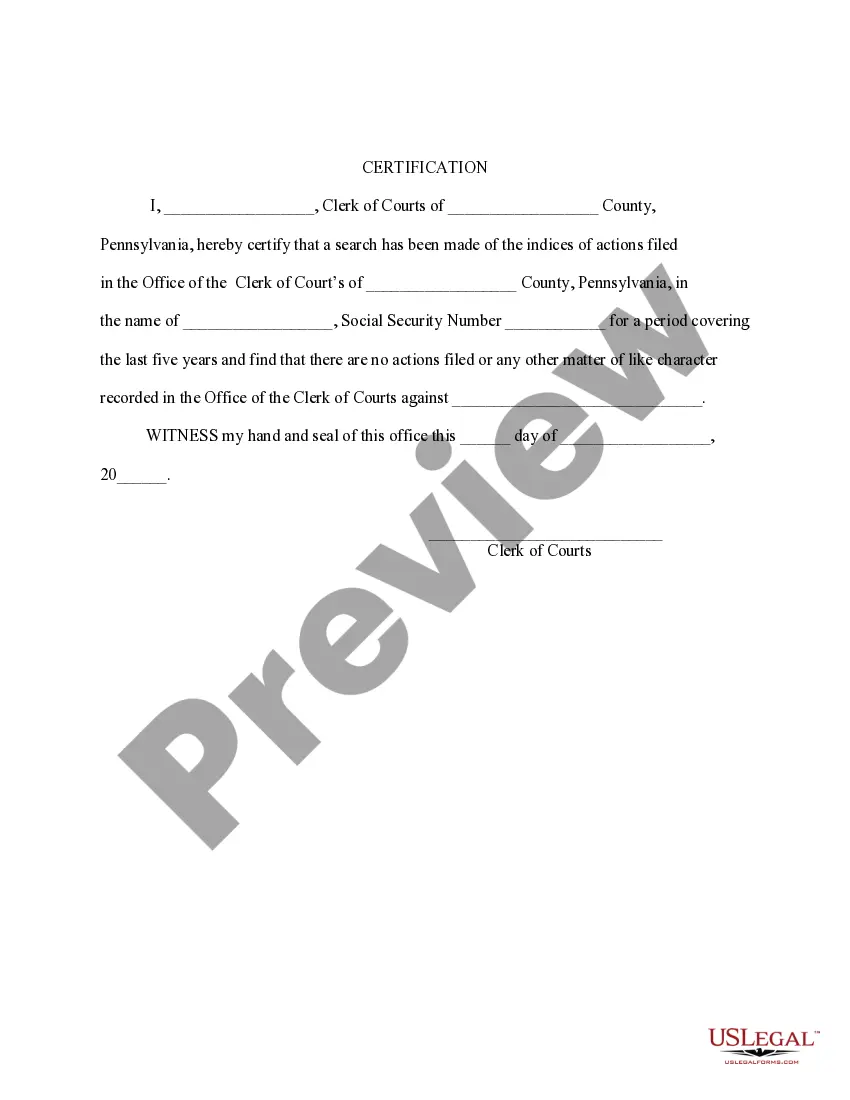
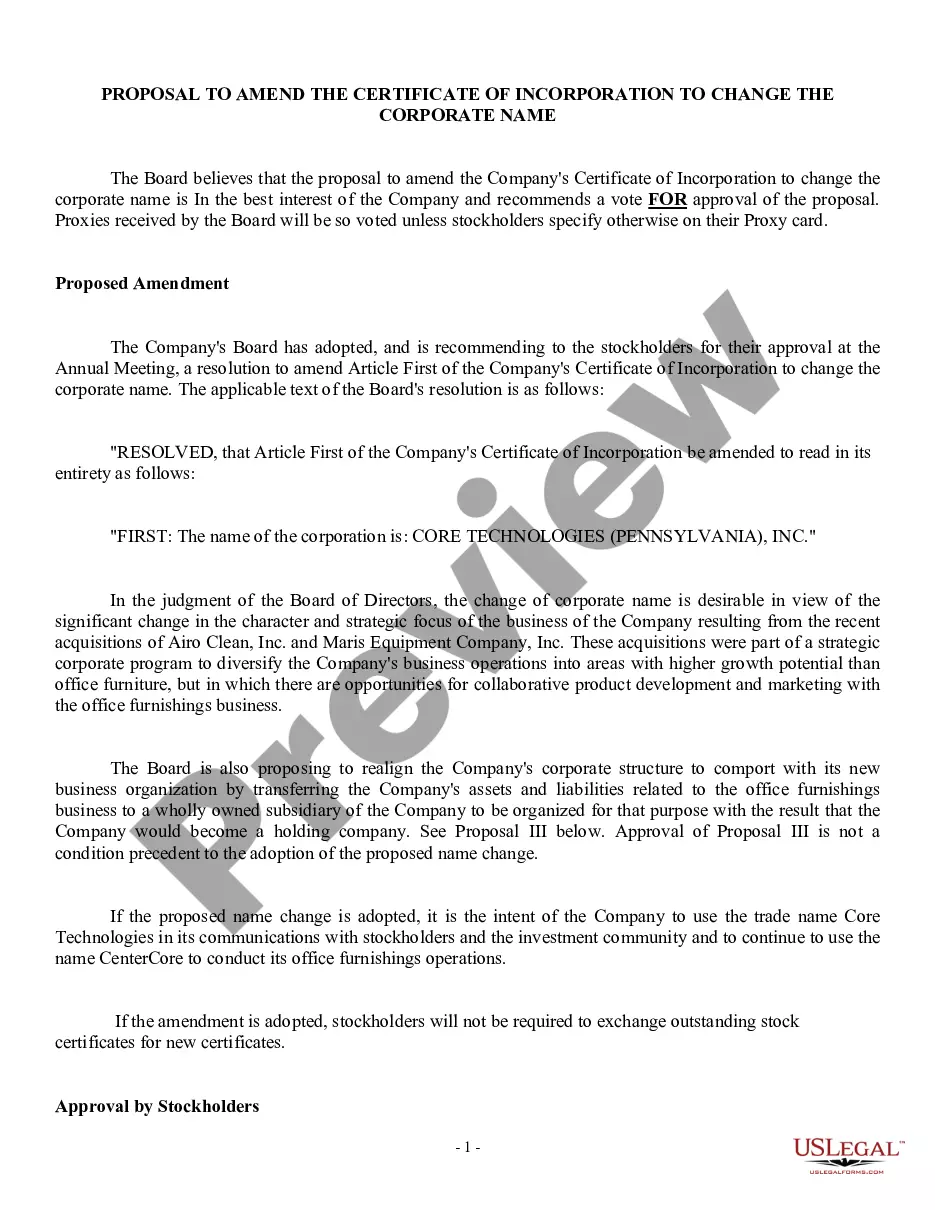
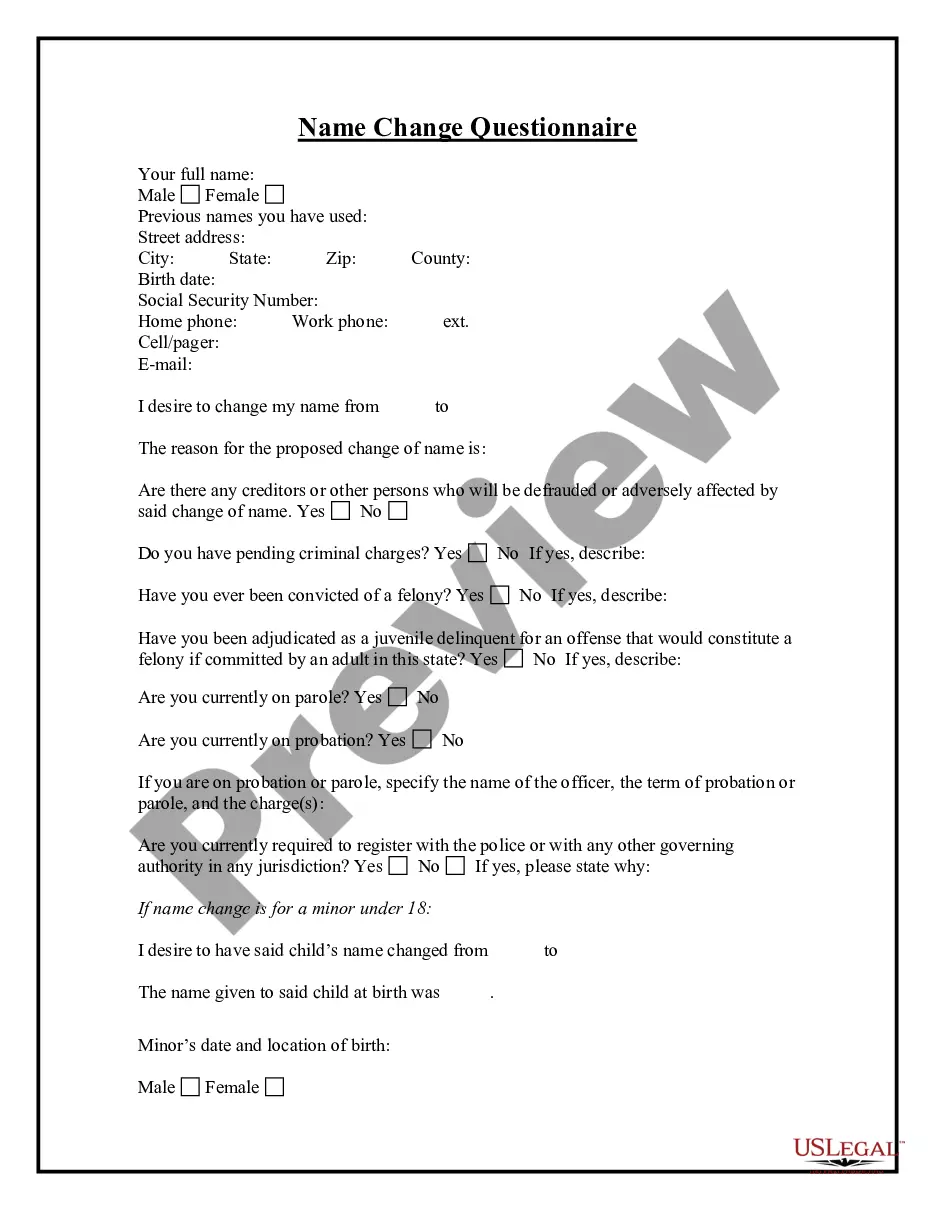
The Prothonotary Certification for Family Name Change is a legal document that outlines the reasons and necessary details for an individual seeking to change their name. This form is specifically tailored for family name changes and is crucial when navigating the legal processes associated with changing oneâs name, ensuring that all required information is documented correctly. It differs from general name change forms by focusing specifically on family-related name changes.
Main sections of this form
- Personal information of the individual requesting the name change.
- Reason for the name change, including any relevant familial circumstances.
- Signature of the individual, affirming the truthfulness of the information provided.
When this form is needed
This form is necessary when you want to legally change your family name, whether due to marriage, divorce, or other personal reasons. It is appropriate to use this form when you have a valid reason for your name change and need to provide that information to official entities or courts to formalize the transition.
Who can use this document
- Individuals seeking to change their last name due to marriage or divorce.
- Parents wishing to change their child's last name as part of legal or familial arrangements.
- Anyone who has a legitimate reason for changing their family name and needs to complete the legal requirements.
Completing this form step by step
- Provide your current name and the new name you wish to adopt.
- State your reasons for wanting to change your name clearly.
- Double-check all entered information for accuracy.
- Sign the form to affirm that everything provided is true.
- Submit the completed form to the appropriate court or agency as required by your state.
Does this document require notarization?
This form does not typically require notarization unless specified by local law. It is advisable to check local requirements to ensure that all legal standards are met before submission.
Get your form ready online
Our built-in tools help you complete, sign, share, and store your documents in one place.
Make edits, fill in missing information, and update formatting in US Legal Forms—just like you would in MS Word.
Download a copy, print it, send it by email, or mail it via USPS—whatever works best for your next step.
Sign and collect signatures with our SignNow integration. Send to multiple recipients, set reminders, and more. Go Premium to unlock E-Sign.
If this form requires notarization, complete it online through a secure video call—no need to meet a notary in person or wait for an appointment.
We protect your documents and personal data by following strict security and privacy standards.

Make edits, fill in missing information, and update formatting in US Legal Forms—just like you would in MS Word.

Download a copy, print it, send it by email, or mail it via USPS—whatever works best for your next step.

Sign and collect signatures with our SignNow integration. Send to multiple recipients, set reminders, and more. Go Premium to unlock E-Sign.

If this form requires notarization, complete it online through a secure video call—no need to meet a notary in person or wait for an appointment.

We protect your documents and personal data by following strict security and privacy standards.
Typical mistakes to avoid
- Failing to provide a valid reason for the name change.
- Incorrectly filling out personal information sections.
- Not signing or dating the document where indicated.
Advantages of online completion
- Convenience of downloading the form any time, without the need for in-person visits.
- Editable format allows you to tailor the document to your specific circumstances.
- Access to professionally crafted templates ensures legal compliance and clarity.
Legal use & context
Using this form ensures that your name change is formally recognized by the court, which is necessary for updating legal documents such as identification, social security records, and banking information.
Summary of main points
- The form is essential for legal recognition of a name change.
- Accuracy in completing the form is crucial to avoid delays.
- Check state-specific requirements for compliance before submission.
Looking for another form?
Form popularity
FAQ
There is no cost. It is free to change the last name of a child during the course of a Family Court proceeding. There is, however, a $65 fee for filing for a name change in Civil Court and a $210 fee for Supreme Court.
If both biological parents want to change their child's name after a birth certificate has been issued, they can complete and sign the form on the back of the birth certificate. After mailing the form to the Department of Vital Statistics, a new birth certificate with the new name will be issued.
Affidavit. Seek the help of a local notary to make an affidavit for name change. Publish in newspaper. Next, you need to publish the change of name in at least two local newspaper. Gazette notification. Verification. Approval.
When you have your Name Change Court Order signed by the judge, you can get A Certified Copy of it that day from the same court. You need the Certified Copy to get your most important records changed. It will take you from 6 weeks to 6 months (usually 8 weeks or so) to get your Court Order.
Petition to change your name by filling out a name change form, an order to show cause for legally changing your name, and a decree to legally change your name. Take these forms to the court clerk and file them along with your state's required filing fees.
Affidavit. Seek the help of a local notary to make an affidavit for name change. Publish in newspaper. Next, you need to publish the change of name in at least two local newspaper. Gazette notification. Verification. Approval.
The law allows a spouse to change his or her name before or after a divorce decree is entered by filing a notice with the office of prothonotary in the county in which the divorce action was filed or the decree of divorce was entered. The written notice should include the caption and docket number of the divorce case.
Under the law in England, Wales and Northern Ireland, if you want to be known by a different name you can change your name at any time, provided you do not intend to deceive or defraud another person. There is no legal procedure to follow in order to change a name.