Pennsylvania City Council Resolution for Easement
About this form
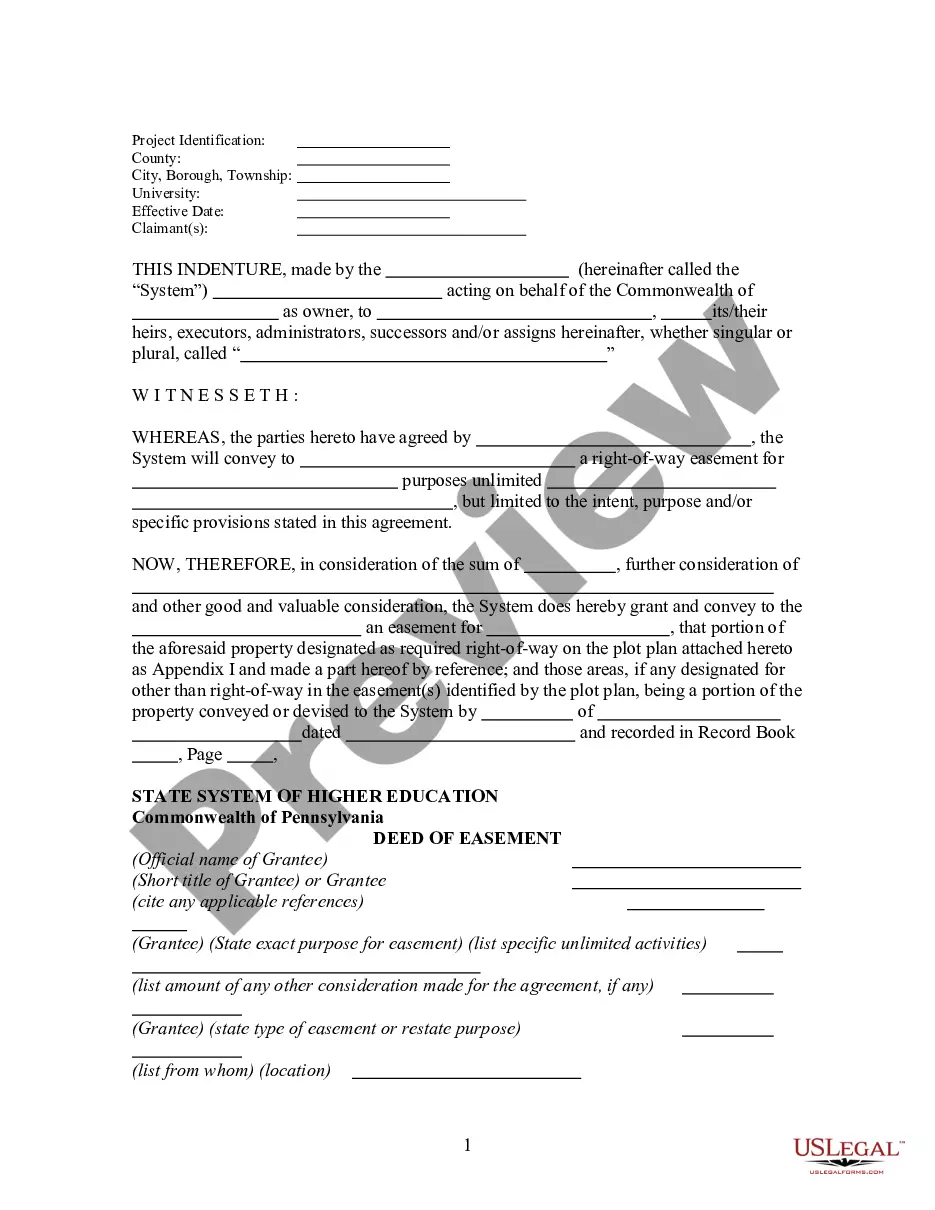
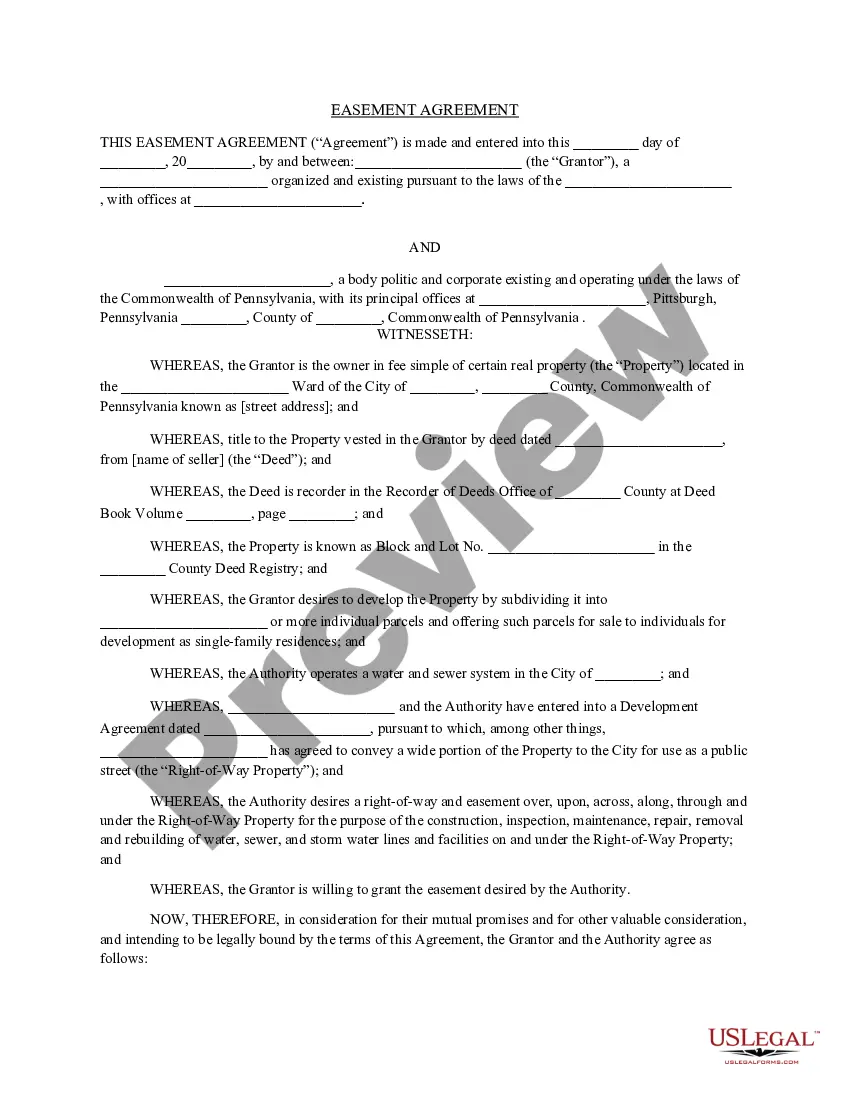
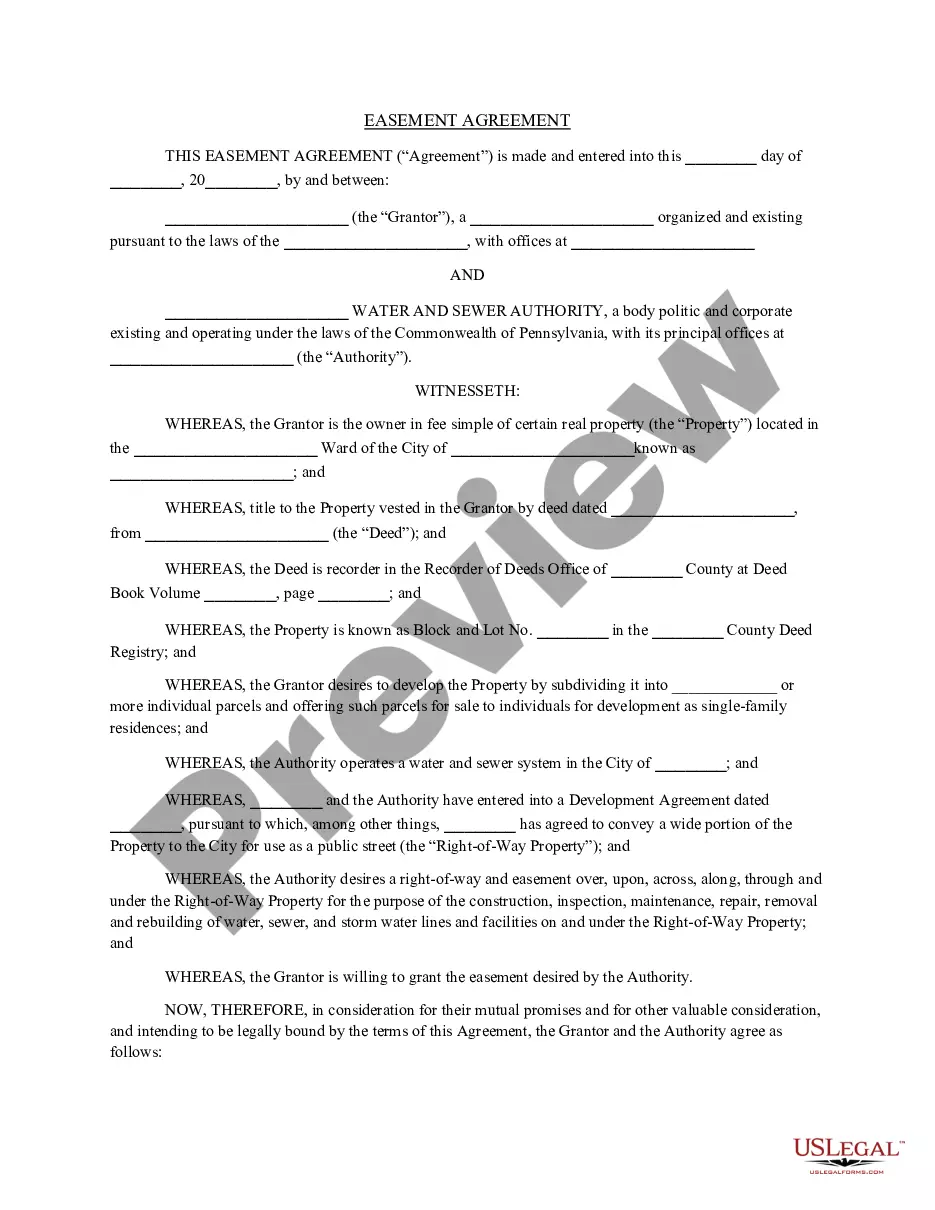
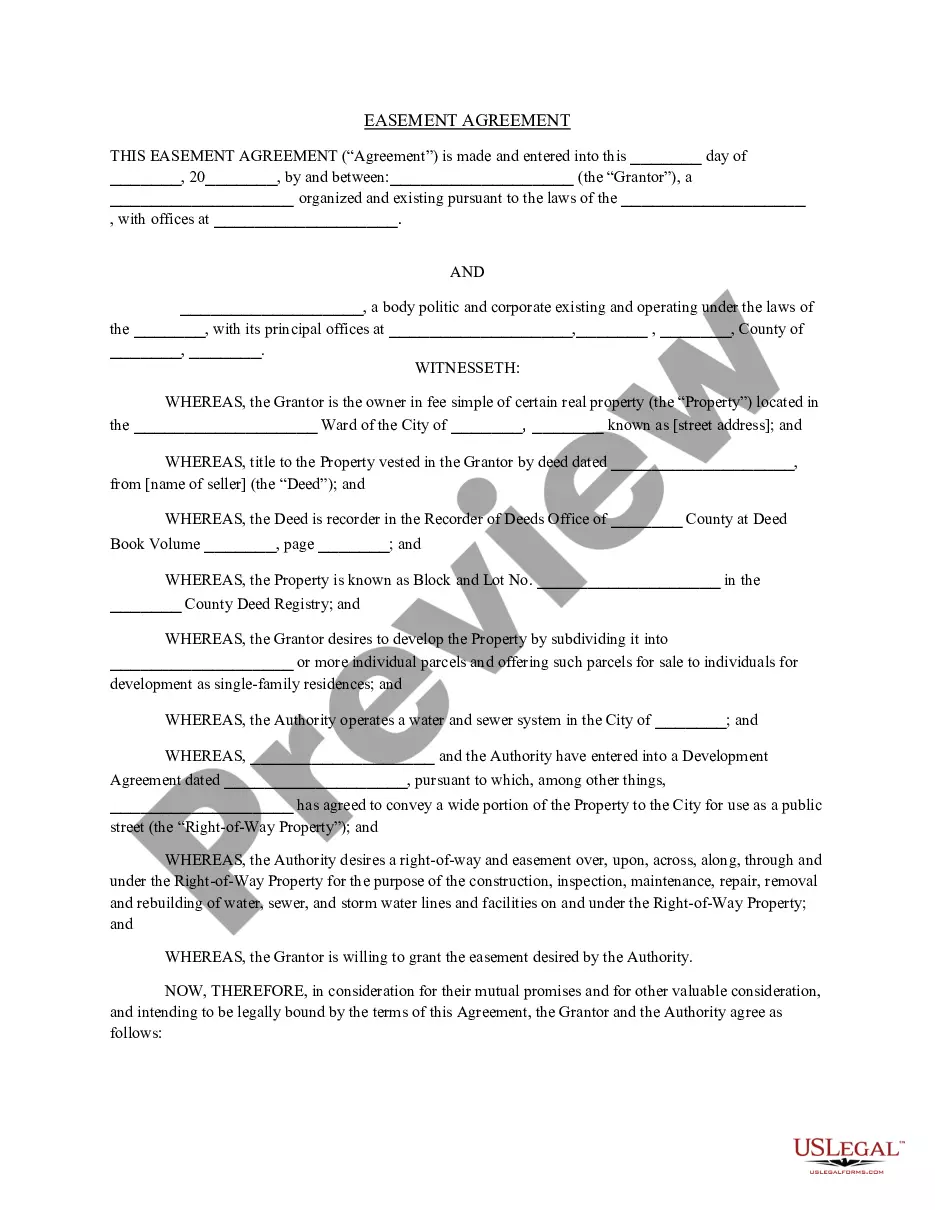
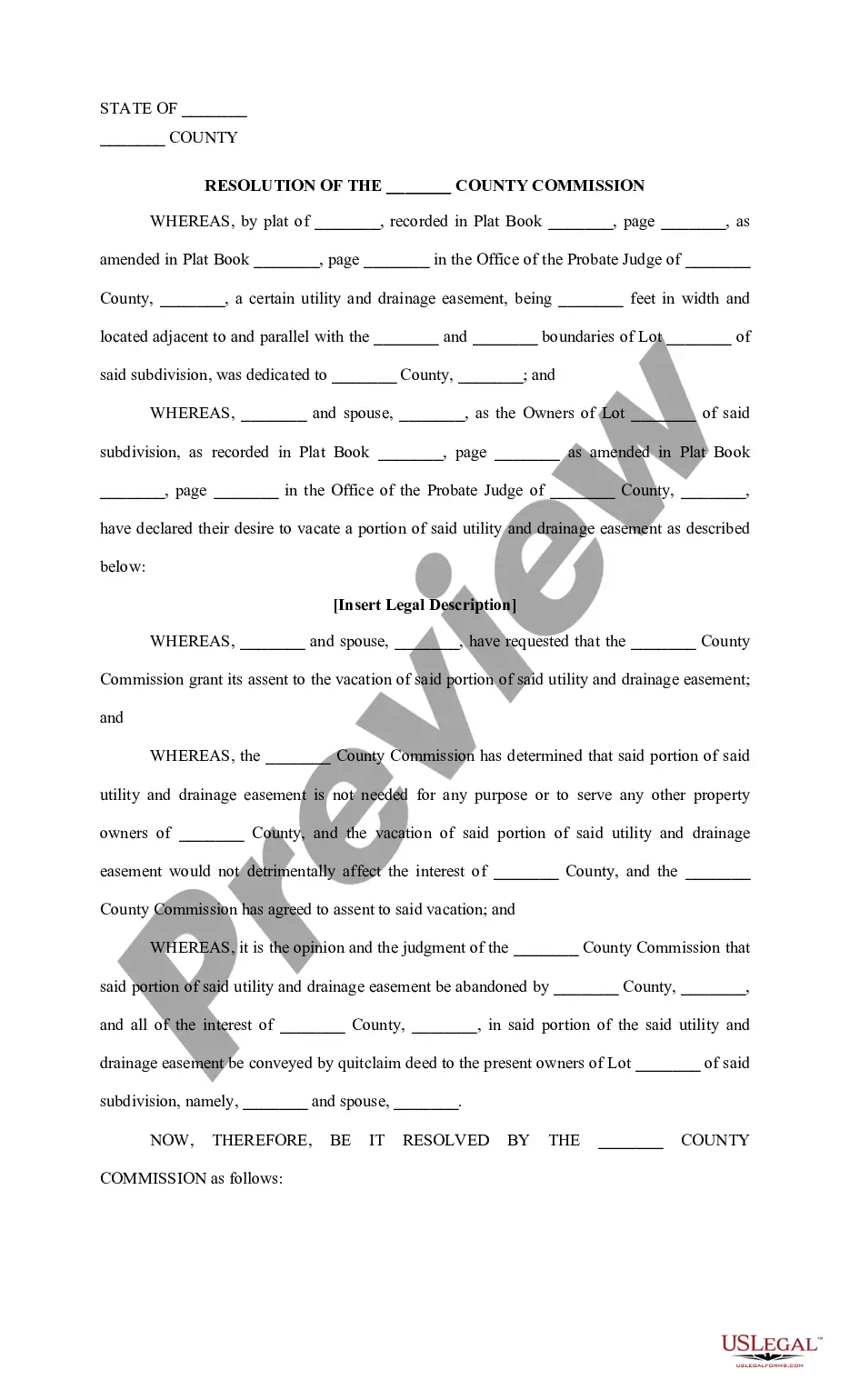
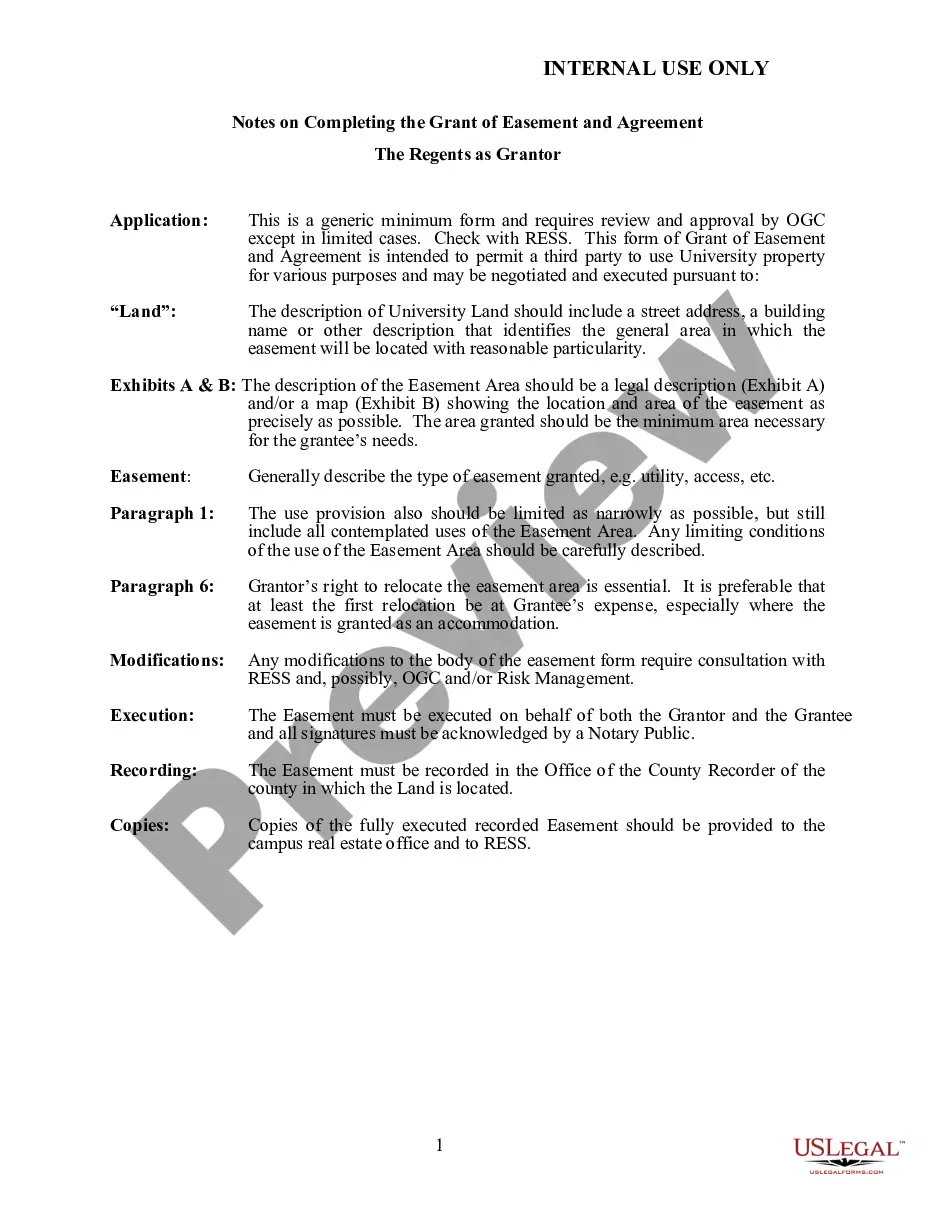
The City Council Resolution for Easement is a legal document that authorizes the city mayor and comptroller to enter into an easement agreement with the Commonwealth of Pennsylvania. This form specifies the rights and responsibilities associated with the easement, ensuring that the property can be used for designated purposes while retaining certain rights for mineral extraction. It is important for municipalities needing to formalize agreements concerning land use for public projects, distinguishing it from standard easement agreements that may not require council approval.
Form components explained
- Authorization statement allowing the mayor and comptroller to execute the agreement.
- Details on rights to deep mine minerals on the property.
- Provisions for ingress, egress, and regress within the specified right-of-way.
- Restrictions on the use of the easement to ensure it remains for its intended purpose.
- Conditions regarding access and non-transferability of the easement rights.
When to use this document
This form is typically used when a city council needs to grant an easement on city-owned property for utility companies or government projects. Situations may include infrastructure development, pipeline installation, or access for maintenance of public services where drilling for gas or oil is necessary without disrupting public land use.
Intended users of this form
This form is intended for:
- City council members and elected officials involved in land use decisions.
- City mayors and comptrollers responsible for executing easement agreements.
- Legal advisors or consultants representing municipalities in easement matters.
Steps to complete this form
- Identify the parties involved: the city and the Commonwealth of Pennsylvania.
- Specify the details of the easement, including the location and purpose.
- Include clauses regarding mineral rights and access terms.
- Ensure all necessary signatures are obtained from authorized individuals.
- File the resolution with the appropriate city records office.
Does this document require notarization?
This form does not typically require notarization unless specified by local law. However, it is important to check local regulations to ensure proper execution and validity.
Get your form ready online
Our built-in tools help you complete, sign, share, and store your documents in one place.
Make edits, fill in missing information, and update formatting in US Legal Forms—just like you would in MS Word.
Download a copy, print it, send it by email, or mail it via USPS—whatever works best for your next step.
Sign and collect signatures with our SignNow integration. Send to multiple recipients, set reminders, and more. Go Premium to unlock E-Sign.
If this form requires notarization, complete it online through a secure video call—no need to meet a notary in person or wait for an appointment.
We protect your documents and personal data by following strict security and privacy standards.

Make edits, fill in missing information, and update formatting in US Legal Forms—just like you would in MS Word.

Download a copy, print it, send it by email, or mail it via USPS—whatever works best for your next step.

Sign and collect signatures with our SignNow integration. Send to multiple recipients, set reminders, and more. Go Premium to unlock E-Sign.

If this form requires notarization, complete it online through a secure video call—no need to meet a notary in person or wait for an appointment.

We protect your documents and personal data by following strict security and privacy standards.
Typical mistakes to avoid
- Failing to obtain the necessary council votes or signatures prior to execution.
- Leaving out critical details regarding rights of access and use conditions.
- Overlooking local or state requirements that may affect the easement terms.
Why complete this form online
- Convenient access to a legal document that can be downloaded and completed from anywhere.
- Editability allows customization for specific city needs and legal compliance.
- Reliable legal framework ensures that the form meets current standards and practices.
Legal use & context
- The easement grants specific rights while ensuring that the propertyâs use remains non-transferable and non-severable.
- It is important to ensure that all conditions for use are clearly stated to prevent future disputes.
Key takeaways
- The City Council Resolution for Easement authorizes city officials to execute easement agreements.
- It is specifically designed for compliance with Pennsylvania state law regarding land use.
- Proper completion of this form is essential to ensure legal validity and compliance with local governance.
Looking for another form?

Form popularity
FAQ
There must be a dominant and a servient tenement; The easement must accommodate the dominant tenement, that is, be connected with its enjoyment and for its benefit; The dominant and servient owners must be different persons; The right claimed must be capable of forming the subject-matter of a grant.
When you're buying a house, you might find out that the property has an easement on it. Essentially this means that someone other than you could have access to the land. This isn't necessarily a bad thing. For example, utility companies typically hold easements in case they need to access pipes or cables.
An easement is a property right that provides its holder with a non-possessory interest on another person's land.If there are only personal individual benefits from an easement the term used is in gross. The majority of easements are affirmative, this means that they authorise the use of another person's land.
A property easement is a legal situation in which the title to a specific piece land remains with the landowner, but another person or organization is given the right to use that land for a distinct purpose.
An easement is a nonpossessory right to use and/or enter onto the real property of another without possessing it. It is "best typified in the right of way which one landowner, A, may enjoy over the land of another, B".
The legal term easement refers to the legal right to use another person's real property, for a specific purpose and a specific amount of time. An easement gives a person the legal right to go through another person's land, as long as the usage is consistent with the specified easement restrictions.
A common law way of necessity is an easement which arises when an owner sells a portion of his or her land and either (a) the portion sold has no practical access to a public road except over the remaining lands of the seller, or (b) the remaining lands retained by the seller have no practical access to a public road
An easement is a limited right to use another person's land for a stated purpose. Examples of easements include the use of private roads and paths, or the use of a landowner's property to lay railroad tracks or electrical wires.
Utility Easements. Private Easements. Easements by Necessity. Prescriptive Easements. Legal Disputes Over Easements. More Help with Easements.