Pennsylvania Assignment to Living Trust
What is this form?
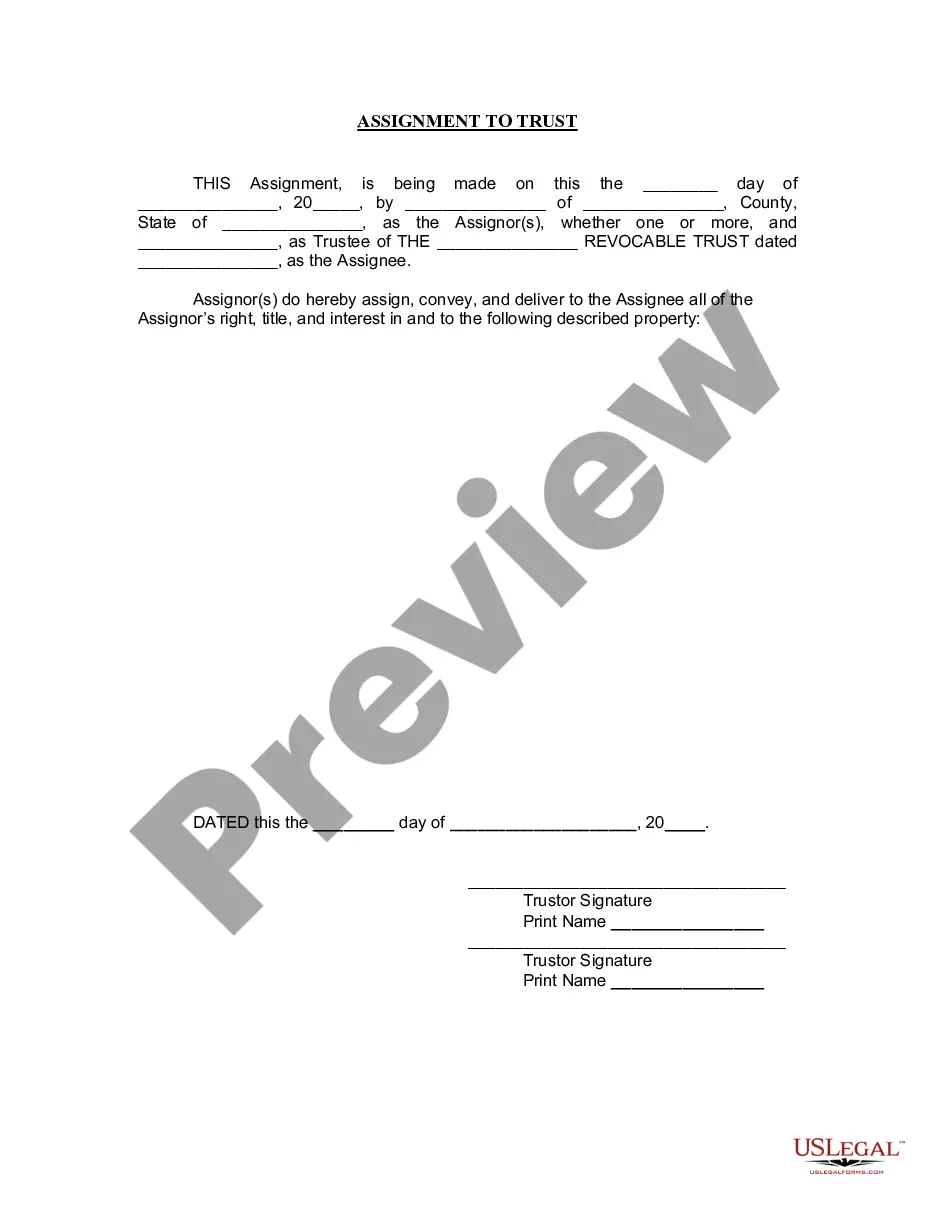
The Assignment to Living Trust form is designed to transfer a personâs property rights into a living trust established during their lifetime. This form is essential for individuals looking to streamline their estate planning process by ensuring that their assets are managed according to their wishes while they are still alive and after their passing. Unlike wills, living trusts can help avoid probate court, making them easier to administer efficiently upon the trustor's death.
Key components of this form
- Date of assignment
- Name of the Assignor(s)
- Identification of the property being assigned
- Name of the Trustee
- Signature of the Assignor(s)
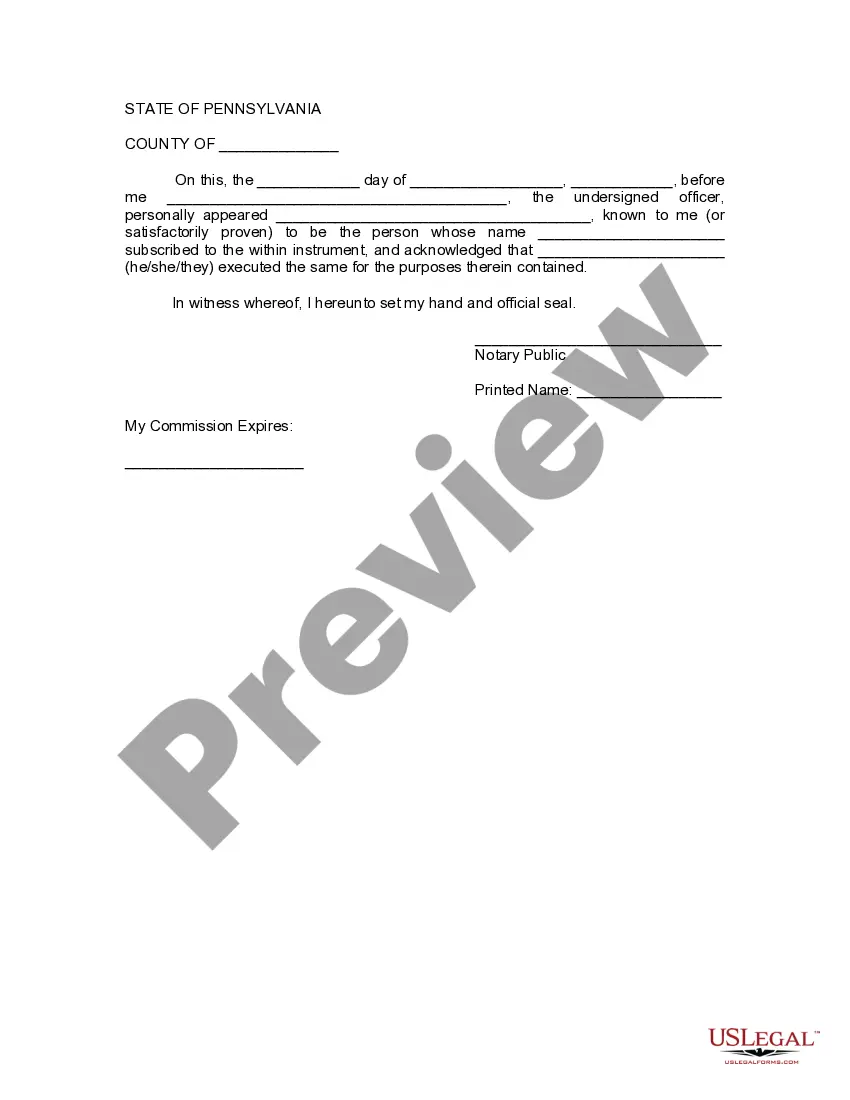
- Notary acknowledgment section


When to use this document
This form is necessary when you want to formally assign property, such as real estate or financial assets, to your living trust. You may need this form if youâve created a living trust and want to ensure that specific assets are included in it for management and distribution purposes. It is particularly useful in estate planning scenarios when you wish to clarify ownership and facilitate trust administration.
Intended users of this form
- Individuals creating or managing a living trust
- Estate planners and trusted advisors
- Property owners looking to streamline estate management
- Trustees managing assets on behalf of a living trust
Steps to complete this form
- Enter the date on which the assignment is being made.
- Fill in the complete name and address of the Assignor(s).
- Specify the property being assigned to the trust.
- Provide the name of the Trustee and the trust's formal title.
- Have the Assignor(s) sign the document in the presence of a notary public.
- Complete the notary acknowledgment section to validate the form.
Does this form need to be notarized?
Yes, this form must be notarized to be legally valid. The notarization process ensures that the signatures are authenticated and the assignment is executed with necessary legal formalities. US Legal Forms offers secure online notarization services, allowing you to complete this requirement conveniently from home.
Get your form ready online
Our built-in tools help you complete, sign, share, and store your documents in one place.
Make edits, fill in missing information, and update formatting in US Legal Forms—just like you would in MS Word.
Download a copy, print it, send it by email, or mail it via USPS—whatever works best for your next step.
Sign and collect signatures with our SignNow integration. Send to multiple recipients, set reminders, and more. Go Premium to unlock E-Sign.
If this form requires notarization, complete it online through a secure video call—no need to meet a notary in person or wait for an appointment.
We protect your documents and personal data by following strict security and privacy standards.

Make edits, fill in missing information, and update formatting in US Legal Forms—just like you would in MS Word.

Download a copy, print it, send it by email, or mail it via USPS—whatever works best for your next step.

Sign and collect signatures with our SignNow integration. Send to multiple recipients, set reminders, and more. Go Premium to unlock E-Sign.

If this form requires notarization, complete it online through a secure video call—no need to meet a notary in person or wait for an appointment.

We protect your documents and personal data by following strict security and privacy standards.
Mistakes to watch out for
- Failing to include all required parties in the assignment.
- Not clearly identifying the property being transferred.
- Omitting to have the form notarized as required.
- Incorrectly completing the date or Trustee information.
Benefits of using this form online
- Convenience of downloading and filling out the form at your pace.
- Editability allows for quick adjustments before finalizing your assignment.
- Reliable access to forms drafted by licensed attorneys, ensuring compliance with legal standards.
Quick recap
- The Assignment to Living Trust form is essential for transferring property into a living trust.
- Proper completion requires accurate information about the Assignor, Trustee, and the property.
- Notarization is necessary for this form to be legally enforceable.
Looking for another form?

Form popularity
FAQ
When you create a DIY living trust, there are no attorneys involved in the process. You will need to choose a trustee who will be in charge of managing the trust assets and distributing them.You'll also need to choose your beneficiary or beneficiaries, the person or people who will receive the assets in your trust.
The advantages of placing your house in a trust include avoiding probate court, saving on estate taxes and possibly protecting your home from certain creditors. Disadvantages include the cost of creating the trust and the paperwork.
Expect to pay $1,000 for a simple trust, up to several thousand dollars. You may incur additional costs after the trust has been established if you transfer property in and out or otherwise move things around. However, the bulk of the cost will be setting it up initially.
Select the trust that best fits your financial situation. Determine which property and assets you want to include in the trust. Select a trustee to manage your living trust. Create the trust document. Sign the trust while a notary public is present. Fund the trust by transferring property into it.
Open a bank account in the name of the trust. Close out any bank accounts the grantor established for the trust and put the proceeds into the new trust bank account. Cash in any life insurance policies that name the trust as beneficiary and put the proceeds into the trust bank account.
In most cases, the surviving owner or heir obtains the title to the home, the former owner's death certificate, a notarized affidavit of death, and a preliminary change of ownership report form. When all these are gathered, the transfer gets recorded, the fees are paid, and the county issues a new title deed.
No, you don't need a lawyer to set up a trust, but it might be a good idea to seek legal advice to ensure the trust is set up correctly and that you have considered all long-term financial and estate planning aspects of the trust.Some living trusts are revocable, which means the trust can be changed at any time.
Qualified retirement accounts 401ks, IRAs, 403(b)s, qualified annuities. Health saving accounts (HSAs) Medical saving accounts (MSAs) Uniform Transfers to Minors (UTMAs) Uniform Gifts to Minors (UGMAs) Life insurance. Motor vehicles.
When they pass away, the assets are distributed to beneficiaries, or the individuals they have chosen to receive their assets. A settlor can change or terminate a revocable trust during their lifetime. Generally, once they die, it becomes irrevocable and is no longer modifiable.