Pennsylvania Marital Property Settlement Agreement - Adult Children
About this form
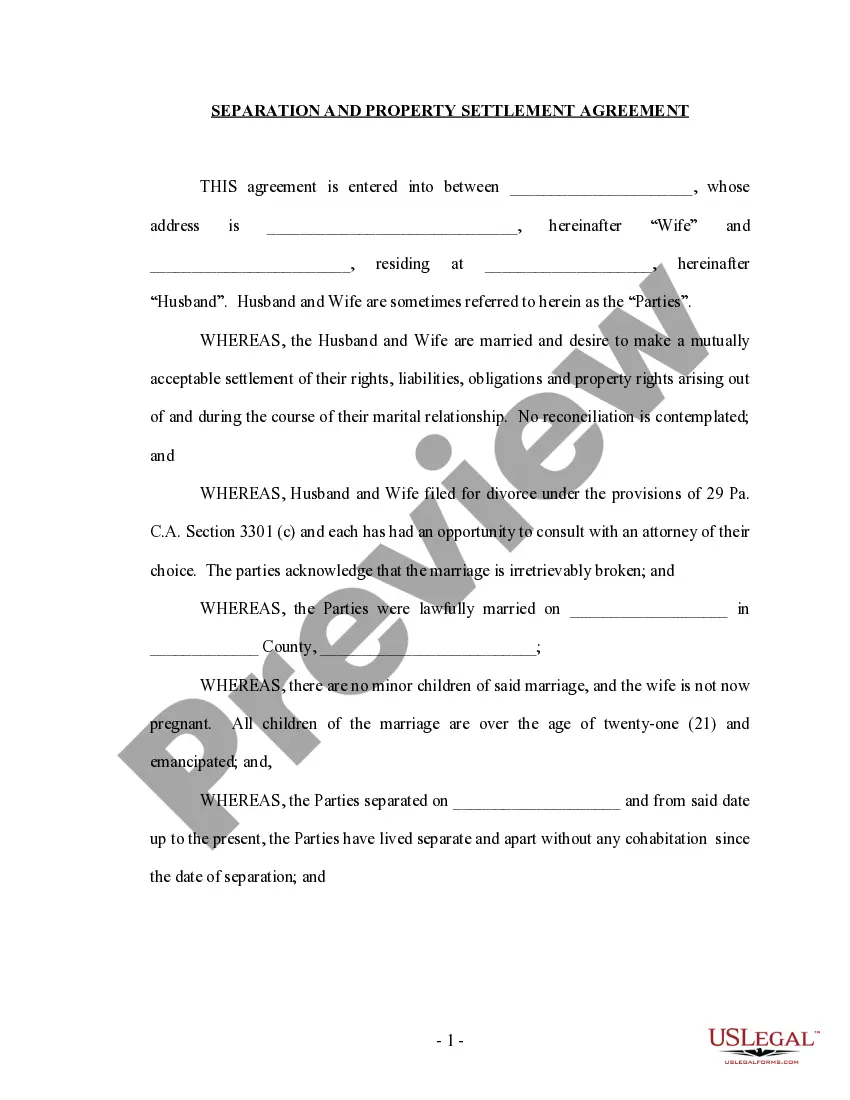
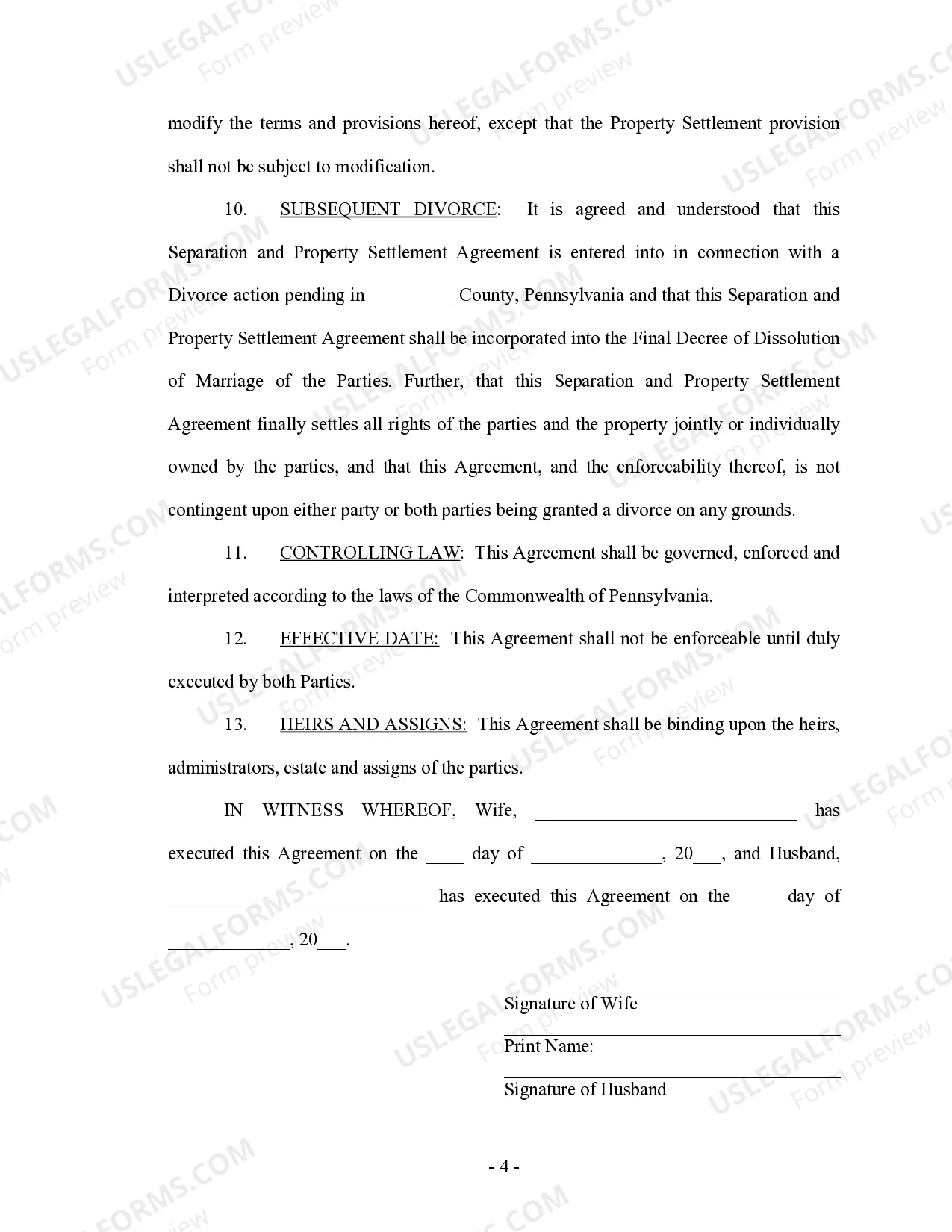
The Marital Property Settlement Agreement - Adult Children is a legal document that outlines the division of marital property between spouses who have adult children. This agreement is important for couples seeking to formalize their property rights and obligations post-separation, particularly when no minor children are involved. It is distinct from other settlement agreements as it specifically addresses the division of assets and liabilities without the complexities of child custody and support considerations, which are relevant only to couples with minor children.
Key components of this form
- Identification of the parties involved (Husband and Wife).
- Statement of the marriage and its breakdown.
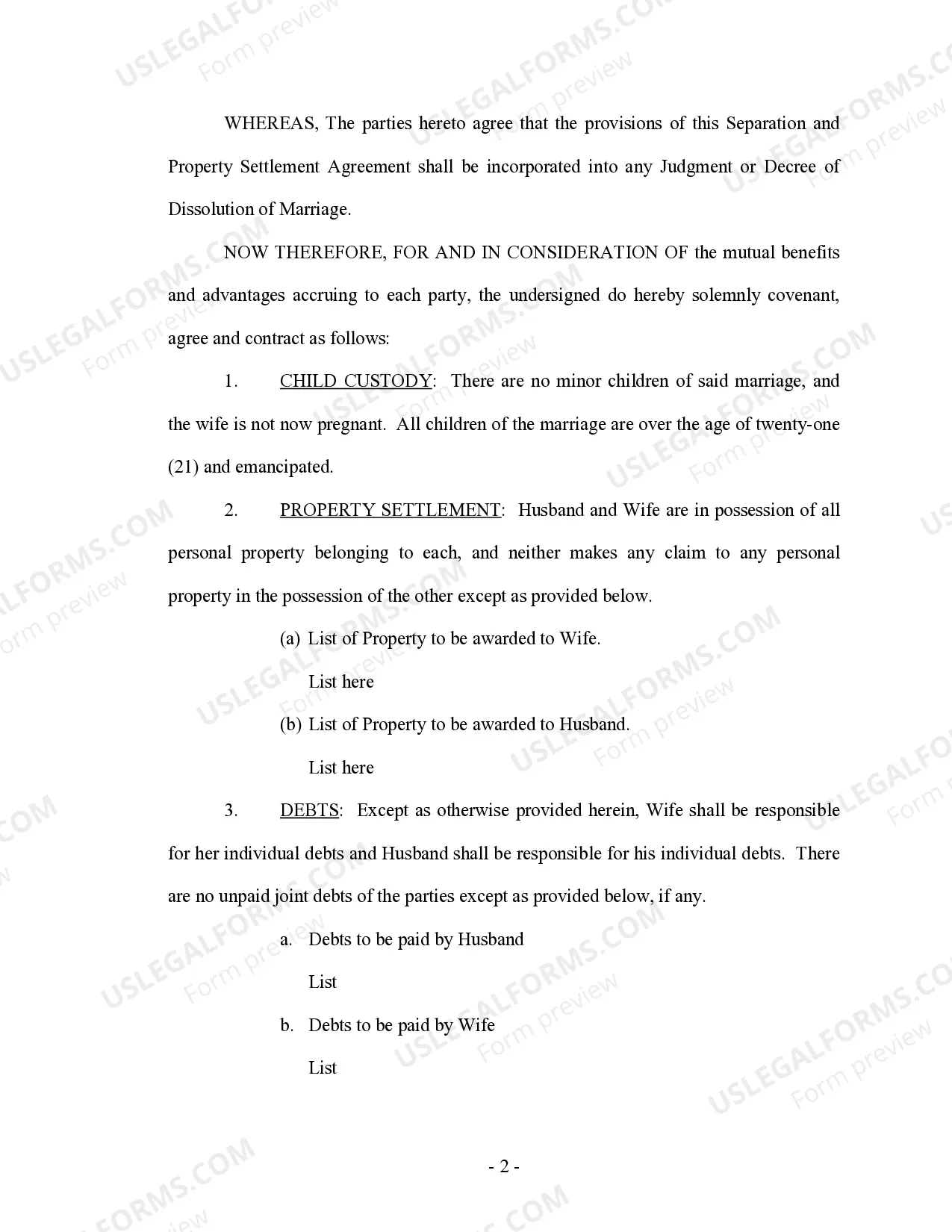
- Details regarding property division, specifying what each party will retain.
- Clarification of debt responsibilities for each party.
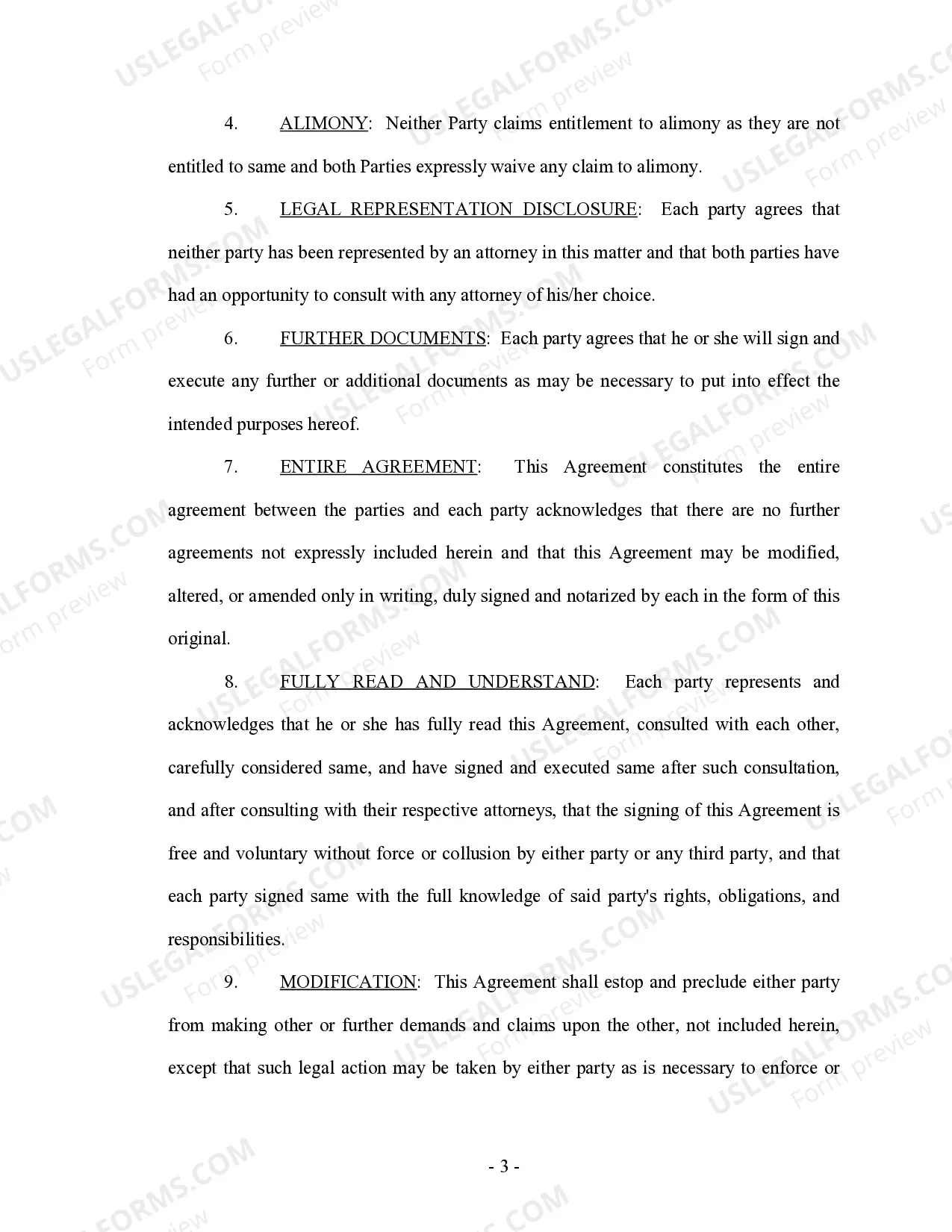
- Waiver of alimony by both parties.
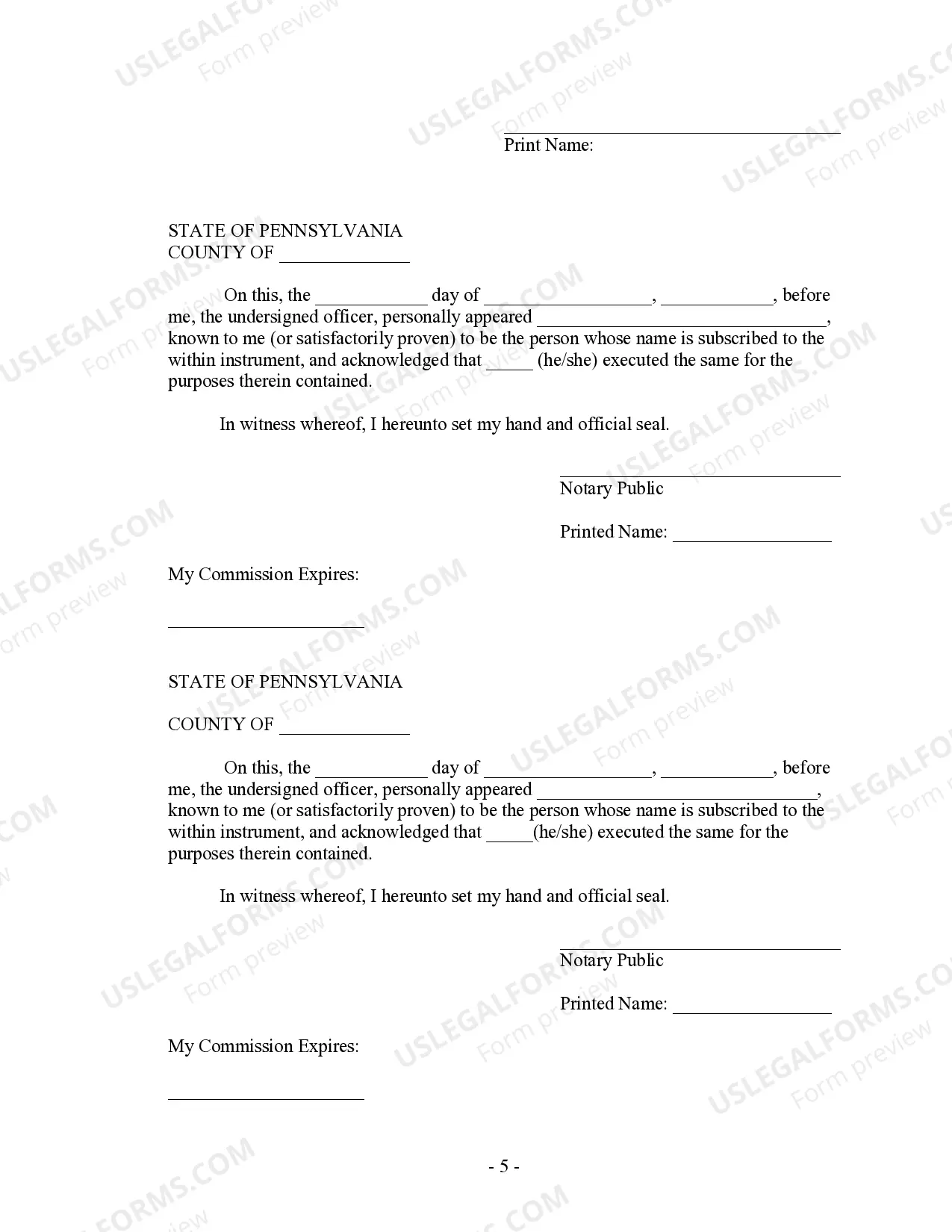
- Notarization requirements to ensure legal validity.

When this form is needed
This agreement should be used when spouses with adult children decide to separate or divorce and need to legally document the division of their marital property. It is specifically applicable when there are no minor children and both parties are capable of making their own decisions regarding property ownership and debt liabilities. This document helps to avoid future disputes and provides a clear legal framework for the settlement terms.
Who this form is for
- Couples who are legally married and are seeking a property settlement without minor children.
- Married parties who have reached an agreement regarding the division of their assets and debts.
- Individuals looking to formalize their separation as they proceed with divorce proceedings.
Instructions for completing this form
- Identify the parties by entering their full names and addresses at the beginning of the document.
- Specify the date and location of the marriage and the date of separation.
- List the marital property to be divided, detailing what is awarded to the Husband and Wife respectively.
- Outline individual debts and responsibilities for each party, noting any shared debts as applicable.
- Both parties should review the document, sign, and have it notarized to ensure legal validity.
Is notarization required?
This form must be notarized to be legally valid. US Legal Forms provides secure online notarization powered by Notarize, allowing you to complete the process through a verified video call.
Get your form ready online
Our built-in tools help you complete, sign, share, and store your documents in one place.
Make edits, fill in missing information, and update formatting in US Legal Forms—just like you would in MS Word.
Download a copy, print it, send it by email, or mail it via USPS—whatever works best for your next step.
Sign and collect signatures with our SignNow integration. Send to multiple recipients, set reminders, and more. Go Premium to unlock E-Sign.
If this form requires notarization, complete it online through a secure video call—no need to meet a notary in person or wait for an appointment.
We protect your documents and personal data by following strict security and privacy standards.
Make edits, fill in missing information, and update formatting in US Legal Forms—just like you would in MS Word.
Download a copy, print it, send it by email, or mail it via USPS—whatever works best for your next step.
Sign and collect signatures with our SignNow integration. Send to multiple recipients, set reminders, and more. Go Premium to unlock E-Sign.

If this form requires notarization, complete it online through a secure video call—no need to meet a notary in person or wait for an appointment.
We protect your documents and personal data by following strict security and privacy standards.
Avoid these common issues
- Failing to clearly identify all marital property and debts, leading to disputes later.
- Neglecting to sign and notarize the document, which may render it unenforceable.
- Omitting relevant details such as the date of marriage or separation.
Why use this form online
- Convenience of completing the form from anywhere, at any time.
- Editability allows for customization based on specific needs and circumstances.
- Access to templates drafted by licensed attorneys ensures the document adheres to legal standards.
Looking for another form?
Form popularity
FAQ
A fair settlement should include ample parenting time for each parent. An equitable visitation agreement may not give parents equal custodial time, but it should provide for frequent and continuing contact with each parent.
In a Pennsylvania divorce, the court divides marital property on an equitable basis. However, this does not necessarily mean that the court will evenly split property between the two spouses. Rather, the judge presiding over the case will split up the property in a way that he or she deems fair.
Pennsylvania divides marital property under the theory of equitable distribution.Community property states attempt a 50-50 distribution, as best as possible. Equitable distribution states divide property based on a determination of what's fair under the circumstances of each case.
There are many factors to consider, including assets, incomes, living expenses, inflation, alimony, child support, taxes, retirement plans, investments, medical expenses and health insurance costs, and child-related expenses such as education.
In a perfect world, separated and divorcing spouses in Pennsylvania would not start dating until their divorce was final, but that's easier said than done.If you start seeing someone else before you and your spouse decide to divorce or before you physically separate, it is considered adultery.
A spouse is entitled to alimony only if the court decides that alimony is necessary. To decide whether alimony is necessary, how much should be paid, and how long it should be paid, the court must consider many factors including but not limited to the relative income and earning capacities of the parties, the ages
Your divorce settlement agreement should cover everything that is important to you, including custody of your children, child support payments, alimony, and the separation of your property, such as your family home, vehicles, and other assets.
#1. Start with the Basics. #2. Include the Details. #3. Confirm Your Agreement. #4. Identify and Divide Assets and Debts. #5. Create a Parenting Plan for Custody and Visitation. #6. Agree on Child Support and Spousal Support (Alimony) #7. Polishing Your Agreement. Conclusion.
Marital Settlement Agreements, reached between the parties in writing and signed by the parties, become legally binding when approved by the court at the time of the final court hearing.Once approved by the court, such post judgment stipulations do become legally binding and enforceable between the parties.