Pennsylvania Husband and Wife to a Trust
About this form
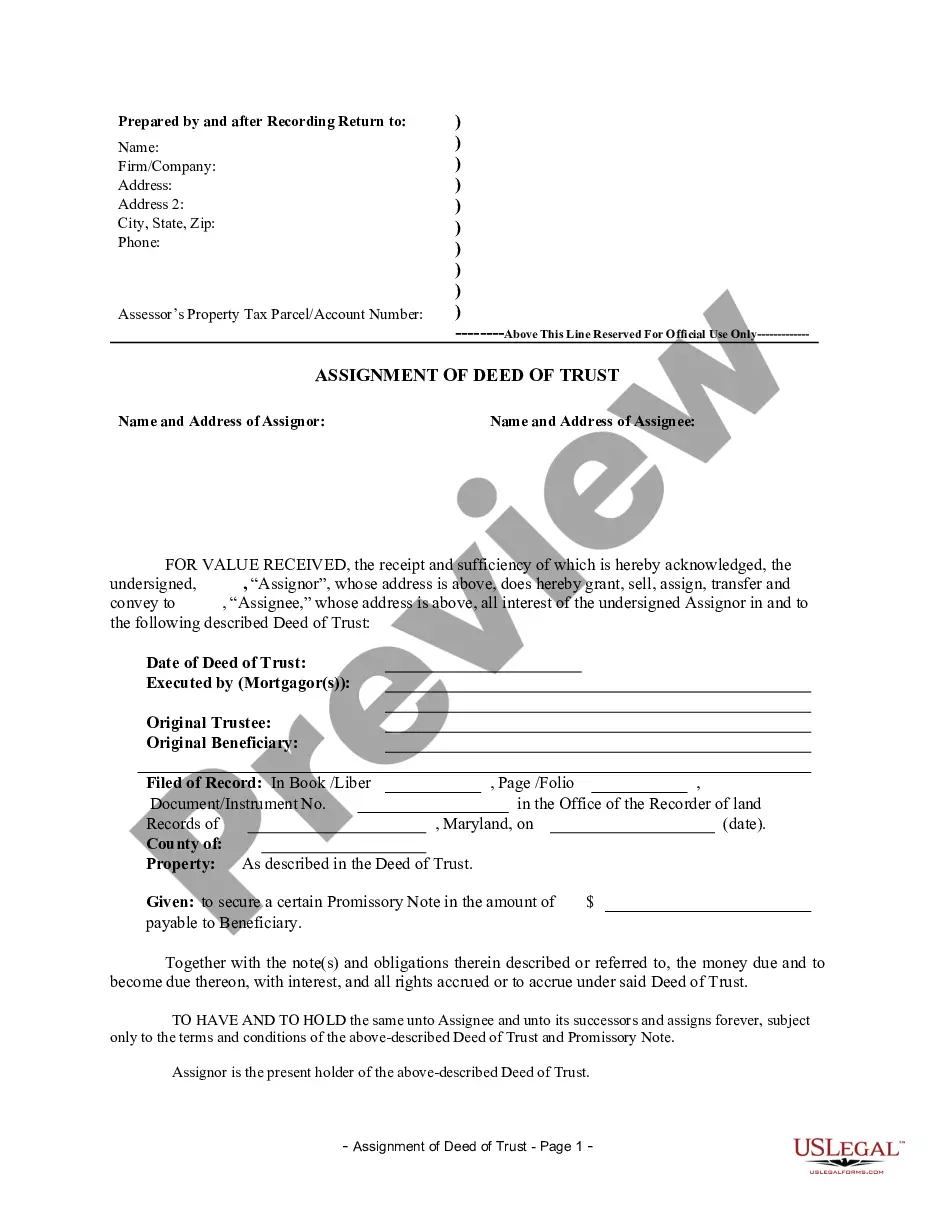
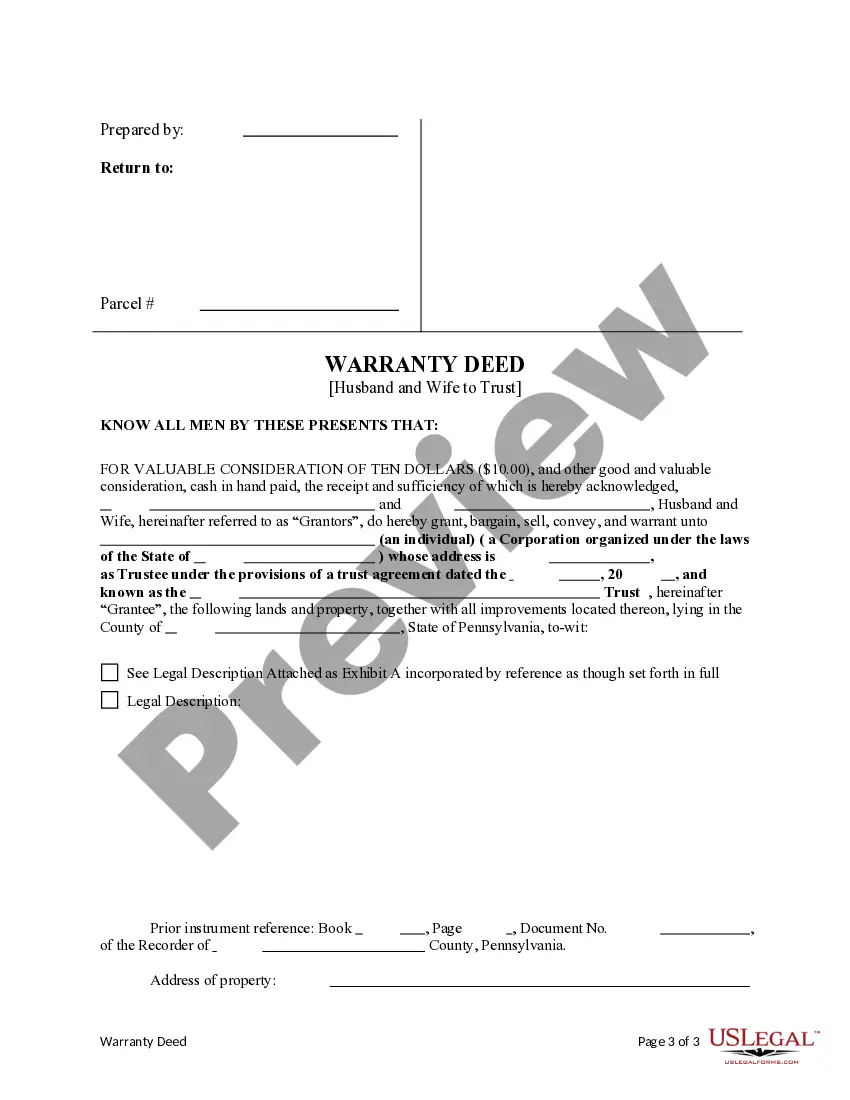
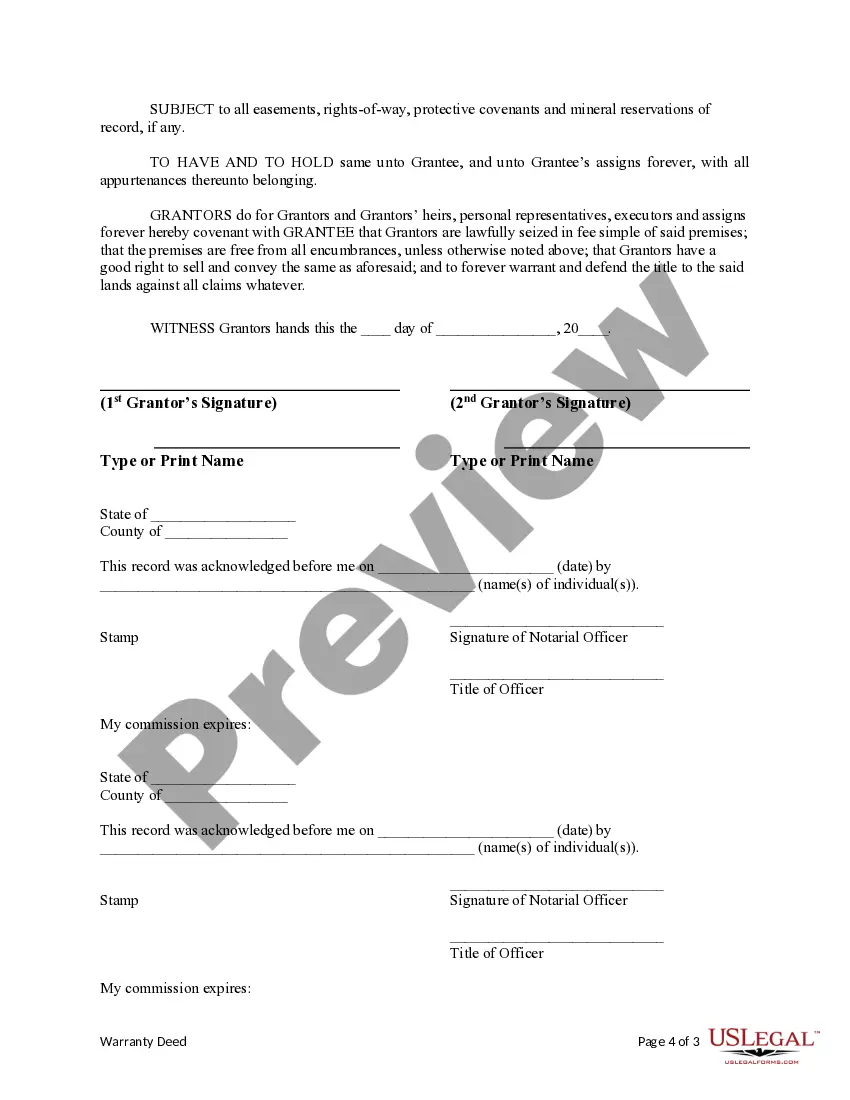
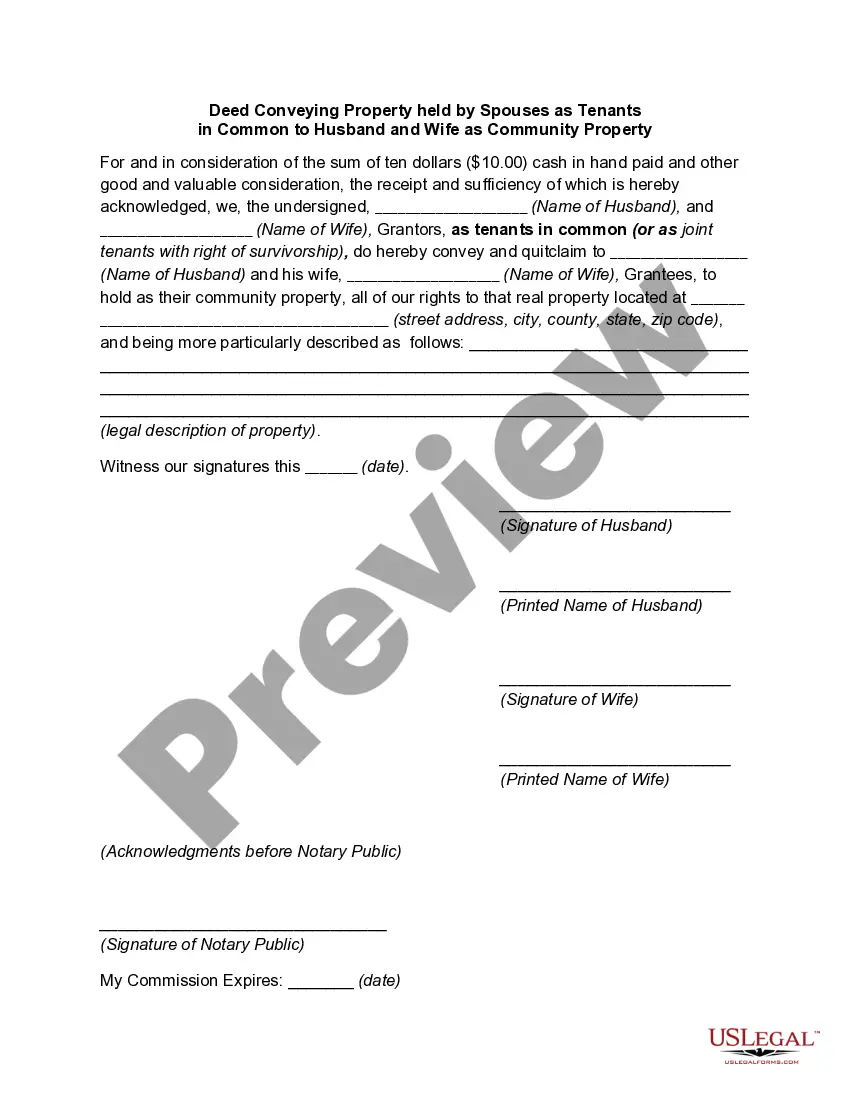
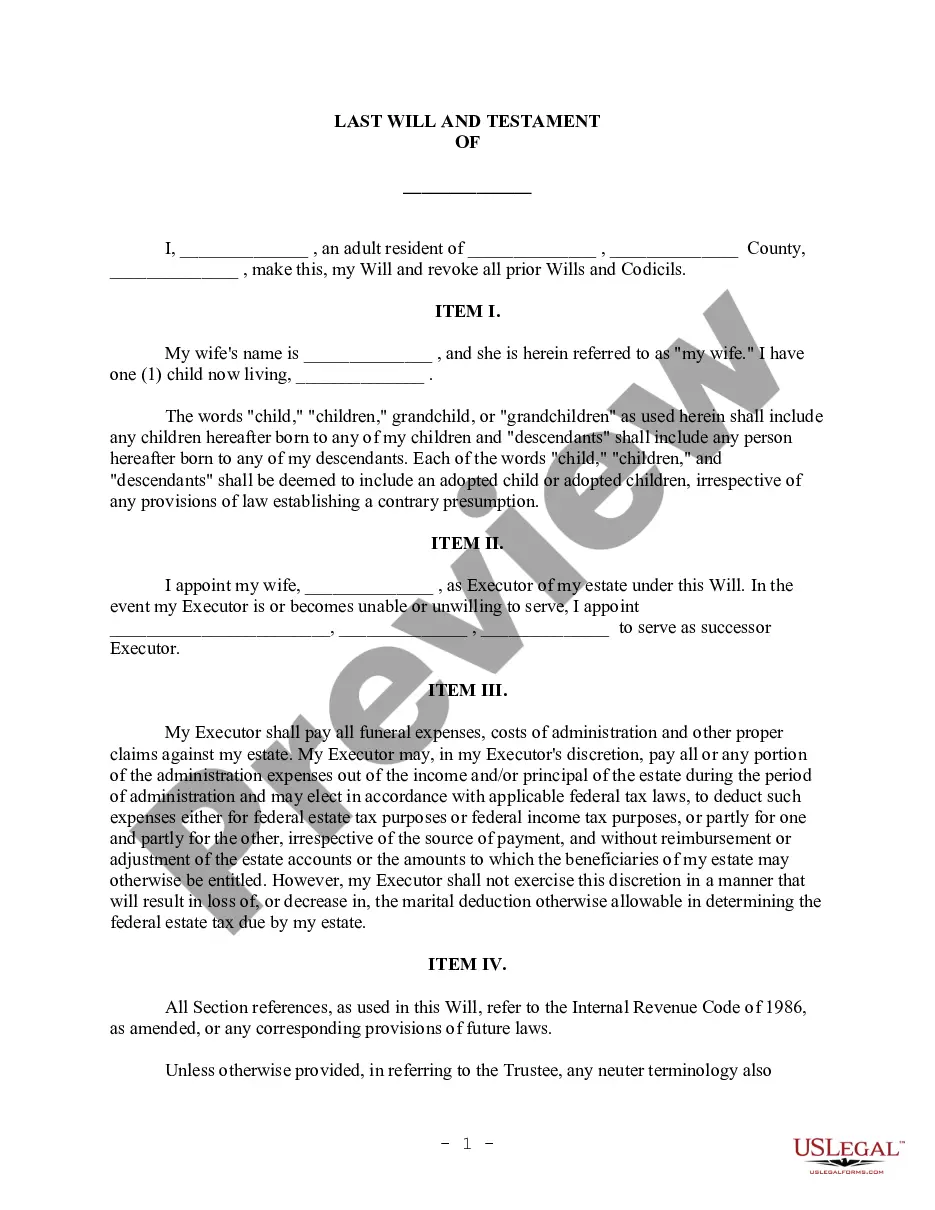
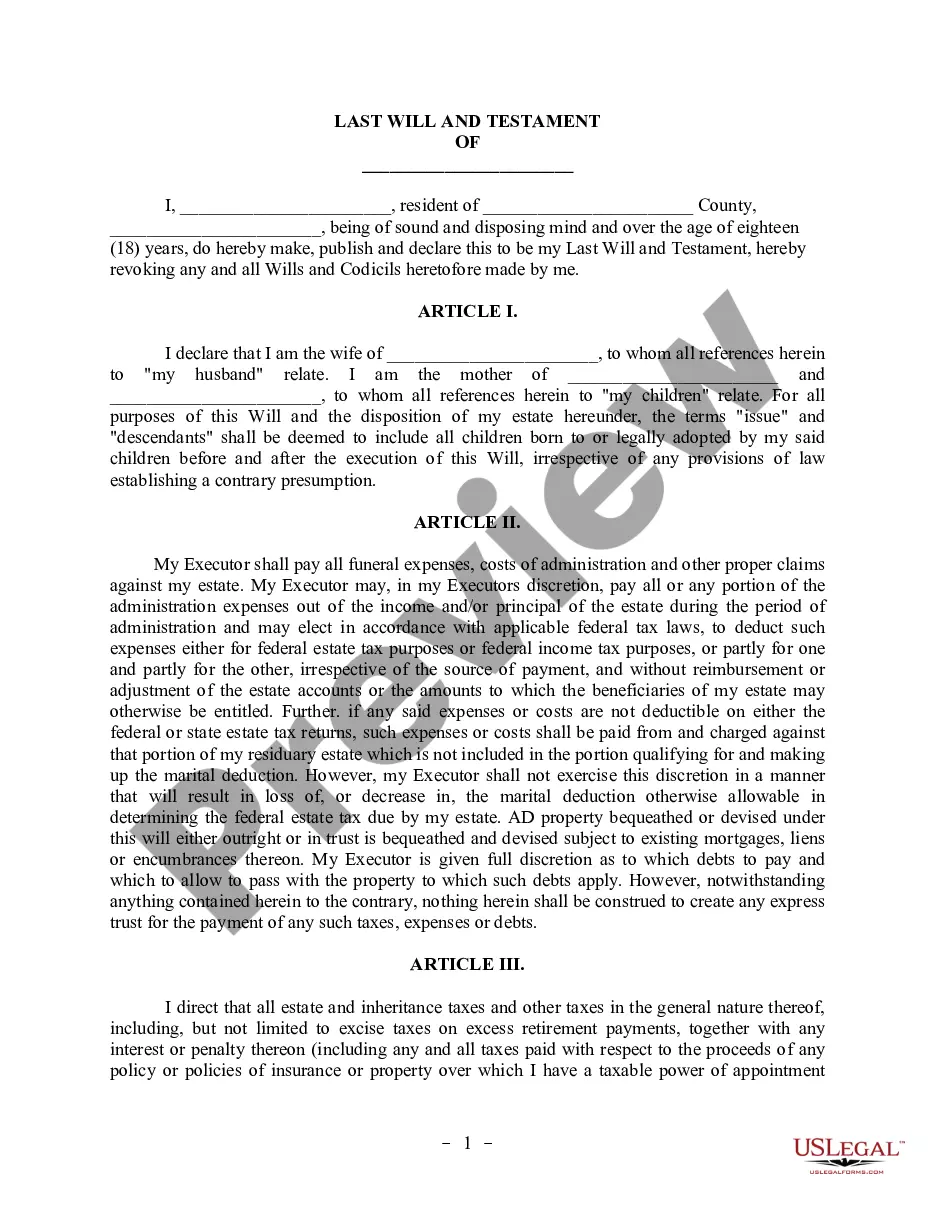
The Husband and Wife to a Trust form is a legal document that enables a married couple to convey property to a trust. This Warranty Deed specifies that the husband and wife, as Grantors, are transferring their interest in a property to a Trustee of the trust, which serves as the Grantee. This form is essential for couples looking to secure their assets within a trust structure, differing from other deeds by its designation of a trust rather than an individual as the recipient of the property.
Form components explained
- Identification of Grantors: Names and details of the husband and wife transferring the property.
- Property Description: A clear legal description of the property being conveyed.
- Trustee Information: Identification of the Trustee who will manage the trust on behalf of the beneficiaries.
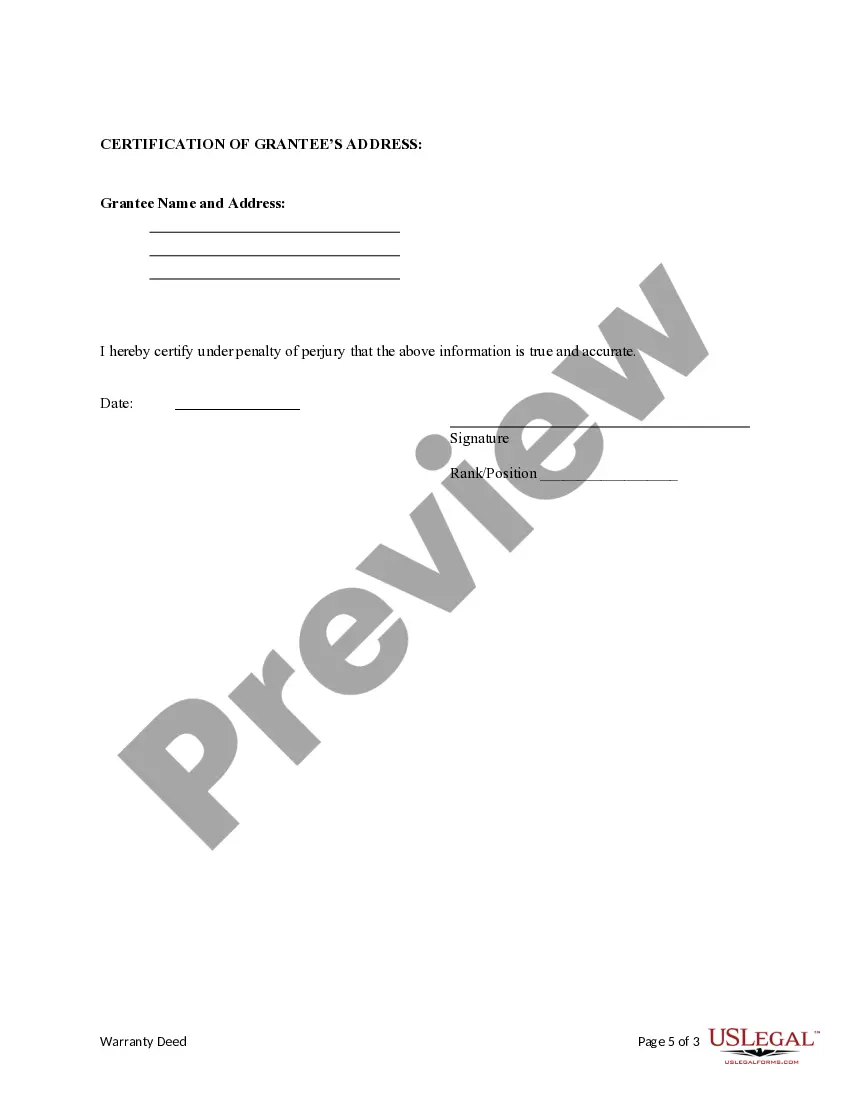
- Signatures: Spaces for the Grantors and a notary to sign and validate the document.
- Date of Acknowledgment: The specific date when the deed is acknowledged before a notary.


When to use this form
This form should be used when a married couple wishes to place their property into a trust to manage their assets or to facilitate estate planning. Utilizing this document ensures that the property is legally transferred into the trust, protecting it from probate and potentially providing tax benefits for the couple and their heirs.
Who should use this form
This form is intended for:
- Married couples looking to create a trust for estate planning purposes.
- Couples wishing to manage their property collectively under trust provisions.
- Individuals seeking to simplify the transfer of property to their beneficiaries.
How to prepare this document
- Identify the parties: Fill in the names of the husband and wife as Grantors.
- Specify the property: Provide the legal description of the property being conveyed.
- Enter Trustee information: Include the name and details of the Trustee handling the trust.
- Sign the document: Ensure that both Grantors and a notary public sign the form.
- Record the date: Write down the date on which the deed is being executed and acknowledged.
Notarization guidance
Yes, this form must be notarized to be legally valid. The signing of the Warranty Deed requires the presence of a notary public to acknowledge the identities of the Grantors, ensuring the authenticity and legality of the document. US Legal Forms offers integrated online notarization services that are secure and available 24/7, making the process straightforward and convenient.
Get your form ready online
Our built-in tools help you complete, sign, share, and store your documents in one place.
Make edits, fill in missing information, and update formatting in US Legal Forms—just like you would in MS Word.
Download a copy, print it, send it by email, or mail it via USPS—whatever works best for your next step.
Sign and collect signatures with our SignNow integration. Send to multiple recipients, set reminders, and more. Go Premium to unlock E-Sign.
If this form requires notarization, complete it online through a secure video call—no need to meet a notary in person or wait for an appointment.
We protect your documents and personal data by following strict security and privacy standards.

Make edits, fill in missing information, and update formatting in US Legal Forms—just like you would in MS Word.

Download a copy, print it, send it by email, or mail it via USPS—whatever works best for your next step.

Sign and collect signatures with our SignNow integration. Send to multiple recipients, set reminders, and more. Go Premium to unlock E-Sign.

If this form requires notarization, complete it online through a secure video call—no need to meet a notary in person or wait for an appointment.

We protect your documents and personal data by following strict security and privacy standards.
Typical mistakes to avoid
- Failing to provide a complete and accurate property description.
- Not including the correct names of the Grantors and Trustee.
- Omitting signatures or failing to have the deed notarized.
- Neglecting to record the date of acknowledgment properly.
Benefits of completing this form online
- Convenience: Download and complete the form from your own device.
- Editability: Make quick updates or changes to the form as necessary.
- Accessibility: Store and retrieve your legal documents easily.
- Reliability: Legal templates are prepared by licensed attorneys to ensure compliance with state laws.
Legal use & context
- This form is legally binding once fully executed and notarized.
- It provides a clear record of property ownership transfer to the trust.
- Using this form facilitates a smoother estate planning process, reducing the complications associated with probate.
Quick recap
- The Husband and Wife to a Trust form is essential for transferring property into a trust.
- Accurate completion and notarization are vital for legal validity.
- This form helps in effective estate planning and asset protection.
Looking for another form?
Form popularity
FAQ
Joint trusts are easier to fund and maintain.In a joint trust, after the death of the first spouse, the surviving spouse has complete control of the assets. When separate trusts are used, the deceased spouses' trust becomes irrevocable and the surviving spouse has limited control over assets.
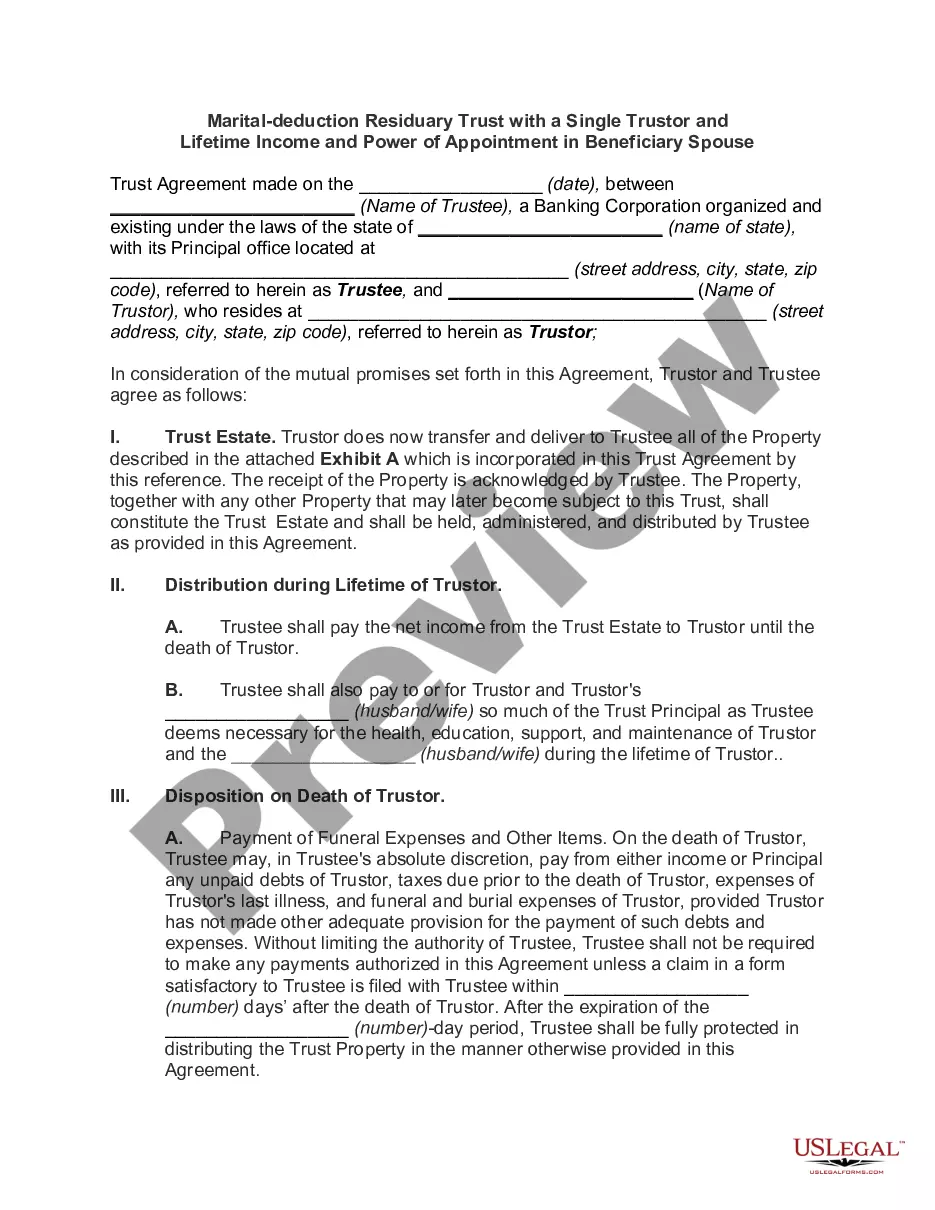
Typically, when a married couple utilizes a Revocable Living Trust based estate plan, each spouse creates and funds his or her own separate Revocable Living Trust. This results in two trusts. However, in the right circumstances, a married couple may be better served by creating a single Joint Trust.
List Your Assets and Decide Which You'll Include in the Trust. Gather the Paperwork. Decide Whether You Will Be the Sole Grantor. Choose Beneficiaries. Choose a Successor Trustee. Choose Someone to Manage Property for Minor Children. Prepare the Trust Document. Sign and Notarize.
Select the trust that best fits your financial situation. Determine which property and assets you want to include in the trust. Select a trustee to manage your living trust. Create the trust document. Sign the trust while a notary public is present. Fund the trust by transferring property into it.
Separate trusts provide more flexibility in the event of a death in the marriage. Since the trust property is already divided, separate trusts preserve the surviving spouse's ability to amend or revoke assets held within their own trust, while ensuring that the deceased spouse's trust cannot be amended after death.
Separate trusts may offer better protection from creditors, if this is a concern. For example, at the death of the first spouse, the deceased spouse's trust becomes irrevocable, which makes it harder to access by creditors. And yet the surviving spouse can still access it for income and other needs.
In California, surviving spouses already receive all of the community property upon the death of their spouse.However, creating a joint will is still an option in California, and while it might help a couple save some time and money on their estate plan, it can also lead to some complex problems.
Q: Can a person have more than one trust? A: Yes, it is not that uncommon for a person to be the beneficiary of multiple trusts. However, caution should be used. Trusts come in many shapes and sizes and can serve multiple purposes and can be established by you or by someone else for your benefit.