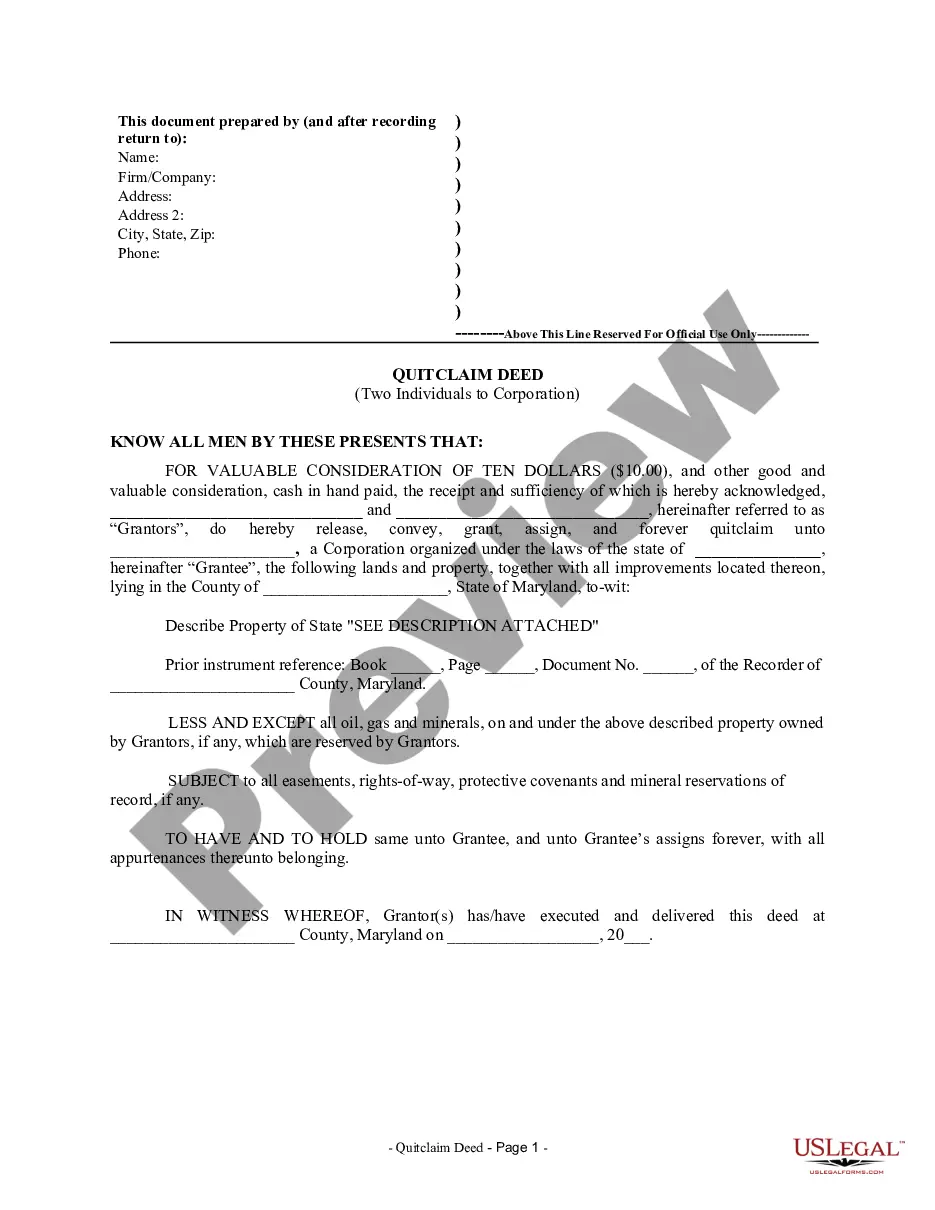
Pennsylvania Warranty Deed - Partnership to Two Individuals
About this form
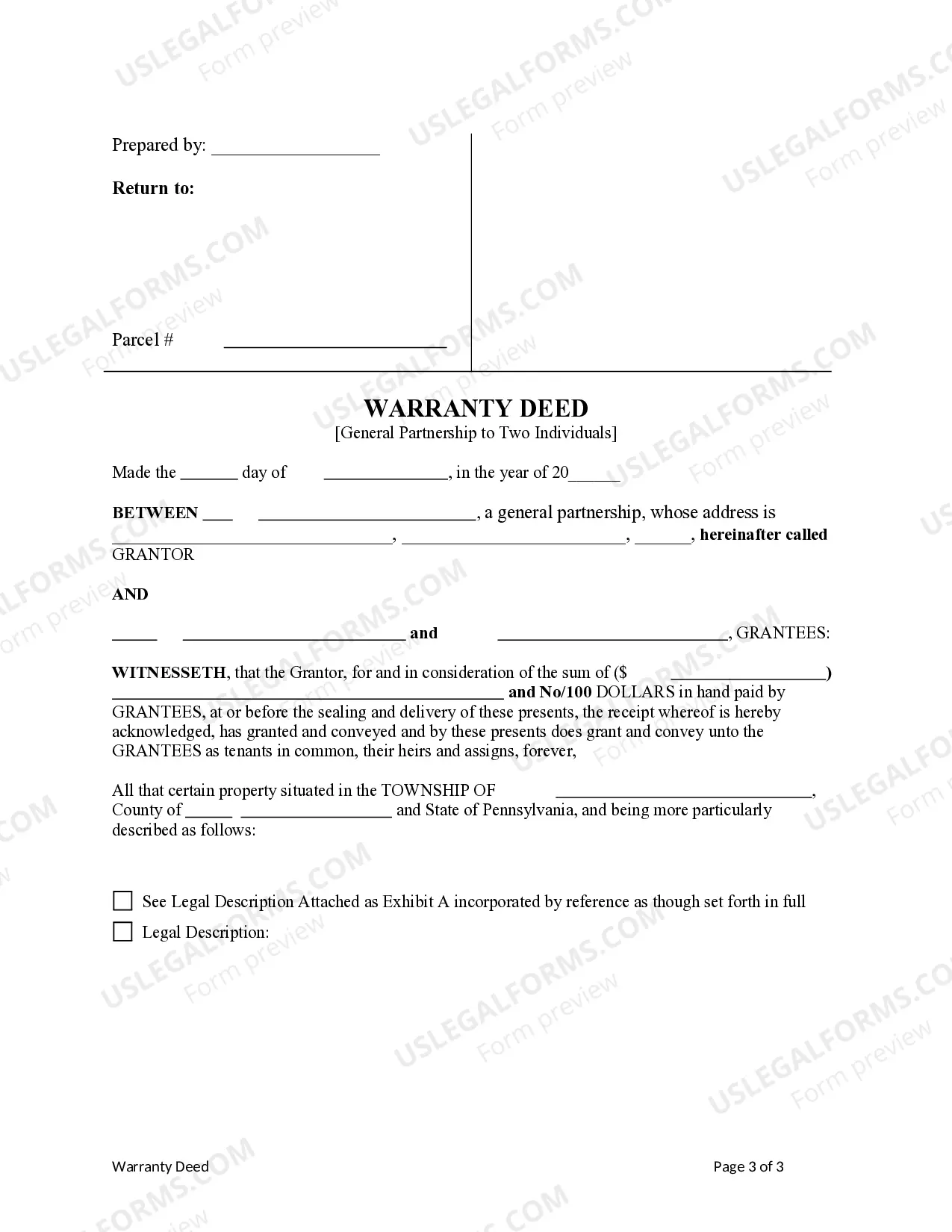
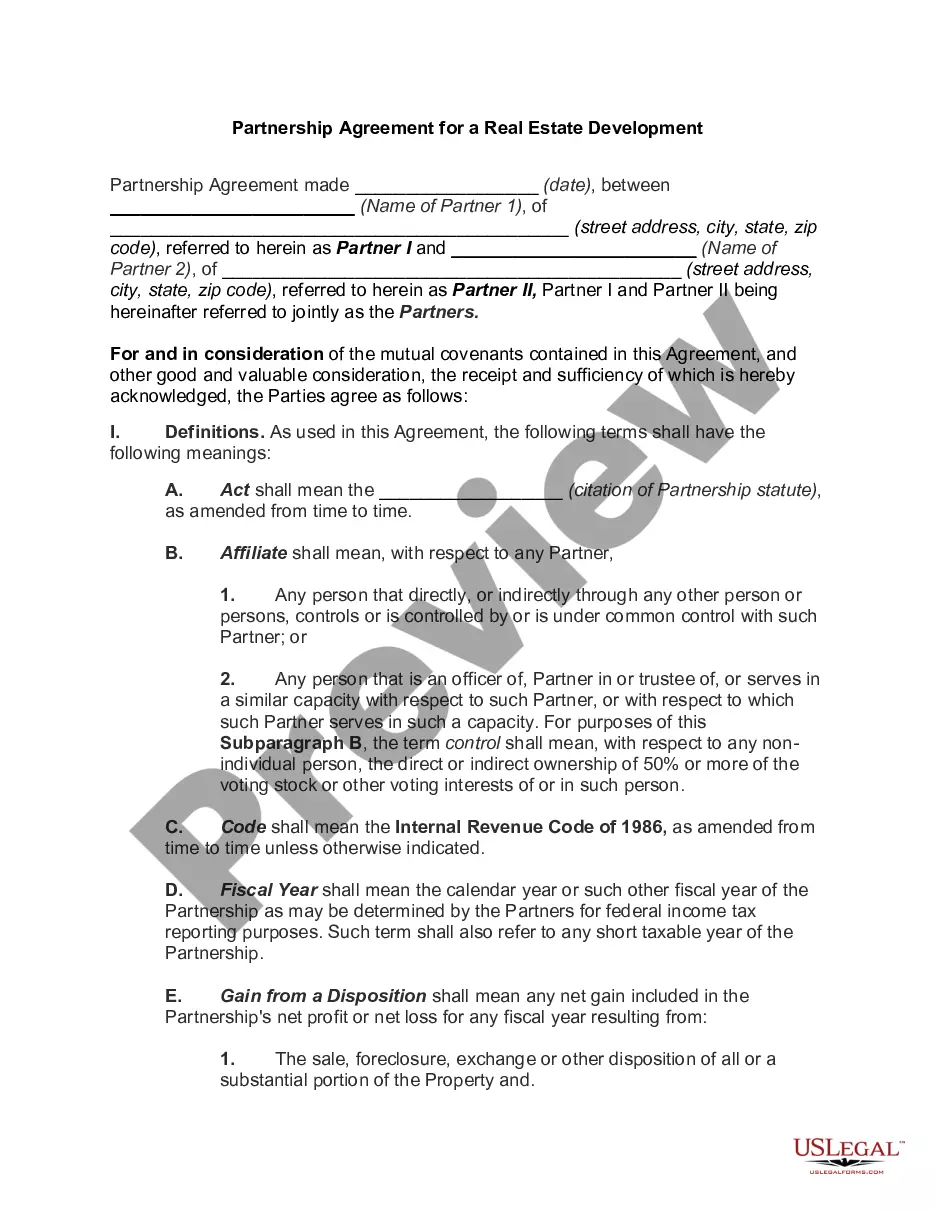
This Warranty Deed is a legal document where a partnership (the Grantor) transfers property to two individuals (the Grantees). This form is crucial for formally documenting the transfer of ownership, ensuring both parties are protected under the law. Unlike other forms of deeds, this specific warranty deed provides a guarantee that the Grantor holds clear title to the property and has the right to transfer it, offering the Grantees enhanced security in their property ownership.
What’s included in this form
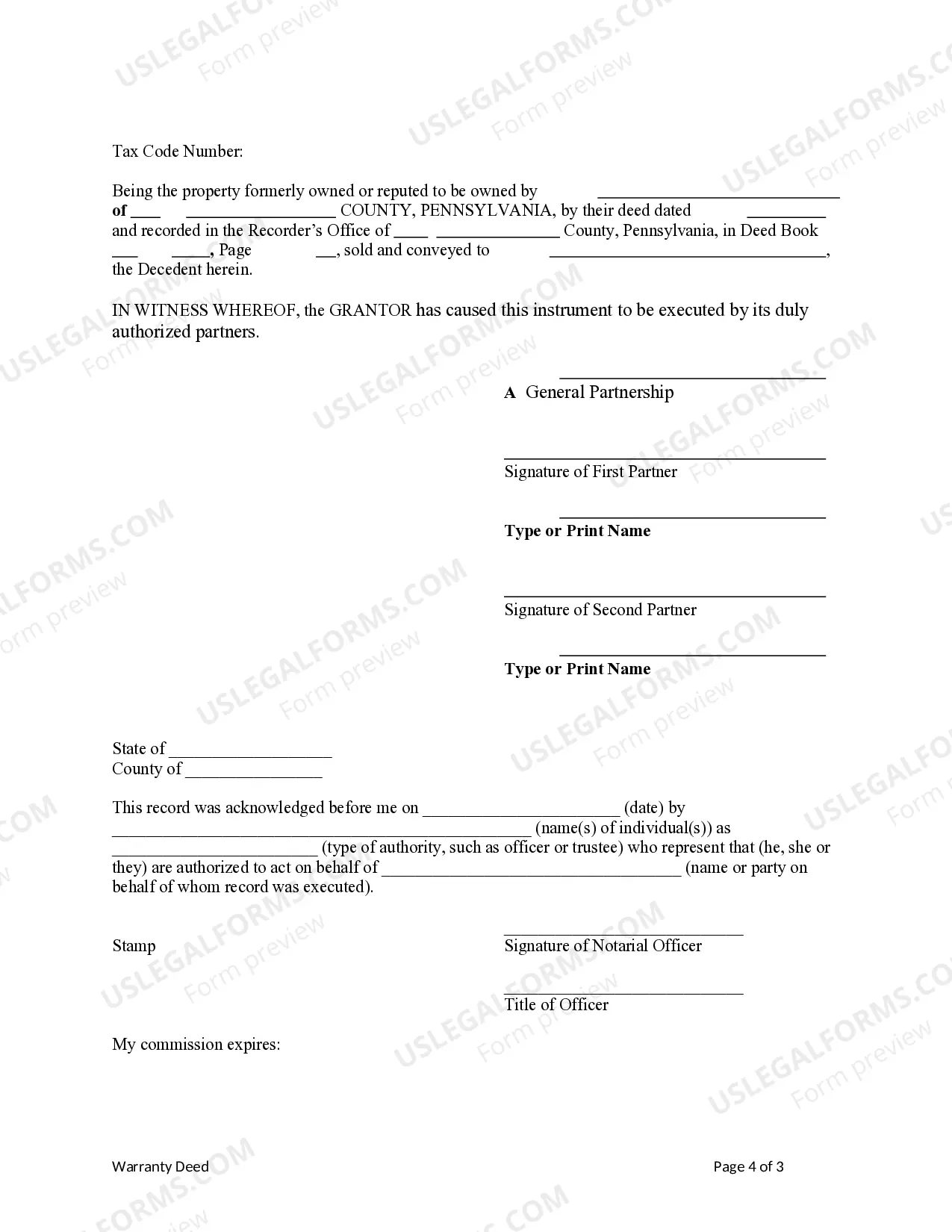
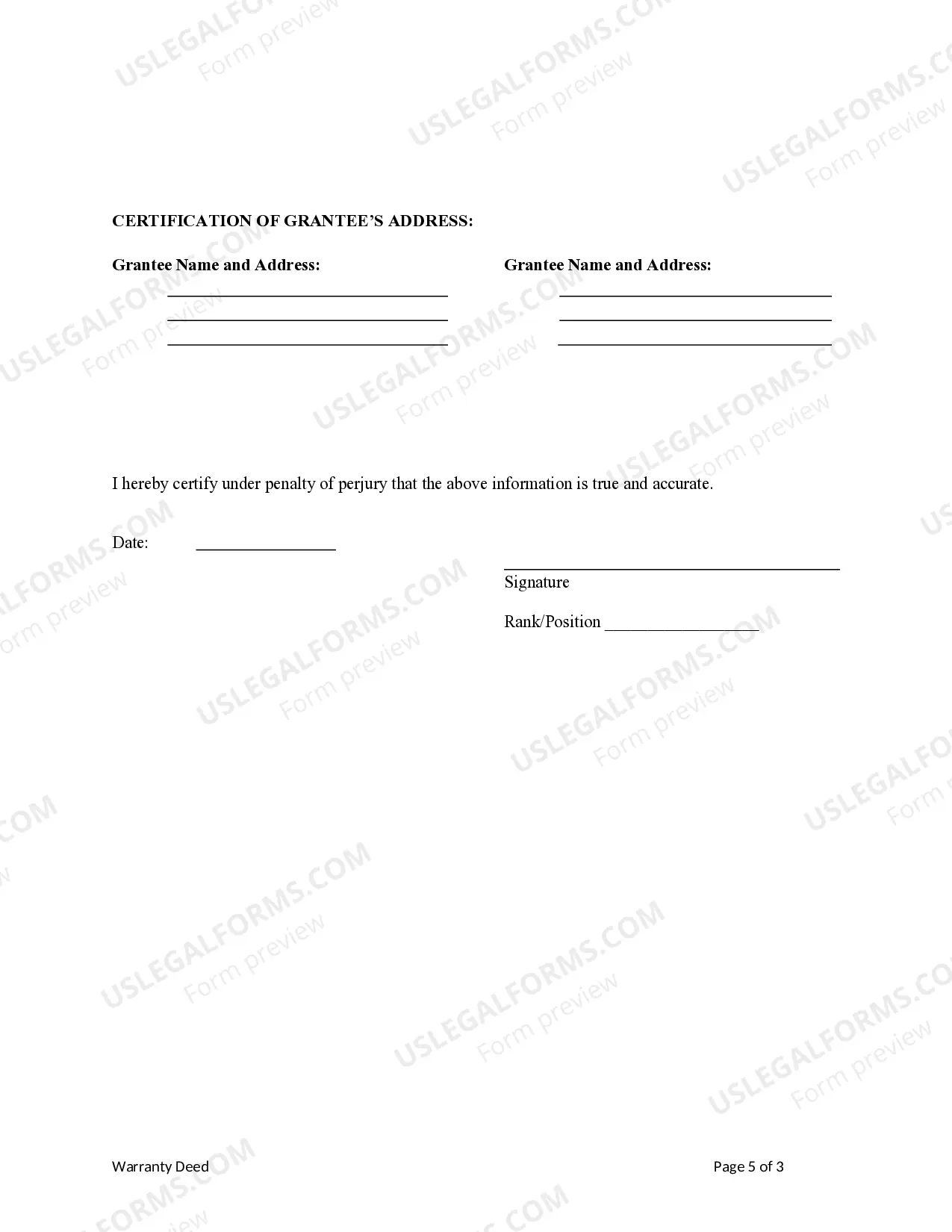
- Identification of the Grantor (Partnership) and Grantees (Individual 1 and Individual 2).
- Description of the property being conveyed.
- Warranties provided by the Grantor regarding the title.
- Signatures of the Grantor and possibly witnesses.
- Date of the transaction.



Common use cases
This form is used when a partnership wishes to transfer property ownership to two individuals. You might use this warranty deed in situations such as when the partnership is dissolving, distributing its assets, or when a business partnership is reconfiguring ownership stakes among its members.
Who can use this document
- Partnerships that own real estate and need to transfer property.
- Individuals receiving property from a partnership, ensuring their ownership is legally recognized.
- Legal representatives or attorneys involved in the property transfer process.
Steps to complete this form
- Identify the Grantor and Grantees by entering their full names and relevant details.
- Clearly describe the property being conveyed, including its physical address and legal description.
- Select the appropriate date for the transfer of property.
- Ensure all parties sign the form where indicated, including any necessary witnesses if required by law.
- Review the completed form for accuracy before submitting it for recording with the relevant authorities.
Is notarization required?
This form does not typically require notarization unless specified by local law. However, having a notary can provide additional verification of the identities of the parties involved, which may be beneficial during the recording process.
Get your form ready online
Our built-in tools help you complete, sign, share, and store your documents in one place.
Make edits, fill in missing information, and update formatting in US Legal Forms—just like you would in MS Word.
Download a copy, print it, send it by email, or mail it via USPS—whatever works best for your next step.
Sign and collect signatures with our SignNow integration. Send to multiple recipients, set reminders, and more. Go Premium to unlock E-Sign.
If this form requires notarization, complete it online through a secure video call—no need to meet a notary in person or wait for an appointment.
We protect your documents and personal data by following strict security and privacy standards.

Make edits, fill in missing information, and update formatting in US Legal Forms—just like you would in MS Word.

Download a copy, print it, send it by email, or mail it via USPS—whatever works best for your next step.

Sign and collect signatures with our SignNow integration. Send to multiple recipients, set reminders, and more. Go Premium to unlock E-Sign.

If this form requires notarization, complete it online through a secure video call—no need to meet a notary in person or wait for an appointment.

We protect your documents and personal data by following strict security and privacy standards.
Common mistakes
- Failing to provide a complete legal description of the property.
- Not signing the form where required, which can invalidate the deed.
- Using incorrect or outdated versions of the form.
- Neglecting local regulations that may affect the transfer process.
Benefits of using this form online
- Convenient access to a legally vetted template tailored for property transfer.
- Edit and fill out forms digitally, allowing for easy corrections and adjustments.
- Immediate download capability, enabling quick use without waiting for shipping or printing services.
Quick recap
- A Warranty Deed from a partnership to two individuals ensures clear property title ownership.
- Complete all fields accurately to avoid legal complications.
- Review state-specific requirements to ensure compliance.
- Consider notarizing the document for enhanced credibility.
Looking for another form?
Form popularity
FAQ
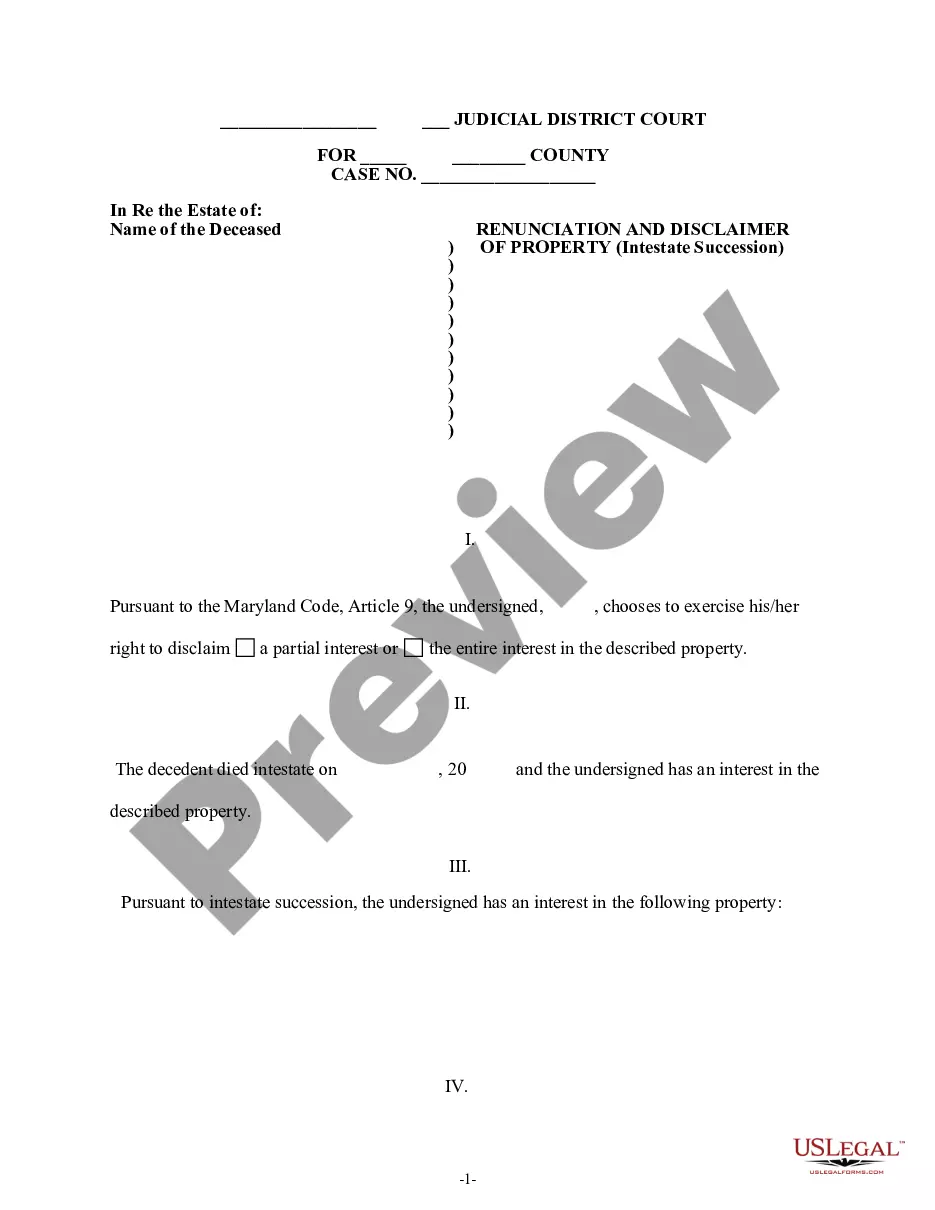
In most states you can file a disclaimer or deed of disclaimer that says specifically you were placed in title without your knowledge or consent and disclaim the deed.
Yes you can. This is called a transfer of equity but you will need the permission of your lender. If you are not married or in a civil partnership you may wish to consider creating a deed of trust and a living together agreement which we can explain to you.
A quitclaim deed will remove the out-spouse (or departing spouse) from the title to the property, effectively relinquishing their equity or ownership in the home. The execution of a quitclaim deed is typically a requirement of a divorce settlement in order to complete the division of assets.
It will depend what state the property is in. For example, the minimum fee payable when changing the title to have someone removed from a property title in NSW is $133.48. This fee must be paid to the NSW Government Land & Property Information Department.
To add a name to a house deed in Pennsylvania, a new deed is prepared. The owner can prepare his own deed or contact an attorney or document service to provide one. Using an attorney is the best route because the attorney ensures that the deed is prepared per the requirements of the state.
The Grantee in a Quitclaim Deed is the person who is being given interest in a property from the Grantor. It is possible for someone to be both a Grantor and a Grantee in a Quitclaim Deed.Most real estate deeds are notarized by attorneys.
The name and address of the seller (called the grantor) The name and address of the buyer (called the grantee) A legal description of the property (found on the previous deed) A statement that the grantor is transferring the property to the grantee.
The only way to forcibly change the ownership status is through a legal action and the resultant court order. However, if an owner chooses to be removed from the deed, it is simply a matter of preparing a new deed transferring that owner's interest in the property.
Discuss property ownership interests. Access a copy of your title deed. Complete, review and sign the quitclaim or warranty form. Submit the quitclaim or warranty form. Request a certified copy of your quitclaim or warranty deed.