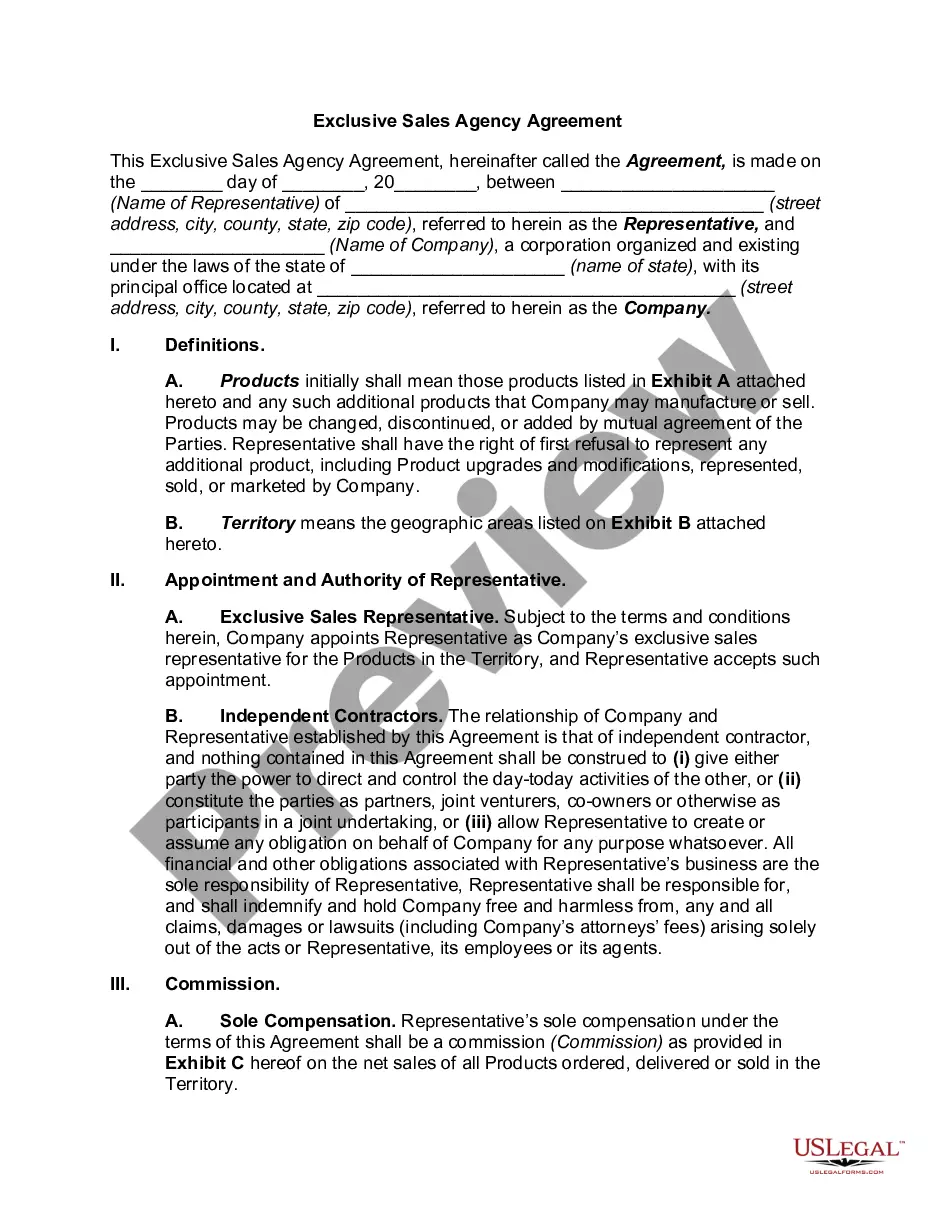
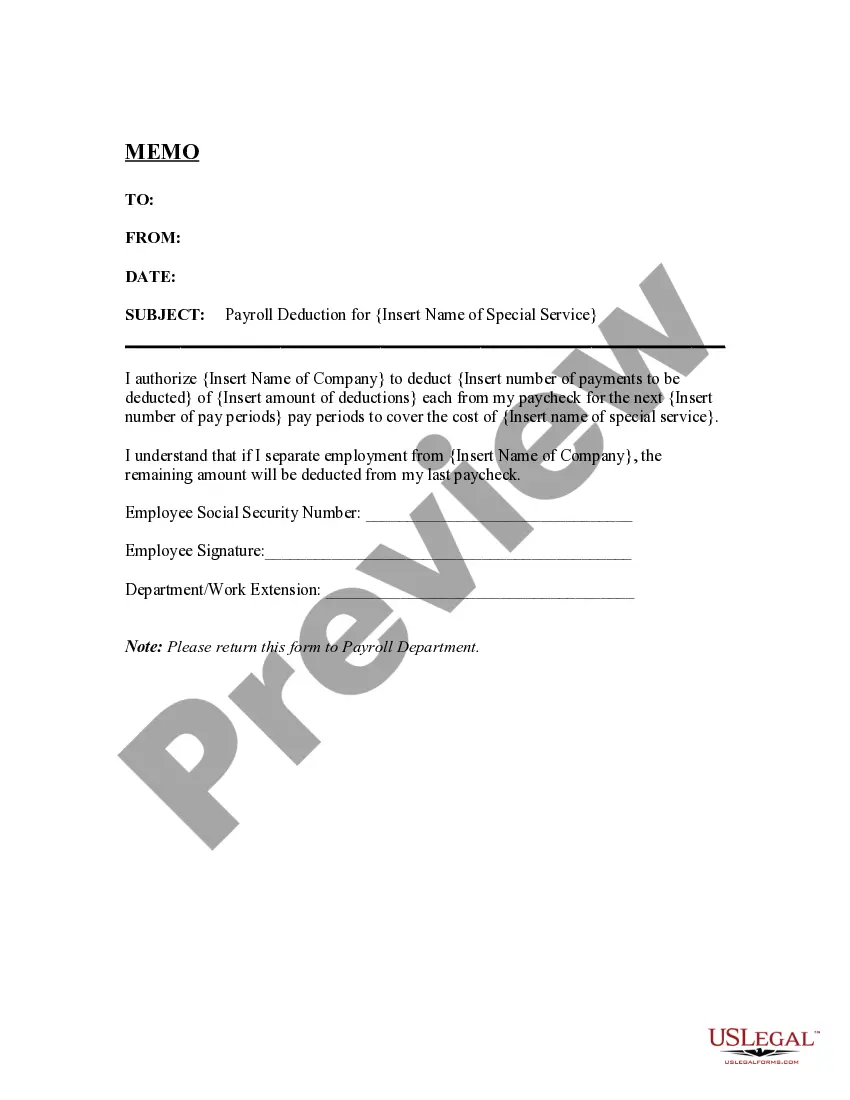
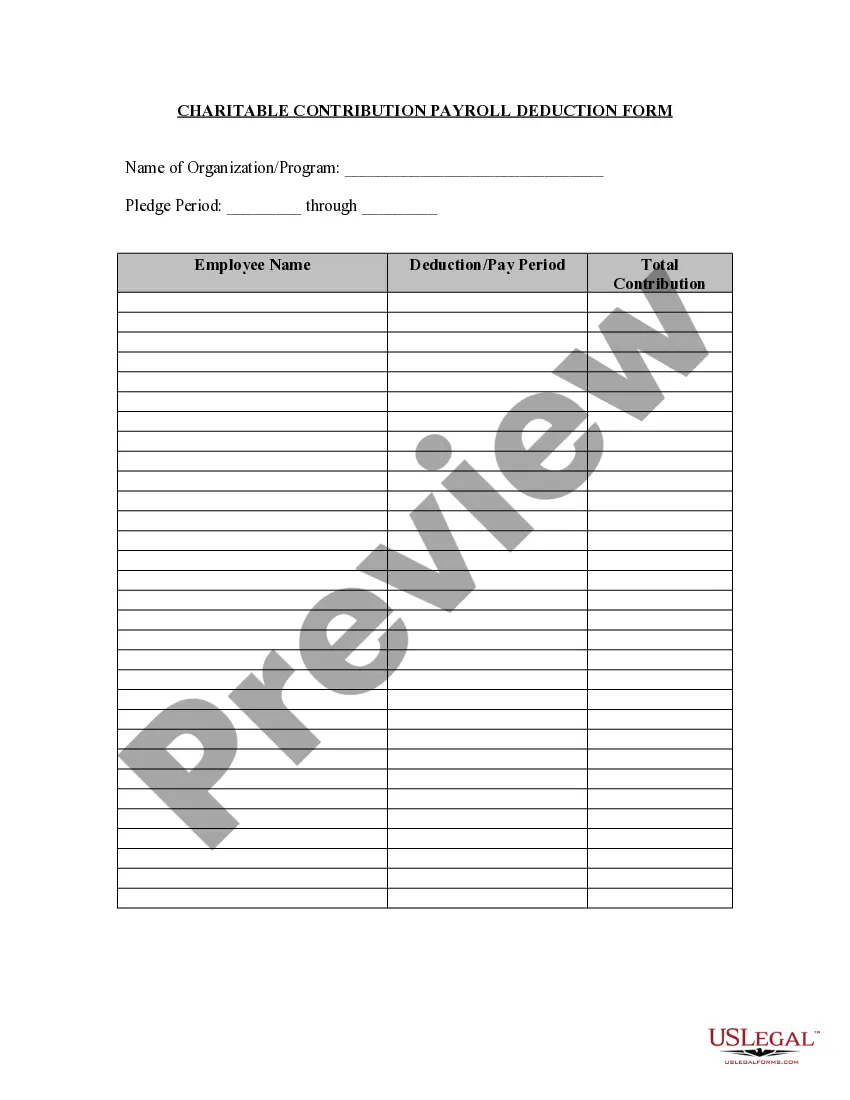
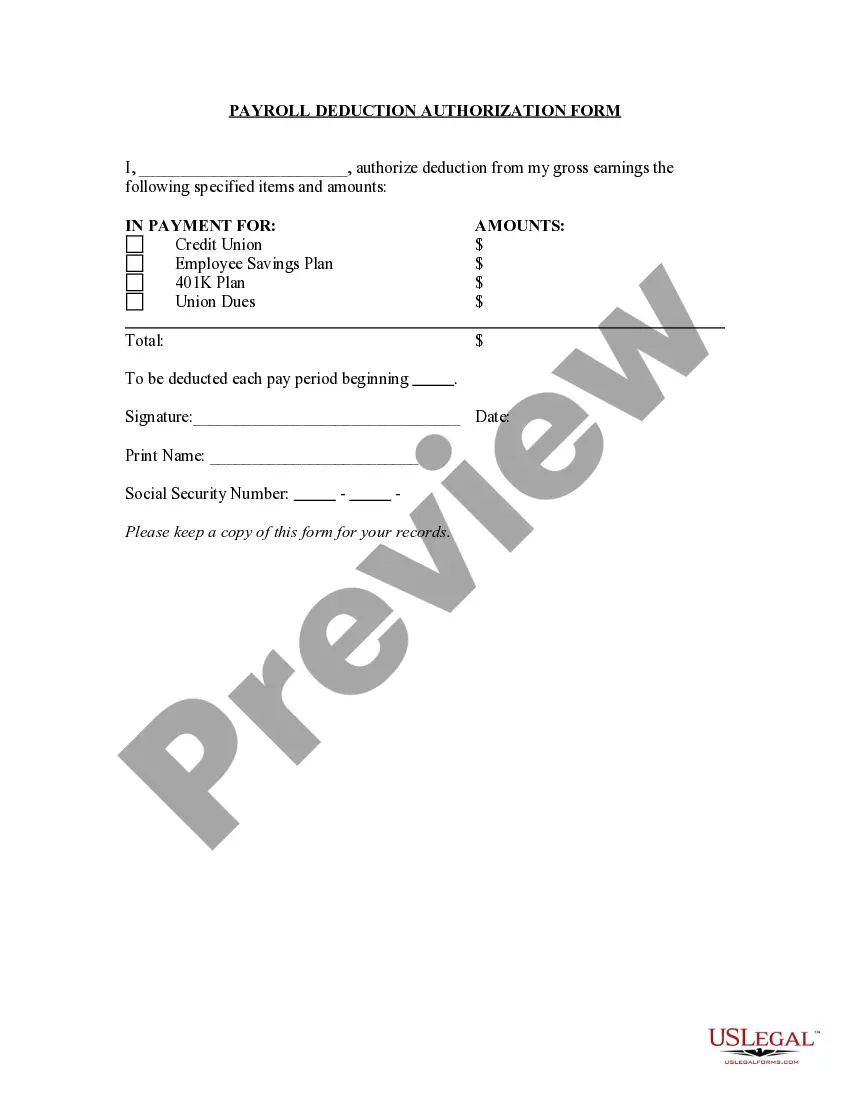
Oregon Payroll Deduction - Special Services
Description
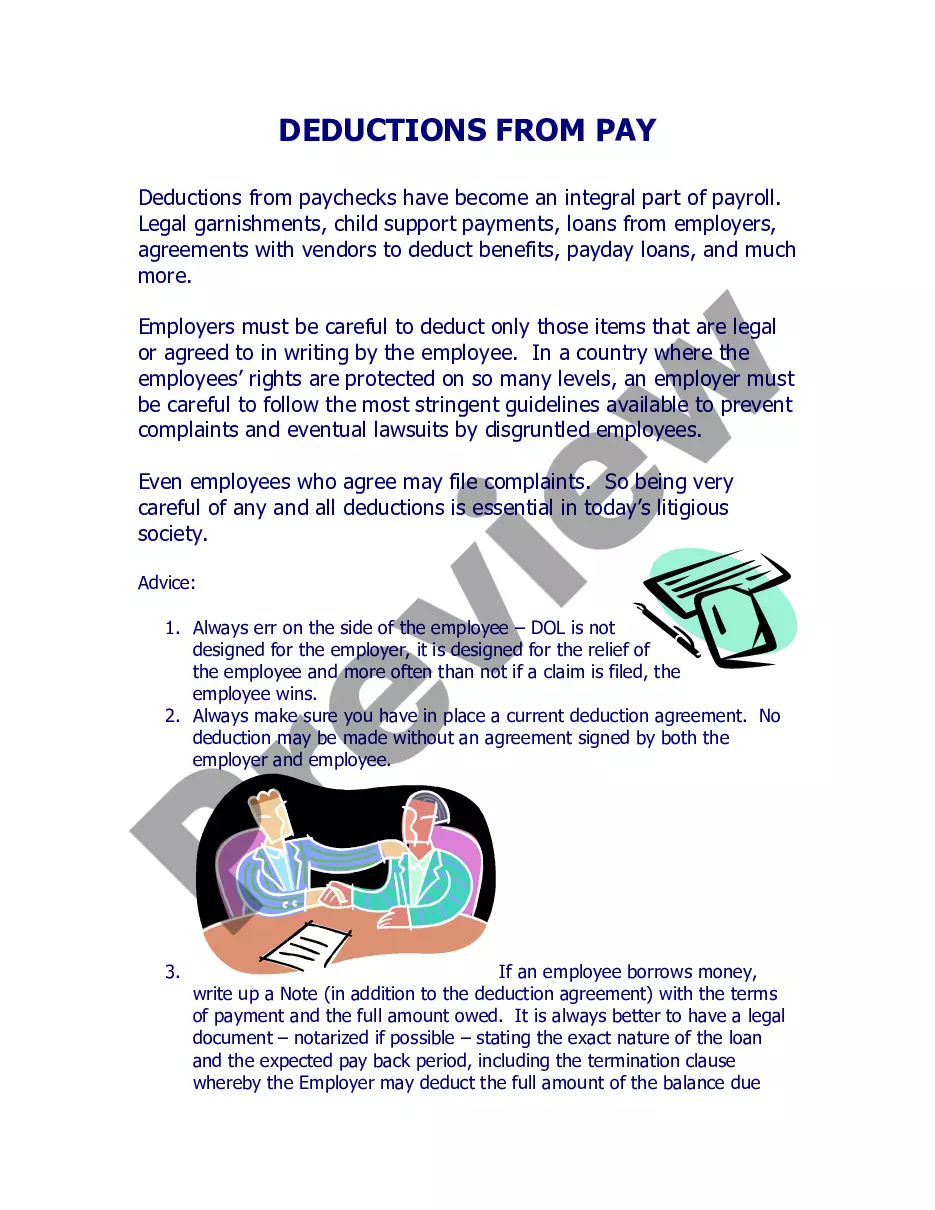
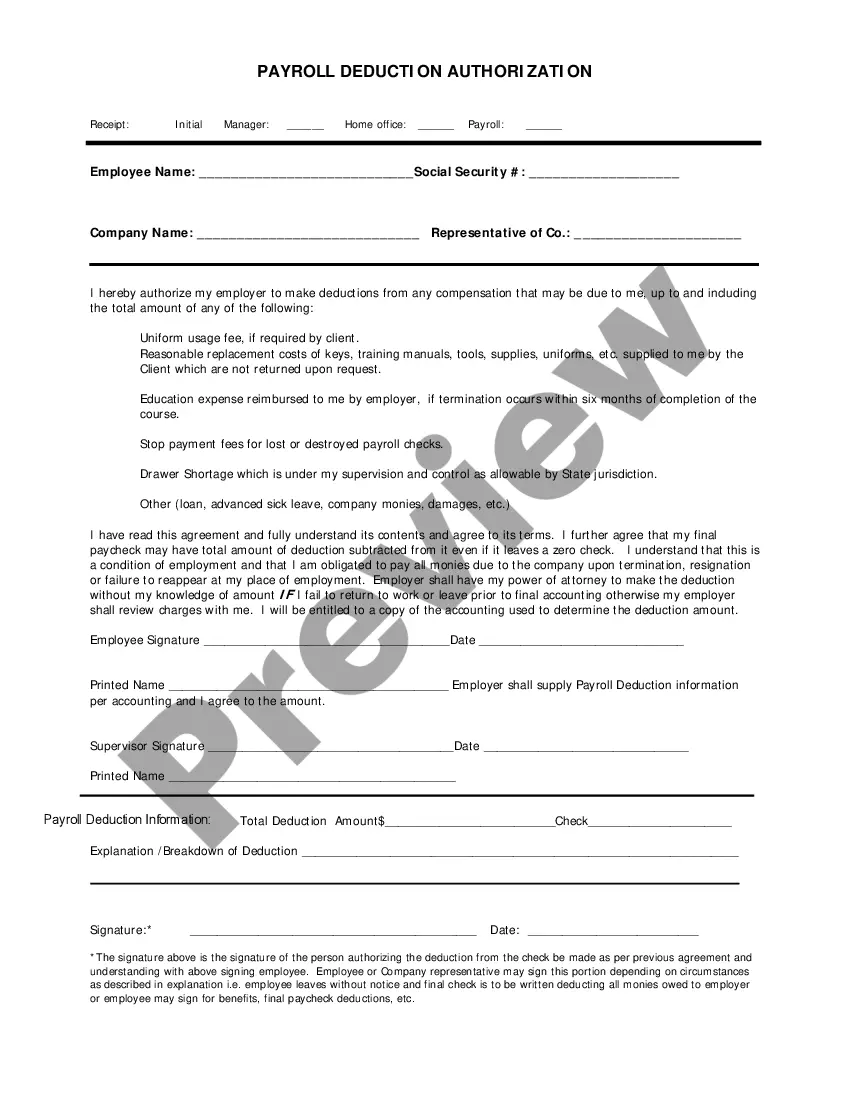

Get your form ready online
Our built-in tools help you complete, sign, share, and store your documents in one place.
Make edits, fill in missing information, and update formatting in US Legal Forms—just like you would in MS Word.
Download a copy, print it, send it by email, or mail it via USPS—whatever works best for your next step.
Sign and collect signatures with our SignNow integration. Send to multiple recipients, set reminders, and more. Go Premium to unlock E-Sign.
If this form requires notarization, complete it online through a secure video call—no need to meet a notary in person or wait for an appointment.
We protect your documents and personal data by following strict security and privacy standards.

Make edits, fill in missing information, and update formatting in US Legal Forms—just like you would in MS Word.

Download a copy, print it, send it by email, or mail it via USPS—whatever works best for your next step.

Sign and collect signatures with our SignNow integration. Send to multiple recipients, set reminders, and more. Go Premium to unlock E-Sign.

If this form requires notarization, complete it online through a secure video call—no need to meet a notary in person or wait for an appointment.

We protect your documents and personal data by following strict security and privacy standards.
Looking for another form?

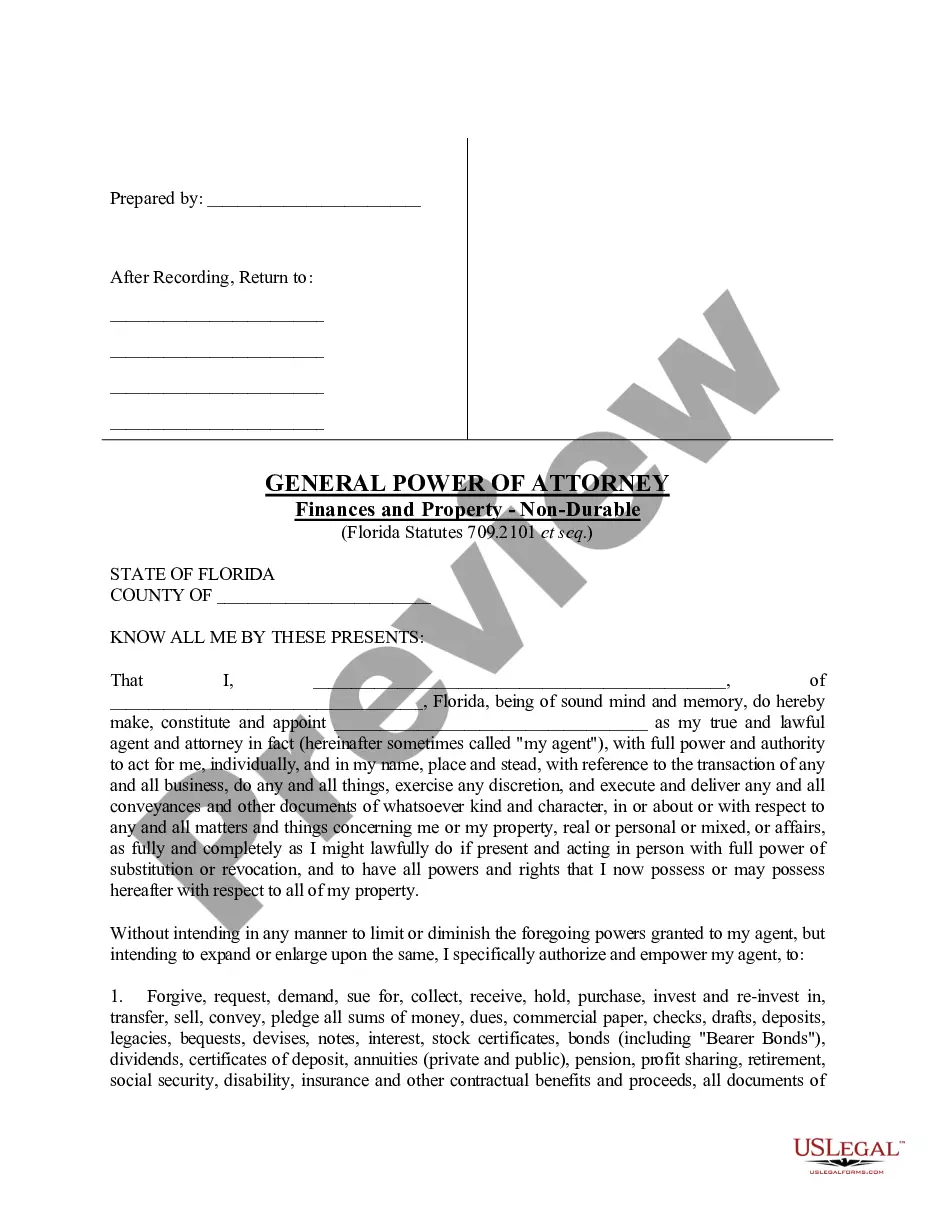
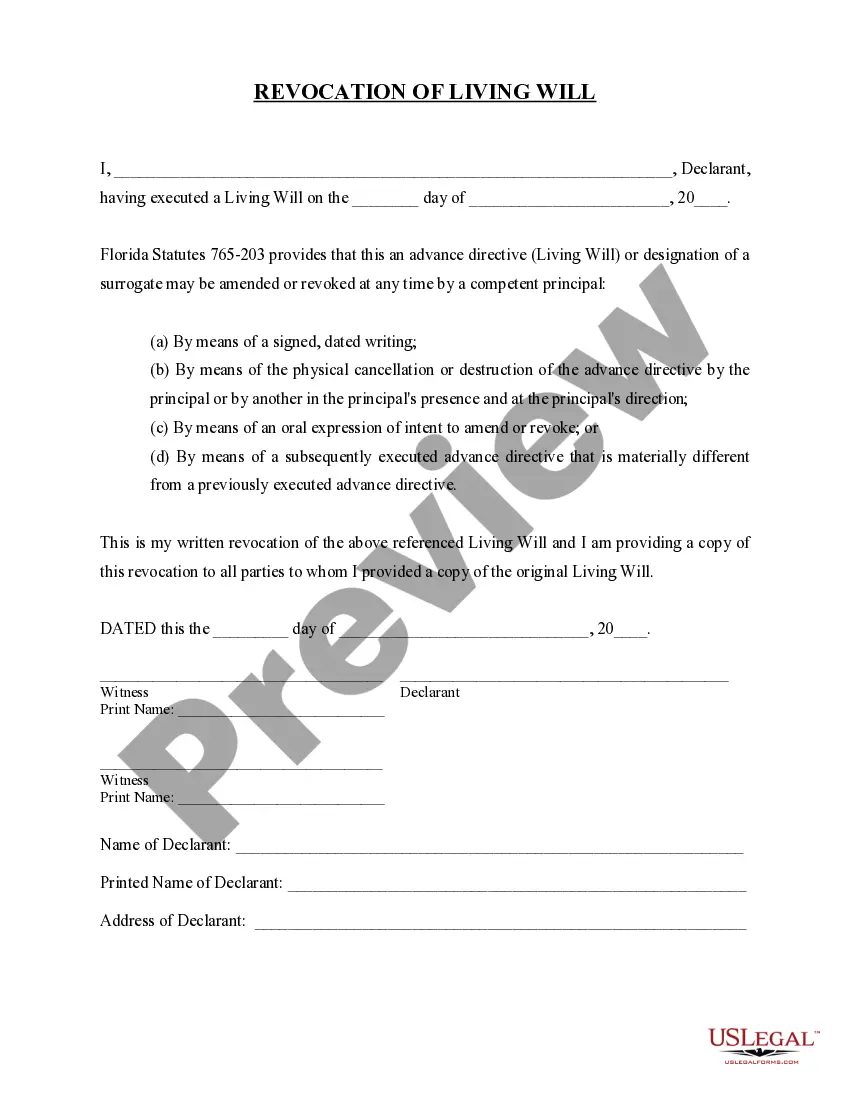




How to fill out Payroll Deduction - Special Services?
If you need to acquire, download, or print legal document templates, utilize US Legal Forms, the largest collection of legal forms available online.
Use the site's user-friendly and convenient search feature to locate the documents you require. Several templates for business and personal purposes are categorized by types and titles, or keywords.
Utilize US Legal Forms to find the Oregon Payroll Deduction - Special Services in just a few clicks.
Every legal document template you purchase is yours indefinitely. You have access to every form you downloaded in your account. Click on the My documents section and select a form to print or download again.
Complete and download, and print the Oregon Payroll Deduction - Special Services with US Legal Forms. There are numerous professional and state-specific forms available for your personal or business needs.
- If you are already a US Legal Forms user, Log In to your account and click on the Download button to obtain the Oregon Payroll Deduction - Special Services.
- You can also access forms you previously downloaded from the My documents section of your account.
- If you are using US Legal Forms for the first time, follow the instructions below.
- Step 1. Make sure you have selected the form for your specific city/state.
- Step 2. Use the Preview option to review the form's details. Don't forget to check the summary.
- Step 3. If you are unhappy with the form, use the Search area at the top of the page to find alternative versions of the legal form template.
- Step 4. After you have found the form you need, click on the Buy Now button. Choose the payment plan you prefer and provide your information to register for an account.
- Step 5. Complete the transaction. You can use your credit card or PayPal account to finalize the purchase.
- Step 6. Select the format of the legal form and download it to your device.
- Step 7. Fill out, edit, and print or sign the Oregon Payroll Deduction - Special Services.
Form popularity
FAQ
There are three basic categories of deductions employers make from pay: legally required deductions, deductions for the employer's convenience and deductions for the employee's benefit.
A payroll deduction refers to money that your employer withholds from your paycheck for a number of different reasons. This includes mandatory deductions that are taken for tax purposes or voluntary deductions for various benefit programs, such as retirement plans or healthcare contributions.
What are payroll deductions?Income tax.Social security tax.401(k) contributions.Wage garnishments.Child support payments.
For the first quarter 2021, the special surcharge is 0.12%. For the remaining quarters of 2021, the special surcharge is 0.09%.
Pre-tax deductions: Medical and dental benefits, 401(k) retirement plans (for federal and most state income taxes) and group-term life insurance. Mandatory deductions: Federal and state income tax, FICA taxes, and wage garnishments. Post-tax deductions: Garnishments, Roth IRA retirement plans and charitable donations.
Oregon has some of the highest tax burdens in the U.S. The state uses a four-bracket progressive state income tax, which means that higher income levels correspond to higher state income tax rates. These rates range from 4.75% to 9.90%. For 2021, that's the fourth-highest top rate in the country.
Special Payroll Tax Offsets are used to fund various state programs. Programs that have been supported this way include: Wage Security Fund -- Pays final wages to persons who are unemployed and whose employer could not afford to make a final payroll.
Some mandatory payroll tax deductions that employers are required by law to withhold from an employee's paycheck include: Federal income tax withholding. Social Security & Medicare taxes also known as FICA taxes. State income tax withholding.
There are four basic types of payroll taxes: federal income, Social Security, Medicare, and federal unemployment. Employees must pay Social Security and Medicare taxes through payroll deductions, and most employers also deduct federal income tax payments.