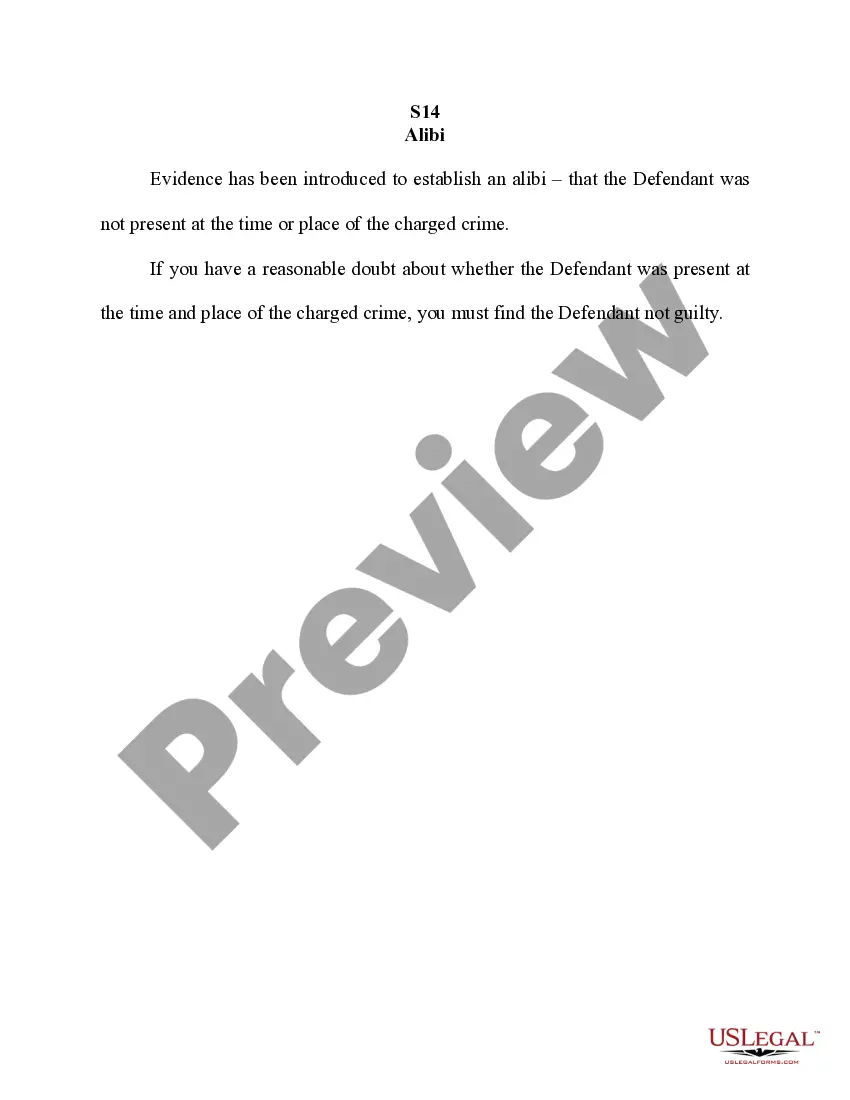
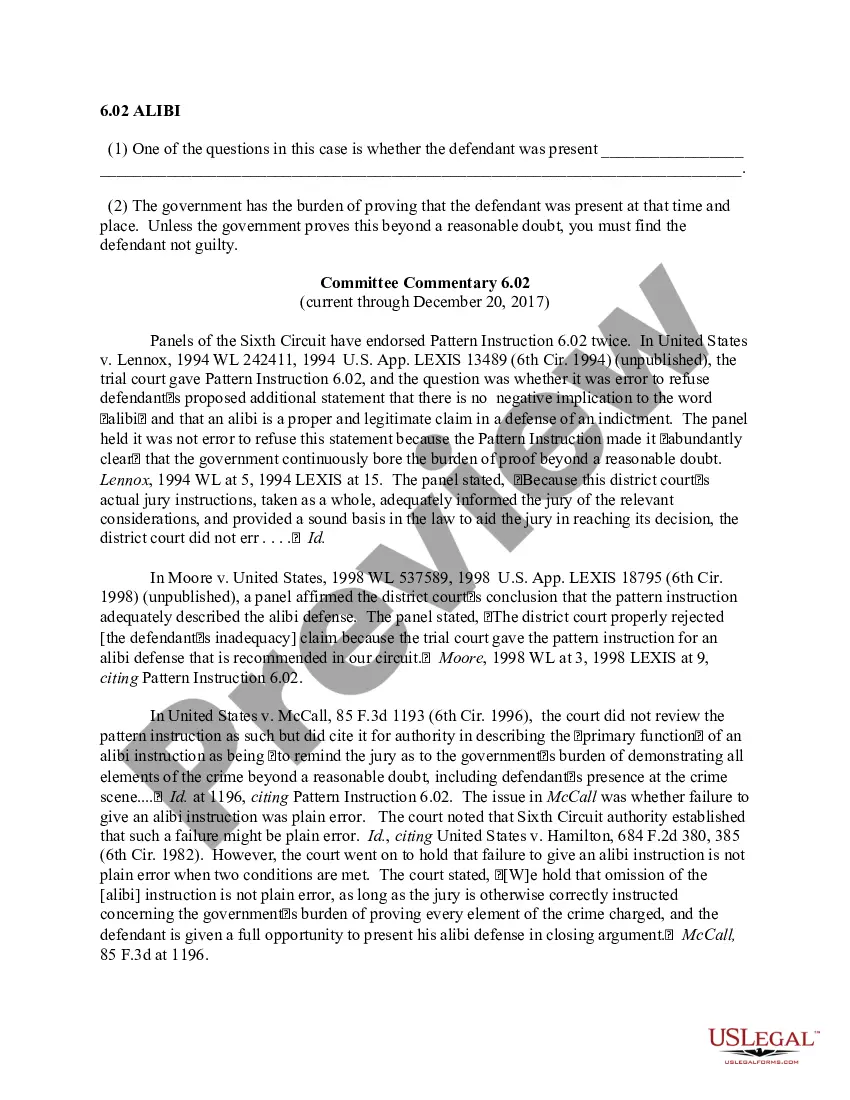
Oregon Alibi Instruction
Description
Get your form ready online
Our built-in tools help you complete, sign, share, and store your documents in one place.
Make edits, fill in missing information, and update formatting in US Legal Forms—just like you would in MS Word.
Download a copy, print it, send it by email, or mail it via USPS—whatever works best for your next step.
Sign and collect signatures with our SignNow integration. Send to multiple recipients, set reminders, and more. Go Premium to unlock E-Sign.
If this form requires notarization, complete it online through a secure video call—no need to meet a notary in person or wait for an appointment.
We protect your documents and personal data by following strict security and privacy standards.

Make edits, fill in missing information, and update formatting in US Legal Forms—just like you would in MS Word.

Download a copy, print it, send it by email, or mail it via USPS—whatever works best for your next step.

Sign and collect signatures with our SignNow integration. Send to multiple recipients, set reminders, and more. Go Premium to unlock E-Sign.

If this form requires notarization, complete it online through a secure video call—no need to meet a notary in person or wait for an appointment.

We protect your documents and personal data by following strict security and privacy standards.
Looking for another form?
How to fill out Alibi Instruction?
If you desire to be thorough, acquire, or print legal document templates, utilize US Legal Forms, the largest assortment of legal forms, accessible online.
Employ the site's simple and convenient search to obtain the documents you need.
Various templates for business and personal purposes are categorized by types and states, or keywords.
Step 4. Once you have found the form you need, click the Purchase now button. Choose the pricing plan you prefer and provide your details to register for an account.
Step 5. Complete the purchase. You can use your credit card or PayPal account to finalize the transaction.
- Use US Legal Forms to obtain the Oregon Alibi Instruction with just a few clicks.
- If you are already a US Legal Forms customer, Log In to your account and click the Download button to retrieve the Oregon Alibi Instruction.
- You can also access forms you previously acquired in the My documents section of your account.
- If you are using US Legal Forms for the first time, follow the instructions below.
- Step 1. Confirm you have selected the form for the correct city/state.
- Step 2. Use the Preview option to review the contents of the form. Be sure to read through the summary.
- Step 3. If you are not satisfied with the form, use the Search field at the top of the screen to find other types of your legal form template.
Form popularity
FAQ
If the defendant has a bona fide alibi, the charges against him can be dismissed. If his alibi is false, the investigation may disclose that fact and the prosecution will have sufficient time to secure rebuttal evidence.
In general, defenses to crimes fall into three main categories: Negative, Affirmative, and Procedural. Negative defenses: A negative defense is when the defendant relies on lack of sufficient evidence needed to prove every element of the crime beyond a reasonable doubt.
Elements of alibi defense In order to present a successful alibi, the defendant's attorney: The defendant was somewhere else when the crime took place; There was no reasonable opportunity for the defendant to have committed the crime; and. The defendant was unable to have committed the crime by any other means.
General Principles Alibi evidence must be evidence that is "determinative of the final issue of guilt or innocence of the accused." It must be dispositive of guilt or innocence. An admission of being a party to some events making up the crime but not others is not an alibi. It must completely absolve the accused.
To establish a successful alibi, you need to prove the following elements: You were not physically present at the time and location of the crime. You had no reasonable opportunity to commit the crime. There is no possibility that you committed the crime.
Alibi: The primary purpose of an alibi is to establish the defendant's absence from the crime scene, creating reasonable doubt about their guilt. Witness: Witnesses provide firsthand accounts or expert opinions to either support or challenge the facts and claims presented in the case.
The burden of proof in an alibi defense is on the defendant. This means that the defendant must prove their alibi defense by a preponderance of the evidence, which is a lower standard of proof than beyond a reasonable doubt.
The defendant has 10 days (unless the court alters that period) within which to serve the government with written notice of his intention to offer an alibi defense, "stat[ing] the specific place or places at which [he] claims to have been at the time of the alleged offense and the names and addresses of the witnesses ...