Oregon Pre-Purchase Recommendations - Horse Equine Forms
What this document covers
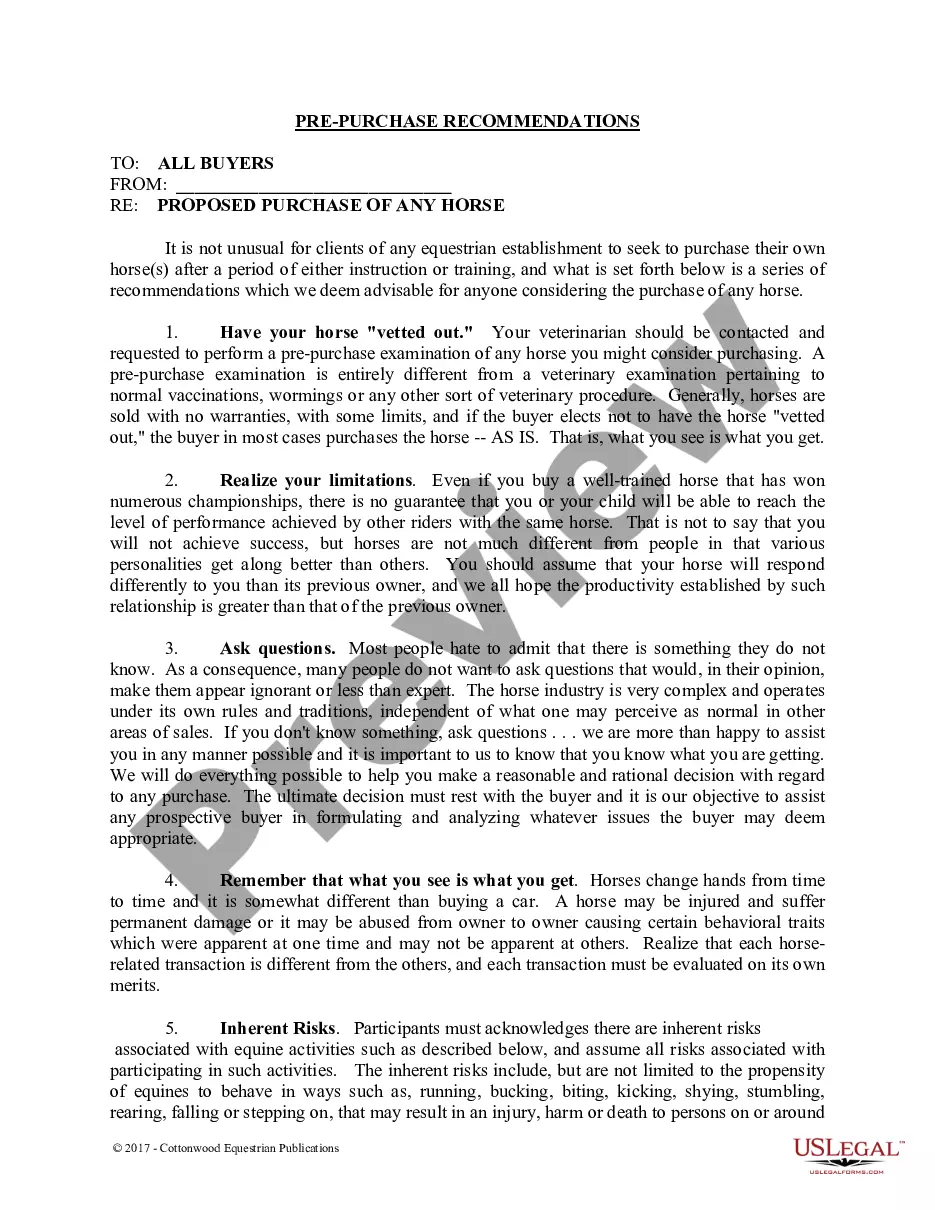
The Pre-Purchase Recommendations form is a vital document for anyone considering purchasing a horse. It offers potential buyers recommendations and guidelines to help inform their decision. This form is specifically tailored for the equine industry, setting it apart from standard purchase agreements by focusing on the unique aspects of horse ownership and care.
Key components of this form
- Recommendations for veterinary examinations before purchasing a horse.
- Advice on understanding personal riding limits and the horse's behavior with different riders.
- A checklist of important questions to ask during the purchasing process.
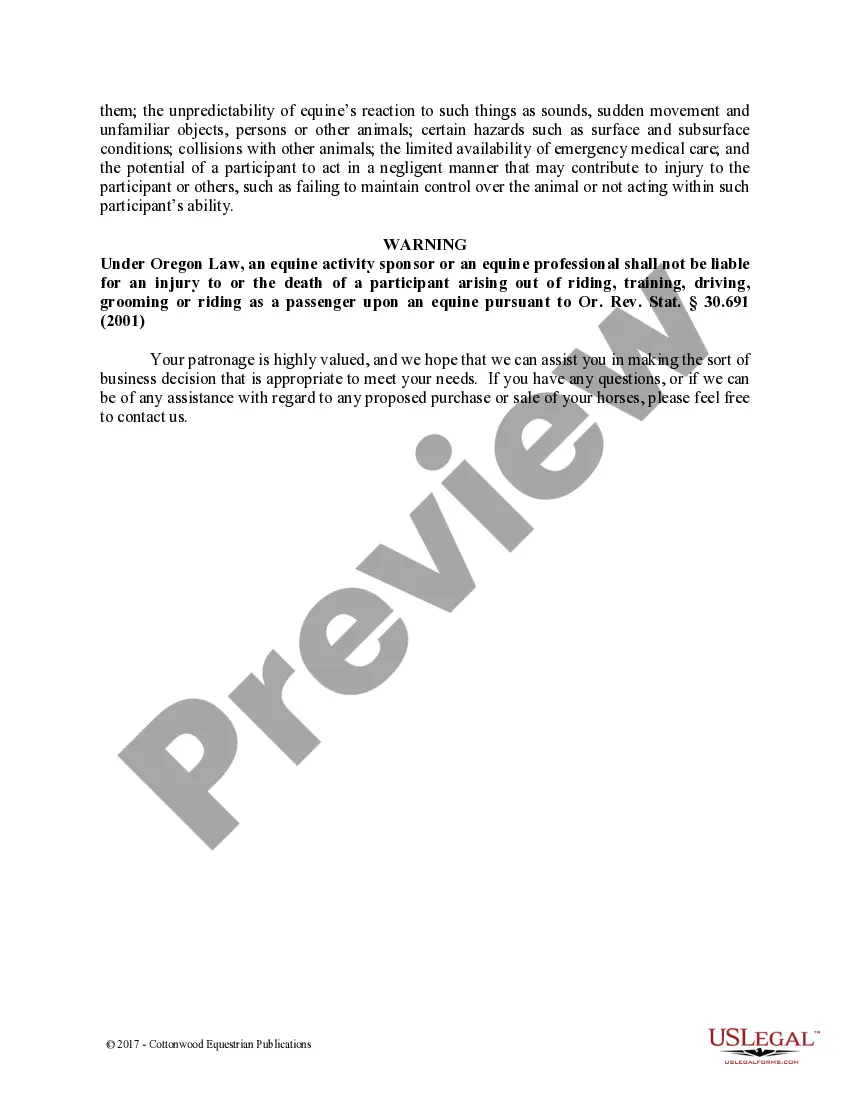
- Information about inherent risks associated with equine activities.
- A reminder about the "as is" nature of horse purchases.
When to use this form
This form should be used when a buyer is considering the purchase of a horse. It serves as a guide to ensure that all necessary precautions are taken, helping buyers make informed and responsible decisions during the buying process.
Who should use this form
- First-time horse buyers who need guidance on the purchasing process.
- Experienced equestrians seeking a refresher on best practices for purchasing a new horse.
- Parents buying a horse for their children, to understand specific considerations.
- Anyone looking to acquire a horse from an equestrian establishment.
How to complete this form
- Begin by addressing the form to the prospective horse seller.
- Insert the name of the horse and relevant details about the proposed purchase.
- Review the recommendations provided in the form, focusing on key considerations with your veterinarian.
- Ask any questions needed to clarify uncertainties before making a final decision.
- Complete the form with your signature and date when ready to proceed.
Does this form need to be notarized?
This form usually doesn’t need to be notarized. However, local laws or specific transactions may require it. Our online notarization service, powered by Notarize, lets you complete it remotely through a secure video session, available 24/7.
Get your form ready online
Our built-in tools help you complete, sign, share, and store your documents in one place.
Make edits, fill in missing information, and update formatting in US Legal Forms—just like you would in MS Word.
Download a copy, print it, send it by email, or mail it via USPS—whatever works best for your next step.
Sign and collect signatures with our SignNow integration. Send to multiple recipients, set reminders, and more. Go Premium to unlock E-Sign.
If this form requires notarization, complete it online through a secure video call—no need to meet a notary in person or wait for an appointment.
We protect your documents and personal data by following strict security and privacy standards.

Make edits, fill in missing information, and update formatting in US Legal Forms—just like you would in MS Word.

Download a copy, print it, send it by email, or mail it via USPS—whatever works best for your next step.

Sign and collect signatures with our SignNow integration. Send to multiple recipients, set reminders, and more. Go Premium to unlock E-Sign.

If this form requires notarization, complete it online through a secure video call—no need to meet a notary in person or wait for an appointment.

We protect your documents and personal data by following strict security and privacy standards.
Mistakes to watch out for
- Failing to conduct a veterinary examination before purchase.
- Overestimating personal riding abilities and the horse's suitability.
- Not asking enough questions about the horse's health history and training.
- Ignoring the risks associated with horse ownership.
Why complete this form online
- Convenient access to a customizable form template.
- Ability to download and print instantly for immediate use.
- Reliability, knowing it has been drafted by licensed attorneys.
- No need for lengthy appointments; complete the form at your own pace.
Main things to remember
- The Pre-Purchase Recommendations form guides potential horse buyers through critical considerations.
- Understanding veterinary checks, personal limits, and the inherent risks is essential for responsible ownership.
- Asking questions and seeking assistance is encouraged to ensure a well-informed purchase.
Looking for another form?

Form popularity
FAQ
A thorough inspection will include checking engine compression and a computer engine analysis. How much should it cost, and who pays? The buyer typically pays for the pre-purchase inspection.For that price, you can expect a good overall mechanical and safety inspection (including a test drive) of the vehicle.
Take a close look at your potential horse. Then look even closer. A seller is going to try to present a perfect horse, so don't overlook clues such as lumps, scars, or a dull coat. Give particular attention to the feet and legs.
The Price Tag The price of a basic pre-purchase exam will vary from one veterinary practice to another, but in general you can expect to pay from $250 to $500. It's a good idea to ask the veterinarian the base cost up front.
The prepurchase examination is an objective evaluation of the horse to discover any problems that might affect the horse's current or future performance and health.Our prepurchase exams include a thorough physical exam where the heart, lungs, eyes, conformation, skin, teeth, legs, and feet are evaluated.
The prepurchase examination is an objective evaluation of the horse to discover any problems that might affect the horse's current or future performance and health.Our prepurchase exams include a thorough physical exam where the heart, lungs, eyes, conformation, skin, teeth, legs, and feet are evaluated.
The cost of vetting a horse may vary between veterinary practices and the type of vetting carried out. A basic or insurance 2 stage vetting will normally cost around £75 and a 5 stage vetting will normally cost around A£250.
You should have the horse checked by a vet. A vet check will probably cost you between £75 and A£250 depending on the extent to which the vet examines the horse. There are 5 levels of check: the more you have, the more expensive the fee.
Typically the person who is going to be buying the horse pays for the pre-purchase exam. This means that all discoveries and medical findings discovered during this exam belong to that client.