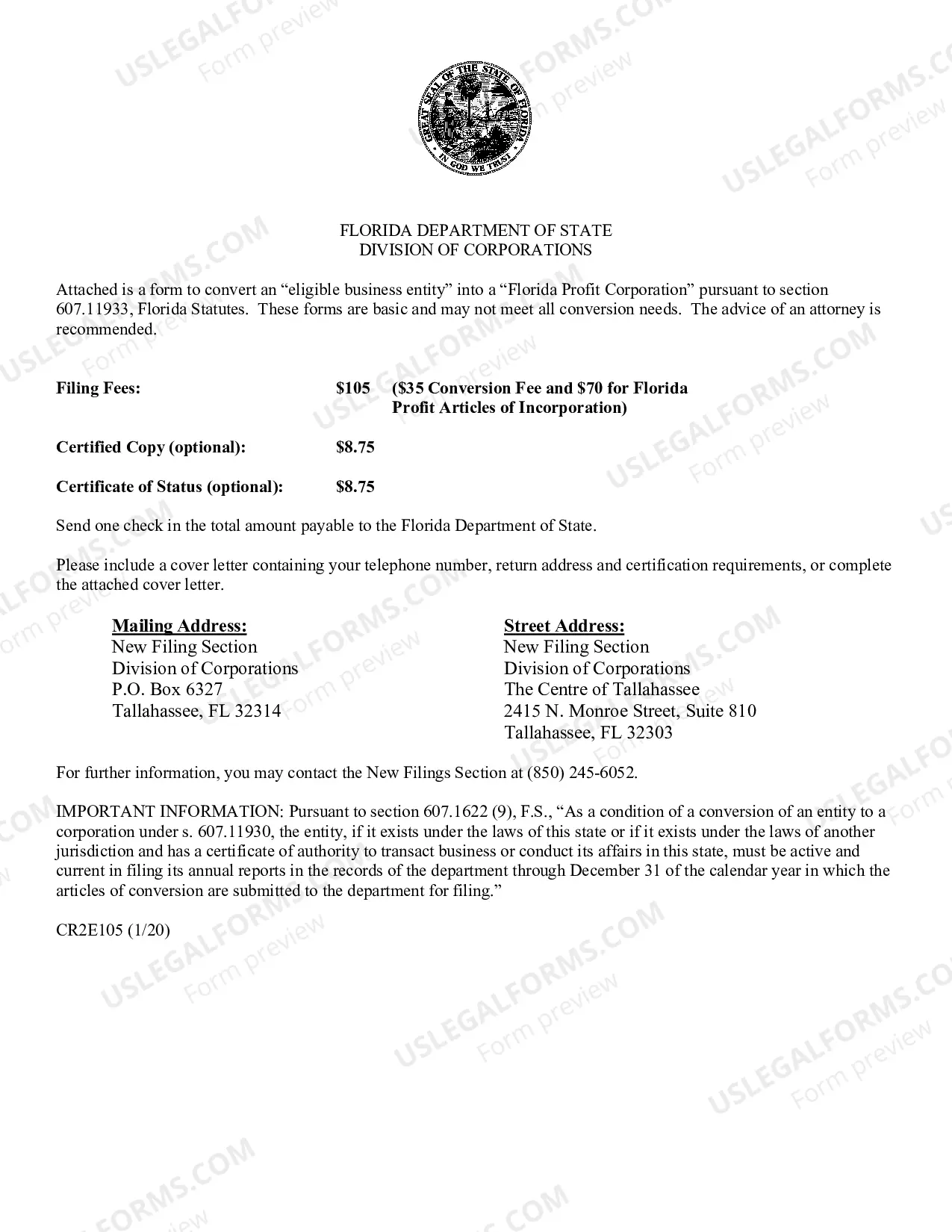
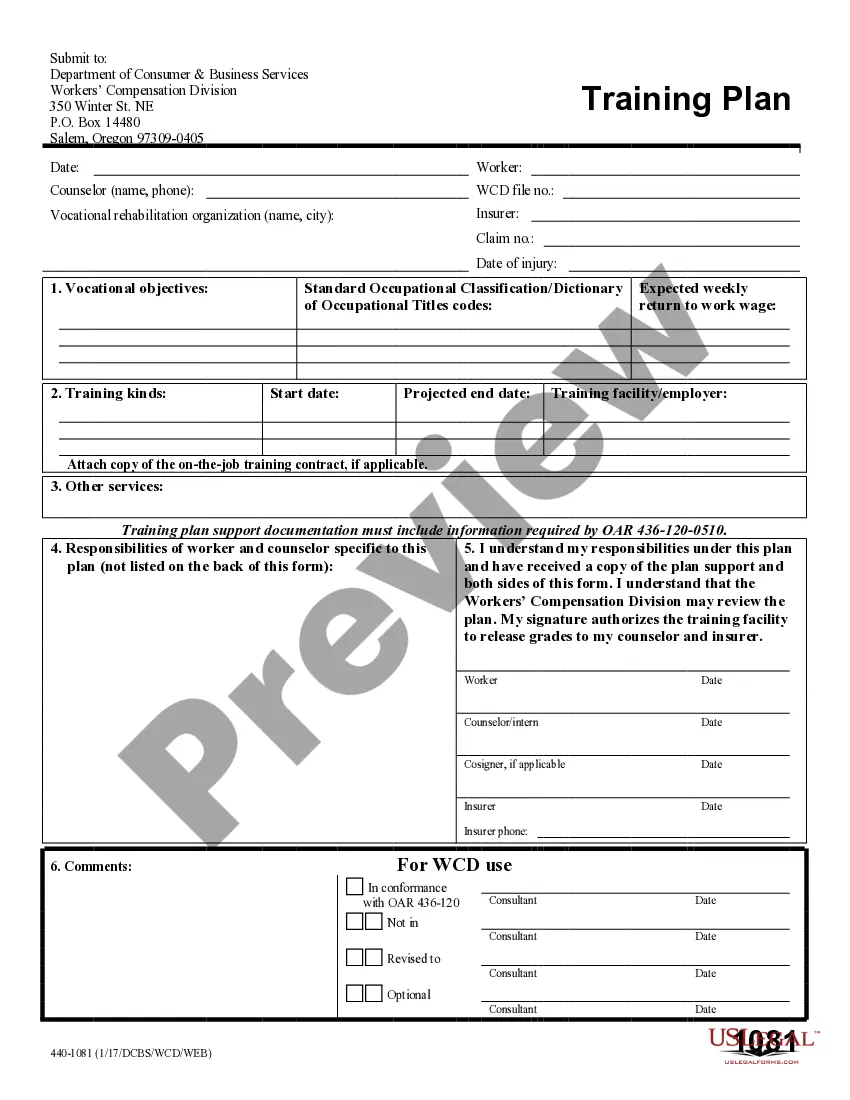
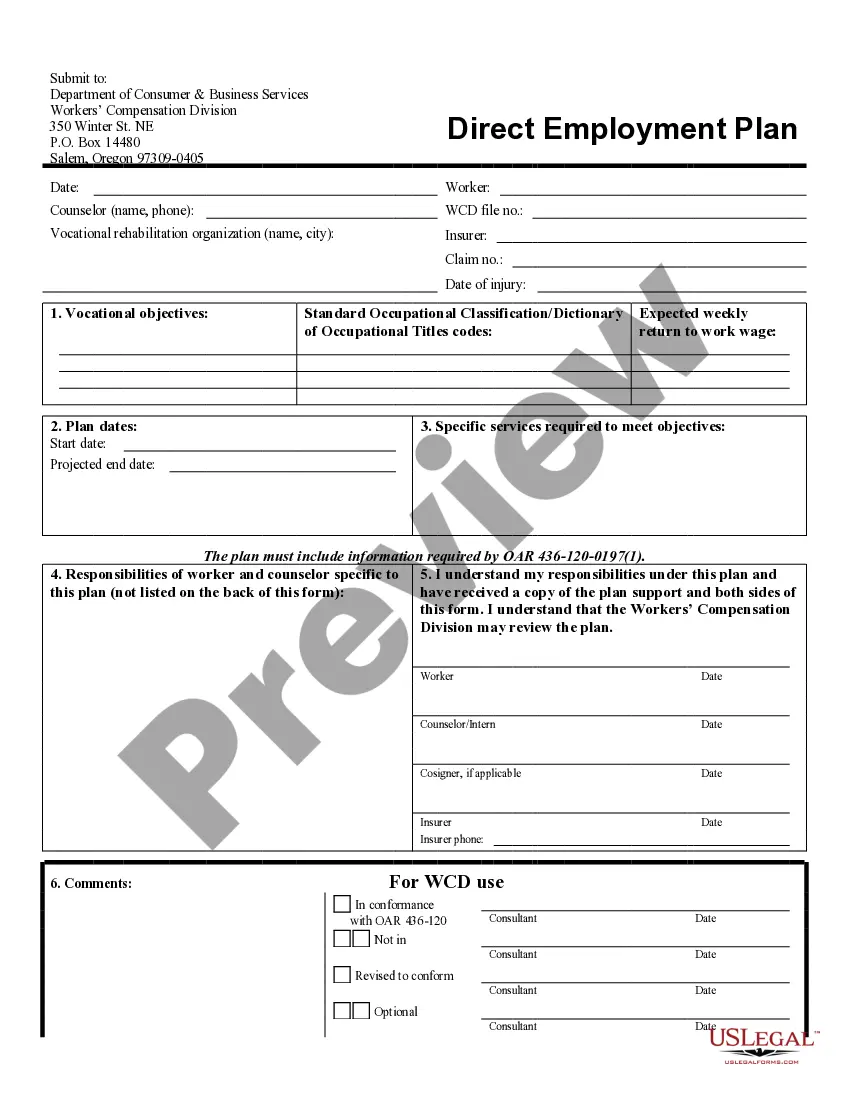
Oregon Return-To-Work Plan; Training
Description
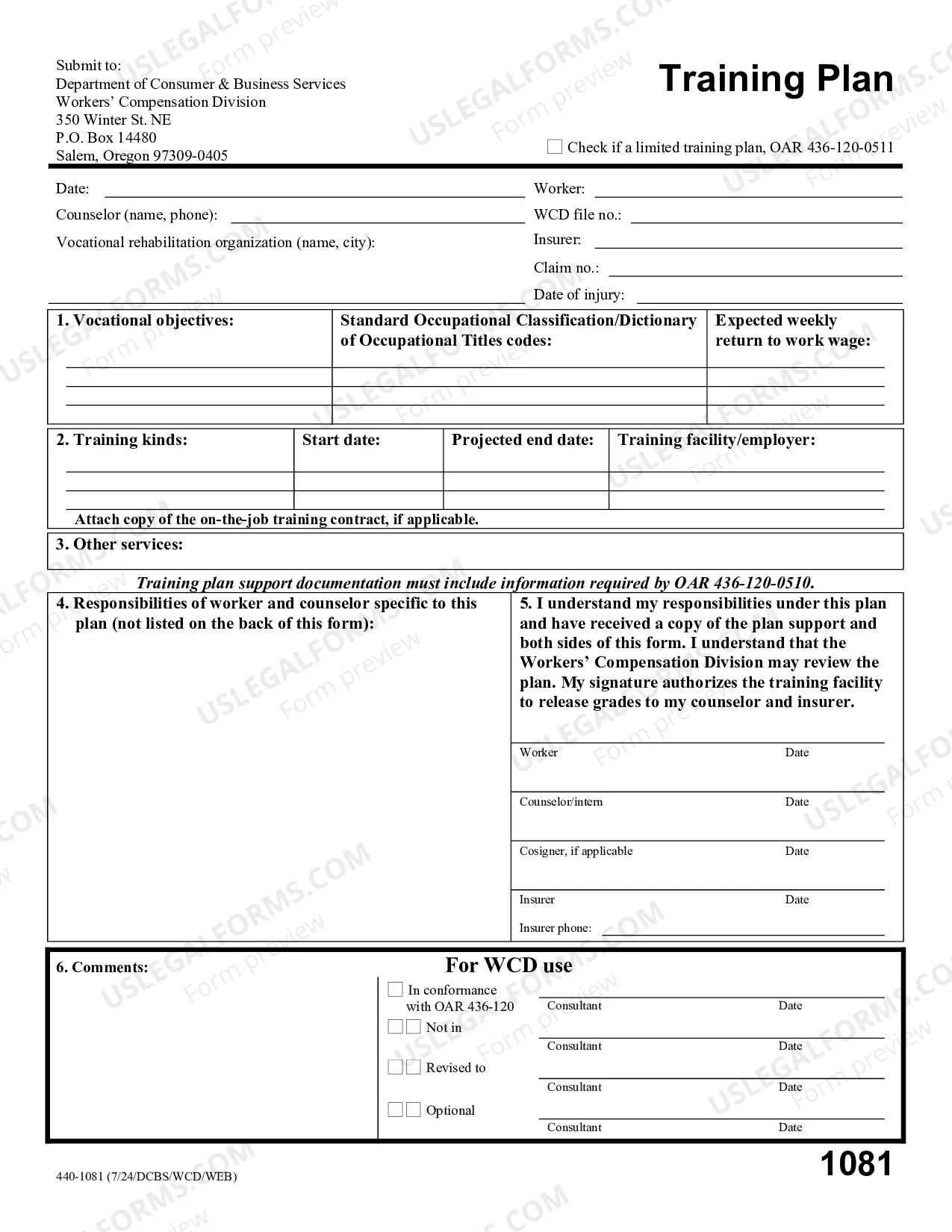
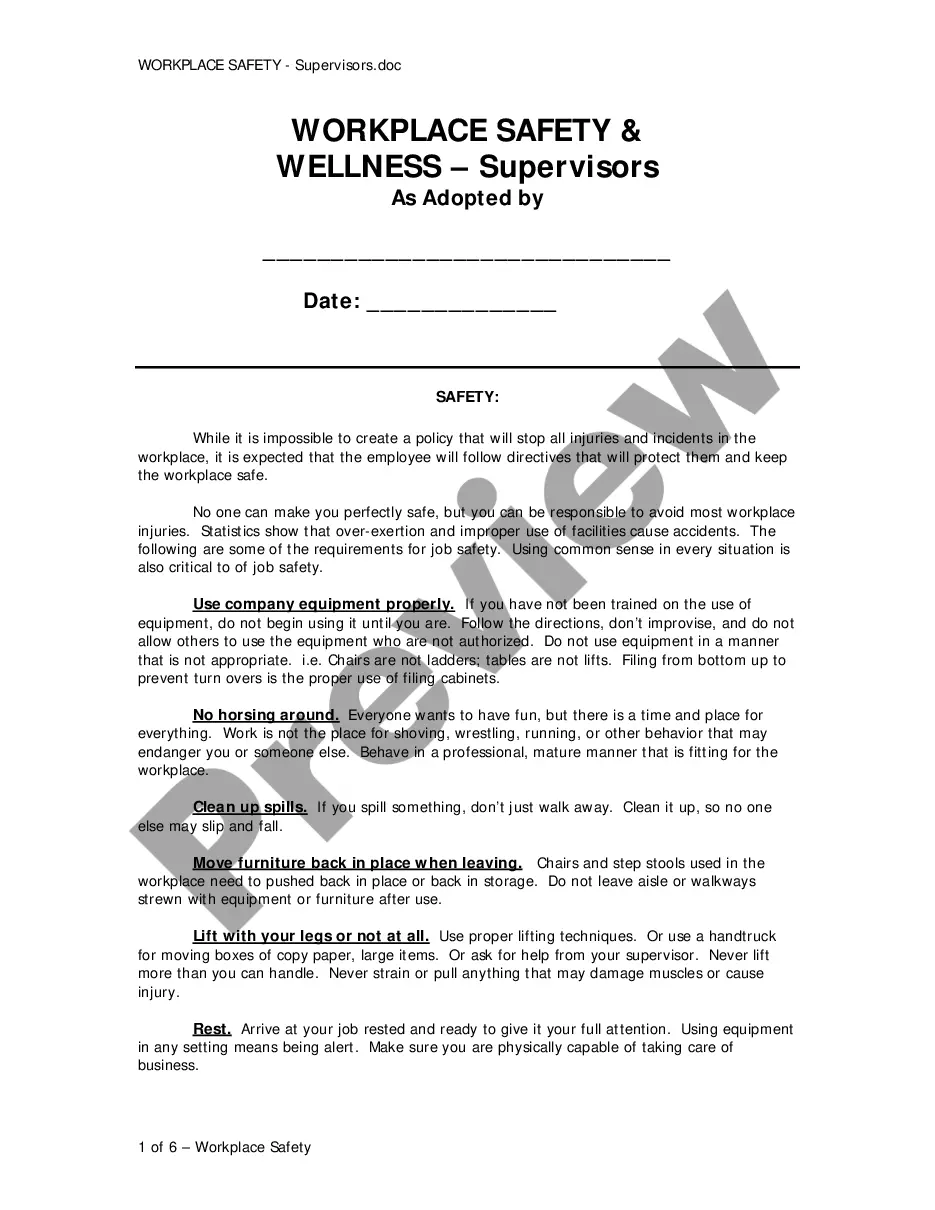
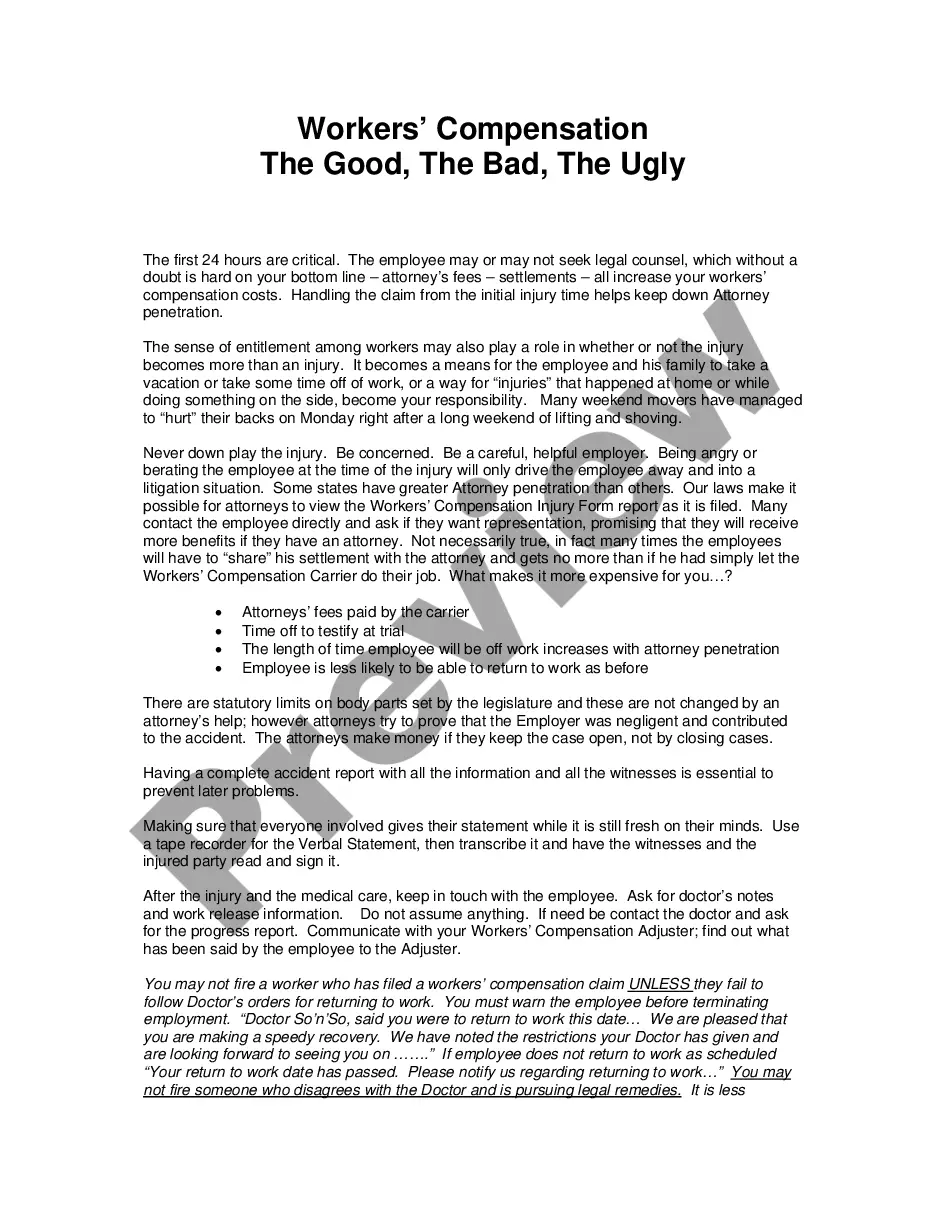
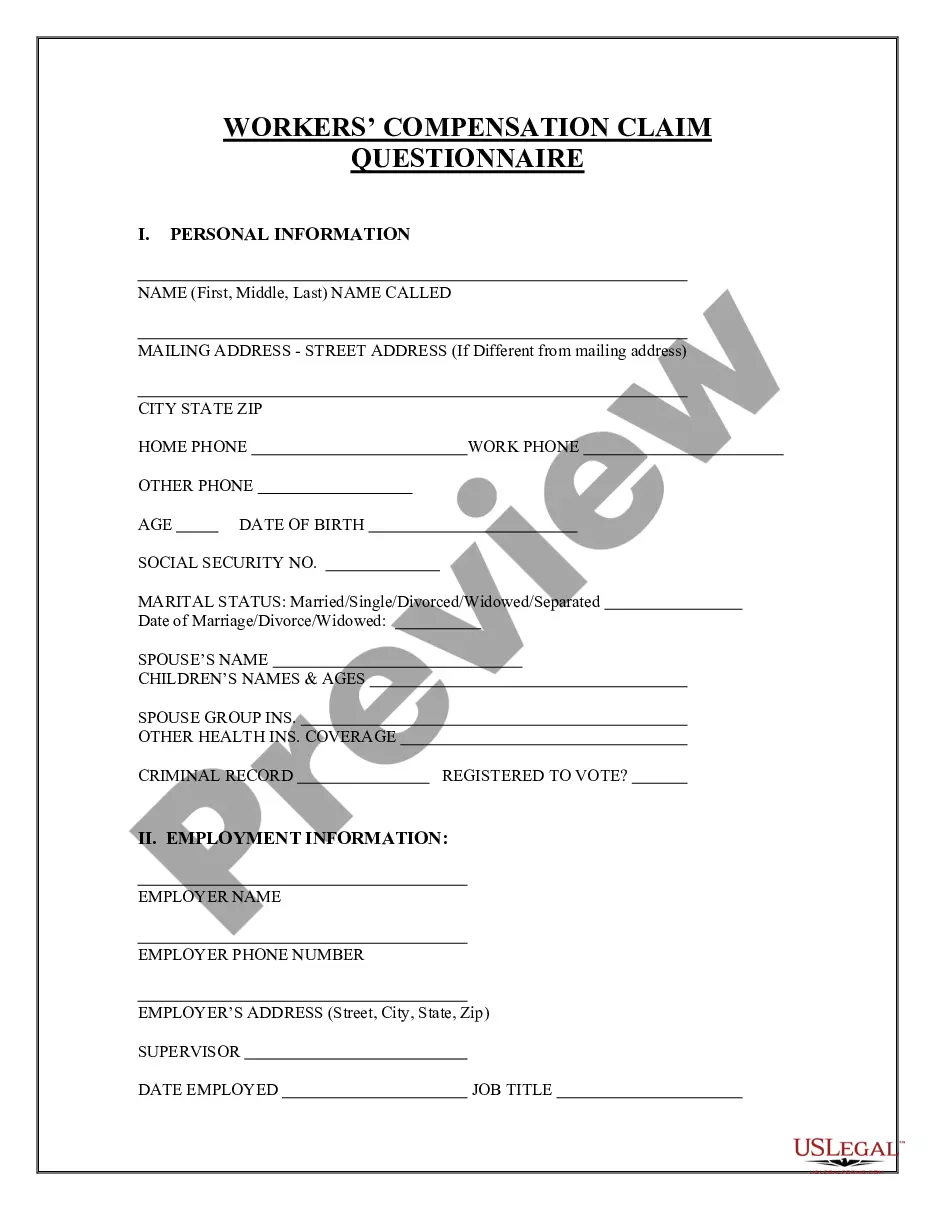
Get your form ready online
Our built-in tools help you complete, sign, share, and store your documents in one place.
Make edits, fill in missing information, and update formatting in US Legal Forms—just like you would in MS Word.
Download a copy, print it, send it by email, or mail it via USPS—whatever works best for your next step.
Sign and collect signatures with our SignNow integration. Send to multiple recipients, set reminders, and more. Go Premium to unlock E-Sign.
If this form requires notarization, complete it online through a secure video call—no need to meet a notary in person or wait for an appointment.
We protect your documents and personal data by following strict security and privacy standards.

Make edits, fill in missing information, and update formatting in US Legal Forms—just like you would in MS Word.

Download a copy, print it, send it by email, or mail it via USPS—whatever works best for your next step.

Sign and collect signatures with our SignNow integration. Send to multiple recipients, set reminders, and more. Go Premium to unlock E-Sign.

If this form requires notarization, complete it online through a secure video call—no need to meet a notary in person or wait for an appointment.

We protect your documents and personal data by following strict security and privacy standards.
Looking for another form?


How to fill out Oregon Return-To-Work Plan; Training?
When it comes to completing Oregon Return-To-Work Plan; Training, you almost certainly imagine a long procedure that requires choosing a appropriate sample among countless similar ones and then being forced to pay out an attorney to fill it out for you. On the whole, that’s a slow-moving and expensive choice. Use US Legal Forms and pick out the state-specific document in a matter of clicks.
In case you have a subscription, just log in and click on Download button to get the Oregon Return-To-Work Plan; Training form.
If you don’t have an account yet but need one, stick to the step-by-step manual below:
- Make sure the document you’re downloading is valid in your state (or the state it’s required in).
- Do so by reading the form’s description and also by visiting the Preview function (if readily available) to see the form’s content.
- Click on Buy Now button.
- Choose the suitable plan for your financial budget.
- Subscribe to an account and select how you want to pay out: by PayPal or by card.
- Save the document in .pdf or .docx format.
- Find the document on your device or in your My Forms folder.
Professional legal professionals work on creating our samples to ensure after saving, you don't have to worry about editing and enhancing content material outside of your personal details or your business’s information. Join US Legal Forms and get your Oregon Return-To-Work Plan; Training sample now.
Form popularity
FAQ
Employers benefit by bringing injured employees back to work as soon as they're medically able because it: Reduces the likelihood of litigation. Helps control workers' compensation claim costs, which affect future premium.
Step 1 Notification of an injury or illness. Step 2 Appoint a rehabilitation case manager. Step 3 Assess the need for rehabilitation. Step 4 Organise a rehabilitation assessment (if requested or required) Step 5 Arrange a rehabilitation program (if needed) Step 6 Monitor the rehabilitation program.
A return-to-work program allows workers who are unable to perform their usual job duties to work in a limited or temporary light-duty capacity. In some cases, this can even involve arrangements where employees volunteer with a non-profit organization rather than work for their employer.
Your employer can't force you to return to work early.If your employer is pressuring you to return to work or if you believe your employer has violated your workers' compensation rights, contact our team of experienced personal injury attorneys for a consultation.
Retain Experienced Workers. Injured workers who remain at home for an extended period may become discouraged and leave the firm. Reduce Turnover. Better Employee Relations. Better Productivity. Lower Workers Compensation Costs.
A return to work (RTW) plan is developed to help an injured worker stay at work or return to their pre-injury work duties. In the health care industry, RTW plans are done by a rehabilitation consultant.
A return to work (RTW) program is the formal policy that outlines general procedures for handling work related injury or illness. It represents an employer's commitment to the health, safety and recovery of workers following an incident.
Discrete-time hazard estimates suggest that the workers in a program return approximately 1.4 times sooner compared to workers injured at a firm without a program. This corresponds to a reduction of between 3-4 weeks in median duration of time to return to work for all workers in our sample.