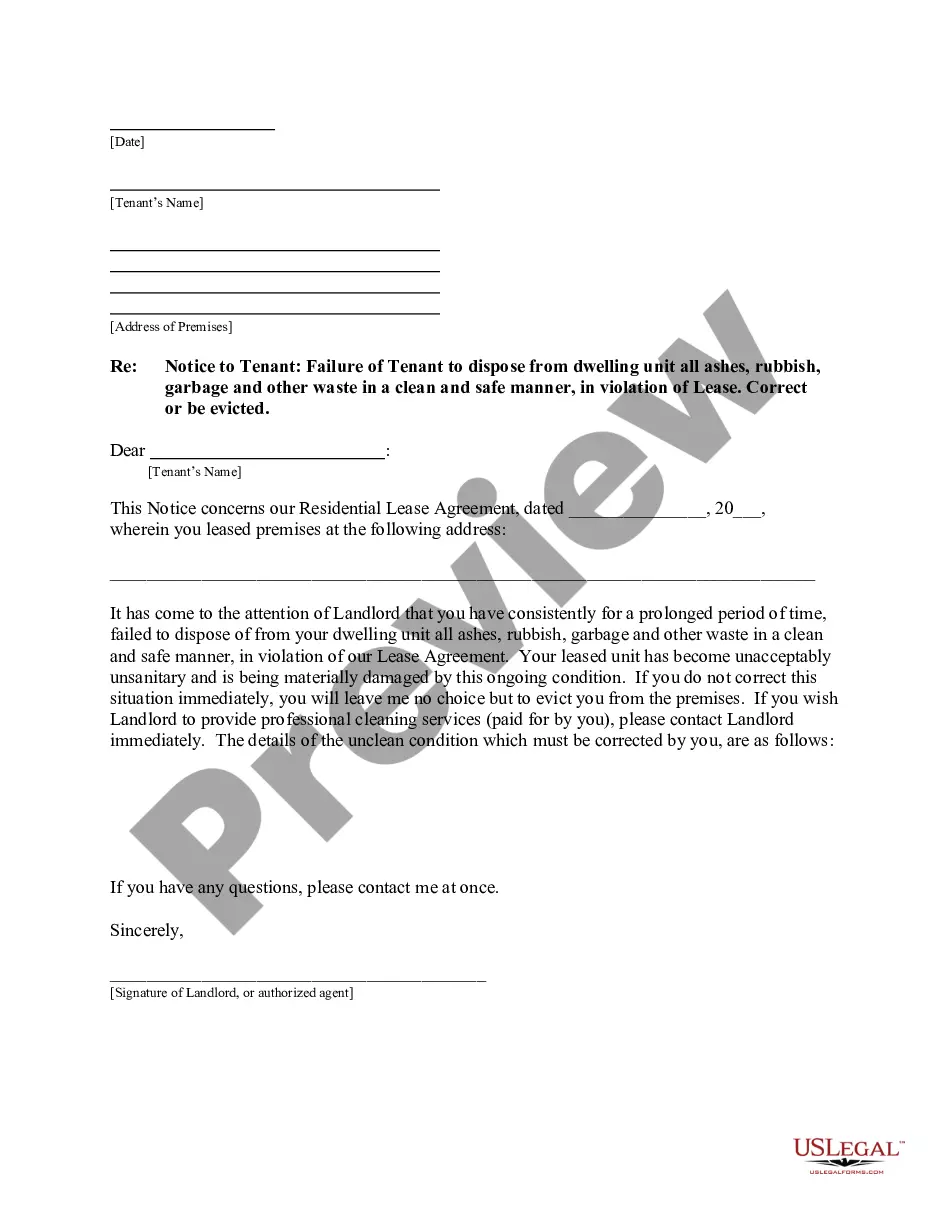
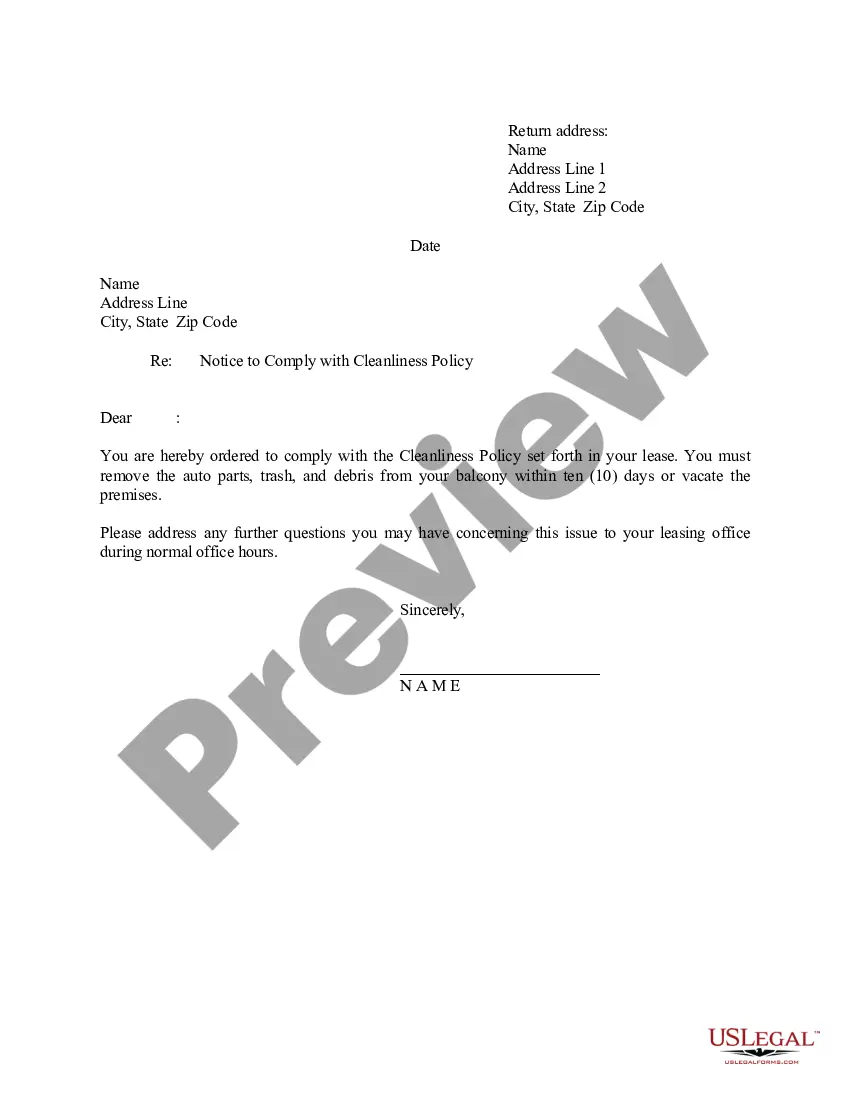
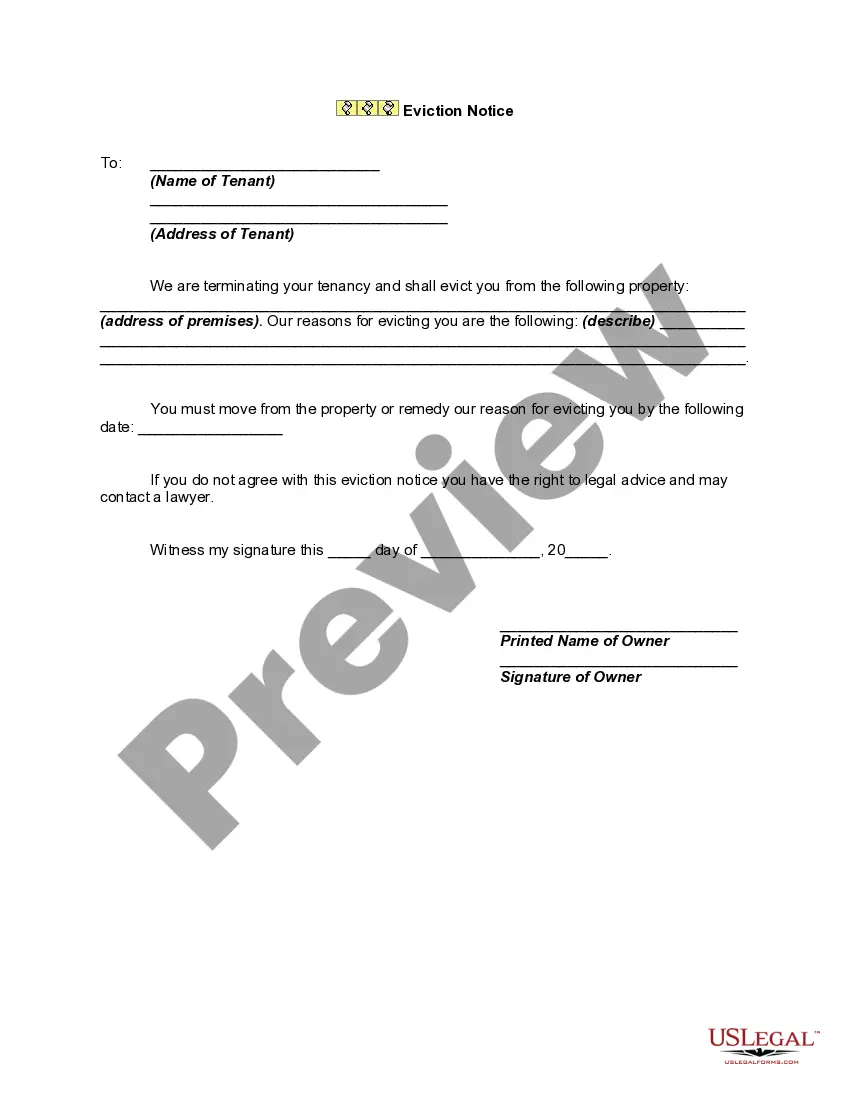
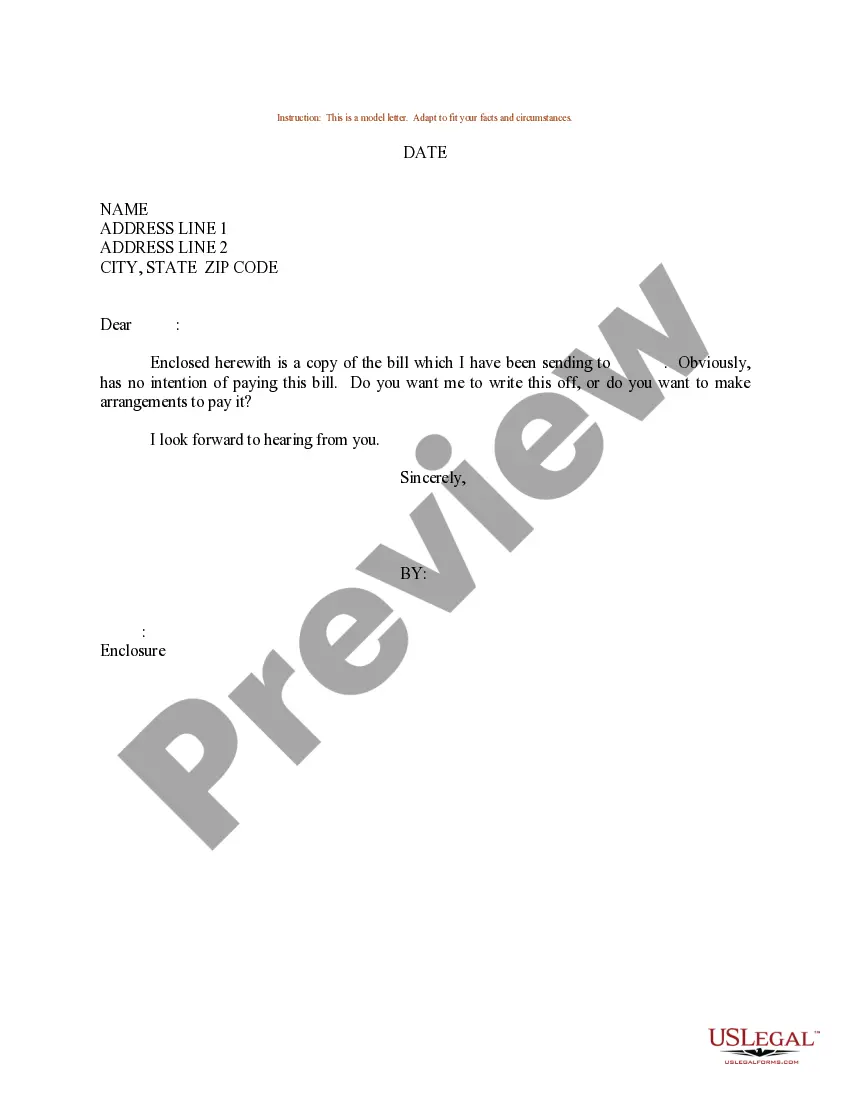
This is a cease or evict notice from the Landlord to Tenant demanding that Tenant begin to dispose of his/her waste in a manner that is lawful and conforming to community standards. Should Tenant fail to abide by the demands of this notice then Tenant shall be evicted.
Oregon Letter from Landlord to Tenant for Failure of to dispose all ashes, rubbish, garbage or other waste in a clean and safe manner in compliance with community rules
State:
Oregon
Control #:
OR-1043LT
Format:
Word;
Rich Text
Instant download
Description
Free preview
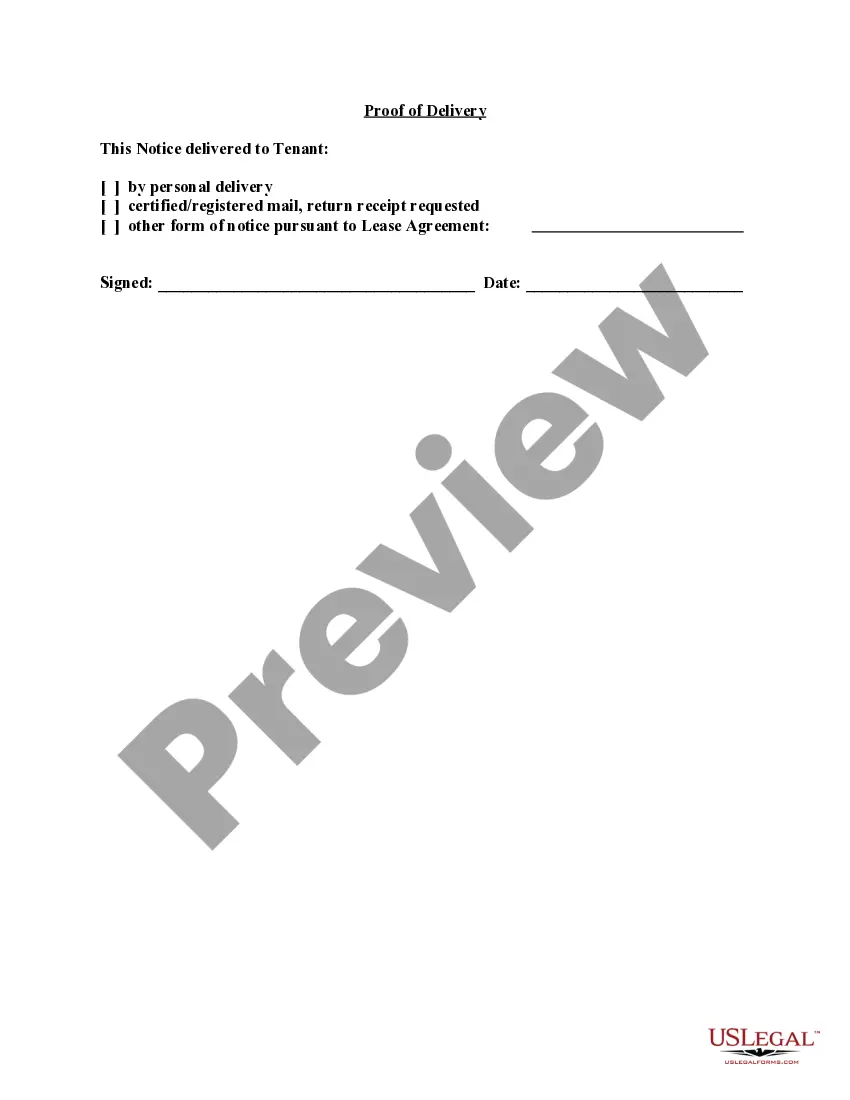

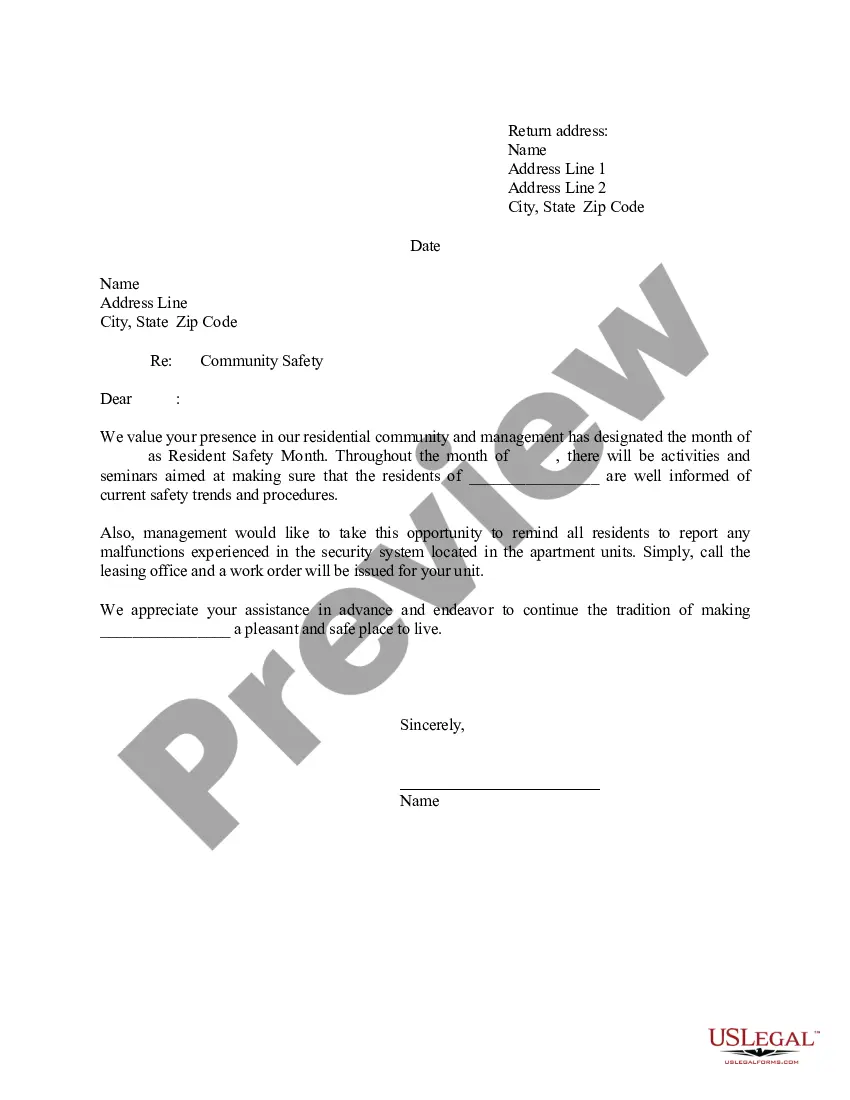
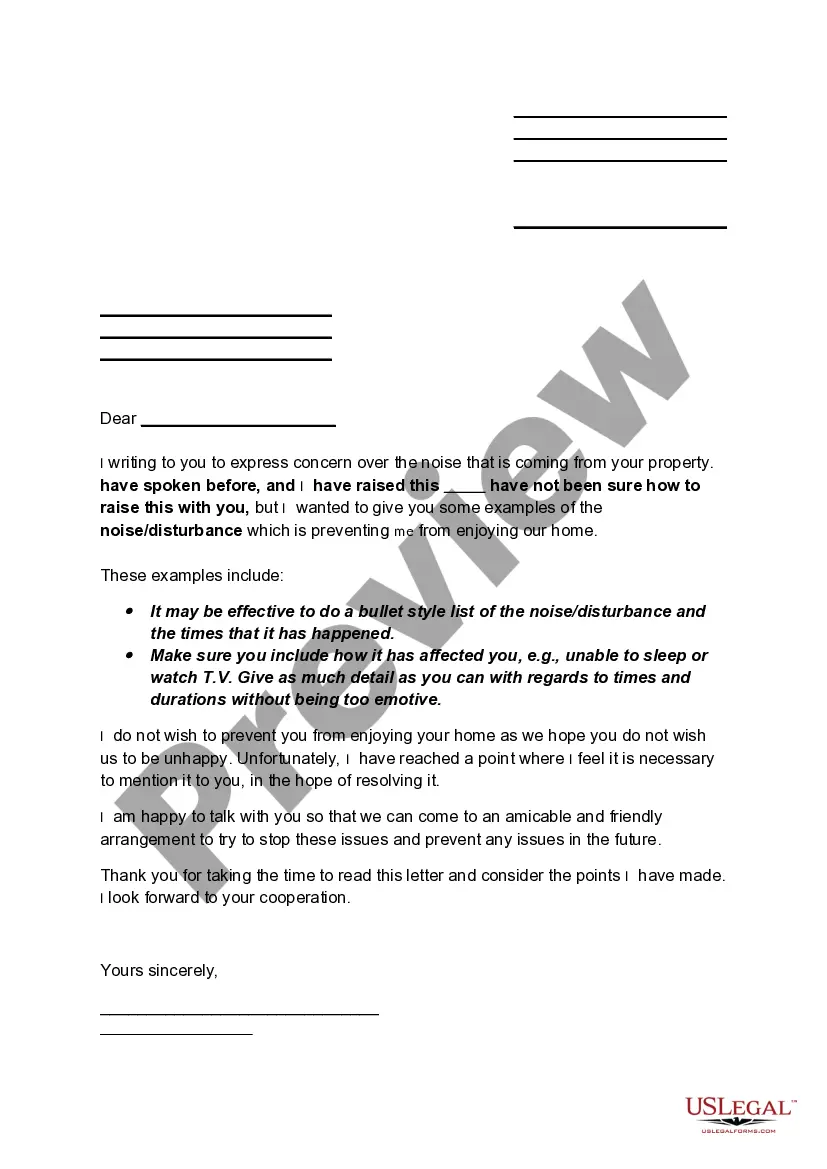

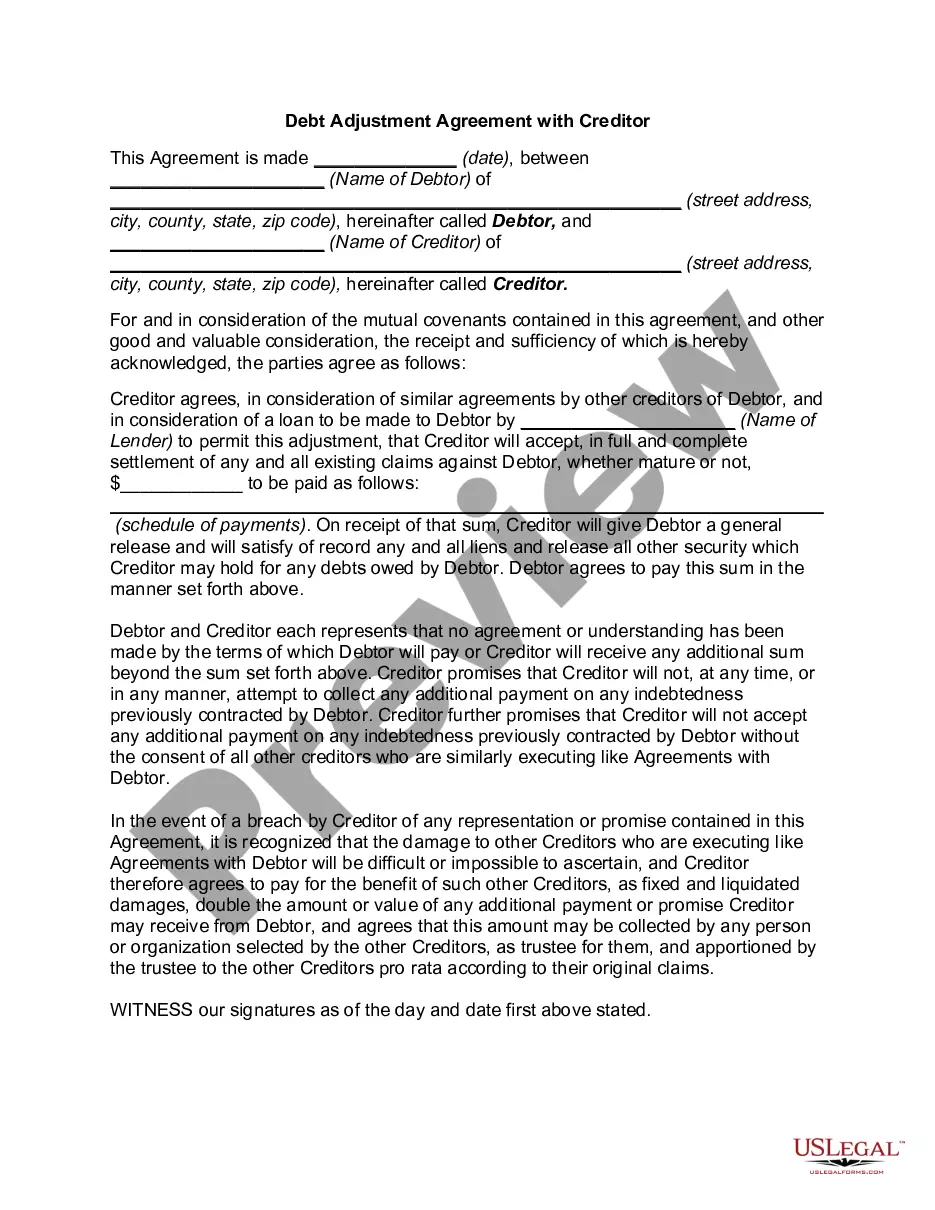


How to fill out Oregon Letter From Landlord To Tenant For Failure Of To Dispose All Ashes, Rubbish, Garbage Or Other Waste In A Clean And Safe Manner In Compliance With Community Rules?
When it comes to completing Oregon Letter from Landlord to Tenant for Failure of to dispose all ashes, rubbish, garbage or other waste in a clean and safe manner in compliance with community rules, you most likely imagine a long process that requires finding a suitable form among a huge selection of very similar ones and after that needing to pay out a lawyer to fill it out to suit your needs. Generally, that’s a slow-moving and expensive option. Use US Legal Forms and select the state-specific template in a matter of clicks.
For those who have a subscription, just log in and then click Download to have the Oregon Letter from Landlord to Tenant for Failure of to dispose all ashes, rubbish, garbage or other waste in a clean and safe manner in compliance with community rules sample.
In the event you don’t have an account yet but need one, stick to the step-by-step guideline listed below:
- Be sure the document you’re downloading is valid in your state (or the state it’s needed in).
- Do it by reading the form’s description and by clicking the Preview function (if readily available) to find out the form’s content.
- Click on Buy Now button.
- Select the suitable plan for your financial budget.
- Subscribe to an account and select how you would like to pay out: by PayPal or by card.
- Save the file in .pdf or .docx format.
- Find the file on your device or in your My Forms folder.
Skilled legal professionals work on creating our templates to ensure that after downloading, you don't have to worry about enhancing content outside of your individual info or your business’s details. Sign up for US Legal Forms and get your Oregon Letter from Landlord to Tenant for Failure of to dispose all ashes, rubbish, garbage or other waste in a clean and safe manner in compliance with community rules document now.
Form popularity
FAQ
The short answer is yes, a tenant can be billed for garbage.Furthermore, the Oregon landlord/tenant law that addresses utility payments, ORS 90.315, does NOT prohibit charging tenants for garbage service.
Tenants have been forced to live in terrible housing, and neighborhoods have suffered from housing eyesores. HUD calls this a double crime: one against both tenants and taxpayers. To report a bad landlord to the Multifamily Housing Complaint Line call toll-free at (800) MULTI-70 (800) 685-8470) / TTY (800) 432-2209.
The landlord had a duty to reasonably maintain the property; The landlord knew or should have known of the dangerous condition; The landlord breached their duty by failing to repair/fix the dangerous condition;
If they don't come to pick up their stuff after 60 days, and haven't reached out to you with a good reason as to why, you can consider the property abandoned. In that case, you may dispose of it as you see fit.
Uninhabitable conditions can include dangerous ones, such as holes in the floor, unsafe or exposed wiring, or non-working air conditioning in dangerously hot summer months. Gross infestations of roaches, fleas or other pests are also uninhabitable conditions.
Negligent Landlords Depending on the type of problem, the duration of neglect and the severity of its effect on health or safety, tenants can file a lawsuit against their landlords.Tenants can file a lawsuit in California's small claims court or even Superior Court if the negligence is severe enough.
In Oregon, property is generally presumed abandoned if it has remained unclaimed by the owner for more than three years after it became payable or distributable.
The second way a tenant's personal belongings are considered abandoned is when the tenant has been gone from the rental unit continuously for at least 7 days after a court has ordered an eviction of the tenant, even though the sheriff's department has not executed the court order or judgment.
Know your state's landlord/tenant laws. Read and respond to the court summons. Try to work out a settlement. Consider legal counsel. Show up for court. Look sharp and provide evidence.