Florida Quitclaim Deed - Wife to Herself and Husband
What is this form?
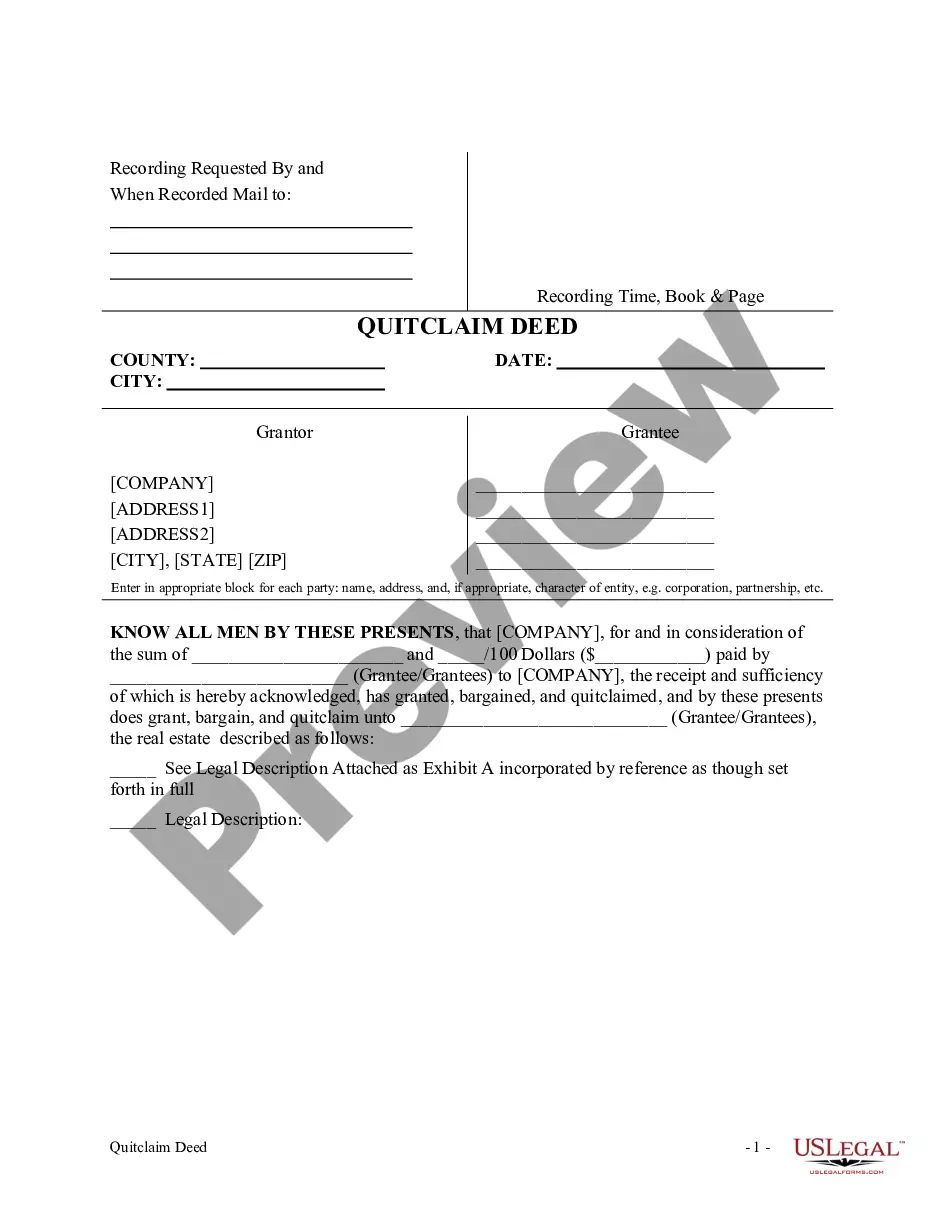
This Quitclaim Deed facilitates the transfer of property from a wife to herself and her husband. Unlike other types of deeds, this form allows the grantor to convey any interest they may have in the property without making warranties or guarantees about the property's condition. It is especially useful for couples looking to clarify ownership of a shared property without involving complex legal proceedings.
Form components explained
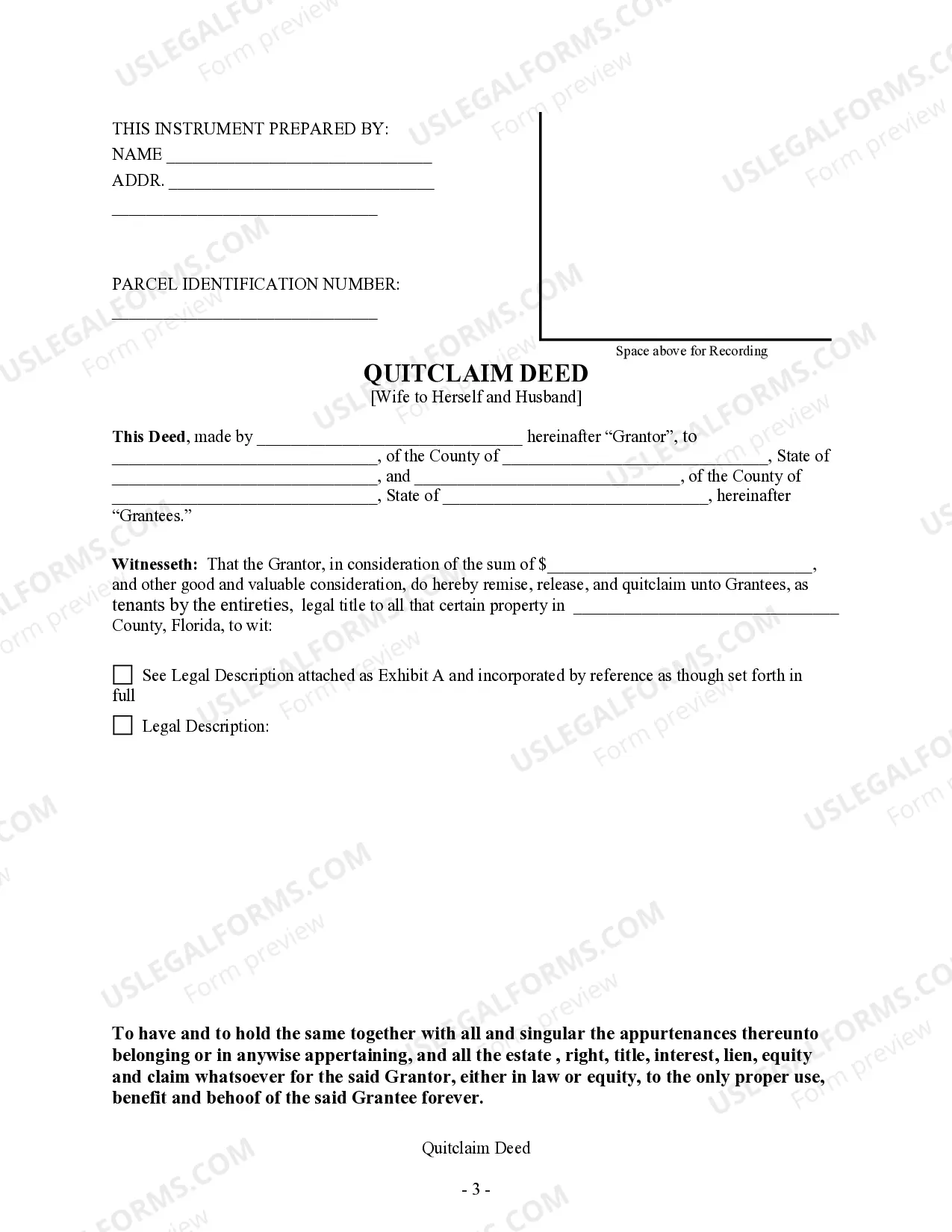
- Grantor: The wife transferring the property rights.
- Grantees: The wife and her husband acquiring the property.
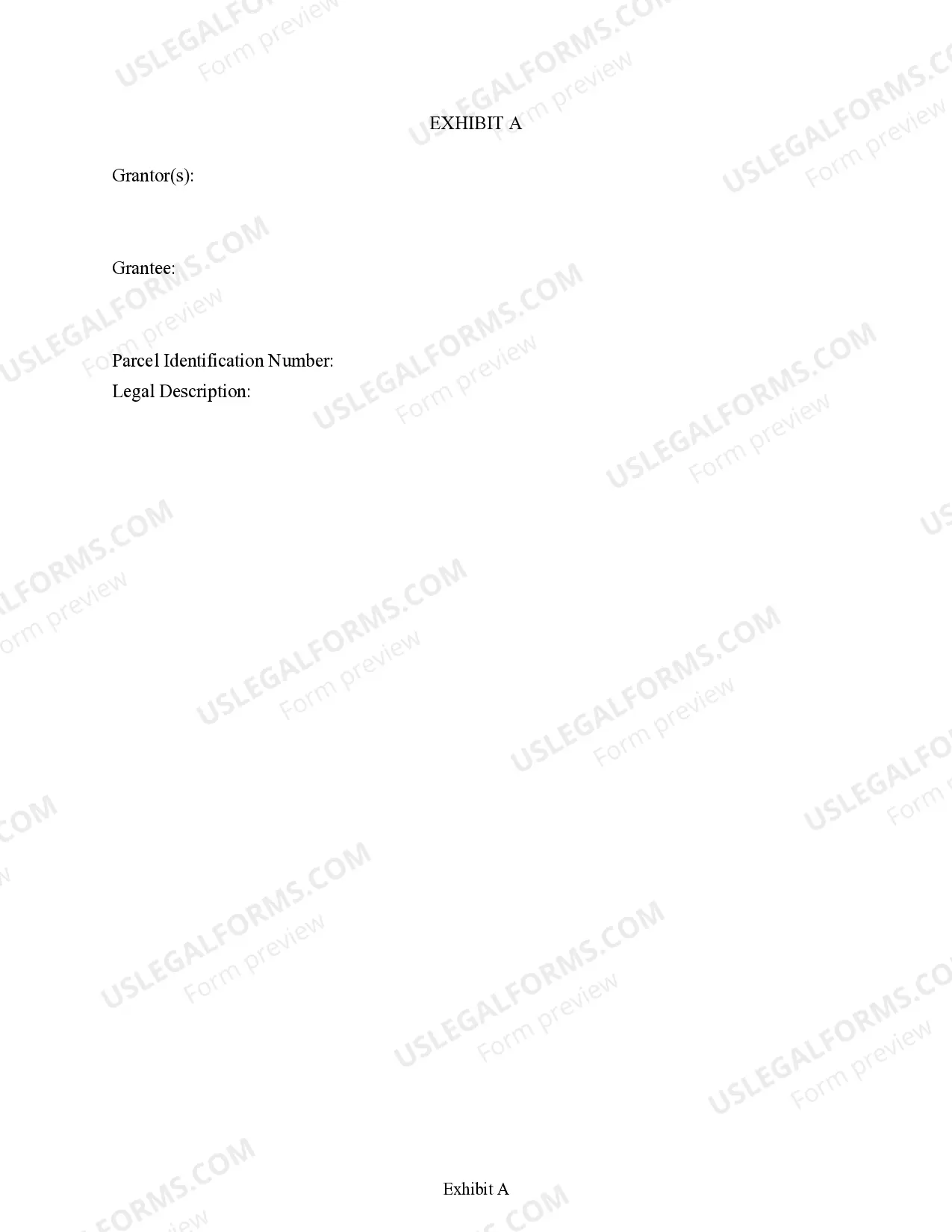
- Property description: A clear description of the property being transferred.
- Type of tenancy: Options for holding the property (tenants by the entirety, joint tenants with the right of survivorship, or tenants in common).
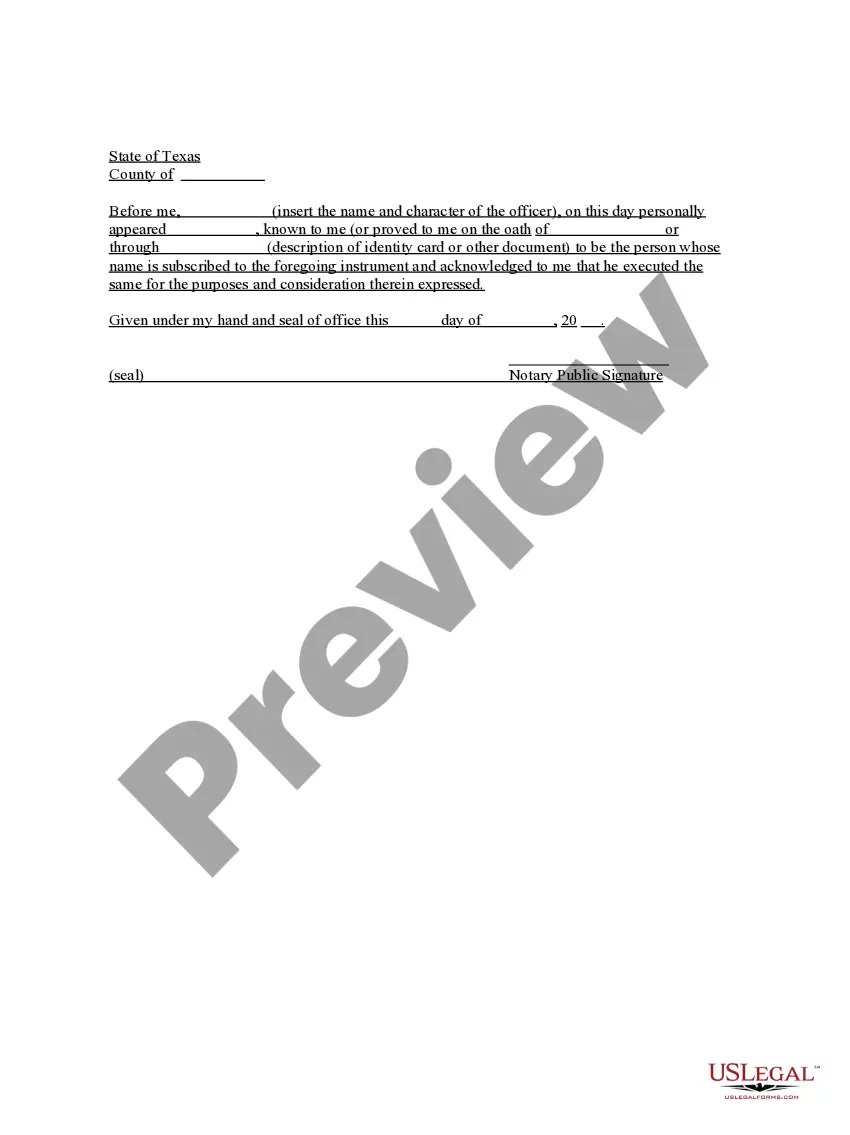
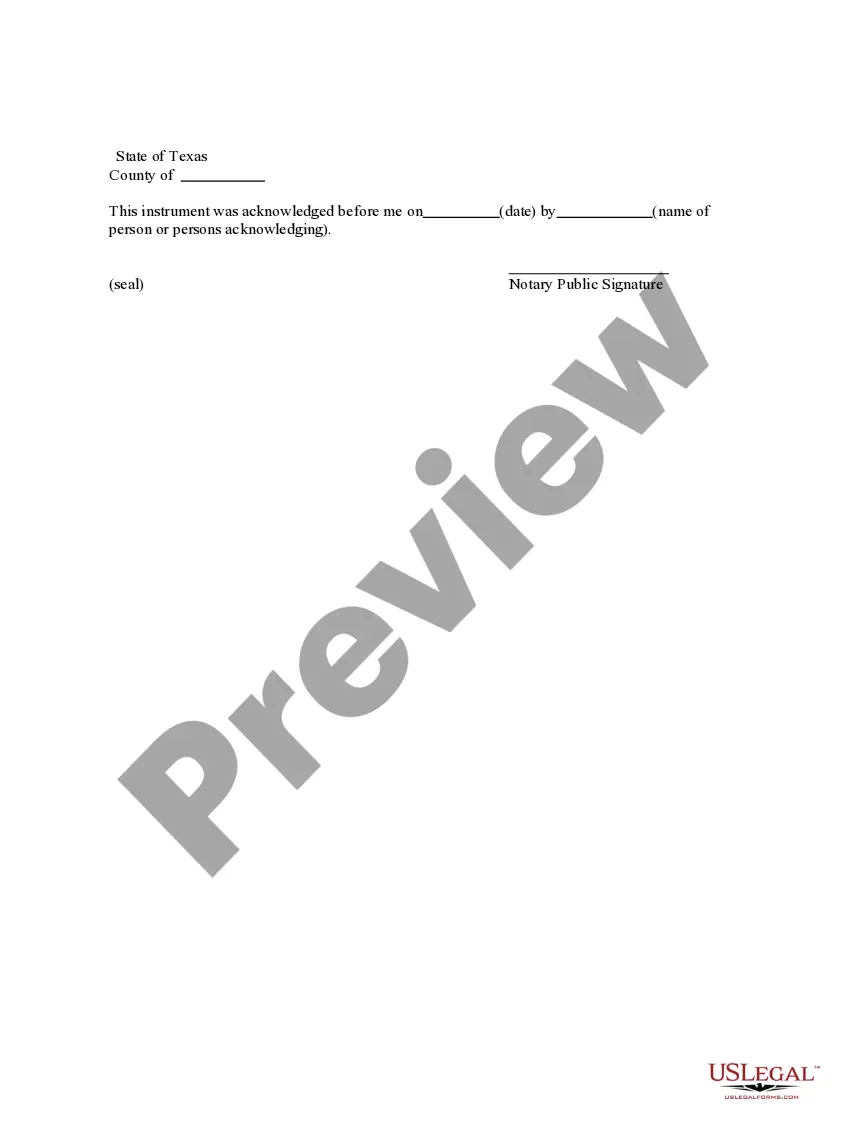
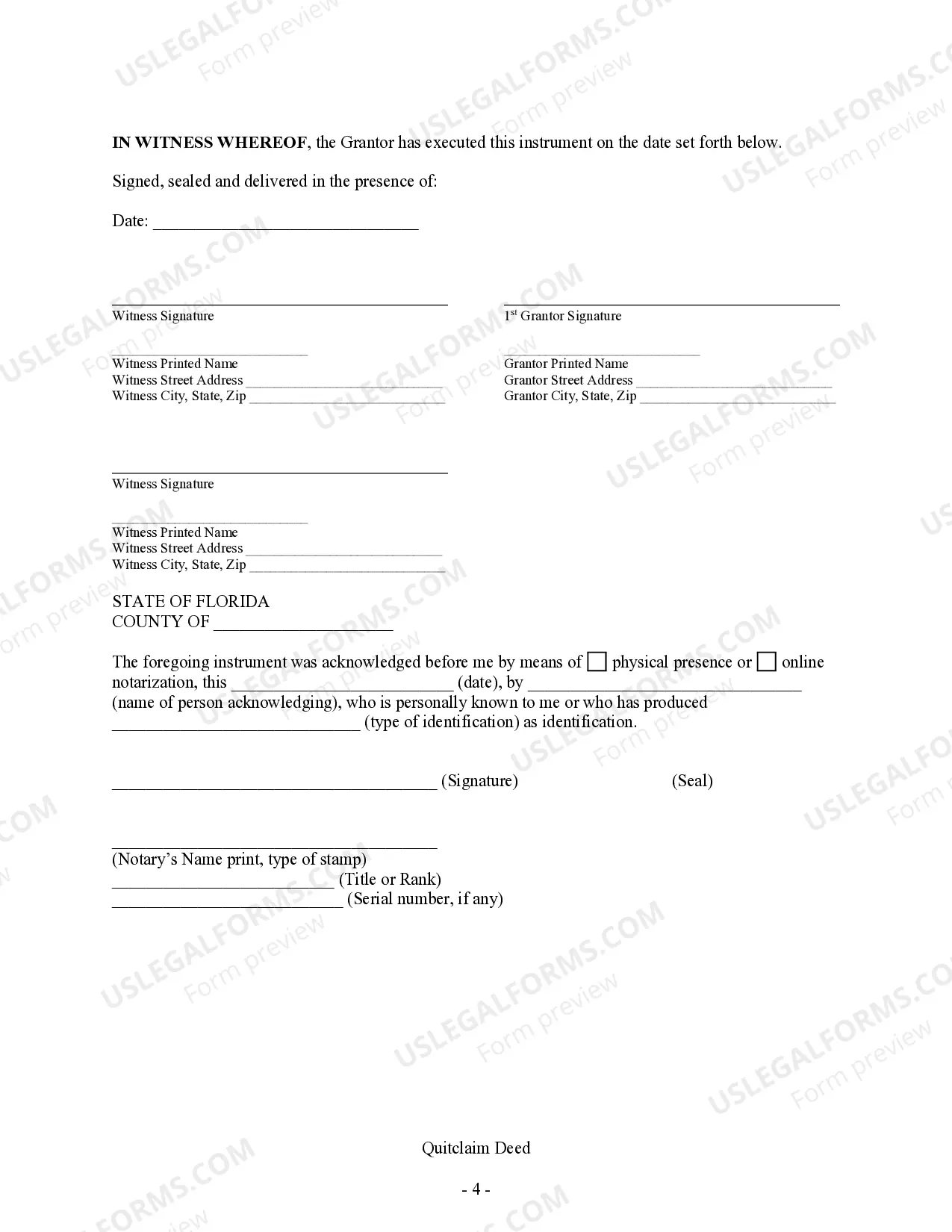
- Notarization field: A section for signatures to validate the transaction.


When to use this document
This Quitclaim Deed is typically used when a married couple wants to consolidate or clarify their ownership of a property. It is beneficial in situations such as transferring property into joint names, reinforcing property ownership after marriage, or addressing changes in ownership due to personal preferences.
Who this form is for
- Married couples looking to formalize their property ownership.
- Individuals wishing to transfer their ownership interest to their spouse.
- Anyone needing to clarify property rights between spouses.
How to complete this form
- Identify the parties: Fill in the names of the wife as the grantor and both spouses as grantees.
- Specify the property: Clearly describe the property being transferred.
- Choose the type of tenancy: Decide how the property will be owned (tenants by the entirety, joint tenants, or tenants in common).
- Enter the date: Indicate the date when the transfer will be effective.
- Sign the form: The grantor and the grantees must sign the form in the presence of a notary public, if applicable.
Does this document require notarization?
Notarization is required for this form to take effect. Our online notarization service, powered by Notarize, lets you verify and sign documents remotely through an encrypted video session, available 24/7.
Get your form ready online
Our built-in tools help you complete, sign, share, and store your documents in one place.
Make edits, fill in missing information, and update formatting in US Legal Forms—just like you would in MS Word.
Download a copy, print it, send it by email, or mail it via USPS—whatever works best for your next step.
Sign and collect signatures with our SignNow integration. Send to multiple recipients, set reminders, and more. Go Premium to unlock E-Sign.
If this form requires notarization, complete it online through a secure video call—no need to meet a notary in person or wait for an appointment.
We protect your documents and personal data by following strict security and privacy standards.

Make edits, fill in missing information, and update formatting in US Legal Forms—just like you would in MS Word.

Download a copy, print it, send it by email, or mail it via USPS—whatever works best for your next step.

Sign and collect signatures with our SignNow integration. Send to multiple recipients, set reminders, and more. Go Premium to unlock E-Sign.

If this form requires notarization, complete it online through a secure video call—no need to meet a notary in person or wait for an appointment.

We protect your documents and personal data by following strict security and privacy standards.
Mistakes to watch out for
- Failing to provide a complete property description.
- Not specifying the type of tenancy selected.
- Neglecting to sign the document in front of a notary public if required.
- Not updating the deed if ownership changes occur after the initial transfer.
Benefits of using this form online
- Convenience: Forms can be completed from the comfort of your home.
- Editability: Easily fill out the form fields on your computer before printing.
- Time-saving: Instant access to form templates eliminates the need for attorney visits.
Looking for another form?
Form popularity
FAQ
In Florida, a quitclaim deed must include specific information, such as the names of the grantor and grantee, a clear description of the property, and the acknowledgment of the signing. Furthermore, the deed must be signed and notarized to be valid. When considering a Florida Quitclaim Deed - Wife to Herself and Husband, it is essential to ensure that all legal criteria are met to avoid disputes. Utilizing templates from US Legal Forms can ease this process, allowing you to stay compliant with Florida property laws.
Yes, a spouse can be removed from a property deed in Florida through the execution of a quitclaim deed. This deed transfers ownership from one person to another and effectively removes the spouse from the title. For those looking to execute a Florida Quitclaim Deed - Wife to Herself and Husband, using reliable documentation and legal resources, like those offered by US Legal Forms, ensures a smooth transition. Make sure to follow all legal requirements to protect your interests.
In Florida, once a spouse signs a quitclaim deed, they typically forfeit their right to the property listed on that deed. However, this can be nuanced by legal documents that specify property rights following the quitclaim deed execution. If you're navigating this process, particularly with a Florida Quitclaim Deed - Wife to Herself and Husband, consulting legal resources or templates from US Legal Forms can be very beneficial. This guidance will help clarify your rights and responsibilities.
Generally, a spouse who signs a quitclaim deed relinquishes ownership rights to the property in question. However, rights can depend on various factors, such as agreements made during divorce proceedings or spousal consent. If you're considering a Florida Quitclaim Deed - Wife to Herself and Husband, it’s wise to review your specific situation with a legal professional. This review helps protect your interests and ensures clear ownership.
In Florida, a quitclaim deed does not automatically override a divorce decree. It is important to understand that property division and ownership are often dictated by the terms of a divorce decree, which a quitclaim deed cannot change. Therefore, if you and your spouse have agreed on property ownership in your divorce settlement, you should consult a legal expert before executing a quitclaim deed. This ensures that the terms of the Florida Quitclaim Deed - Wife to Herself and Husband align with your divorce agreement.
Yes, you can create a Florida Quitclaim Deed - Wife to Herself and Husband on your own. Many people choose to handle this simple process to save on costs. However, it's essential to ensure that the document meets all legal requirements in Florida. Using platforms like US Legal Forms can streamline the process and provide you with the correct templates.
Filling out a quit claim deed in Florida requires a few simple steps. First, access a Florida Quitclaim Deed - Wife to Herself and Husband template from platforms like US Legal Forms. Input the names of the grantor and grantee, include the property's details, and sign the document before a notary. Once completed, file the deed with the county clerk's office to finalize the transfer.
To fill out a Florida Quitclaim Deed - Wife to Herself and Husband, start by obtaining the correct form, which you can find on the US Legal Forms platform. Fill in both parties' names clearly, along with the property's legal description. Ensure you provide the correct signatures and notarization to validate the deed. This process transfers ownership effectively while avoiding future disputes.
In Florida, it is not mandatory for both spouses to be on the deed, but doing so can provide legal benefits. When both names are on the deed, it clarifies ownership and helps protect both partners' rights. If you are considering a Florida quitclaim deed - wife to herself and husband, it can simplify this process effectively.
Filling out a quitclaim deed to add a spouse involves several straightforward steps. You will need to enter the property’s details, including legal description and both spouses' names. After filling it out correctly, both parties must sign and have the deed notarized before recording it with the county. Consider using US Legal Forms for an easy-to-follow template.