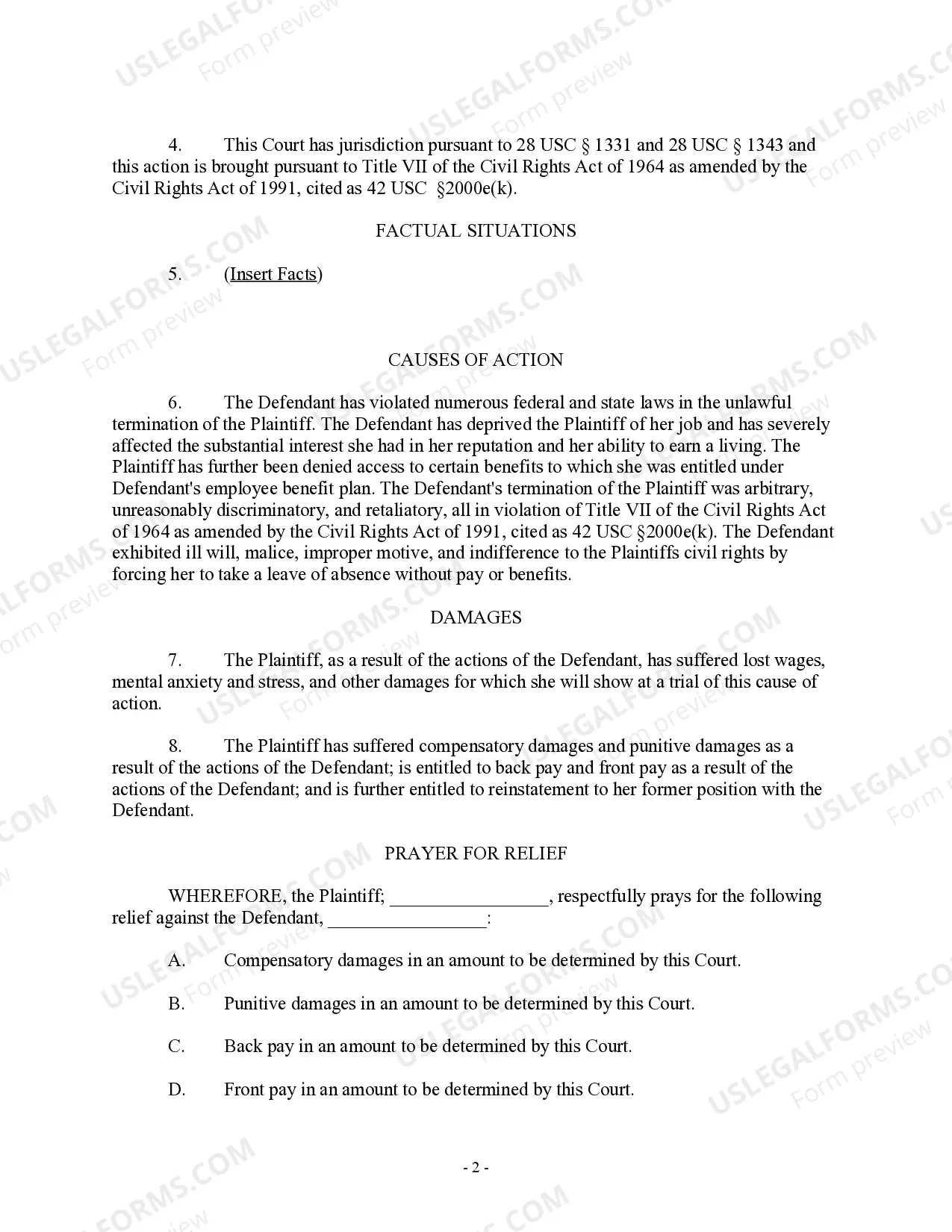
This is a multi-state form covering the subject matter of the title.
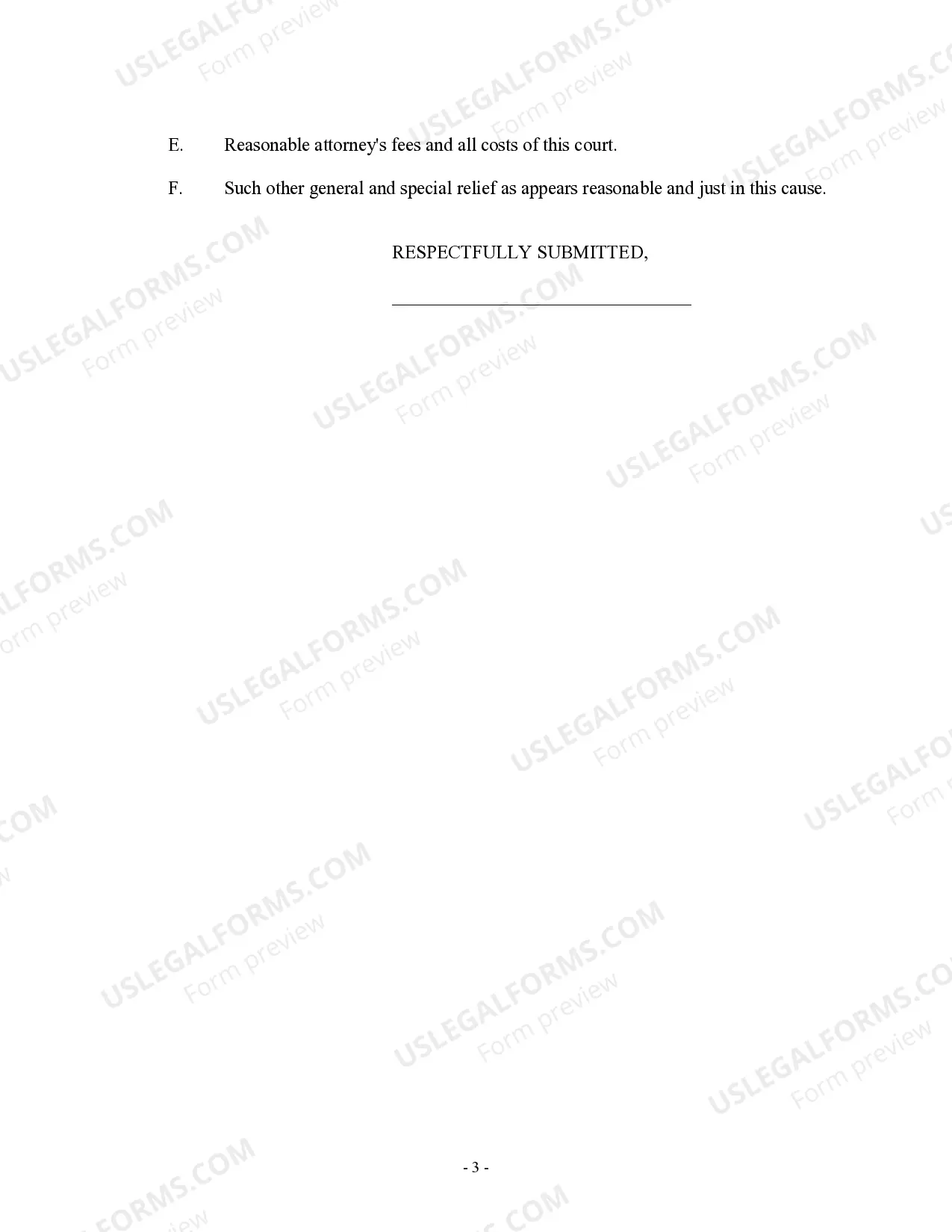
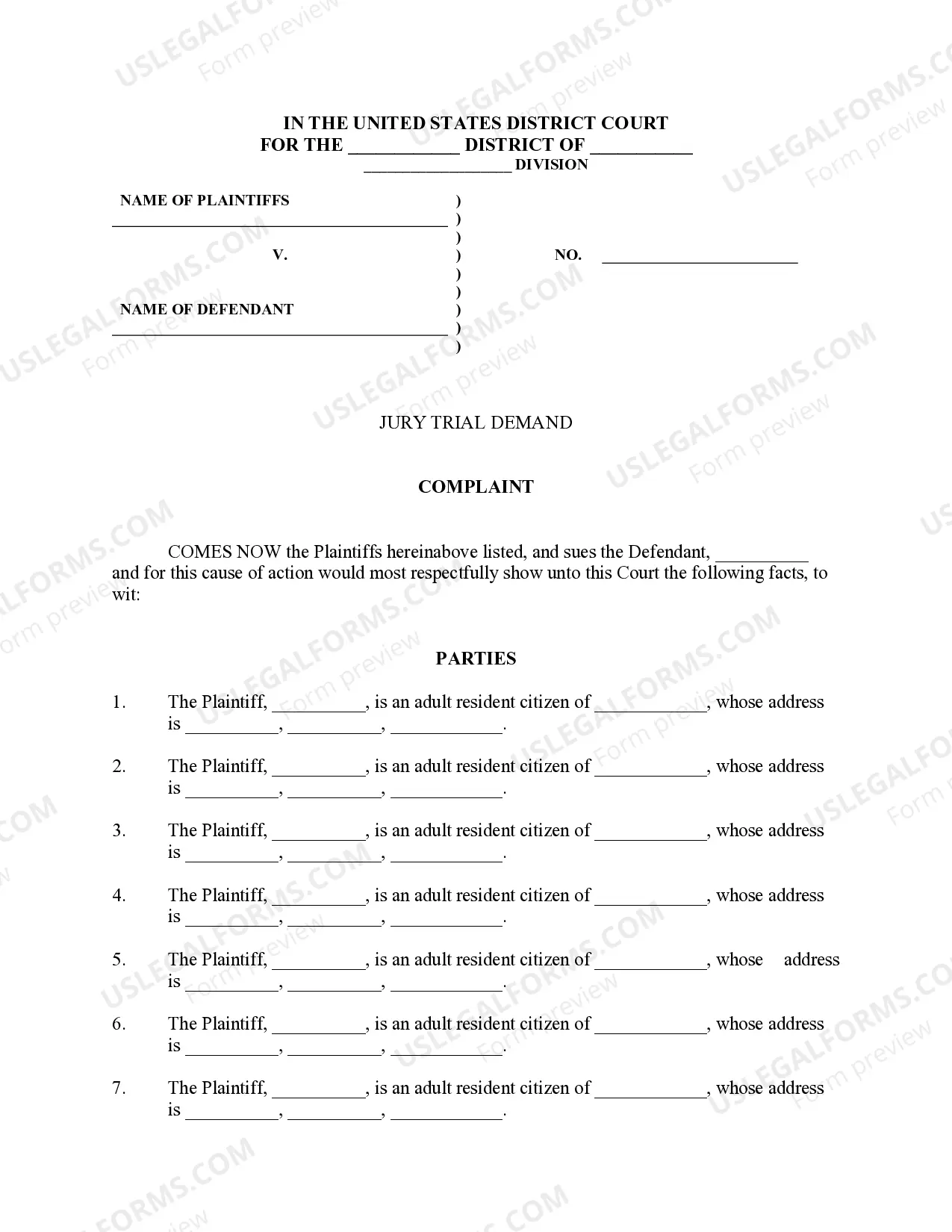
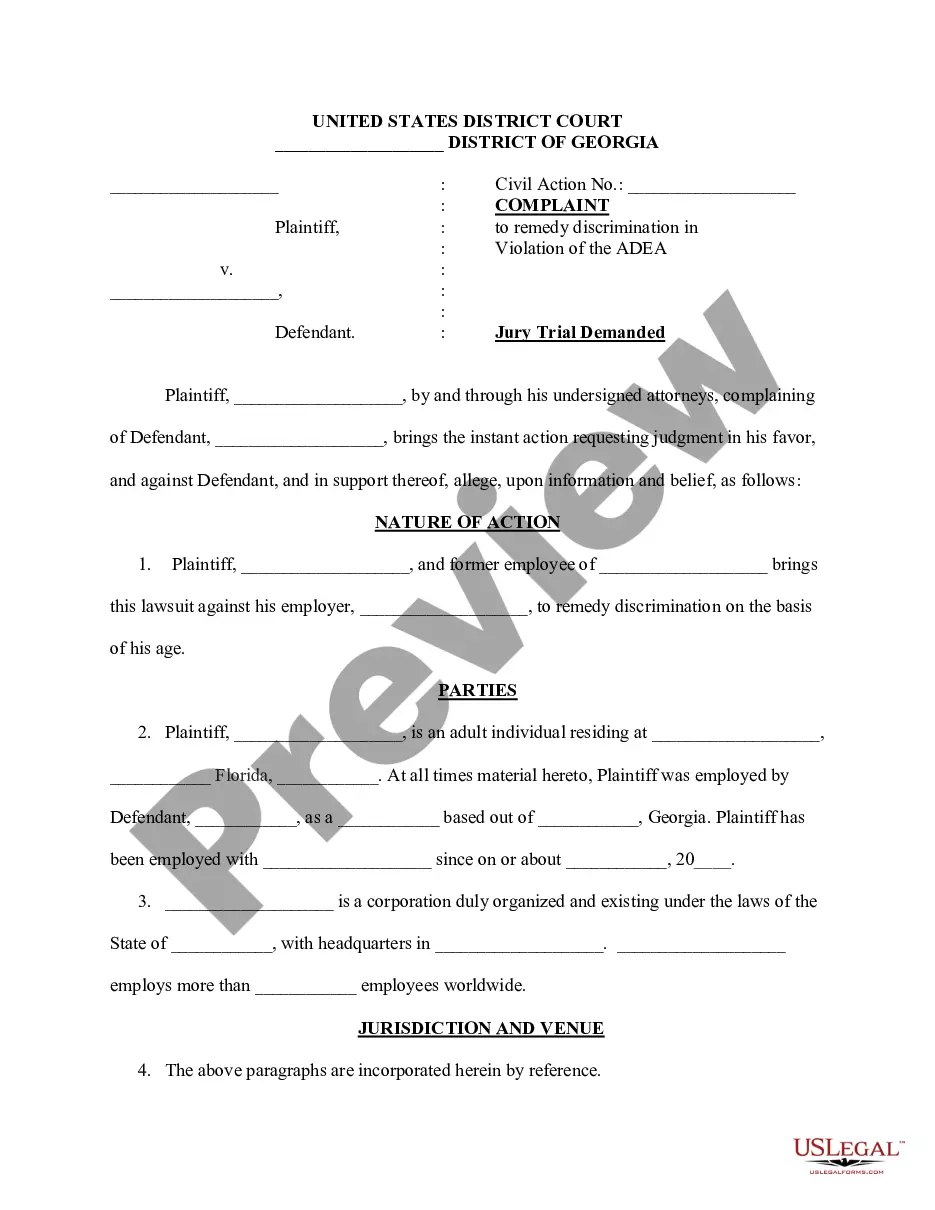
Oklahoma Complaint For Wrongful Termination - Title VII Civil Rights Act - Pregnancy Discrimination Act - Jury Trial Demand
Category:
State:
Multi-State
Control #:
US-000291
Format:
Word;
Rich Text
Instant download
Description
Free preview




Get your form ready online
Our built-in tools help you complete, sign, share, and store your documents in one place.
Built-in online Word editor
Make edits, fill in missing information, and update formatting in US Legal Forms—just like you would in MS Word.
Export easily
Download a copy, print it, send it by email, or mail it via USPS—whatever works best for your next step.
E-sign your document
Sign and collect signatures with our SignNow integration. Send to multiple recipients, set reminders, and more. Go Premium to unlock E-Sign.
Notarize online 24/7
If this form requires notarization, complete it online through a secure video call—no need to meet a notary in person or wait for an appointment.
Store your document securely
We protect your documents and personal data by following strict security and privacy standards.

Make edits, fill in missing information, and update formatting in US Legal Forms—just like you would in MS Word.

Download a copy, print it, send it by email, or mail it via USPS—whatever works best for your next step.

Sign and collect signatures with our SignNow integration. Send to multiple recipients, set reminders, and more. Go Premium to unlock E-Sign.

If this form requires notarization, complete it online through a secure video call—no need to meet a notary in person or wait for an appointment.

We protect your documents and personal data by following strict security and privacy standards.
Looking for another form?




How to fill out Complaint For Wrongful Termination - Title VII Civil Rights Act - Pregnancy Discrimination Act - Jury Trial Demand?
US Legal Forms - one of the largest collections of legal documents in the United States - offers a variety of legal form templates that you can download or print.
By using the website, you can access thousands of forms for business and personal purposes, organized by categories, states, or keywords. You can find the latest versions of forms such as the Oklahoma Complaint For Wrongful Termination - Title VII Civil Rights Act - Pregnancy Discrimination Act - Jury Trial Demand in just a few minutes.
If you already have a monthly subscription, Log In and download the Oklahoma Complaint For Wrongful Termination - Title VII Civil Rights Act - Pregnancy Discrimination Act - Jury Trial Demand from the US Legal Forms library. The Download button will appear on every form you view. You can access all previously saved forms from the My documents tab of your account.
Make modifications. Fill out, edit, print, and sign the downloaded Oklahoma Complaint For Wrongful Termination - Title VII Civil Rights Act - Pregnancy Discrimination Act - Jury Trial Demand.
Each template you saved in your account does not have an expiration date and is yours permanently. So, if you wish to download or print another version, simply go to the My documents section and click on the form you need. Access the Oklahoma Complaint For Wrongful Termination - Title VII Civil Rights Act - Pregnancy Discrimination Act - Jury Trial Demand with US Legal Forms, the most comprehensive collection of legal document templates. Utilize a wealth of professional and state-specific templates that meet your business or personal requirements.
- If you are using US Legal Forms for the first time, here are simple instructions to help you get started.
- Ensure you have selected the correct form for your city/county. Click on the Preview button to examine the form's content. Check the form overview to confirm you have selected the right form.
- If the form does not meet your needs, use the Search field at the top of the screen to find one that does.
- If you are satisfied with the form, confirm your choice by clicking on the Buy now button. Then, choose the pricing plan you want and provide your information to register for an account.
- Process the payment. Use your credit card or PayPal account to complete the transaction.
- Select the format and download the form to your device.
Form popularity
FAQ
To prove pregnancy discrimination in the workplace, you need to show that your pregnancy was a factor in an adverse employment decision. This can involve gathering evidence such as emails, performance reviews, or witness testimonies that indicate bias. Additionally, you should document any changes in your treatment at work after you announced your pregnancy. If you believe you have experienced wrongful termination related to your pregnancy, consider filing an Oklahoma Complaint for Wrongful Termination under the Title VII Civil Rights Act and the Pregnancy Discrimination Act, which provides a path for justice and may include a Jury Trial Demand.
To file an EEOC complaint in Oklahoma, you must first contact the local EEOC office or visit their website. Complete the intake form detailing your wrongful termination under the Title VII Civil Rights Act or Pregnancy Discrimination Act. Once submitted, the EEOC will review your claim, and you can request a jury trial if your case qualifies. This process is crucial for your Oklahoma Complaint For Wrongful Termination - Title VII Civil Rights Act - Pregnancy Discrimination Act - Jury Trial Demand.
When preparing your complaint, gather evidence that supports your claim of wrongful termination. This may include your employment records, emails, witness statements, and any documentation related to your pregnancy if applicable. A thorough compilation of evidence strengthens your case under the Title VII Civil Rights Act and the Pregnancy Discrimination Act. Remember, an organized presentation of your evidence can be vital for your Oklahoma Complaint For Wrongful Termination - Title VII Civil Rights Act - Pregnancy Discrimination Act - Jury Trial Demand.
To file a complaint with the Oklahoma Attorney General, visit their official website and locate the complaint form specific to wrongful termination. Ensure your complaint details the violation under the Title VII Civil Rights Act or Pregnancy Discrimination Act. After filling out the form, submit it online or send it via mail. Using the right forms helps streamline your Oklahoma Complaint For Wrongful Termination - Title VII Civil Rights Act - Pregnancy Discrimination Act - Jury Trial Demand.
The 85% rule in Oklahoma refers to the principle that an employee must meet certain criteria to be considered for unemployment benefits after termination. Specifically, it implies that employees who are fired for misconduct may not qualify for benefits. This rule plays a significant role in wrongful termination cases, particularly when determining eligibility for claims. If you feel your case involves this rule, consider seeking assistance through platforms like US Legal Forms.
Affirmative defenses to Title VII claims can vary, but they often include arguments that the employer had legitimate non-discriminatory reasons for the termination. For example, an employer might assert that the termination was based on performance issues or misconduct rather than discrimination. Understanding these defenses is crucial when preparing your case, especially if you are demanding a jury trial. Legal resources like US Legal Forms can assist in structuring your complaint.
In Oklahoma, wrongful termination typically involves dismissals that violate federal or state laws, such as the Title VII Civil Rights Act or the Pregnancy Discrimination Act. Factors like discrimination based on race, gender, or pregnancy can qualify as wrongful termination. Additionally, retaliatory actions against employees for asserting their rights may also fall under this category. If you believe you have been wrongfully terminated, consider filing an Oklahoma Complaint For Wrongful Termination.
Unfair termination occurs when an employee is dismissed without just cause or in violation of employment laws. This can include terminations based on discrimination, retaliation, or breach of contract. Understanding what constitutes unfair termination is essential for anyone considering an Oklahoma Complaint For Wrongful Termination. Consulting with legal experts can provide clarity on your specific circumstances.
Yes, there is a statute of limitations for filing complaints with the Office for Civil Rights (OCR). Typically, you have 180 days from the date of the alleged discriminatory act to file your complaint. This timeframe is crucial for ensuring your rights under the Title VII Civil Rights Act are protected. It is advisable to act quickly and gather necessary documentation to support your claim.
Winning a wrongful termination case can be challenging, but it is not impossible. To succeed, you must provide evidence that your termination violated laws like the Title VII Civil Rights Act or the Pregnancy Discrimination Act. The complexity of your case may depend on various factors, including the nature of your employment and the specifics of your situation. Utilizing resources like US Legal Forms can help you navigate this process effectively.