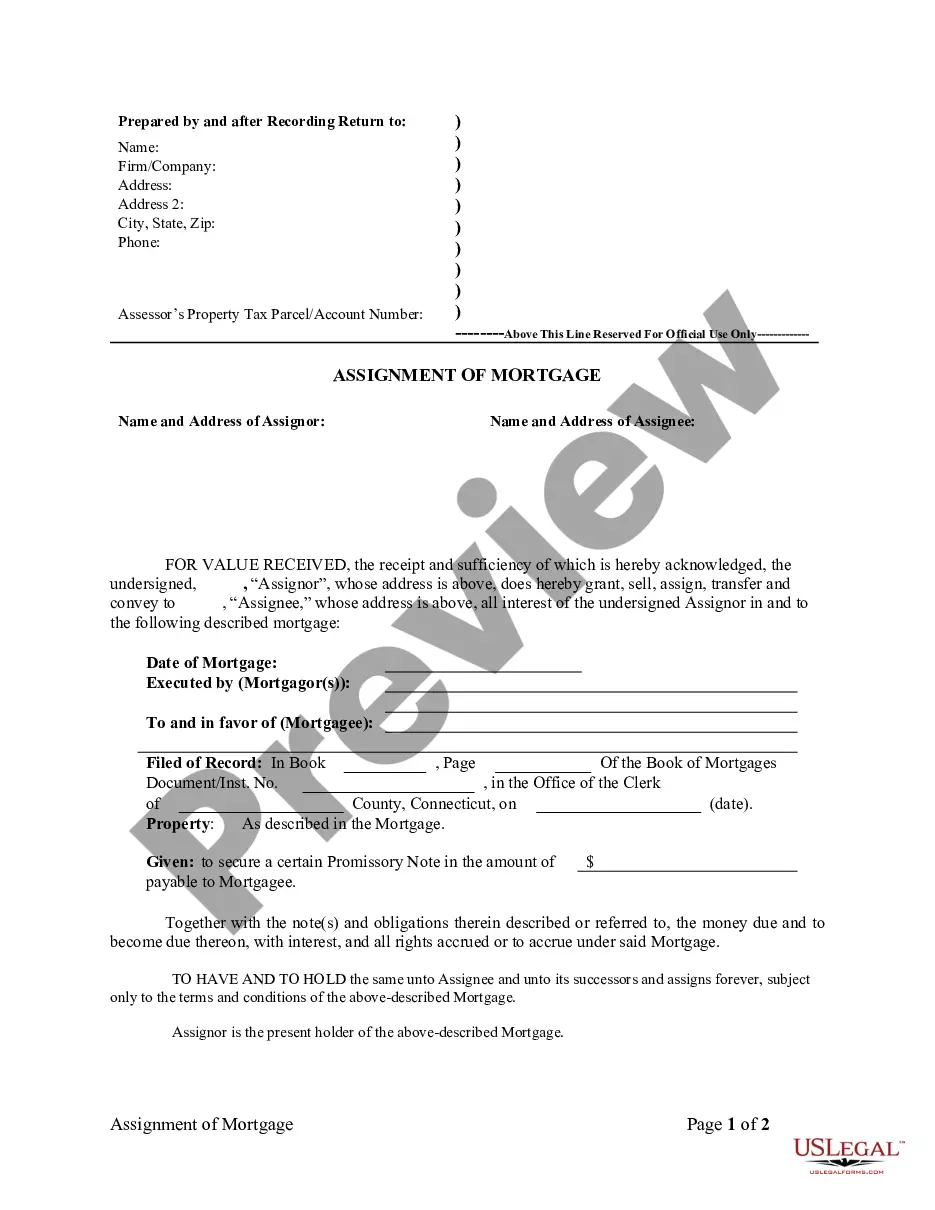
Oklahoma Intercreditor and SubordinationAgreement
Overview of this form
An Intercreditor and Subordination Agreement is a legal contract between two or more creditors that outlines the terms of their financial relationships when a borrower has multiple lenders. This agreement is crucial for establishing the priority of claims against the borrower's assets and ensures that one lender's rights are subordinate to another's under specified conditions. This form is typically used in financing arrangements to clarify the responsibilities and rights of all parties, distinguishing it from other loan agreements by focusing on creditor relationships rather than borrower obligations.
What’s included in this form
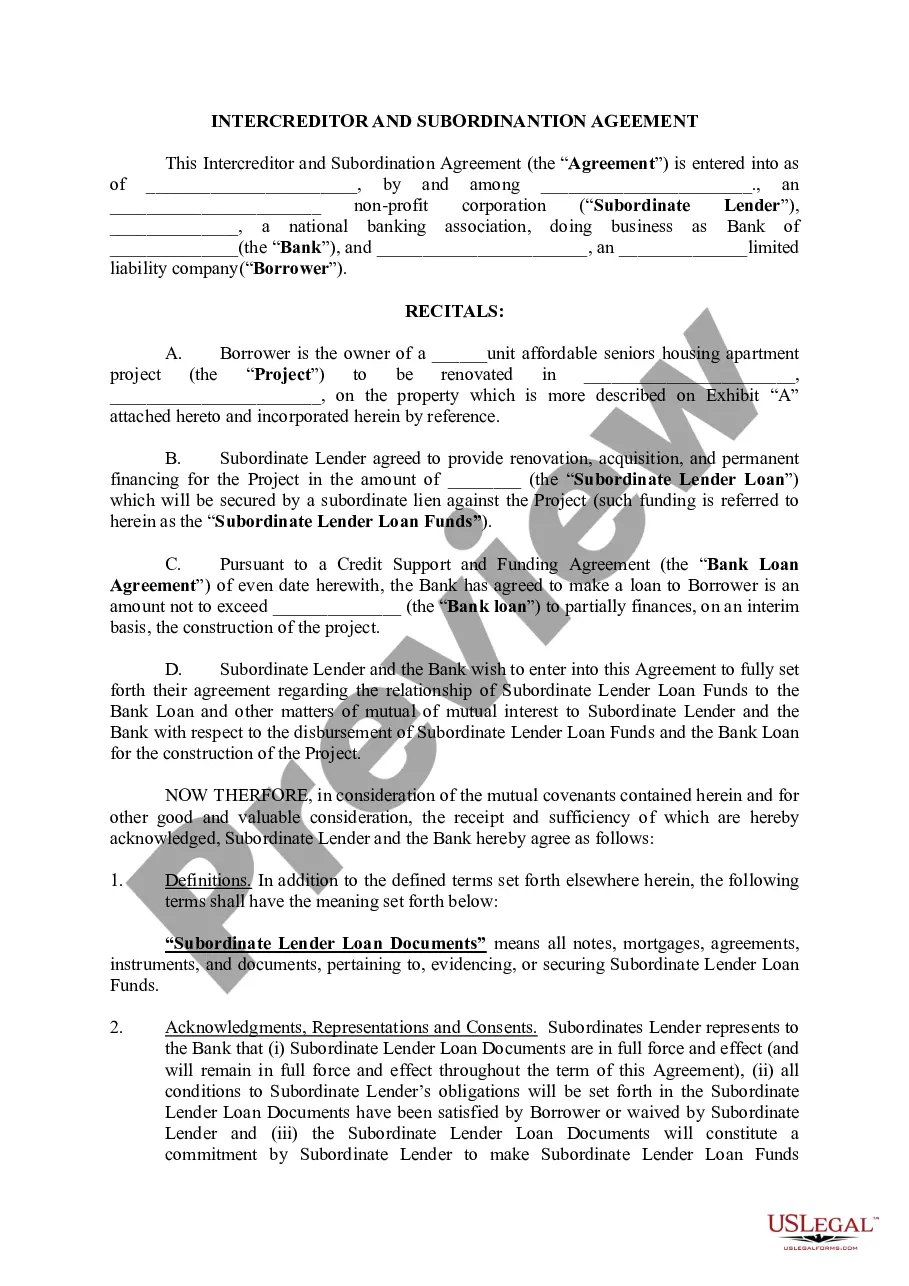
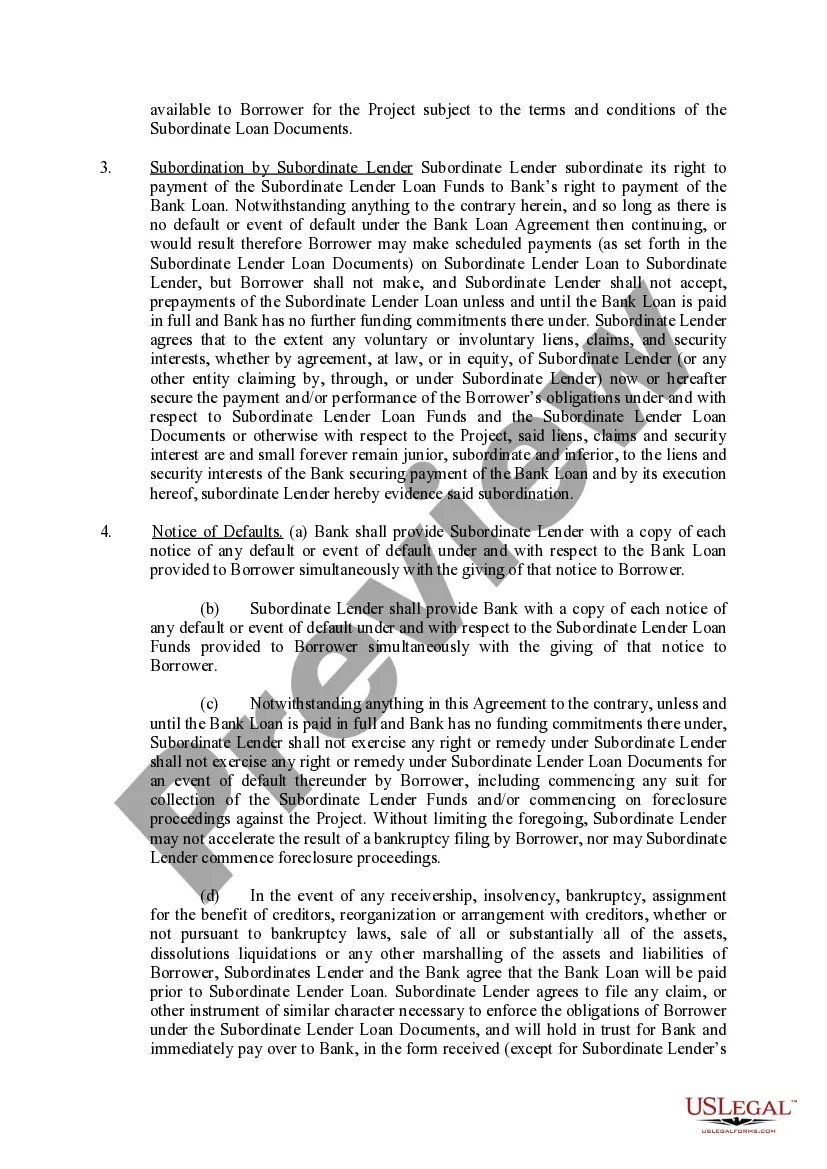
- Definitions of terms relevant to the agreement
- Representations and acknowledgments by the subordinate lender
- Subordination clause outlining the priority of payments
- Notification procedures for defaults under the agreements
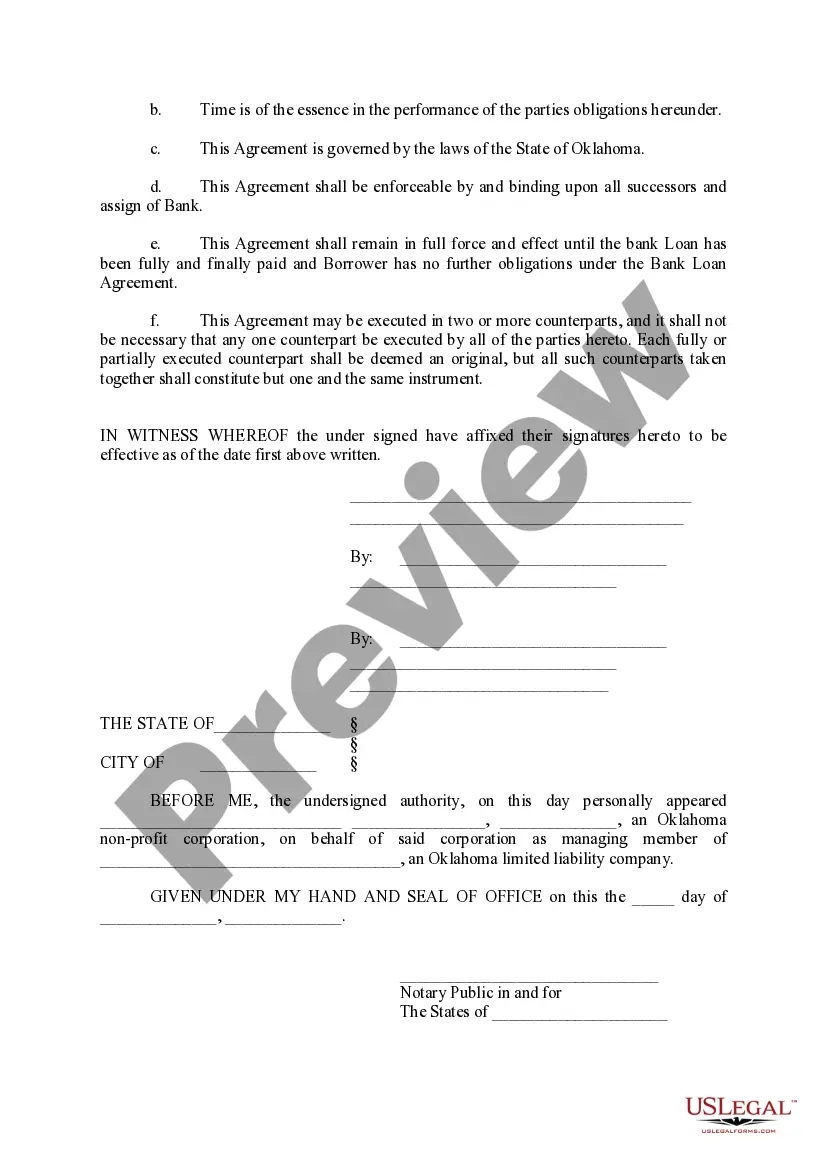
- Miscellaneous provisions governing the agreement

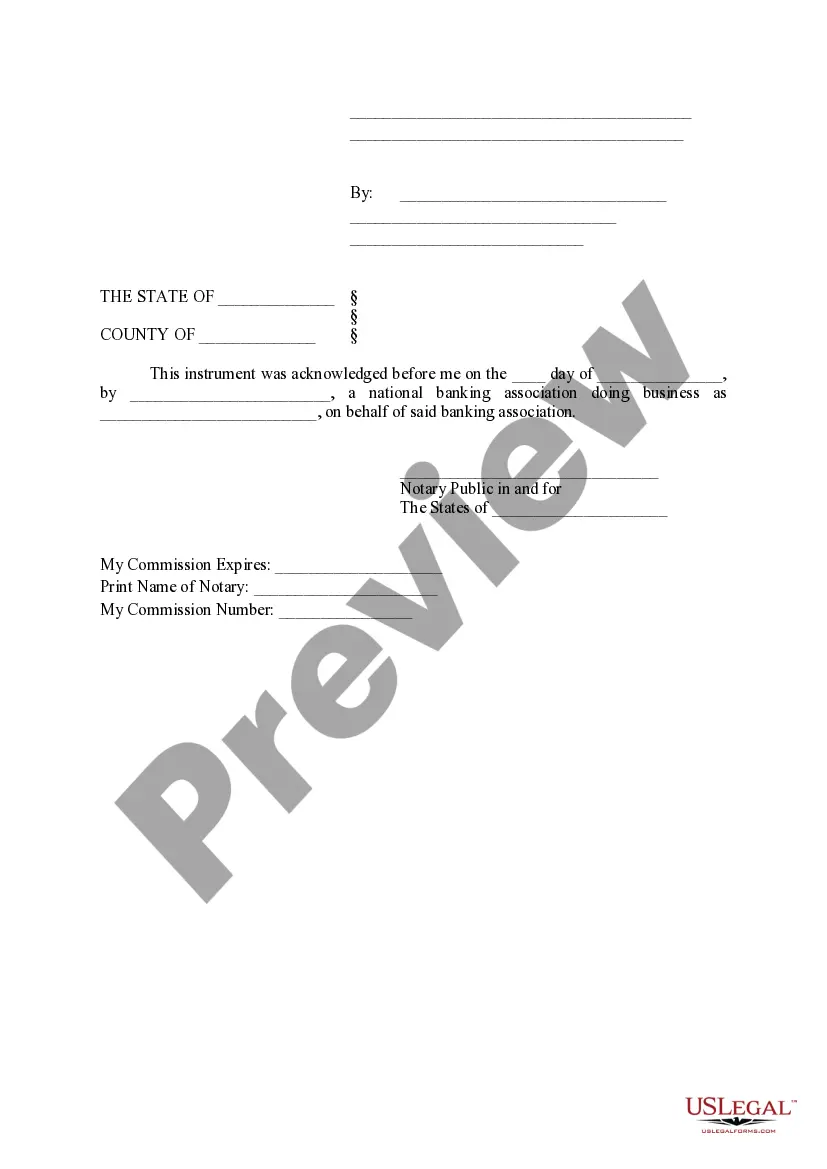
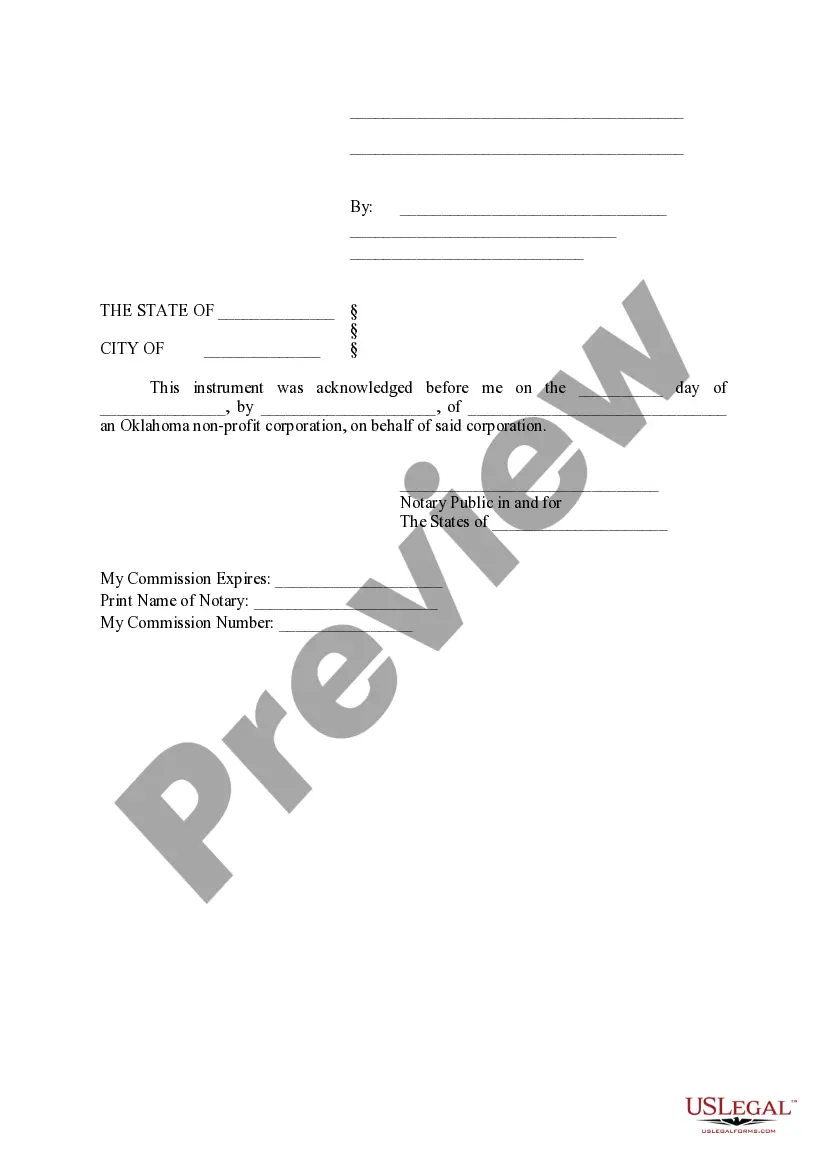


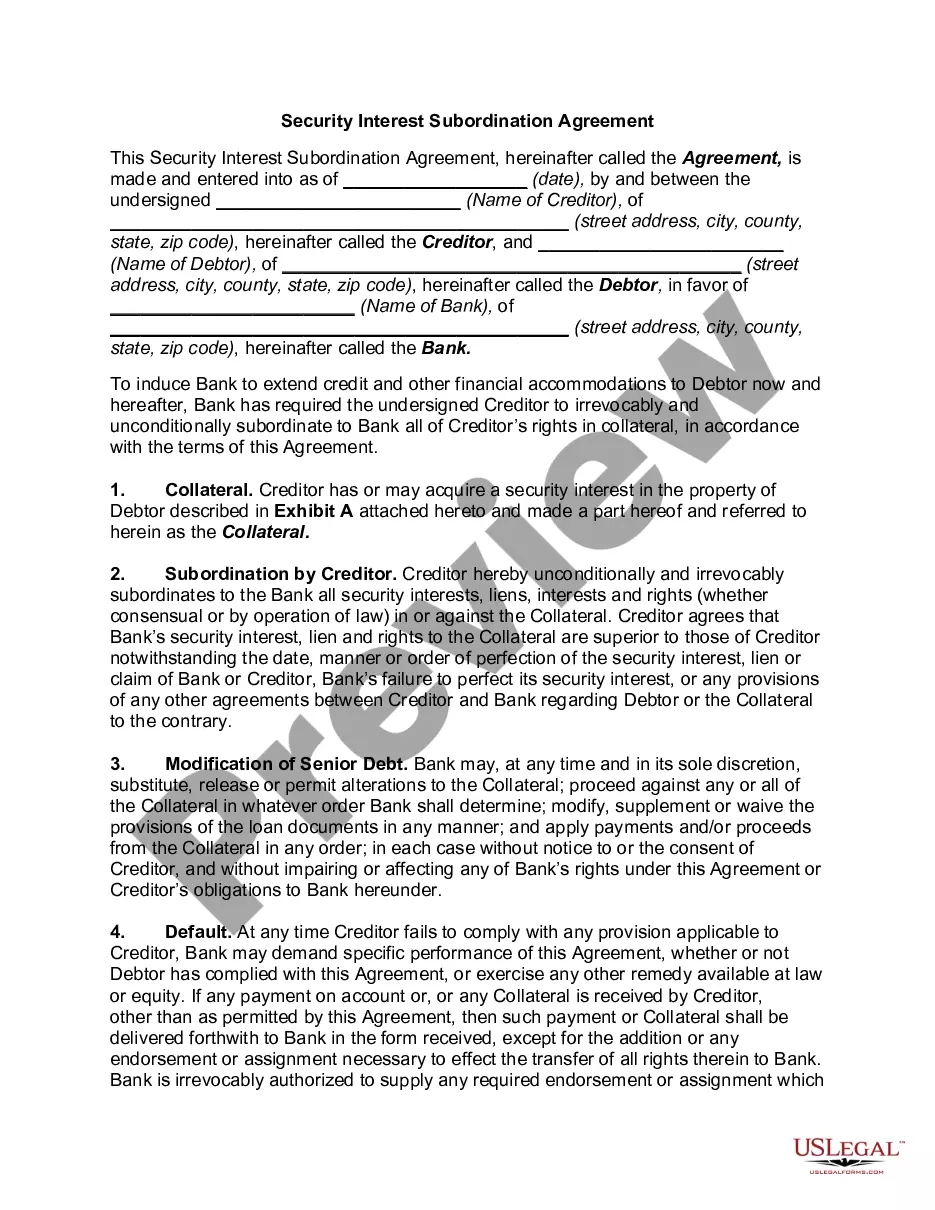
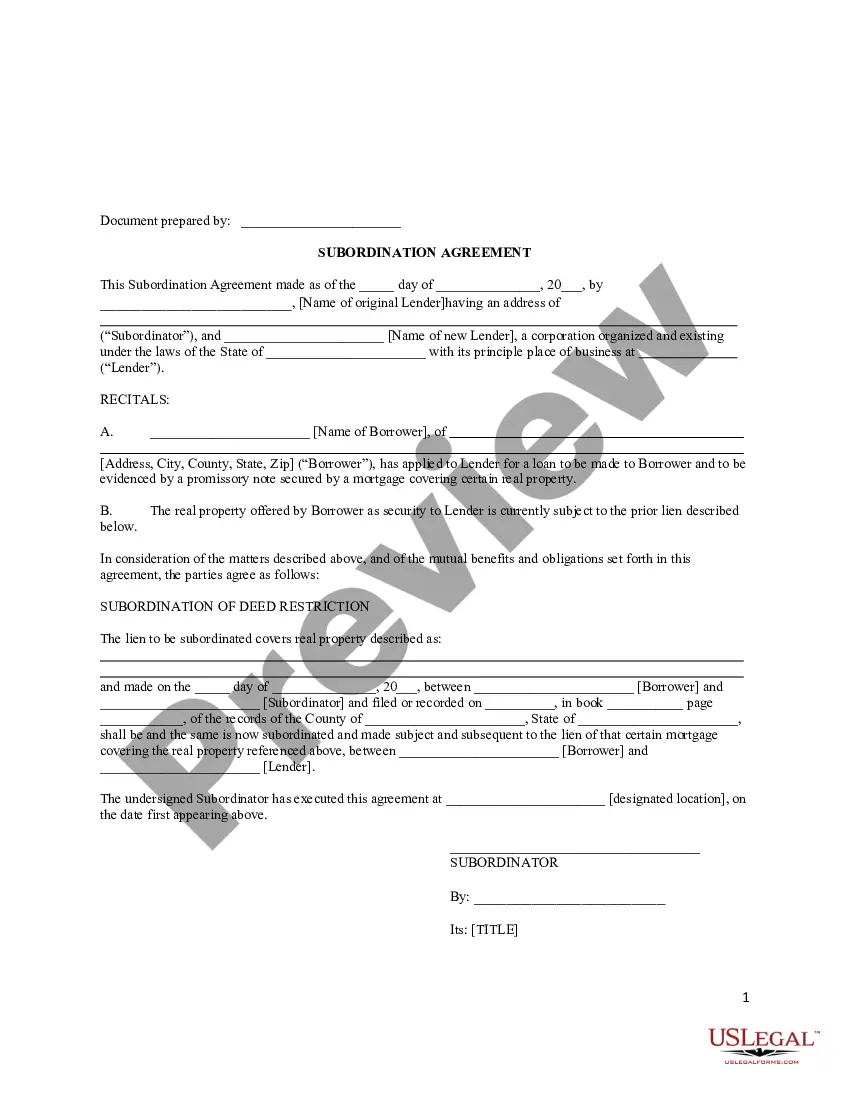
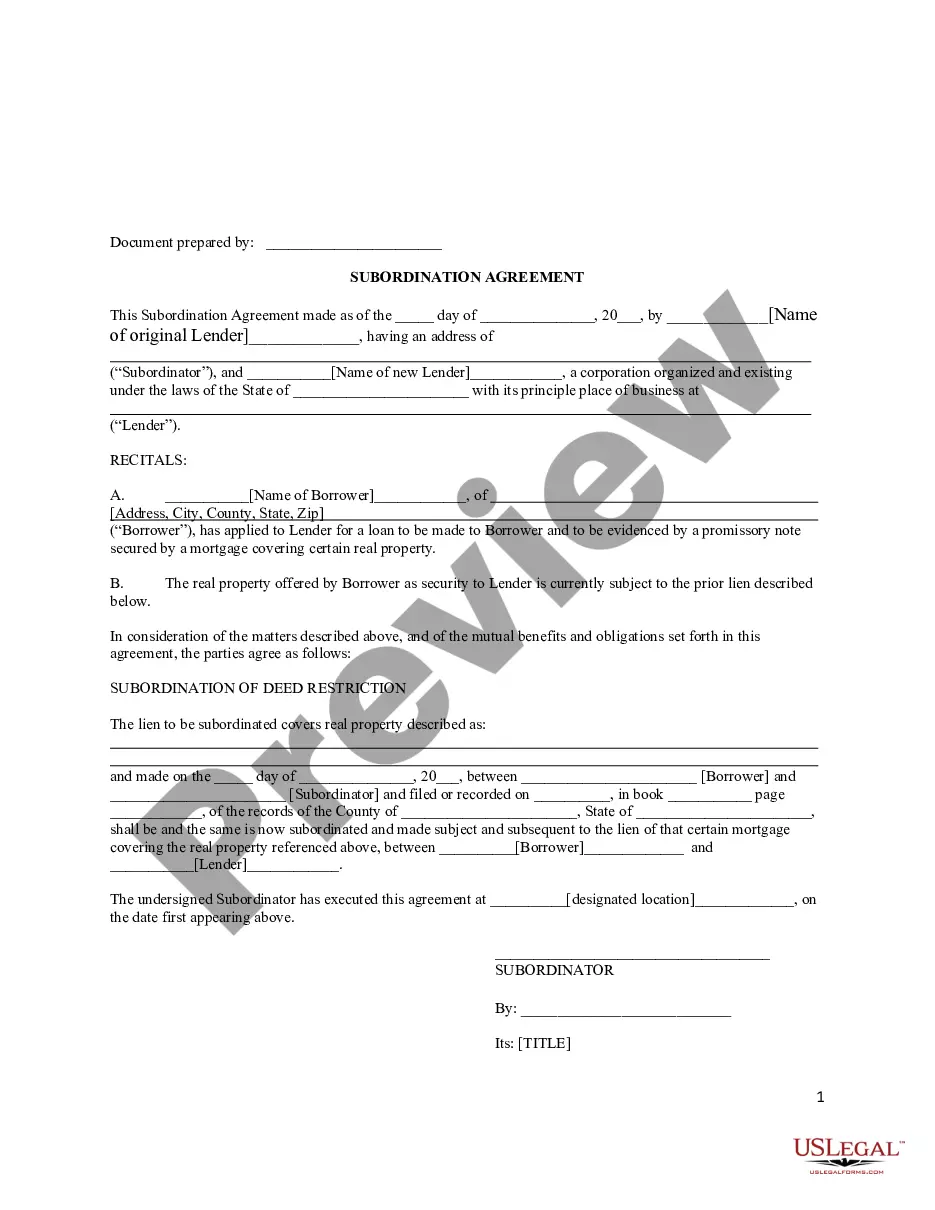
When to use this form
This form should be used when a borrower is seeking to secure financing from multiple lenders. It is particularly relevant in real estate development projects or when significant renovations require funding from different sources. The agreement helps avoid conflicts between the lenders regarding payment priorities and ensures clear terms for the disbursement of funds. It is essential in situations where a subordinate lender provides financing while a senior lender holds a primary lien.
Who can use this document
- Borrowers seeking to finance a project with multiple lenders
- Subordinate lenders providing secondary loans
- Senior lenders or banks issuing primary loans
- Attorneys involved in real estate or commercial financing transactions
Completing this form step by step
- Identify the parties involved: Borrower, Subordinate Lender, and Bank.
- Specify the terms of financing, including amounts and project details.
- Include any required definitions of terms specific to the agreement.
- Outline the subordination of the subordinate lender's rights to those of the bank.
- Gather signatures from all parties and ensure proper notarization if necessary.
Notarization requirements for this form
This form does not typically require notarization unless specified by local law. However, it is always recommended to consult with a legal professional to confirm the need for notarization based on jurisdictional requirements. Using US Legal Forms' integrated online notarization service can ensure compliance if needed.
Get your form ready online
Our built-in tools help you complete, sign, share, and store your documents in one place.
Make edits, fill in missing information, and update formatting in US Legal Forms—just like you would in MS Word.
Download a copy, print it, send it by email, or mail it via USPS—whatever works best for your next step.
Sign and collect signatures with our SignNow integration. Send to multiple recipients, set reminders, and more. Go Premium to unlock E-Sign.
If this form requires notarization, complete it online through a secure video call—no need to meet a notary in person or wait for an appointment.
We protect your documents and personal data by following strict security and privacy standards.

Make edits, fill in missing information, and update formatting in US Legal Forms—just like you would in MS Word.

Download a copy, print it, send it by email, or mail it via USPS—whatever works best for your next step.

Sign and collect signatures with our SignNow integration. Send to multiple recipients, set reminders, and more. Go Premium to unlock E-Sign.

If this form requires notarization, complete it online through a secure video call—no need to meet a notary in person or wait for an appointment.

We protect your documents and personal data by following strict security and privacy standards.
Typical mistakes to avoid
- Failing to include proper definitions, which can lead to misunderstandings.
- Not specifying the amounts or terms clearly, causing ambiguity in the agreement.
- Omitting required signatures from one or more parties, leading to an unenforceable document.
- Neglecting to review state-specific requirements, resulting in non-compliance.
Advantages of online completion
- Convenience of completing at your own pace without time constraints.
- Editability allows for customization based on specific needs or details.
- Access to templates drafted by licensed attorneys ensures reliability and legal compliance.
- Cost-effective compared to hiring legal counsel for standard agreements.
Looking for another form?
Form popularity
FAQ
An intercreditor agreement is an agreement among creditors that sets forth the various lien positions and the rights and liabilities of each creditor and its impact on the other creditors.
A subordination agreement is a legal document that establishes one debt as ranking behind another in priority for collecting repayment from a debtor. The priority of debts can become extremely important when a debtor defaults on payments or declares bankruptcy.
An Intercreditor Agreement, commonly referred to as an inter-creditor deed, is a document signed between two or more creditors.In a typical scenario, there are two creditors involved in a given agreement a senior(s) and subordinate (junior) lender(s) Capital stack ranks the priority of different sources of financing
When a Borrower wishes to refinance the property, they must request a subordination request to the Lender. The Lender will subordinate their loan only when there is no cash out as part of the refinance.
Unless there is a subordination agreement, it is virtually impossible to refinance your first mortgage. The document agreeing to the subordination must be signed by the lender and the borrower and requires notarization.
Payment subordination is where the subordinated lender agrees (subject to carve-outs noted in the agreement) to fully subordinate the payment of the subordinated obligations to the prior repayment in full of the senior obligations.
Despite its technical-sounding name, the subordination agreement has one simple purpose. It assigns your new mortgage to first lien position, making it possible to refinance with a home equity loan or line of credit. Signing your agreement is a positive step forward in your refinancing journey.
An agreement among lenders, or classes of lenders, describing their respective rights and obligations with respect to the borrower and its assets.This agreement can also specify how payments from the borrower are to be applied among the lenders.
An intercreditor agreement is a bit different than a subordination agreement. They both serve to do the same thing, allow two different lenders to split up the collateral of a business so both can be secured in the first lien on their respective collateral.