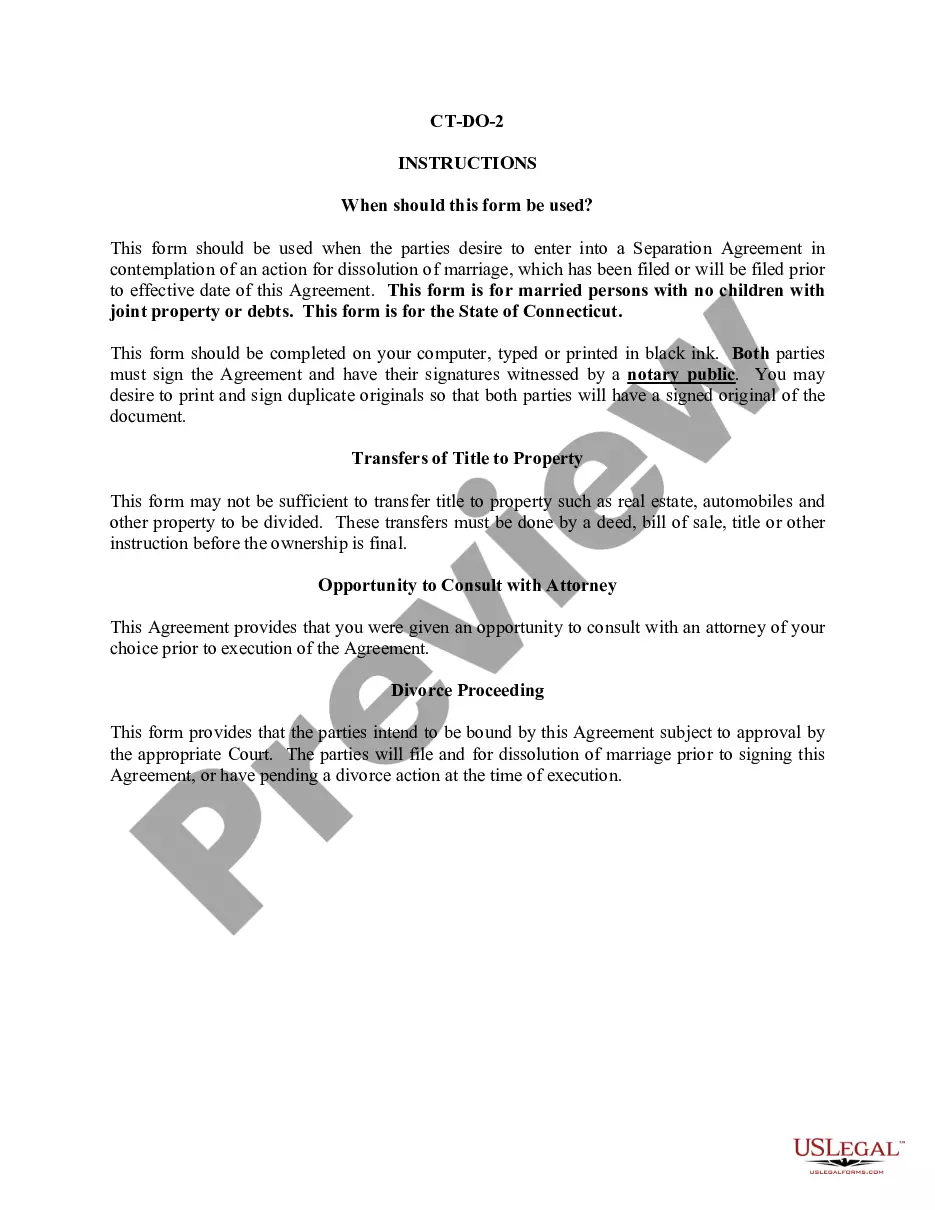
Oklahoma Subordination Agreement
Overview of this form
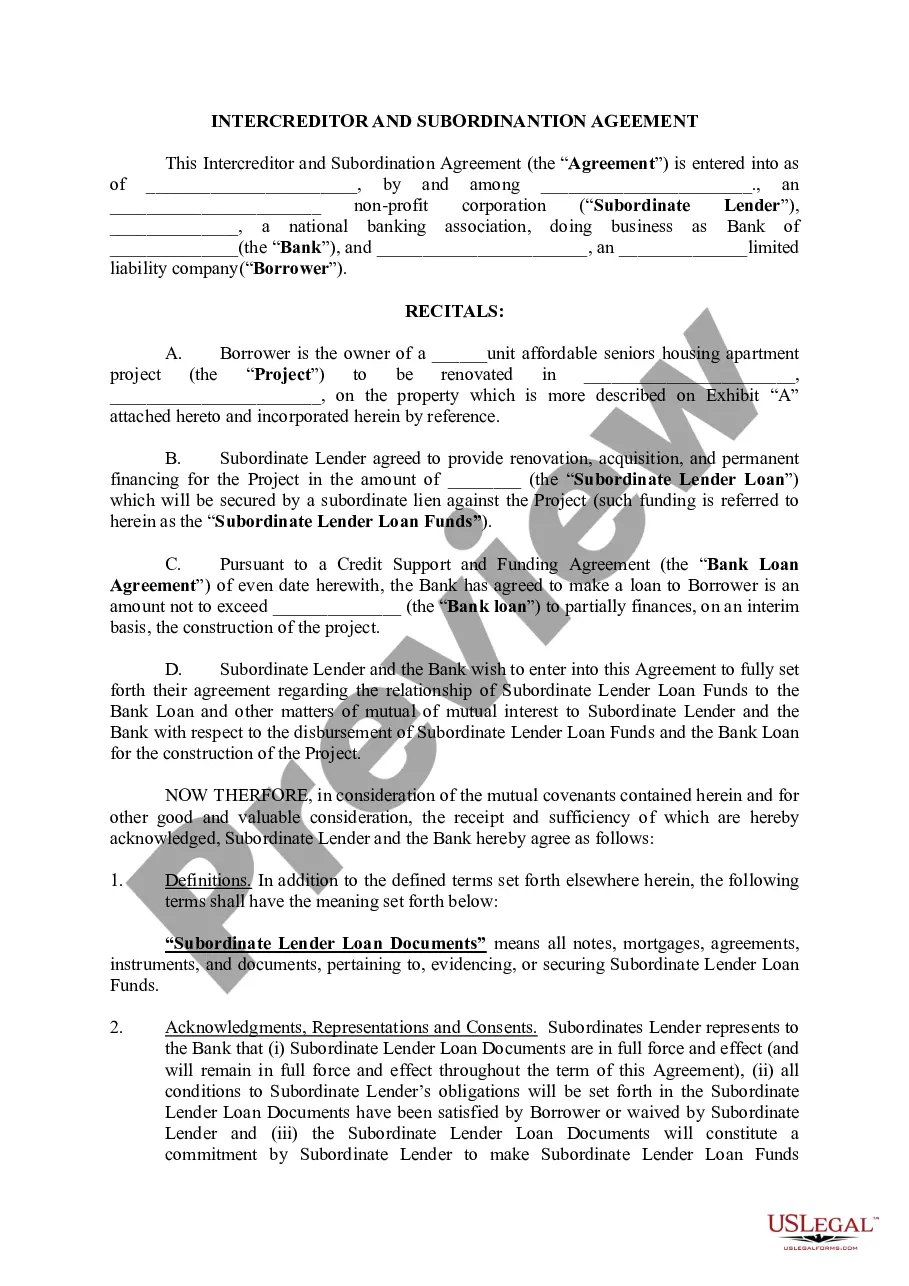
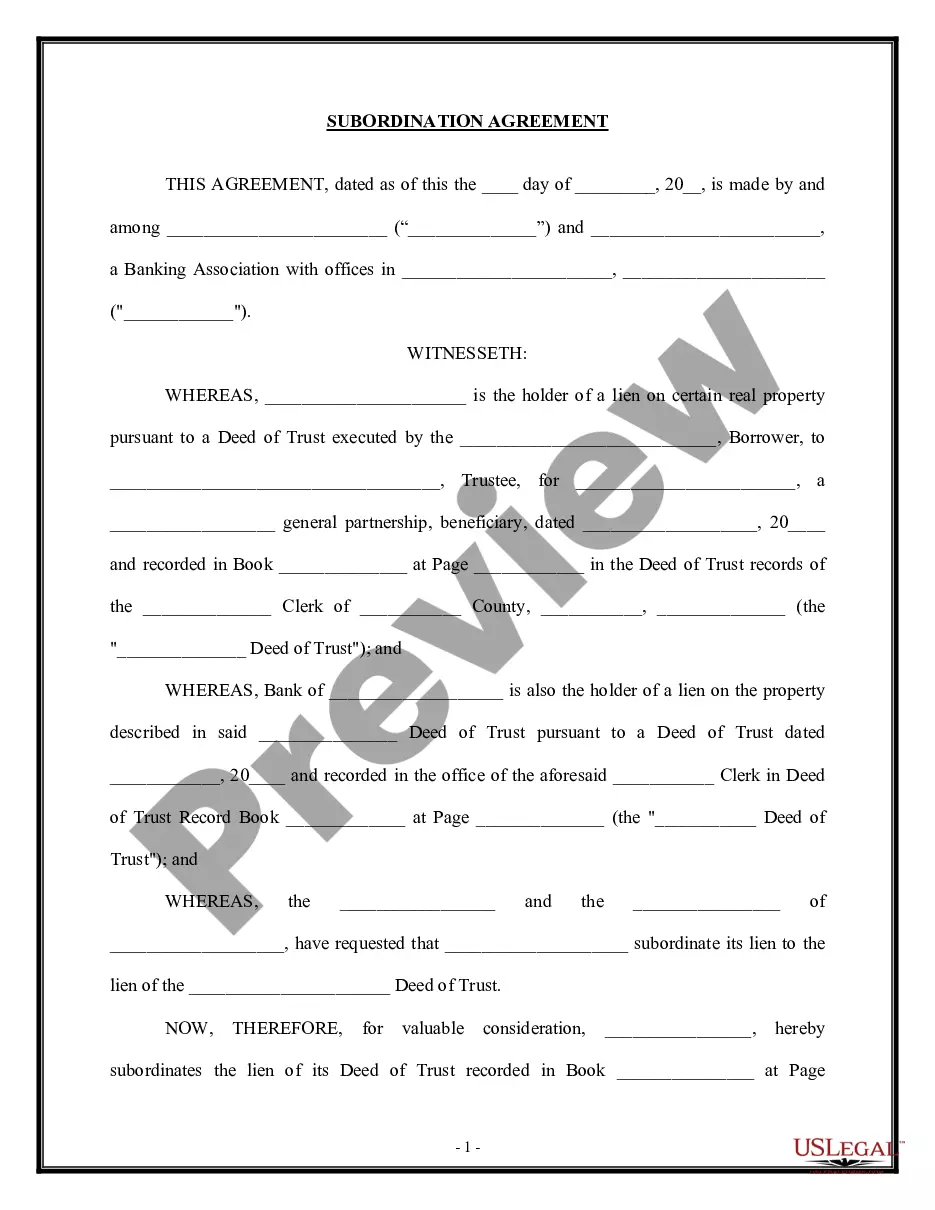
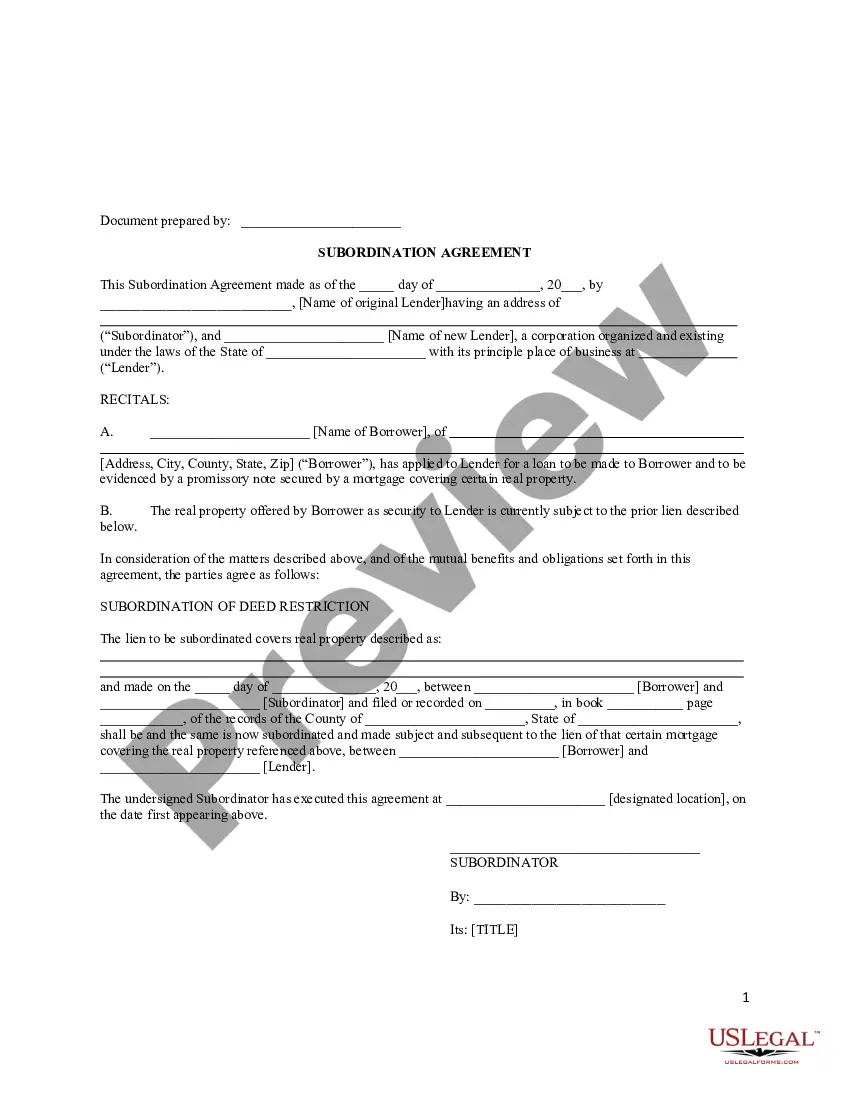
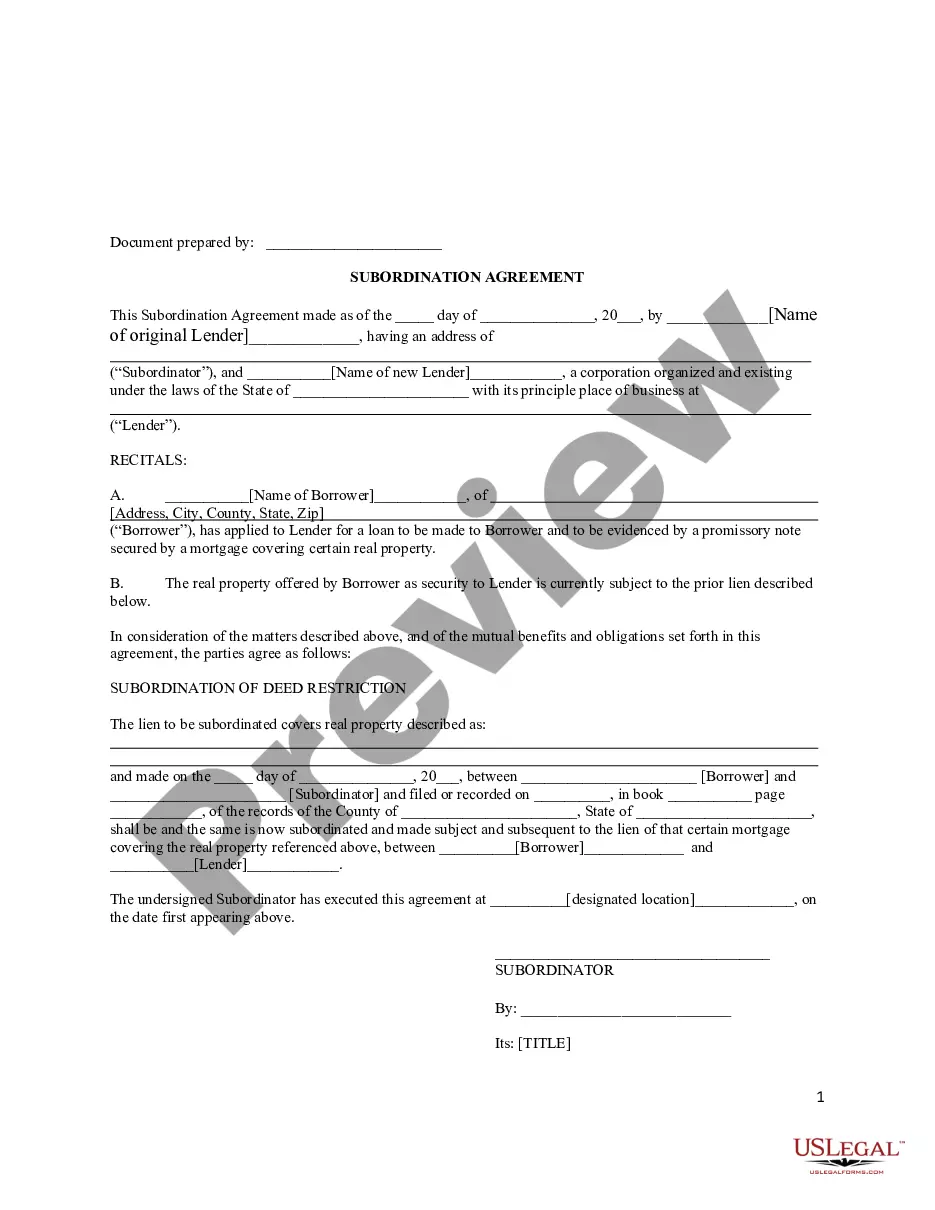
A subordination agreement is a legal contract where a junior creditor agrees that their claims against a debtor will be subordinate to those of senior creditors. This means the junior creditor agrees to wait for payment until all senior debts are settled. This form is essential for defining the priority of liens on property, which can help clarify payment responsibilities in financial transactions involving multiple lenders.
Main sections of this form
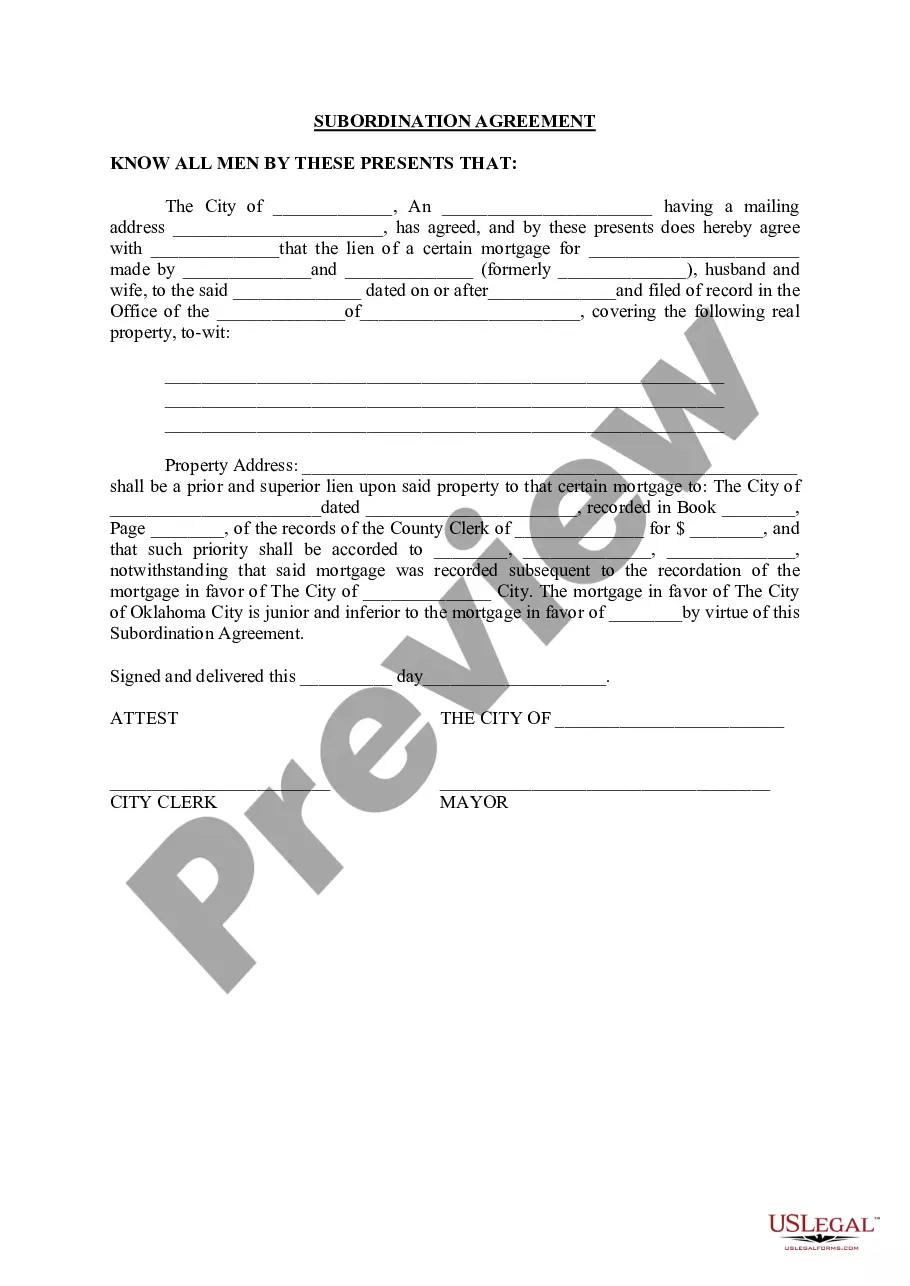
- Identification of the parties involved, including the junior and senior creditors.
- Description of the property covered by the mortgage.
- Details about the original mortgage, including dates and recording information.
- Statement of the agreement regarding the lien priority between mortgages.
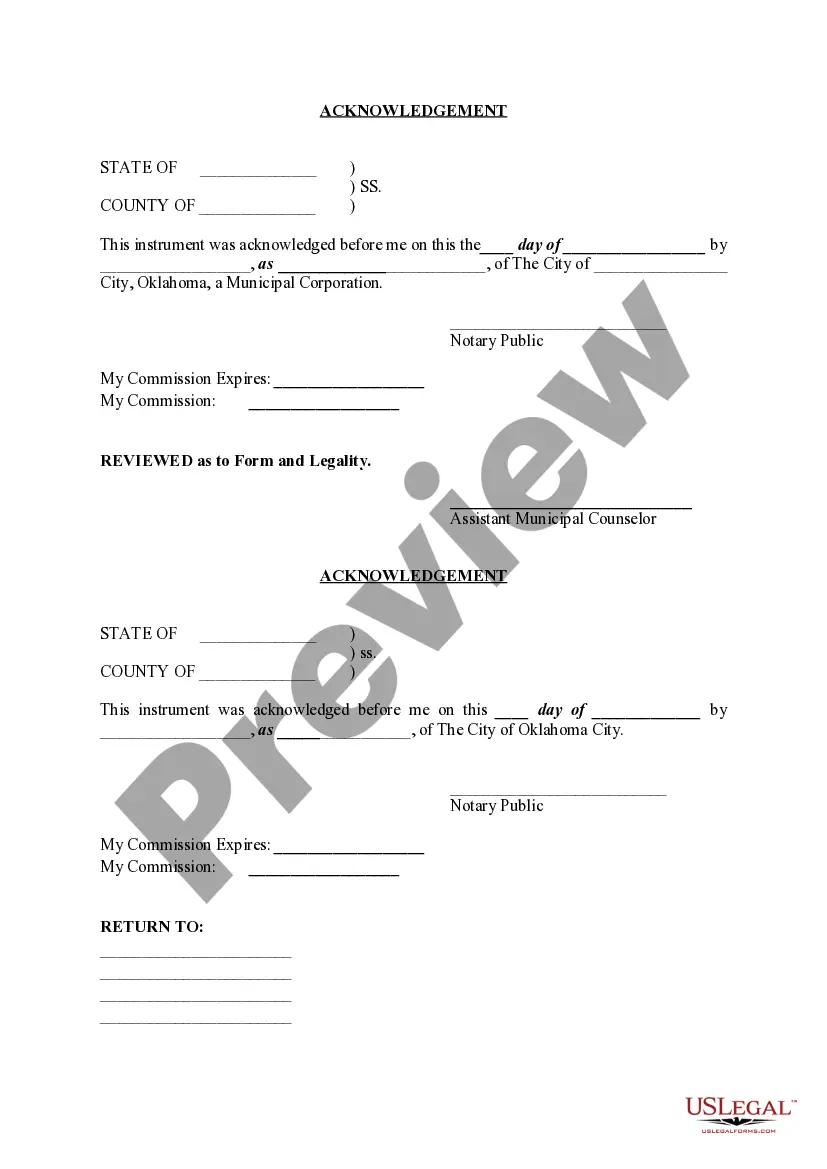
- Signatures of authorized representatives and notarization section.
When to use this form
This form is typically used when a property owner seeks additional financing and there is already an existing mortgage on the property. The new lender may require a subordination agreement to ensure their loan is prioritized above existing loans. This agreement can also be useful in negotiations between creditors to establish clear repayment terms in the event of default.
Intended users of this form
- Property owners who are seeking to secure additional financing against their property.
- Junior creditors offering loans that require lien priority over existing mortgages.
- Senior creditors who want to clarify the priority of their loans.
- Real estate attorneys assisting clients with mortgage agreements.
Completing this form step by step
- Identify and enter the names of all parties involved in the agreement.
- Clearly describe the property being financed, including its address and any identifying details.
- Input the details of the original mortgage, including dates and recording information.
- Specify the terms of the agreement regarding the lien priority.
- Have authorized representatives sign and date the form, and ensure it is notarized as required.
Notarization requirements for this form
Yes, this form must be notarized to be legally valid. Notarization helps provide assurance that the signatures are authentic and the agreement is properly executed. US Legal Forms offers integrated online notarization services, available 24/7 through secure video calls, ensuring a convenient and legally equivalent option without the need for physical travel.
Get your form ready online
Our built-in tools help you complete, sign, share, and store your documents in one place.
Make edits, fill in missing information, and update formatting in US Legal Forms—just like you would in MS Word.
Download a copy, print it, send it by email, or mail it via USPS—whatever works best for your next step.
Sign and collect signatures with our SignNow integration. Send to multiple recipients, set reminders, and more. Go Premium to unlock E-Sign.
If this form requires notarization, complete it online through a secure video call—no need to meet a notary in person or wait for an appointment.
We protect your documents and personal data by following strict security and privacy standards.

Make edits, fill in missing information, and update formatting in US Legal Forms—just like you would in MS Word.

Download a copy, print it, send it by email, or mail it via USPS—whatever works best for your next step.

Sign and collect signatures with our SignNow integration. Send to multiple recipients, set reminders, and more. Go Premium to unlock E-Sign.

If this form requires notarization, complete it online through a secure video call—no need to meet a notary in person or wait for an appointment.

We protect your documents and personal data by following strict security and privacy standards.
Common mistakes to avoid
- Failing to include complete and accurate descriptions of the property.
- Not having the document notarized when required.
- Leaving out necessary signatures from all relevant parties.
- Not clearly defining the terms of subordination and lien priority.
Benefits of completing this form online
- Convenient access to legal documents anytime, anywhere.
- Easy-to-edit templates that allow for customized entries.
- Documents drafted by licensed attorneys for reliability and legal compliance.
- Quick downloading and printing options for immediate use.
Looking for another form?




Form popularity
FAQ
Despite its technical-sounding name, the subordination agreement has one simple purpose. It assigns your new mortgage to first lien position, making it possible to refinance with a home equity loan or line of credit.
A written contract in which a lender who has secured a loan by a mortgage or deed of trust agrees with the property owner to subordinate its loan (accept a lower priority for the collection of its debt), thus giving the new loan priority in any foreclosure or payoff.
But as property values are going up and the demand for refinance isn't as much, it seems that the subordination process has gotten a little easier. Typically, it takes two to three weeks to get the resubordination paperwork through, and it is likely to set you back $200 to $300.
But as property values are going up and the demand for refinance isn't as much, it seems that the subordination process has gotten a little easier. Typically, it takes two to three weeks to get the resubordination paperwork through, and it is likely to set you back $200 to $300.
Subordination agreements are prepared by your lender. The process occurs internally if you only have one lender. When your mortgage and home equity line or loan have different lenders, both financial institutions work together to draft the necessary paperwork.
Subordination clauses in mortgages refer to the portion of your agreement with the mortgage company that says their lien takes precedence over any other liens you may have on your property.The primary lien on a house is usually a mortgage. However, it's also possible to have other liens.
A subordination agreement often comes up when a home has a first and a second mortgage, and the borrower wants to refinance the first mortgage. If you have two mortgages on your home and refinance the first loan, the refinancing lender might require a subordination agreement.
A subordination is a process where the second lender asks the first lender if they will let go of a particular class of collateral.Where an intercreditor agreement differs from a subordination is in the way it is structured. When lenders use intercreditor agreements they both file UCC-1 financing statements.
Subordination is the tenant's agreement that its interest under the lease will be subordinate to that of the lender. Of course, in many situations, the mortgage will already be superior, depending on when the mortgage was recorded and when the lease was recorded or the tenant took possession of the property.