Oklahoma Assignment to Living Trust
About this form
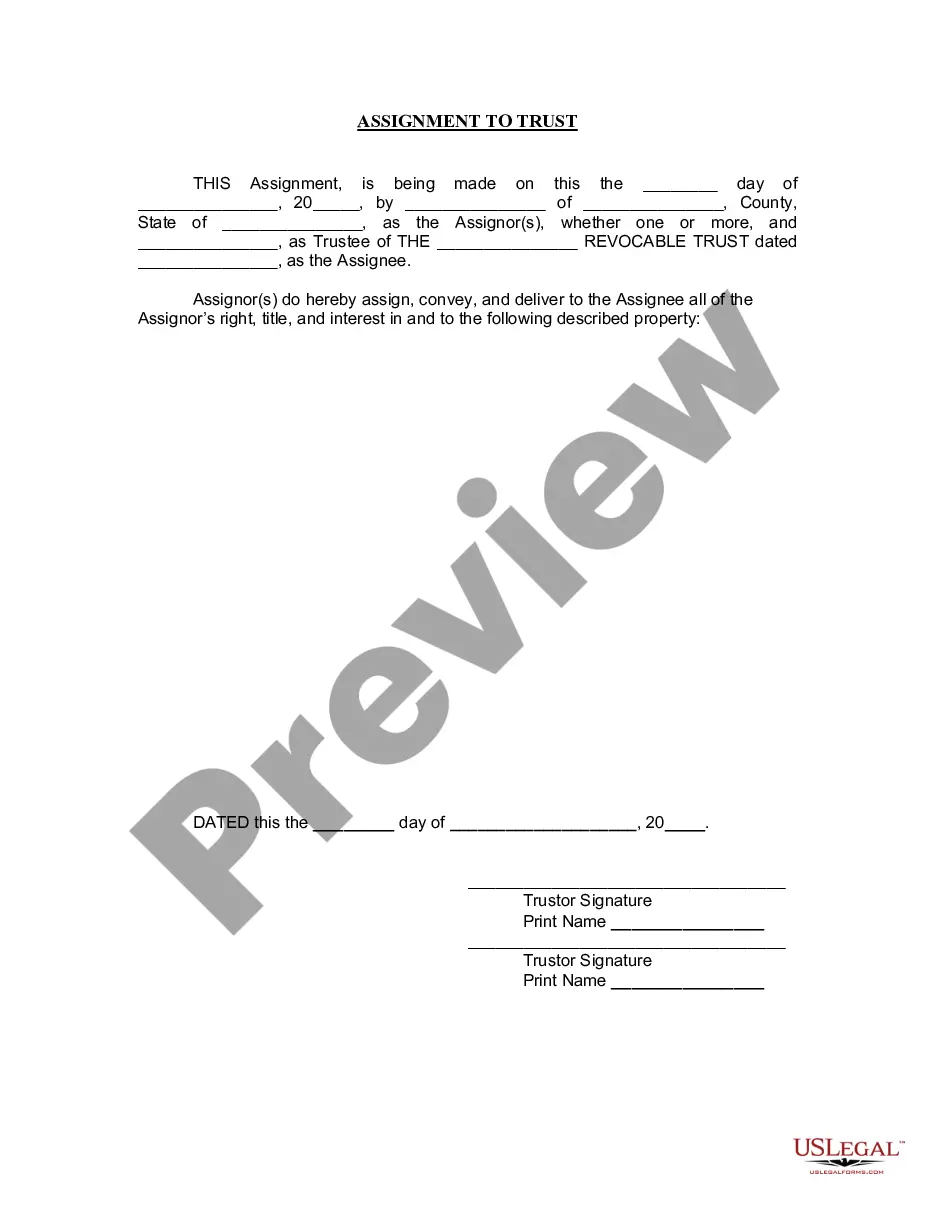
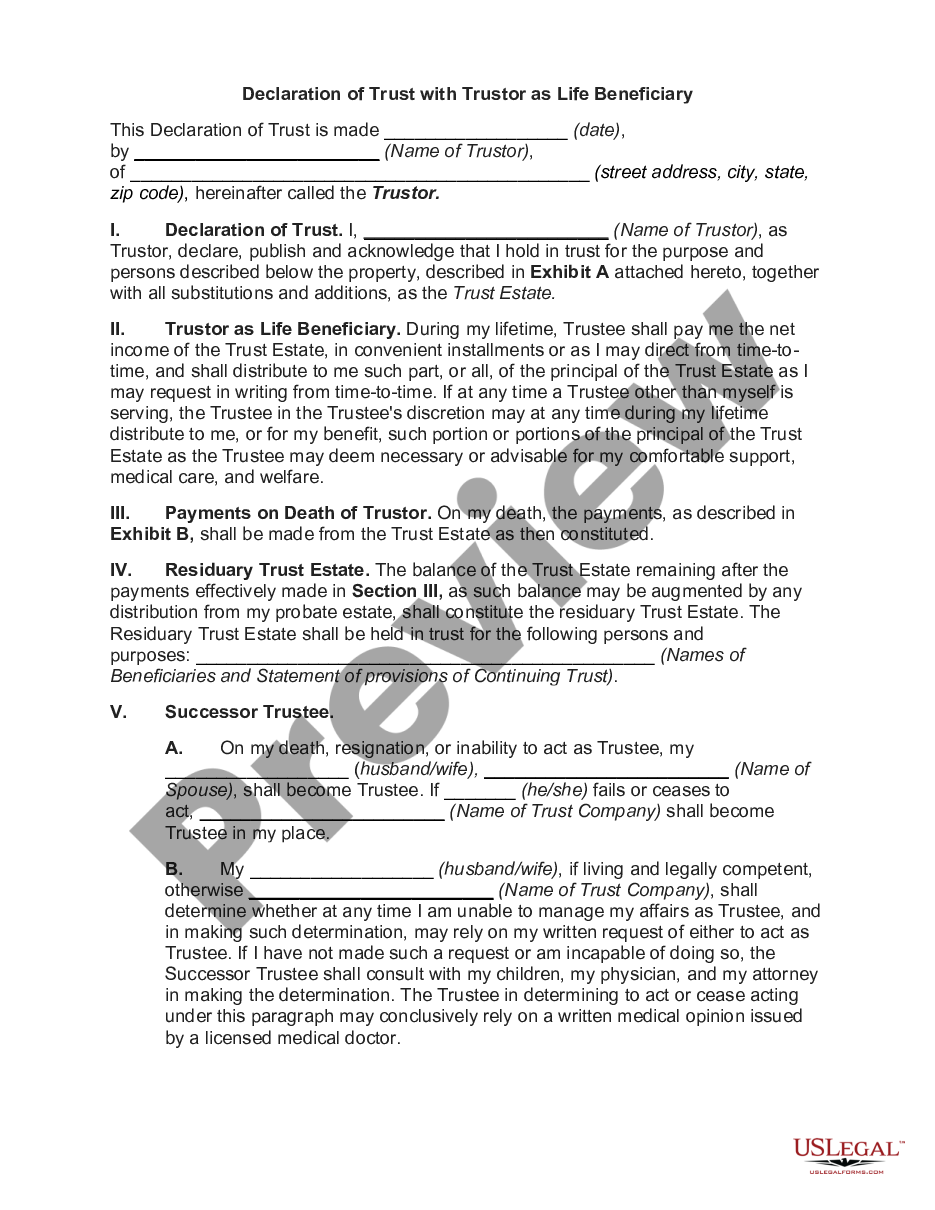
The Assignment to Living Trust form is a legal document that allows an individual (the Assignor) to transfer property ownership and designate assets into a Living Trust. This form serves a crucial purpose in estate planning by ensuring that the specified property is managed according to the Assignorâs wishes during their lifetime and after their death. Unlike a last will, which only disposes of assets upon death, a living trust can provide for asset management during the Assignor's lifetime, offering greater control and flexibility.
Form components explained
- Assignor details: Includes name and address of the person transferring the property.
- Trustee information: Identifies the trustee responsible for managing the trust.
- Property description: Specifies the property being assigned to the trust.
- Date of assignment: The date when the assignment is executed.
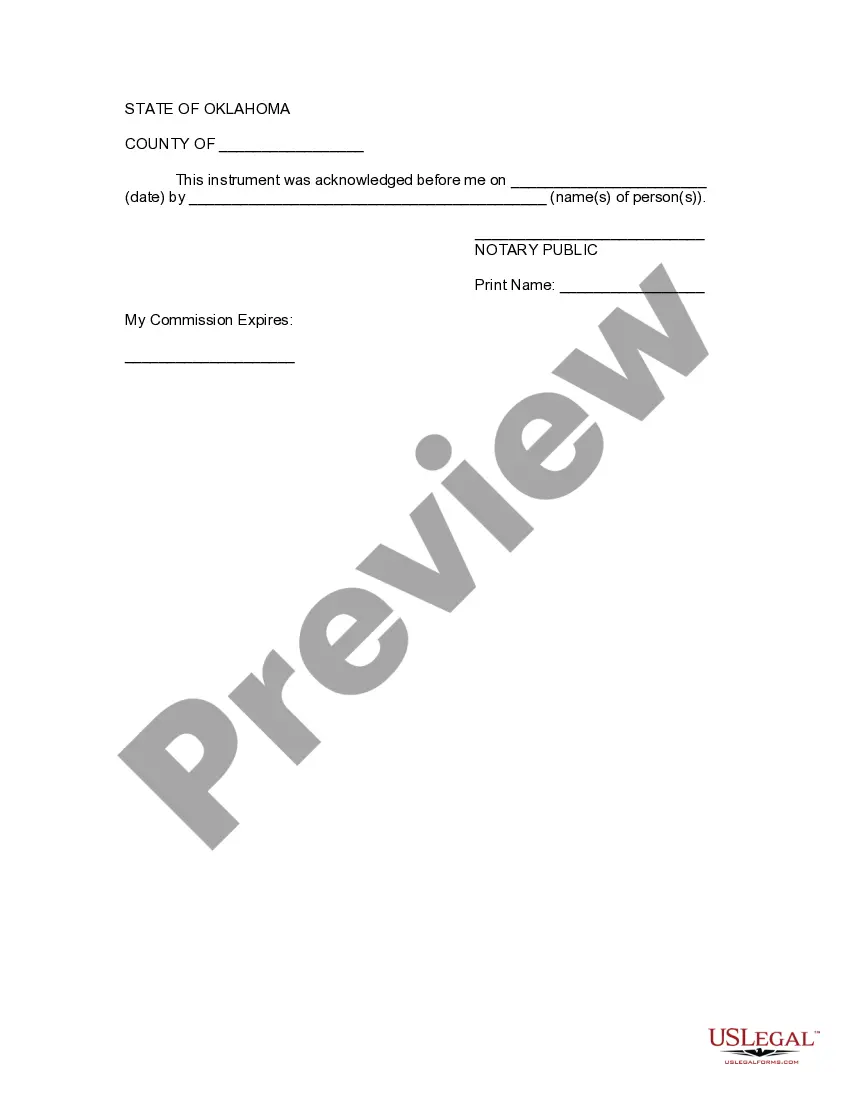
- Notarization clause: Requires acknowledgment of the documents before a notary public.

When to use this form
This form should be used when an individual wants to transfer specific property assets into a Living Trust. It is particularly beneficial when managing property during the Assignor's lifetime, facilitating smoother asset distribution upon death, and avoiding the probate process. Situations where this form is useful include setting up a trust for estate planning purposes, protecting assets for beneficiaries, or retaining control over property while ensuring its management by a trustee.
Who needs this form
- Individuals establishing a Living Trust to manage their assets.
- Estate planners seeking to transfer specific properties into a trust.
- Trustors who wish to assign property for future distribution.
- Family members involved in estate management and planning.
How to prepare this document
- Identify the Assignor: Fill in the name and address of the individual transferring property.
- Provide Trustee details: Enter the name of the Trustee for the Living Trust.
- Specify the property: Clearly describe the property being transferred to the trust.
- Enter the date of assignment: Include the exact date when the form is being executed.
- Complete the notary section: Ensure the Assignor signs the form in the presence of a notary public.
Is notarization required?
Yes, this form must be notarized to be legally valid. The Assignor's signature must be acknowledged by a notary public to confirm its authenticity. US Legal Forms offers integrated online notarization services available 24/7, making this process secure and convenient without the need for travel.
Get your form ready online
Our built-in tools help you complete, sign, share, and store your documents in one place.
Make edits, fill in missing information, and update formatting in US Legal Forms—just like you would in MS Word.
Download a copy, print it, send it by email, or mail it via USPS—whatever works best for your next step.
Sign and collect signatures with our SignNow integration. Send to multiple recipients, set reminders, and more. Go Premium to unlock E-Sign.
If this form requires notarization, complete it online through a secure video call—no need to meet a notary in person or wait for an appointment.
We protect your documents and personal data by following strict security and privacy standards.

Make edits, fill in missing information, and update formatting in US Legal Forms—just like you would in MS Word.

Download a copy, print it, send it by email, or mail it via USPS—whatever works best for your next step.

Sign and collect signatures with our SignNow integration. Send to multiple recipients, set reminders, and more. Go Premium to unlock E-Sign.

If this form requires notarization, complete it online through a secure video call—no need to meet a notary in person or wait for an appointment.

We protect your documents and personal data by following strict security and privacy standards.
Typical mistakes to avoid
- Failing to accurately describe the property being assigned.
- Not having the form notarized properly.
- Leaving out essential information about the Assignor or Trustee.
- Missing signatures from all required parties.
Advantages of online completion
- Convenience: Access and complete the form from anywhere at any time.
- Editability: Easily modify the form as needed before finalizing.
- Reliability: Use templates drafted by licensed attorneys, ensuring legal accuracy.
Main things to remember
- The Assignment to Living Trust is essential for transferring property into a trust.
- This form helps simplify estate planning and asset management.
- Notarization is required for the form to be legally valid.
Looking for another form?
Form popularity
FAQ
A living trust is an important part of your estate plan. Most people can create a living trust without an attorney using software or an online service.
Sure you can write your own revocable living trust.The discussion of your need for a revocable living trust is in another of my articles, but it is safe to say that if you own real property and have a significant estate (over about $50,000), then you could use a trust and it would help your loved ones.
Expect to pay $1,000 for a simple trust, up to several thousand dollars. You may incur additional costs after the trust has been established if you transfer property in and out or otherwise move things around. However, the bulk of the cost will be setting it up initially.
Open a bank account in the name of the trust. Close out any bank accounts the grantor established for the trust and put the proceeds into the new trust bank account. Cash in any life insurance policies that name the trust as beneficiary and put the proceeds into the trust bank account.
Choose whether to make an individual or shared trust. Decide what property to include in the trust. Choose a successor trustee. Decide who will be the trust's beneficiaries who will get the trust property. Create the trust document.
There is no set price tag on setting up a living trust. It can range from just under $100 to more than $1,000. It all depends on how you create it and how complex your estate is. These days, you can shop around and find plenty of living trust software options.
Pick a type of living trust. If you're married, you'll first need to decide whether you want a single or joint trust. Take stock of your property. Choose a trustee. Draw up the trust document. Sign the trust. Transfer your property to the trust.
When you create a DIY living trust, there are no attorneys involved in the process. You will need to choose a trustee who will be in charge of managing the trust assets and distributing them.You'll also need to choose your beneficiary or beneficiaries, the person or people who will receive the assets in your trust.
You should still have a durable power of attorney for finances.You may even want to empower your attorney-in-fact to transfer into your living trust any property that becomes yours after you become incapacitated. Only a durable power of attorney for finances can grant that authority.