Oklahoma Private County Process Server License
Overview of this form
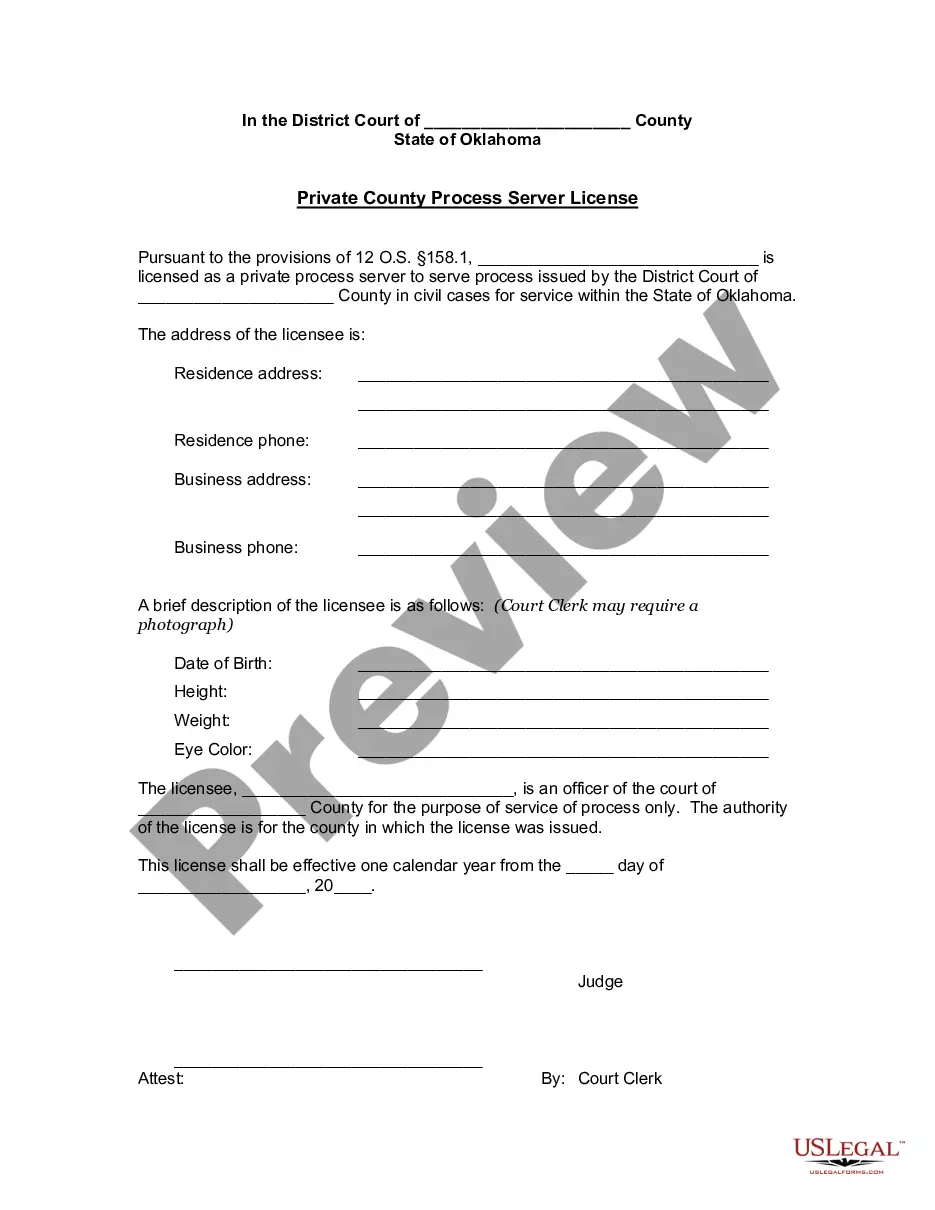
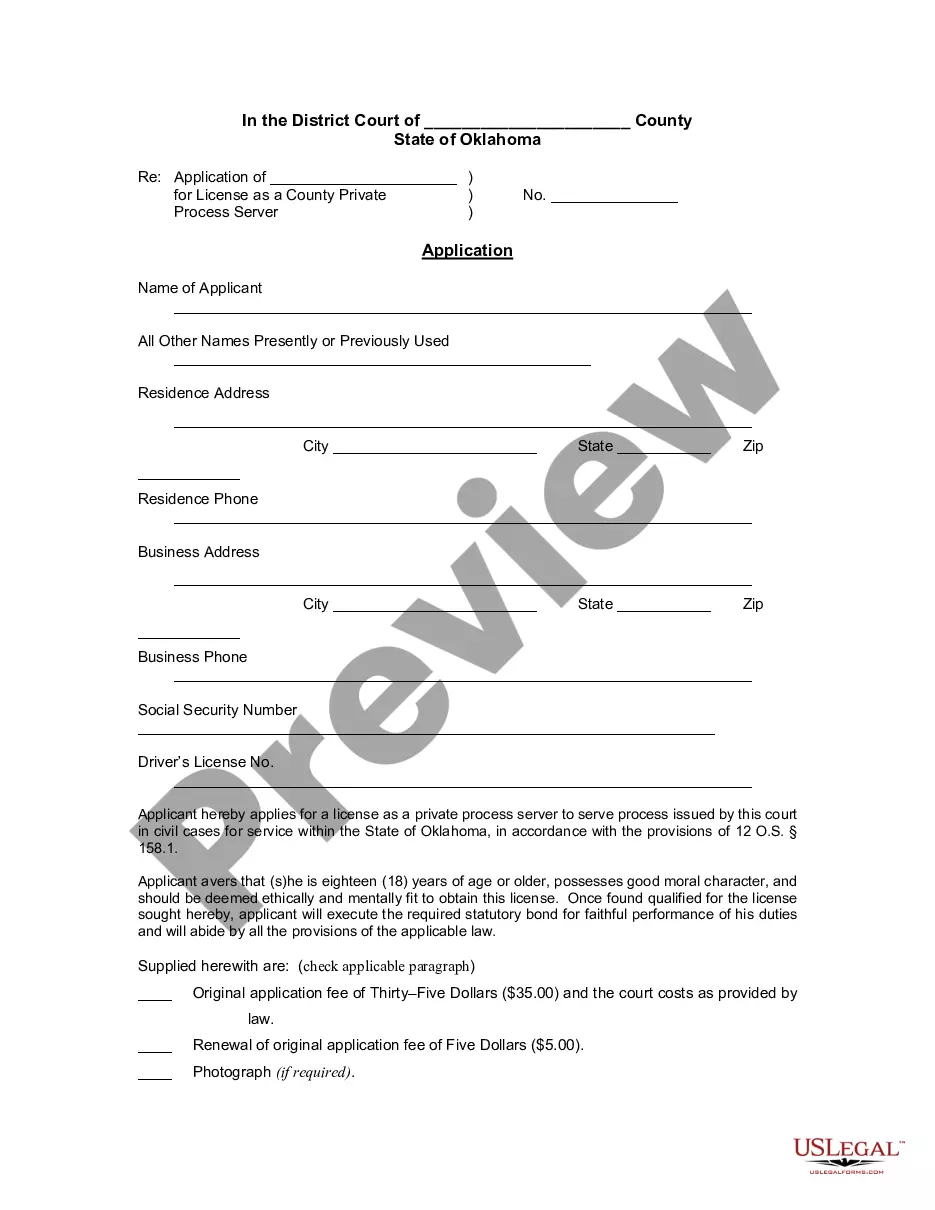
The Private County Process Server License is an official legal document issued by the Oklahoma State Courts, allowing an individual to serve legal documents on behalf of the District Court within specified counties in Oklahoma. This form is essential for those seeking to operate as a private process server, with authority limited to civil cases within the state. Unlike other legal forms, this license specifically focuses on the qualifications and details required for serving process in Oklahoma's judicial system.
What’s included in this form
- Licensee's name and identification as a private process server.
- Specific county jurisdiction for serving legal documents.
- Contact details, including residence and business addresses.
- Personal information such as date of birth, height, weight, and eye color.
- Effective date of the license and duration (one calendar year).
- Signature and attestation by the judge and court clerk.

When this form is needed
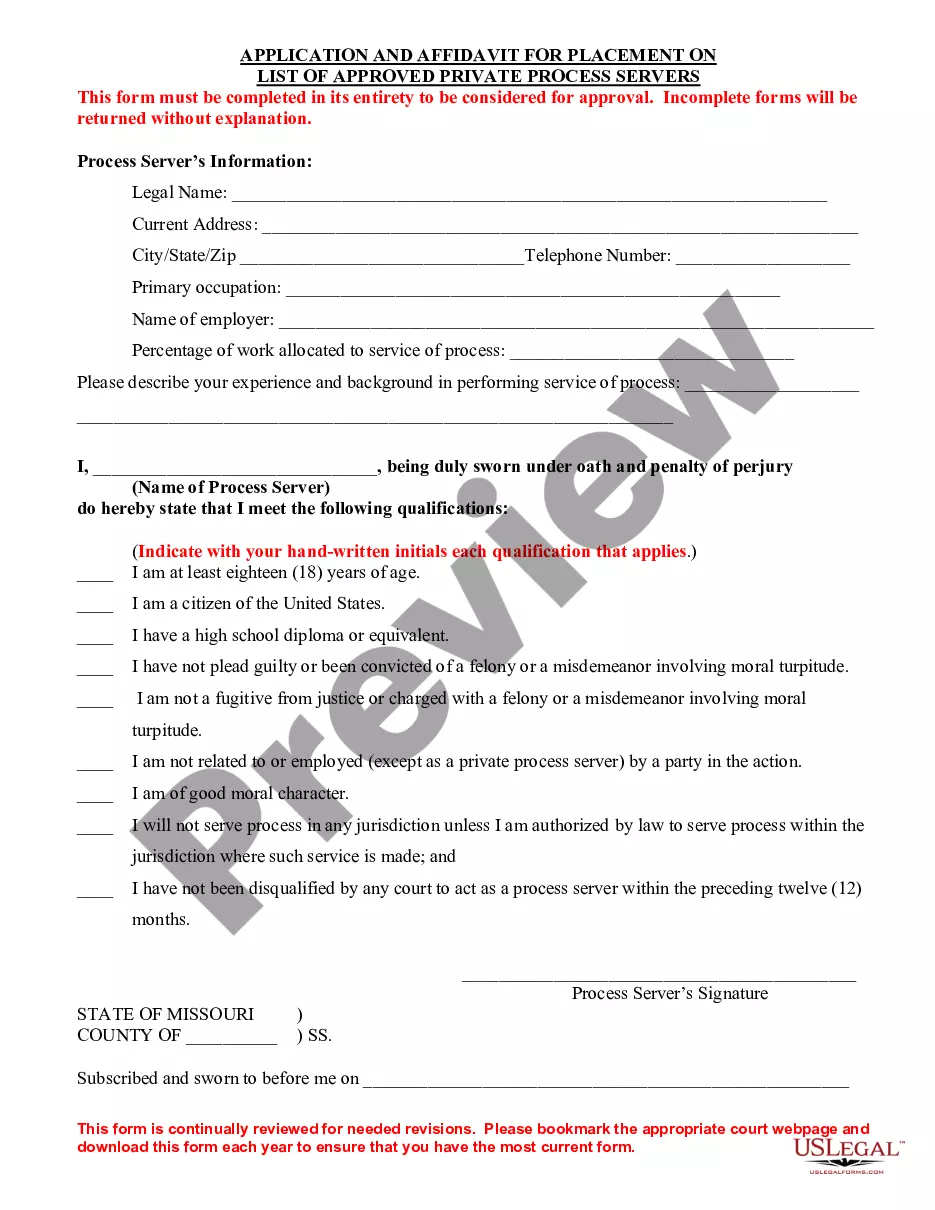
This form should be used when an individual in Oklahoma desires to become a licensed private process server. It is necessary for those who want to serve court documents, such as summonses and complaints, on behalf of the District Court. This license is particularly important for those working within the legal field or involved in civil litigation, ensuring they have the appropriate authority to carry out their duties effectively.
Who needs this form
- Individuals seeking to work as private process servers in Oklahoma.
- Legal professionals needing a license to deliver court documents.
- Anyone who meets the eligibility requirements set by the Oklahoma court system.
How to complete this form
- Enter the full name of the applicant seeking the license.
- Specify the county in Oklahoma where the process server will operate.
- Provide full residential and business addresses, including phone numbers.
- Fill in personal details, including date of birth, height, weight, and eye color.
- Acquire the signature of a judge and the court clerk to validate the license.
Notarization guidance
This form does not typically require notarization unless specified by local law. However, it's important to check with local court rules to ensure compliance.
Get your form ready online
Our built-in tools help you complete, sign, share, and store your documents in one place.
Make edits, fill in missing information, and update formatting in US Legal Forms—just like you would in MS Word.
Download a copy, print it, send it by email, or mail it via USPS—whatever works best for your next step.
Sign and collect signatures with our SignNow integration. Send to multiple recipients, set reminders, and more. Go Premium to unlock E-Sign.
If this form requires notarization, complete it online through a secure video call—no need to meet a notary in person or wait for an appointment.
We protect your documents and personal data by following strict security and privacy standards.

Make edits, fill in missing information, and update formatting in US Legal Forms—just like you would in MS Word.

Download a copy, print it, send it by email, or mail it via USPS—whatever works best for your next step.

Sign and collect signatures with our SignNow integration. Send to multiple recipients, set reminders, and more. Go Premium to unlock E-Sign.

If this form requires notarization, complete it online through a secure video call—no need to meet a notary in person or wait for an appointment.

We protect your documents and personal data by following strict security and privacy standards.
Mistakes to watch out for
- Failing to include complete contact information for both residence and business.
- Not obtaining the necessary signatures from court officials.
- Submitting the form before ensuring all required fields are accurately filled.
Benefits of completing this form online
- Immediate access to the form for quick processing.
- Easy to fill out and modify to meet specific needs.
- Compliance with the latest legal requirements ensuring reliability.
Looking for another form?
Form popularity
FAQ
Most process servers are paid between $30 and $250 per document served. They can make $25,000 to $70,000 per year, but it isn't always smooth sailing. Before you sign up, watch All Worked Up on truTV to watch a process server in action. As a process server, every day will be different.
If a Defendant Does Not Answer the Door A process server cannot compel a defendant to answer the door. In some cases, people who know a lawsuit has been filed against them will attempt to avoid service.He or she will have to come back on another date if the defendant refuses to open the door.
The server must tell the person that he or she hands the papers to that they are legal documents for the other party. The server must also write down the name and address of the person he or she gave the court papers to.
Generally, process servers make at least three attempts to serve somebody. These attempts are normally made at different times of day and on different days to maximize our chance of serving the papers.
The process server Oklahoma City does have to be at least 18 years old, must be of sound moral character, has to be a resident of the county he or she is applying in for at least the previous six months, and may not have any felonies or pending criminal charges on his or her record.
Generally, a process server can come to your house as many times as they want. They will usually make three attempts, in the morning, afternoon and evening respectively, typically on different days of the week to maximize their chances of reaching you.
Process servers will call you, but they won't threaten you over the phone. A process server is always paid by the party hiring them to deliver legal documents. Whether it's a divorce, child support, or debt collection case, the party being served will never pay the server directly.
In fact, Process Servers are performing an important legal function. It is highly uncommon and unusual for a process server to dress up and pretend they are someone other than a person with legal papers to deliver.Process serving is not an inherently dangerous job.