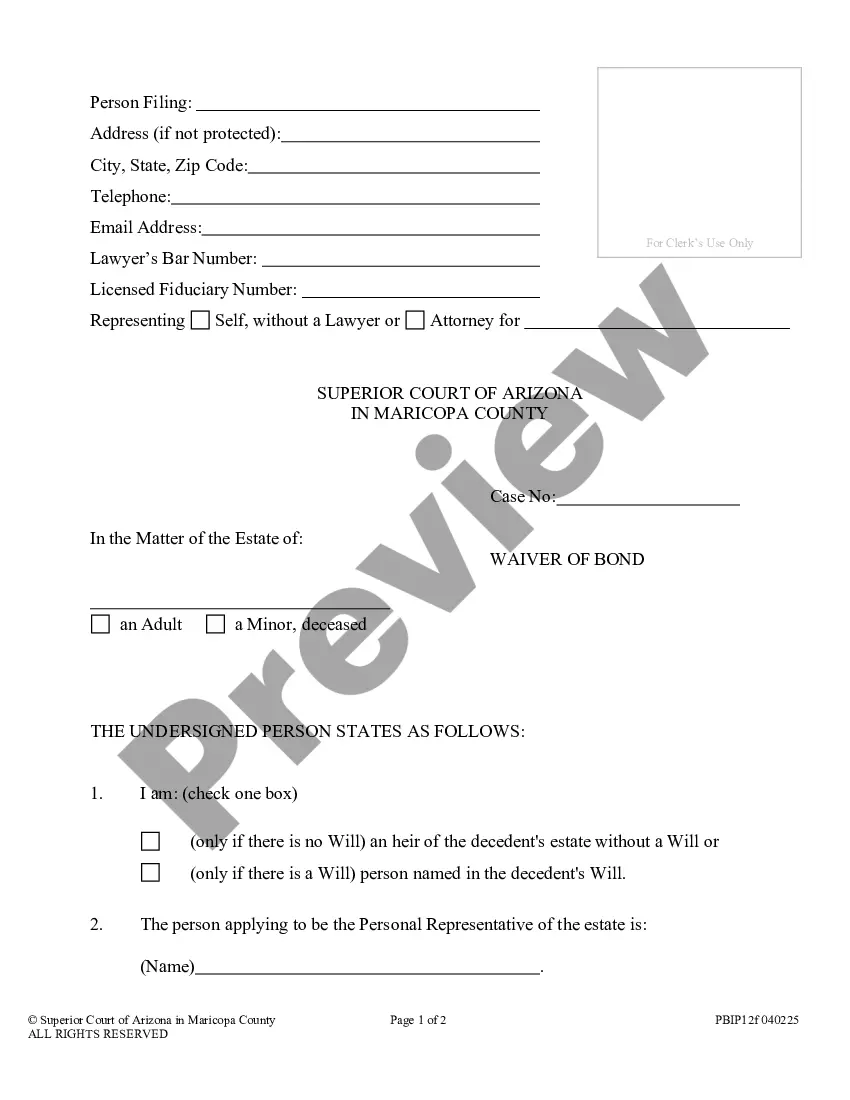
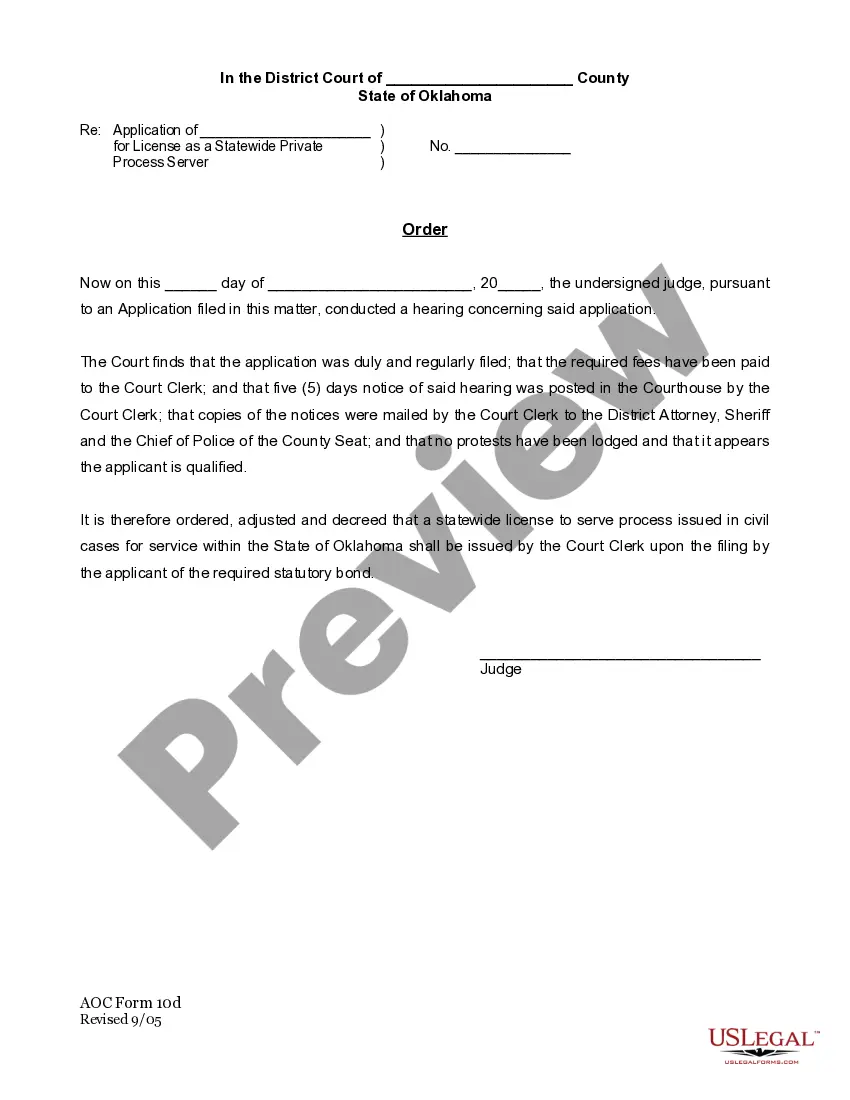
Oklahoma Statewide Private Process Server Order
What is this form?
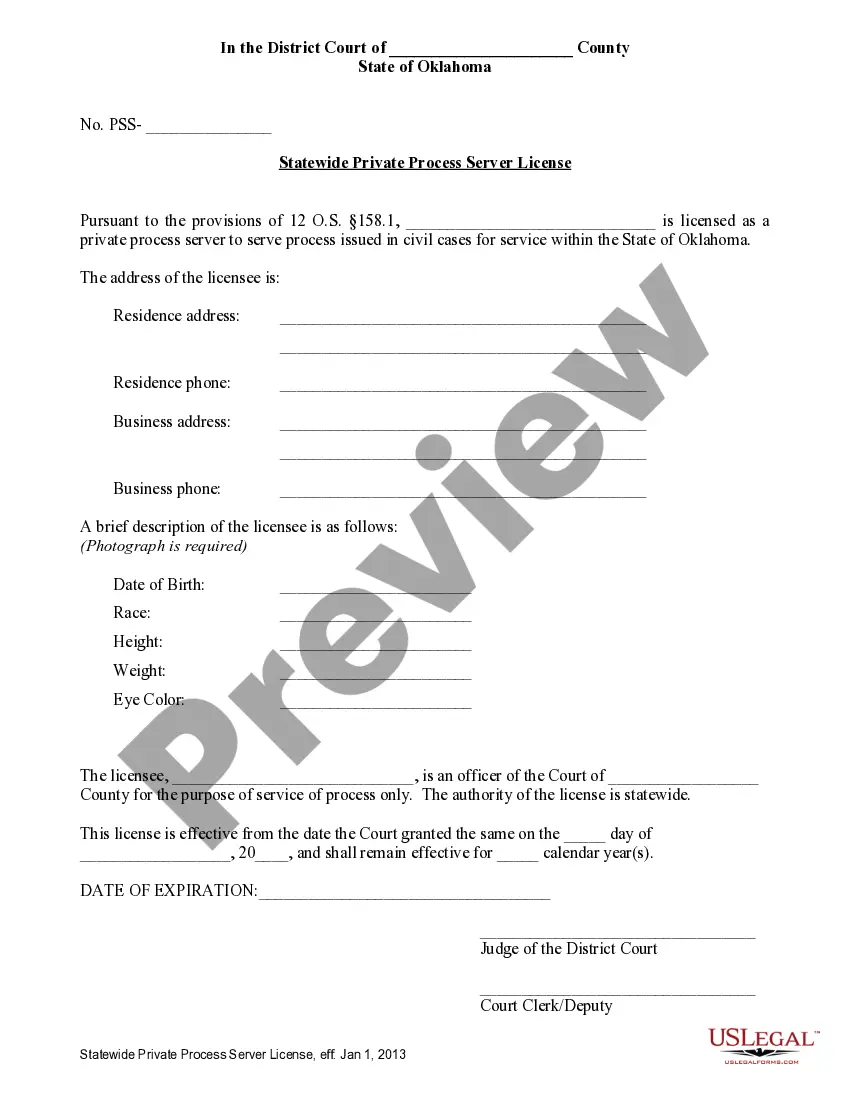
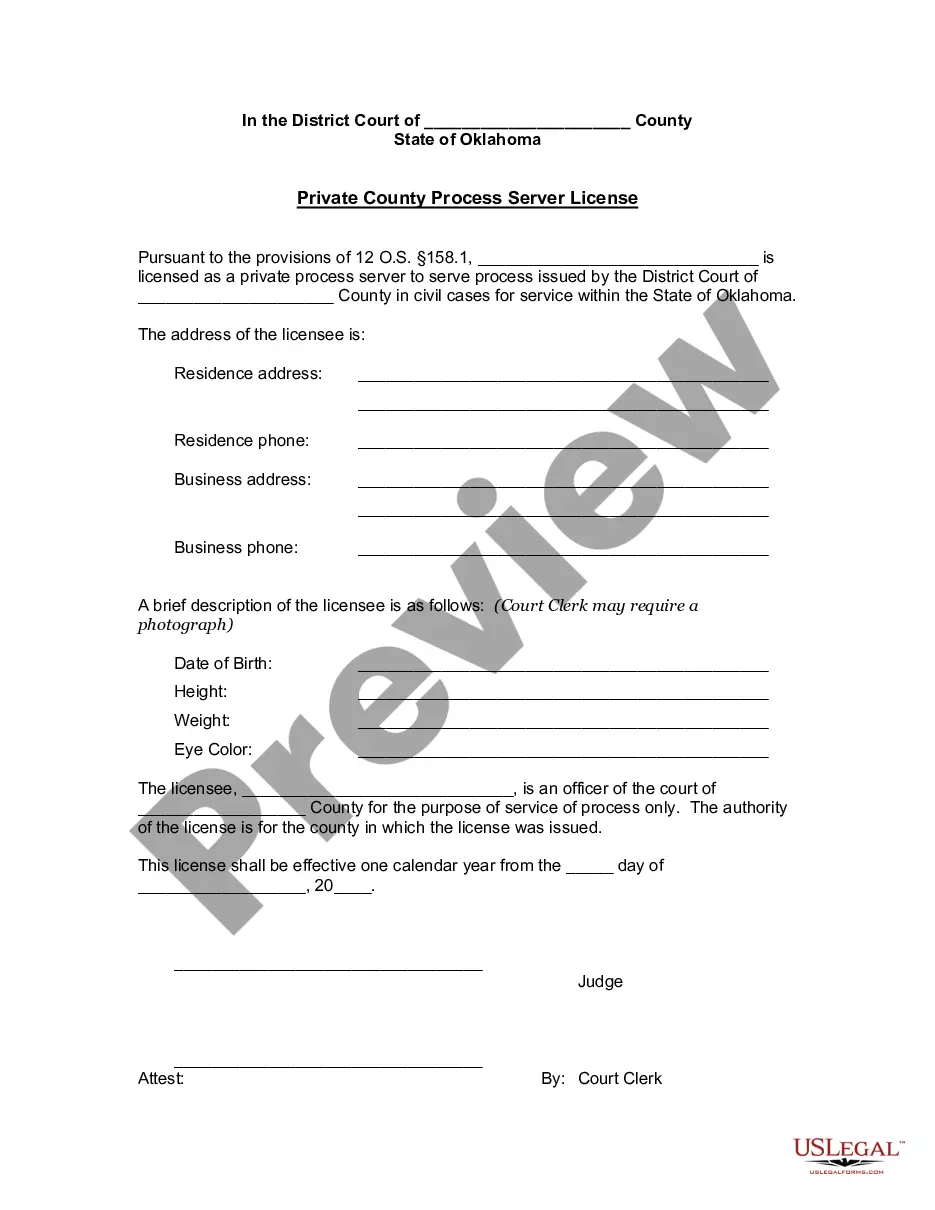
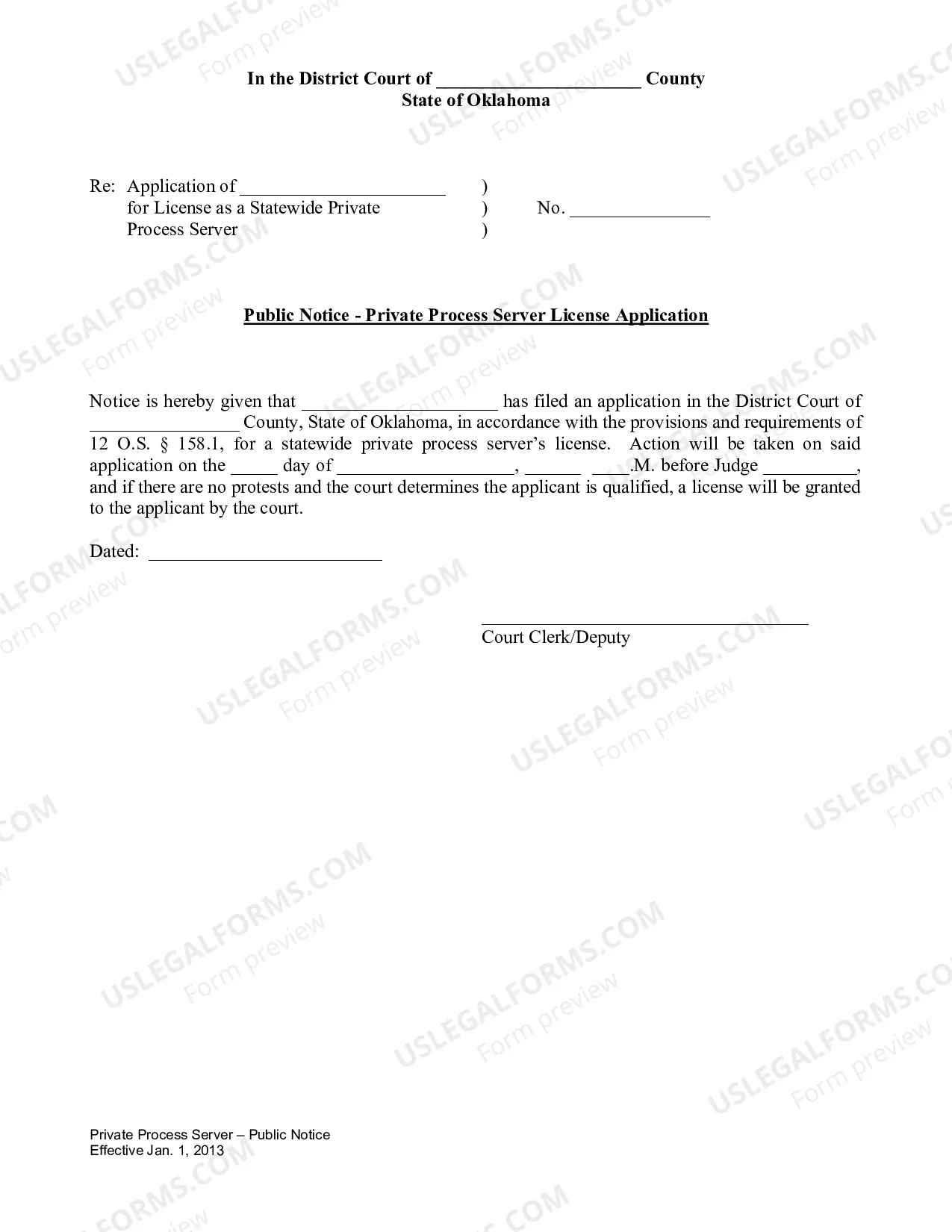
The Statewide Private Process Server Order is an official legal document issued to authorize an individual as a statewide private process server in Oklahoma. This form differs from similar forms by specifically designating the applicant's ability to serve legal documents within the entire state, rather than just a localized area. It is essential for individuals who wish to serve legal notices, court summons, or other legal documents in civil cases throughout Oklahoma.
Main sections of this form
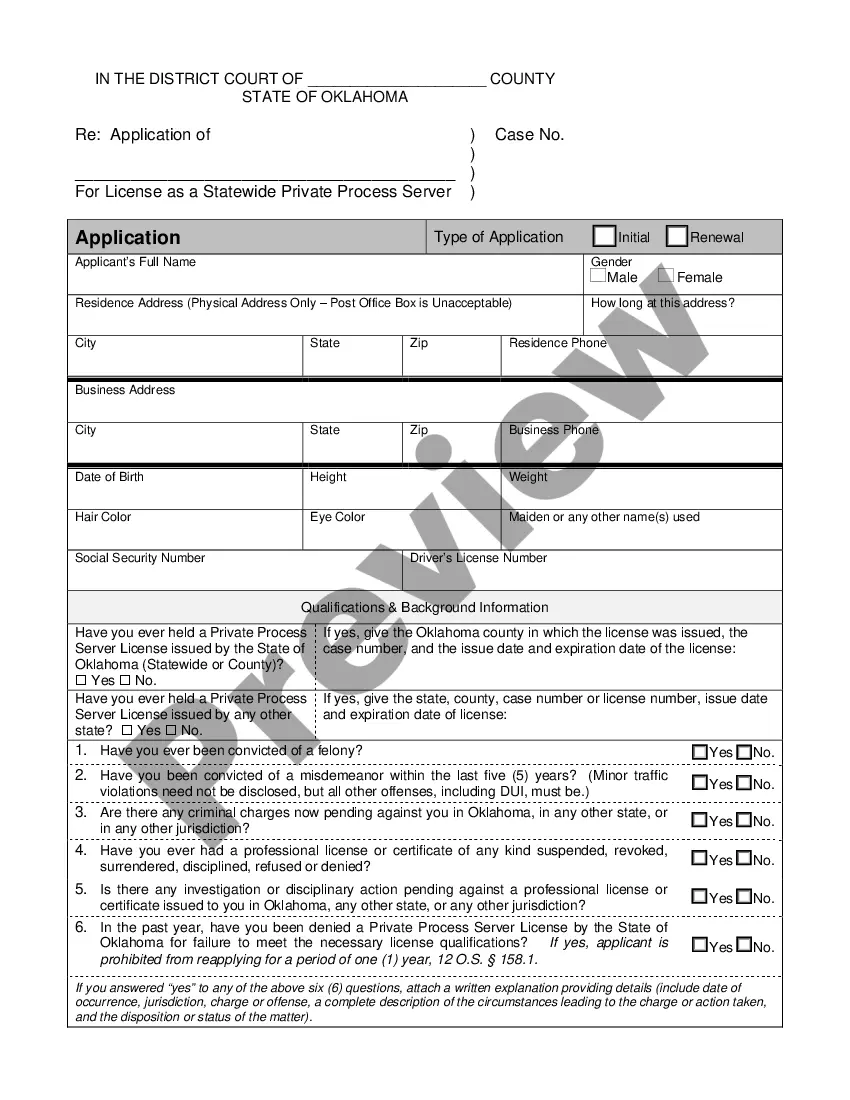
- Application details: Name of the applicant and their request for a license.
- Court order: The official order issued by the judge after reviewing the application.
- Notice requirements: Documentation that proper notice was given before the hearing.
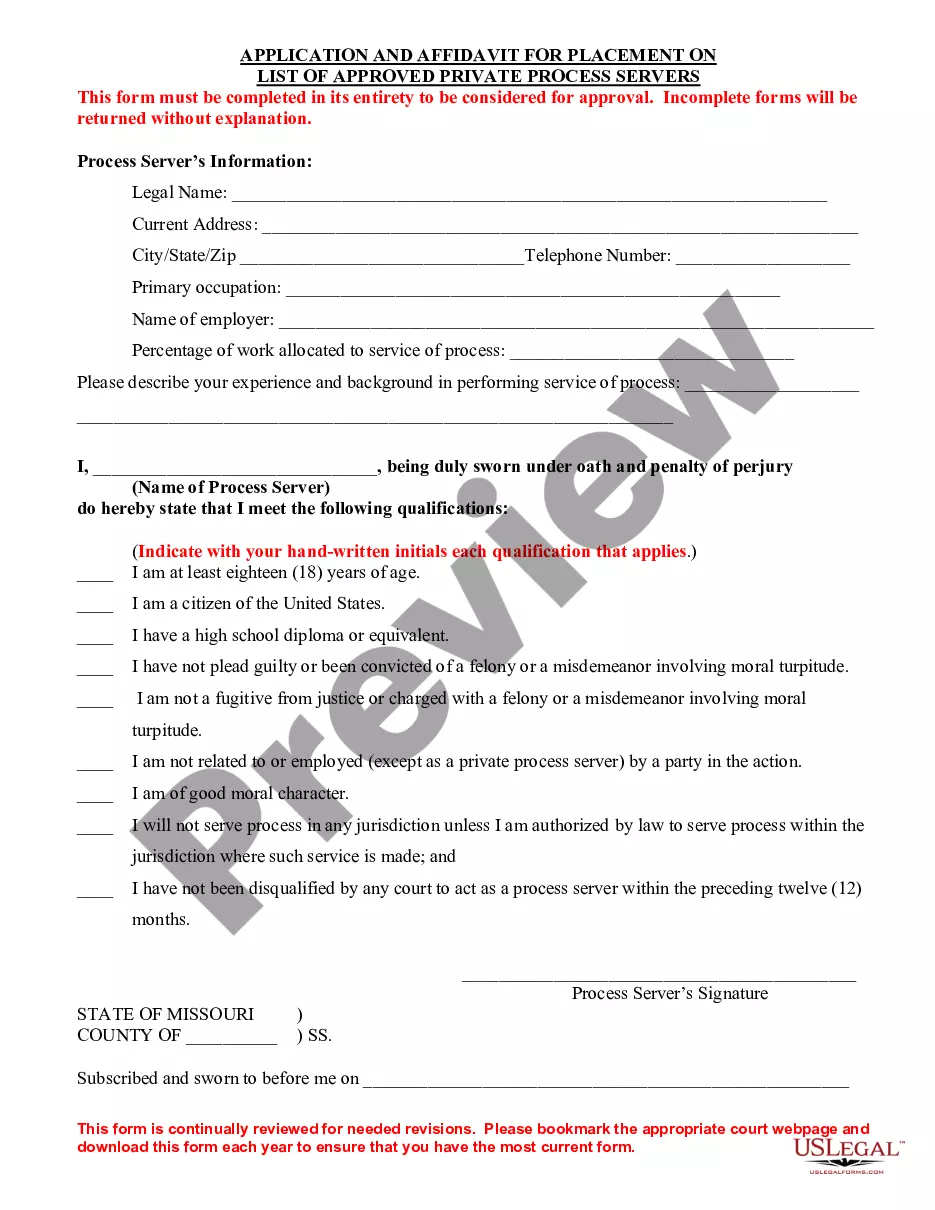
- Qualifications: Confirmation that the applicant meets the necessary qualifications for licensing.
- Statutory bond: Requirement for the applicant to file a bond before issuance of the license.
When to use this document
This form should be used when an individual in Oklahoma seeks to become a licensed private process server. It is appropriate to file this order after the applicant has taken the following steps: submitted an application, paid the necessary fees, and provided the required notice of the hearing. The form is necessary to legally serve process in civil matters throughout the state.
Who can use this document
- Individuals seeking to become licensed private process servers in Oklahoma.
- Those who have met the qualifications and wish to serve legal documents statewide.
- Applicants who have completed the necessary application process and complied with local legal requirements.
Steps to complete this form
- Fill in the name of the applicant seeking the license.
- Enter the case number assigned by the court.
- Specify the date for the hearing and ensure it is completed correctly.
- Obtain necessary signatures from the judge and file the form with the court.
- Ensure that the required statutory bond is filed with the court clerk.
Does this form need to be notarized?
Notarization is generally not required for this form. However, certain states or situations might demand it. You can complete notarization online through US Legal Forms, powered by Notarize, using a verified video call available anytime.
Get your form ready online
Our built-in tools help you complete, sign, share, and store your documents in one place.
Make edits, fill in missing information, and update formatting in US Legal Forms—just like you would in MS Word.
Download a copy, print it, send it by email, or mail it via USPS—whatever works best for your next step.
Sign and collect signatures with our SignNow integration. Send to multiple recipients, set reminders, and more. Go Premium to unlock E-Sign.
If this form requires notarization, complete it online through a secure video call—no need to meet a notary in person or wait for an appointment.
We protect your documents and personal data by following strict security and privacy standards.

Make edits, fill in missing information, and update formatting in US Legal Forms—just like you would in MS Word.

Download a copy, print it, send it by email, or mail it via USPS—whatever works best for your next step.

Sign and collect signatures with our SignNow integration. Send to multiple recipients, set reminders, and more. Go Premium to unlock E-Sign.

If this form requires notarization, complete it online through a secure video call—no need to meet a notary in person or wait for an appointment.

We protect your documents and personal data by following strict security and privacy standards.
Avoid these common issues
- Failing to provide proper notice of the hearing to required parties.
- Incomplete application details, such as missing names or case numbers.
- Neglecting to file the required statutory bond with the application.
- Not obtaining the judge's signature before submission.
Benefits of using this form online
- Instant access to the form ensures you can start your application without delay.
- Editable templates allow for easy customization to fit your specific needs.
- Reliable and professionally drafted documents provide peace of mind.
Looking for another form?
Form popularity
FAQ
Generally, process servers make at least three attempts to serve somebody.
Private Process Servers A private process server requires a $5,000 bond for a new license and a 30 day posting period. A first time application must be renewed after 1 year and thereafter is renewable every 3 years. This requires 2, 2 by 2 photographs. A new license is $354.14 and a renewal license is $219.14.
A Process Server is a person who is able to serve legal court documents for any court case.
Most process servers are paid between $30 and $250 per document served. They can make $25,000 to $70,000 per year, but it isn't always smooth sailing. Before you sign up, watch All Worked Up on truTV to watch a process server in action. As a process server, every day will be different.
If a Defendant Does Not Answer the Door A process server cannot compel a defendant to answer the door. In some cases, people who know a lawsuit has been filed against them will attempt to avoid service.He or she will have to come back on another date if the defendant refuses to open the door.
Generally, process servers make up to three attempts (morning, afternoon, & evening).
Generally, a process server can come to your house as many times as they want. They will usually make three attempts, in the morning, afternoon and evening respectively, typically on different days of the week to maximize their chances of reaching you.
A Simple Answer to "What Happens if a Process Server Can't Serve You?" The simple answer to your question is that the court continues without you. Evidence is brought forth without a rebuttal or defense from you and a judgment is issued.
In fact, Process Servers are performing an important legal function. It is highly uncommon and unusual for a process server to dress up and pretend they are someone other than a person with legal papers to deliver.Process serving is not an inherently dangerous job.