Arizona Request and Notice of Hearing on Garnishment Earnings Statement
Overview of this form
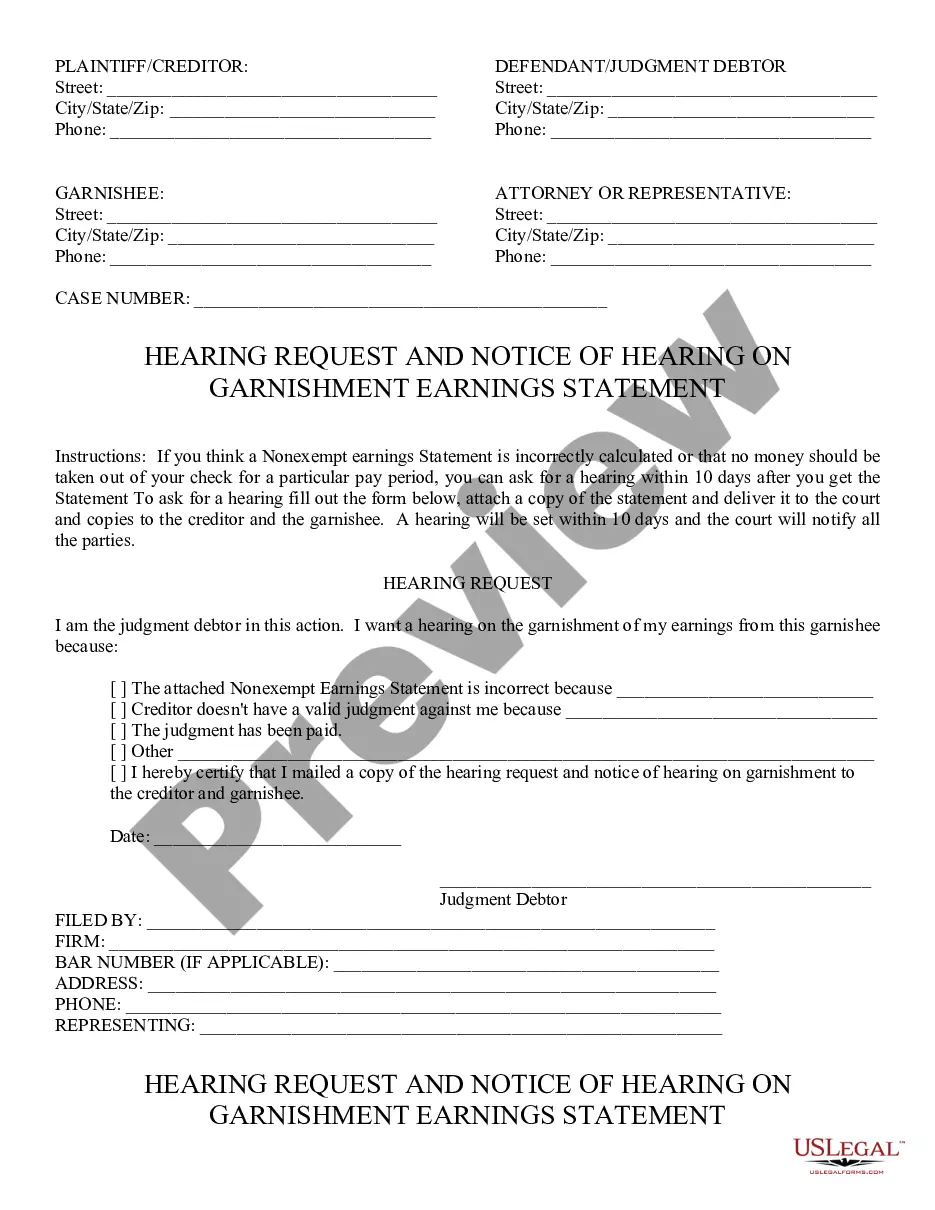
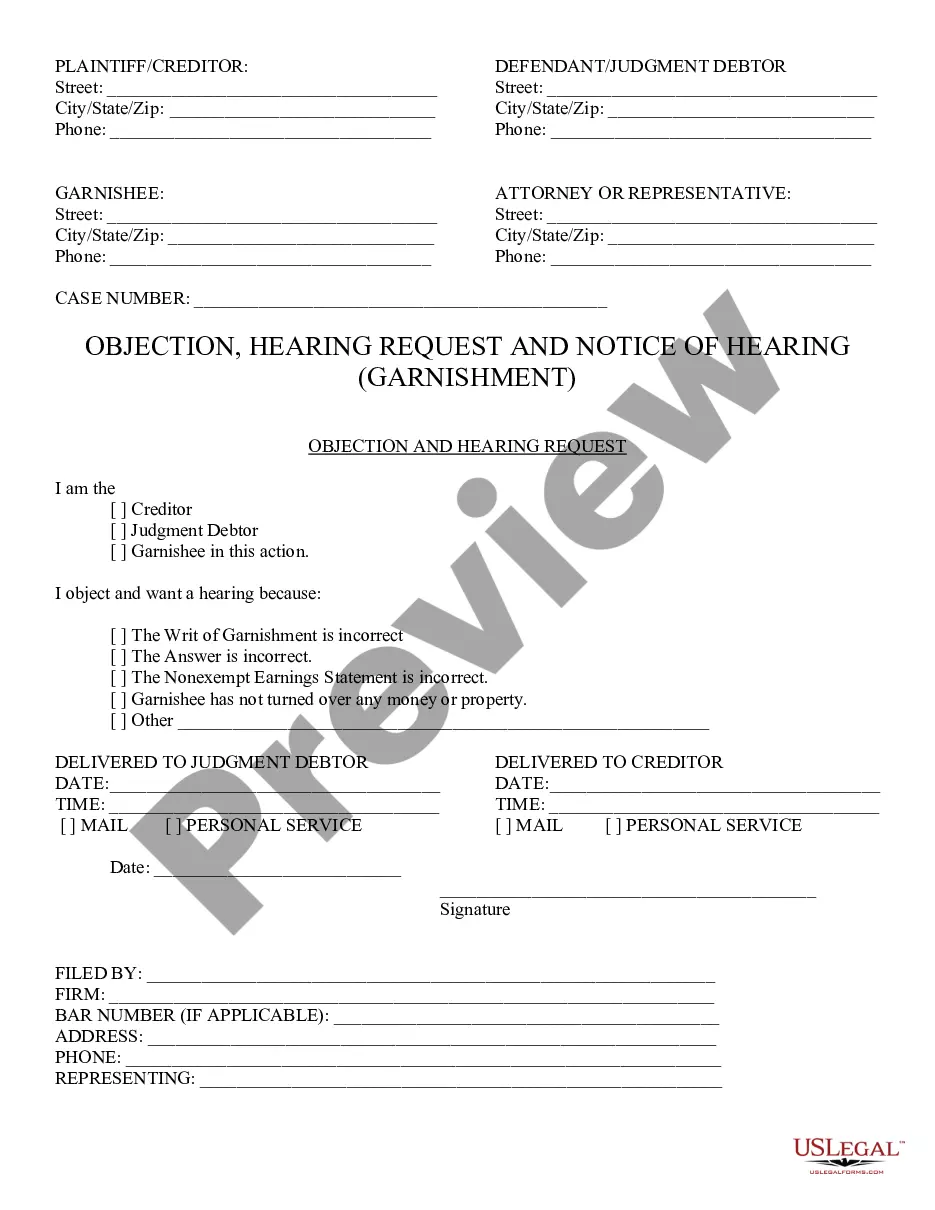
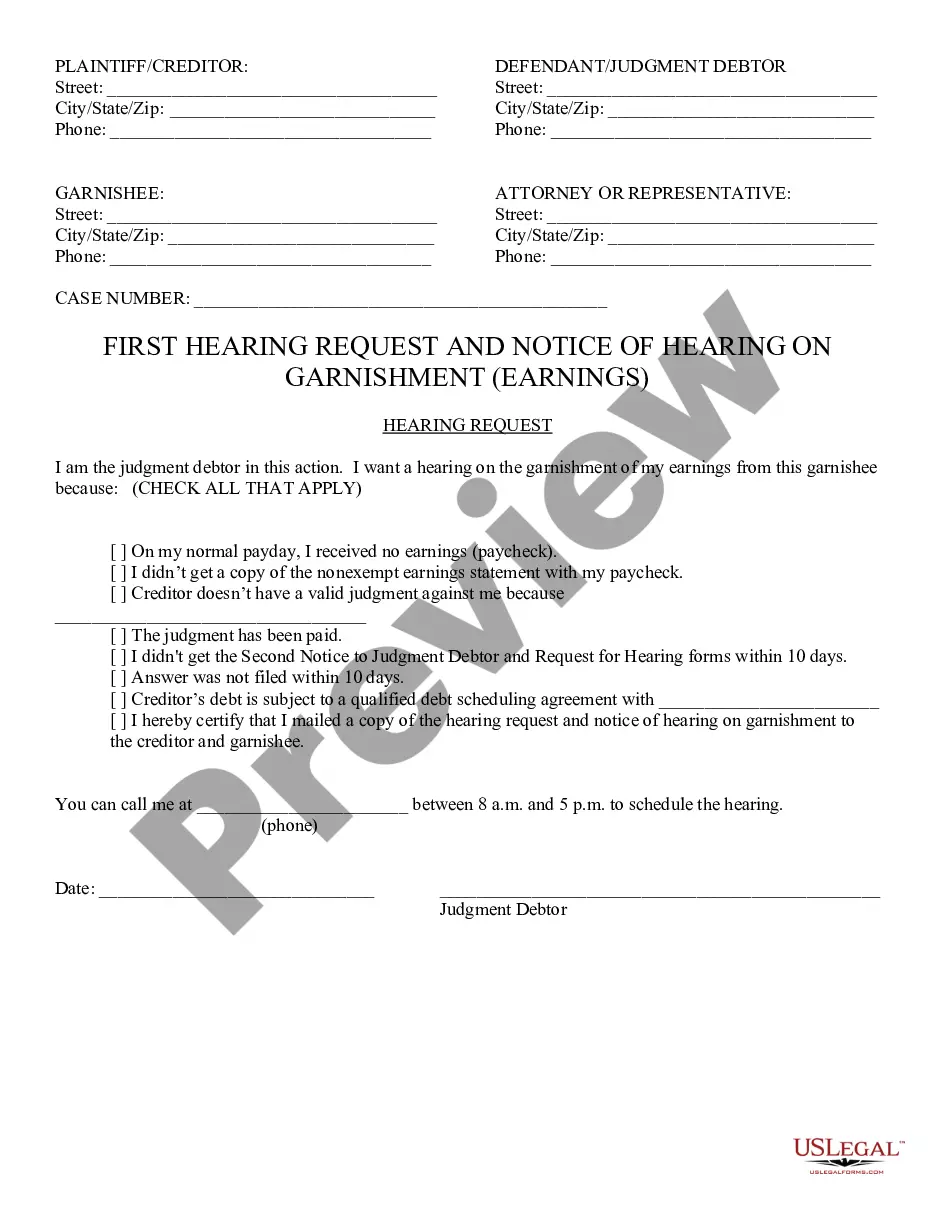
The Request and Notice of Hearing on Garnishment Earnings Statement is a legal form used by debtors to challenge the garnishment of their earnings. This form allows individuals to request a court hearing if they believe that the amount of money being withheld from their paycheck is incorrect or if they contest the validity of the creditor's judgment. Unlike other forms related to debt collection, this form specifically addresses garnishment of earnings and ensures that the debtor has an opportunity to present their case in court.
Main sections of this form
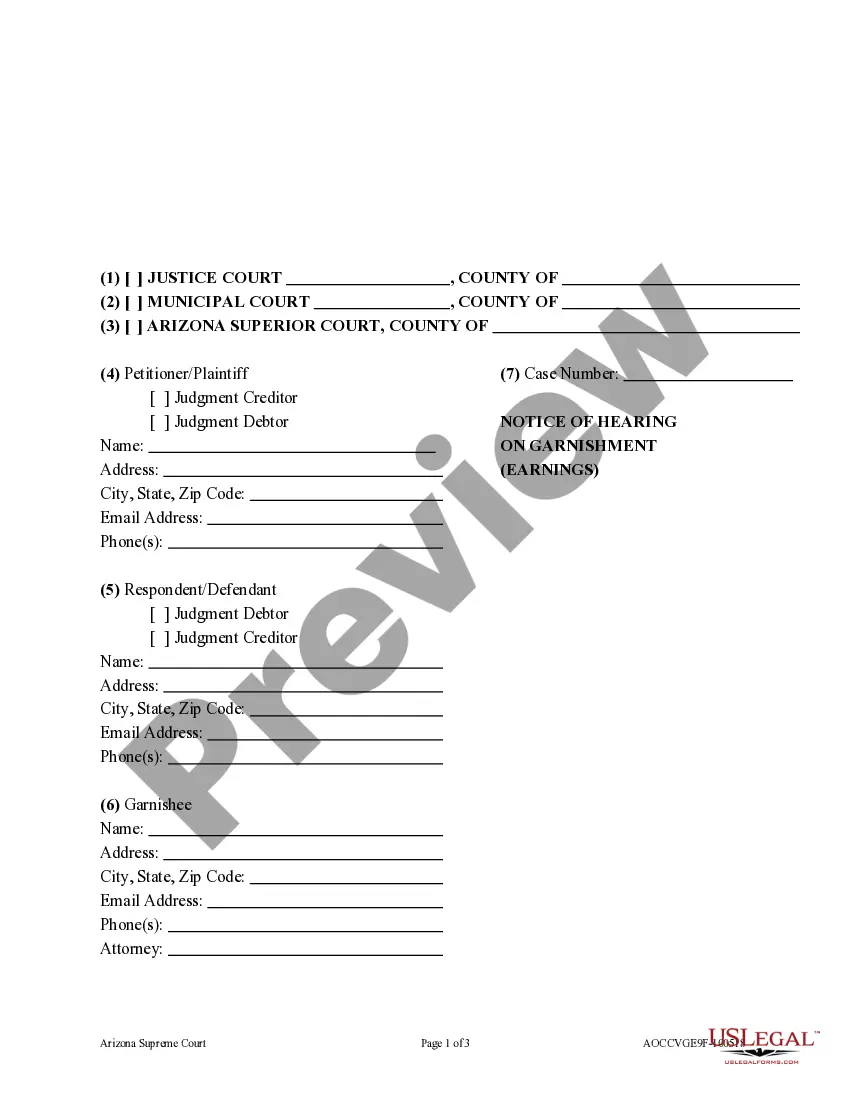
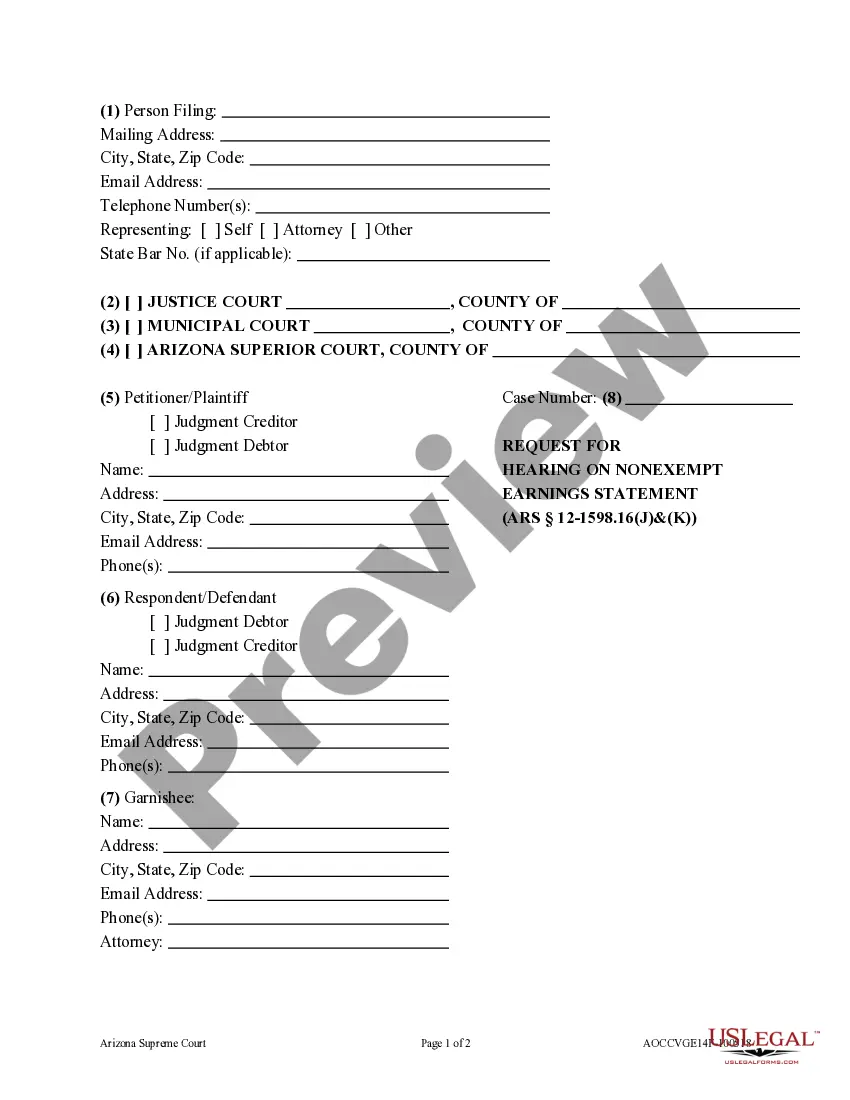
- Debtor Information: Contact details and identification of the debtor.
- Garnishee and Creditor Information: Details of the third party that is withholding the funds and the creditor seeking the garnishment.
- Case Number: Unique identification number for the legal case to which this form pertains.
- Hearing Request Section: Space for the debtor to explain why they believe the garnishment amount is incorrect.
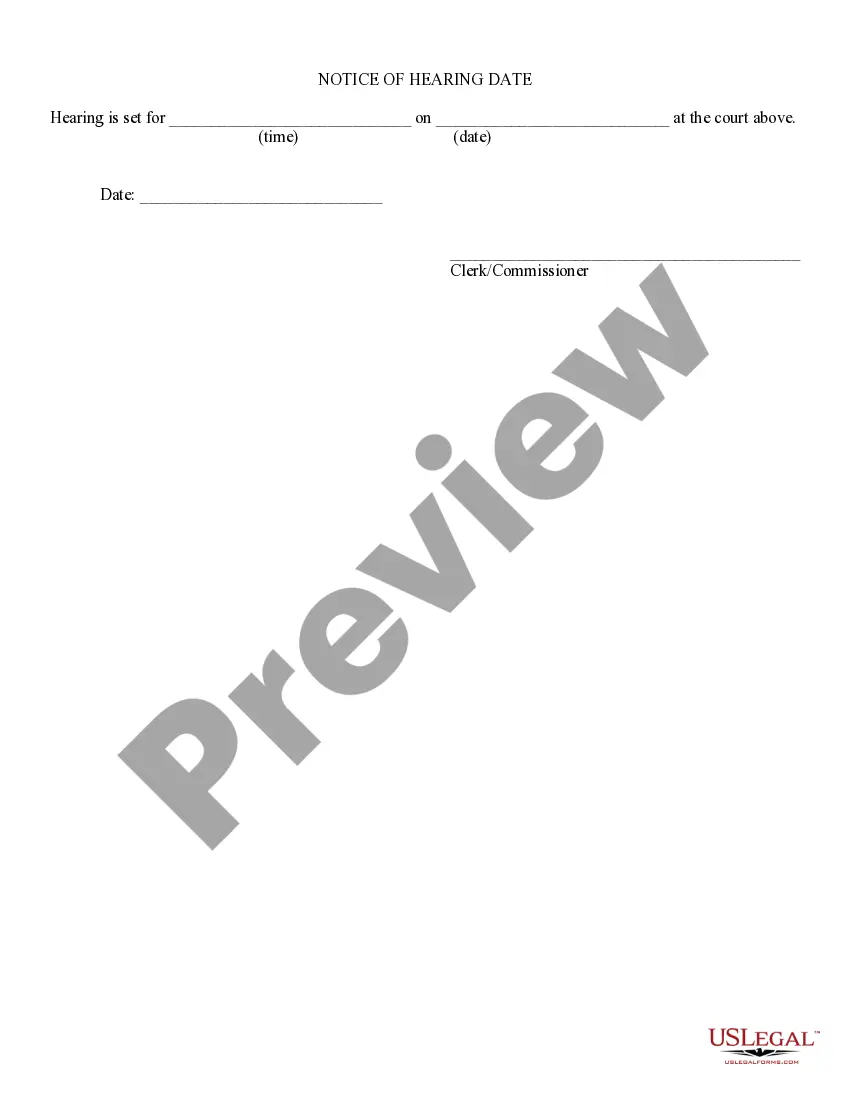
- Notice of Hearing Date: Information regarding the scheduled date and time of the hearing.
Common use cases
This form should be used when a debtor receives a Nonexempt Earnings Statement indicating that their wages are being garnished and believes that the amount is erroneous or disputes the validity of the judgment against them. It is crucial to file this request within ten days of receiving the Statement to ensure the hearing is scheduled promptly.
Who needs this form
- Individuals who are having their wages garnished and want to dispute the amount.
- Debtors who believe that the creditor does not have a valid judgment against them.
- Those whose judgments have been paid and wish to address incorrect garnishments.
Steps to complete this form
- Identify the parties involved: Fill in the names and contact information of the debtor, garnishee, and creditor.
- Enter the case number: Include the case number assigned to the original judgment.
- Complete the hearing request section: Clearly explain your reasons for disputing the garnishment and provide any necessary details.
- Certification: Sign and date the form to certify that copies were mailed to the garnishee and creditor.
- File the form: Submit the completed form to the appropriate court, making sure to keep copies for your records.
Notarization requirements for this form
This form does not typically require notarization unless specified by local law. Always verify with local regulations or court requirements before submitting.
Get your form ready online
Our built-in tools help you complete, sign, share, and store your documents in one place.
Make edits, fill in missing information, and update formatting in US Legal Forms—just like you would in MS Word.
Download a copy, print it, send it by email, or mail it via USPS—whatever works best for your next step.
Sign and collect signatures with our SignNow integration. Send to multiple recipients, set reminders, and more. Go Premium to unlock E-Sign.
If this form requires notarization, complete it online through a secure video call—no need to meet a notary in person or wait for an appointment.
We protect your documents and personal data by following strict security and privacy standards.

Make edits, fill in missing information, and update formatting in US Legal Forms—just like you would in MS Word.

Download a copy, print it, send it by email, or mail it via USPS—whatever works best for your next step.

Sign and collect signatures with our SignNow integration. Send to multiple recipients, set reminders, and more. Go Premium to unlock E-Sign.

If this form requires notarization, complete it online through a secure video call—no need to meet a notary in person or wait for an appointment.

We protect your documents and personal data by following strict security and privacy standards.
Typical mistakes to avoid
- Failing to file the request within the ten-day period after receiving the earnings statement.
- Not providing sufficient information or details in the hearing request section.
- Neglecting to send copies of the form to the garnishee and creditor.
Benefits of using this form online
- Convenience: Easily fill out and download the form from your device at any time.
- Editability: Make necessary changes and updates before finalizing the document.
- Reliability: Access forms drafted by licensed attorneys, ensuring they are legally sound.
Main things to remember
- This form is essential for debtors wishing to contest the garnishment of their earnings.
- Timeliness is critical; requests should be filed within ten days of receiving the garnishment notice.
- Completing the form accurately and fully is important to ensure the court considers your request.
Looking for another form?

Form popularity
FAQ
The most that can be garnished from your paycheck in Arizona is typically 25% of your disposable earnings. However, if your earnings fall below a certain threshold, a lesser amount may be applicable. It is crucial to review the guidelines specified in your Arizona Request and Notice of Hearing on Garnishment Earnings Statement to ensure accurate calculations.
Recent changes to garnishment laws in Arizona aim to provide more protection to debtors while allowing creditors to collect owed amounts. Individuals should ensure they are familiar with any updates to laws that may impact how the Arizona Request and Notice of Hearing on Garnishment Earnings Statement functions, particularly regarding limits and exemptions.
The maximum amount that can be garnished from your wages in Arizona usually stands at 25% of your disposable earnings. It's vital to review your Arizona Request and Notice of Hearing on Garnishment Earnings Statement to understand how this applies to your situation specifically.
Calculating wage garnishment in Arizona involves determining your disposable income, which is your earnings after taxes and mandatory deductions. Once you have the disposable amount, you can use it to figure out the maximum allowed garnishment, typically up to 25%. Utilizing the Arizona Request and Notice of Hearing on Garnishment Earnings Statement can provide further clarification on the calculations.
To stop wage garnishment in Arizona, you should consider filing a claim of exemption or entering into a repayment agreement with your creditor. Consider seeking assistance or guidance through the Arizona Request and Notice of Hearing on Garnishment Earnings Statement process, which provides options to challenge or reduce garnishments effectively.
In Arizona, the maximum garnishment allowed is determined by federal and state laws. Generally, creditors can garnish up to 25% of your disposable earnings. Understanding the details in your Arizona Request and Notice of Hearing on Garnishment Earnings Statement will help you manage your finances better.
A writ of garnishment in Arizona remains valid for 90 days from the date it is issued. If the garnishment is not executed within this timeframe, you may need to seek a new court order. Understanding this duration is vital when dealing with an Arizona Request and Notice of Hearing on Garnishment Earnings Statement, as it can influence your immediate financial planning.
The new legislation for garnishment in Arizona is designed to offer more protection to debtors, especially regarding income thresholds and notification processes. It emphasizes the importance of the Arizona Request and Notice of Hearing on Garnishment Earnings Statement, improving clarity for individuals facing garnishment. Staying informed about these laws can empower you to take appropriate action if you find yourself in this situation.
In Arizona, the law generally allows a maximum garnishment of 25% of your disposable earnings. This will reduce if you have multiple creditors or other factors impacting your income, which you can highlight in your Arizona Request and Notice of Hearing on Garnishment Earnings Statement. Knowing what can be garnished will help you manage your budget and prepare for the potential impact on your finances.
To stop a wage garnishment in Arizona, you can file a motion to quash or set aside the garnishment with the court. You'll then need to present evidence that the garnishment causes significant financial distress. Receiving an Arizona Request and Notice of Hearing on Garnishment Earnings Statement could indicate that swift action is necessary, and using platforms like uslegalforms can guide you through that process effectively.