Oklahoma Warranty Deed from Individual to Corporation

State:
Oklahoma
Control #:
OK-06-78
Format:
Word; 
Rich Text
Instant download

Understanding this form

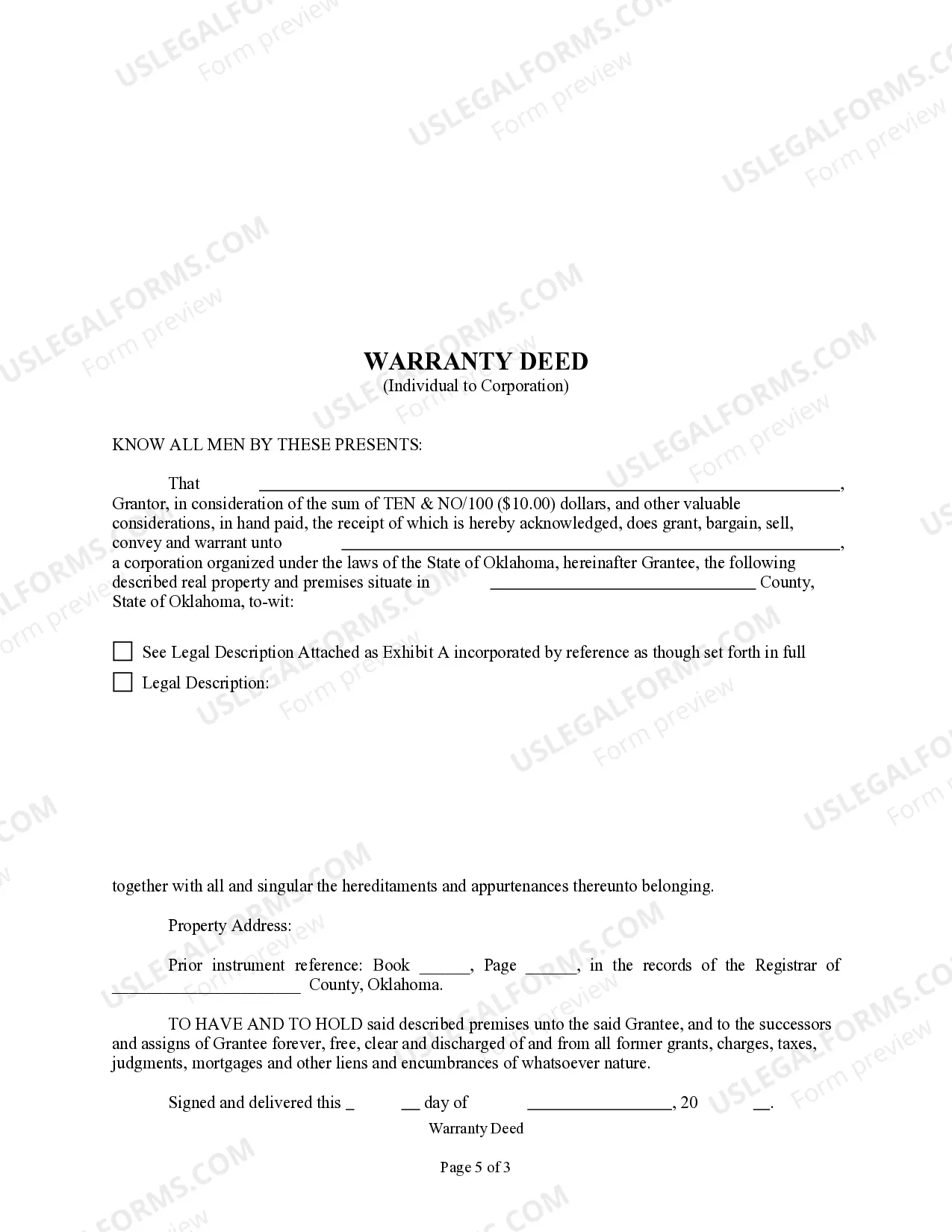
The Warranty Deed from Individual to Corporation is a legal document that facilitates the transfer of real property from an individual (the grantor) to a corporation (the grantee). This form specifies that the property is conveyed with a warranty, meaning the grantor guarantees that they hold clear title to the property and has the right to transfer it. This form is distinct from other types of warranty deeds because it specifically pertains to transfers to corporate entities and may include language related to mineral rights reservations.

Key parts of this document

  • Identification of the grantor and grantee, specifying one individual and one corporation.
  • Legal description of the property being conveyed.
  • Reservation of mineral rights, indicating what is retained by the grantor.
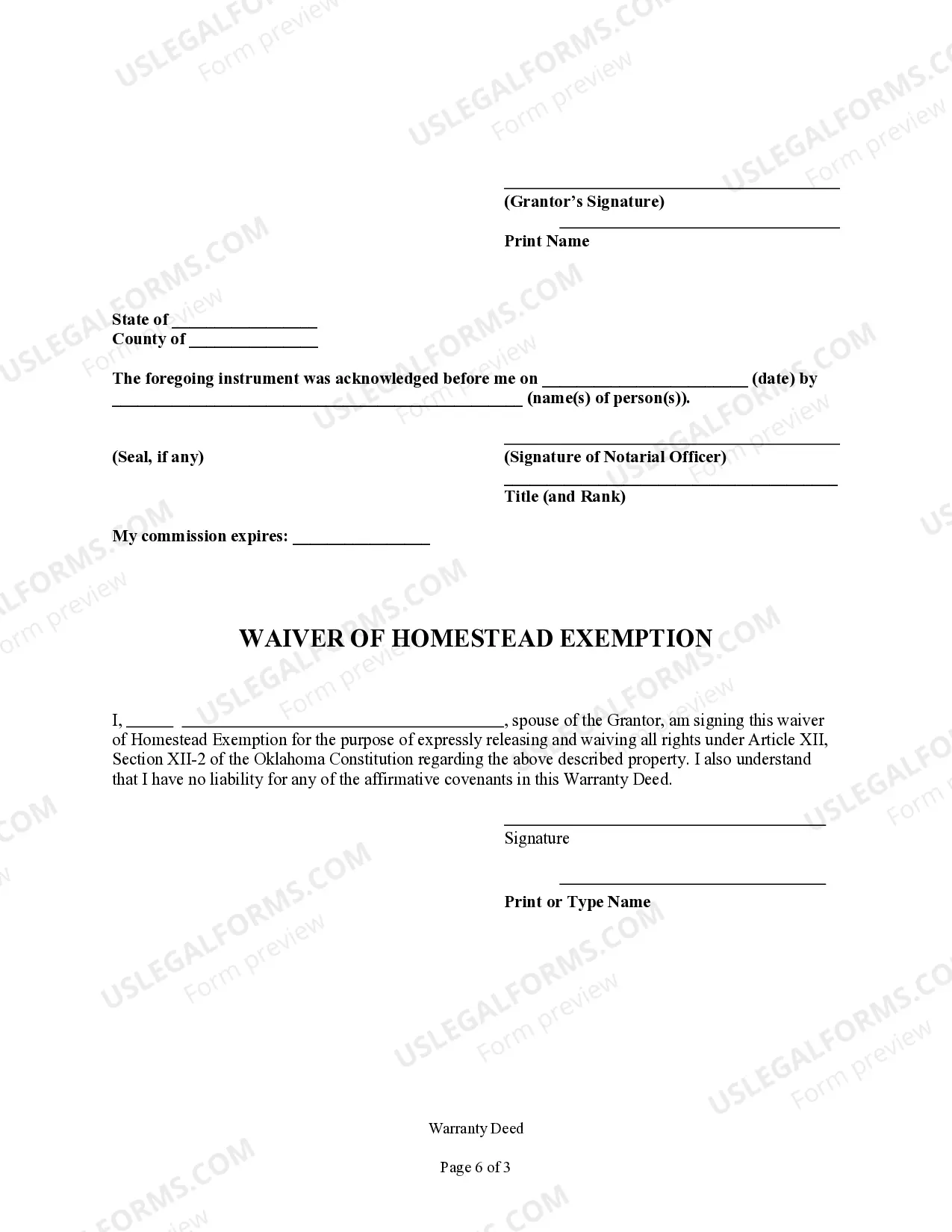
  • Signatures of both parties, with stipulations for spousal consent if applicable.
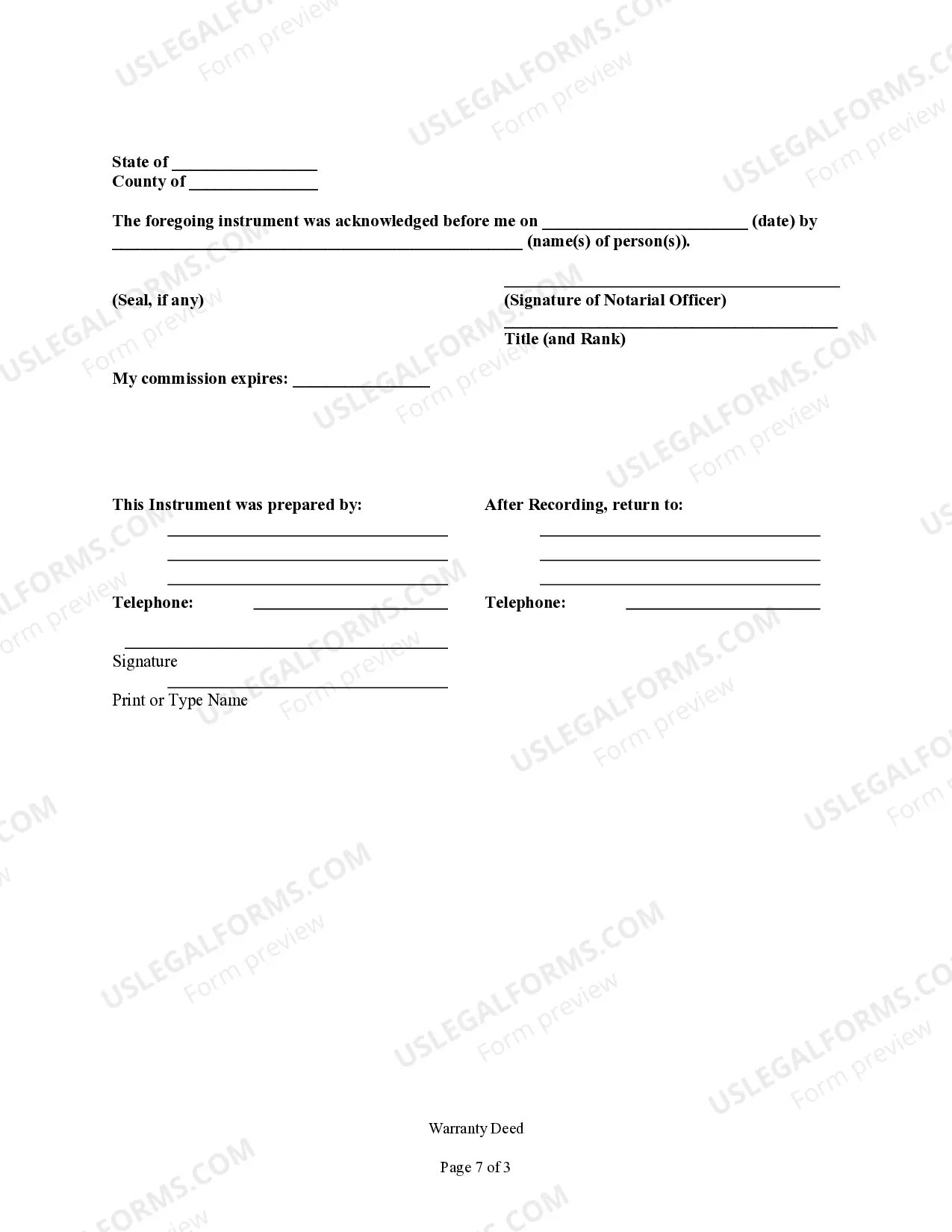
  • Instructions for recording the deed with the appropriate local authority.
Free preview
  • Preview Warranty Deed from Individual to Corporation
  • Preview Warranty Deed from Individual to Corporation
  • Preview Warranty Deed from Individual to Corporation
  • Preview Warranty Deed from Individual to Corporation
  • Preview Warranty Deed from Individual to Corporation
  • Preview Warranty Deed from Individual to Corporation
  • Preview Warranty Deed from Individual to Corporation
  • Preview Warranty Deed from Individual to Corporation

When to use this document

This Warranty Deed is typically used when an individual intends to transfer ownership of real estate to a corporation. This situation may arise in various contexts, such as consolidating property ownership under a corporate entity for liability protection, business operations, or estate planning. It is essential to ensure that the individual has the legal right to sell the property and that all necessary consents, especially from a spouse if applicable, are obtained.

Who can use this document

  • Property owners who are individuals looking to transfer their property to a corporation.
  • Corporations that are set to receive a property as part of their operations or for investment purposes.
  • Individuals who need to ensure that the transfer complies with state laws regarding property conveyance.

Steps to complete this form

  • Identify the parties involved: the grantor (individual) and the grantee (corporation).
  • Provide a complete legal description of the property being transferred.
  • Specify any reservations regarding mineral rights to ensure clarity in the deed.
  • Ensure all required signatures are obtained, including spousal consent if necessary.
  • File the completed deed with the appropriate county recorder’s office to make it official.

Notarization guidance

This form needs to be notarized to ensure legal validity. US Legal Forms provides secure online notarization powered by Notarize, allowing you to complete the process through a verified video call, available anytime.

Get your form ready online

Our built-in tools help you complete, sign, share, and store your documents in one place.

Built-in online Word editor

Make edits, fill in missing information, and update formatting in US Legal Forms—just like you would in MS Word.

Export easily

Download a copy, print it, send it by email, or mail it via USPS—whatever works best for your next step.

E-sign your document

Sign and collect signatures with our SignNow integration. Send to multiple recipients, set reminders, and more. Go Premium to unlock E-Sign.

Notarize online 24/7

If this form requires notarization, complete it online through a secure video call—no need to meet a notary in person or wait for an appointment.

Store your document securely

We protect your documents and personal data by following strict security and privacy standards.

Form selector

Make edits, fill in missing information, and update formatting in US Legal Forms—just like you would in MS Word.

Form selector

Download a copy, print it, send it by email, or mail it via USPS—whatever works best for your next step.

Form selector

Sign and collect signatures with our SignNow integration. Send to multiple recipients, set reminders, and more. Go Premium to unlock E-Sign.

Form selector

If this form requires notarization, complete it online through a secure video call—no need to meet a notary in person or wait for an appointment.

Form selector

We protect your documents and personal data by following strict security and privacy standards.

Common mistakes

  • Failing to include spousal consent when transferring a homestead property.
  • Not providing a complete and accurate legal description of the property.
  • Omitting to reserve mineral rights or misinterpreting what is being reserved.
  • Neglecting to properly record the deed with the local authority.

Why use this form online

  • Convenience of downloading the form immediately after purchase.
  • Editability allows customization to fit specific transfer details.
  • Accessibility of legal resources and guidance throughout the form completion process.
  • No need to schedule in-person appointments with legal professionals.

Looking for another form?

This field is required
Virginia
Select state

Form popularity

FAQ

As defined in section 706.10(5) of the Wisconsin Statutes, a warranty deed conveys real property in fee simple to the grantee and contains covenants by the grantor that he or she holds title to the property and has "good right to convey the same land or its title." The grantor guarantees that the property is "free from

A warranty deed is a higher level of protection produced by the seller upon the real estate closing. It includes a full legal description of the property, and confirms the title is clear and free from all liens, encumbrances, or title defects. Most property sales make use of a warranty deed.

Corporate warranty deeds offer the seller's guarantee to the buyer in regards to the validity of the chain of title. Generally, special warranty deeds only protect against problems occurring since the seller purchased the property.

It's important to note that a warranty deed does not actually prove the grantor has ownership (a title search is the best way to prove that), but it is a promise by the grantor that they are transferring ownership and if it turns out they don't actually own the property, the grantor will be responsible for compensating

The mortgage company usually prepares this deed as part of the loan package and delivers it to the title company for you to sign at closing. The title company is commonly the trustee to the deed and holds legal title to the property until the loan gets fully repaid.

A special warranty deed is a deed to real estate where the seller of the propertyknown as the grantorwarrants only against anything that occurred during their physical ownership. In other words, the grantor doesn't guarantee against any defects in clear title that existed before they took possession of the property.

A warranty deed is a legal document used to transfer, or convey, rights in real property from a grantor (seller) to a grantee (buyer). For Kansas residential property, the primary methods for holding title in co-ownership are tenancy in common and joint tenancy.

A warranty deed, also known as a general warranty deed, is a legal real estate document between the seller (grantor) and the buyer (grantee). The deed protects the buyer by pledging that the seller holds clear title to the property and there are no encumbrances, outstanding liens, or mortgages against it.

Laws § 16-40. Recording (A§ 16-16) Must be filed with the Register of Deeds in the County where the property is located. Signing (A§ 16-26) The Grantor(s) are required to sign this form in the presence of a Notary Public. Step 1 Write in the date of the deed. Step 2 Fill in the name of the person selling.

Trusted and secure by over 3 million people of the world’s leading companies

Oklahoma Warranty Deed from Individual to Corporation