Oklahoma Emergency Protective Order
About this form
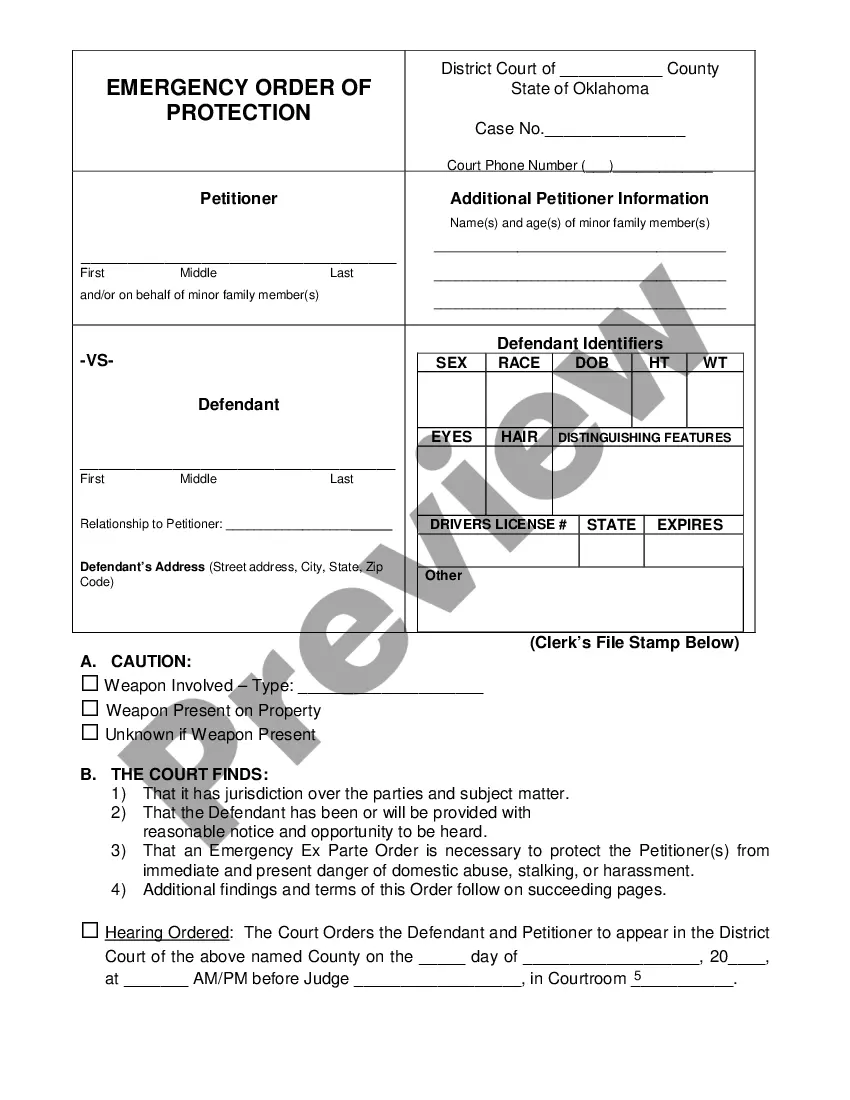
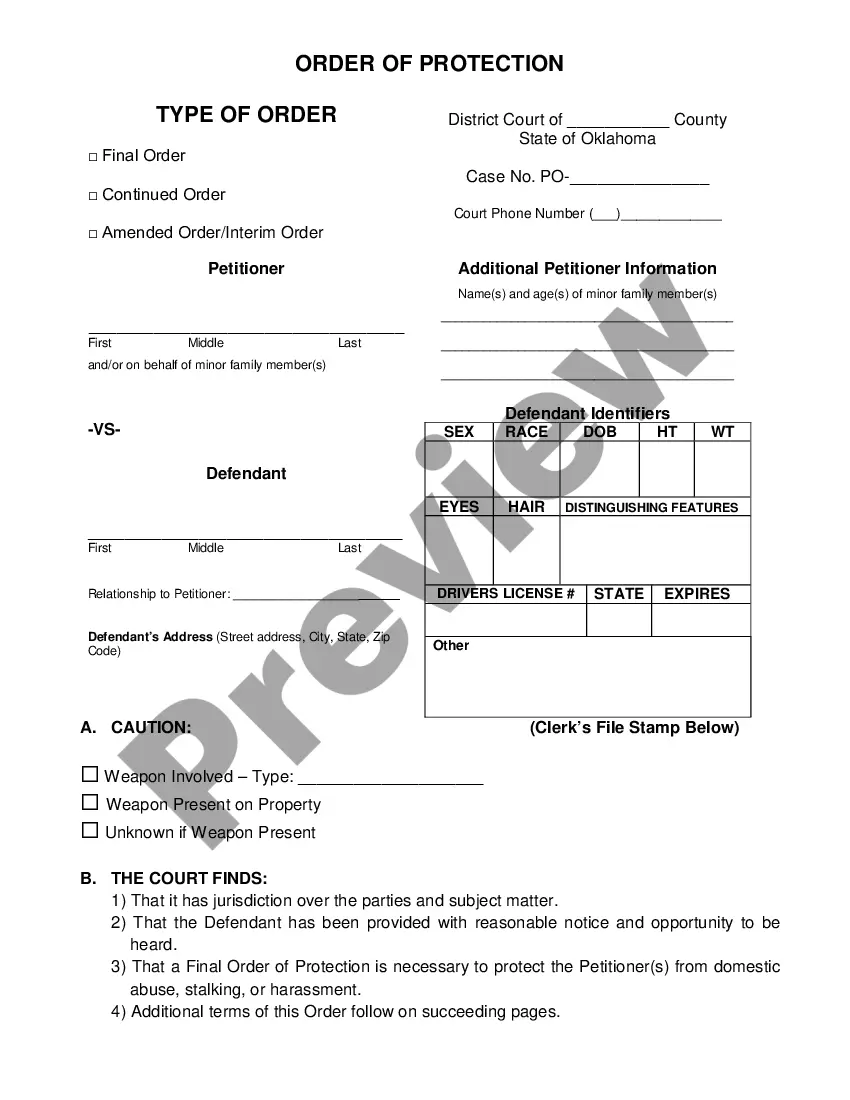
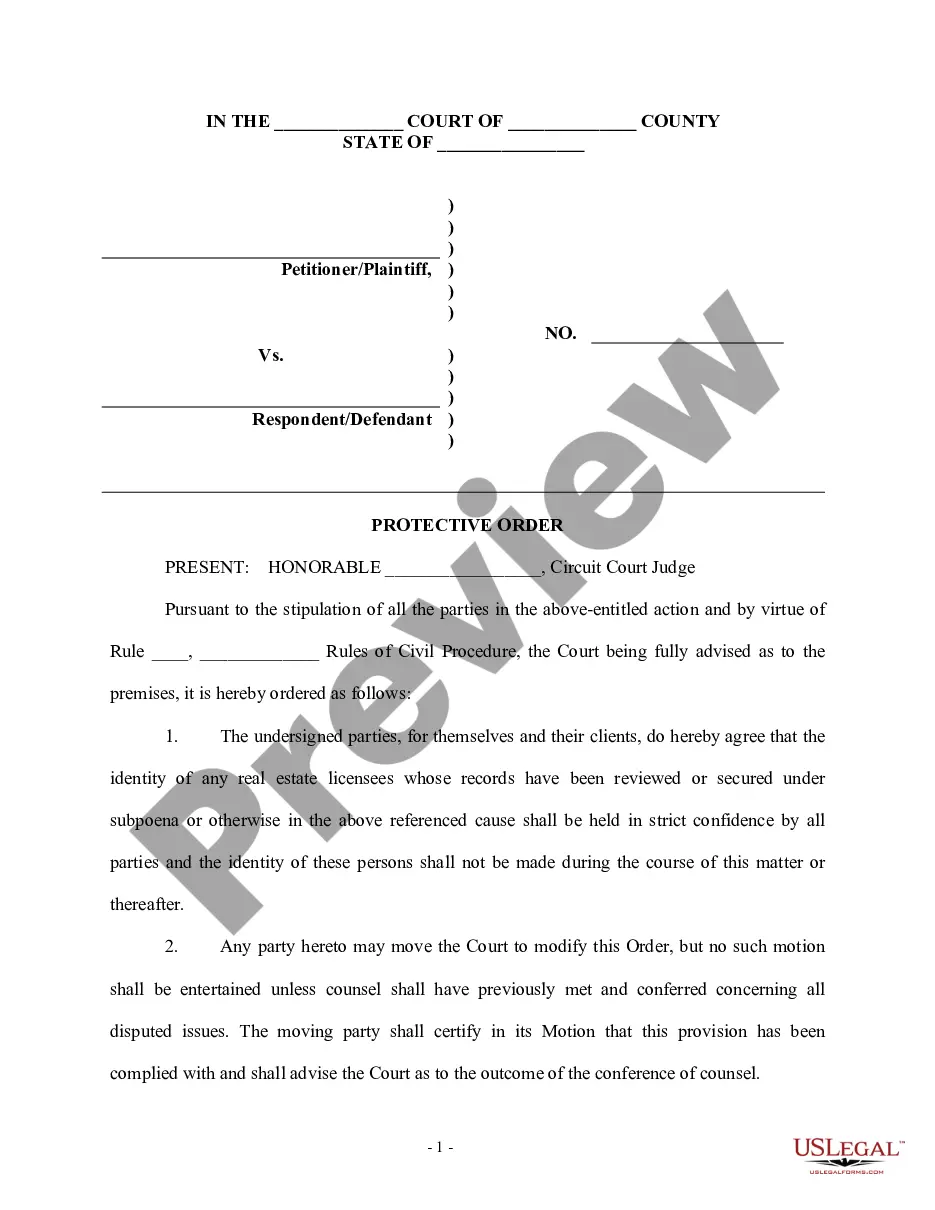
The Emergency Protective Order is a legal document designed to provide immediate protection to individuals who are victims of domestic abuse, stalking, or harassment. It differs from other protective orders by offering swift relief without the need for a full court hearing, making it vital for those in urgent danger. This order can be effective statewide and nationwide, ensuring that the protection is upheld across state lines.
Key components of this form
- Identification of the petitioner and any minor family members involved.
- Details about the defendant, including their relationship to the petitioner.
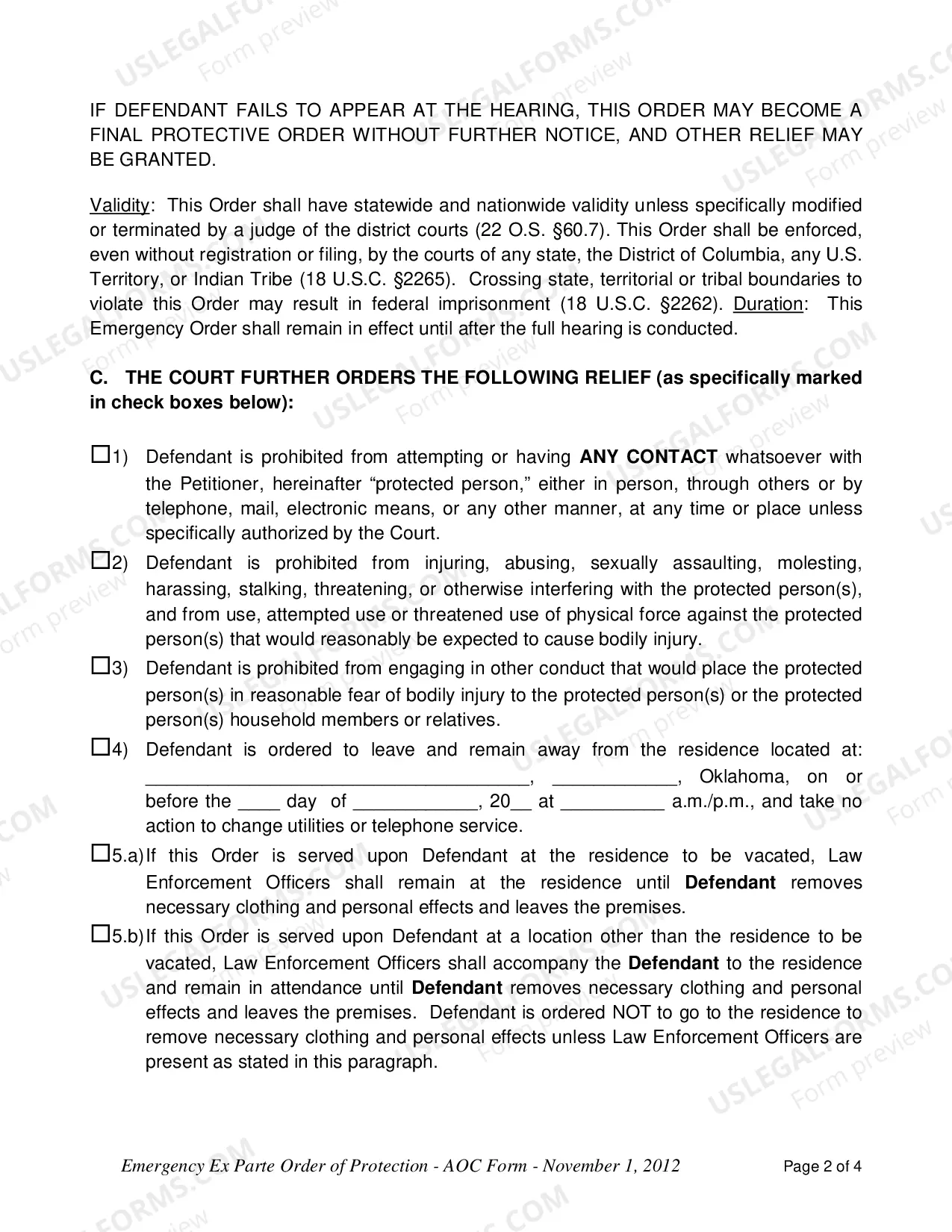
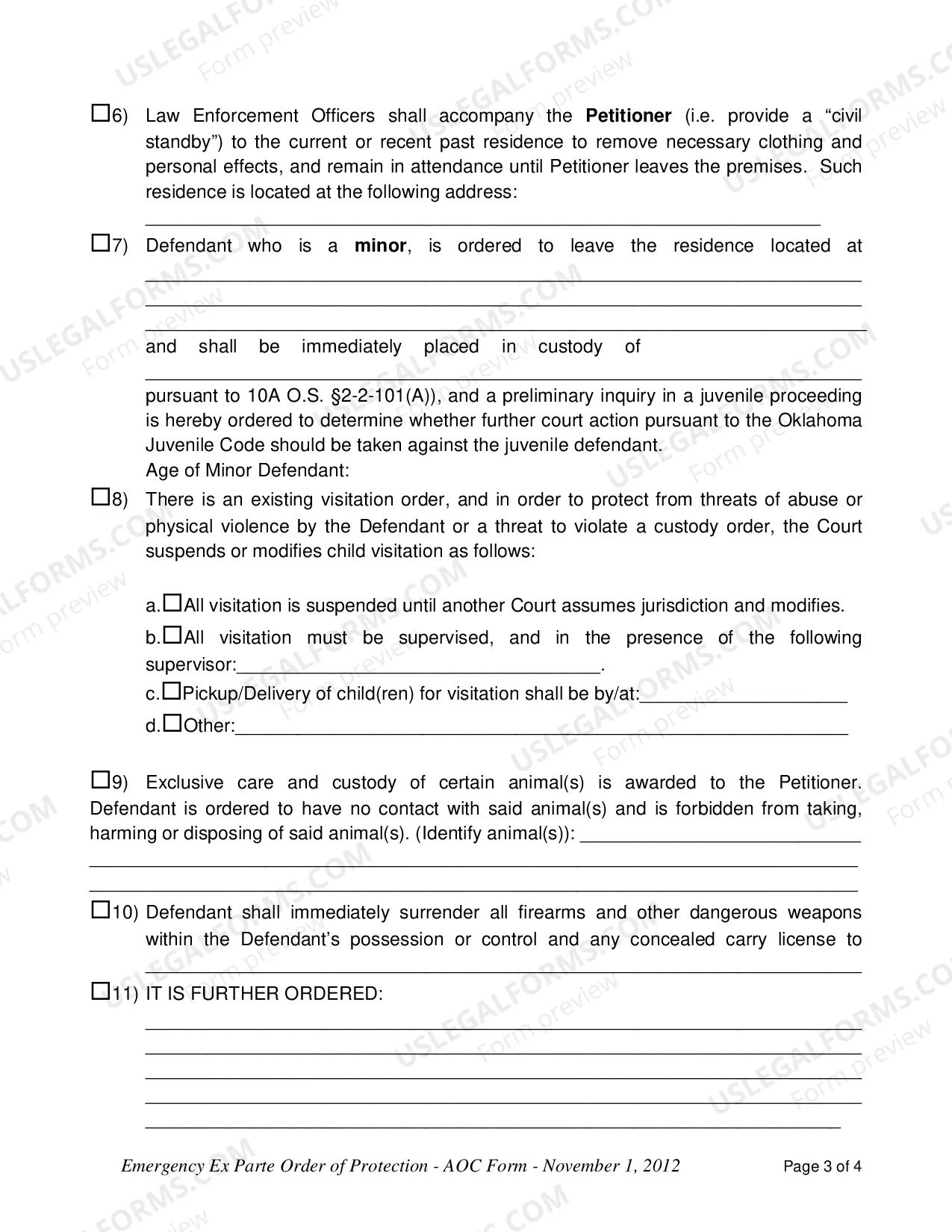
- Provisions for prohibiting contact and specific actions by the defendant.
- Jurisdictional information, including the court's authority to issue the order.
- Terms for a scheduled hearing to determine the need for a final protective order.
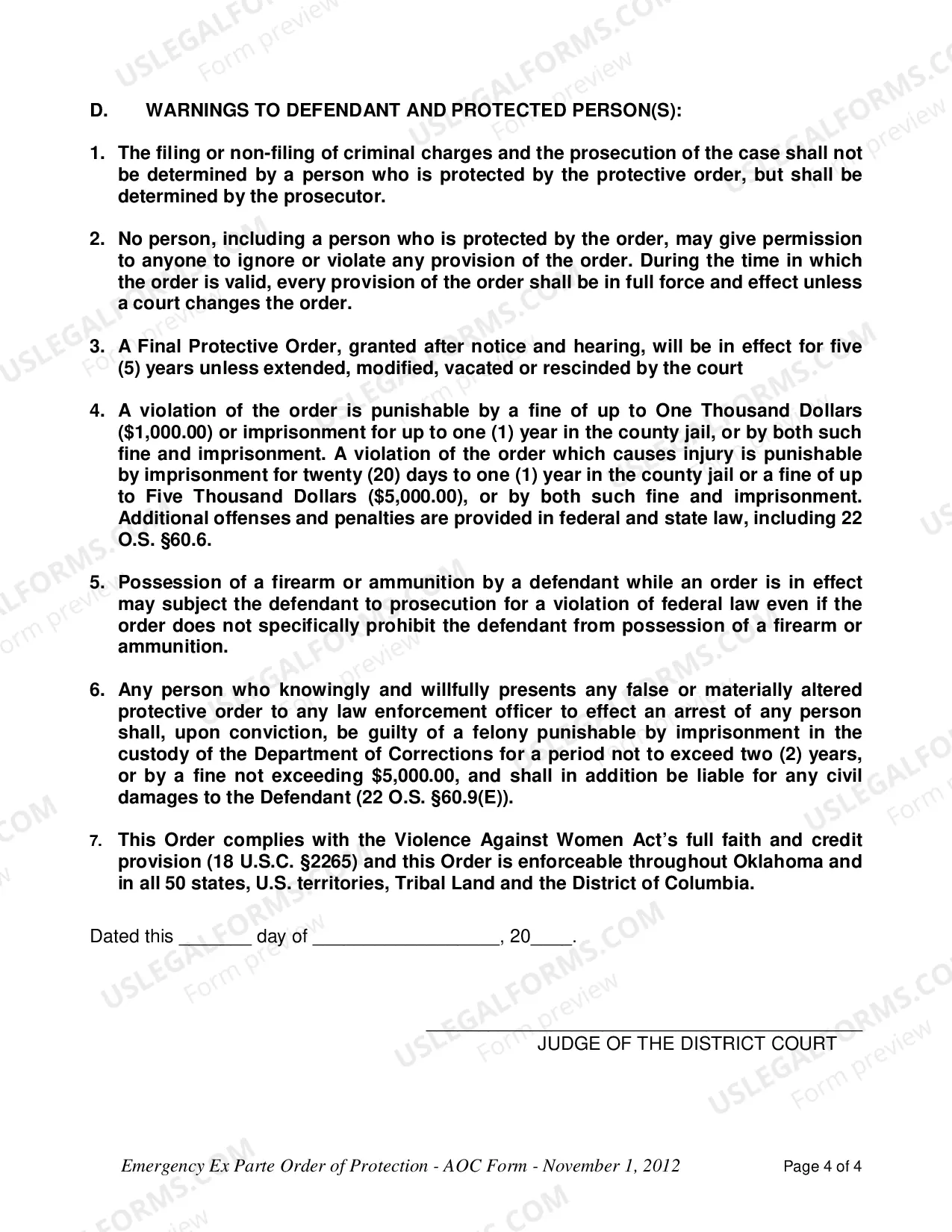
- Warnings regarding the consequences of violating the order.
When to use this form
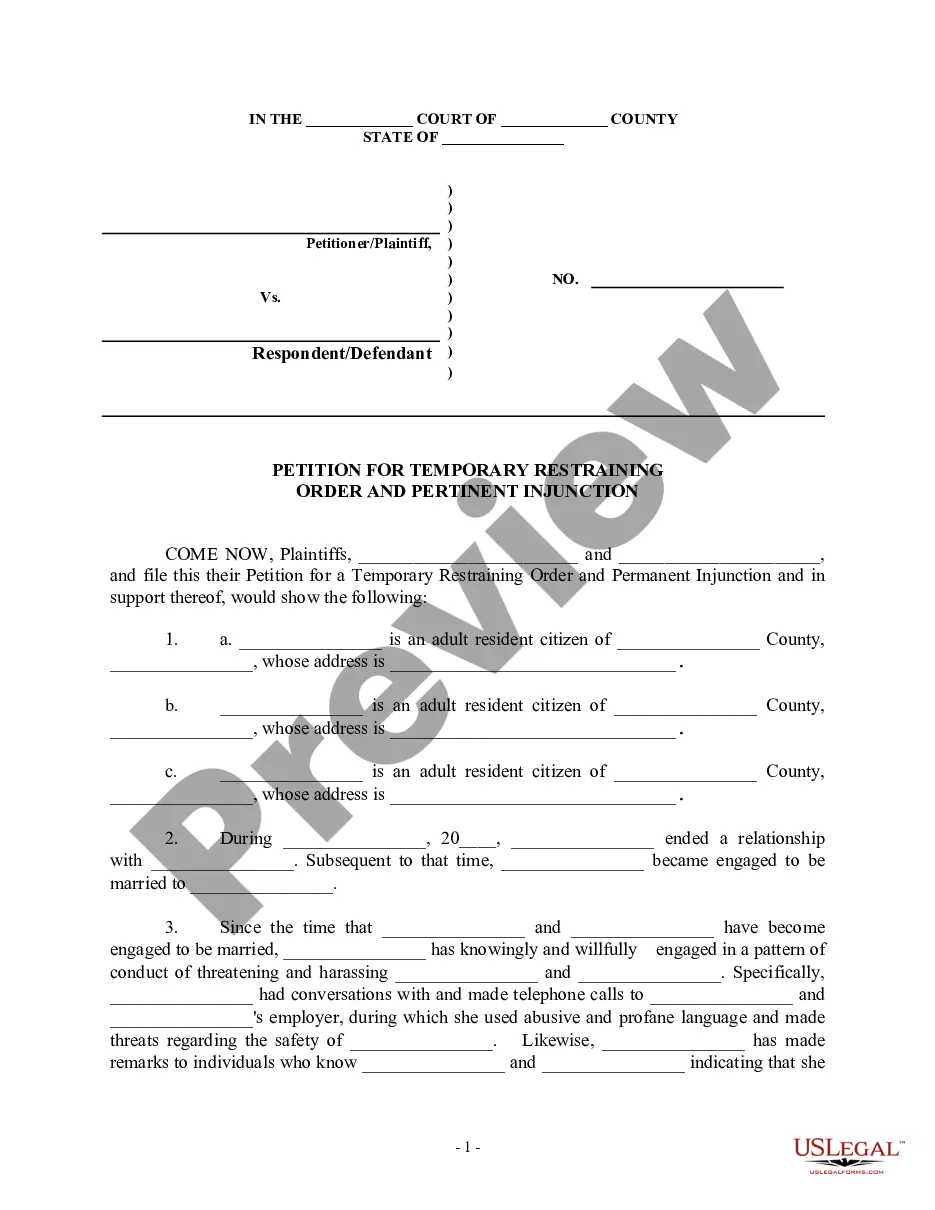
This form should be used when an individual believes they are in immediate danger from another person, such as a partner or family member, due to domestic abuse, threats, or harassment. It is typically filed in situations where the victim fears for their safety and requires urgent legal intervention to prevent further harm.
Who should use this form
This form is intended for:
- Individuals experiencing domestic abuse or violence.
- Victims of stalking or harassment.
- Parents seeking protection for themselves and their minor children.
Completing this form step by step
- Identify the petitioner and any minor family members by providing their full names and ages.
- Enter the defendant's information, including their full name and relationship to the petitioner.
- Check the appropriate boxes to outline the nature of the threat or abuse, including any weapons involved.
- Specify the terms of the protective order, such as prohibiting contact and defining the residence to be vacated.
- Complete the hearing date and details to schedule a court appearance for further proceedings.
Does this form need to be notarized?
This form does not typically require notarization unless specified by local law. However, ensuring that all details are accurate and properly documented is essential for its effectiveness in court.
Get your form ready online
Our built-in tools help you complete, sign, share, and store your documents in one place.
Make edits, fill in missing information, and update formatting in US Legal Forms—just like you would in MS Word.
Download a copy, print it, send it by email, or mail it via USPS—whatever works best for your next step.
Sign and collect signatures with our SignNow integration. Send to multiple recipients, set reminders, and more. Go Premium to unlock E-Sign.
If this form requires notarization, complete it online through a secure video call—no need to meet a notary in person or wait for an appointment.
We protect your documents and personal data by following strict security and privacy standards.

Make edits, fill in missing information, and update formatting in US Legal Forms—just like you would in MS Word.

Download a copy, print it, send it by email, or mail it via USPS—whatever works best for your next step.

Sign and collect signatures with our SignNow integration. Send to multiple recipients, set reminders, and more. Go Premium to unlock E-Sign.

If this form requires notarization, complete it online through a secure video call—no need to meet a notary in person or wait for an appointment.

We protect your documents and personal data by following strict security and privacy standards.
Common mistakes
- Failing to provide accurate and complete information about the defendant.
- Not specifying the details of the abuse or threats clearly enough.
- Omitting contact information for the court or parties involved.
- Missing deadlines for submitting the order before a hearing.
Benefits of completing this form online
- Convenience of downloading and completing the form at your own pace.
- Editability ensures accurate information can be provided before submission.
- Access to reliable templates created by licensed attorneys for tailored legal compliance.
Looking for another form?
Form popularity
FAQ
The court decides what will constitute the evidence for the case. They will send directions to the applicant, their representative and anyone else identified as a party, setting out: the issues of the case that will require evidence. what evidence is needed to decide those issues.
If someone has filed a restraining order against you, you will be served by the police or by mail.If you are served with a restraining order, you should appear at the hearing if you want to contest the order. The judge and the court staff pay close attention to the behavior of everyone in the courtroom.
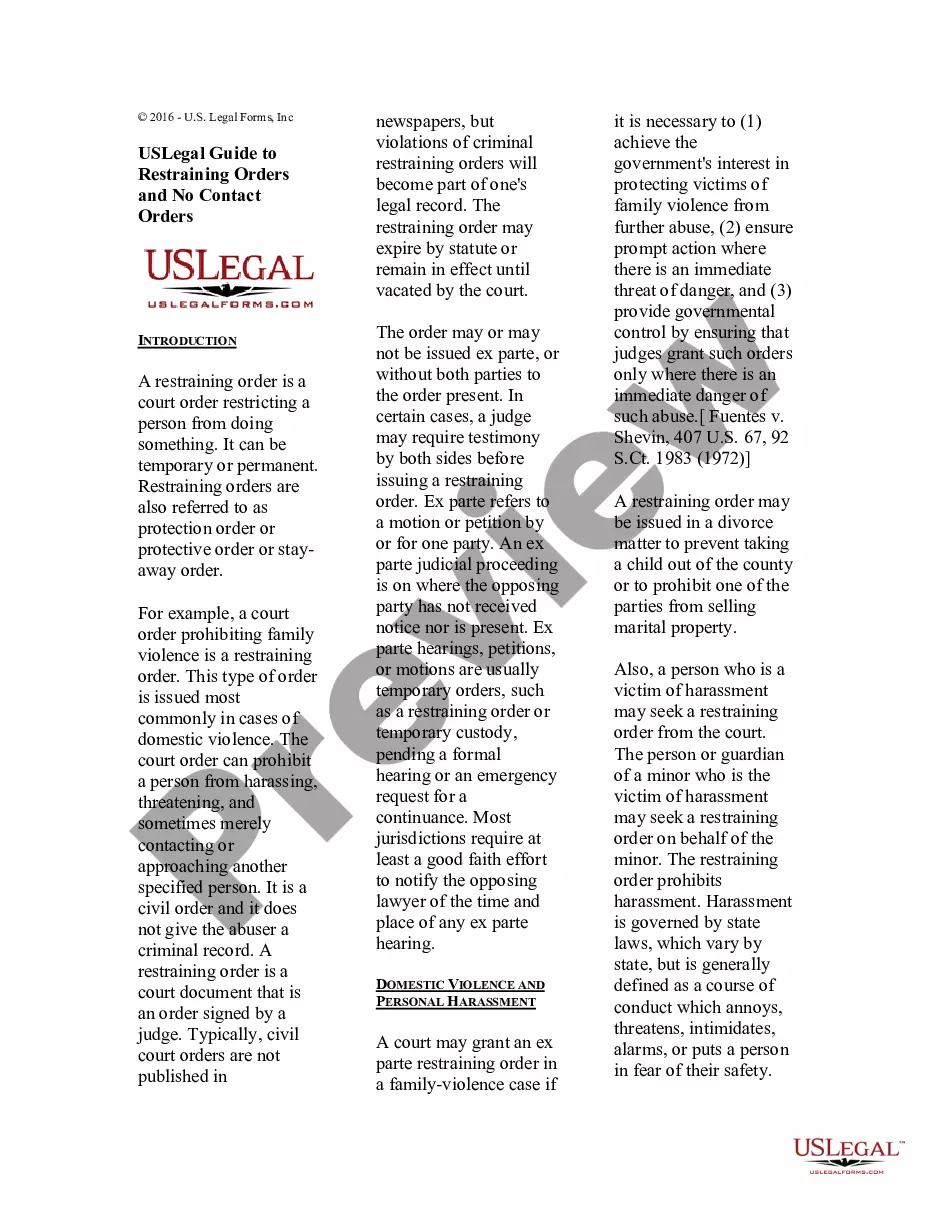
A civil harassment restraining order is a court order that helps protect people from violence, stalking, serious harassment, or threats of violence. You can ask for a civil harassment restraining order if: A person has abused (or threatened to abuse), sexually assaulted, stalked, or seriously harassed you, and.
It's much like a mini-trial. Your attorney would have the right to cross examine those witnesses, and then put you or other witnesses on to combat it. Then those people can be cross examined, and then at the end, arguments are made for or against the order, and the judge makes a decision.
It is a legal order issued by a Court to help protect you and/or your children from harassment or abuse. It can set limits on the abuser's behavior such as: Order the abuser to stop abusing you and your children. Tell the abuser to leave and stay away from your home, work place, and family.
It does not cost anything to file for an order of protection. Many orders of protection cases are handled without a lawyer however it can often be helpful to have one represent you in court.If you are going to be in court without a lawyer, our Preparing for Court By Yourself section may be useful to you.
These are orders to stop specific acts against everyone named in the restraining order as a protected person. Some of the things that the restrained person can be ordered to stop are: Contacting, calling, or sending any messages (including e-mail);
The court is looking for a description of your relationship to the respondent, when, where, what happened, and who did what to whom. Using the facts of the incident only, keep your statement brief and to the point. Briefly describe the most recent incident of abuse and/or threats of abuse or other behaviors.
It's much like a mini-trial. Your attorney would have the right to cross examine those witnesses, and then put you or other witnesses on to combat it. Then those people can be cross examined, and then at the end, arguments are made for or against the order, and the judge makes a decision. It's very much like a trial.