Oklahoma Protective Order
Understanding this form
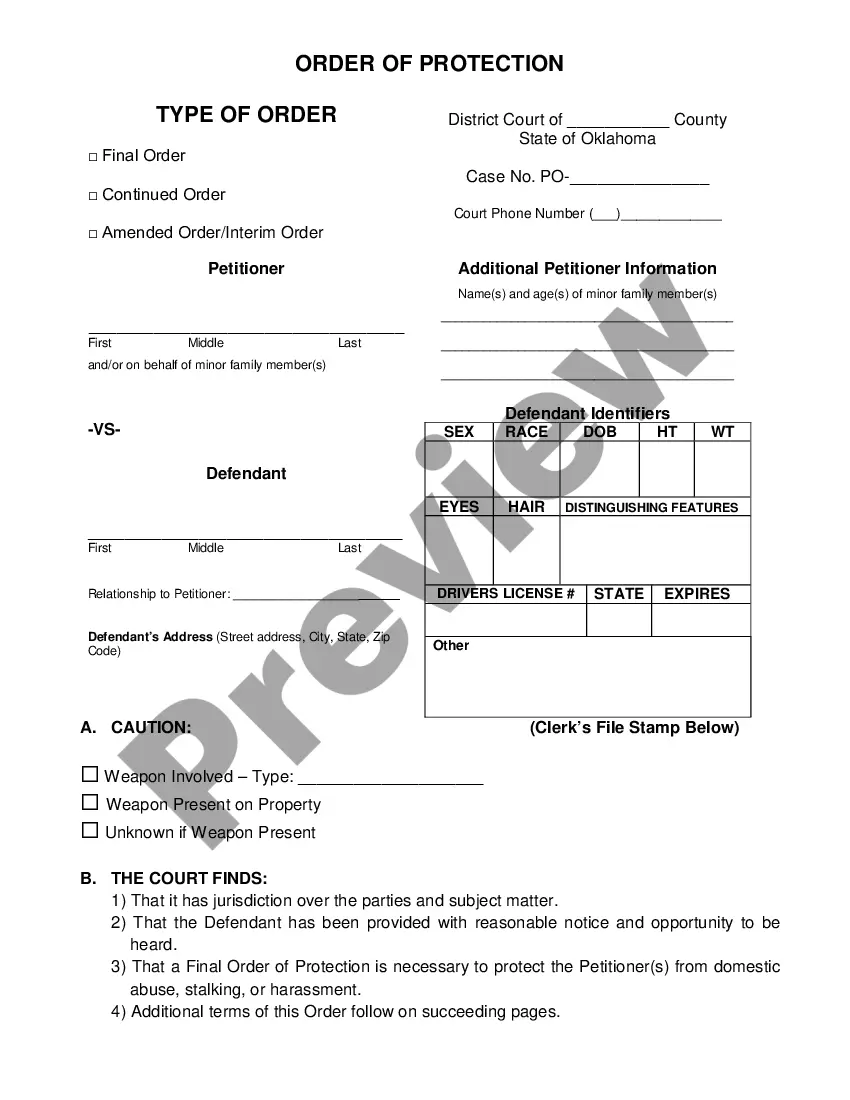
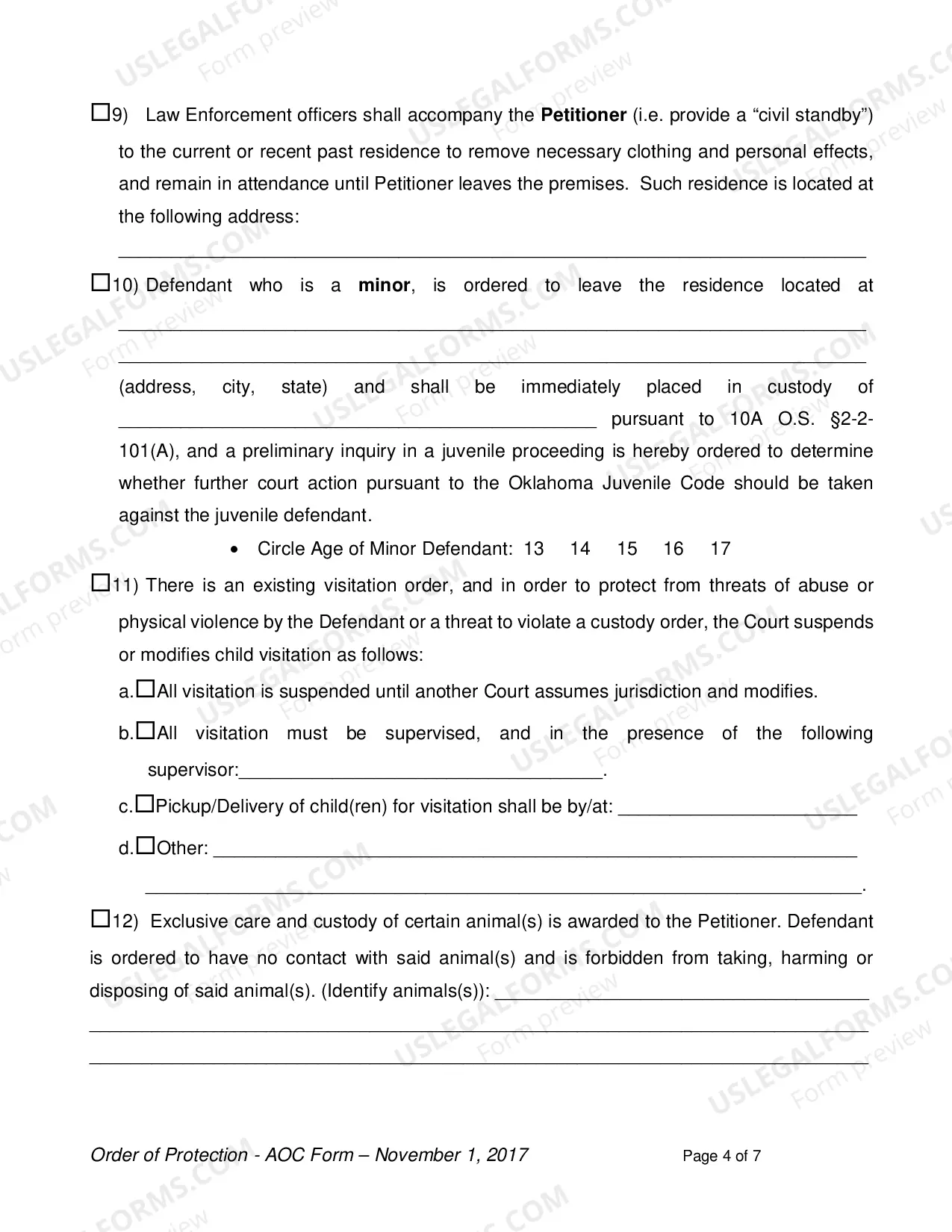
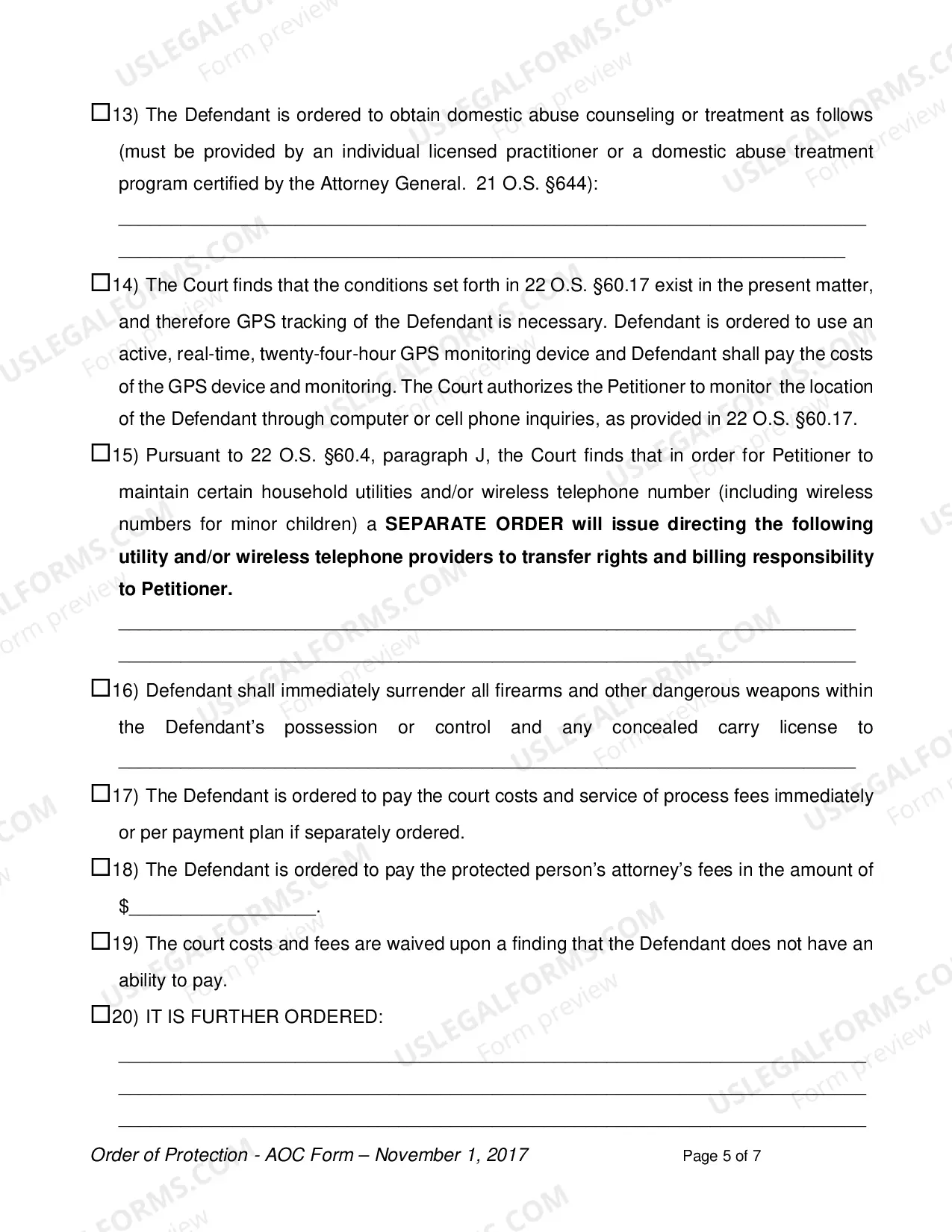
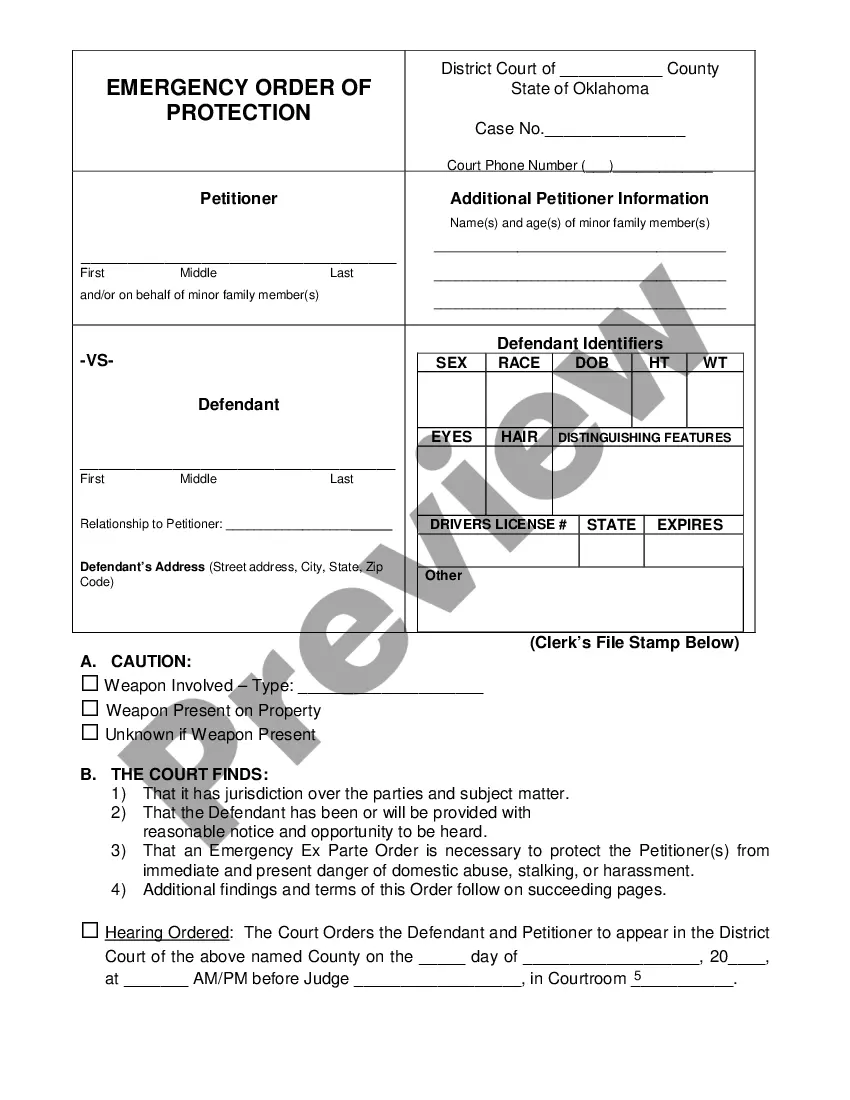
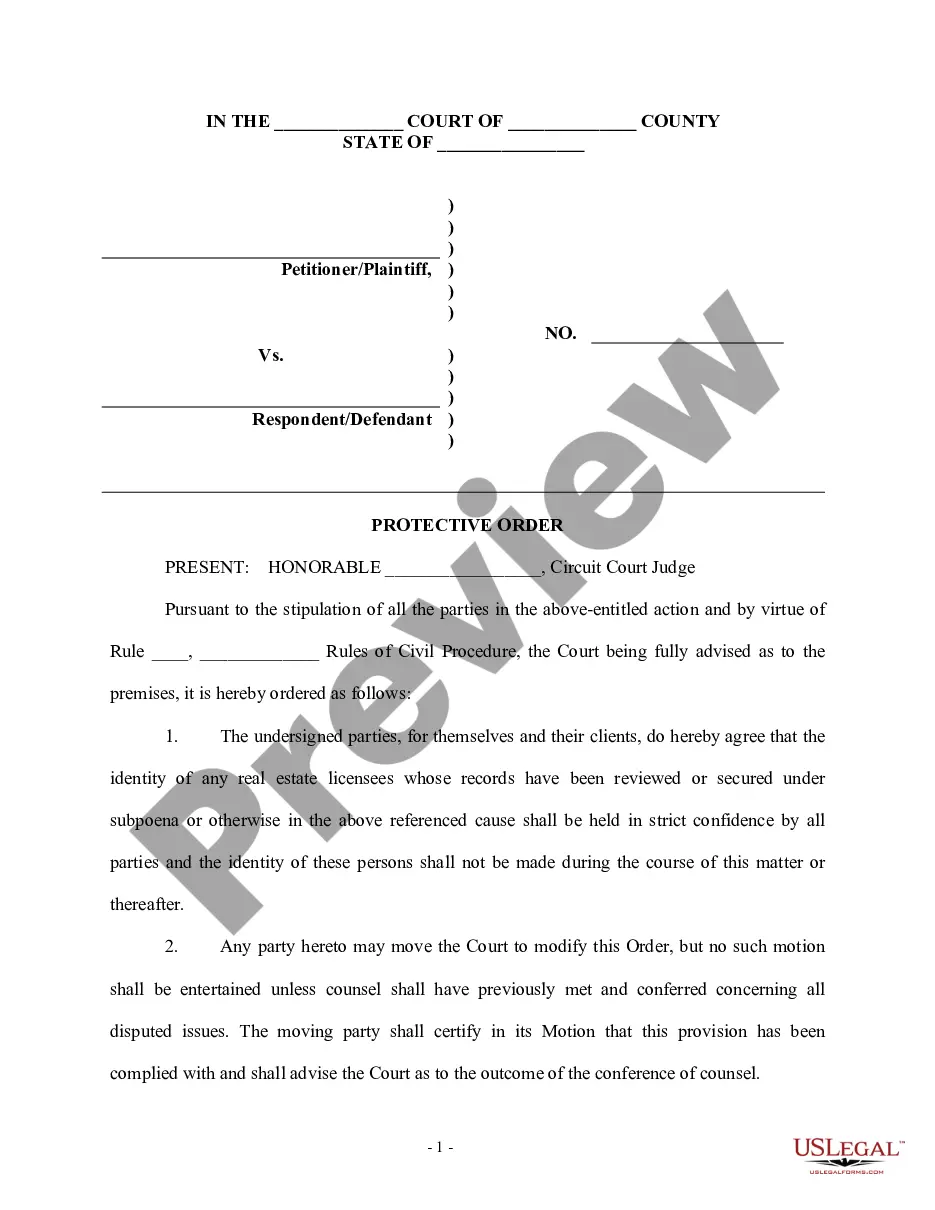
The Protective Order is a legal document designed to provide immediate protection for individuals from domestic abuse, harassment, or stalking. This form establishes guidelines and restrictions to ensure the safety of the petitioner and their minor family members. Unlike a restraining order, which may be related to various disputes, a Protective Order specifically addresses incidents of domestic violence or threats, focusing on the safety and security of individuals at risk.
Main sections of this form
- Type of order: Final, Continued, or Amended Order
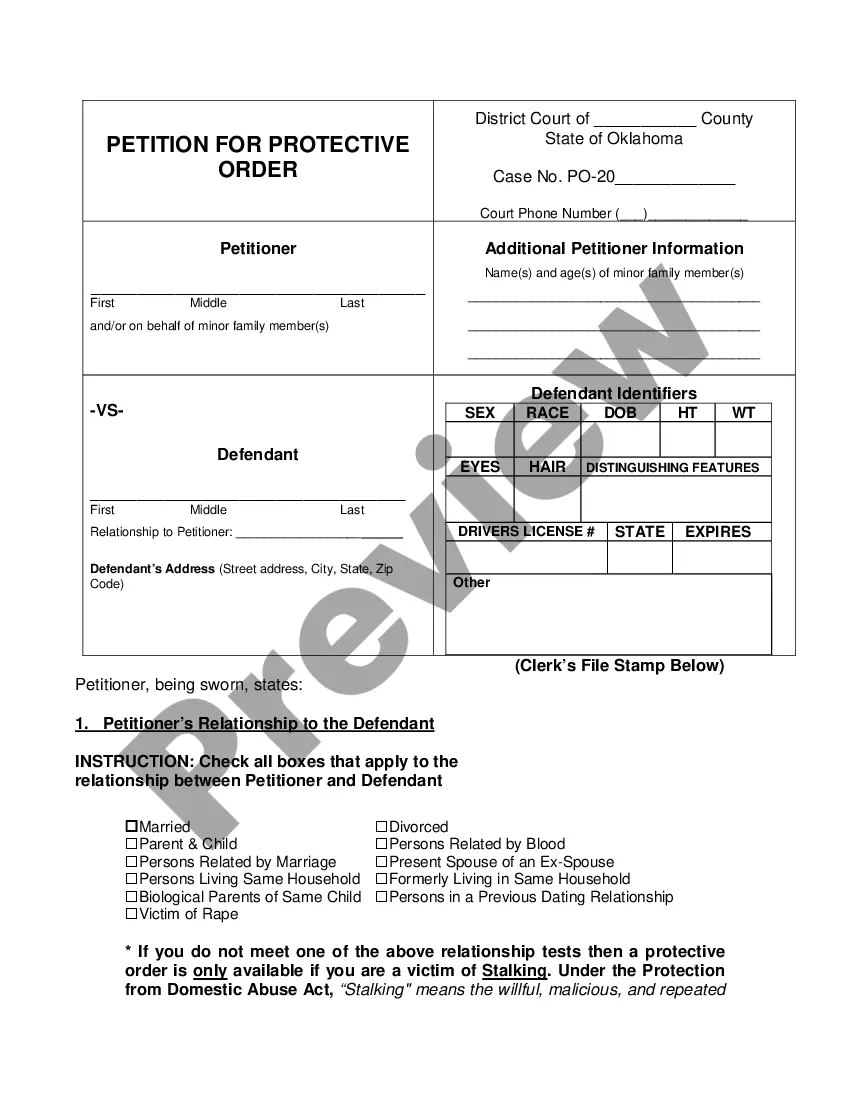
- Details of the petitioner and defendants, including names and relationship
- Findings by the court regarding jurisdiction and necessity of the order
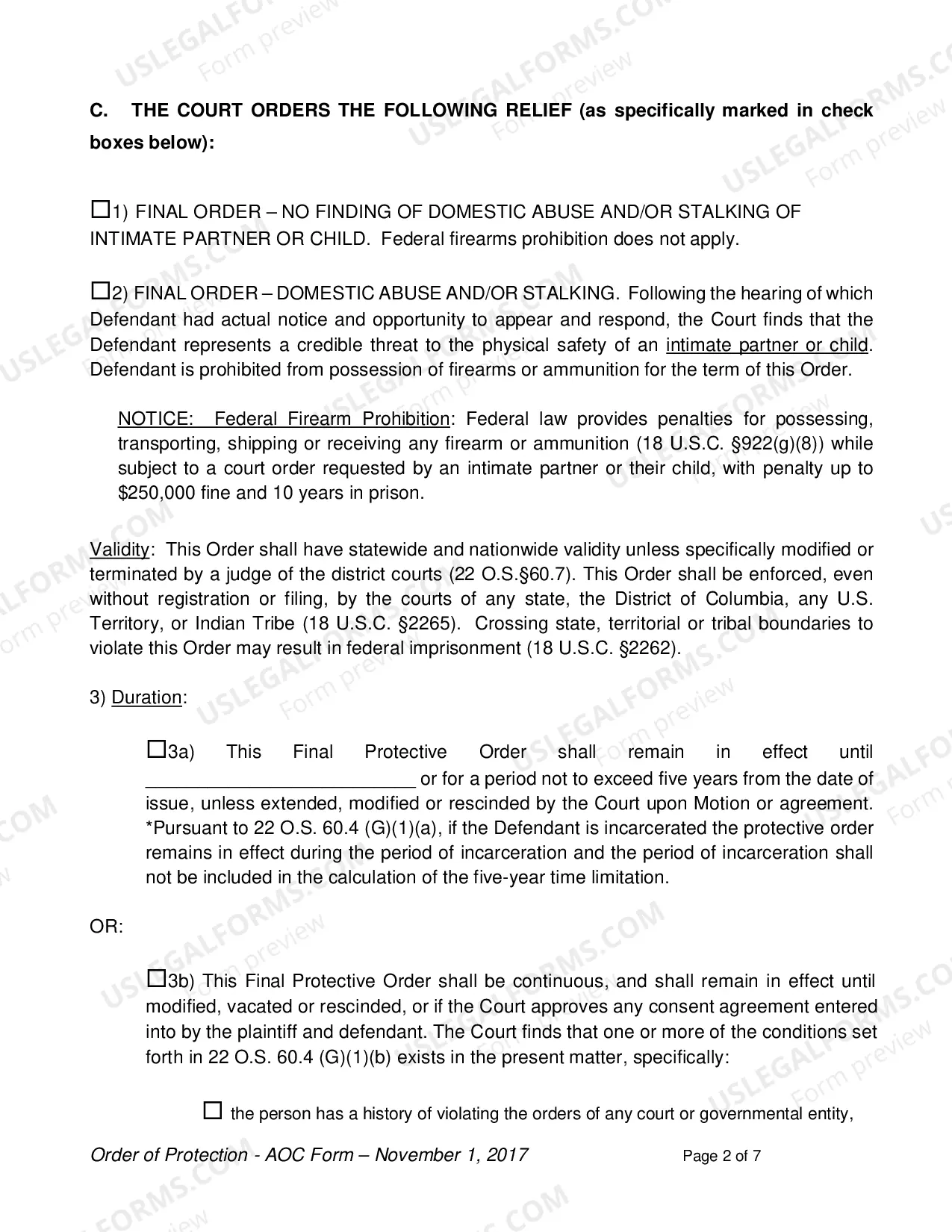
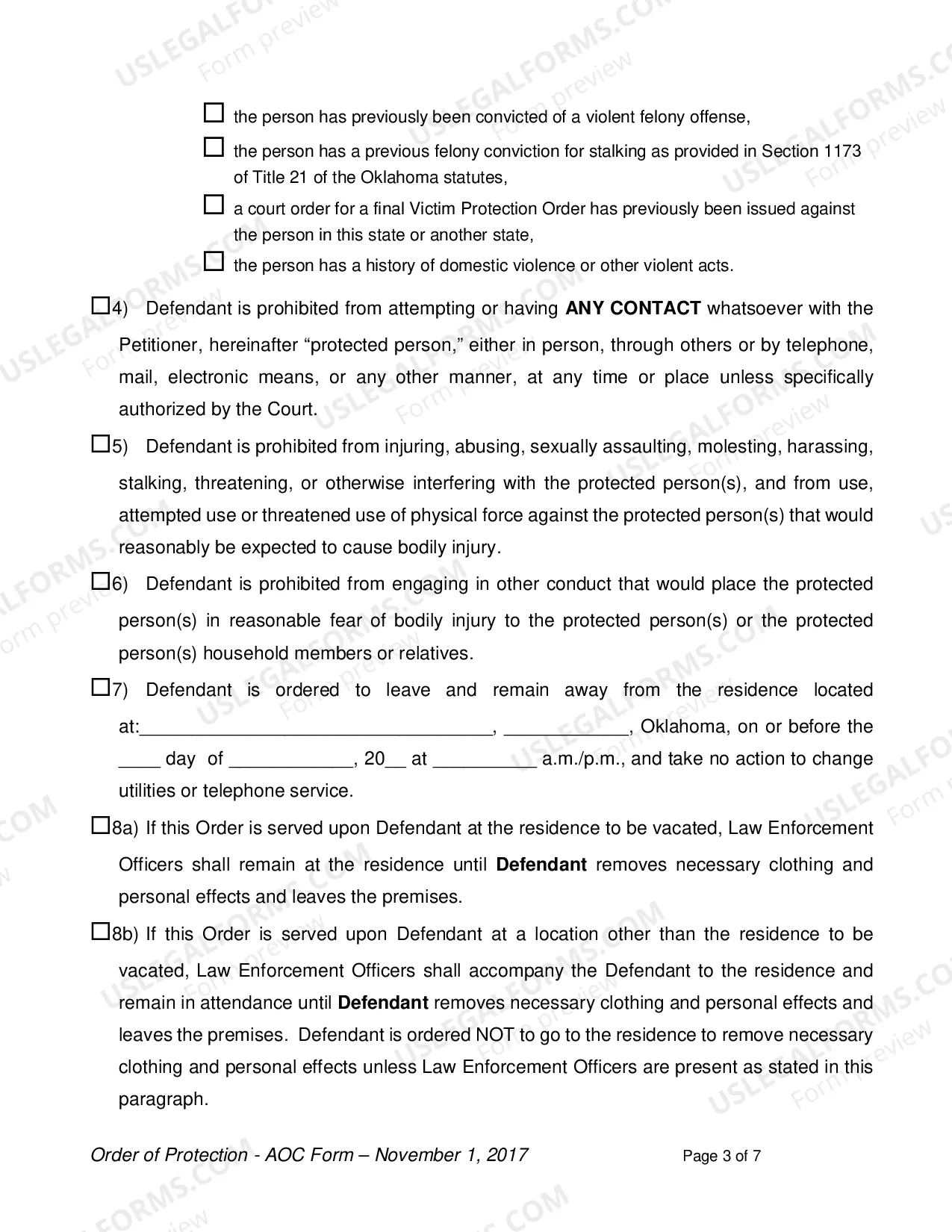
- Specific prohibitions placed on the defendant to protect the petitioner
- Potential duration of the order and conditions for its extension
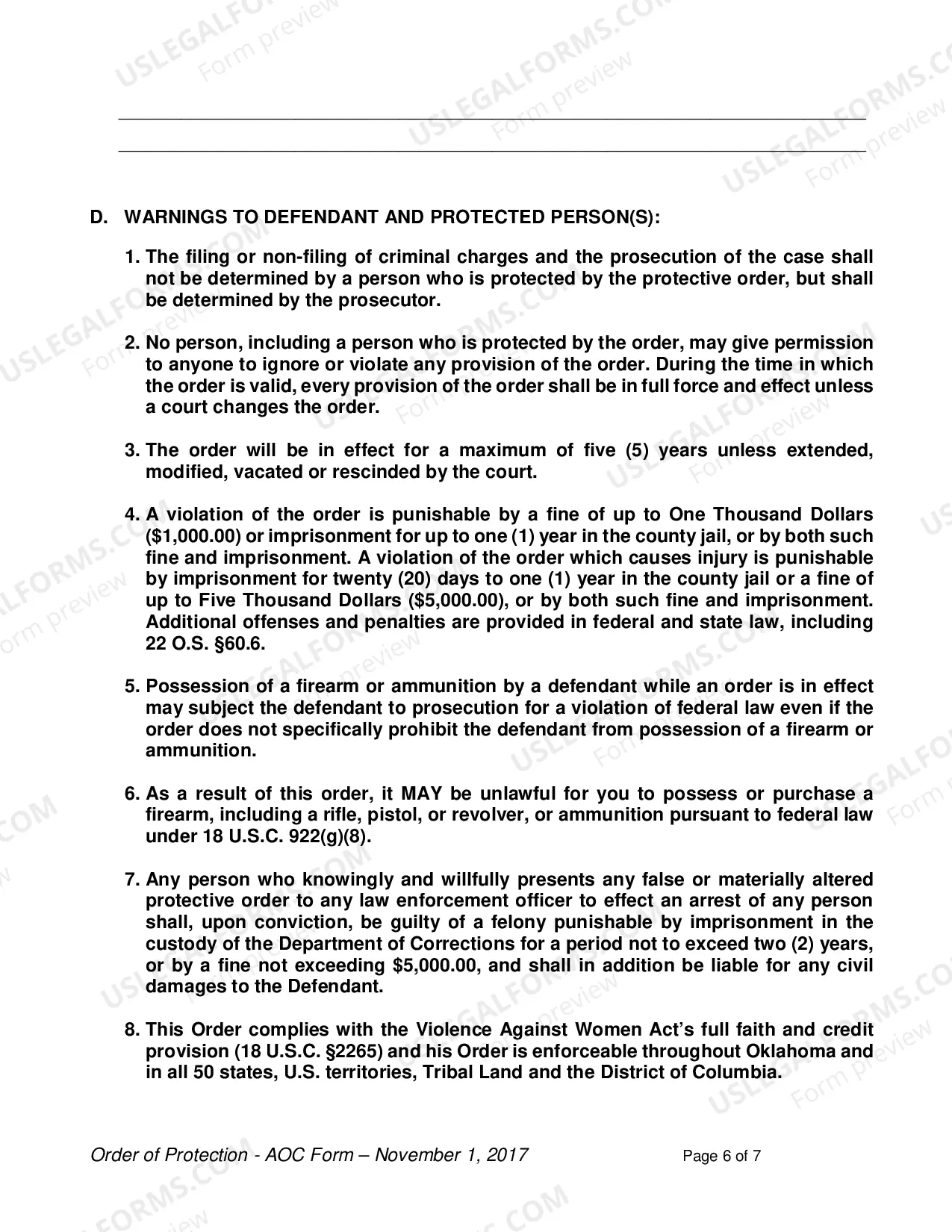
- Warnings regarding violations and penalties associated with non-compliance
When this form is needed
This form should be used when an individual feels threatened or has experienced acts of domestic violence, stalking, or harassment. Examples include situations where there has been physical abuse, emotional abuse, or behavior that instills fear for oneâs safety or the safety of minor children. The Protective Order can help in legally prohibiting the abuser from contacting or coming near the victim, providing essential protection during critical situations.
Who this form is for
This form is intended for individuals who are victims of domestic abuse, stalking, or harassment. It is specifically useful for:
- Adults seeking protection for themselves
- Parents filing on behalf of minor children
- Individuals who have had a documented history of violence or threats from an intimate partner or family member
How to prepare this document
- Identify the type of protective order you are requesting (Final, Continued, or Amended).
- Fill out personal information for both the petitioner and the defendant, including names, addresses, and identifiers.
- Check the boxes that specify the findings made by the court regarding the necessity of the order.
- Mark the appropriate boxes to indicate the relief you are seeking, such as contact restrictions or temporary custody arrangements.
- Specify the duration of the order and any additional orders for relief relevant to your situation.
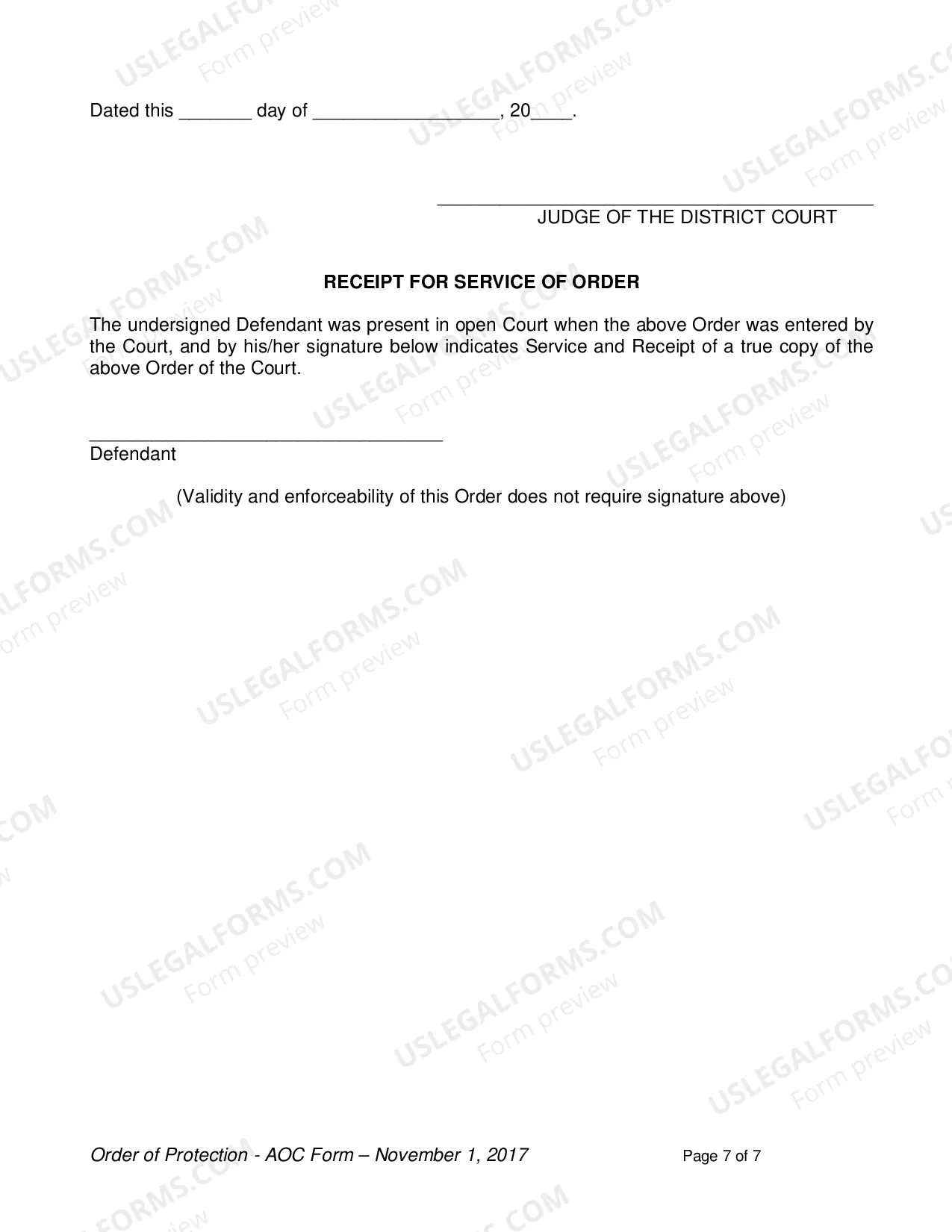
- Sign and date the document before submission to the appropriate court.
Notarization guidance
This form does not typically require notarization unless specified by local law. However, always check local regulations to ensure compliance with any specific requirements that may apply.
Get your form ready online
Our built-in tools help you complete, sign, share, and store your documents in one place.
Make edits, fill in missing information, and update formatting in US Legal Forms—just like you would in MS Word.
Download a copy, print it, send it by email, or mail it via USPS—whatever works best for your next step.
Sign and collect signatures with our SignNow integration. Send to multiple recipients, set reminders, and more. Go Premium to unlock E-Sign.
If this form requires notarization, complete it online through a secure video call—no need to meet a notary in person or wait for an appointment.
We protect your documents and personal data by following strict security and privacy standards.

Make edits, fill in missing information, and update formatting in US Legal Forms—just like you would in MS Word.

Download a copy, print it, send it by email, or mail it via USPS—whatever works best for your next step.

Sign and collect signatures with our SignNow integration. Send to multiple recipients, set reminders, and more. Go Premium to unlock E-Sign.

If this form requires notarization, complete it online through a secure video call—no need to meet a notary in person or wait for an appointment.

We protect your documents and personal data by following strict security and privacy standards.
Common mistakes
- Failing to provide accurate or complete information about the parties involved.
- Not specifying the type of order correctly, which may affect enforcement.
- Overlooking the need to clearly indicate any specific prohibitions against the defendant.
- Not understanding the implications of the order regarding firearms and potential charges.
Why use this form online
- Convenient access to required legal forms anytime and anywhere.
- Edit and customize the form to fit your specific needs easily.
- Reliable templates drafted by licensed attorneys to ensure legal accuracy.
Legal use & context
- The Protective Order is enforceable in all states, allowing for cross-state recognition.
- Violating the terms of the order may result in criminal penalties, including fines and imprisonment.
- Understanding your rights and the legal framework surrounding protective orders can aid in effectively securing your safety.
What to keep in mind
- The Protective Order provides essential legal protection against domestic violence and harassment.
- Accurate completion of the form is critical for effective enforcement.
- Legal advice may be beneficial when navigating the complexities of domestic protection laws.
Looking for another form?
Form popularity
FAQ
It is a legal order issued by a Court to help protect you and/or your children from harassment or abuse. It can set limits on the abuser's behavior such as: Order the abuser to stop abusing you and your children. Tell the abuser to leave and stay away from your home, work place, and family.
What is a Protective Order? 2022 A Protective Order is an order of the court on behalf of a victim of domestic violence. It may order the abuser to. move out of a home that is shared and/or to stop hurting, threatening, stalking and harassing the victim.
Usually yes, but sometimes no. Temporary restraining orders will appear so law enforcement officers can see it.But if the hearing results in a permanent restraining order, it goes on your record. But even restraining orders that should be expunged sometimes stay in the system longer.
It's much like a mini-trial. Your attorney would have the right to cross examine those witnesses, and then put you or other witnesses on to combat it. Then those people can be cross examined, and then at the end, arguments are made for or against the order, and the judge makes a decision. It's very much like a trial.
Although the VPO is vacated, it remains on a person's court record. Fortunately, just as a person can obtain expungement of a misdemeanor or non-violent felony conviction, a person may be able to get the record of a protective order expunged.
If someone has filed a restraining order against you, you will be served by the police or by mail.If you are served with a restraining order, you should appear at the hearing if you want to contest the order. The judge and the court staff pay close attention to the behavior of everyone in the courtroom.
The Judge will decide immediately whether an Emergency Temporary Order will be issued and will set a hearing date to decide whether to issue a "finalized protective order." The judge may order the protective order to be in place for up to 5 years.