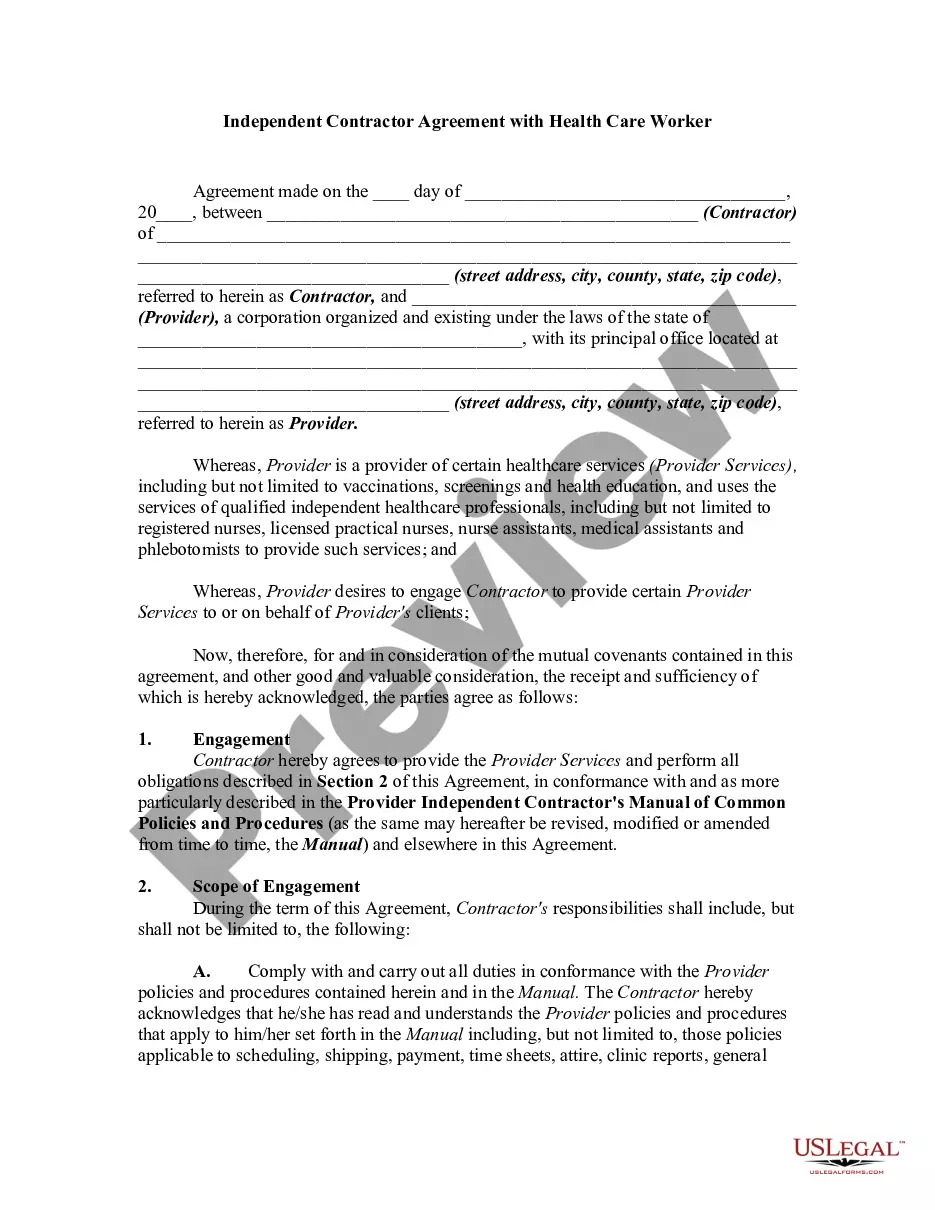
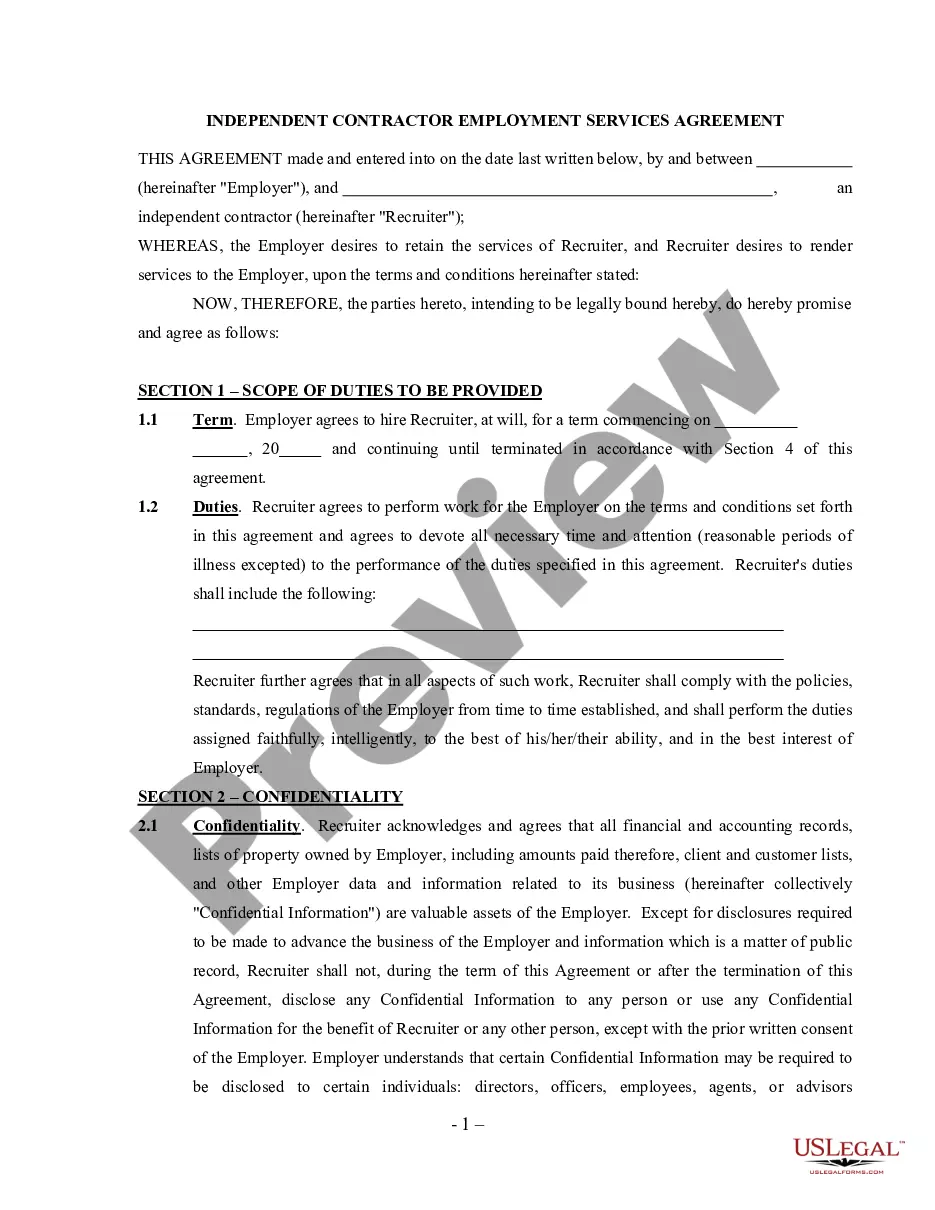
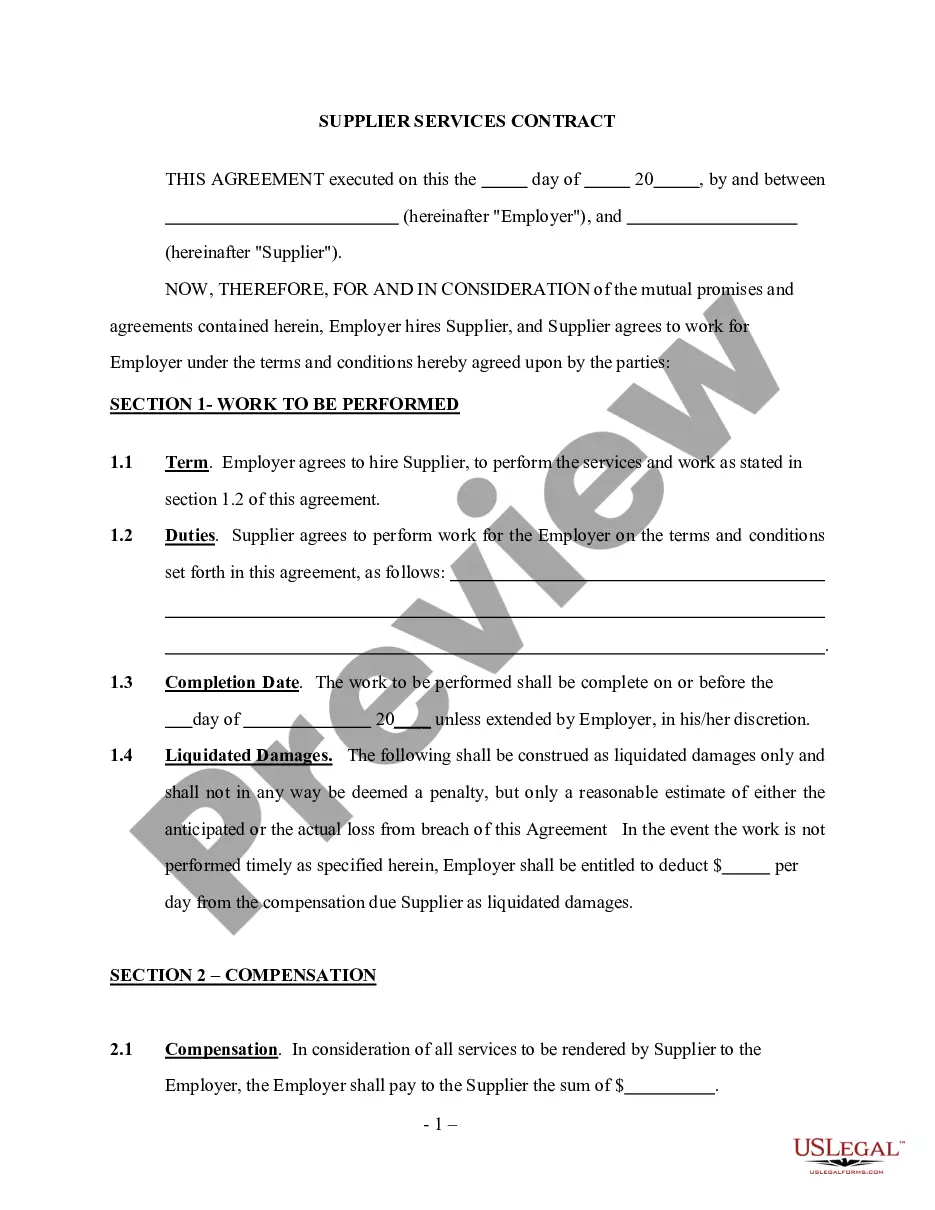
Employer contracts with an independent contractor to provide any specialized services required by Employer as agreed to and specified in the contract.
Ohio Specialty Services Contact - Self-Employed
State:
Multi-State
Control #:
US-INDC-164
Format:
Word;
Rich Text
Instant download
Description
Free preview
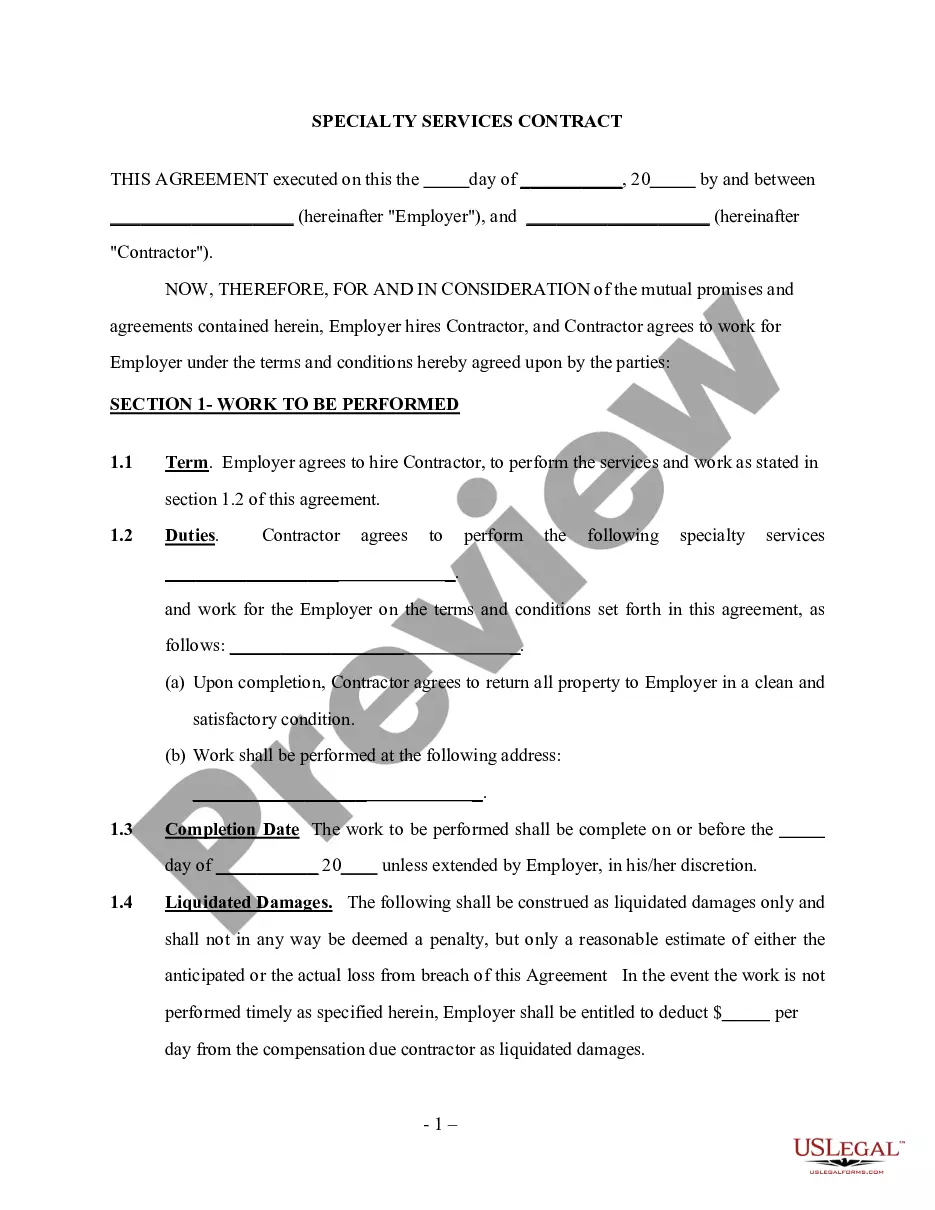
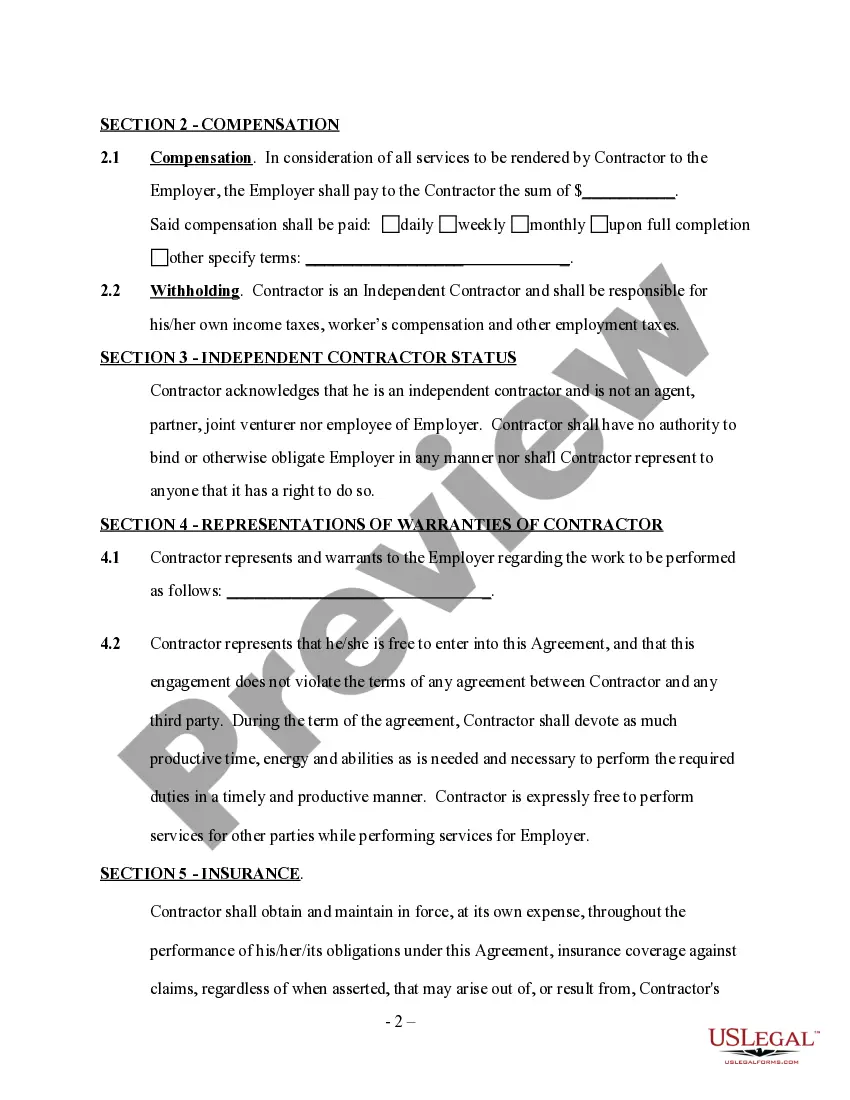
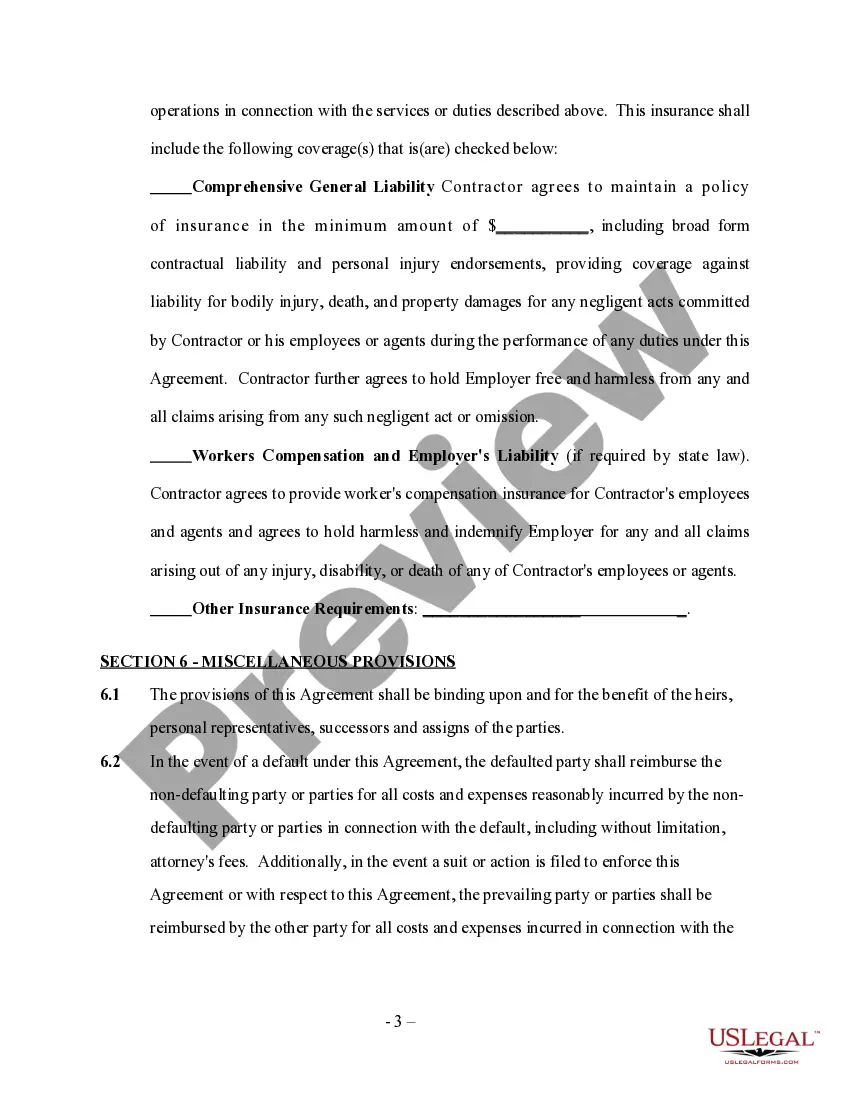
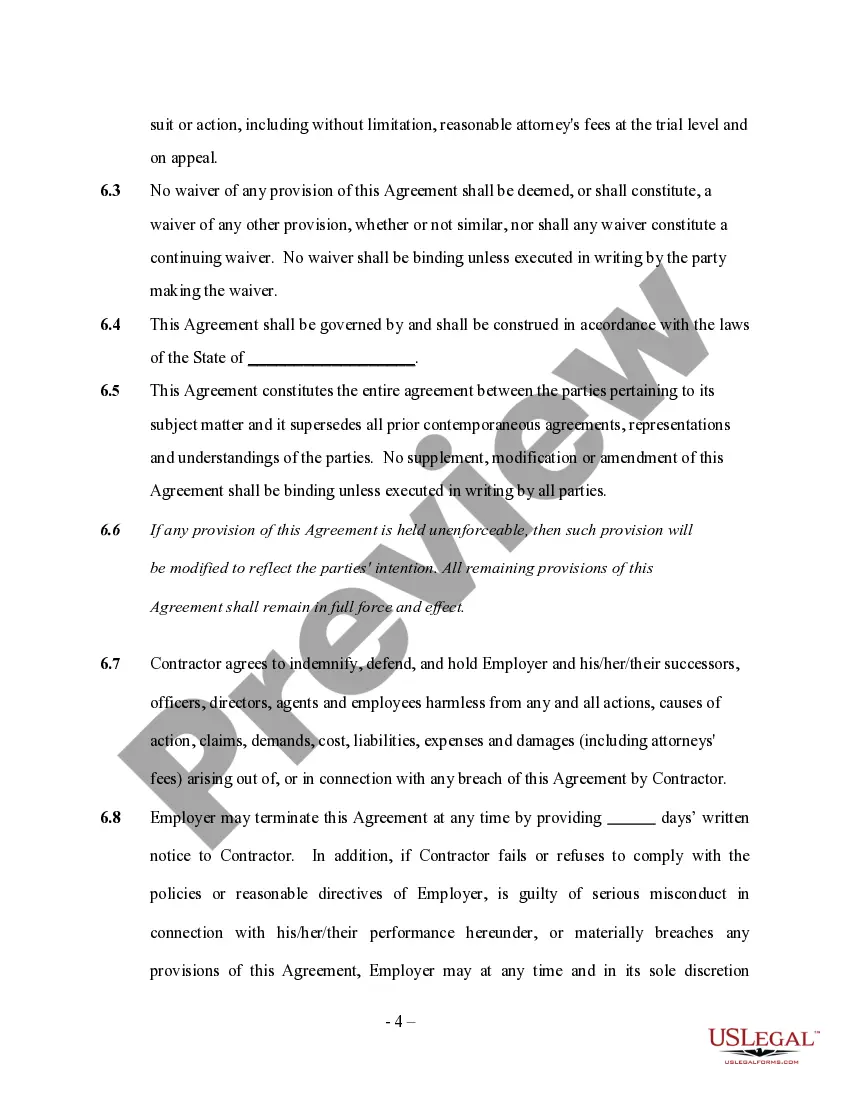




How to fill out Specialty Services Contact - Self-Employed?
Are you currently in a scenario where you require documents for both business or personal purposes almost every day.
There are numerous valid document templates accessible online, but finding ones you can trust isn’t simple.
US Legal Forms offers a vast array of form templates, such as the Ohio Specialty Services Contact - Self-Employed, which can be completed to meet state and federal requirements.
Once you find the correct form, click Get now.
Select the pricing plan you want, fill in the required information to create your account, and make a purchase using your PayPal or credit card.
- If you are already familiar with the US Legal Forms website and have your account, just Log In.
- Then, you can download the Ohio Specialty Services Contact - Self-Employed template.
- If you do not have an account and want to start using US Legal Forms, follow these instructions.
- Locate the form you need and ensure it is for the correct city/county.
- Use the Preview button to view the form.
- Review the description to confirm that you have selected the right form.
- If the form isn’t what you’re looking for, use the Search box to find the form that meets your needs.
Form popularity
FAQ
It’s advisable to set aside approximately 25% to 30% of your income for taxes when you receive a 1099 form in Ohio. This estimation helps cover both federal and state income taxes, along with self-employment taxes. Staying proactive by saving throughout the year can ease the burden when tax time arrives. If you need help determining the exact amount, reach out via Ohio Specialty Services Contact - Self-Employed for personalized assistance on tax planning.
Yes, if you are operating as a sole proprietor in Ohio, you typically need a business license. The requirements may vary by city or county, so check local regulations to ensure compliance. Obtaining a license not only legitimizes your business but also allows you to legally operate at the state and federal levels. If you have further questions about licensing, consider reaching out through the Ohio Specialty Services Contact - Self-Employed platform.
To prove you are an independent contractor, deliver documentation including contracts, invoices, and any related payment records. Evidence that illustrates your control over your work and relationship with clients can also support your claims. This proof is vital for both legal and tax purposes. If you need help gathering this information, Ohio Specialty Services Contact - Self-Employed is available for support.
Reporting self-employment income to the IRS involves filing a Schedule C form along with your Form 1040 tax return. On Schedule C, you'll detail your income and any business expenses to determine your net profit or loss. This is essential for settling your tax obligations appropriately. For further guidance, Ohio Specialty Services Contact - Self-Employed can provide valuable assistance.
To show proof that you are self-employed, provide documentation such as tax returns, 1099 forms, and business licenses. Maintaining clear financial records of your income and expenses can also support your self-employed status. Proper documentation is crucial for tax purposes and to ensure compliance. Ohio Specialty Services Contact - Self-Employed can help you compile the necessary documentation effectively.
Qualifying as an independent contractor depends on several factors, including your autonomy in deciding how to complete your work and whether you provide your tools and resources. You must also have a contractual agreement with the client. These elements establish your contractor status rather than employee status. For further clarification, reach out to Ohio Specialty Services Contact - Self-Employed.
Proving you are an independent contractor involves providing appropriate documentation, such as contracts, invoices, and tax filings. Additionally, you can show that you control your work schedule and the delivery of services. This evidence can help distinguish you from employees. If you need assistance with this process, consider Ohio Specialty Services Contact - Self-Employed for reliable support.
To set up as an independent contractor in Ohio, you first need to choose a business structure, such as a sole proprietorship or LLC. Then, register your business name and obtain any required licenses. Don't forget to keep thorough records of your contracts and invoices. With the support of Ohio Specialty Services Contact - Self-Employed, you can navigate these steps smoothly.