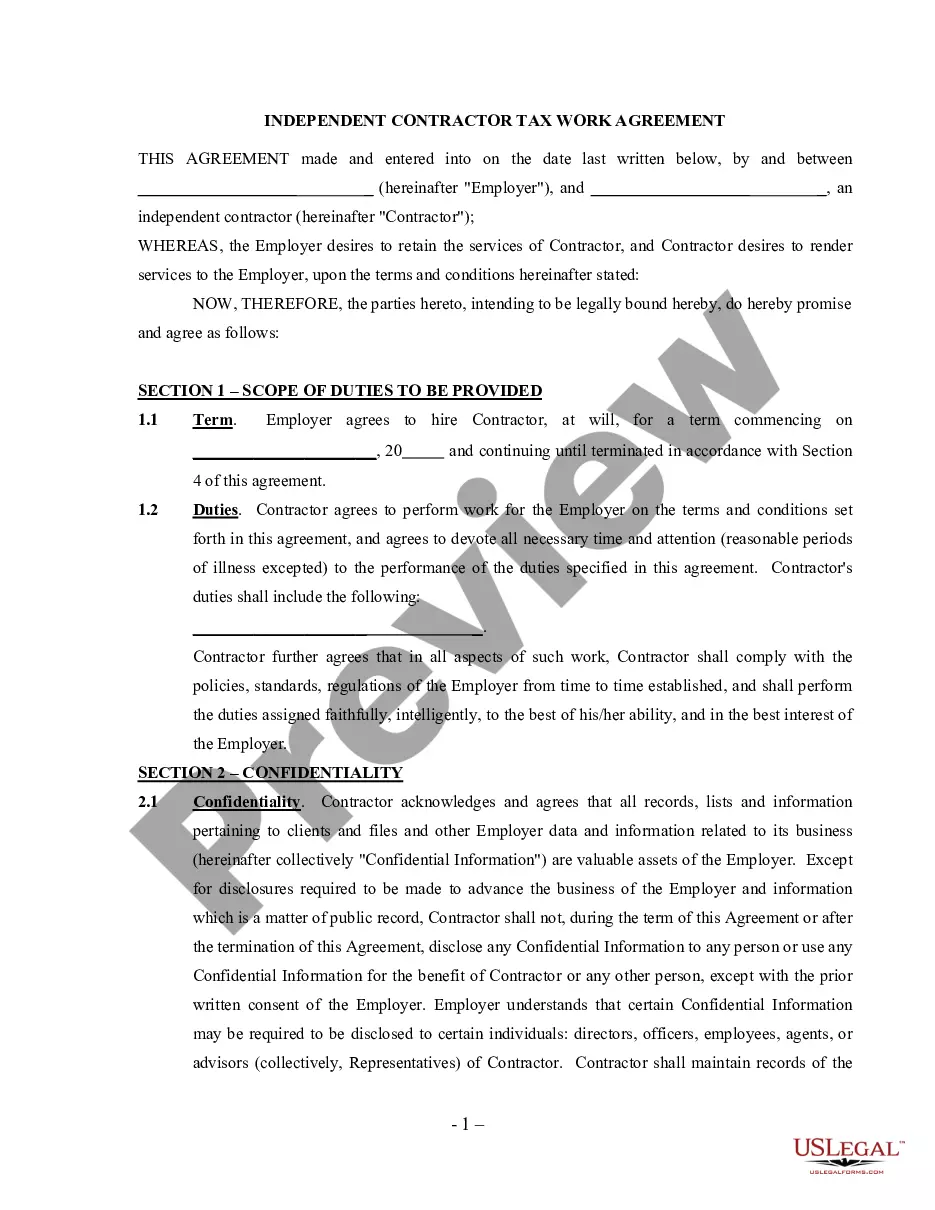
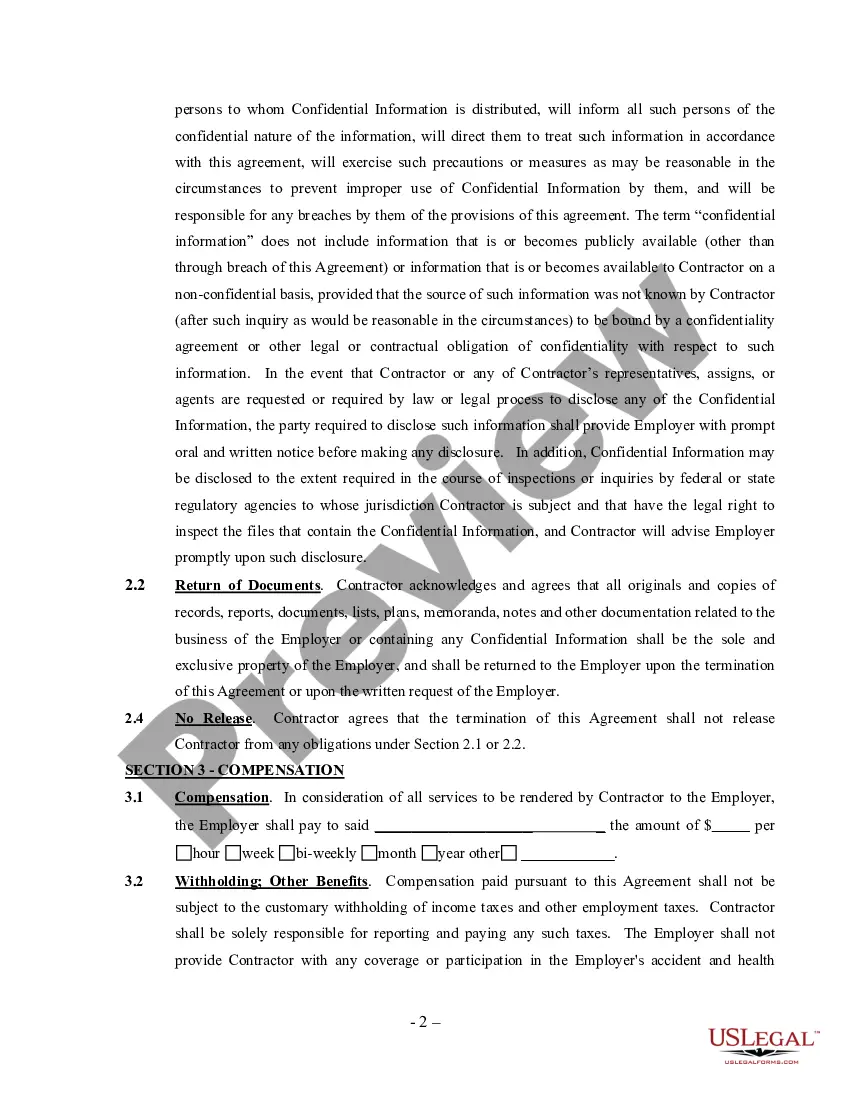
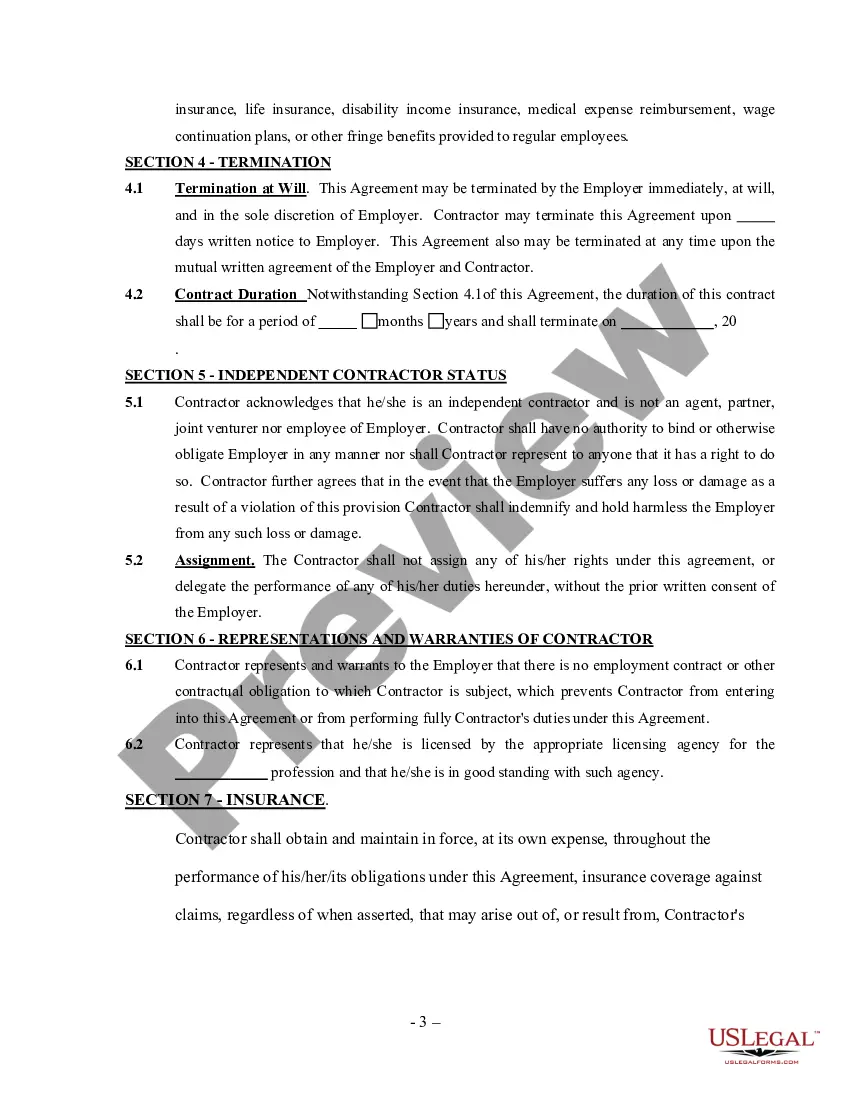
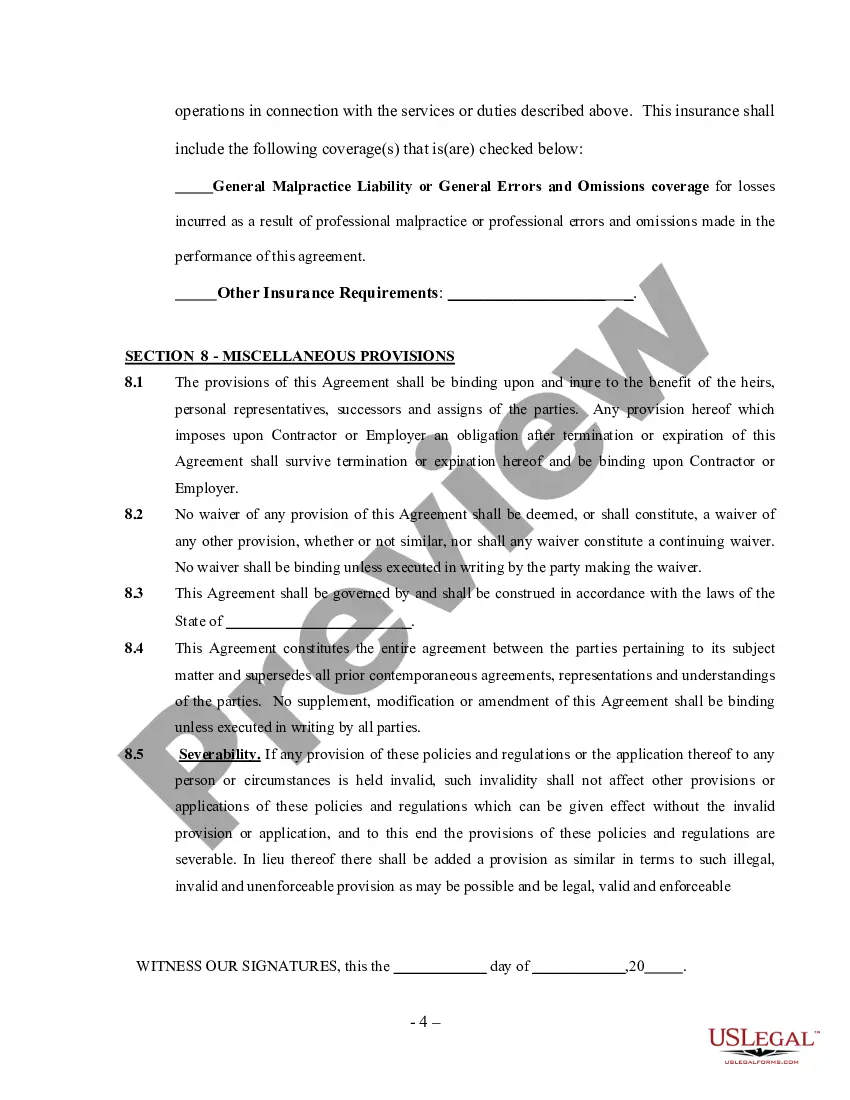
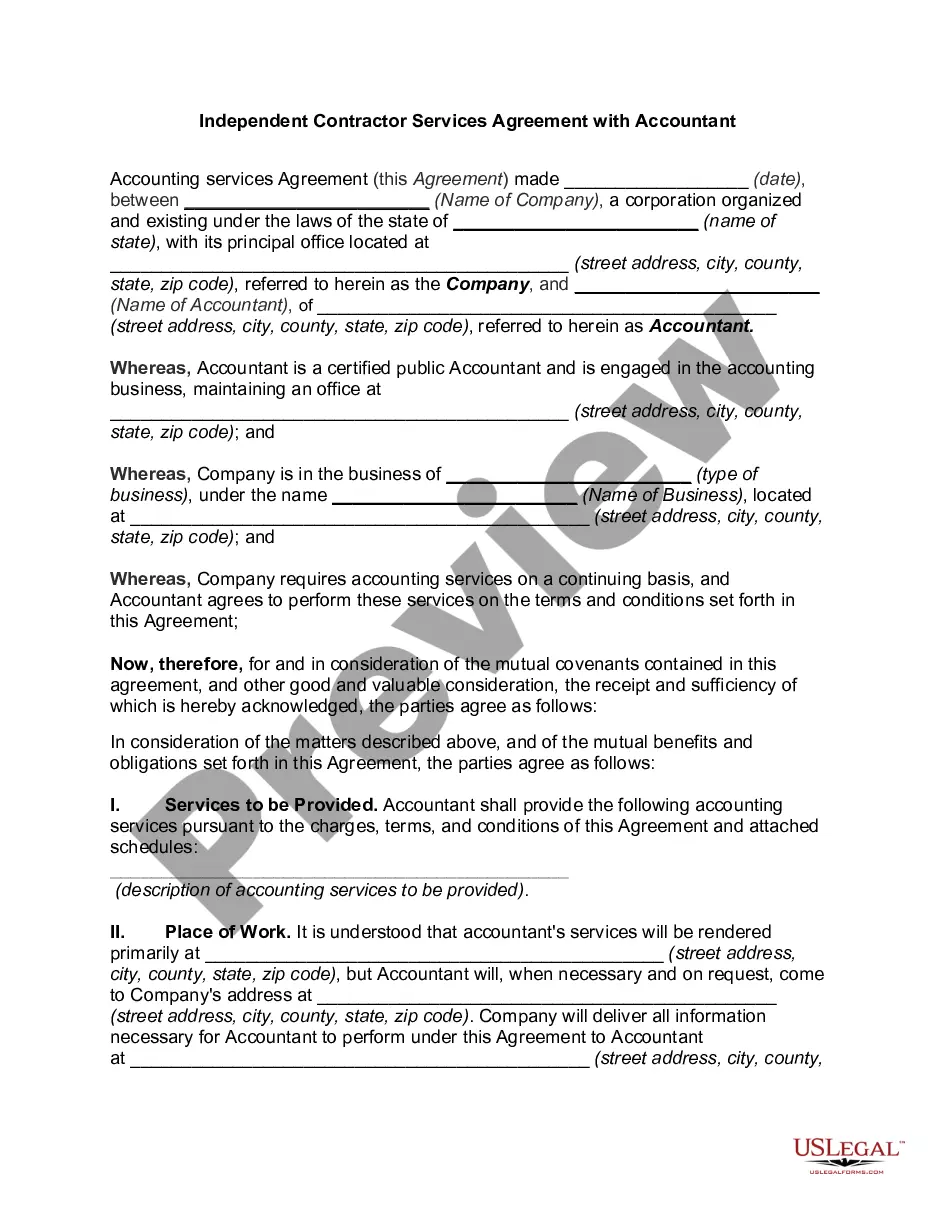
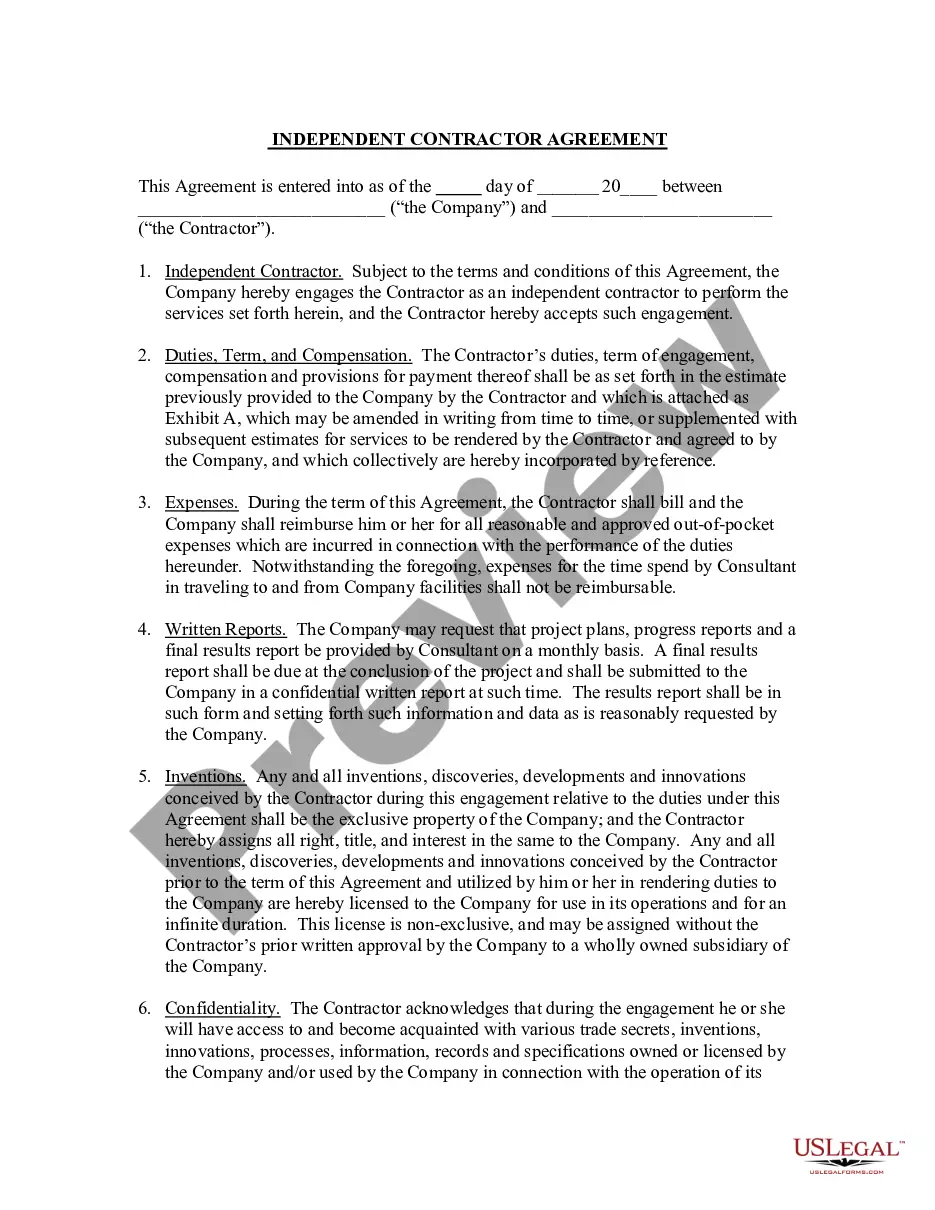
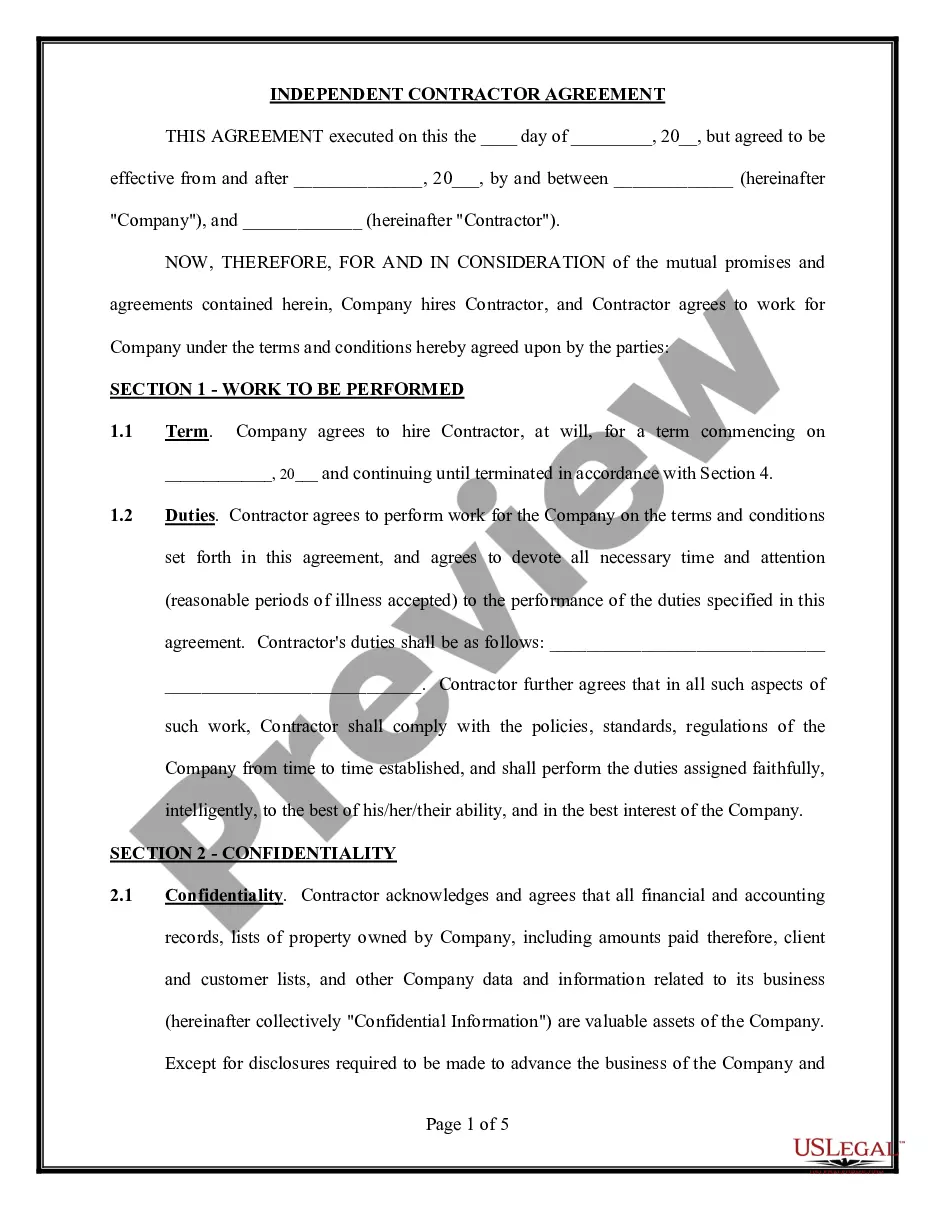
Employer contracts with an independent contractor to provide tax work services as specified and agreed upon in the contract. Contract includes a confidentiality clause.
Ohio Tax Work Agreement - Self-Employed Independent Contractor
State:
Multi-State
Control #:
US-INDC-128
Format:
Word;
Rich Text
Instant download
Description
Free preview

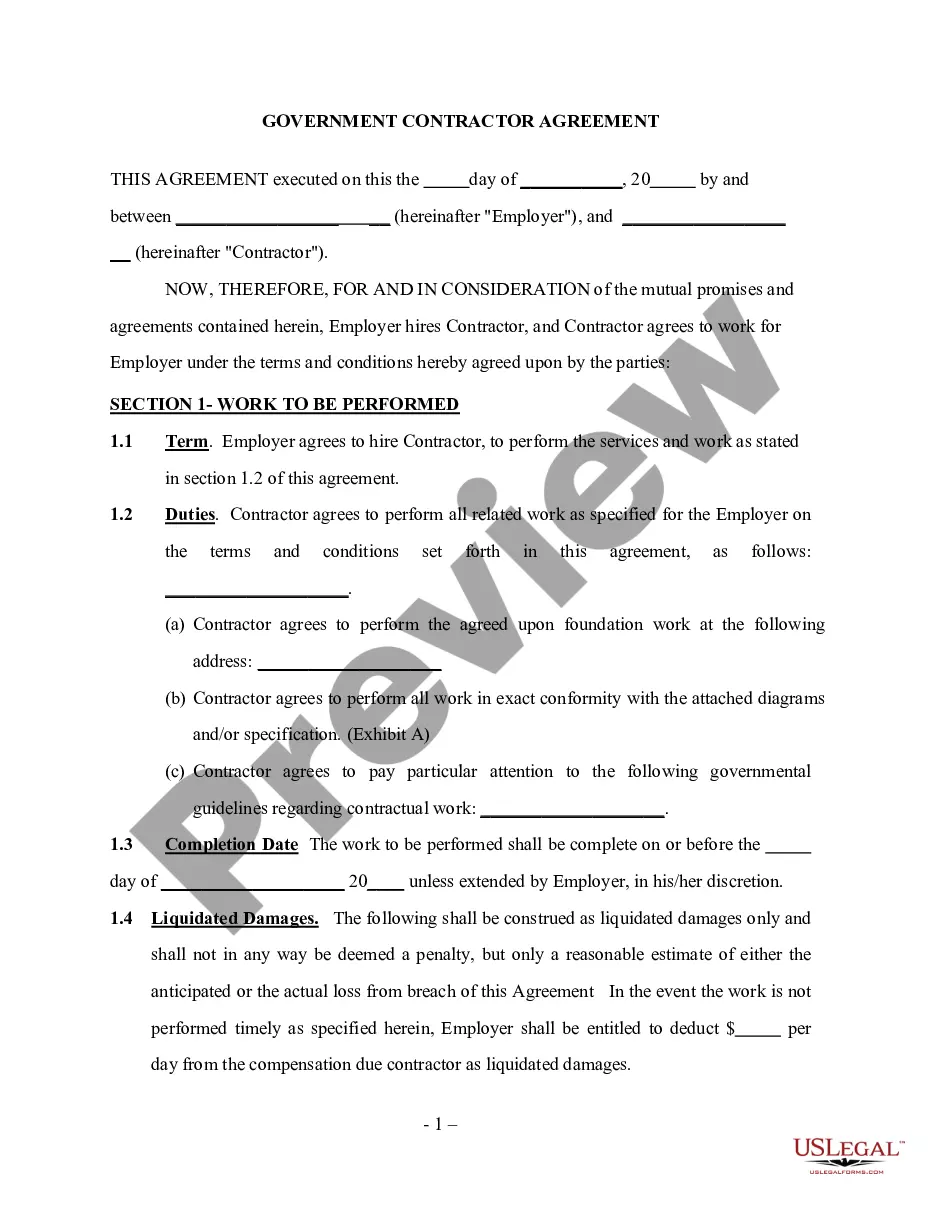
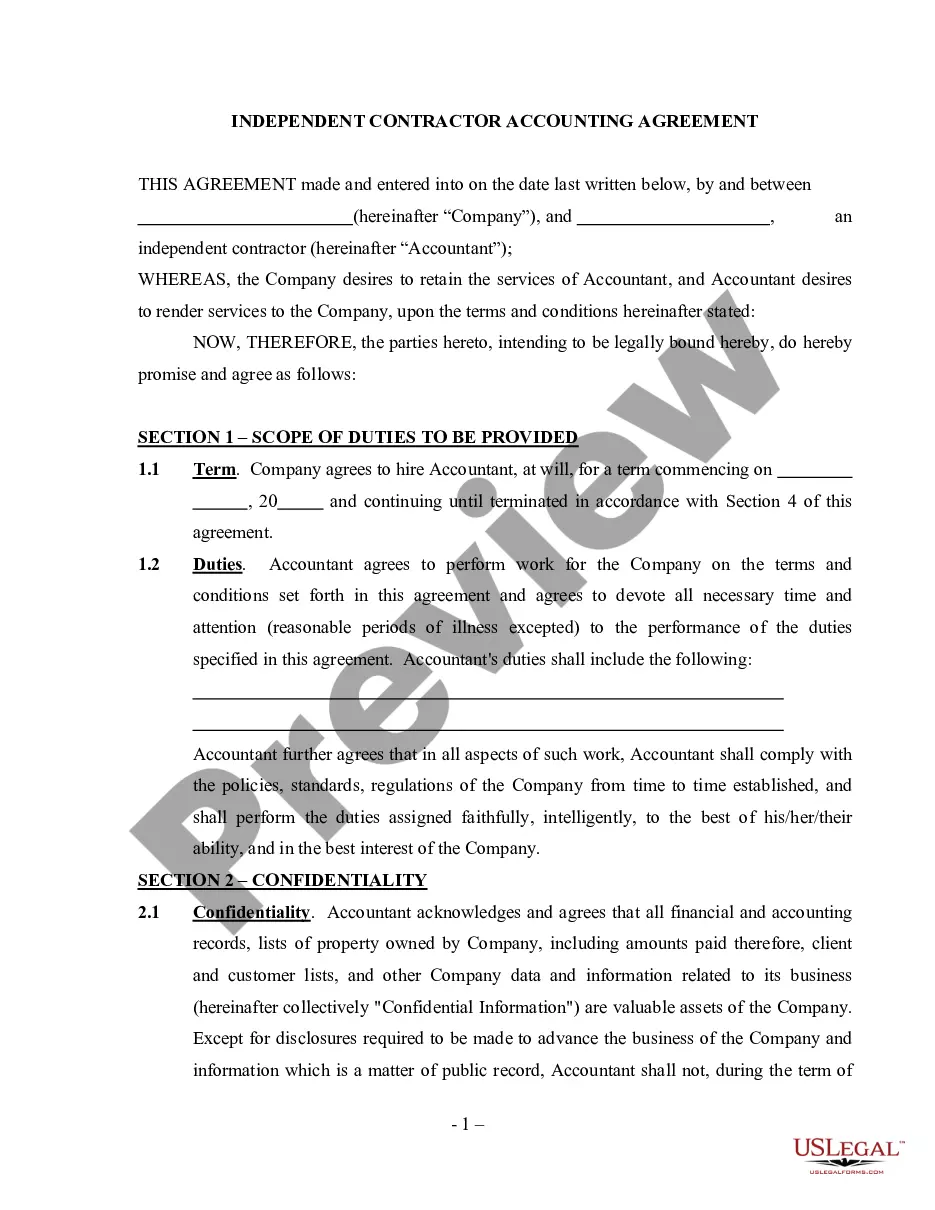

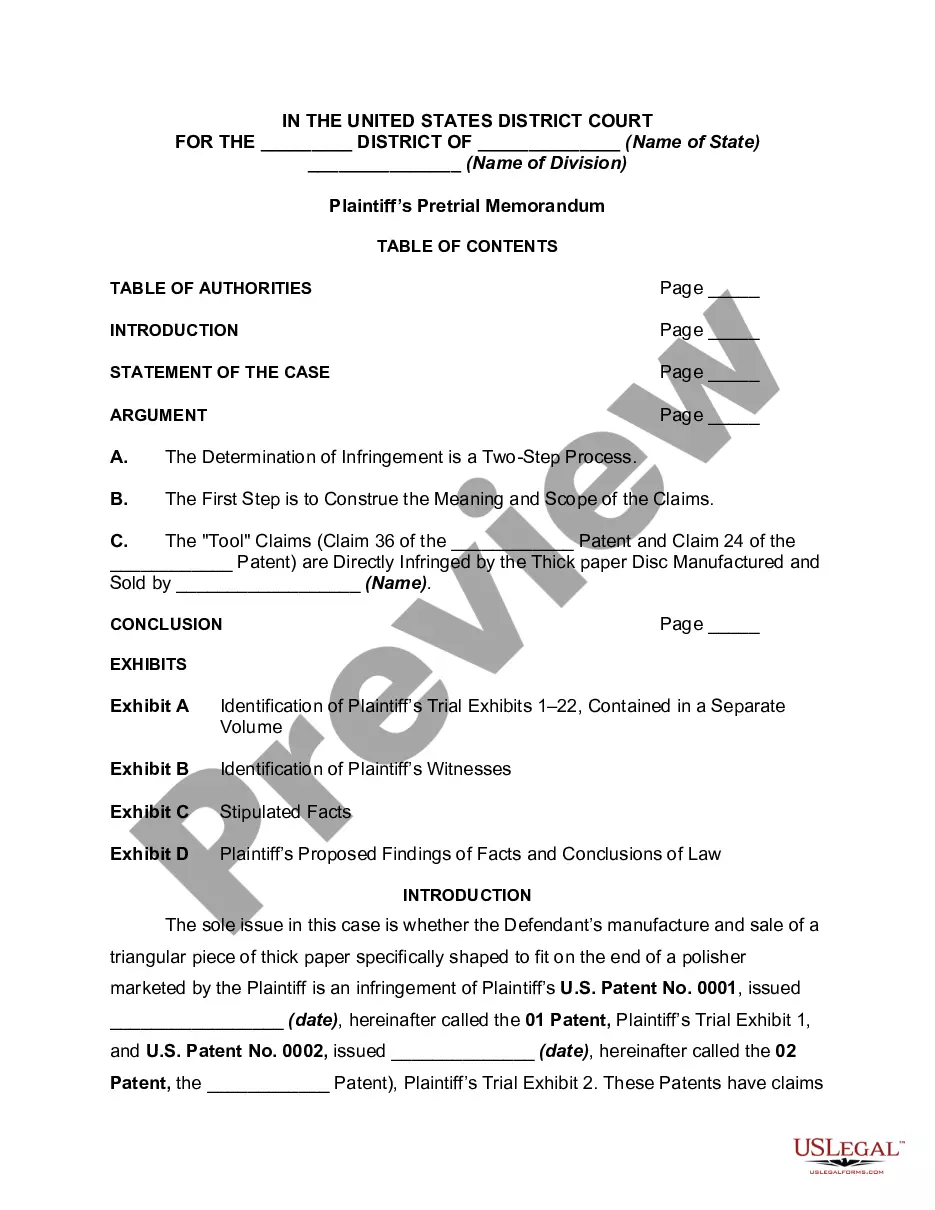
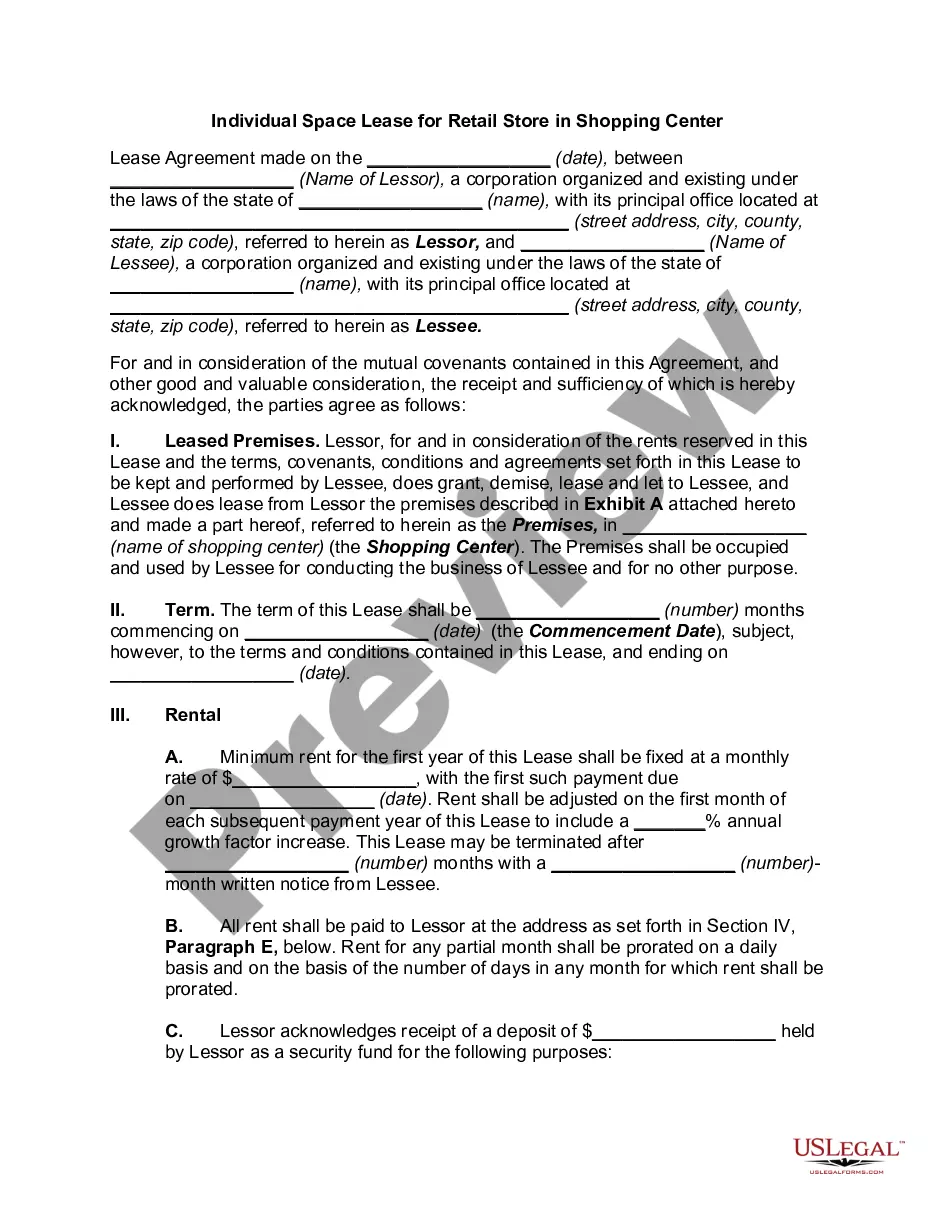

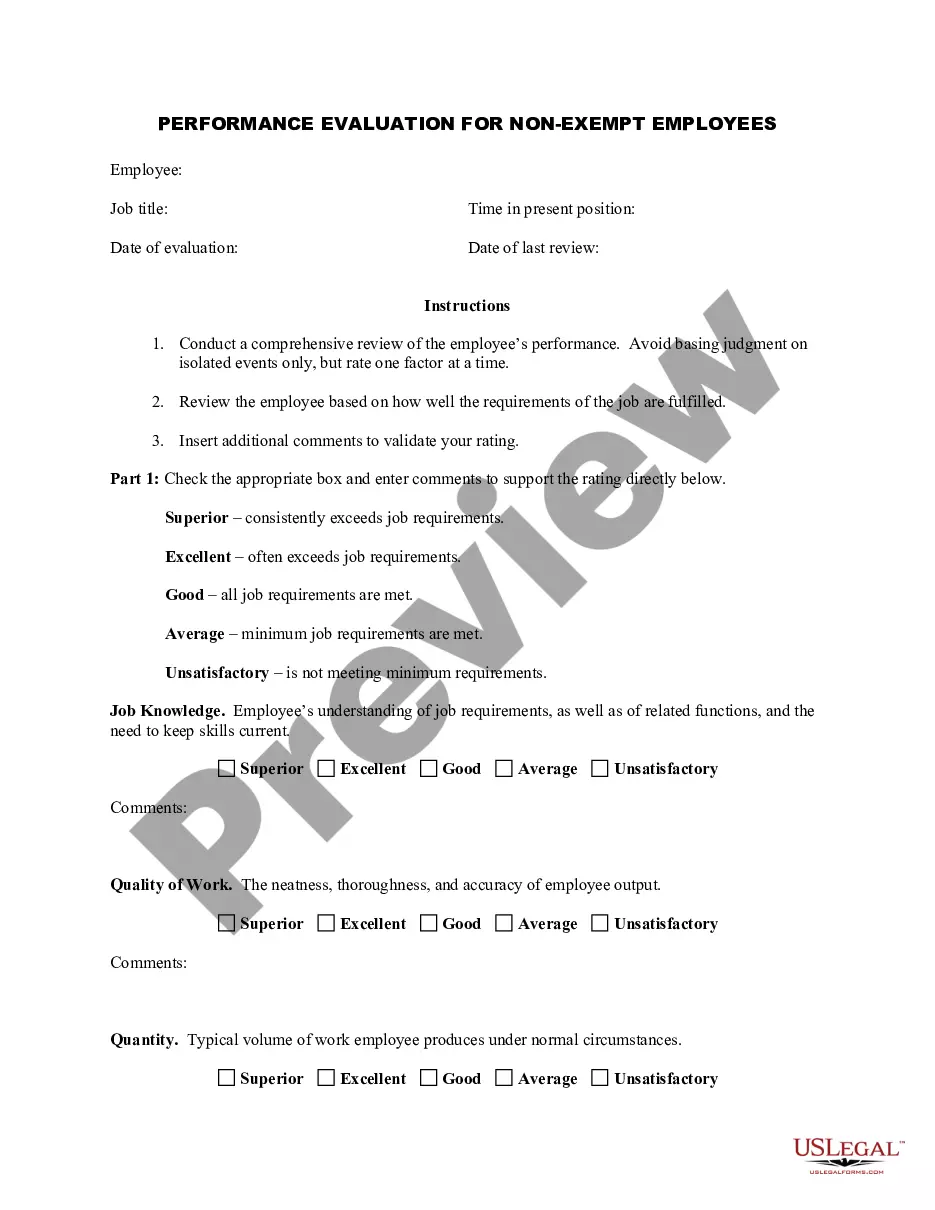

How to fill out Tax Work Agreement - Self-Employed Independent Contractor?
Locating the appropriate legal document template can be a challenge. Certainly, there are numerous designs available online, but how can you acquire the legal document you require? Utilize the US Legal Forms website. The platform offers thousands of designs, such as the Ohio Tax Work Agreement - Self-Employed Independent Contractor, suitable for business and personal purposes. All documents are reviewed by professionals and meet federal and state regulations.
If you are already registered, sign in to your account and then click the Download button to retrieve the Ohio Tax Work Agreement - Self-Employed Independent Contractor. Use your account to browse the legal documents you have previously purchased. Navigate to the My documents section of your account to obtain an additional copy of the document you need.
For new users of US Legal Forms, here are some straightforward steps you can follow: First, ensure you have chosen the correct form for your city/region. You can examine the document using the Review option and read the document details to confirm it is the correct one for you. If the form does not meet your needs, utilize the Search field to find the appropriate document. Once you are confident that the document is correct, proceed by clicking the Buy now button to purchase the form. Choose the pricing plan you require and enter the necessary information. Create your account and pay for the order using your PayPal account or credit card. Select the file format and download the legal document template to your device. Complete, modify, print, and sign the received Ohio Tax Work Agreement - Self-Employed Independent Contractor.
By following these guidelines, you can easily navigate the US Legal Forms platform and obtain the legal documents you require.
- US Legal Forms is the largest collection of legal documents where you can find a variety of document designs.
- Utilize the service to download properly crafted documents that adhere to state requirements.
- Ensure the form meets your specific needs before proceeding.
- Review the document details thoroughly.
- Select the appropriate pricing plan for your needs.
- Download your legal document template in the desired file format.
Form popularity
FAQ
Providing proof of employment as an independent contractor can be done through various documents such as contracts, project completion letters, and payment receipts. It’s crucial to have a well-documented history of your work engagements. This not only helps you in daily business dealings but also keeps you compliant with the terms outlined in the Ohio Tax Work Agreement for self-employed independent contractors.
To show proof of employment as an independent contractor, you can submit contracts with clients, invoices, and proof of payment. These documents serve to confirm your active engagement in work as a self-employed individual. They are beneficial, especially when dealing with financial institutions or during tax filing under the Ohio Tax Work Agreement for self-employed independent contractors.
To demonstrate that you are self-employed, you can present your business registration documents, your tax returns, and your 1099 forms. You might also consider maintaining detailed records of your transactions and client interactions. These documents collectively provide a robust proof of your self-employment status under the Ohio Tax Work Agreement for self-employed independent contractors.
To show proof of income as a 1099 contractor, you can provide tax documents like your 1099 forms, along with bank statements that reflect your earnings. Keep copies of invoices and payment receipts to substantiate your claims. Having a well-organized portfolio of these documents can be very helpful, especially when fulfilling requirements under the Ohio Tax Work Agreement for self-employed independent contractors.
In Ohio, independent contractors typically do not need to carry workers' compensation insurance. However, if your business employs others or if you are classified under certain categories, you may be required to obtain coverage. It's best to review your situation in detail to determine your needs. Platforms like USLegalForms can assist you in understanding your responsibilities regarding the Ohio Tax Work Agreement for self-employed independent contractors.
Yes, independent contractors are indeed subject to self-employment tax. This tax accounts for Social Security and Medicare contributions, which traditional employees have deducted from their paychecks. As a self-employed independent contractor in Ohio, you need to include this when calculating your tax obligations. Utilizing resources like USLegalForms can help clarify your responsibilities under the Ohio Tax Work Agreement.
A good rule of thumb is to set aside 25% to 30% of your income for taxes when you receive 1099 forms in Ohio. This amount considers both federal and state taxes, along with self-employment tax. Understanding the guidelines of the Ohio Tax Work Agreement - Self-Employed Independent Contractor allows you to plan your finances effectively, ensuring you are prepared for tax season.
Self-employment tax primarily covers Social Security and Medicare taxes, and it currently stands at 15.3%. This rate consists of 12.4% for Social Security and 2.9% for Medicare. For those working under an Ohio Tax Work Agreement - Self-Employed Independent Contractor, it's essential to remember that this tax applies to net earnings above a certain threshold.
To file taxes for independent contract work, start by gathering all your income documents, including 1099 forms. You will then report this income on Schedule C of your federal tax return. Engaging in a well-structured Ohio Tax Work Agreement - Self-Employed Independent Contractor ensures you track your income and expenses meticulously, making tax filing more straightforward.
Many independent contractors make mistakes like underreporting income or failing to take advantage of deductions. Another common error involves not keeping thorough records of all expenses, which can lead to inaccuracies. Knowing how to navigate the Ohio Tax Work Agreement - Self-Employed Independent Contractor can help you avoid these issues and file correctly.