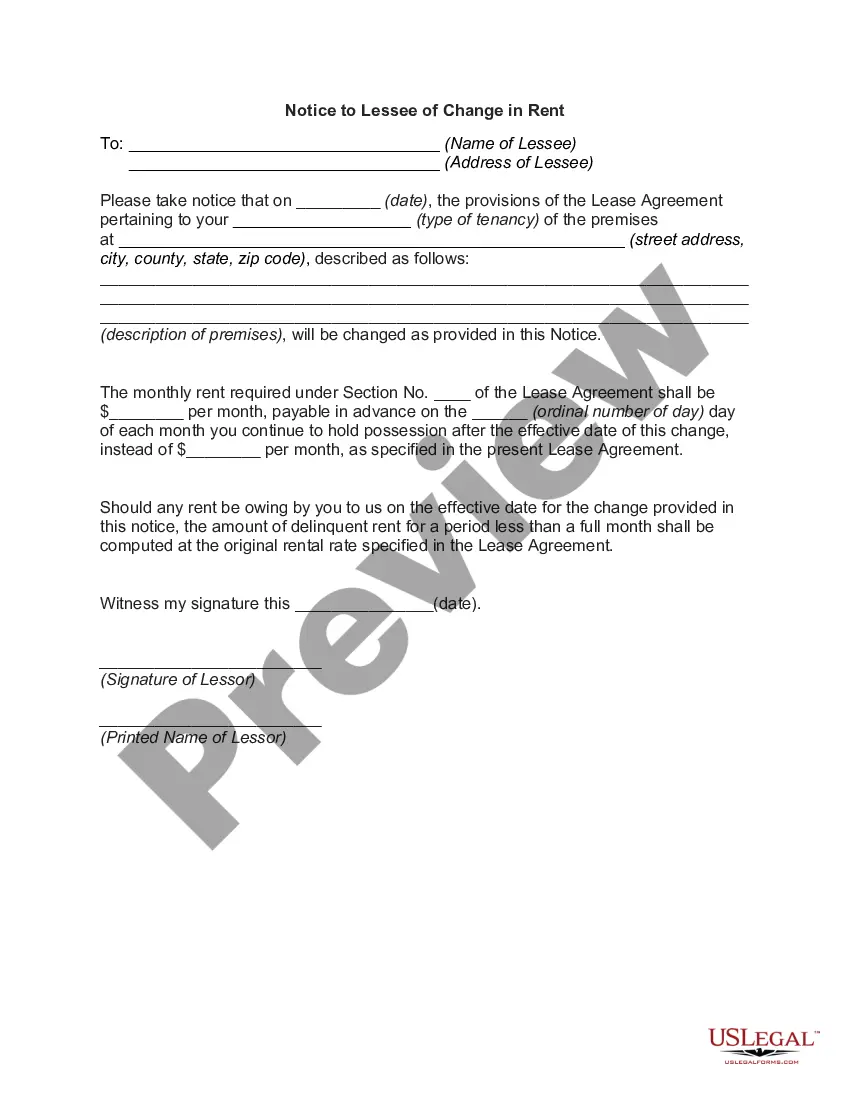
Ohio Notice to Lessee of Change in Rent
Description

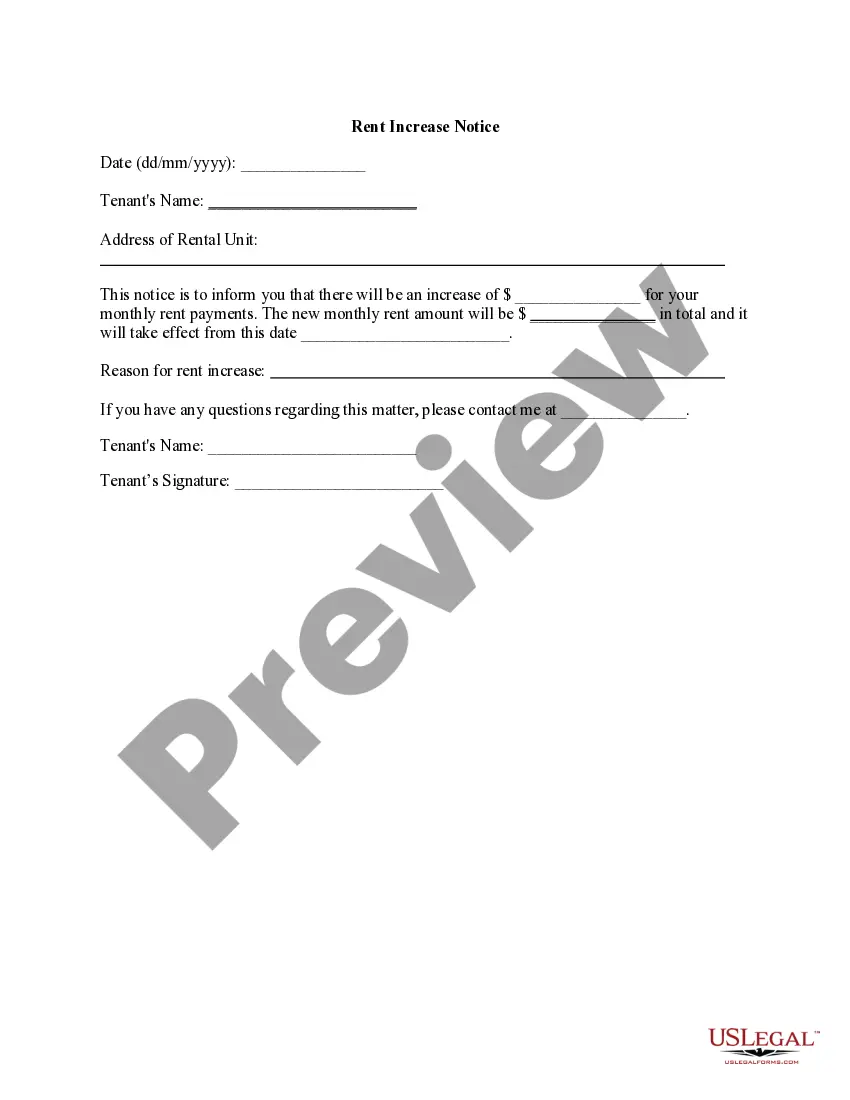
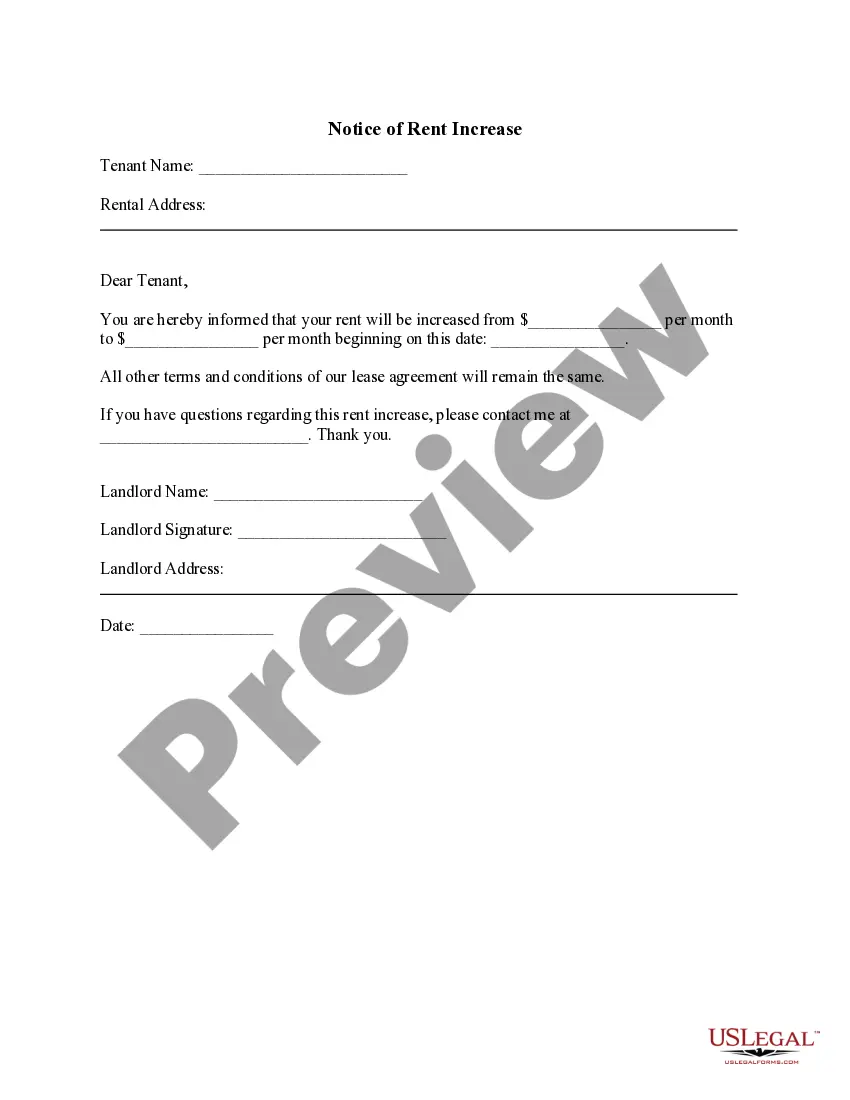


How to fill out Notice To Lessee Of Change In Rent?
Locating the appropriate legal document template can be a challenge.
Certainly, there are numerous templates accessible on the internet, but how can you discover the legal type you require.
Leverage the US Legal Forms website. The service provides thousands of templates, including the Ohio Notice to Lessee of Change in Rent, which you can utilize for business and personal purposes.
If you are a new user of US Legal Forms, here are simple steps to follow: First, ensure you have selected the right type for your city/region. You can preview the form using the Review button and read the form description to verify it is suitable for you. If the type does not fit your requirements, use the Search field to find the correct form. Once you are confident that the form is appropriate, click the Get now button to obtain the form. Choose the pricing plan you need and enter the required information. Create your account and complete the purchase using your PayPal account or credit card. Select the file format and download the legal document template to your device. Complete, modify, print, and sign the received Ohio Notice to Lessee of Change in Rent. US Legal Forms is the largest repository of legal forms where you can find various document templates. Use the service to obtain professionally-crafted paperwork that adheres to state regulations.
- All templates are reviewed by specialists.
- Comply with federal and state regulations.
- If you are already registered, Log In to your account.
- Click on the Download button to obtain the Ohio Notice to Lessee of Change in Rent.
- Use your account to view the legal forms you have previously acquired.
- Visit the My documents tab of your account to download another copy of the document you need.
Form popularity
FAQ
Yes, in Ohio, tenants can terminate a rental agreement with a 60-day written notice, provided this notice period aligns with the lease terms. It's crucial to review the lease for specific stipulations regarding notice periods. Utilizing an Ohio Notice to Lessee of Change in Rent ensures clear communication and protects both parties during the termination process.
With regards to notifying my tenants of the rent increase, I send them an email or letter two months before their contract ends, asking if they wish to stay for another year, whilst letting them know what the new rent will be. I also send out their new contract with the increased rent added.
A tenancy agreement can normally only be changed if both you and your landlord agree. If you both agree, the change should be recorded in writing, either by drawing up a new written document setting out the terms of the tenancy or by amending the existing written tenancy agreement.
If your landlord wants to end your periodic tenancy, they usually have to give you 90 days' notice. In some cases, your landlord only has to give you 42 days' notice. They will need to tell you the reason why they're giving you less notice though.
Landlords CANNOT:Shut off utilities or other services, change locks, remove doors or windows, or take tenants possessions in order to try to force them to move, even if the tenant is behind on rent payments or their lease has expired.
Generally, landlords must not accept rent or agree to new terms beyond the original lease term if they do not wish to renew the lease. Doing so could be interpreted by a court as a default extension of the lease, at least on a month-to-month basis.
Can my landlord raise the rent during the coronavirus? It depends. If you and your landlord signed a lease, your landlord cannot raise your rent until the lease ends, unless you agreed otherwise in the lease.
Notice of Entry Laws in OhioIn any case other than an emergency, the landlord must notify the tenant at least 24 hours before entry, and may only enter the unit at a reasonable time. Although Ohio landlord-tenant law requires at least 24-hour notice, most landlords in Ohio provide tenants 48 hours notice before entry.
There is no governmental control over rent in Ohio, except in subsidized housing programs. In the case of a month to month agreement, landlords must give a full thirty days notice before raising rent. In the case of a lease, landlords may not raise rents during the term of the lease agreement.
(A) Except as provided in division (C) of this section, the landlord or the tenant may terminate or fail to renew a week-to-week tenancy by notice given the other at least seven days prior to the termination date specified in the notice.