Ohio Self-Defense
Description
Get your form ready online
Our built-in tools help you complete, sign, share, and store your documents in one place.
Make edits, fill in missing information, and update formatting in US Legal Forms—just like you would in MS Word.
Download a copy, print it, send it by email, or mail it via USPS—whatever works best for your next step.
Sign and collect signatures with our SignNow integration. Send to multiple recipients, set reminders, and more. Go Premium to unlock E-Sign.
If this form requires notarization, complete it online through a secure video call—no need to meet a notary in person or wait for an appointment.
We protect your documents and personal data by following strict security and privacy standards.

Make edits, fill in missing information, and update formatting in US Legal Forms—just like you would in MS Word.

Download a copy, print it, send it by email, or mail it via USPS—whatever works best for your next step.

Sign and collect signatures with our SignNow integration. Send to multiple recipients, set reminders, and more. Go Premium to unlock E-Sign.

If this form requires notarization, complete it online through a secure video call—no need to meet a notary in person or wait for an appointment.

We protect your documents and personal data by following strict security and privacy standards.
Looking for another form?





How to fill out Self-Defense?
Are you currently in a situation where you require documents for either business or personal purposes almost every day.
There are numerous legal document templates available online, but locating reliable versions can be challenging.
US Legal Forms provides thousands of form templates, such as the Ohio Self-Defense, which are designed to comply with federal and state regulations.
Utilize US Legal Forms, the most extensive collection of legal forms, to save time and avoid mistakes.
The service offers professionally drafted legal document templates that you can use for various purposes. Create an account on US Legal Forms and start making your life easier.
- If you are already familiar with the US Legal Forms website and possess an account, simply Log In.
- Then, you can download the Ohio Self-Defense template.
- If you do not have an account and wish to start using US Legal Forms, follow these steps.
- Find the form you need and ensure it is for the correct state/region.
- Use the Review feature to examine the form.
- Read the description to confirm that you have selected the correct form.
- If the form isn’t what you are looking for, utilize the Search field to find the form that fits your needs and requirements.
- Once you find the right form, click on Get now.
- Choose the pricing plan you prefer, fill in the required information to create your account, and complete the payment using your PayPal or credit card.
- Select a convenient document format and download your copy.
- Access all the document templates you have purchased in the My documents menu. You can download another copy of Ohio Self-Defense anytime, if needed. Just click the desired form to download or print the document template.
Form popularity
FAQ
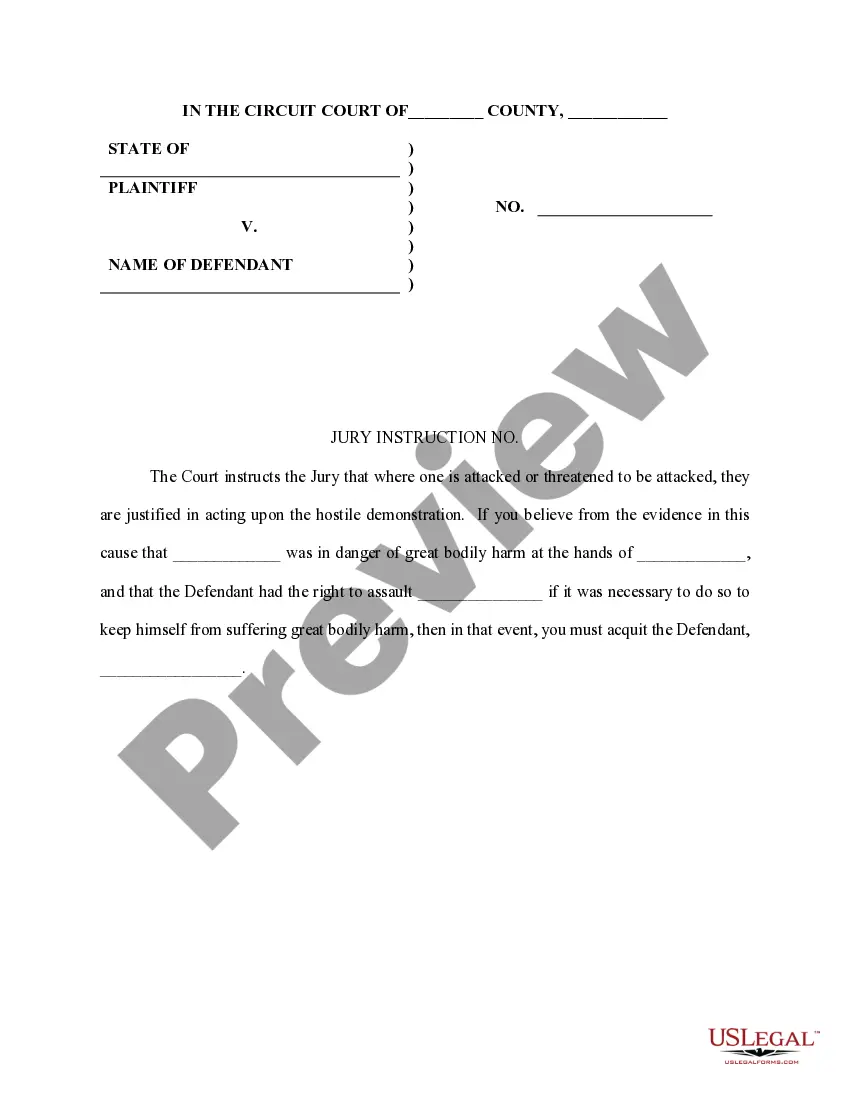
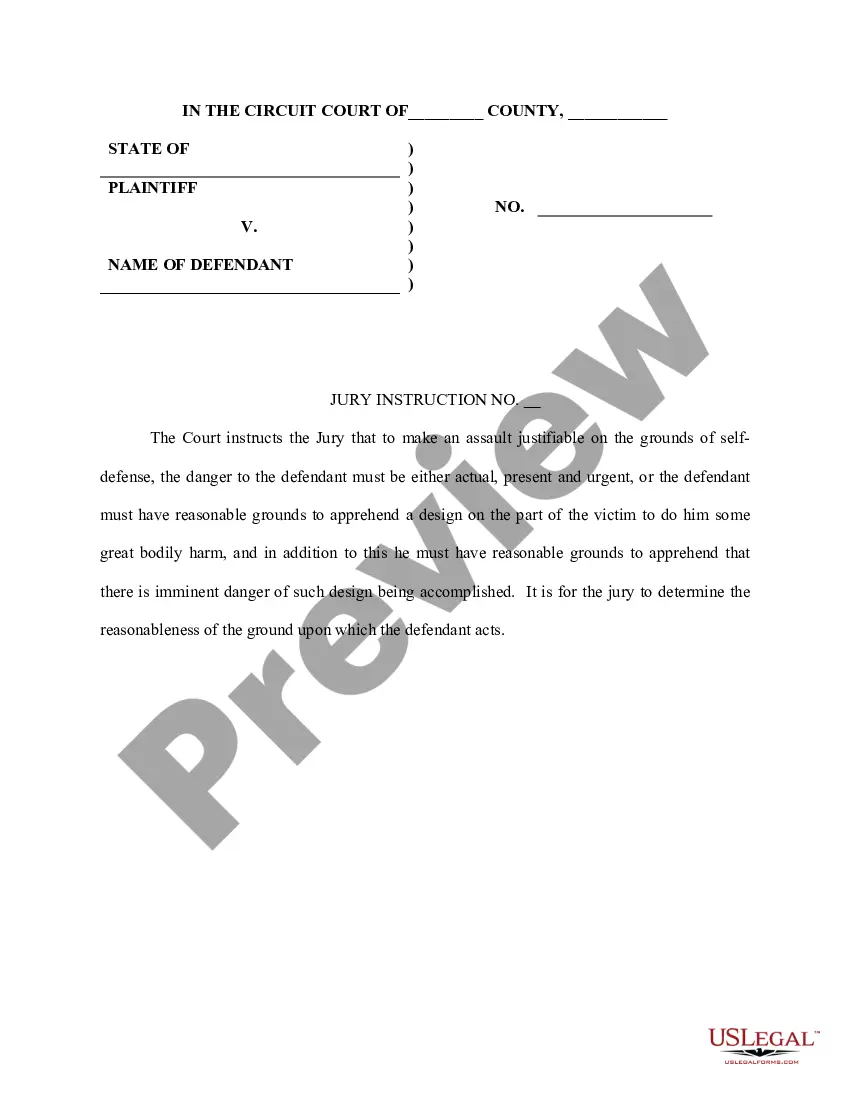
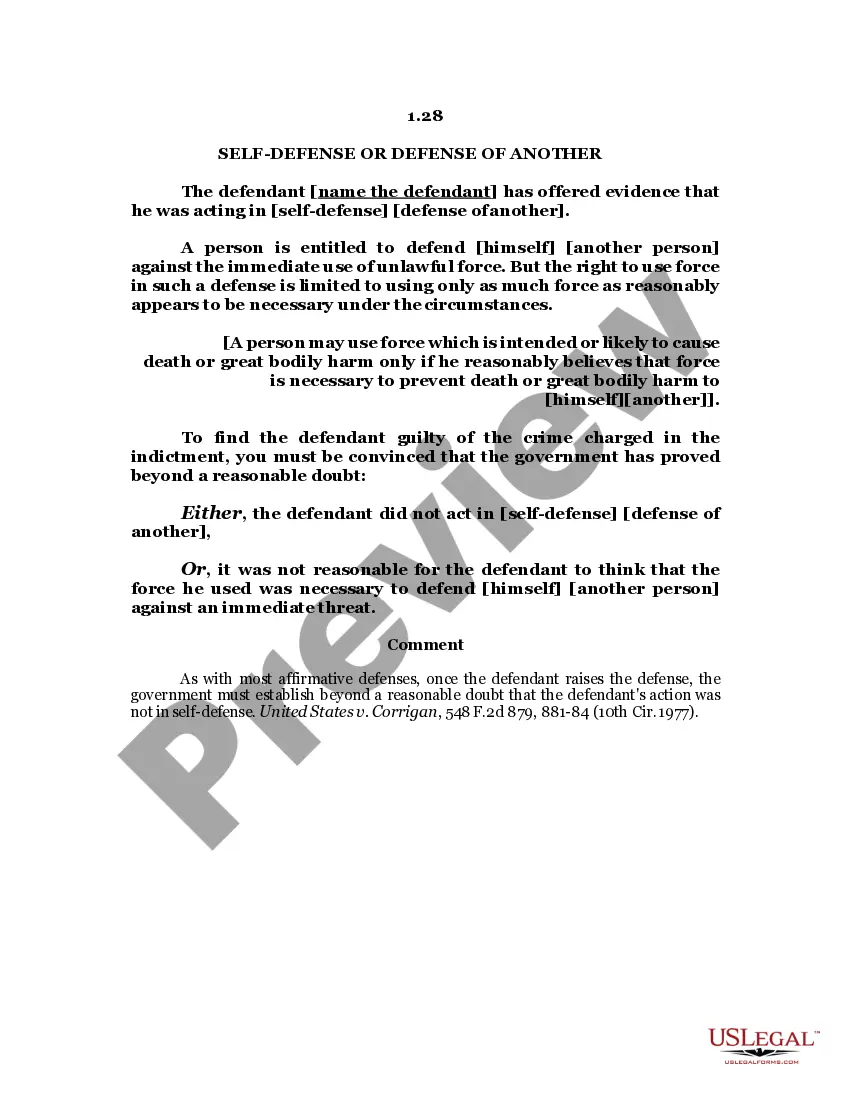
In Ohio, protecting yourself from what you perceive as an immediate threat is self-defense. So too is any action you take to protect other people from a threat to their safety. You also have the right to defend your personal property even if you aren't at risk of bodily harm.
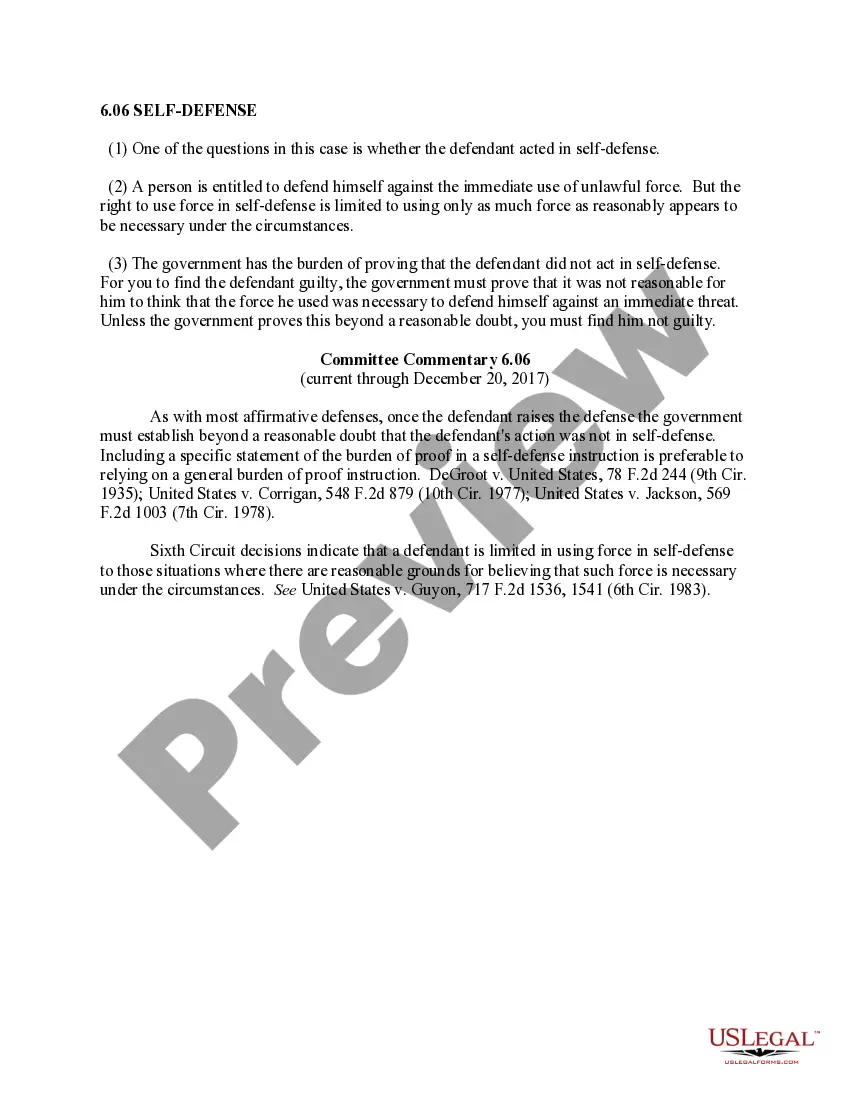
The criminal burden of proof for the prosecution is beyond a reasonable doubt. The criminal burden of proof for the defense is generally preponderance of evidence. States vary on whether they require the criminal defendant to meet both the burden of production and persuasion or just the burden of production.
In a criminal self-defense case, the State of California has the burden of proving the defendant guilty beyond a reasonable doubt. While in most cases the defendant is not required to do anything to prove his or her innocence, affirmative defenses shift the burden of proof to the defendant.
In a criminal self-defense case, the State of California has the burden of proving the defendant guilty beyond a reasonable doubt. While in most cases the defendant is not required to do anything to prove his or her innocence, affirmative defenses shift the burden of proof to the defendant.
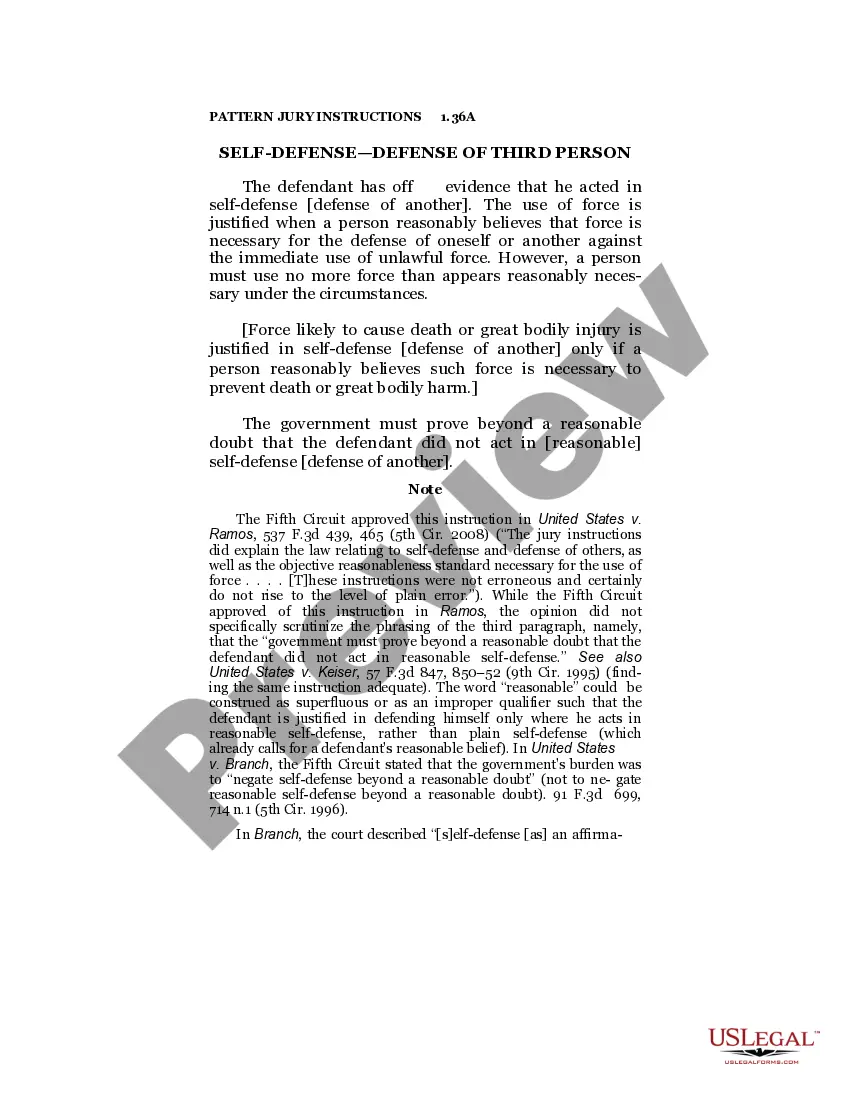
A person is justified in using or threatening to use deadly force if he or she reasonably believes that using or threatening to use such force is necessary to prevent imminent death or great bodily harm to himself or herself or another or to prevent the imminent commission of a forcible felony.
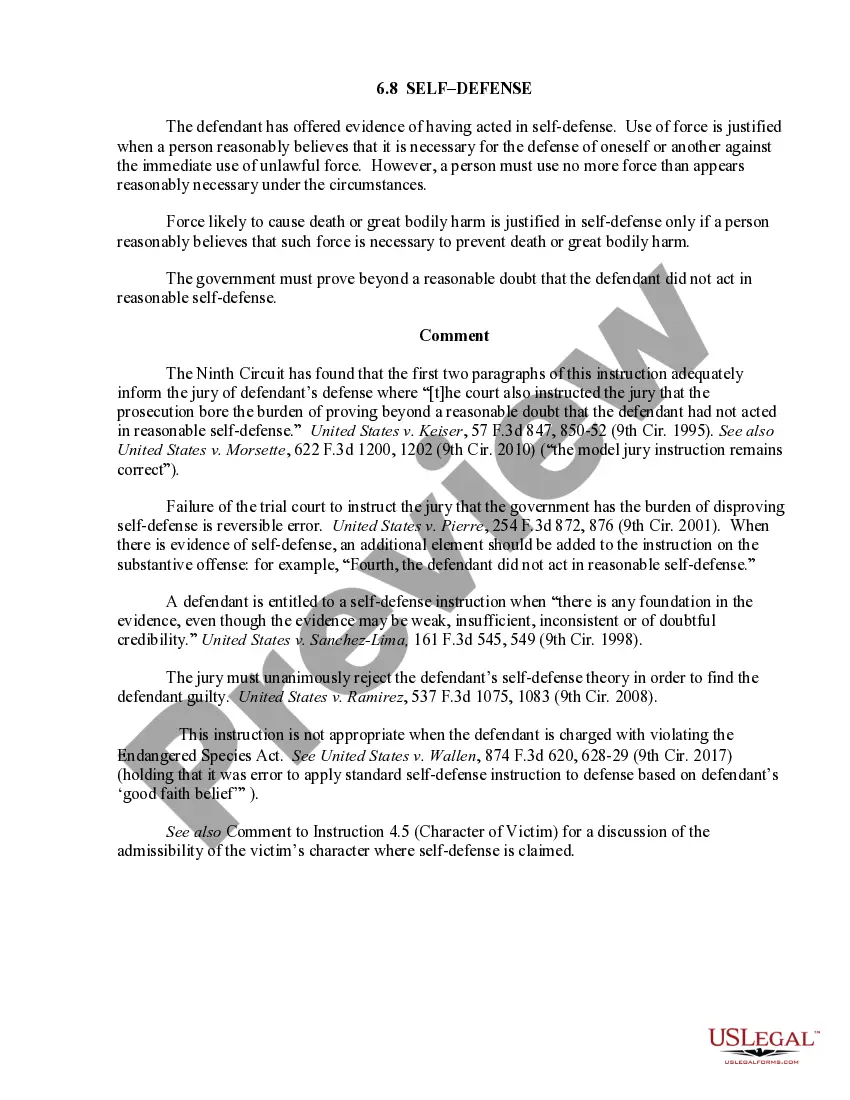
The federal standard is that once a defendant meets the initial burden of producing sufficient evidence for the judge to give a jury instruction on self-defense, the burden shifts to the government to disprove the defense beyond a reasonable doubt.
Yes, Florida has a stand your ground law, relieving citizens of the duty to retreat in the face of imminent violence or the perpetuation of a violent crime.
There is no rule against using basic physical force to prevent the theft and/or damage to your property, but you cannot use deadly force against the person.