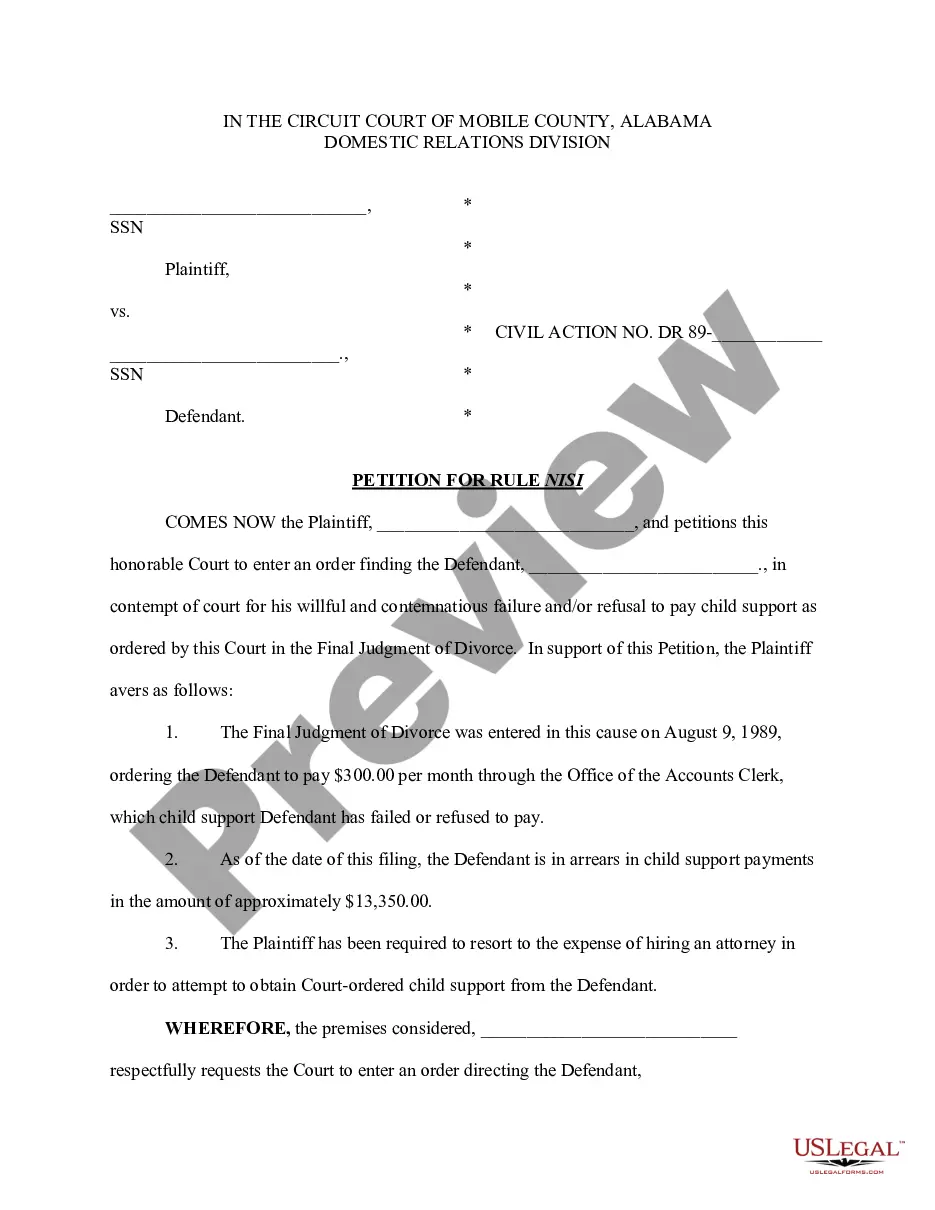
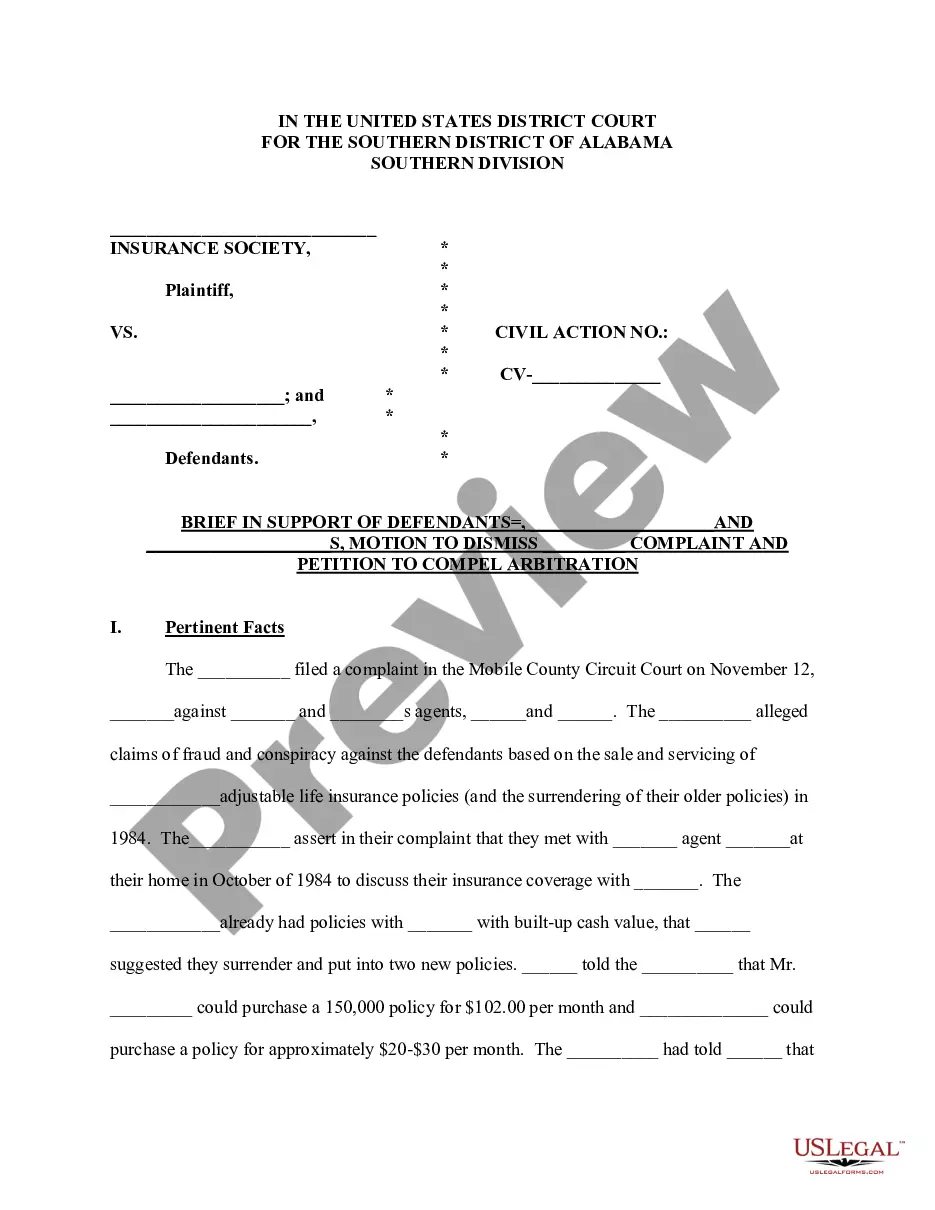
Ohio Affidavit of Lien
What this document covers
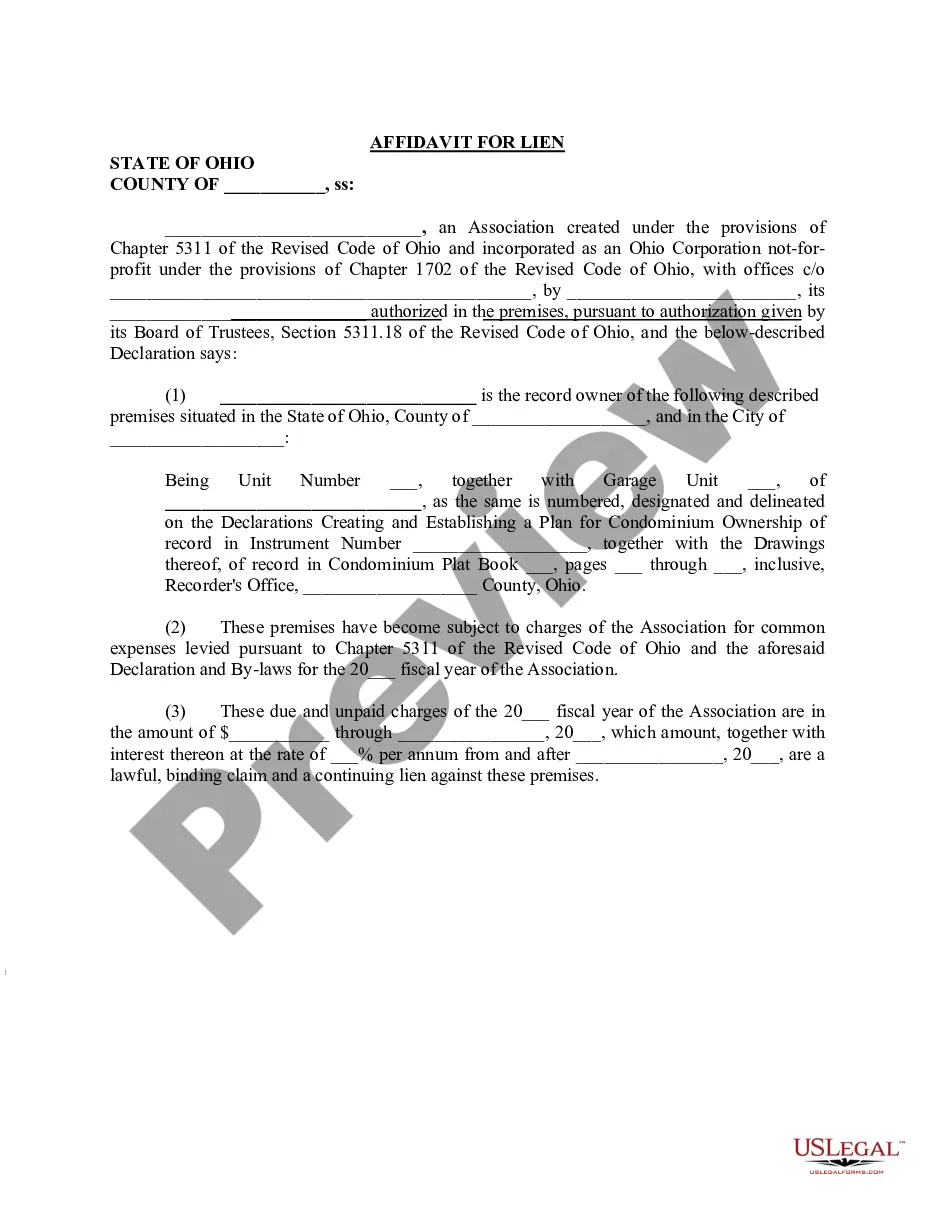
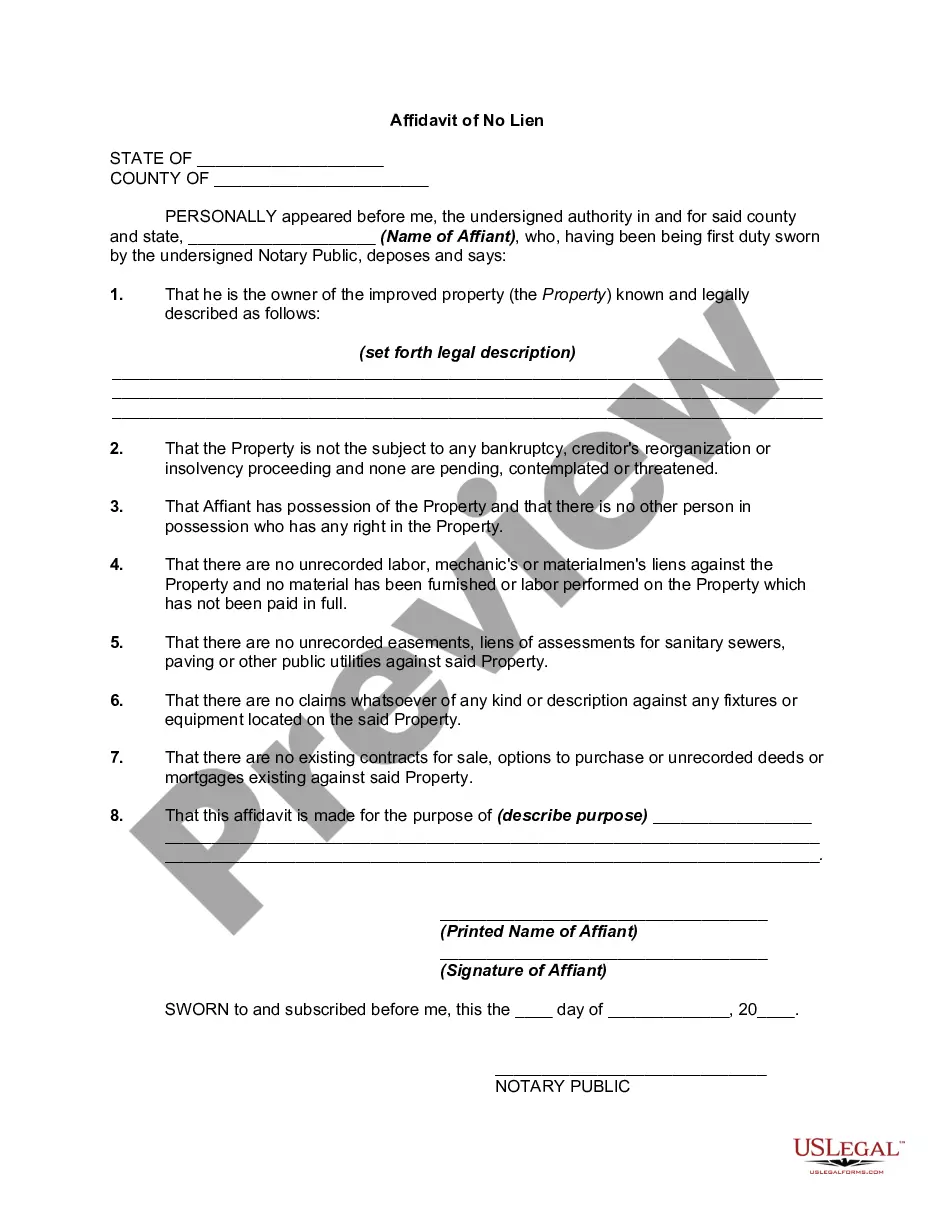
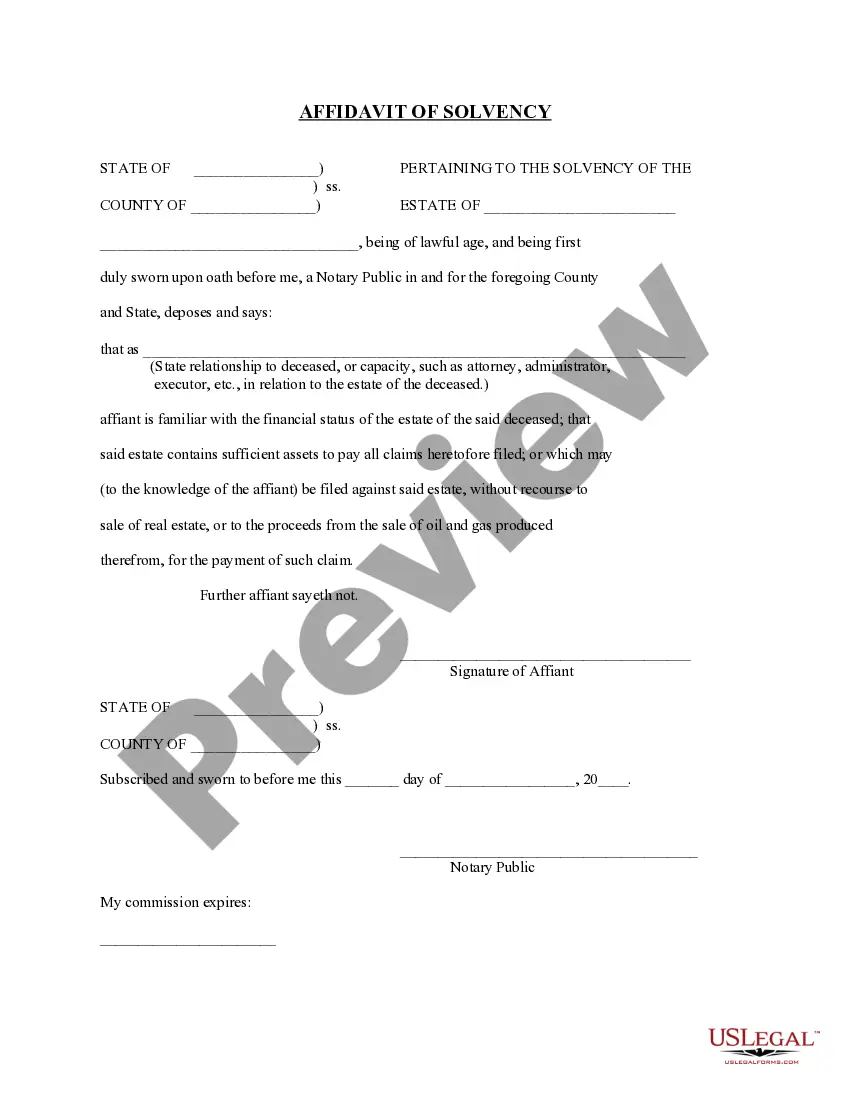
The Affidavit of Lien is a sworn statement asserting a claim against a property due to unpaid charges, often related to common expenses for condominiums or homeowner associations. It serves to perfect the lien and establish the legal rights of the party making the claim. This document is crucial for ensuring that your financial interest in the property is protected, distinguishing it from other forms like a standard lien, which may not include sworn statements or details specific to associations.
Form components explained
- State and county of the affidavit
- Identification of the affiant (the party making the claim)
- Details of the property, including unit number and address
- Amount of unpaid charges and interest being claimed
- Statement of the continuing lien against the property
- Signature and notary acknowledgment

When this form is needed
This form is used when an association needs to assert a claim against a property owner for unpaid common expenses. It is essential to complete this affidavit to legally establish the lien, especially when the owner fails to pay dues that support shared community services, such as maintenance and repairs.
Who should use this form
This form is intended for:
- Homeowner associations that need to file a lien against a property
- Condominium associations managing dues for shared amenities
- Property management companies acting on behalf of an association
- Affiants authorized by their associations to make legal claims
How to prepare this document
- Identify the state and county where the affidavit is being filed.
- Fill in the name of the affiant (the entity making the claim) and any required identification details.
- Specify the property details, including unit number and address.
- Document the amount of unpaid charges along with any applicable interest rates and dates.
- Have the affiant sign the document and have it notarized to confirm its validity.
Notarization guidance
Yes, this form must be notarized to be legally valid. This helps establish the authenticity of the signatures and the integrity of the statement made in the affidavit. US Legal Forms offers integrated online notarization services, which are available 24/7 through secure video calls, ensuring you can complete your affidavit conveniently and legally.
Get your form ready online
Our built-in tools help you complete, sign, share, and store your documents in one place.
Make edits, fill in missing information, and update formatting in US Legal Forms—just like you would in MS Word.
Download a copy, print it, send it by email, or mail it via USPS—whatever works best for your next step.
Sign and collect signatures with our SignNow integration. Send to multiple recipients, set reminders, and more. Go Premium to unlock E-Sign.
If this form requires notarization, complete it online through a secure video call—no need to meet a notary in person or wait for an appointment.
We protect your documents and personal data by following strict security and privacy standards.

Make edits, fill in missing information, and update formatting in US Legal Forms—just like you would in MS Word.

Download a copy, print it, send it by email, or mail it via USPS—whatever works best for your next step.

Sign and collect signatures with our SignNow integration. Send to multiple recipients, set reminders, and more. Go Premium to unlock E-Sign.

If this form requires notarization, complete it online through a secure video call—no need to meet a notary in person or wait for an appointment.

We protect your documents and personal data by following strict security and privacy standards.
Typical mistakes to avoid
- Failing to accurately specify the property details, which could lead to enforceability issues.
- Not including the correct amount of unpaid charges and related interest, which may invalidate the claim.
- Neglecting to secure notarization, as it is essential for legal standing.
- Using outdated forms that do not comply with current state laws.
Why use this form online
- Instant access to professionally drafted forms ensures legal compliance.
- Editable templates allow for customization to meet specific needs.
- Convenience of downloading forms from anywhere, eliminating the need for in-person visits.
- 24/7 availability offers flexibility to complete forms at your own pace.
Looking for another form?
Form popularity
FAQ
While it's unlikely that just anyone can put a lien on your home or land, it's not unheard of for a court decision or a settlement to result in a lien being placed against a property.
What does 'Bonding Off a Lien' mean? Typically, in order to move forward with the project, the lien must first be removed. To remove a lien as registered against a property without resolution, an applicant has to deliver to the court acceptable security which stands in place of the lien registered on such property.
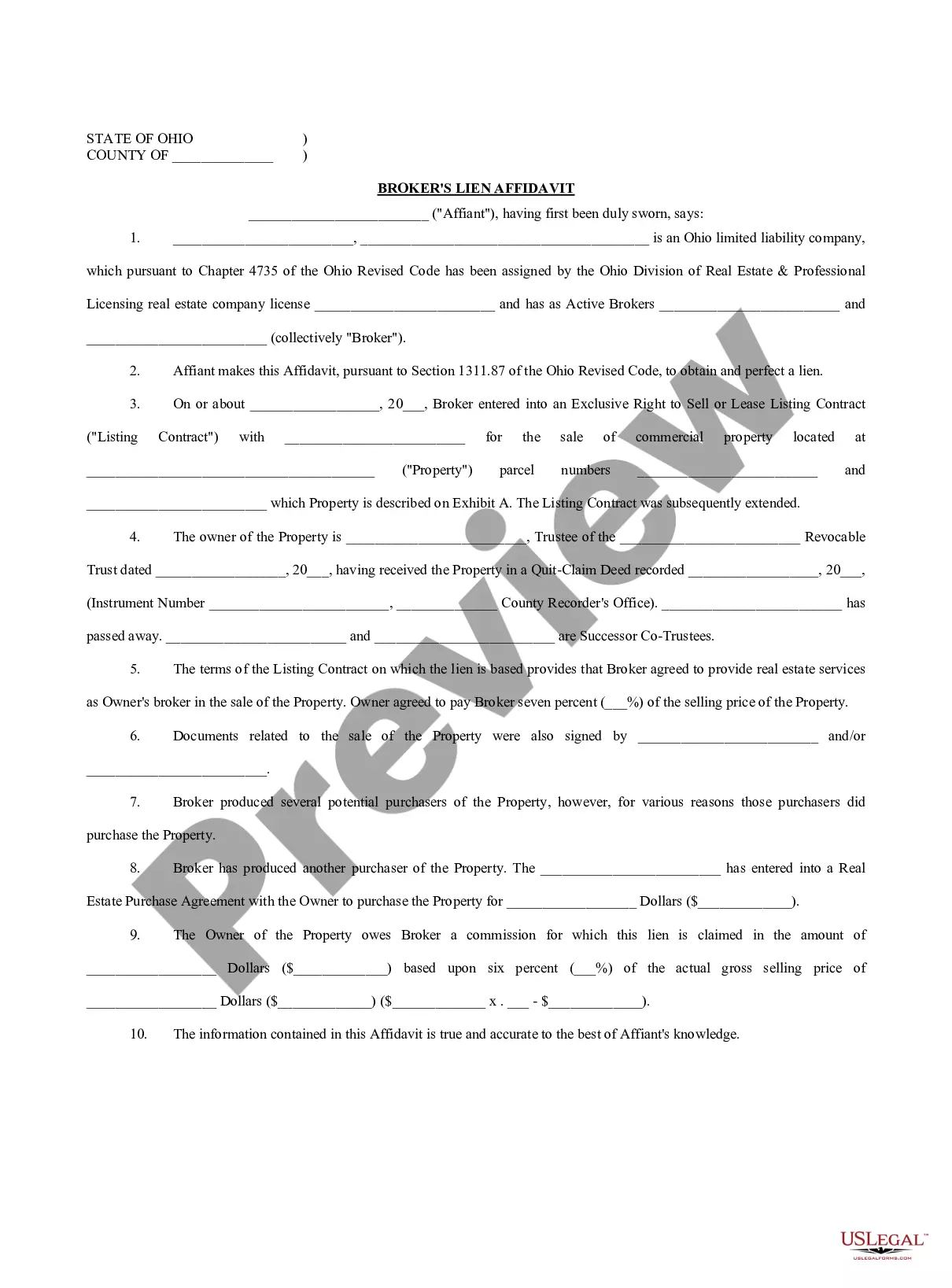
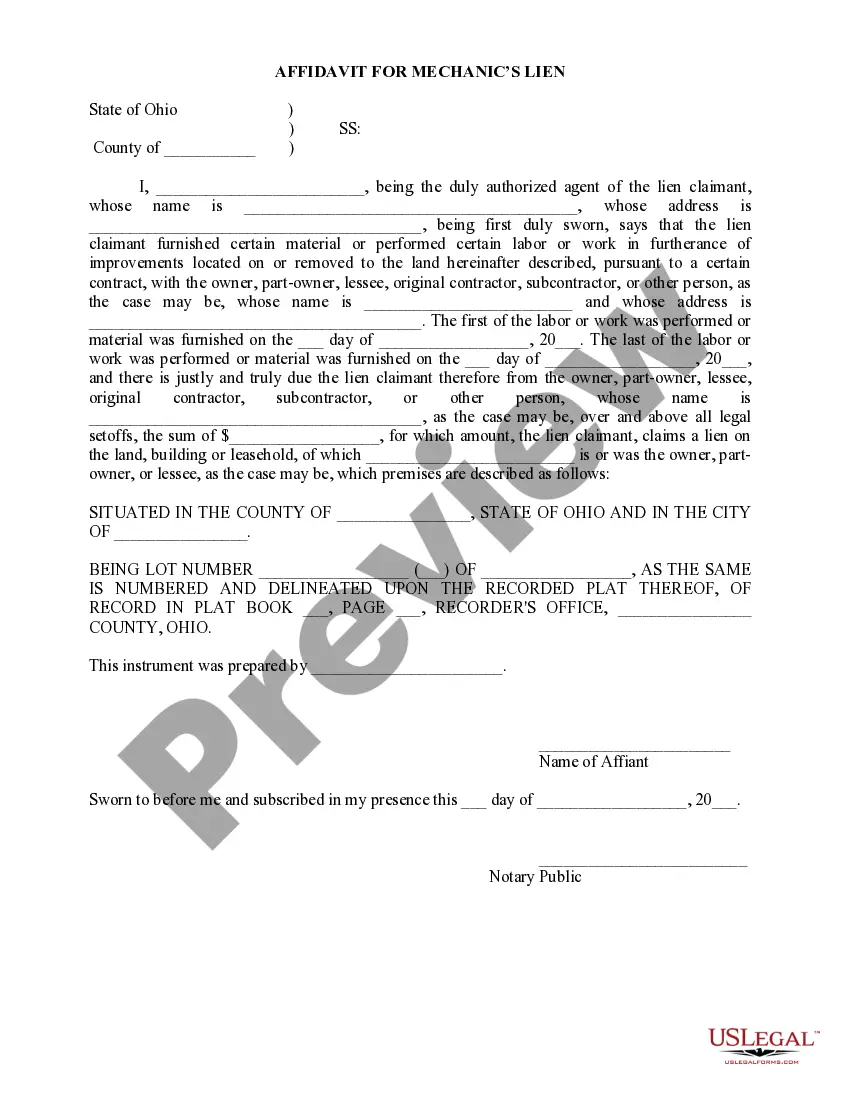
Ohio Mechanics' Lien Law: Forms Sign the mechanic's lien affidavit in front of a notary. File it at the County Recorder's Office, in the county where the property is located. Serve the mechanics' lien affidavit on the person who owes you money.
An Ohio mechanics' liens on private property is perfected by the filing of an affidavit for lien, which must be filed within 75 days from the date on which the last work was performed. A copy of the affidavit must be served on the owner within 30 days after the filing.
Lien Release Bond (Ohio) An owner of property in the State of Ohio that discovers or is notified of a mechanic's lien filed against his or her property may force a resolution of the matter by filing a notice to bring suit and posting an Ohio lien release bond with the county recorder in which the property is located.
An Ohio mechanics' liens on private property is perfected by the filing of an affidavit for lien, which must be filed within 75 days from the date on which the last work was performed. A copy of the affidavit must be served on the owner within 30 days after the filing.
The general deadline to file an Ohio mechanics lien is 75 days from the last date the claimant furnished labor and/or materials to the project.
An Ohio mechanics' liens on private property is perfected by the filing of an affidavit for lien, which must be filed within 75 days from the date on which the last work was performed. A copy of the affidavit must be served on the owner within 30 days after the filing.
A mortgage creates a lien on your property that gives the lender the right to foreclose and sell the home to satisfy the debt. A deed of trust (sometimes called a trust deed) is also a document that gives the lender the right to sell the property to satisfy the debt should you fail to pay back the loan.