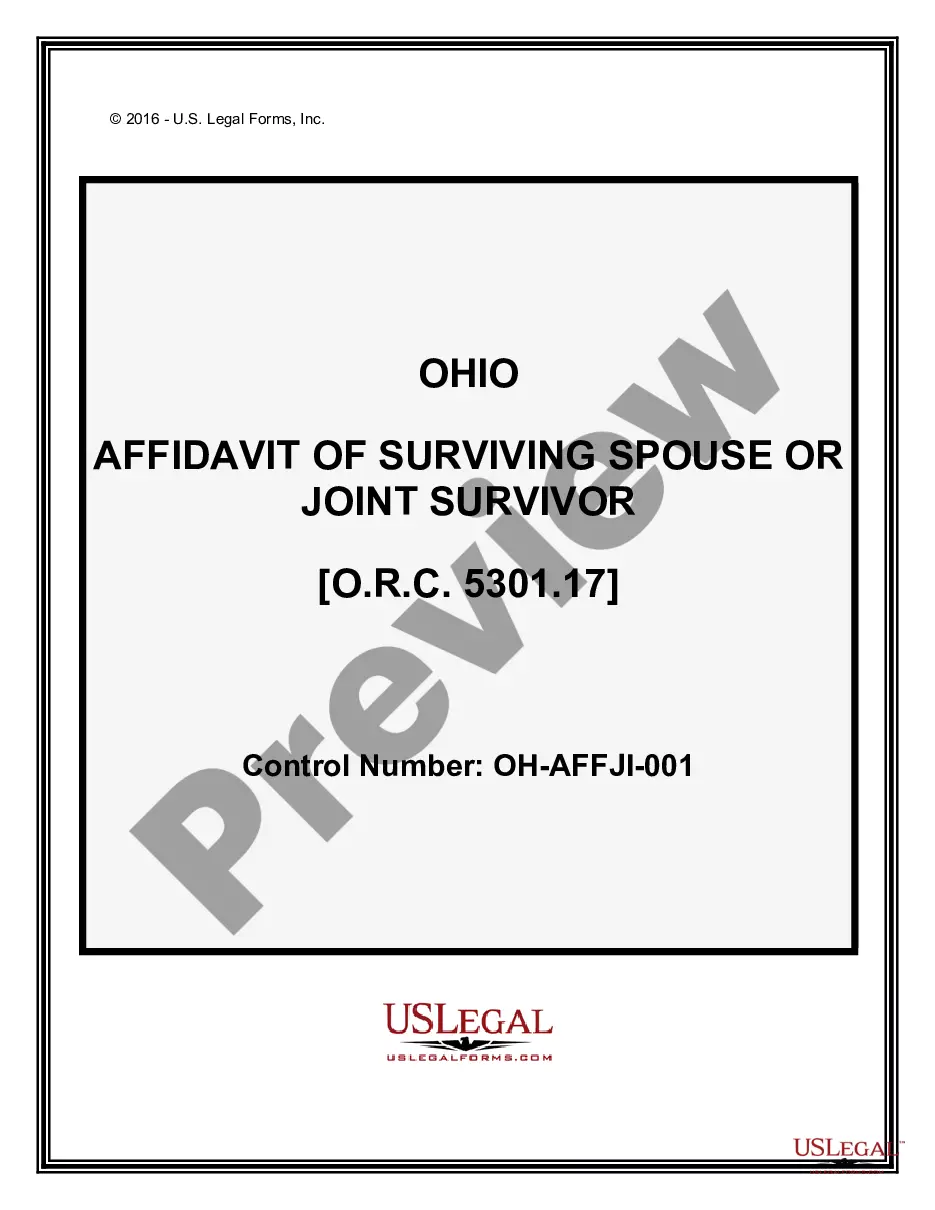
Ohio Affidavit (Survirvorship)
What is this form?
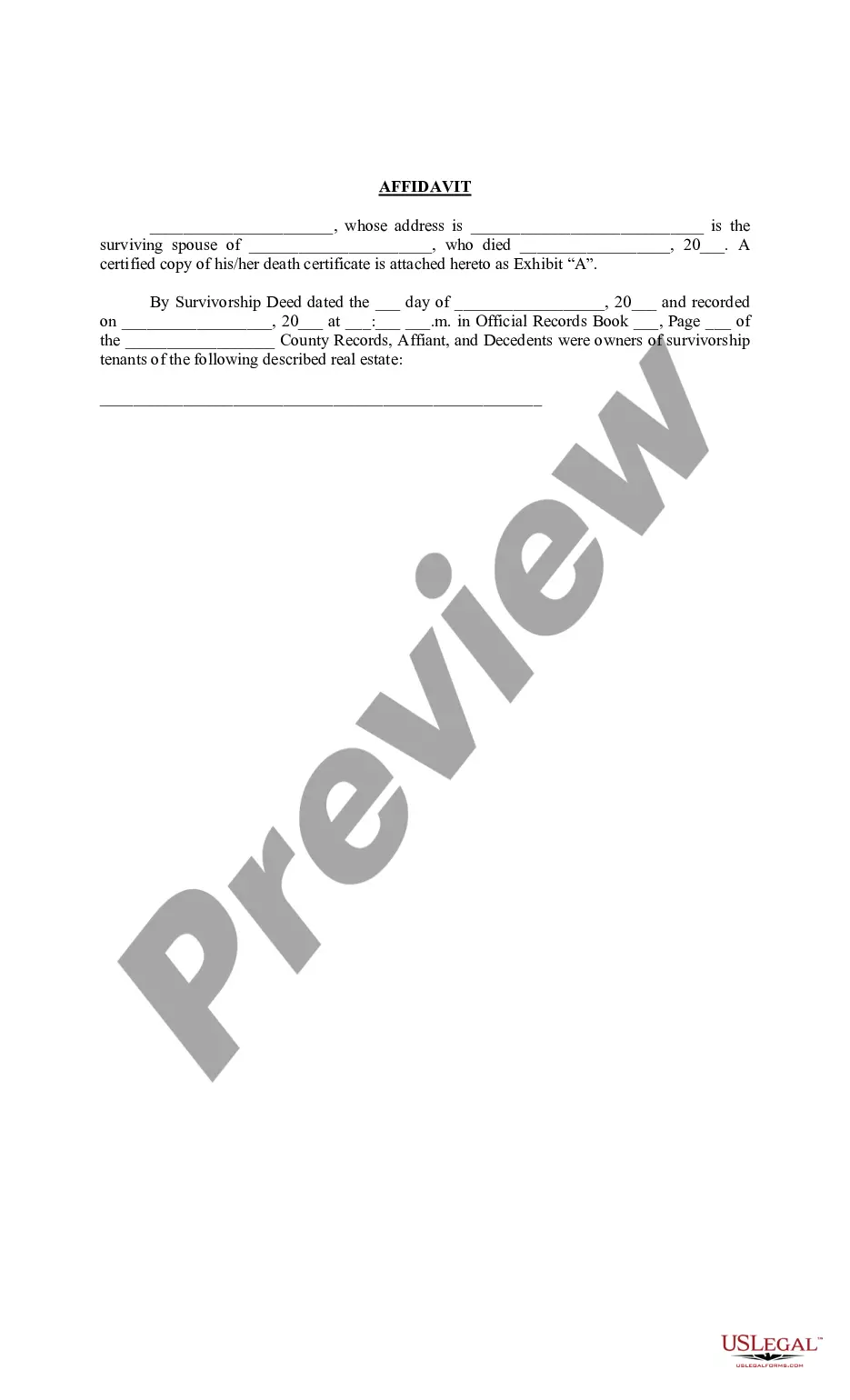
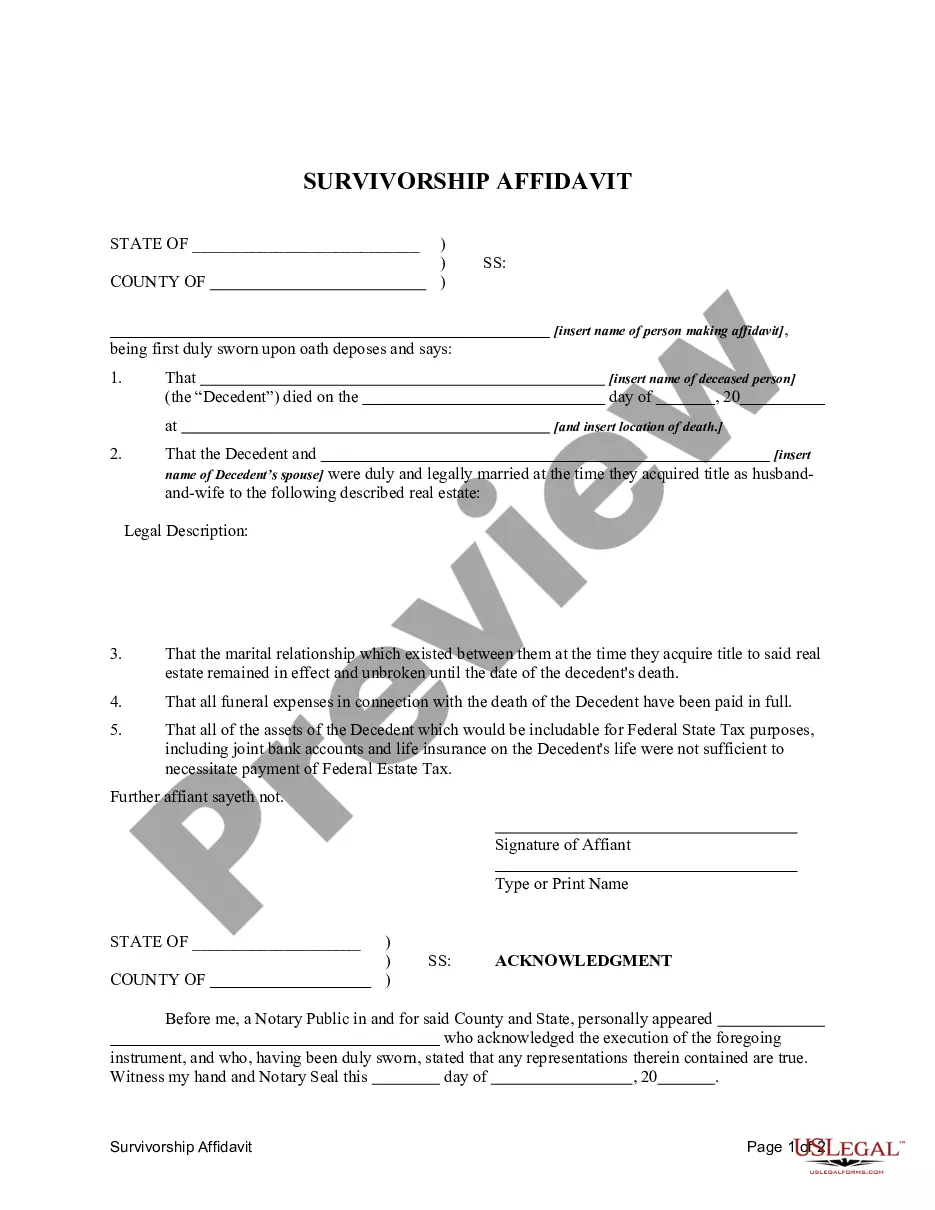
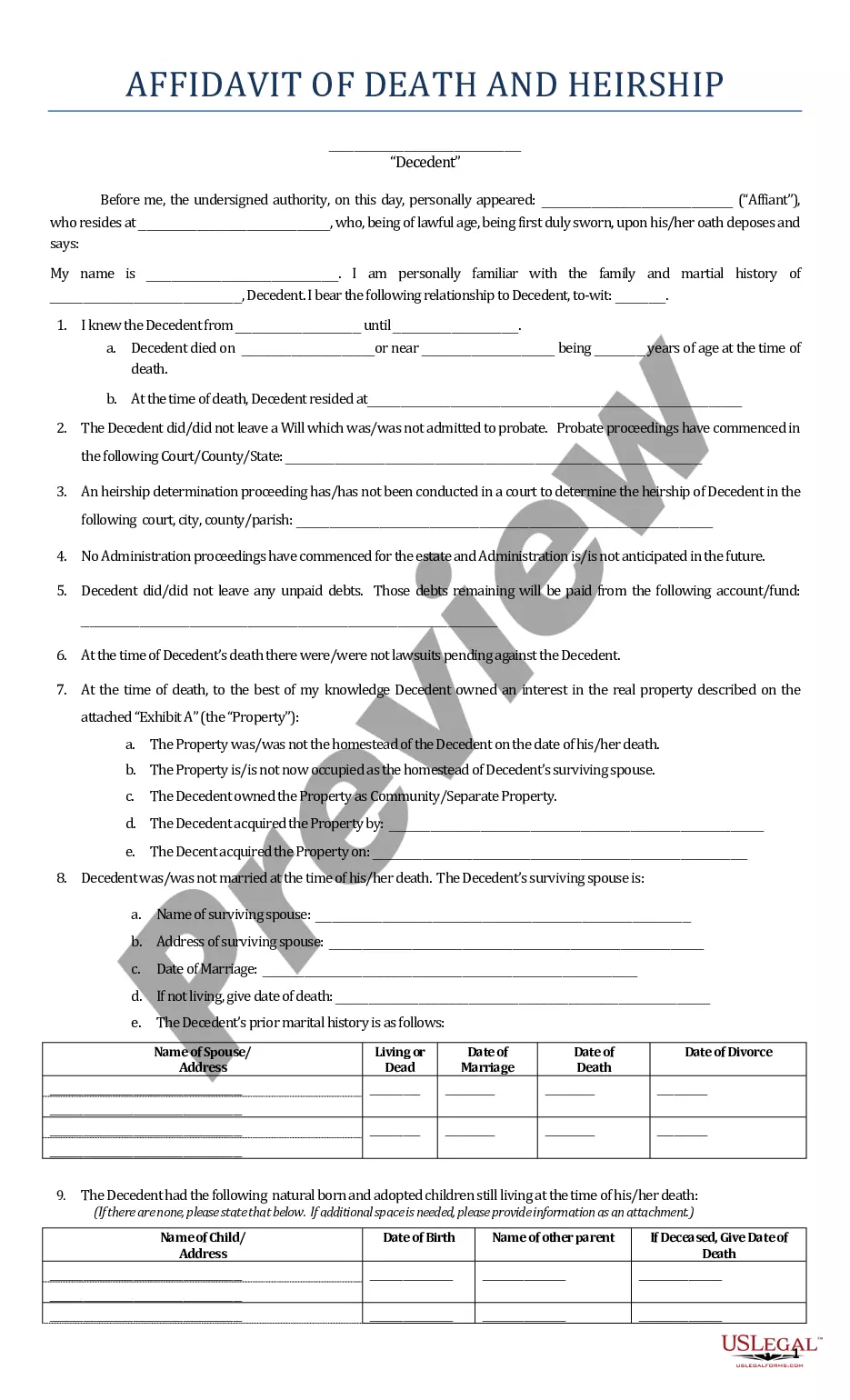
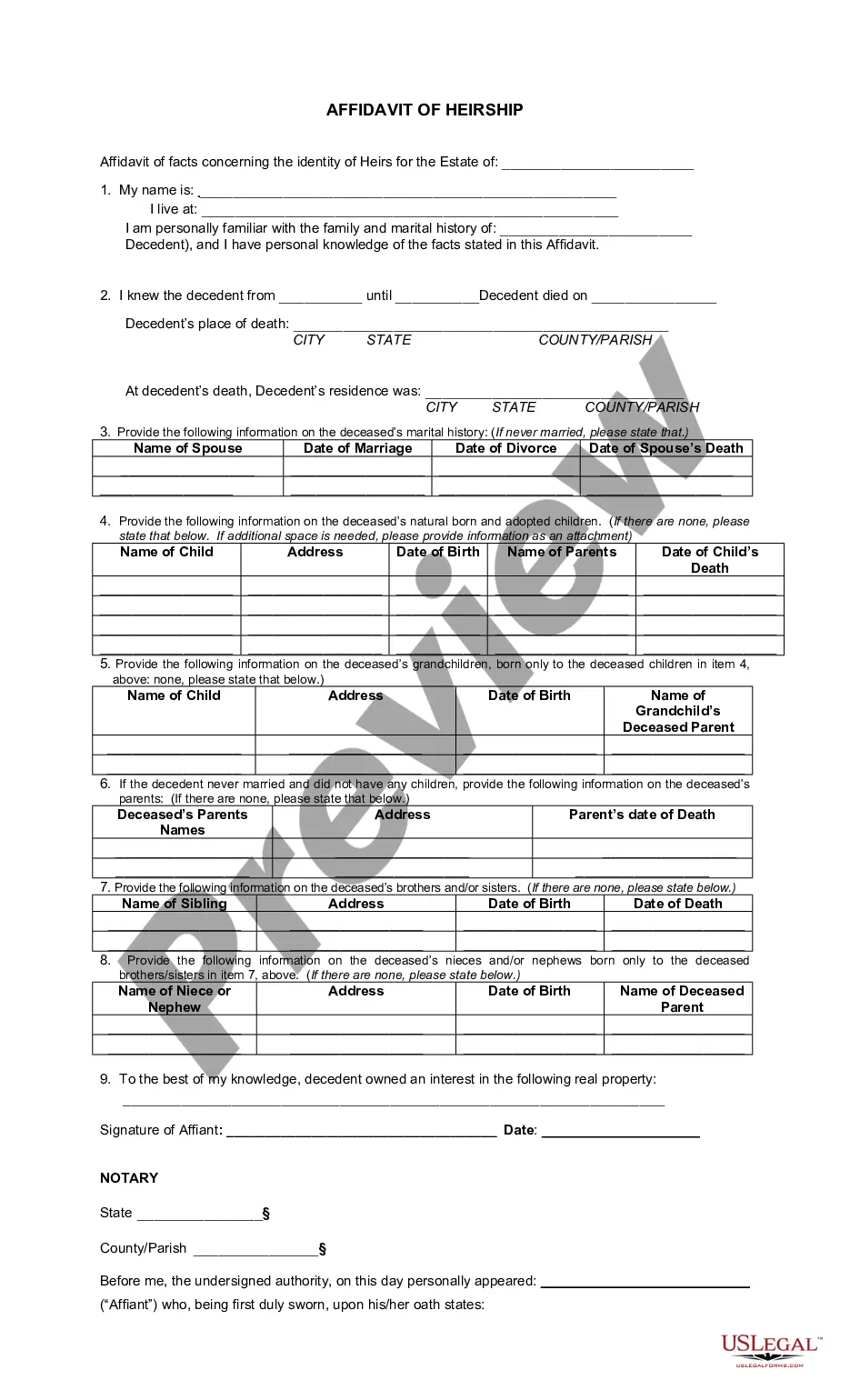
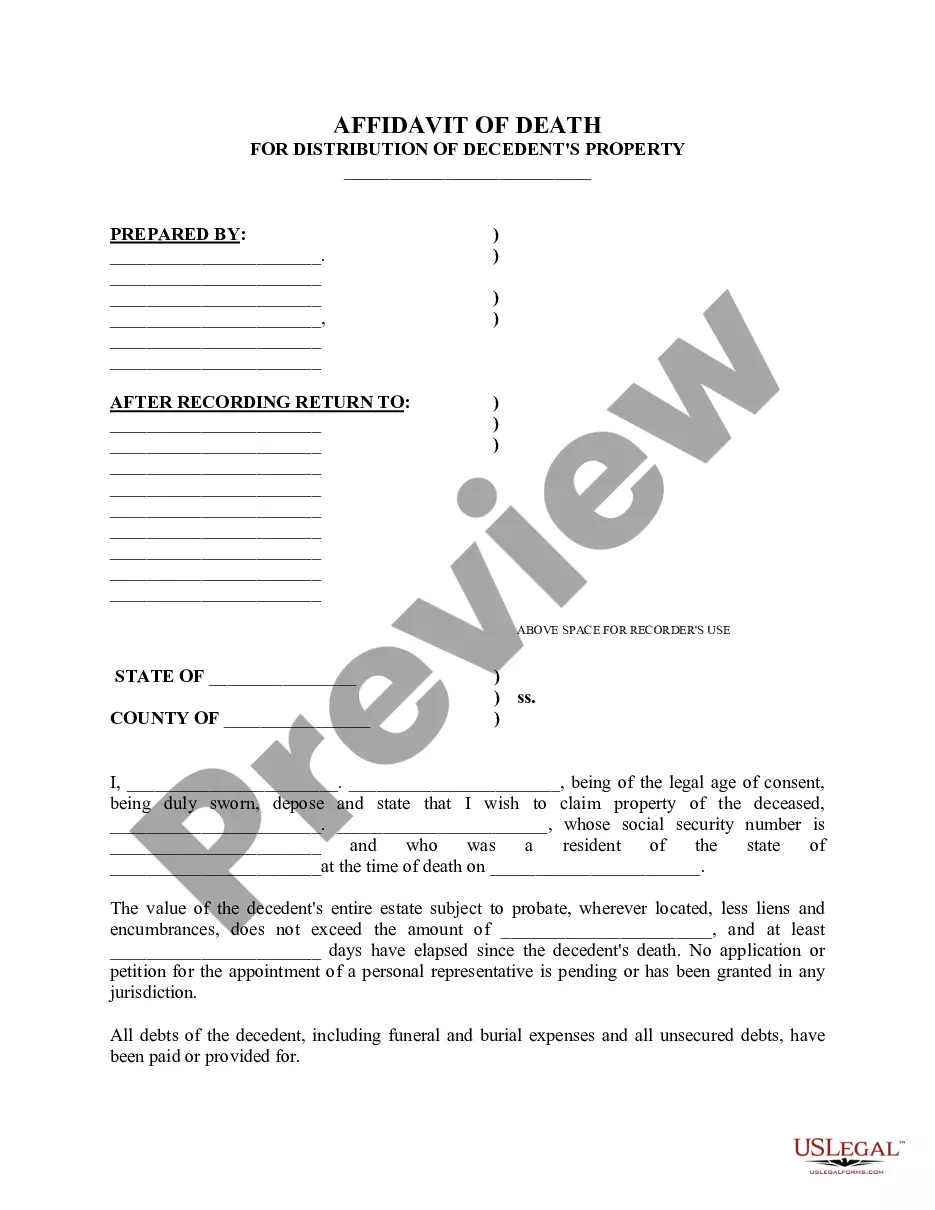
The Affidavit (Survivorship) is a legal document completed by a surviving spouse to affirm their status and facilitate the transfer of property ownership following the death of their partner. This form serves as an important tool to document the survivorship deed, ensuring a clear title on the property without the need for probate. Unlike other affidavits, this one specifically addresses property owned as tenants by the entirety or joint tenants with rights of survivorship, establishing the surviving spouse's claim to the property.
Key parts of this document
- Affiant's name and address to confirm their identity.
- Information about the deceased, including name and date of death.
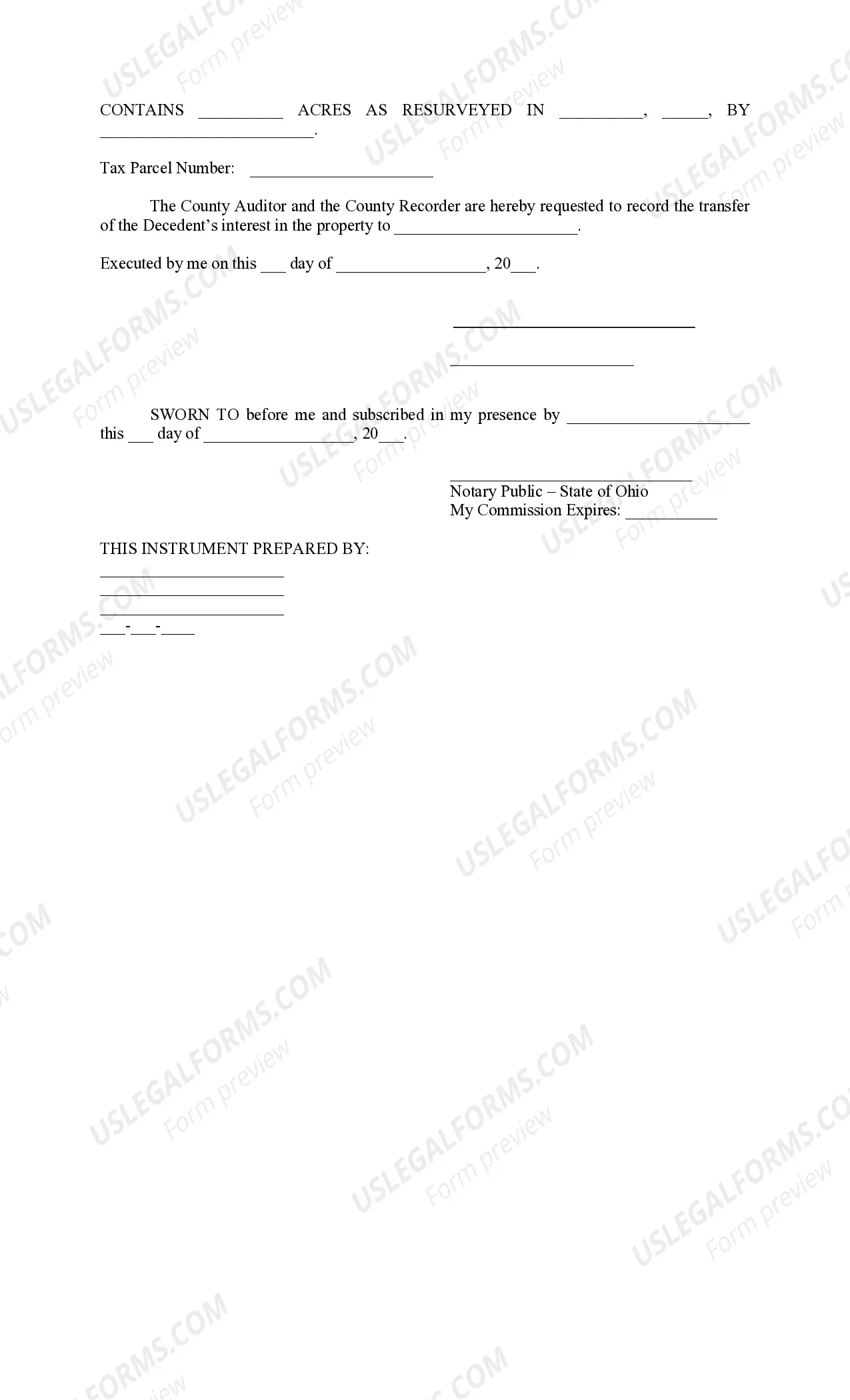
- Details regarding the property being transferred, such as legal descriptions and tax parcel number.
- Reference to the recorded survivorship deed for verification.
- Request for county officials to record the transfer of property interest.
- Signature of the affiant and acknowledgment by a notary public.
When to use this document
This form is typically used when a spouse passes away and the other spouse needs to transfer ownership of jointly owned property into their name. It may be required when the deceased spouse's interests in real estate need to be formally recorded to prevent future ownership disputes or to facilitate the sale or refinancing of the property.
Who needs this form
- Surviving spouses who jointly own property with the deceased.
- Individuals tasked with managing the estate of the deceased, particularly concerning property transfer.
- Anyone who needs to clarify or assert property rights after a spouse's death.
How to complete this form
- Identify the surviving spouse (affiant) and provide their address.
- Fill in the name of the deceased spouse and the date of their passing.
- Specify the details of the property, including the legal description and tax parcel number.
- Include the date the survivorship deed was executed and recorded.
- Request the recording of the property interest with local authorities.
- Sign the affidavit and have it notarized by a qualified notary public.
Does this form need to be notarized?
Yes, this form must be notarized to be legally valid. Notarization provides an extra layer of verification, ensuring the identity of the affiant and the authenticity of the document. US Legal Forms offers integrated online notarization services, allowing you to complete this process securely via video call at any time.
Get your form ready online
Our built-in tools help you complete, sign, share, and store your documents in one place.
Make edits, fill in missing information, and update formatting in US Legal Forms—just like you would in MS Word.
Download a copy, print it, send it by email, or mail it via USPS—whatever works best for your next step.
Sign and collect signatures with our SignNow integration. Send to multiple recipients, set reminders, and more. Go Premium to unlock E-Sign.
If this form requires notarization, complete it online through a secure video call—no need to meet a notary in person or wait for an appointment.
We protect your documents and personal data by following strict security and privacy standards.

Make edits, fill in missing information, and update formatting in US Legal Forms—just like you would in MS Word.

Download a copy, print it, send it by email, or mail it via USPS—whatever works best for your next step.

Sign and collect signatures with our SignNow integration. Send to multiple recipients, set reminders, and more. Go Premium to unlock E-Sign.

If this form requires notarization, complete it online through a secure video call—no need to meet a notary in person or wait for an appointment.

We protect your documents and personal data by following strict security and privacy standards.
Common mistakes
- Failing to properly identify the property details, which can lead to recording issues.
- Not including the necessary date of the survivorship deed, which may invalidate the affidavit.
- Omitting the affiantâs signature or not obtaining notarization.
Key takeaways
- The Affidavit (Survivorship) is essential for transferring joint property ownership after a spouse's death.
- Properly completing and notarizing the form prevents future disputes over property rights.
- Always verify local requirements to ensure compliance with applicable state laws.
Looking for another form?
Form popularity
FAQ
A Survivorship Deed transfers residential or commercial property from one property owner (the grantor) to another (the grantee) while allowing them to avoid going through probate when they (the grantor) passes away. The parties transferring property in a Survivorship Deed must have full ownership of the property.
A survivorship deed is a deed conveying title to real estate into the names of two or more persons as joint tenants with rights of survivorship. Upon the death of one owner, the property passes to and vests in the name of the surviving owner or owners.
Ohio Eliminates Transfer on Death Deeds. Get answers to questions on the impact of Ohio's elimination of Transfer on Death deeds. Effective December 28, 2009, Ohio eliminated transfer on death deeds and replaced that deed with a TRANSFER ON DEATH DESIGNATION AFFIDAVIT.
In Ohio, a Survivorship Deed is used to convey title to real estate to two or more people as joint tenants with rights of survivorship. Upon the death of an owner, the property passes to the surviving owner(s). A Survivorship Deed is commonly utilized to convey property to spouses.
What Is the Difference Between a Warranty Deed & a Survivorship Deed?A warranty deed is the most comprehensive and provides the most guarantees. Survivorship isn't so much a deed as a title. It's a way to co-own property where, upon the death of one owner, ownership automatically passes to the survivor.
The way that the right of survivorship works is that if a property is purchased and owned by two or more individuals and the right of survivorship has been included in the title to the property, then if one of the owners dies, the surviving owner or owners will absorb the share for the deceased's share of the property