Ohio Commercial Building or Space Lease

What is this form?
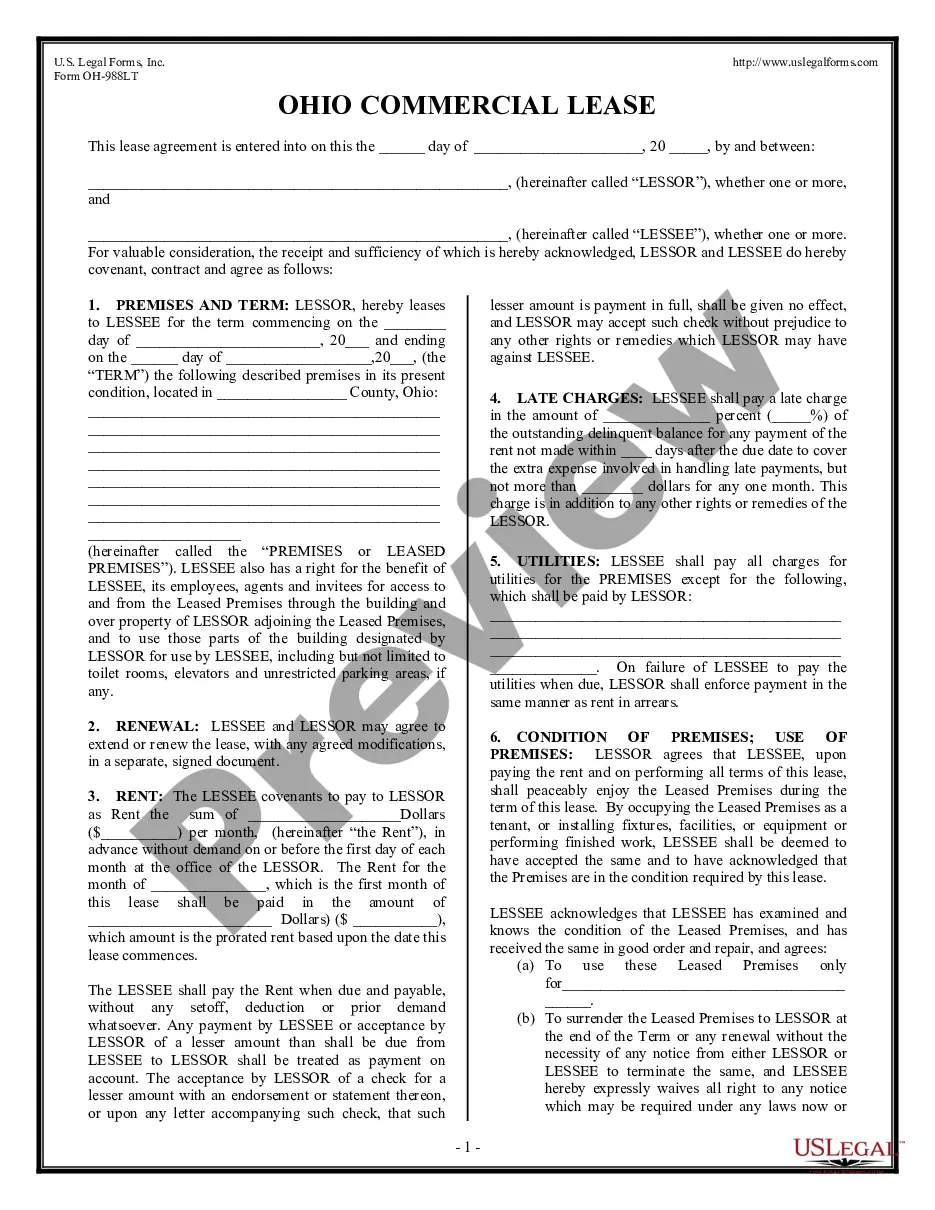
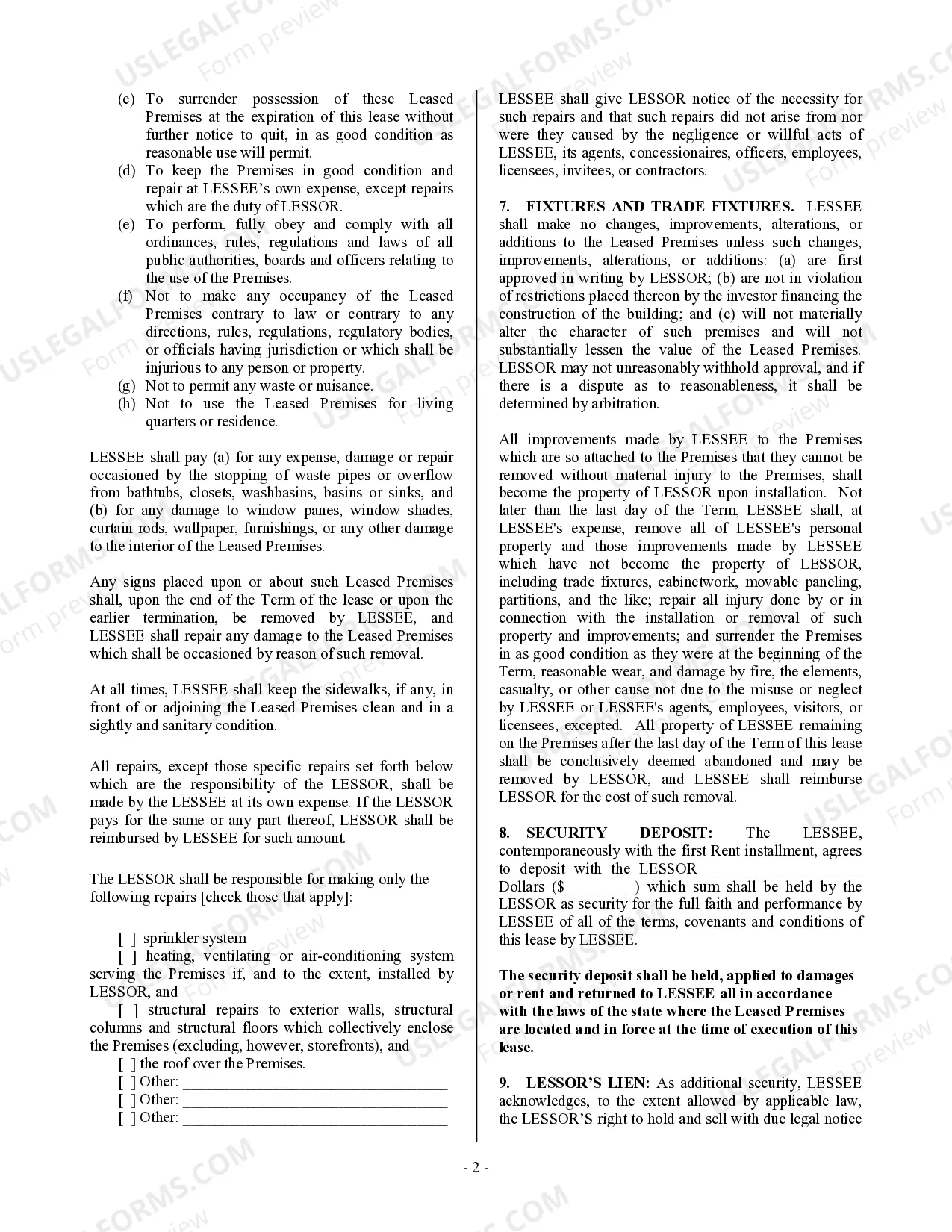
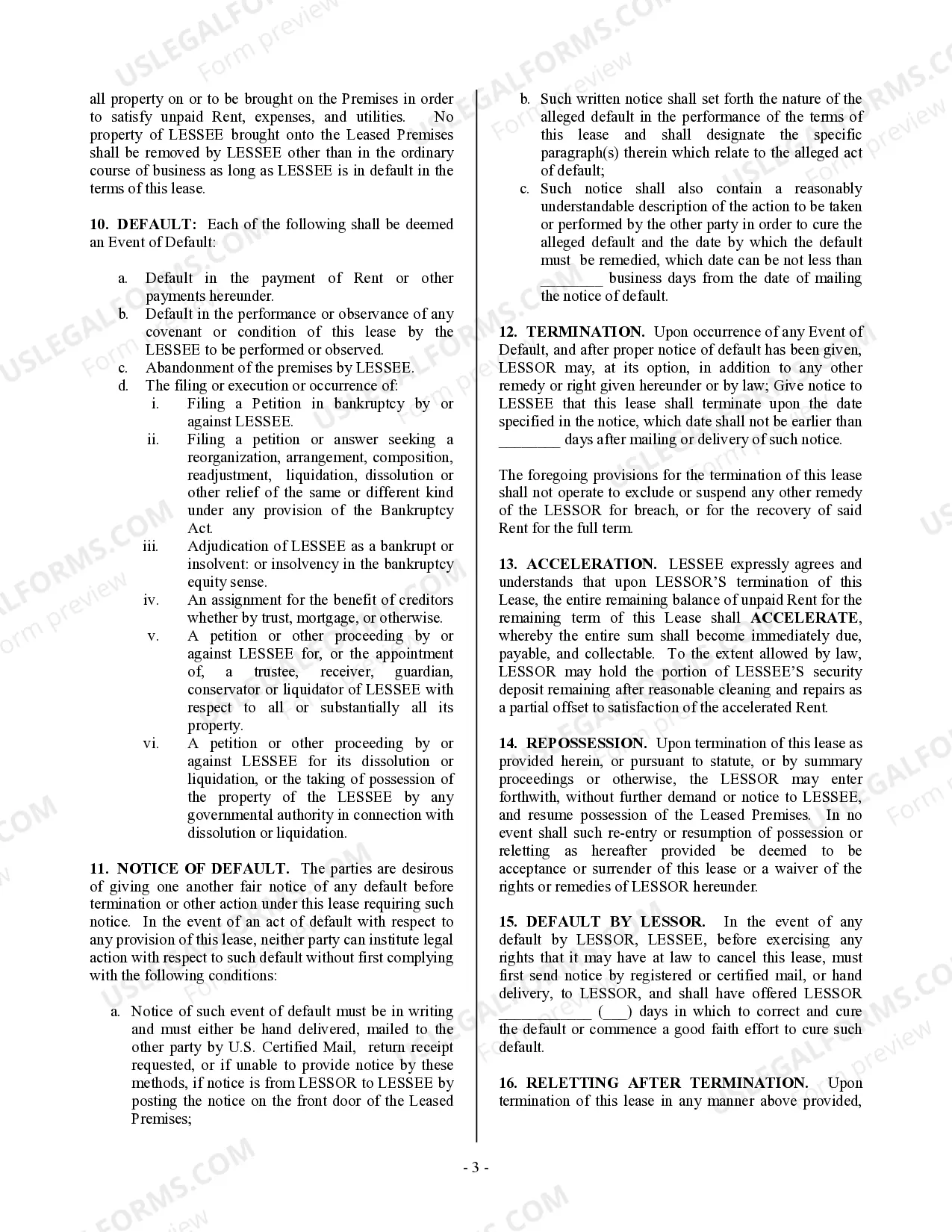
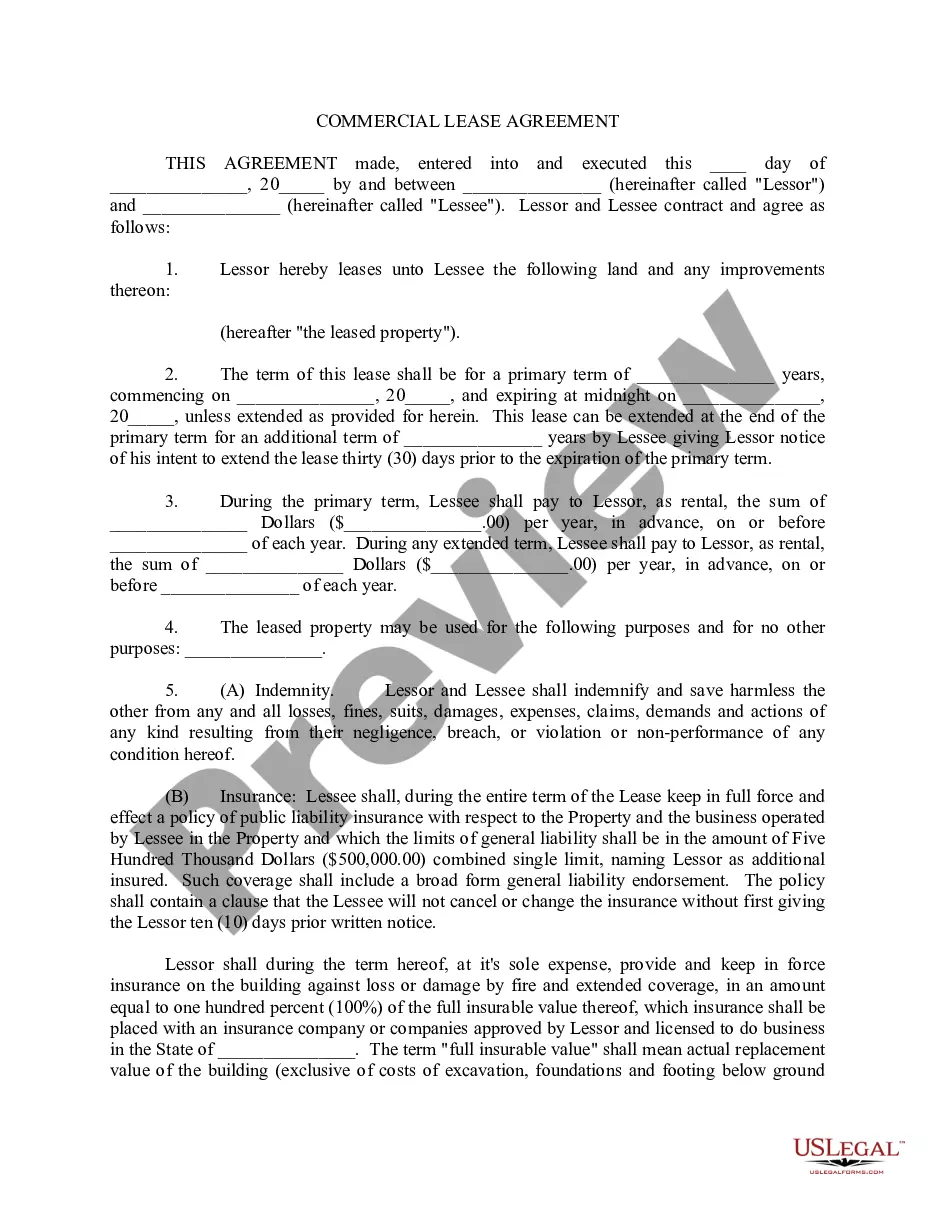
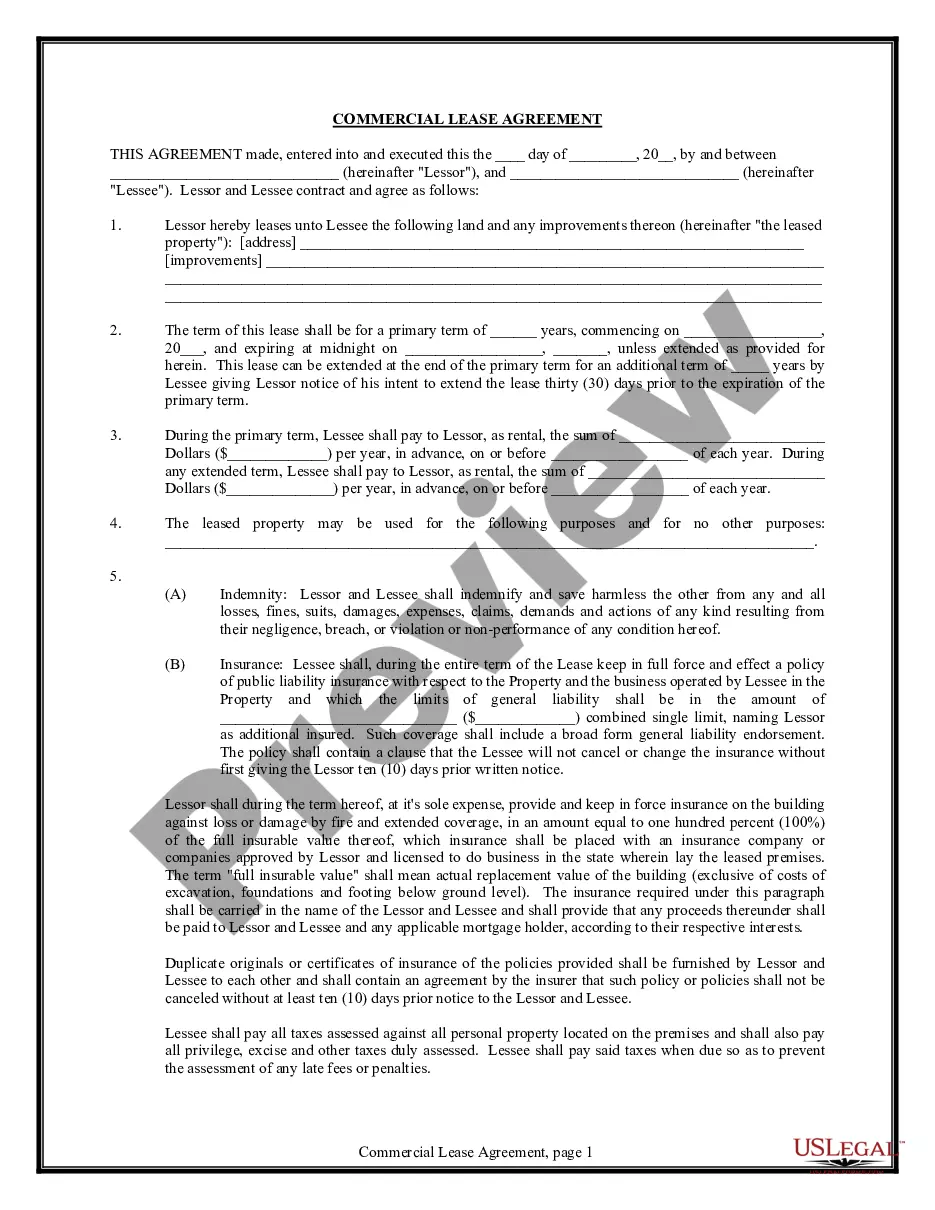
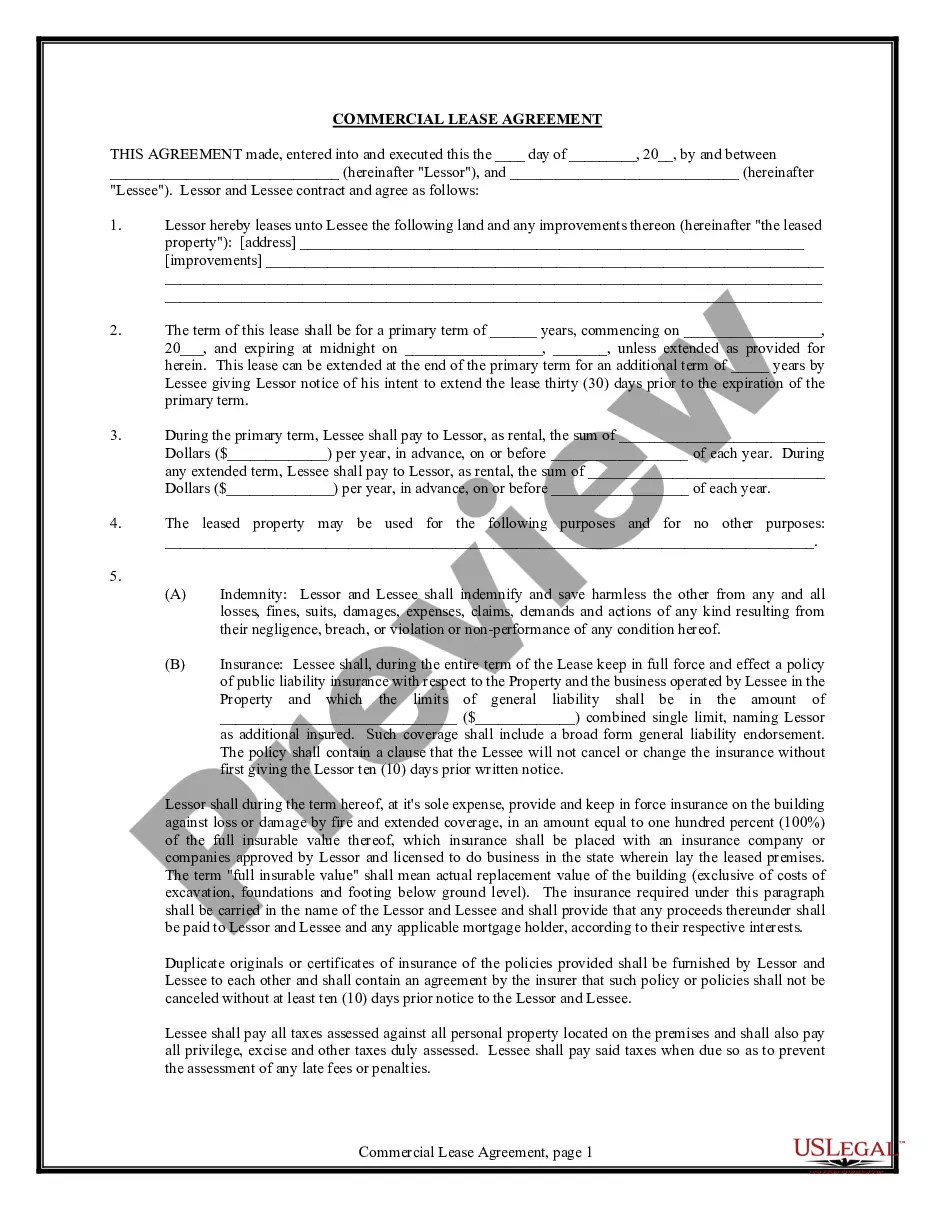
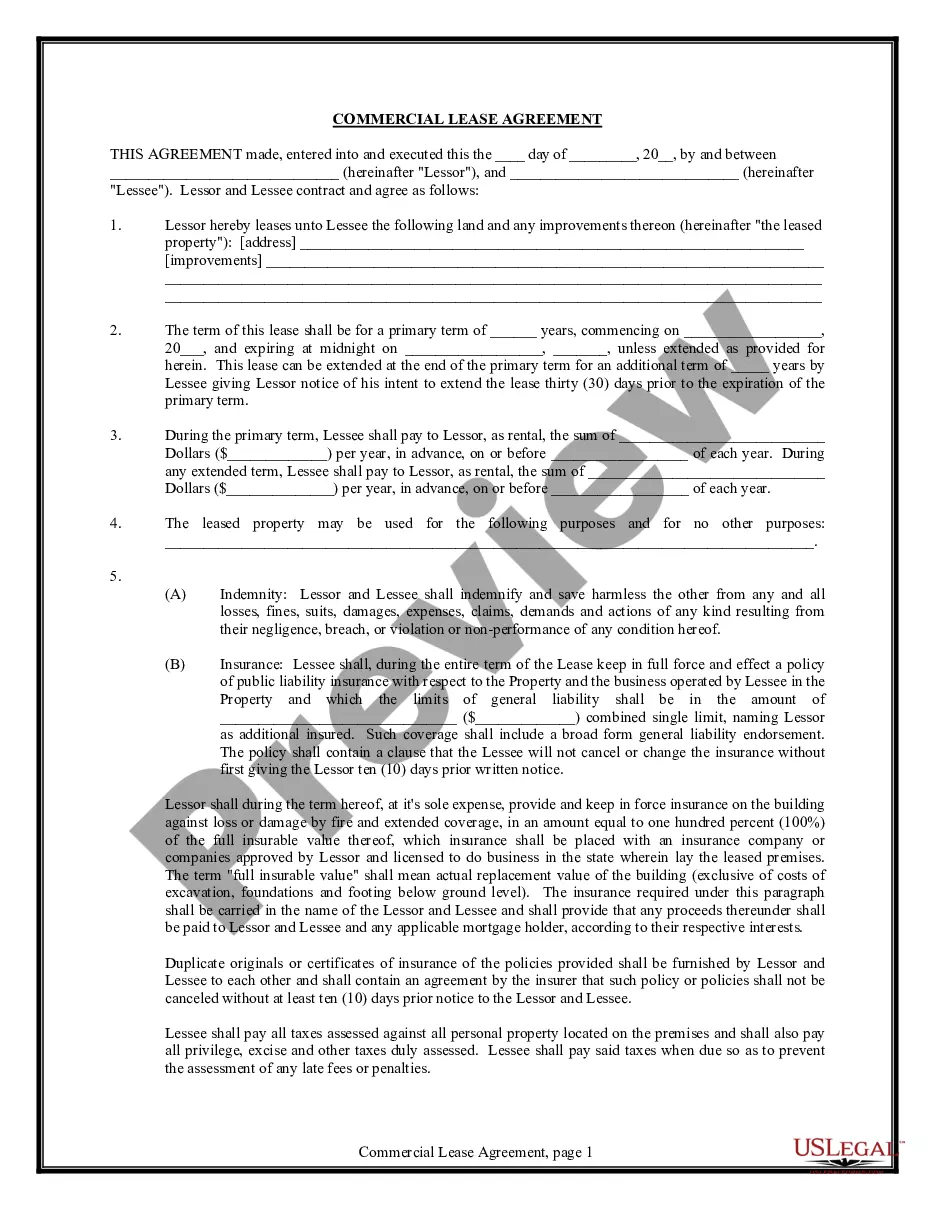
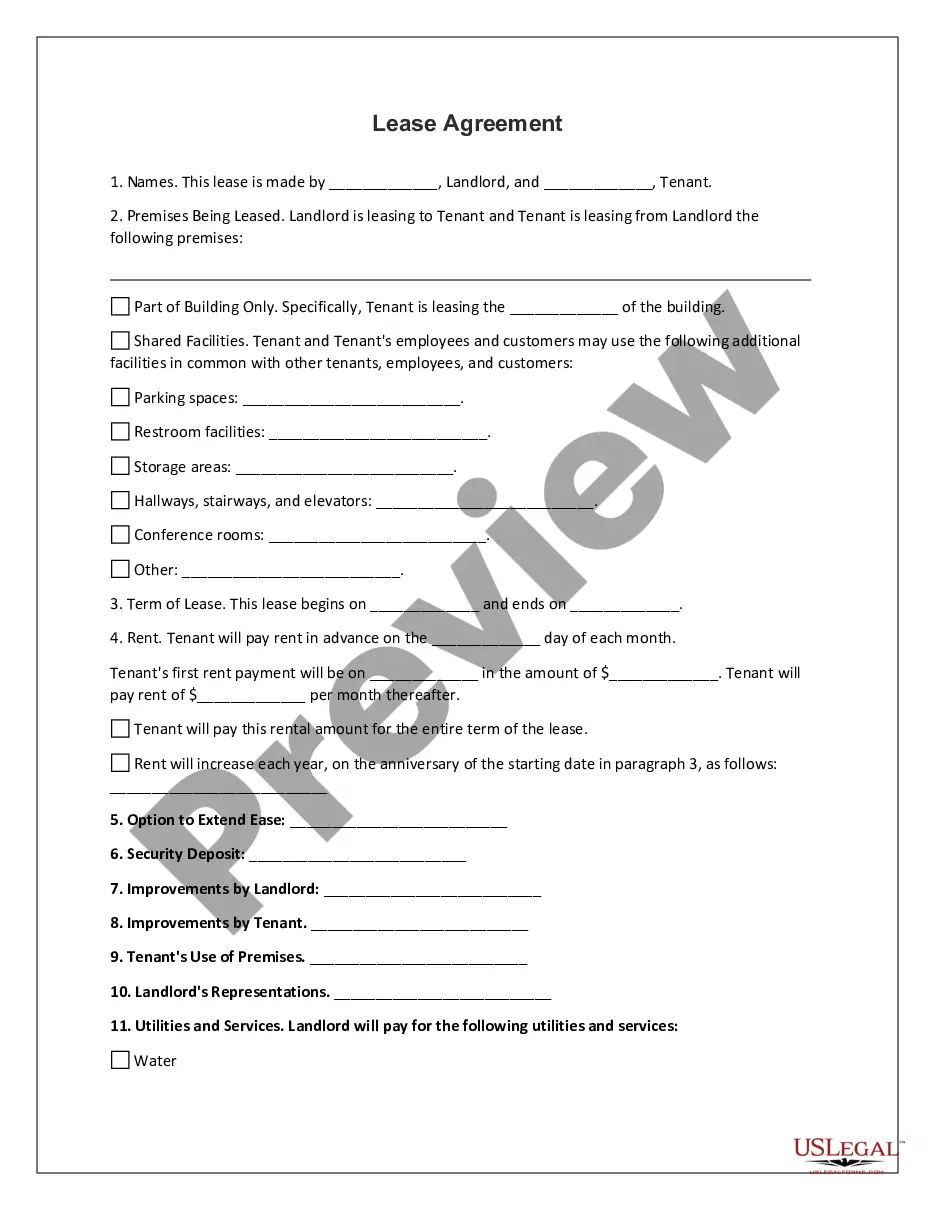
This Commercial Building or Space Lease form is a legally binding document tailored for leasing commercial properties in the State of Ohio. It outlines the specific terms between a lessor (property owner) and a lessee (tenant) concerning rent, maintenance, and use of the property. Unlike residential leases, this form includes detailed provisions suited for commercial transactions, ensuring both parties have clearly defined rights and responsibilities.
Main sections of this form
- Identifies the parties involved: lessor and lessee.
- Details the property being leased, including its location and condition.
- Specifies the lease term, including start and end dates.
- Covers rental payment terms, including amounts, due dates, and late charges.
- Includes provisions related to utilities, maintenance, and alterations.
- Outlines default and termination processes for both parties.
- Details security deposit terms and lessorâs lien rights.


When to use this document
This Commercial Building or Space Lease should be used when a business or individual wishes to lease a commercial property in Ohio for purposes such as an office, retail space, or other commercial activities. It is essential for parties entering into a rental agreement where clarity on obligations, payment terms, and lease duration is necessary to mitigate disputes.
Who needs this form
- Business owners or entrepreneurs seeking to lease commercial space.
- Property owners wanting to establish a clear lease agreement with tenants.
- Real estate professionals facilitating commercial leasing agreements.
- Individuals or organizations looking to formalize a leasing arrangement for commercial purposes.
Instructions for completing this form
- Identify the parties by clearly stating the lessor and lessee names.
- Specify the address and details of the leased premises.
- Enter the commencement and termination dates of the lease.
- Fill in the monthly rent amount and any additional fees such as late charges.
- Include any special conditions, such as maintenance responsibilities or permitted uses of the property.
- Ensure all parties sign and date the lease in accordance with Ohio's legal standards.
Does this form need to be notarized?
This form does not typically require notarization unless specified by local law. However, having a notarized signature can further validate the lease agreement and provide additional legal protection for both parties.
Get your form ready online
Our built-in tools help you complete, sign, share, and store your documents in one place.
Make edits, fill in missing information, and update formatting in US Legal Forms—just like you would in MS Word.
Download a copy, print it, send it by email, or mail it via USPS—whatever works best for your next step.
Sign and collect signatures with our SignNow integration. Send to multiple recipients, set reminders, and more. Go Premium to unlock E-Sign.
If this form requires notarization, complete it online through a secure video call—no need to meet a notary in person or wait for an appointment.
We protect your documents and personal data by following strict security and privacy standards.

Make edits, fill in missing information, and update formatting in US Legal Forms—just like you would in MS Word.

Download a copy, print it, send it by email, or mail it via USPS—whatever works best for your next step.

Sign and collect signatures with our SignNow integration. Send to multiple recipients, set reminders, and more. Go Premium to unlock E-Sign.

If this form requires notarization, complete it online through a secure video call—no need to meet a notary in person or wait for an appointment.

We protect your documents and personal data by following strict security and privacy standards.
Avoid these common issues
- Failing to specify the lease term dates correctly.
- Inadequately detailing maintenance responsibilities, leading to disputes.
- Not clearly stating the security deposit conditions and terms.
- Overlooking local regulations that may affect lease terms.
Advantages of online completion
- Instant access to a legally vetted lease agreement designed by licensed attorneys.
- Easy customization to fit the specific needs of the lessor and lessee.
- Convenient digital format allows for quick downloading and printing.
- Secure and reliable process ensures documentation is legally binding.
Summary of main points
- The Commercial Building or Space Lease is vital for formalizing business property rentals in Ohio.
- Ensure clarity in responsibilities for rent, repairs, and utilities to prevent future disputes.
- Review and understand all terms before signing to protect your interests in the lease agreement.
Looking for another form?

Form popularity
FAQ
Names of all tenants. Limits on occupancy. Term of the tenancy. Rent. Deposits and fees. Repairs and maintenance. Entry to rental property. Restrictions on tenant illegal activity.
As long as the contract spells out specific details and both parties have signed that they agree to the contract's terms, a handwritten contract is legally binding and enforceable in court.
Name the parties. A simple rental agreement form needs to name the parties signing the lease and where they live. Describe the premises. Define the term of the lease. Set how much rent is owed. Assign a security deposit amount. Finalize the lease.
The Lease Must be in Writing It does not matter if the lease is handwritten or typed. If the lease is for more than one year, it must be in written form and contain the following terms.
Keep the Ticking Clock in Mind. Think Seriously About Going Long Term. Prioritize Your Wish List. Arm Yourself With Knowledge. Negotiate Your Way to Greater Flexibility. Study Tenant Improvements Before You Head to the Table. Double Check the Details. Enlist the Help of a Tenant Rep Broker.
Commercial leases in Ohio must be signed by the lessor, and the lessor's signature must be acknowledged before a notary or other official, according to Revised Code 5301.01. In addition, per Revised Code 5301.08, the acknowledgment is unnecessary if the lease term is three years or less.
Are you building for the future? Is the location safe? Is the office space adequately wired for your business and equipment needs. How much will furniture cost? How much will the rent increase each year? What's included in the lease? Who handles repairs?
The Introduction. The beginning of the lease agreement should contain the name of the landlord and tenant, as well as a statement of the agreement into which they are entering. Rent. Deposit. Taxes. Property Insurance. Utilities and Amenities. Remodeling and Improvements. Repairs and Maintenance.
Are you building for the future? Is the location safe? Is the office space adequately wired for your business and equipment needs. How much will furniture cost? How much will the rent increase each year? What's included in the lease? Who handles repairs?