Ohio Performance Horse Lease Agreement
Understanding this form
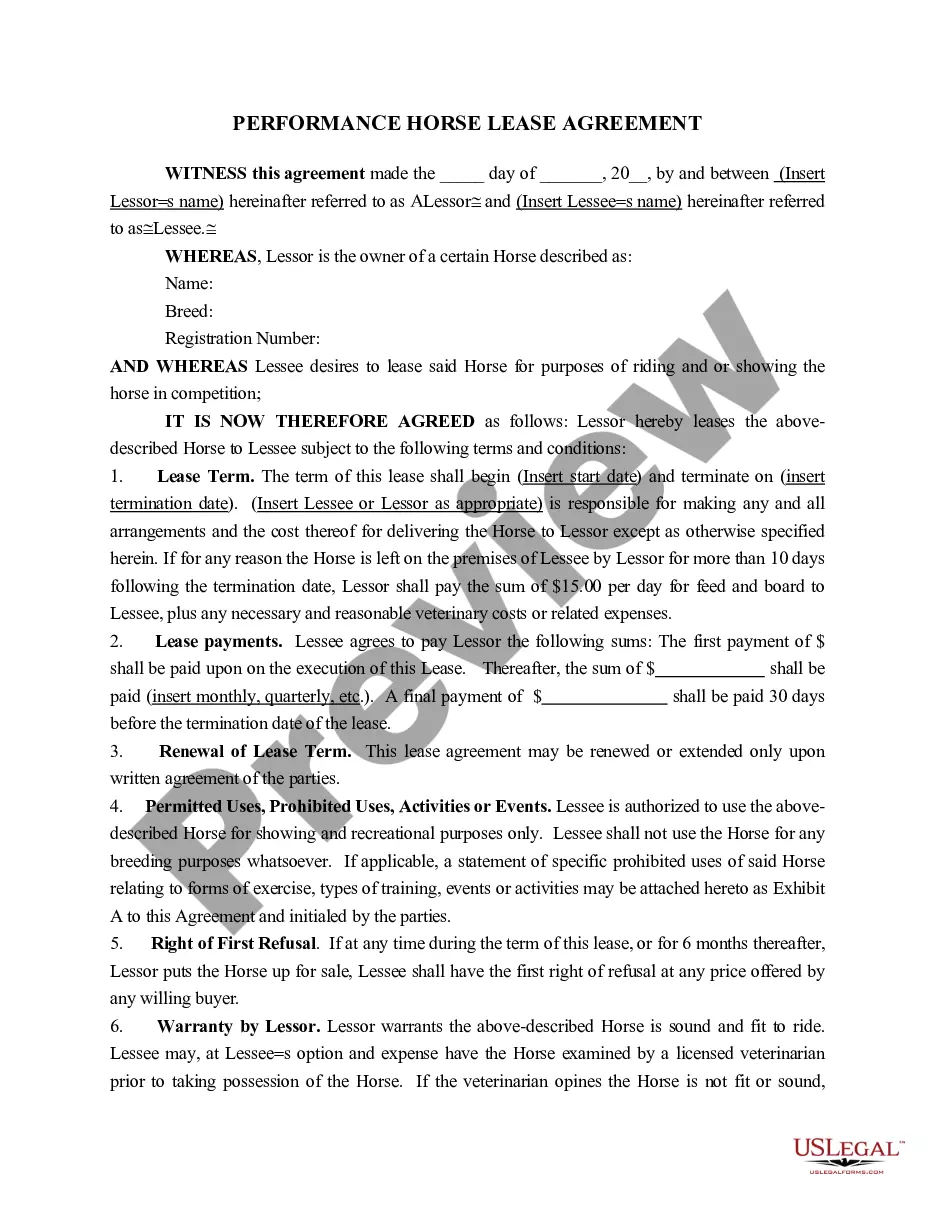
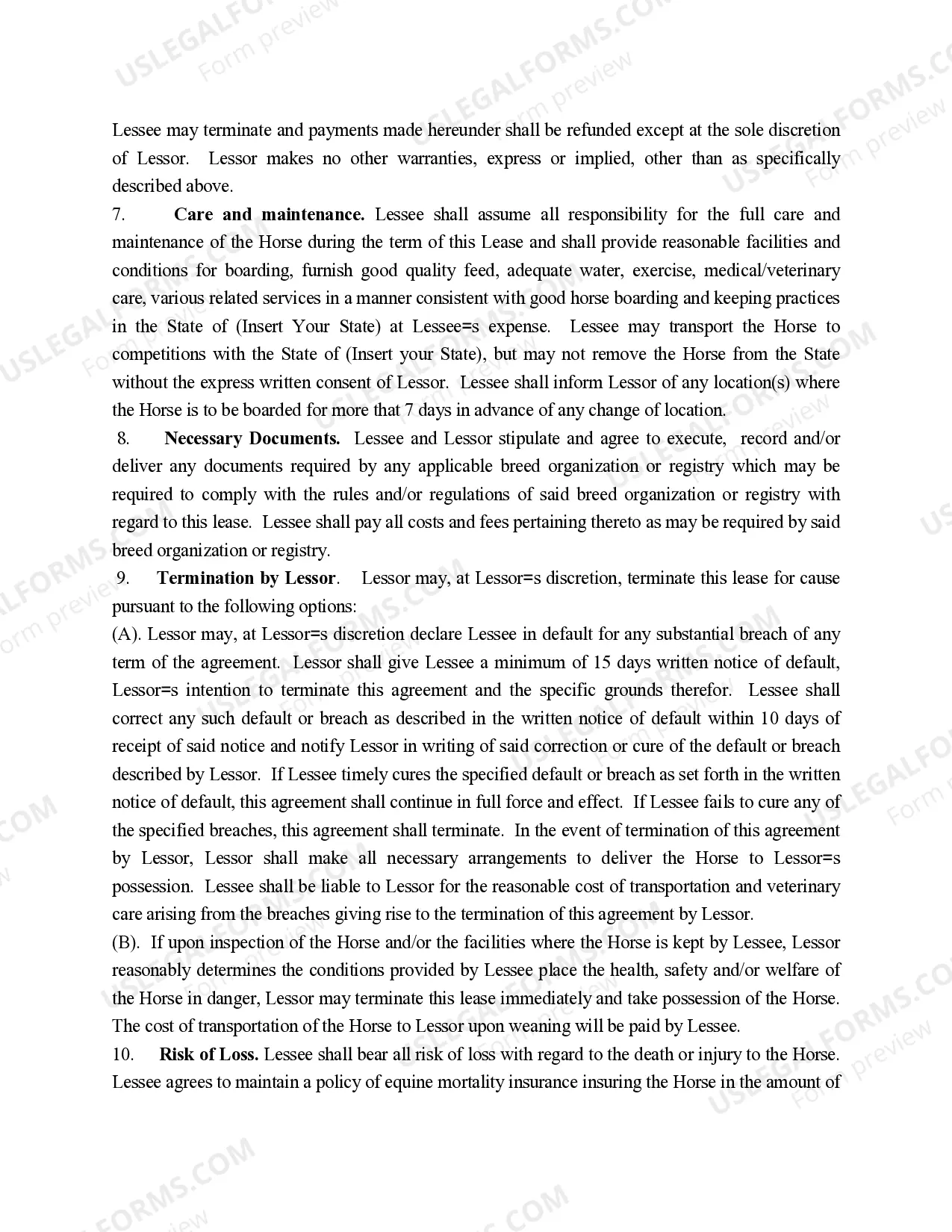
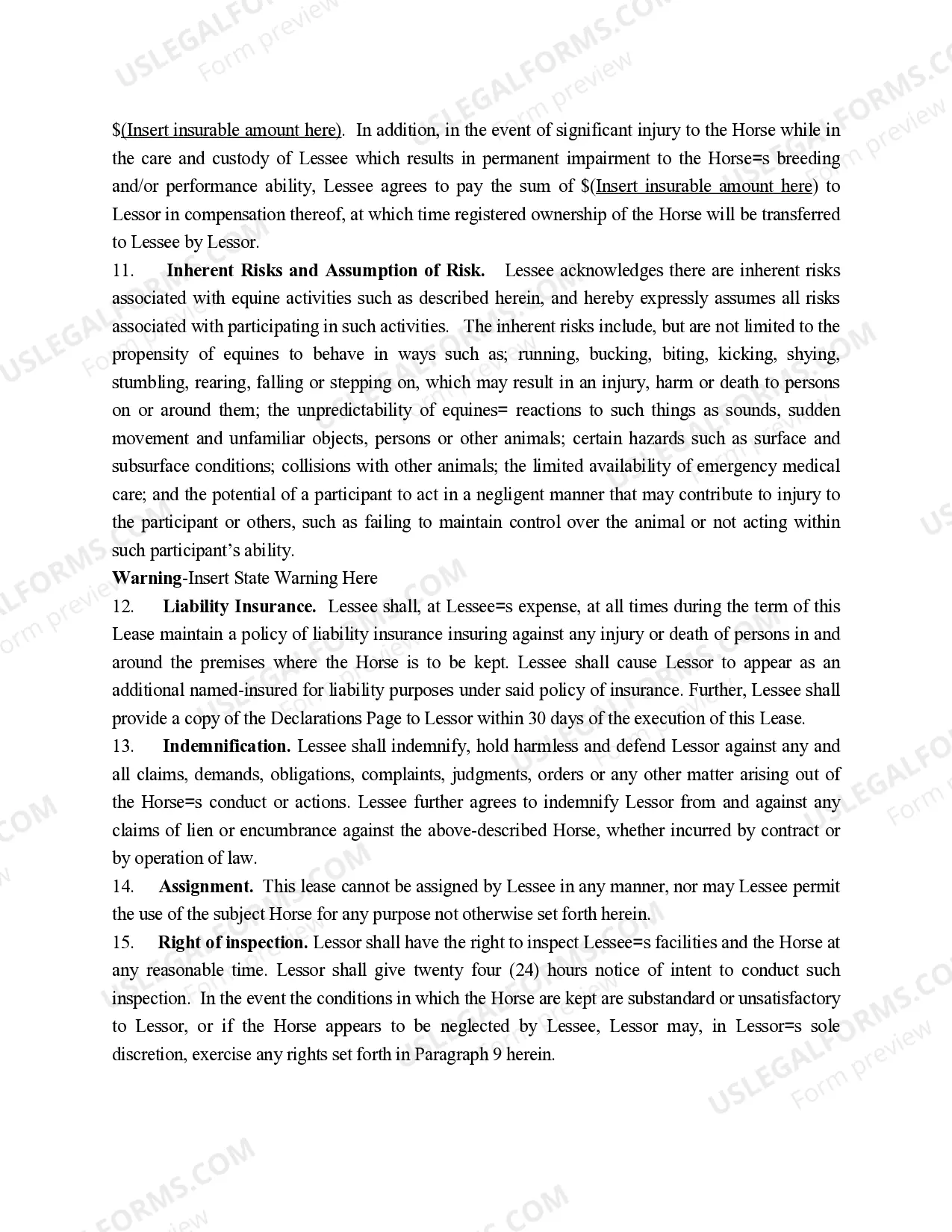
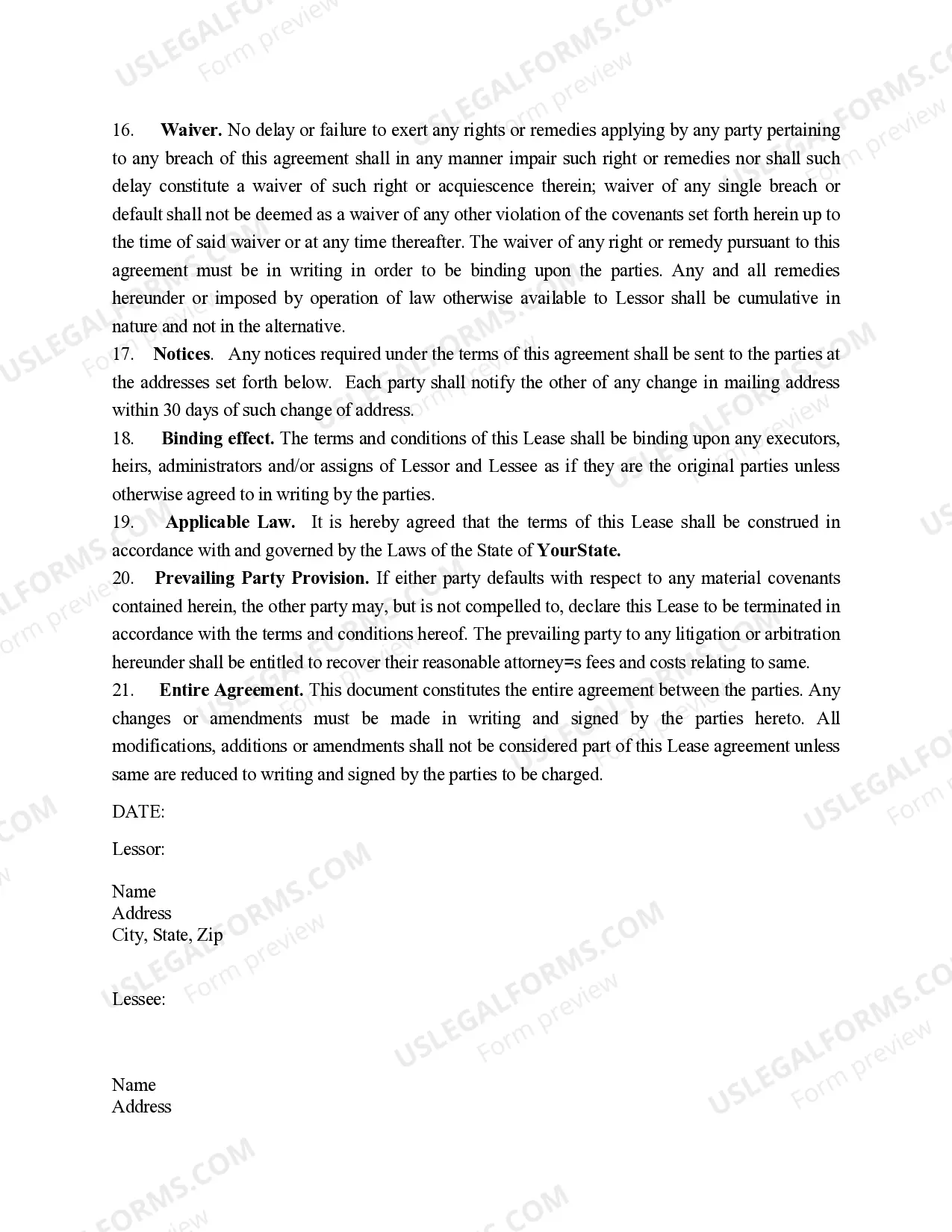
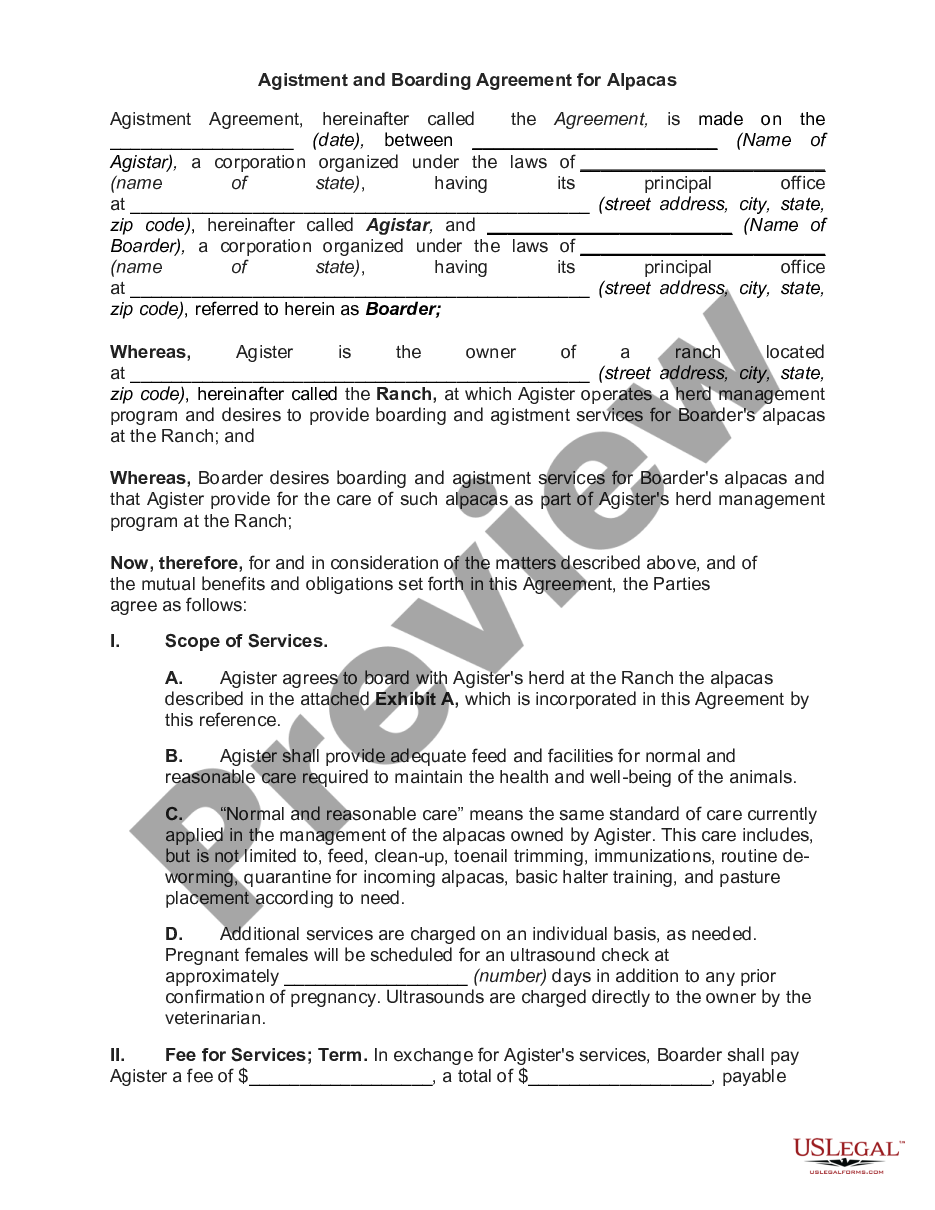
The Performance Horse Lease Agreement is a legally binding document used when an individual (the lessee) wishes to lease a horse from another party (the lessor) for riding and competition purposes. This agreement outlines the terms of the lease, including payment details, permitted activities, and responsibilities for care and maintenance. It is distinct from other horse-related agreements, such as purchase agreements or casual lease arrangements, by specifying the performance-related use of the horse.
Key components of this form
- Lease term: Specifies the start and end dates of the lease.
- Lease payments: Details the payment schedule and amounts due.
- Permitted uses: Outlines acceptable activities for the horse during the lease.
- Right of first refusal: Grants the lessee the first opportunity to purchase the horse if the lessor decides to sell.
- Termination conditions: Lists scenarios under which the lease may be terminated early.

Common use cases
Use the Performance Horse Lease Agreement when you want to formally lease a horse for riding or competing. This is particularly useful for equestrians looking to participate in events without the commitment of ownership. This agreement helps set clear expectations between the horse owner and the lessee, ensuring that all parties understand their rights and responsibilities.
Who this form is for
- Individuals interested in leasing a horse for recreational riding or competitive events.
- Horse owners who are willing to lease their horse to others.
- Professional trainers requiring a structured lease agreement for show horses.
- Anyone seeking to formalize the terms of a horse lease to prevent misunderstandings.
Steps to complete this form
- Identify the parties involved: Fill in the names and contact information for both the lessor and lessee.
- Specify the horse: Include details about the horse, such as its name, breed, and registration number.
- Insert dates: Clearly outline the start and end dates for the lease period.
- Outline payment terms: Enter the amounts and schedule for lease payments.
- Review permitted uses: Ensure all acceptable activities for the horse are clearly documented.
Is notarization required?
Notarization is not commonly needed for this form. However, certain documents or local rules may make it necessary. Our notarization service, powered by Notarize, allows you to finalize it securely online anytime, day or night.
Get your form ready online
Our built-in tools help you complete, sign, share, and store your documents in one place.
Make edits, fill in missing information, and update formatting in US Legal Forms—just like you would in MS Word.
Download a copy, print it, send it by email, or mail it via USPS—whatever works best for your next step.
Sign and collect signatures with our SignNow integration. Send to multiple recipients, set reminders, and more. Go Premium to unlock E-Sign.
If this form requires notarization, complete it online through a secure video call—no need to meet a notary in person or wait for an appointment.
We protect your documents and personal data by following strict security and privacy standards.

Make edits, fill in missing information, and update formatting in US Legal Forms—just like you would in MS Word.

Download a copy, print it, send it by email, or mail it via USPS—whatever works best for your next step.

Sign and collect signatures with our SignNow integration. Send to multiple recipients, set reminders, and more. Go Premium to unlock E-Sign.

If this form requires notarization, complete it online through a secure video call—no need to meet a notary in person or wait for an appointment.

We protect your documents and personal data by following strict security and privacy standards.
Typical mistakes to avoid
- Failing to specify the allowed uses of the horse, potentially leading to misunderstandings.
- Not including all payment terms, which could cause payment disputes later.
- Neglecting to include specific termination conditions, leaving both parties uncertain about their rights.
- Omitting essential details about the horse, including its registration or identification.
Benefits of using this form online
- Convenience of filling out and downloading the agreement from anywhere.
- Editable format allows users to tailor the document to their specific needs.
- Access to templates drafted by licensed attorneys, ensuring legal compliance.
- Quick and easy usability, reducing the time spent on paperwork.
Legal use & context
- A Performance Horse Lease Agreement is essential to clarify the rights and obligations of both parties and avoid potential disputes.
- This agreement can be enforced in court as long as it adheres to local laws and the specific terms laid out within the document.
Main things to remember
- The Performance Horse Lease Agreement formalizes the leasing of a horse for riding or competition.
- Clearly outlines payment terms, permitted activities, and responsibilities of both parties.
- Helps prevent disputes by detailing all aspects of the arrangement.
Looking for another form?
Form popularity
FAQ
Option #1: The person leasing the horse is responsible for all of the horse's expenses (board, feed, veterinary, farrier, etc). The person leasing the horse may ride or use the horse any time they'd like. Full leases rarely restrict riding days, times, or horse-related events, like attending a horse show.
Full Leasing a Horse When you full lease a horse you pay an agreed upon fee for exclusive access to the horse. This means you are the only one riding the horse.
Leases vary - at my barn the cost of a half lease is $475 per month (for privately owned or barn owned horses), which includes one lesson and two "practice rides" (riding without a coach).
Lease-to-Buy Equine Contract To purchase the horse, the buyer will pay the full purchase price during the lease term. During this time, the buyer will continue making lease payments per the parties' agreement, which will potentially go toward the total purchase price of the horse.
FULL LEASE: For $400 per month, you will have full, exclusive use of the horse. Full-leases require that you also pay to the costs of routine farrier and health care, which will vary according to the horse's needs.
A free lease means that the horse is leased to someone without any payment to the owner. When you have a free lease you retain ownership and control of your horse but your horse, in best case scenarios, is still cared for and loved. Everyone wins. The owner has good care for the horse they love.
When you full lease a horse you pay an agreed upon fee for exclusive access to the horse. This means you are the only one riding the horse.Oftentimes a full-lease also comes with the additional costs of board, veterinary expenses and shoeing expenses. It is pretty much exactly like owning the horse yourself.
Leasing a horse is nearly always less expensive than buying one.Leasing often allows riders of all levels to get a better quality horse than they might buy. Horse owners don't usually sell their best or most promising horses, but do lease them out when they don't have time for them or need some extra income.