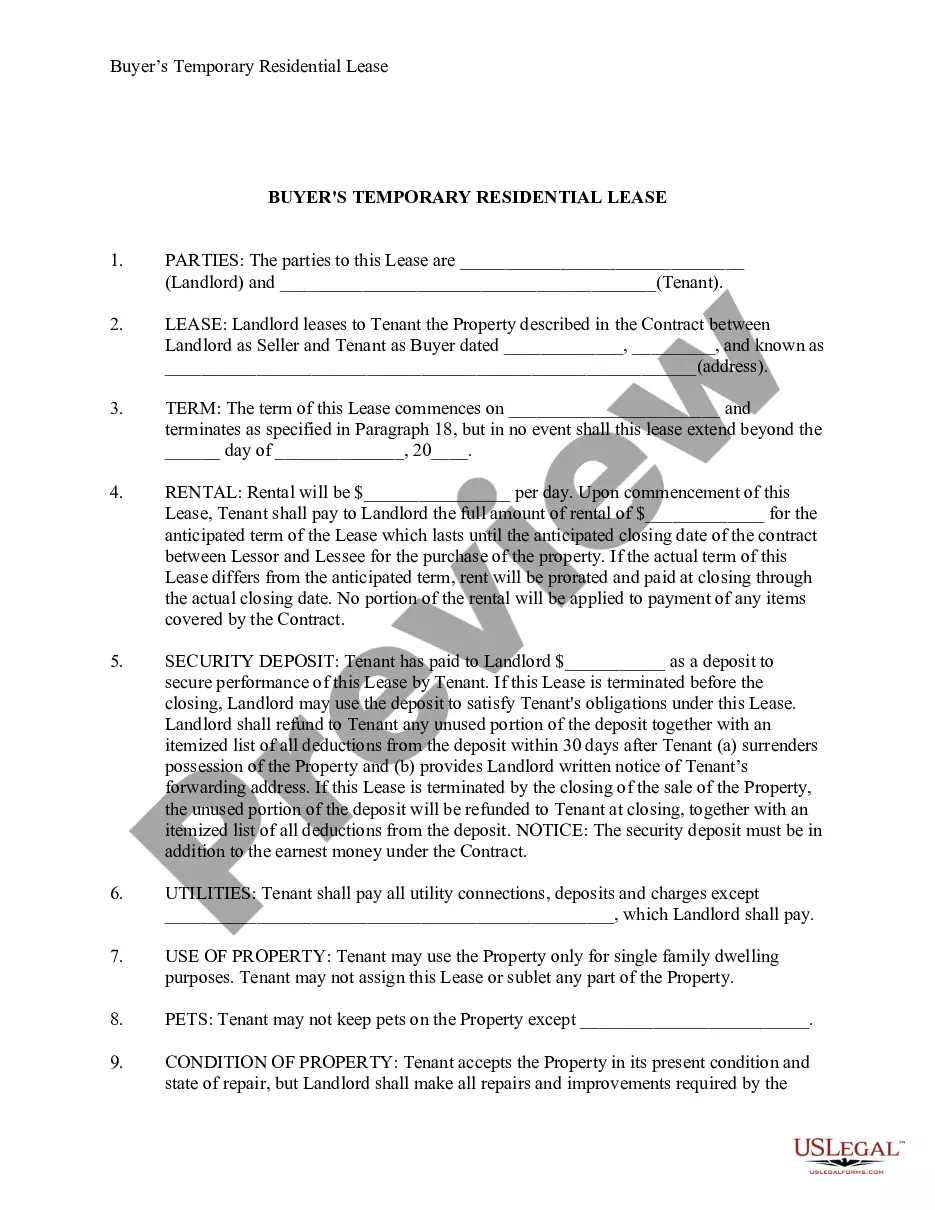
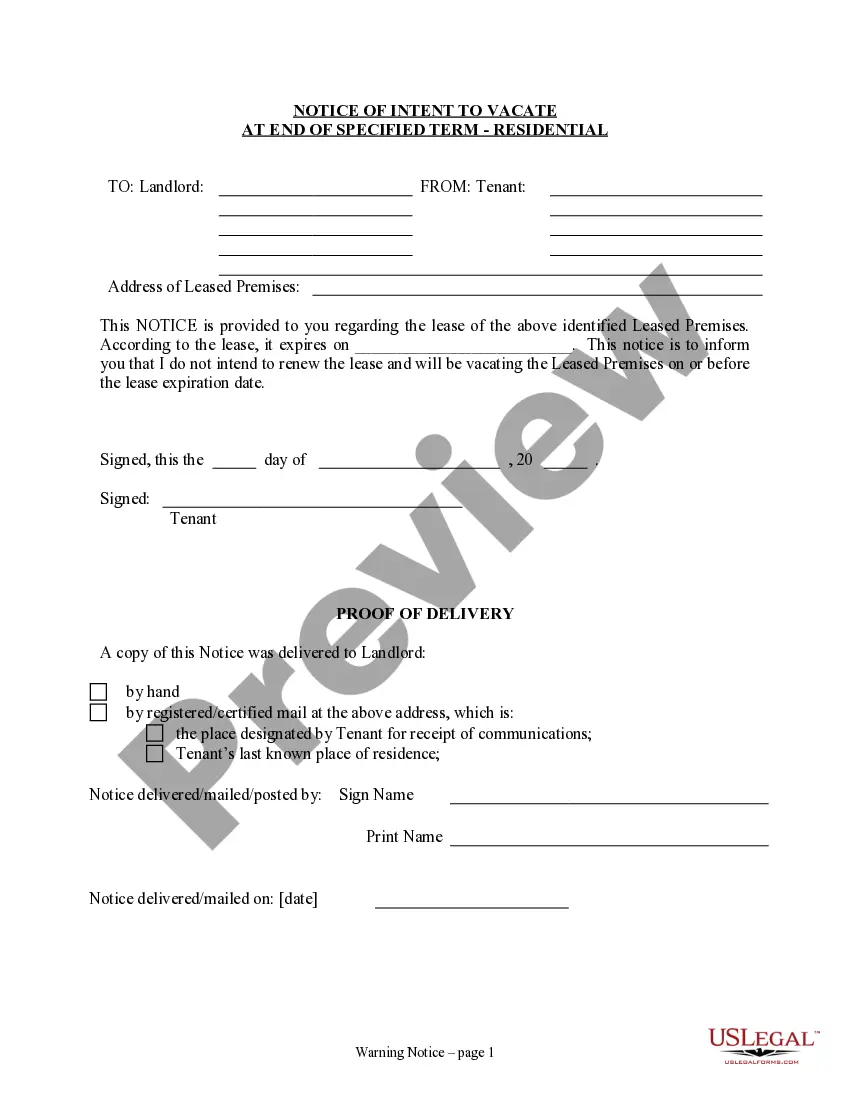
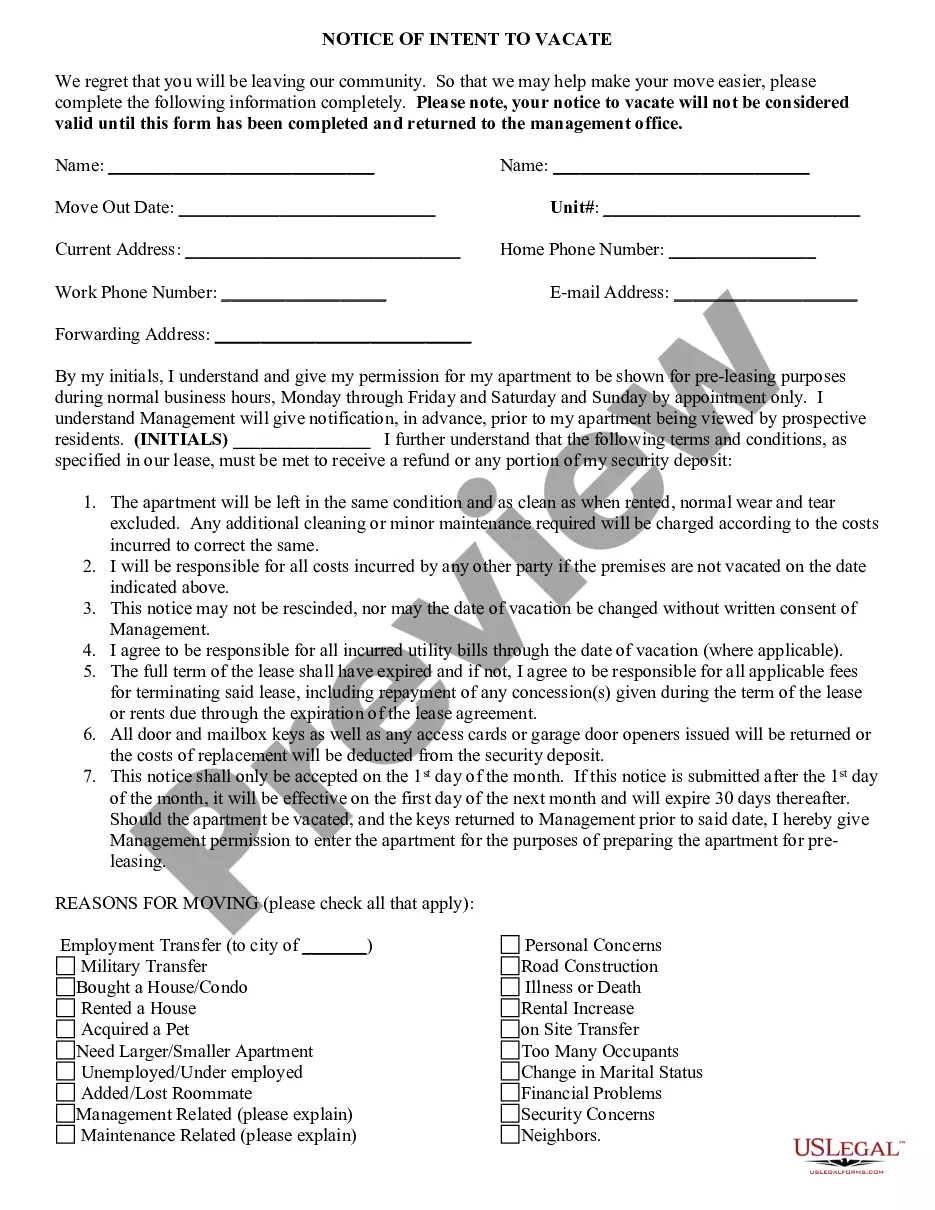
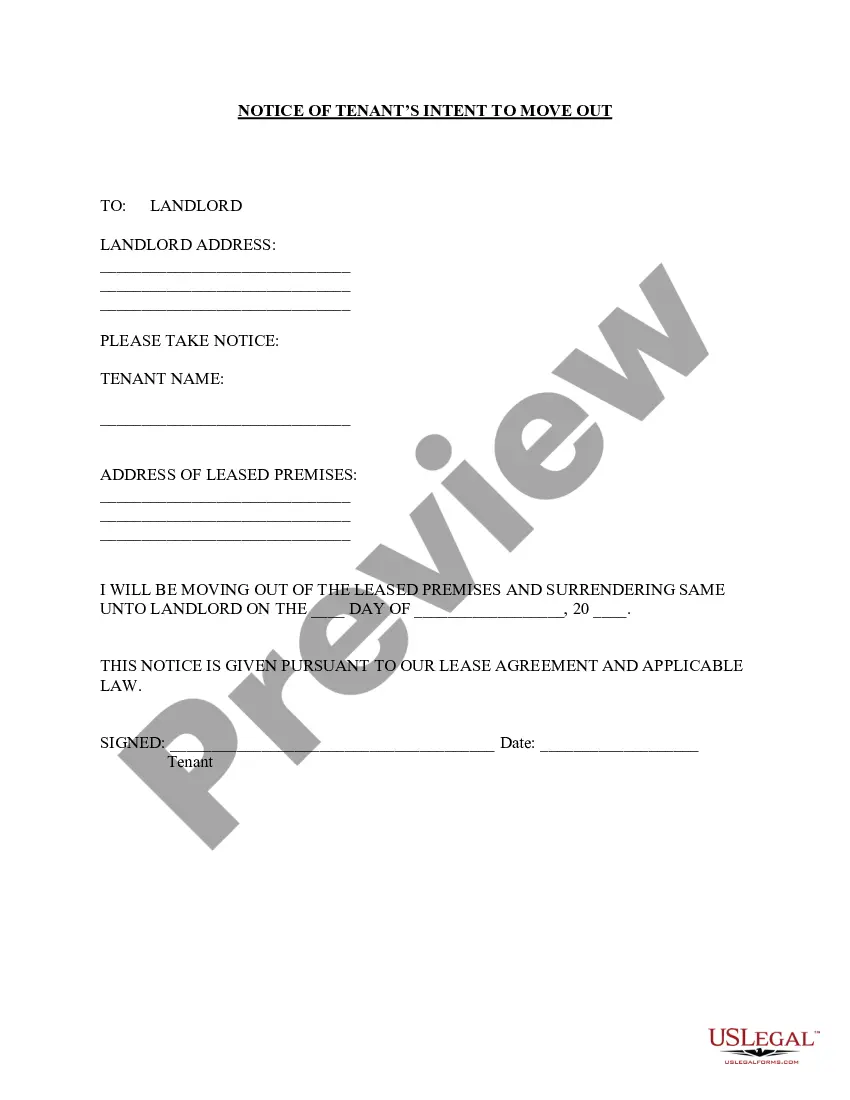
This Notice of Intent to Vacate at End of Specified Lease Term from Tenant to Landlord for Residential Property means generally, no notice is required to terminate a lease which ends at a specific date. Example: "This lease begins on January 1, 2005 and ends on January 1, 2006". However, Landlords and Tenants routinely renew such leases. This form is for use by a Tenant to inform the Landlord that the Tenant intends to vacate at the end of the specified term.
Ohio Notice of Intent to Vacate at End of Specified Lease Term from Tenant to Landlord for Residential Property
State:
Ohio
Control #:
OH-1302LT
Format:
Word;
Rich Text
Instant download
Description

How to fill out Ohio Notice Of Intent To Vacate At End Of Specified Lease Term From Tenant To Landlord For Residential Property?
In terms of filling out Ohio Notice of Intent to Vacate at End of Specified Lease Term from Tenant to Landlord for Residential Property, you most likely imagine a long process that involves finding a appropriate sample among hundreds of similar ones after which having to pay out legal counsel to fill it out for you. Generally speaking, that’s a slow and expensive choice. Use US Legal Forms and choose the state-specific document within just clicks.
In case you have a subscription, just log in and click Download to have the Ohio Notice of Intent to Vacate at End of Specified Lease Term from Tenant to Landlord for Residential Property sample.
In the event you don’t have an account yet but want one, keep to the step-by-step guideline listed below:
- Be sure the file you’re getting is valid in your state (or the state it’s needed in).
- Do this by reading the form’s description and by clicking on the Preview option (if available) to see the form’s content.
- Click on Buy Now button.
- Pick the suitable plan for your budget.
- Subscribe to an account and choose how you want to pay out: by PayPal or by card.
- Save the document in .pdf or .docx file format.
- Find the file on your device or in your My Forms folder.
Professional legal professionals draw up our templates to ensure that after downloading, you don't need to worry about editing and enhancing content outside of your individual details or your business’s info. Join US Legal Forms and receive your Ohio Notice of Intent to Vacate at End of Specified Lease Term from Tenant to Landlord for Residential Property example now.
Form popularity
FAQ
Explain the Situation Tell your tenant in straightforward terms what the problem is, and explain that they cannot stay on the property any longer. Describe the Consequences Calmly explain that they will be evicted with necessary court orders if they remain on the property.
At-will tenancy is subject to the will of both the tenant and the landlord (hence the name). In other words, the tenant can choose to leave and stop paying rent at any time, and the landlord can choose to stop accepting rent and ask the tenant to leave at any time.
A holdover tenant is a tenant who stays in the rental unit after the lease expires. If the tenant continues to pay rent, the tenancy essentially becomes a month-to-month tenancy. A holdover tenant is legally allowed to stay in the rental unit as long as the landlord takes no action to remove them.
A termination notice has to give the tenant 14 clear days before the tenant has to leave the residential premises. The day the notice is served on the tenant and the day the tenant moves out do not count as part of the 14 days.
A landlord can simply give you a written notice to move, allowing you 30 days (60 days if you've lived in the rental a year or more) as required by California law and specifying the date on which your tenancy will end.
They have to give you at least 28 days notice, but this could be longer depending on your agreement. If you don't leave by the time your notice ends, your landlord has to go to court to get a court order to make you leave.
Notice Requirements for Ohio Landlords A landlord can simply give you a written notice to move, allowing you 30 days as required by Ohio law and specifying the date on which your tenancy will end.
Tenants in the state of Ohio are granted certain rights by the state's landlord-tenant code, including the right to fair housing, the right to a return of the security deposit, and the right to notice before landlord entry.
To end a month-to-month tenancy, a landlord must give a tenant at least a 30-day written notice to move. The notice must state the date by which the tenant needs to be out of the rental unit.