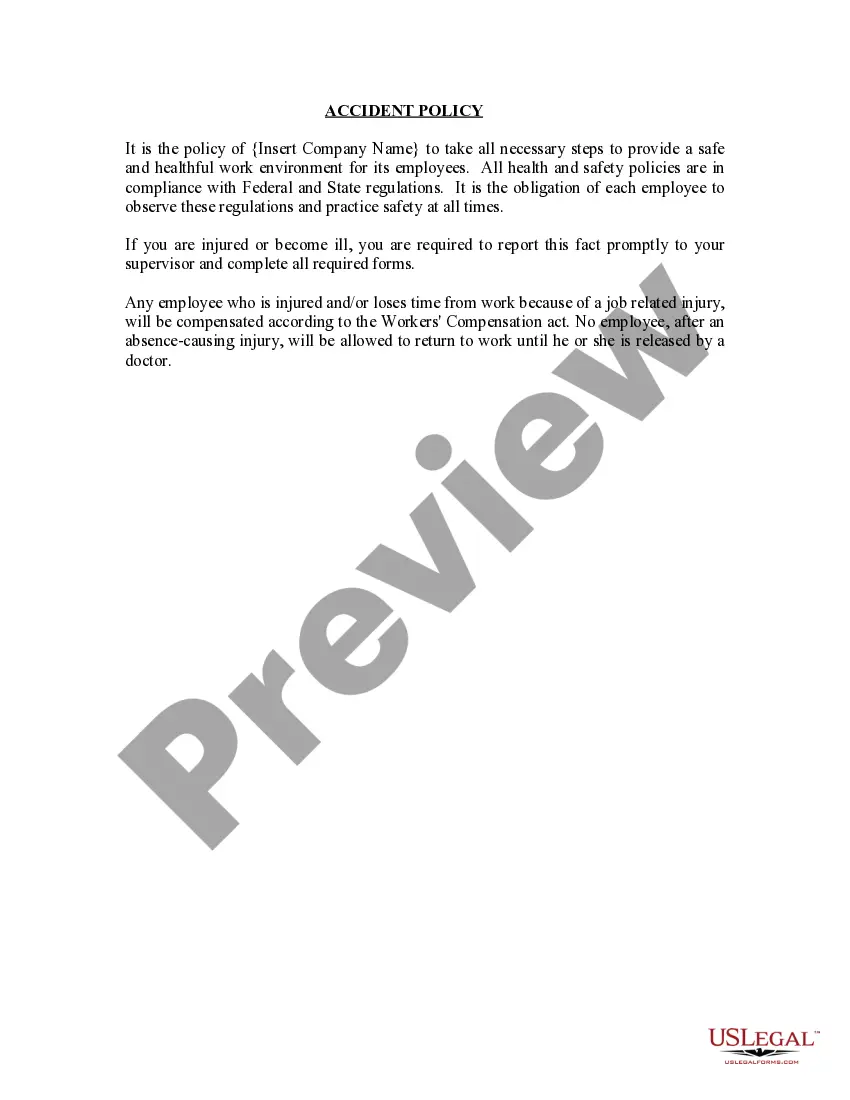
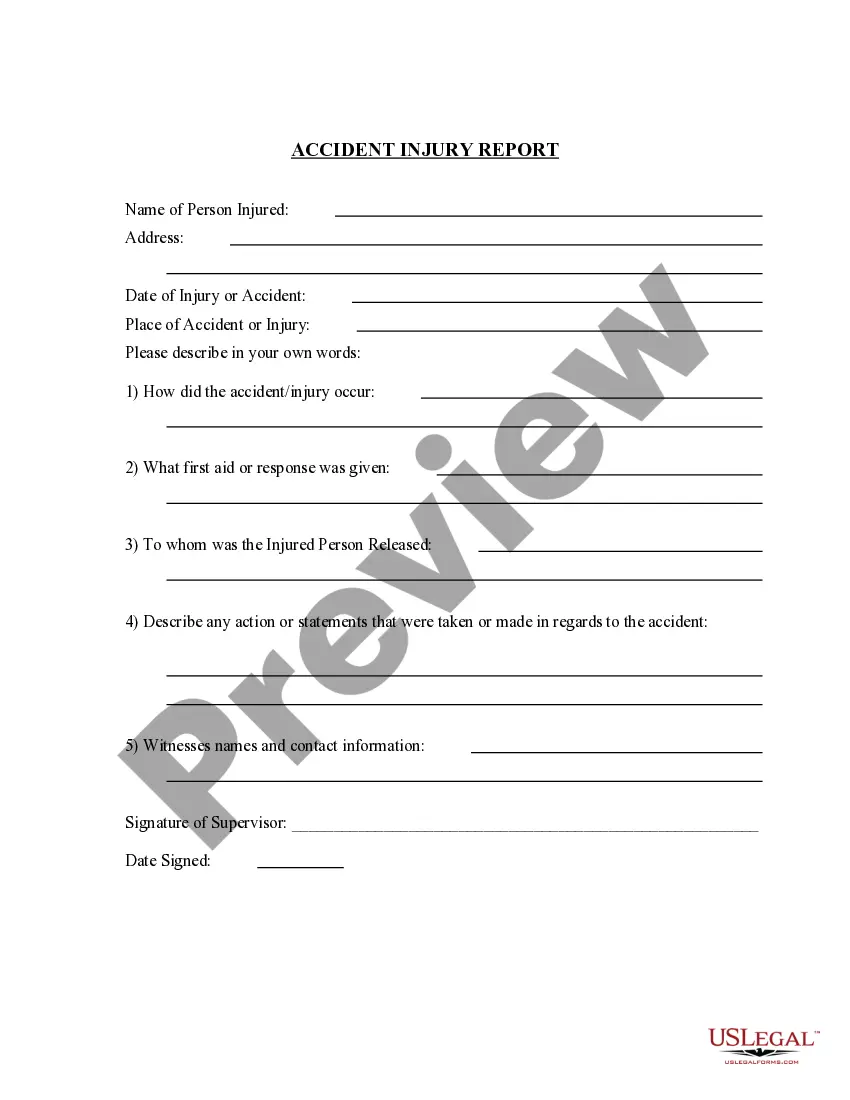
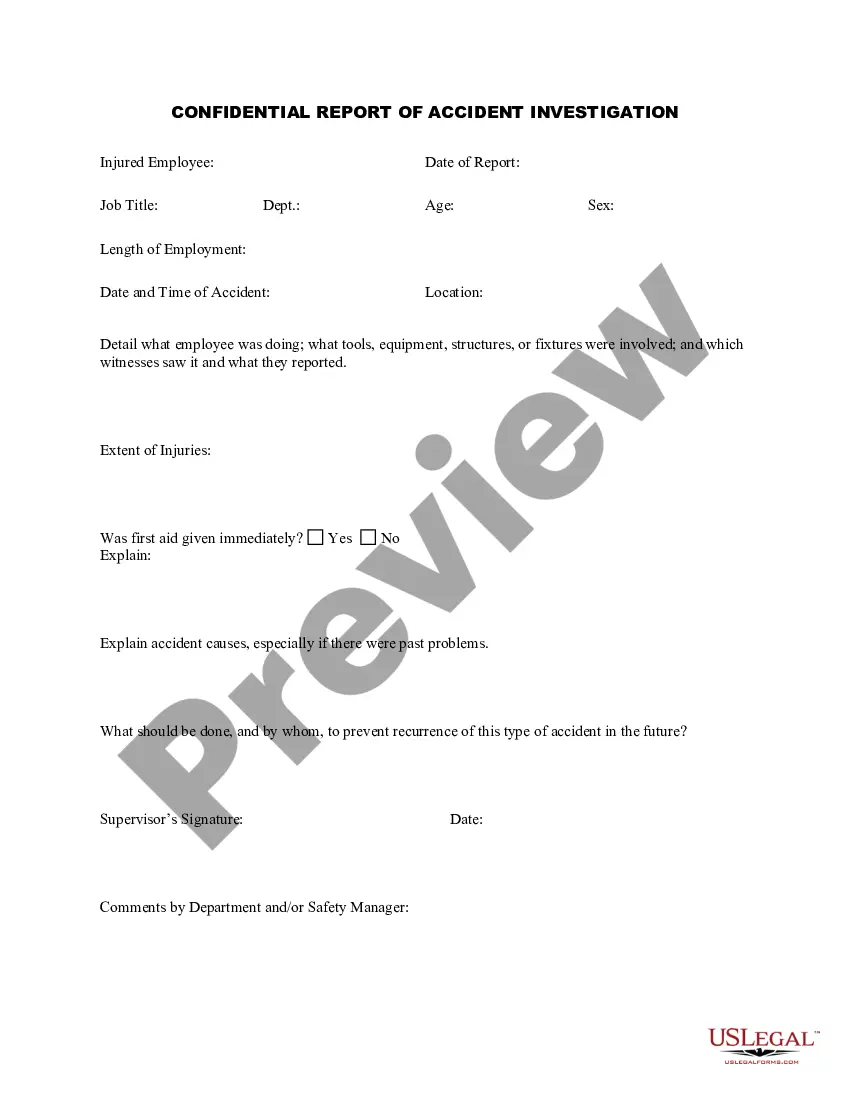
New York Accident Policy
Description

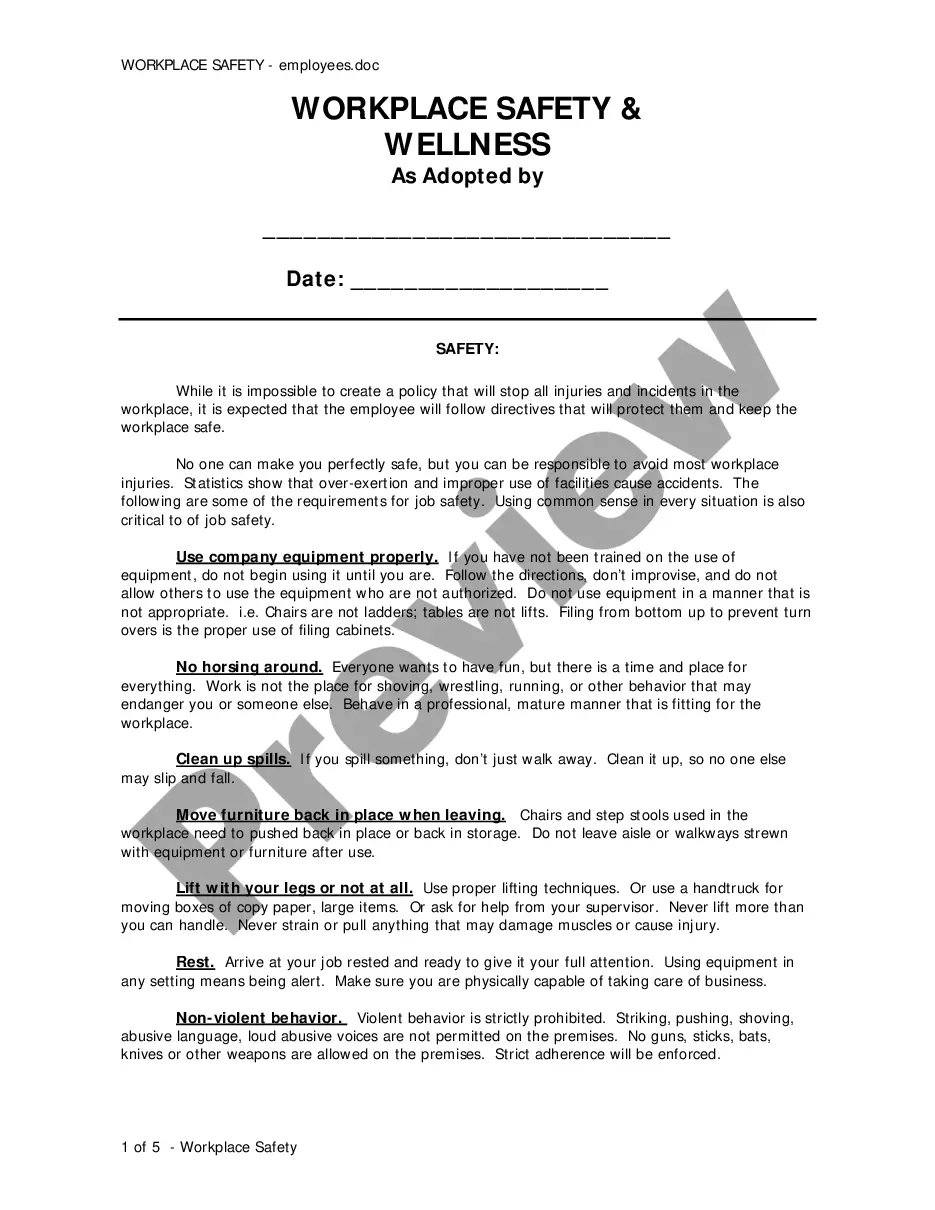
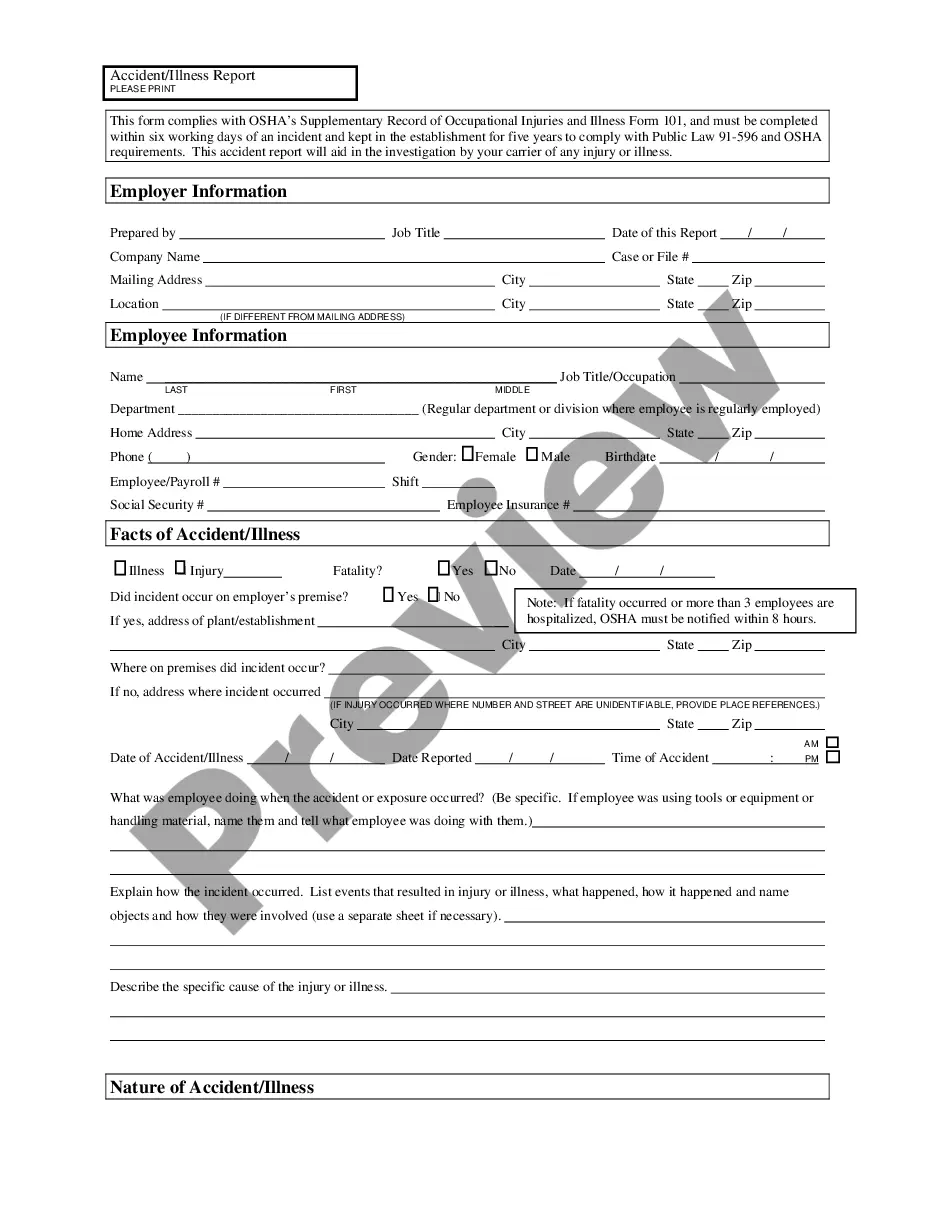
Get your form ready online
Our built-in tools help you complete, sign, share, and store your documents in one place.
Make edits, fill in missing information, and update formatting in US Legal Forms—just like you would in MS Word.
Download a copy, print it, send it by email, or mail it via USPS—whatever works best for your next step.
Sign and collect signatures with our SignNow integration. Send to multiple recipients, set reminders, and more. Go Premium to unlock E-Sign.
If this form requires notarization, complete it online through a secure video call—no need to meet a notary in person or wait for an appointment.
We protect your documents and personal data by following strict security and privacy standards.

Make edits, fill in missing information, and update formatting in US Legal Forms—just like you would in MS Word.

Download a copy, print it, send it by email, or mail it via USPS—whatever works best for your next step.

Sign and collect signatures with our SignNow integration. Send to multiple recipients, set reminders, and more. Go Premium to unlock E-Sign.

If this form requires notarization, complete it online through a secure video call—no need to meet a notary in person or wait for an appointment.

We protect your documents and personal data by following strict security and privacy standards.
Looking for another form?
How to fill out Accident Policy?
US Legal Forms - one of the largest collections of legal documents in the country - provides a selection of legal document templates that you can download or print.
While utilizing the site, you can access numerous forms for business and personal use, organized by categories, states, or keywords. You can also find the latest editions of documents such as the New York Accident Policy in just a few minutes.
If you already have a monthly membership, Log In and download the New York Accident Policy from the US Legal Forms library. The Download button will appear on every document you view. You can find all previously downloaded forms in the My documents section of your account.
Select the format and download the document to your device. Make changes. Fill out, edit, and print and sign the downloaded New York Accident Policy.
Each template you add to your account has no expiration date and is yours indefinitely. Therefore, if you wish to download or print another copy, simply visit the My documents section and click on the document you need. Access the New York Accident Policy with US Legal Forms, the most extensive collection of legal document templates. Utilize countless professional and state-specific templates that meet your business or personal needs.
- If you are using US Legal Forms for the first time, here are some simple instructions to help you get started.
- Ensure you have selected the correct document for your city/region. Click the Preview button to review the document's content.
- Check the document description to confirm that you have chosen the right form.
- If the document does not meet your requirements, utilize the Search box at the top of the screen to find one that does.
- If you are satisfied with the document, confirm your selection by clicking the Get now button. Then, choose the payment plan you prefer and provide your details to create an account.
- Process the payment. Use your credit card or PayPal account to complete the transaction.
Form popularity
FAQ
In New York, an accident typically remains on your driving record for up to three years. During this time, it can impact your insurance rates and your driving history under your New York accident policy. Keeping your driving record clean is essential; thus, understanding this duration helps you plan your insurance needs effectively.
Because of New York's No-Fault law, lawsuits due to auto accidents can be brought only for economic losses that exceed No-Fault benefits and for non-economic damages (such as pain and suffering) only if a "serious injury" (as defined in the Insurance Law) is sustained.
Stop and Notify Police New York State law requires any person involved in an accident to stop at the scene. If possible, move the vehicles involved to the side of the road to prevent further damage or injury. If the accident caused injuries or significant property damage, it is the law to contact the police.
New York follows a "pure comparative fault" rule when both parties are found to share blame for an accident. In most car accident cases, the jury is asked to calculate two things based on the evidence: the total dollar amount of the plaintiff's damages, and the percentage of fault that belongs to each party.
The rule of thumb for the average driver is that the driver of the car that rear ends another is always at fault. Meaning that 100% of the blame would then be attributed to the driver who drove into the back of another vehicle.
Insurance company adjusters determine fault in an auto accident after reviewing the police report and other evidence. They may also ask you and the other driver questions about the collision to try to piece together a reliable narrative of what happened.
New York follows a "pure comparative fault" rule when both parties are found to share blame for an accident. In most car accident cases, the jury is asked to calculate two things based on the evidence: the total dollar amount of the plaintiff's damages, and the percentage of fault that belongs to each party.
Because of New York's No-Fault law, lawsuits due to auto accidents can be brought only for economic losses that exceed No-Fault benefits and for non-economic damages (such as pain and suffering) only if a "serious injury" (as defined in the Insurance Law) is sustained.
Collision insurance: If the owner of the car has collision insurance (which is optional) then his own insurance must pay to repair the car or pay the replacement cost if the car is totaled. Usually there will be a deductible (usually no more than $500).
New York is a no-fault insurance state, which means that insureds are generally reimbursed by their insurance company for damages regardless of who was responsible for causing the accident. Insureds can be reimbursed for medical costs and other losses that might surface after the accident.