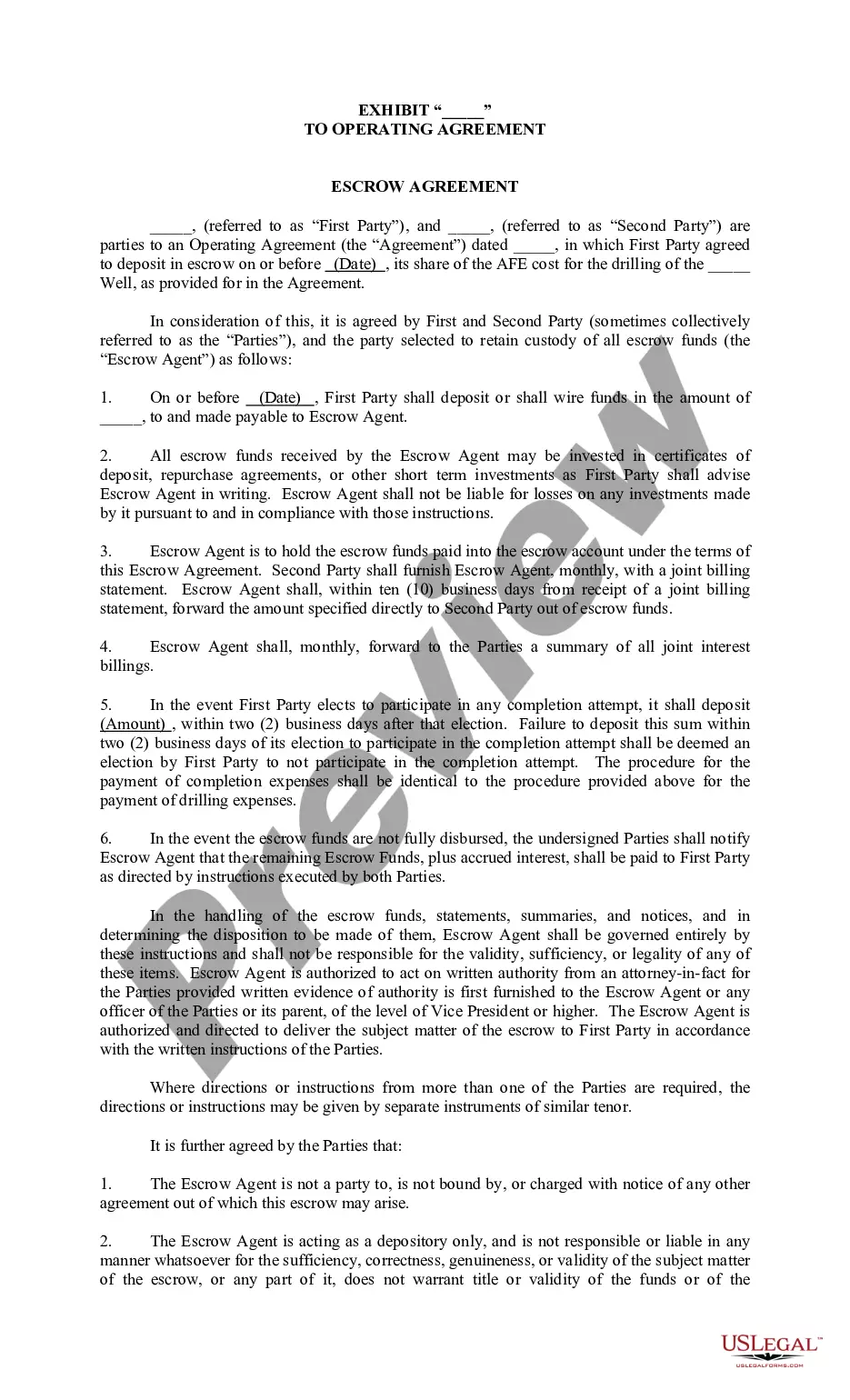
New York Release of Premises from Lien of Judgment
About this form
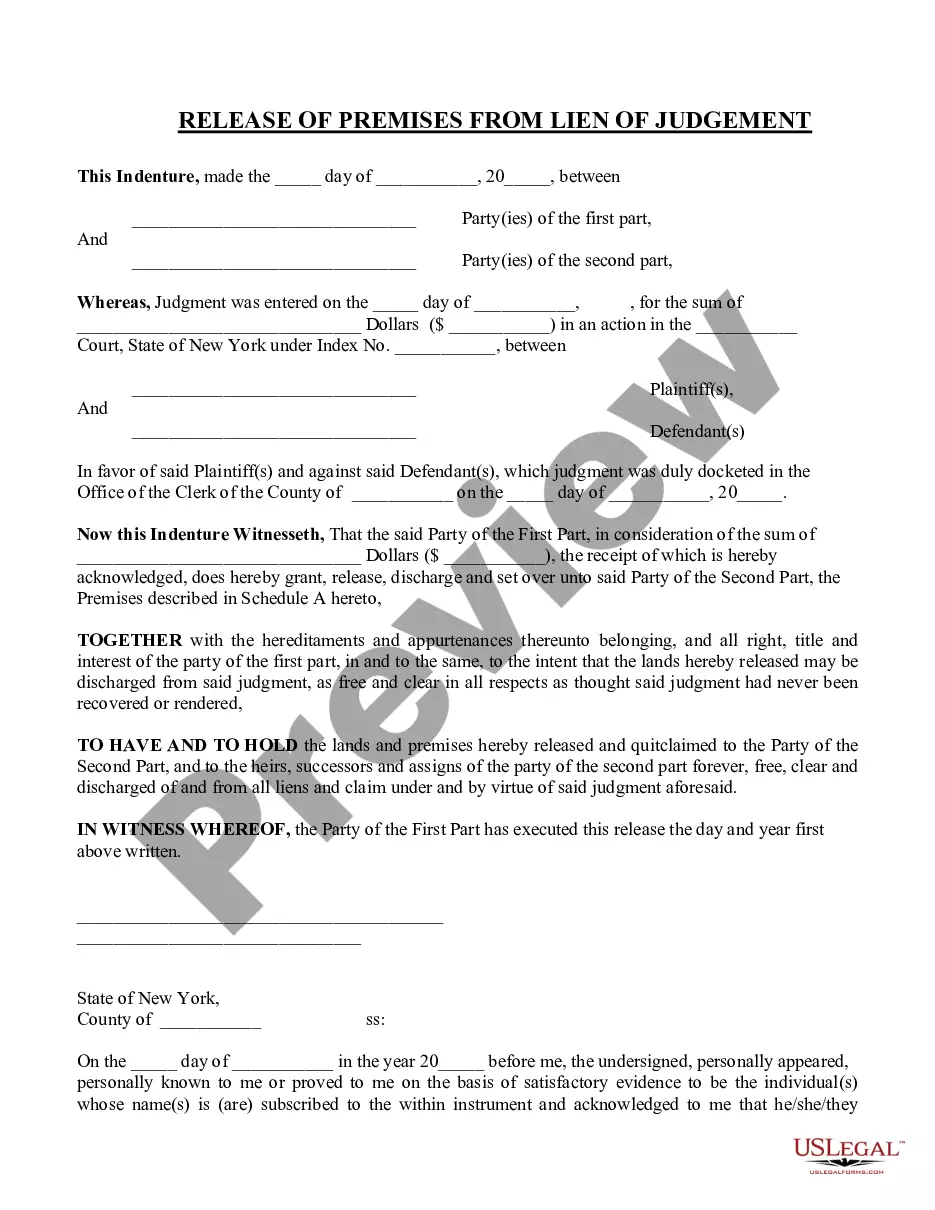
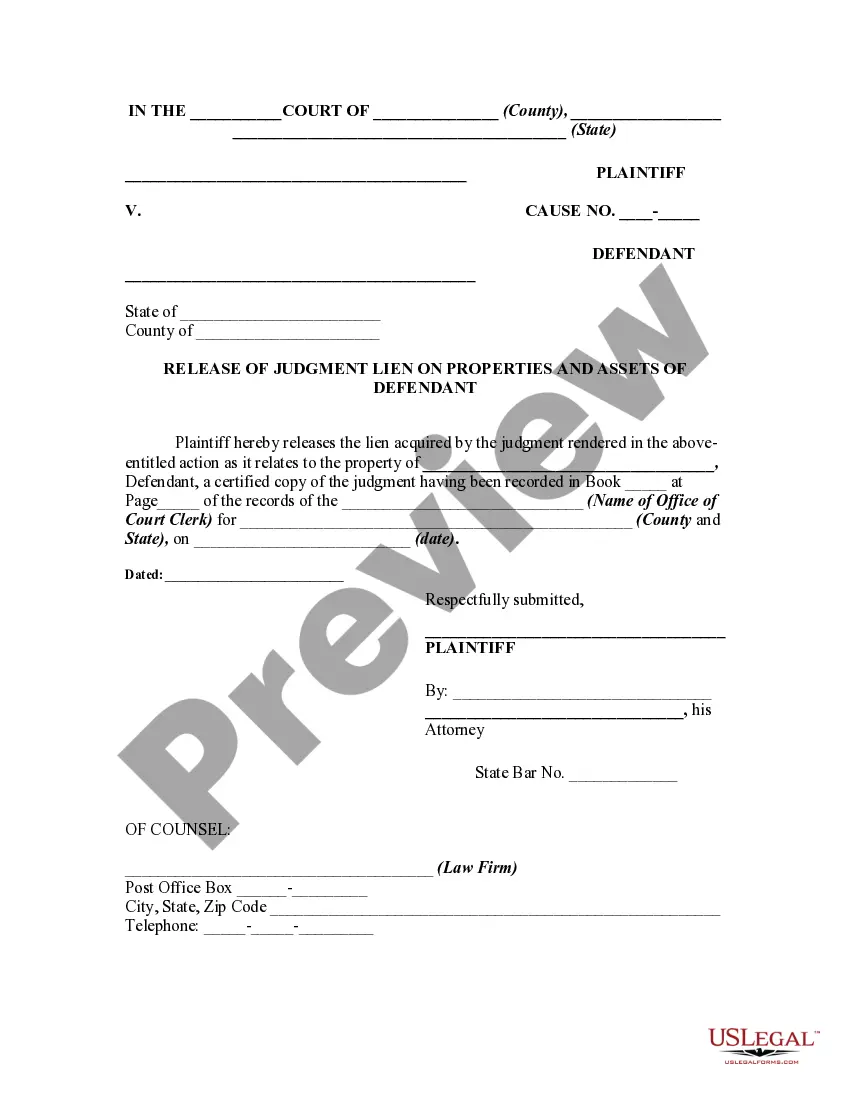
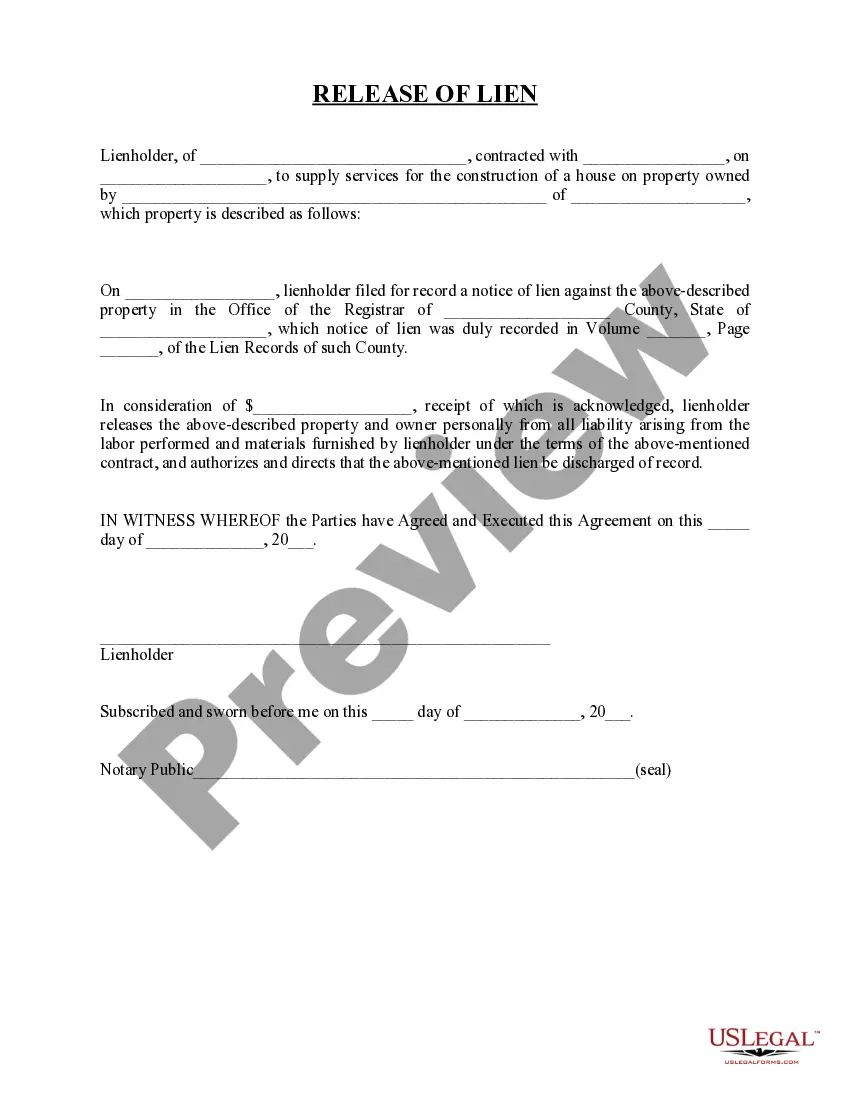
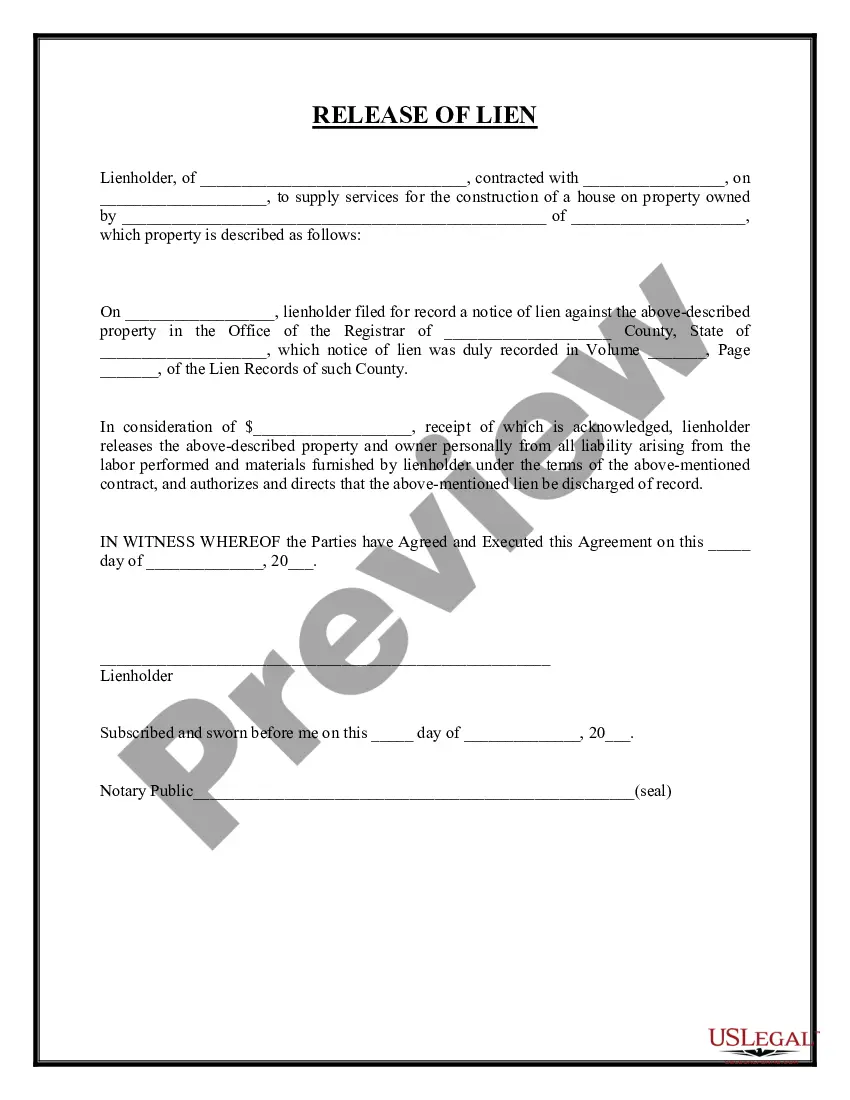
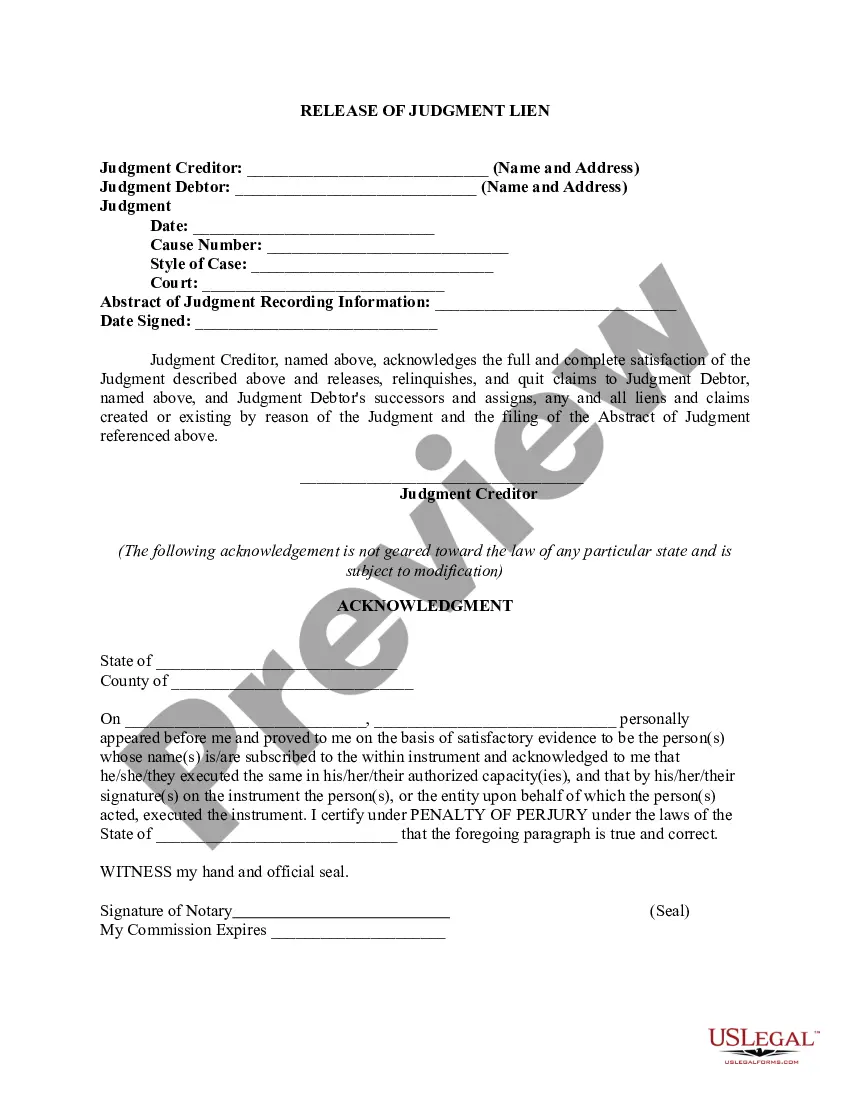
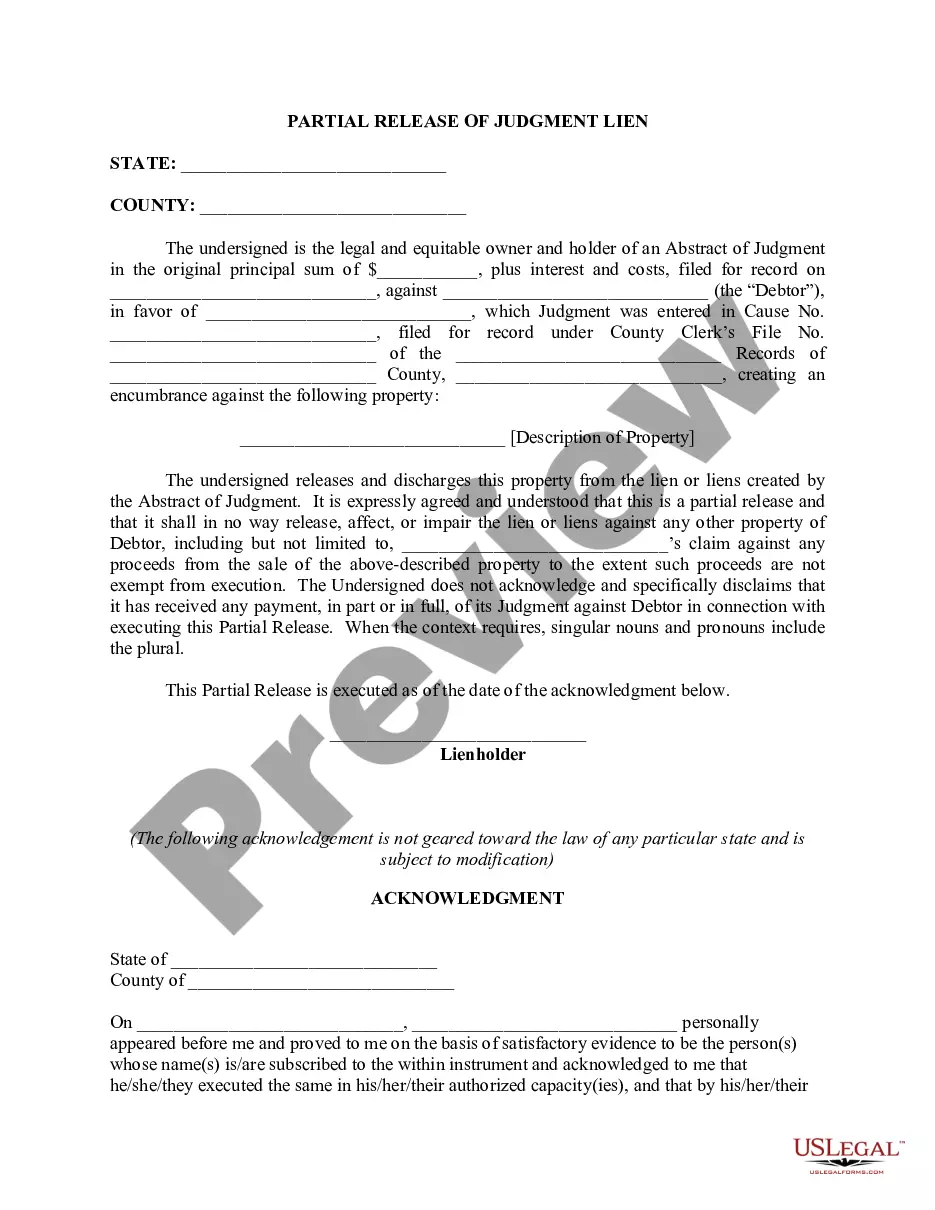
The Release of Premises from Lien of Judgment is a legal document that discharges a property from a lien placed due to a court judgment. This form is used when a successful party in a legal matter has received a monetary award and wants to release the real property from any claims related to that judgment. Unlike other lien release forms, this document specifically pertains to judgments and aims to clear the title of the property involved.
Main sections of this form
- Identification of the parties involved in the agreement.
- Details of the court judgment, including dates and amounts awarded.
- Description of the property being released from the lien.
- Statement confirming the discharge of all liens and claims related to the judgment.
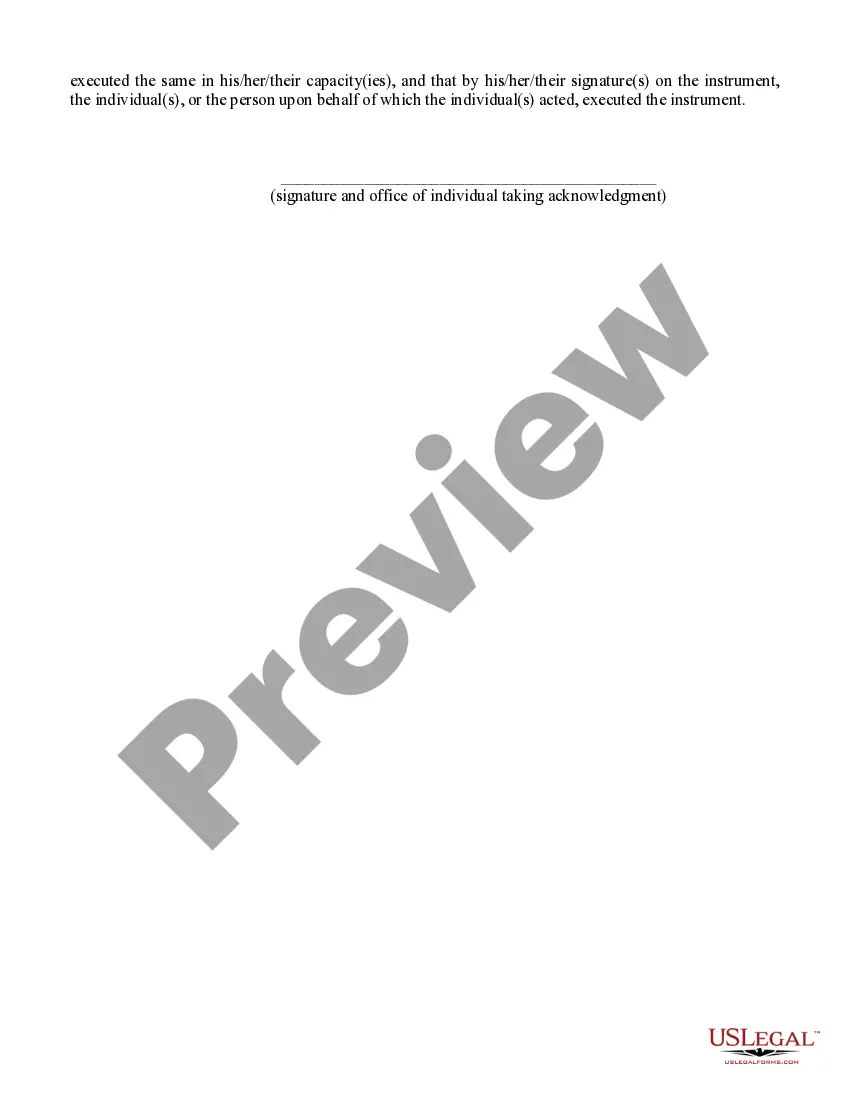
- Notary acknowledgment for verification of signatures.
When this form is needed
This form is necessary when a court judgment has been rendered, awarding a sum of money to one party, and that party is ready to formally release the related property from any legal claims or liens. Common situations include the settlement of debts or disputes where the successful party wants to ensure the property is free and clear of any judgments before selling or refinancing it.
Intended users of this form
- Individuals or entities who have won a court judgment and have received a monetary settlement.
- Property owners looking to clear their property title from any liens after settlement.
- Attorneys handling the release of property from a judgment lien on behalf of their clients.
How to complete this form
- Identify the parties involved by entering their full names and addresses.
- Provide the details of the court judgment, including the date, amount awarded, and court name.
- Describe the property being released from the lien, as listed in Schedule A.
- Specify the amount received as consideration for the release.
- Have all parties sign the document in the presence of a notary public.
Is notarization required?
Yes, this form must be notarized to be legally valid. Notarization ensures the authenticity of the signatures and the integrity of the document. US Legal Forms offers integrated online notarization, allowing you to complete this process securely via video call at your convenience.
Get your form ready online
Our built-in tools help you complete, sign, share, and store your documents in one place.
Make edits, fill in missing information, and update formatting in US Legal Forms—just like you would in MS Word.
Download a copy, print it, send it by email, or mail it via USPS—whatever works best for your next step.
Sign and collect signatures with our SignNow integration. Send to multiple recipients, set reminders, and more. Go Premium to unlock E-Sign.
If this form requires notarization, complete it online through a secure video call—no need to meet a notary in person or wait for an appointment.
We protect your documents and personal data by following strict security and privacy standards.

Make edits, fill in missing information, and update formatting in US Legal Forms—just like you would in MS Word.

Download a copy, print it, send it by email, or mail it via USPS—whatever works best for your next step.

Sign and collect signatures with our SignNow integration. Send to multiple recipients, set reminders, and more. Go Premium to unlock E-Sign.

If this form requires notarization, complete it online through a secure video call—no need to meet a notary in person or wait for an appointment.

We protect your documents and personal data by following strict security and privacy standards.
Common mistakes
- Failing to include accurate details of the court judgment.
- Not correctly identifying the legal description of the property.
- Leaving fields blank, such as the amount received or dates.
- Forgetting to have the document notarized when required.
Benefits of completing this form online
- Convenience of accessing the form and completing it from anywhere.
- Easy editability to customize the form for your specific situation.
- Reliability of having a document drafted by licensed attorneys.
Looking for another form?
Form popularity
FAQ
Salary That Can't be Taken To Pay Money Judgments But, salary can't be garnished if after taxes, it is less than 30 times minimum wage. For example, if minimum wage is $13.00 an hour, if the debtor earns $390 per week or less after taxes, all of the money is exempt from garnishment.
Personal Property Execution The Judgment Creditor may file or request a Property Execution asking that the property be seized and sold with the sole proceeds being used to pay off the balance due on the Debtor's judgment. There is no charge for filing or requesting a Property Execution.
How long does a judgment lien last in New York? A judgment lien in New York will remain attached to the debtor's property (even if the property changes hands) for ten years.
Yes, a lien may be placed on property that is jointly owned.
To remove a lien you have to pay the judgment and get the judgment creditor to complete a notarized Acknowledgment of Satisfaction of Judgment (EJ-100). Either party can eFile the form to the court. Then the judgment creditor or you have to record a certified copy of this form in the county where the property is.
In New York, a judgment lien can be placed on a judgment debtor's real property or personal property to secure the collection of a money judgment. Real property is real estate, such as your house, condo, or other land. This means that in New York, a judgment creditor can place a judgment lien against your home.
Request a Release-of-Lien Form ? After paying off the balance of your debt in full, the creditor will file a release-of-lien form. This will act as evidence that the debt has been paid and will formally release the lien from your property.
Default Judgments The default judgment usually gives the plaintiff the right to collect the amount of money that was asked for in the complaint, plus interest and court costs. The judgment will appear on the defendant's credit report, and it can be there for up to seven years if it is not paid.