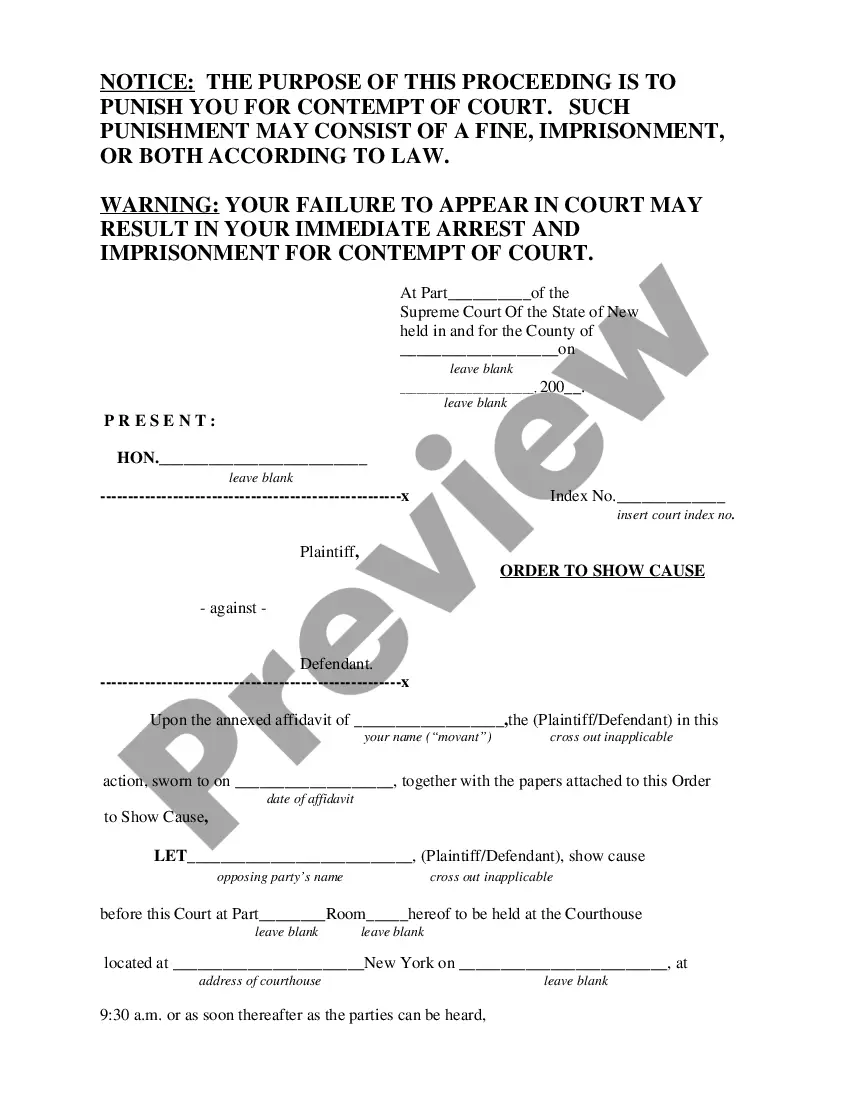
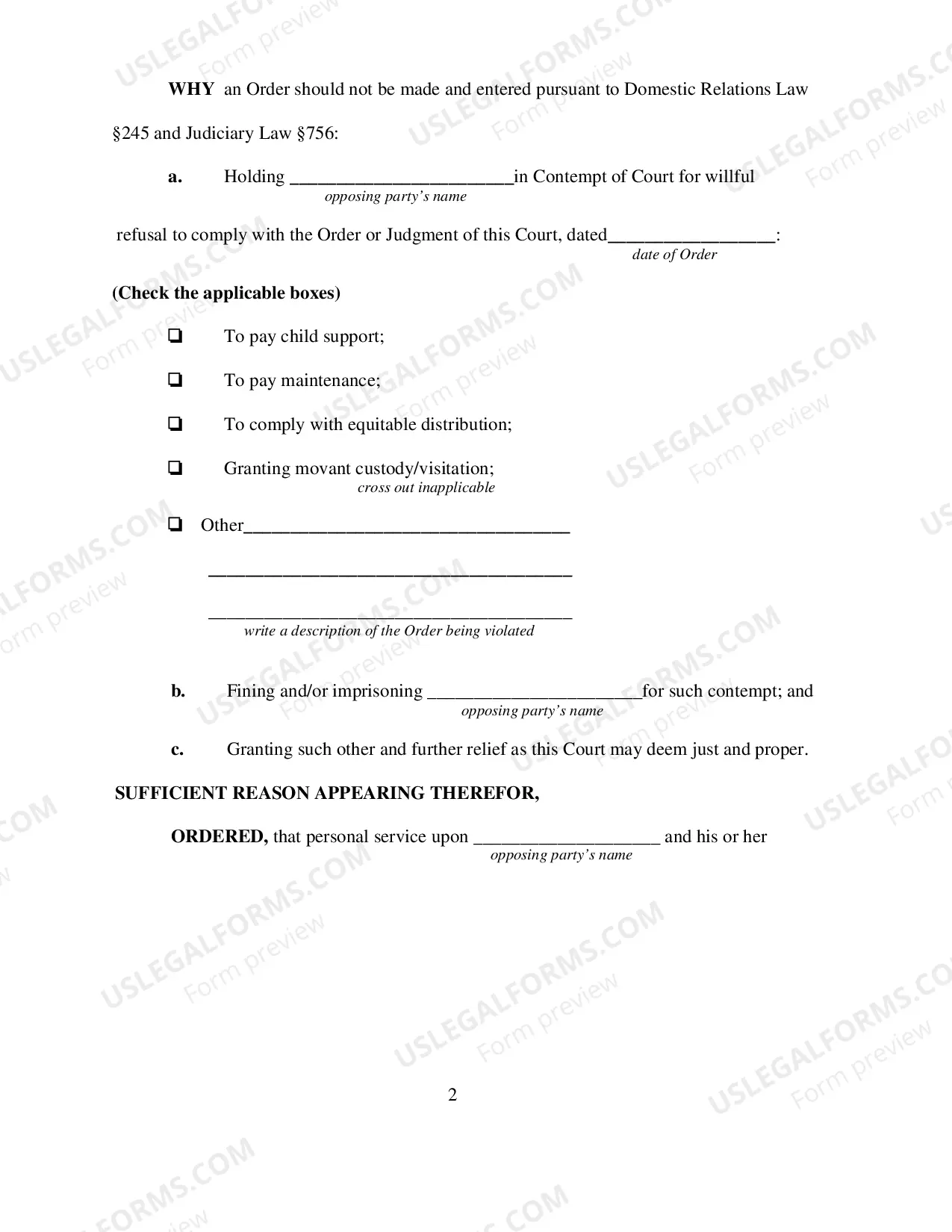
New York Order To Show Cause (Contempt of Court)
Is notarization required?
This form does not typically require notarization to be legally valid. However, some jurisdictions or document types may still require it. US Legal Forms provides secure online notarization powered by Notarize, available 24/7 for added convenience.
Get your form ready online
Our built-in tools help you complete, sign, share, and store your documents in one place.
Make edits, fill in missing information, and update formatting in US Legal Forms—just like you would in MS Word.
Download a copy, print it, send it by email, or mail it via USPS—whatever works best for your next step.
Sign and collect signatures with our SignNow integration. Send to multiple recipients, set reminders, and more. Go Premium to unlock E-Sign.
If this form requires notarization, complete it online through a secure video call—no need to meet a notary in person or wait for an appointment.
We protect your documents and personal data by following strict security and privacy standards.

Make edits, fill in missing information, and update formatting in US Legal Forms—just like you would in MS Word.

Download a copy, print it, send it by email, or mail it via USPS—whatever works best for your next step.

Sign and collect signatures with our SignNow integration. Send to multiple recipients, set reminders, and more. Go Premium to unlock E-Sign.

If this form requires notarization, complete it online through a secure video call—no need to meet a notary in person or wait for an appointment.

We protect your documents and personal data by following strict security and privacy standards.
Looking for another form?
Form popularity
FAQ
The five stages of divorce follow the common five stages of grief: denial, anger, bargaining, depression, and acceptance. When a couple is going through a divorce, both people involved experience these stages at different times, in different ways.
You are not happy. Most of your interactions are not positive. You find reasons to avoid your partner. Your friends or family urge you to end the relationship. Your instincts are telling you to get out. You live like roommates. Everything is hard. One or both have changed values or priorities.
The most commonly reported major contributors to divorce were lack of commitment, infidelity, and conflict/arguing. The most common final straw reasons were infidelity, domestic violence, and substance use. More participants blamed their partners than blamed themselves for the divorce.
There are four main types of California divorce options that can be chosen: no-fault divorce, uncontested divorce, simplified divorce and limited divorce.