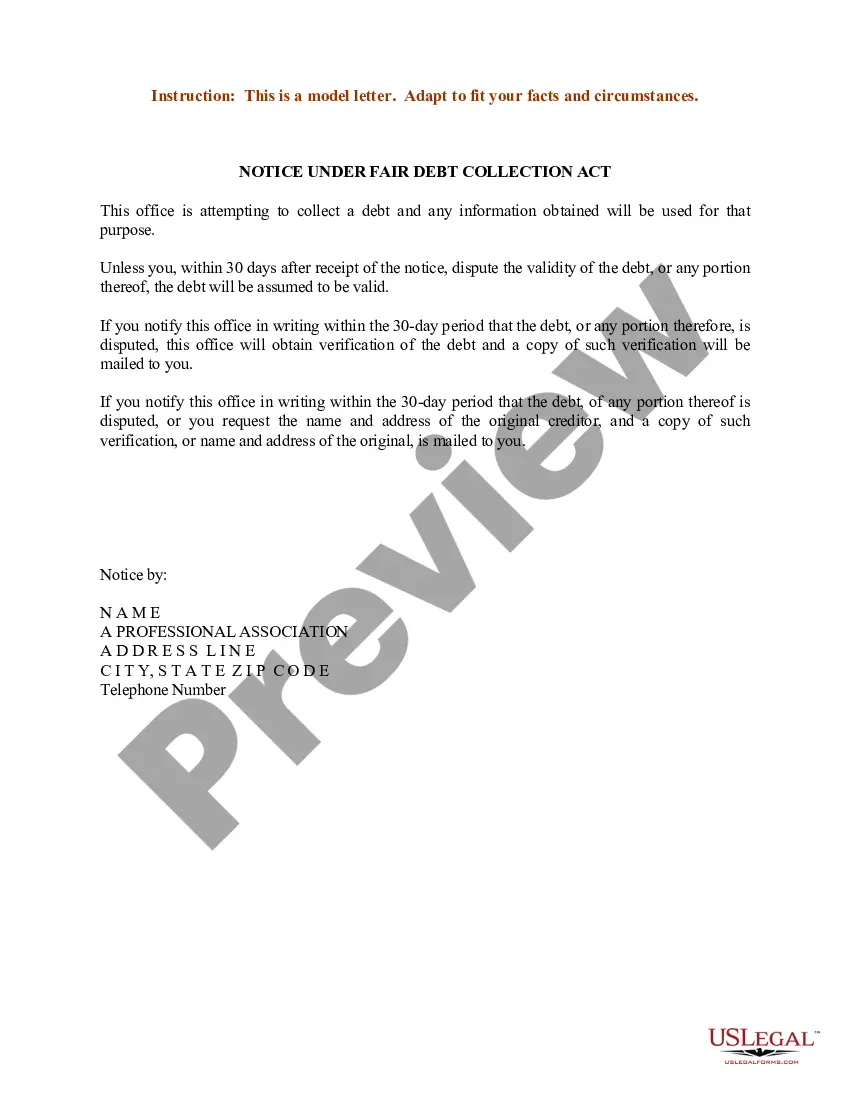
New York Conditional Waiver and Release of Lien Upon Progress Payment
What is this form?
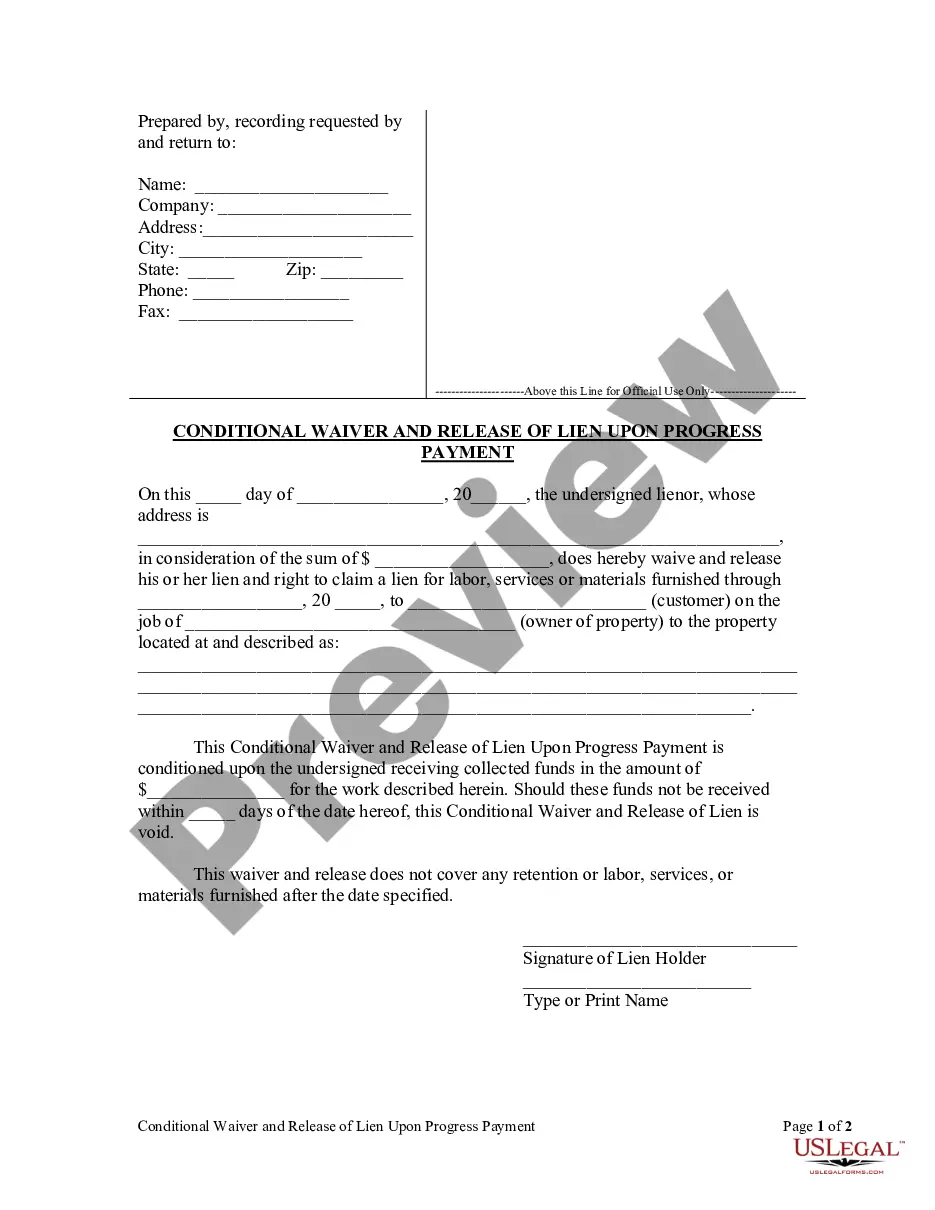
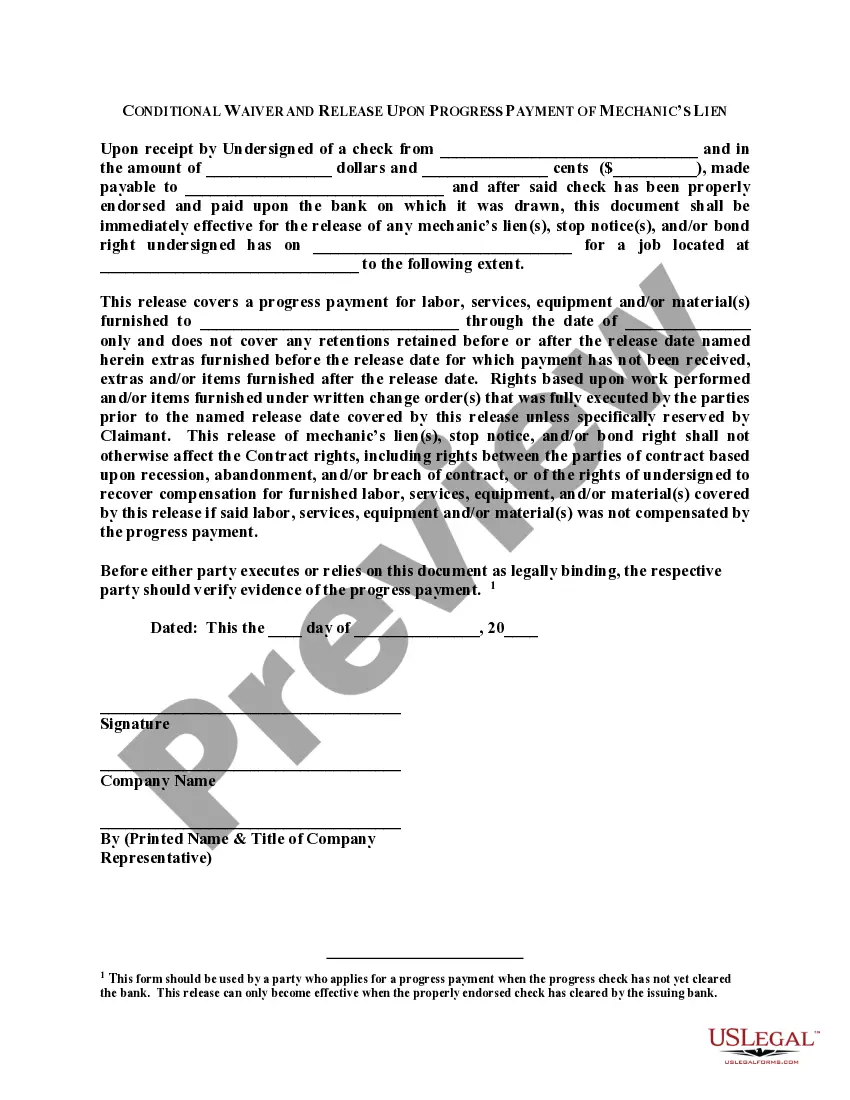
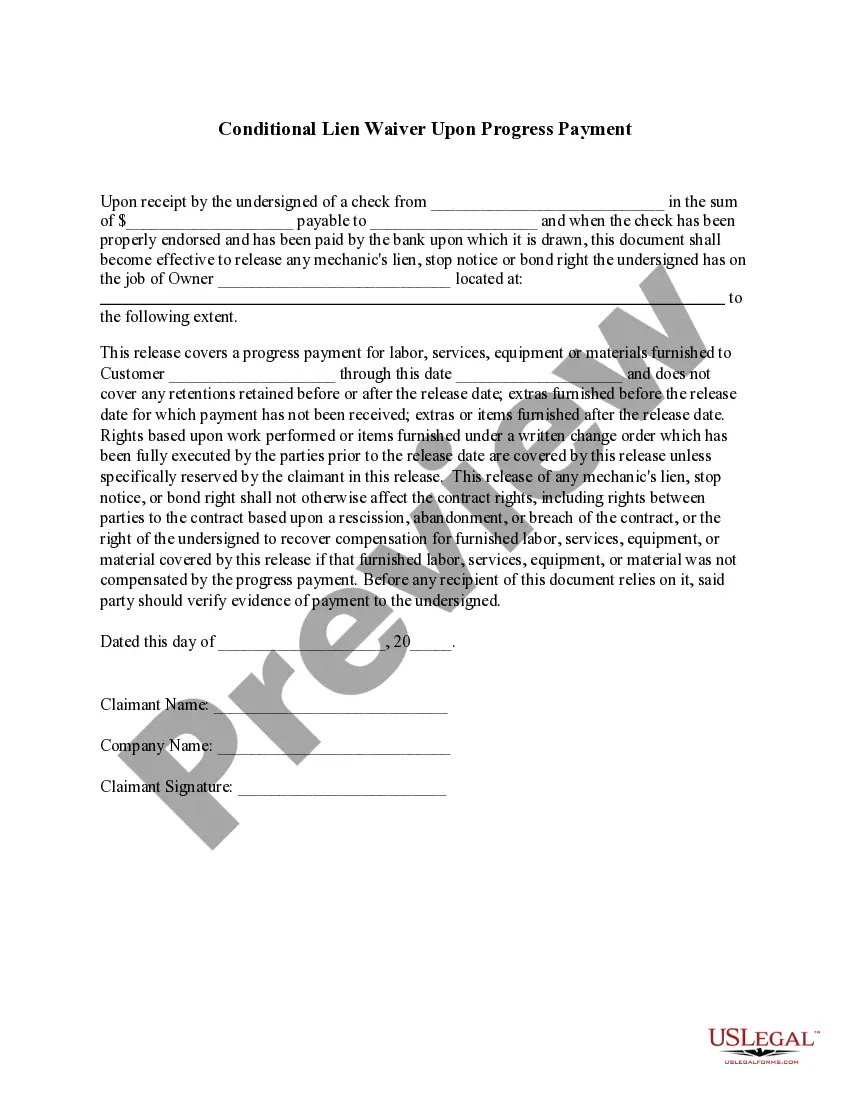
The Conditional Waiver and Release of Lien Upon Progress Payment is a legal document used by lienors to waive their lien rights in exchange for a progress payment. Unlike a blanket waiver, this form specifically addresses payments made for services or materials provided up to a certain date. It ensures that lienors retain protection should they not receive the promised payment, as the waiver is conditional on the funds being collected.
What’s included in this form
- Date of the waiver and release
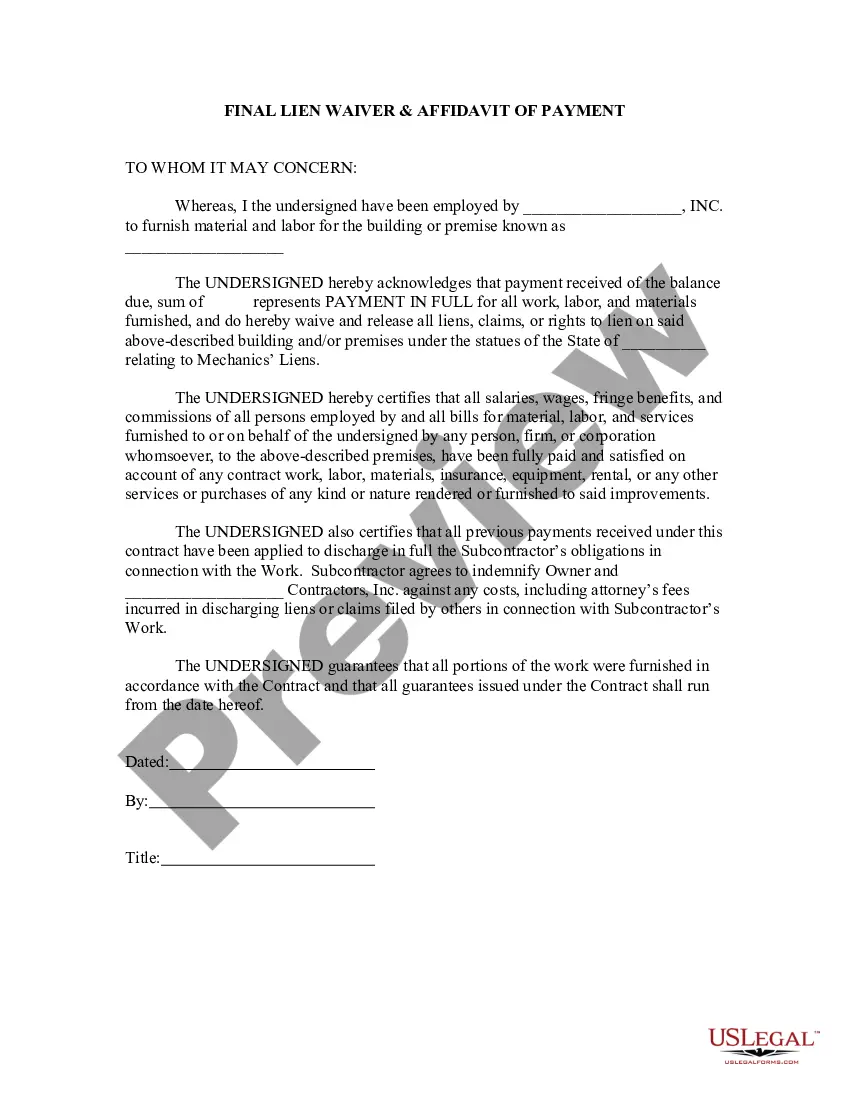
- Details of the lienor, including name and address
- Specified sum to be paid for the work performed
- Definition of the labor, services, or materials covered
- Conditions for the waiver to remain valid
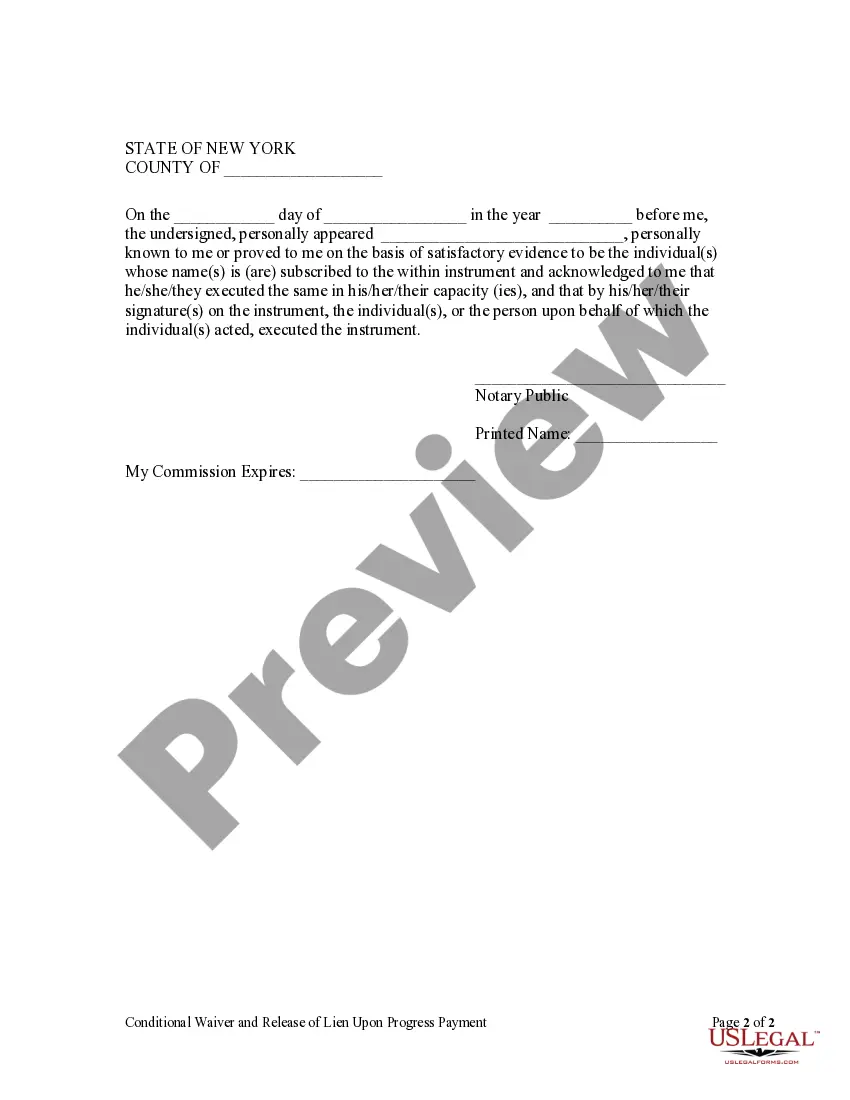
- Signature of the lien holder and notary acknowledgment
Common use cases
This form is typically used in construction or renovation projects when a contractor, subcontractor, or supplier has provided labor, services, or materials but has not yet been fully paid. It is advisable to use this form when a progress payment is being made, ensuring the lienor waives the right to claim a lien up to the specified date, provided they receive payment as outlined.
Who this form is for
This form is intended for:
- Contractors, subcontractors, or suppliers who provide labor or materials
- Property owners who are paying for progress on construction work
- Legal professionals assisting clients with lien issues
Completing this form step by step
- Enter the date when the waiver is being executed.
- Fill in the name and address of the lienor.
- Specify the amount being paid.
- Detail the labor, services, or materials for which payment is received.
- State the name of the customer and the property owner.
- Sign the document and have it notarized, if required.
Is notarization required?
Yes, this form must be notarized to be legally valid. The notary's role is to verify the identity of the signer, ensuring the document is executed under proper legal standing. US Legal Forms offers integrated online notarization for your convenience, which is available 24/7 through secure video calls.
Get your form ready online
Our built-in tools help you complete, sign, share, and store your documents in one place.
Make edits, fill in missing information, and update formatting in US Legal Forms—just like you would in MS Word.
Download a copy, print it, send it by email, or mail it via USPS—whatever works best for your next step.
Sign and collect signatures with our SignNow integration. Send to multiple recipients, set reminders, and more. Go Premium to unlock E-Sign.
If this form requires notarization, complete it online through a secure video call—no need to meet a notary in person or wait for an appointment.
We protect your documents and personal data by following strict security and privacy standards.

Make edits, fill in missing information, and update formatting in US Legal Forms—just like you would in MS Word.

Download a copy, print it, send it by email, or mail it via USPS—whatever works best for your next step.

Sign and collect signatures with our SignNow integration. Send to multiple recipients, set reminders, and more. Go Premium to unlock E-Sign.

If this form requires notarization, complete it online through a secure video call—no need to meet a notary in person or wait for an appointment.

We protect your documents and personal data by following strict security and privacy standards.
Typical mistakes to avoid
- Failing to specify the date range of work covered by the waiver.
- Not entering the correct amount of payment received.
- Forget to have the form notarized when required by state law.
- Leaving out pertinent details about the property or owner.
Advantages of online completion
- Instant access to a professionally drafted form.
- Easy editing and customization to fit specific needs.
- Convenient download options for printing or digital storage.
- Guidance throughout the completion process ensures accuracy.
Legal use & context
- This form serves as proof of payment for services rendered, limiting the lienor's right to later claim a lien without payment.
- Failure to receive payment as per the conditions stated voids the waiver.
- This document may be subject to state-specific lien laws, which can affect its enforceability.
Main things to remember
- The Conditional Waiver and Release of Lien Upon Progress Payment is essential for lienors to protect their rights while receiving payments.
- Completing the form accurately and obtaining notarization is crucial for its enforceability.
- Understanding local jurisdiction requirements can prevent legal complications.
Looking for another form?
Form popularity
FAQ
The main purpose of a lien waiver is to provide protection to the paying party. In exchange for such payment, the lien waiver waives the payee's right to file a lien for the exact value of the payment they have received.
Fill out the proper NY mechanics lien form. New York law sets specific requirements for the form to use when filing a mechanics lien claim. Serve a copy of the lien on the property owner. You must notify the property owner of the lien. Record the lien with the NY county recorder.
It basically states that you've paid the subcontractor what is owed, they accept the payment in full, and they waive the right to put a lien on your property. Simply present this form to the subcontractor with your payment and ask them to sign it. Make sure you get their signature!
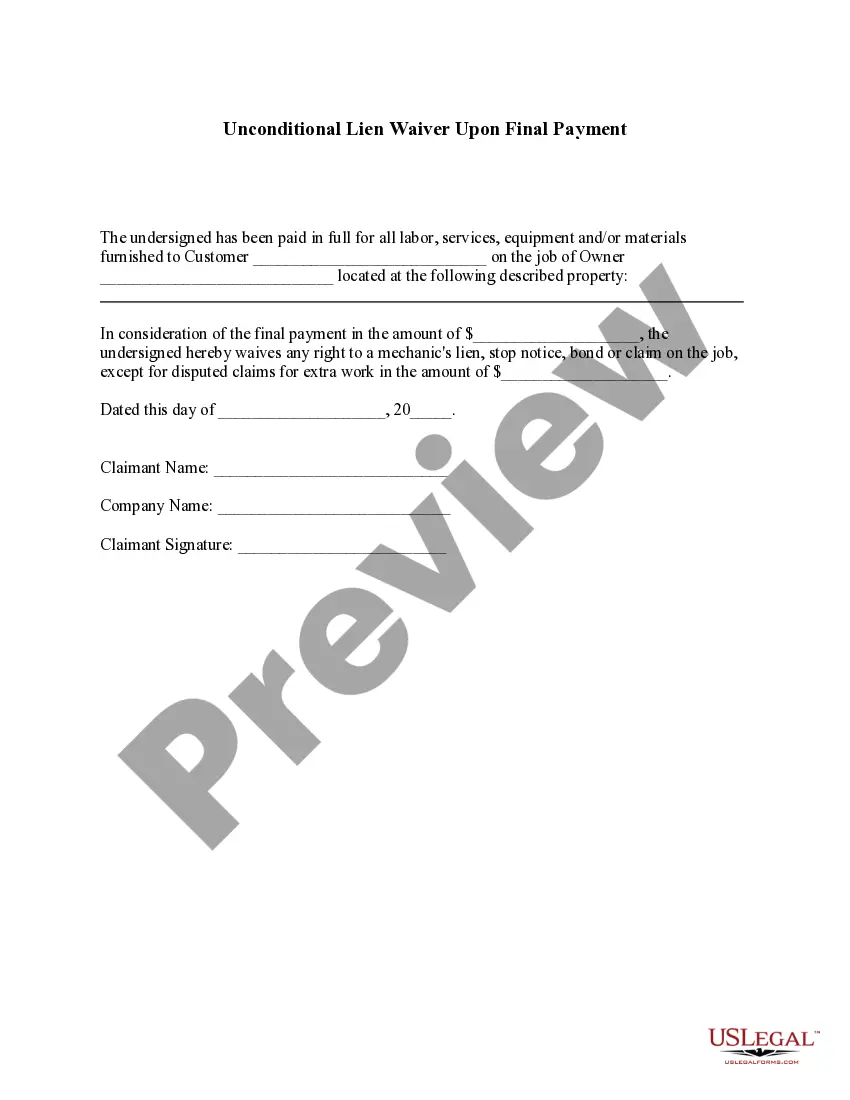
An unconditional mechanic's lien waiver states the contractor has in fact been paid in full for the stated work. Write the name of the maker of the check in the space provided on the mechanic's lien release form. Fill in the amount of the payment. Write the name of contractor the payment is being made to.
New York does not require lien waivers to be notarized.
Signing an unconditional lien waiver is enforceable even before you get paid. This means that if you sign an unconditional lien waiver before receiving the money and the property owner ends up not paying up, you have already waived your lien rights because you signed the unconditional lien waiver.
An "Unconditional Waiver and Release Upon Progress Payment" discharges all claimant rights through a specific date with no stipulations. A "Conditional Waiver and Release Upon Progress Payment" discharges all claimant rights through a specific date, provided the payments have actually been received and processed.
LIen waivers are not required to be notarized. The primary times that a document needs to be notarized is if it is going to be filed with the county recorder or it is an affidavit. There are some other documents that often use notarization, but lien...
A lien waiver is quite common in the construction business. Essentially, it is a document from a contractor, subcontractor, supplier, or another party who holds a mechanic's lien that states they have been paid in full and waive future lien rights to the disputed property.