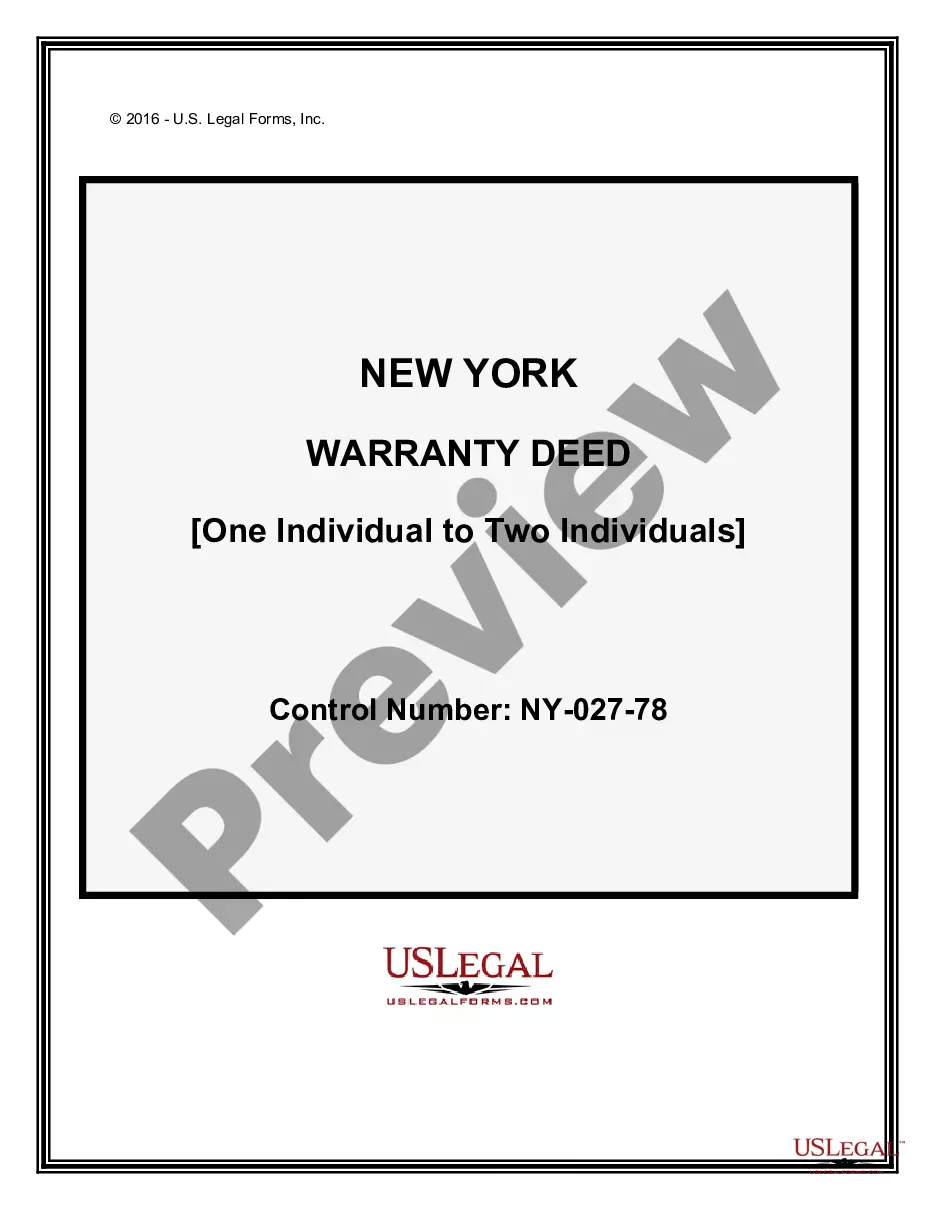
New York Warranty Deed - One Individual to Two Individuals
Overview of this form
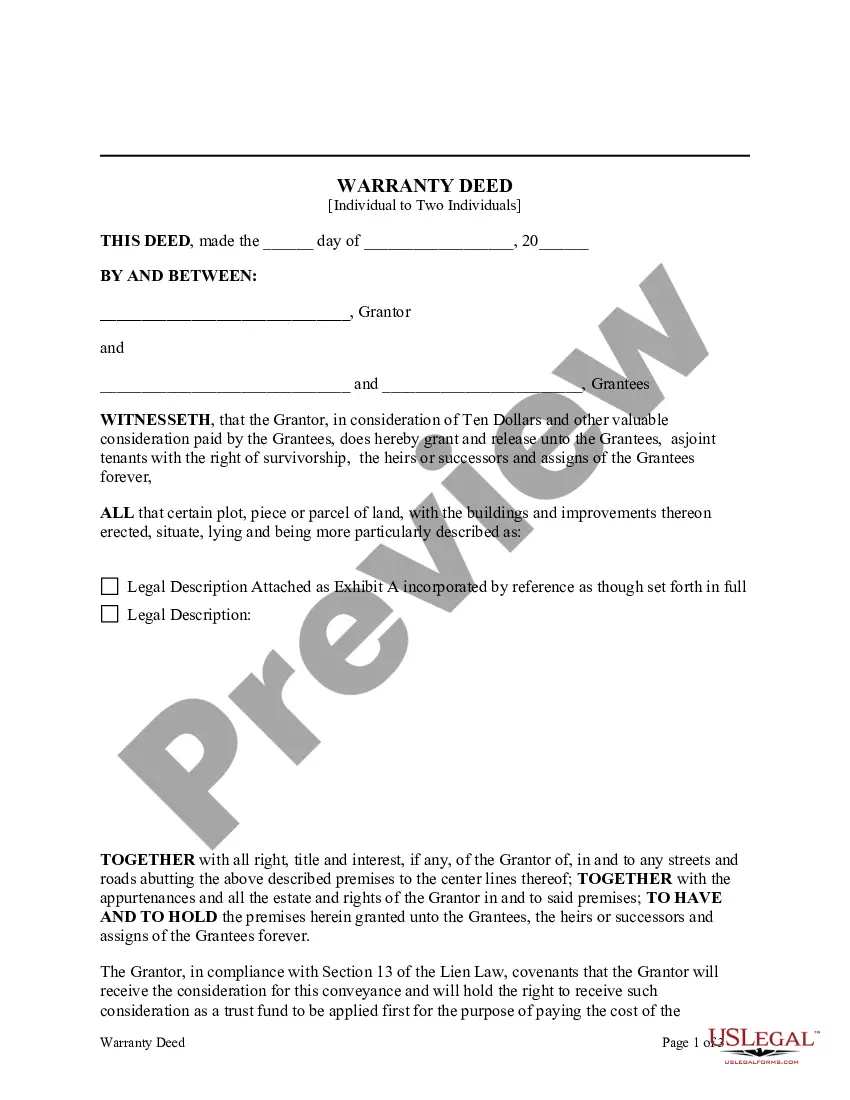
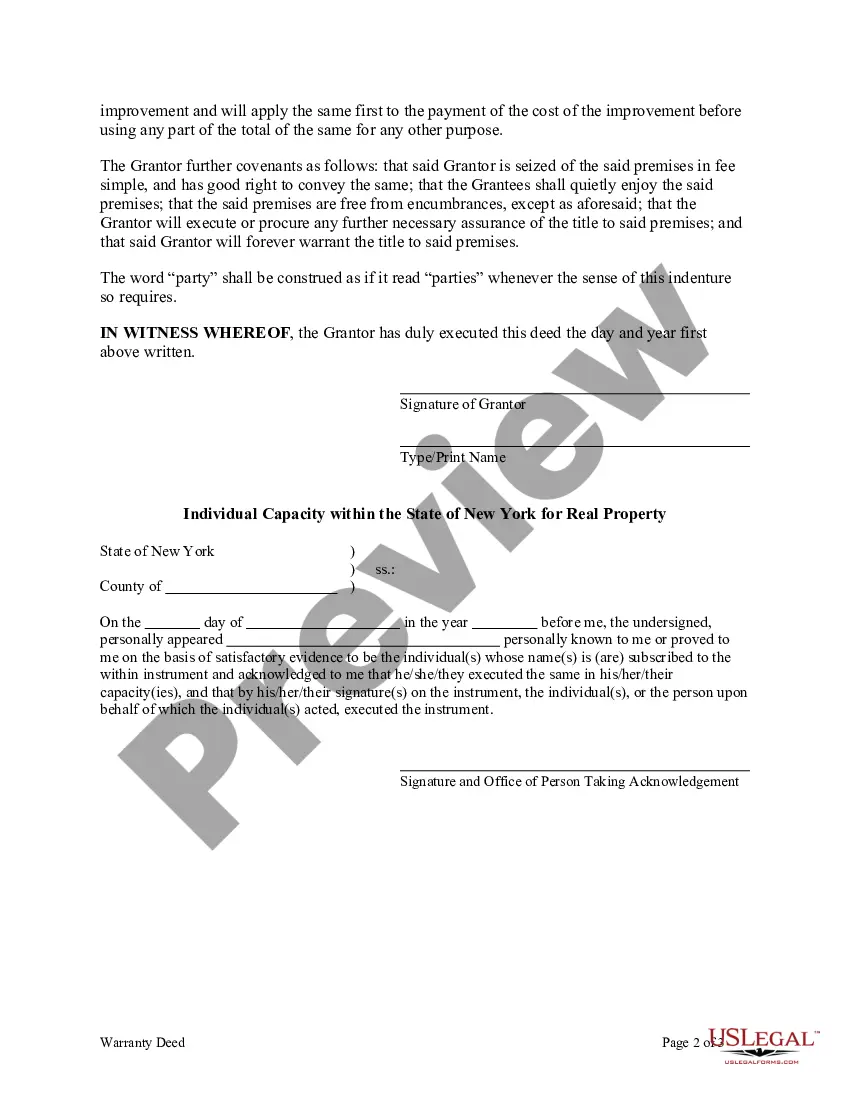
The Warranty Deed - One Individual to Two Individuals is a legal document used to transfer property ownership from one individual (grantor) to two individuals (grantees). This deed conveys the property with warranties, ensuring the grantees receive a clear title. It allows the grantees to hold the property as joint tenants with the right of survivorship, tenants by the entireties, or tenants in common. This form is essential for anyone looking to formalize a property transfer with legal guarantees under applicable state laws.
Key components of this form
- Names of the grantor and grantees
- Legal description of the property
- Consideration (the value exchanged)
- Covenants and warranties of the grantor
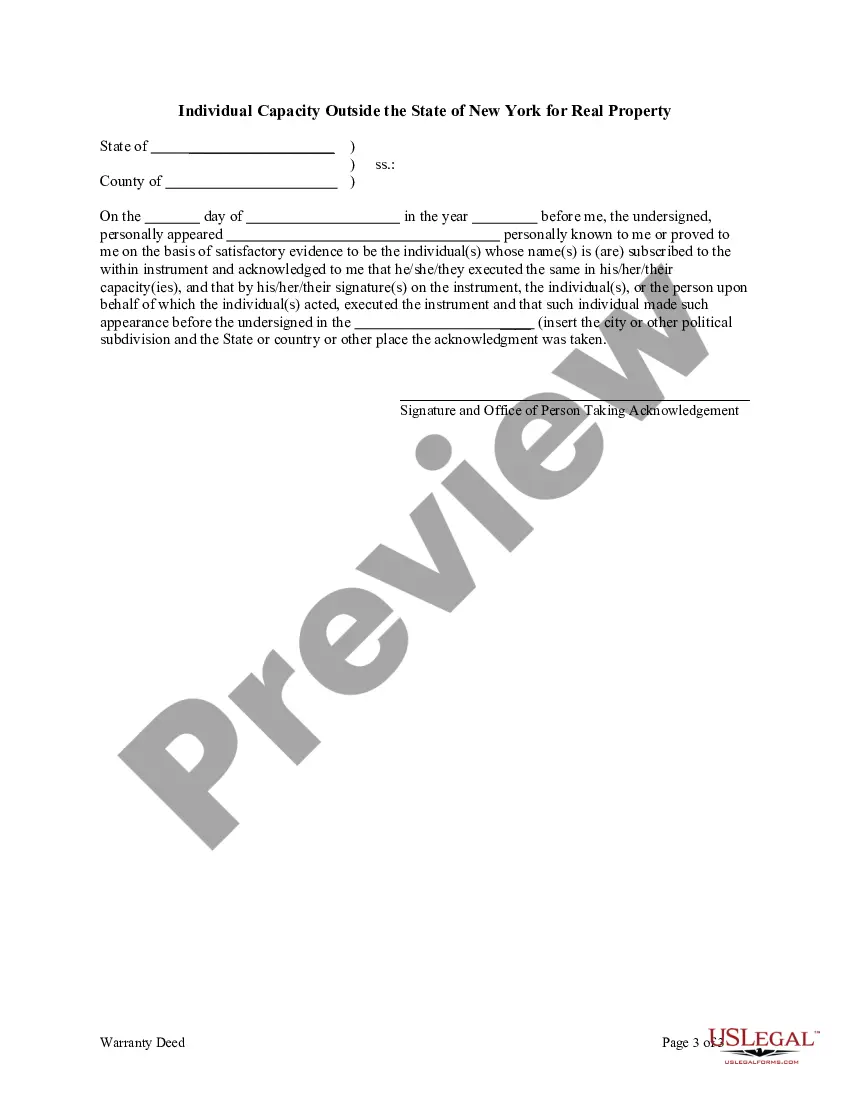
- Signatures of involved parties





When to use this document
This warranty deed should be used when an individual wants to transfer property ownership to two individuals while providing legal assurances about the title. Common situations include transferring inherited property to family members, facilitating a property ownership change between partners, or transitioning real estate ownership in business partnerships.
Who can use this document
- Property owners looking to transfer their property to two individuals
- Individuals involved in joint ownership arrangements
- Couples or business partners seeking to formalize their shared ownership
How to prepare this document
- Identify the grantor and enter their name in the designated field.
- List the names of the two grantees who will receive the property.
- Provide the detailed legal description of the property being transferred.
- Enter the consideration amount (typically Ten Dollars or a nominal amount).
- Ensure that both parties sign the deed and include the date of execution.
Does this form need to be notarized?
Notarization is required for this form to take effect. Our online notarization service, powered by Notarize, lets you verify and sign documents remotely through an encrypted video session, available 24/7.
Get your form ready online
Our built-in tools help you complete, sign, share, and store your documents in one place.
Make edits, fill in missing information, and update formatting in US Legal Forms—just like you would in MS Word.
Download a copy, print it, send it by email, or mail it via USPS—whatever works best for your next step.
Sign and collect signatures with our SignNow integration. Send to multiple recipients, set reminders, and more. Go Premium to unlock E-Sign.
If this form requires notarization, complete it online through a secure video call—no need to meet a notary in person or wait for an appointment.
We protect your documents and personal data by following strict security and privacy standards.

Make edits, fill in missing information, and update formatting in US Legal Forms—just like you would in MS Word.

Download a copy, print it, send it by email, or mail it via USPS—whatever works best for your next step.

Sign and collect signatures with our SignNow integration. Send to multiple recipients, set reminders, and more. Go Premium to unlock E-Sign.

If this form requires notarization, complete it online through a secure video call—no need to meet a notary in person or wait for an appointment.

We protect your documents and personal data by following strict security and privacy standards.
Mistakes to watch out for
- Failing to include the legal description of the property accurately.
- Not having all parties sign the deed.
- Forgetting to date the document properly.
Benefits of completing this form online
- Convenient access from anywhere at any time.
- Editable form fields for accurate information entry.
- Legally compliant templates made by licensed attorneys.
Looking for another form?
Form popularity
FAQ
In most states you can file a disclaimer or deed of disclaimer that says specifically you were placed in title without your knowledge or consent and disclaim the deed.
Record New Document You can record property-related documents in person or online. To register a document, you must create a cover page in ACRIS, and submit document, supporting documents, and pay fees and taxes (if necessary). Learn more about recording documents, including required documentation and fees online.
Title the deed and list the amount given for the transfer. If it is a quitclaim deed, title the deed Quitclaim Deed; for warranty deeds, title the deed Warranty Deed. Write In consideration of dollar amount to list the amount given for the transfer. List the names of the parties involved.
You would simply prepare a deed to you and your fiance. You would then have to prepare and execute the other necessary forms take them to the clerks office and file them. I suggest that you consult with a local attorney. They can do this at a modest cost.
It is possible to be named on the title deed of a home without being on the mortgage. However, doing so assumes risks of ownership because the title is not free and clear of liens and possible other encumbrances.If a mortgage exists, it's best to work with the lender to make sure everyone on the title is protected.
A deed that conveys an interest in your real estate ownership (adds someone on) has the legal effect of giving that additional person the same bundle of rights to which you are entitled. Once the conveyance happens, it cannot be undone except with that other additional owner's consent.
Yes you can. This is called a transfer of equity but you will need the permission of your lender. If you are not married or in a civil partnership you may wish to consider creating a deed of trust and a living together agreement which we can explain to you.
You can transfer real estate to someone else by selling it, giving it away or leaving it to someone in your will. Transfers don't have to involve money, and they can be as simple as adding or deleting the name on a deed.
Today's question is is it possible to deed real estate to someone without them knowing it? Strictly speaking, the answer is no. Because it does not meet the acceptance element of a valid deed transfer. Us lawyers must learn to speak in elements because it governs everything that we do.