Ohio HVAC Contract for Contractor
About this form
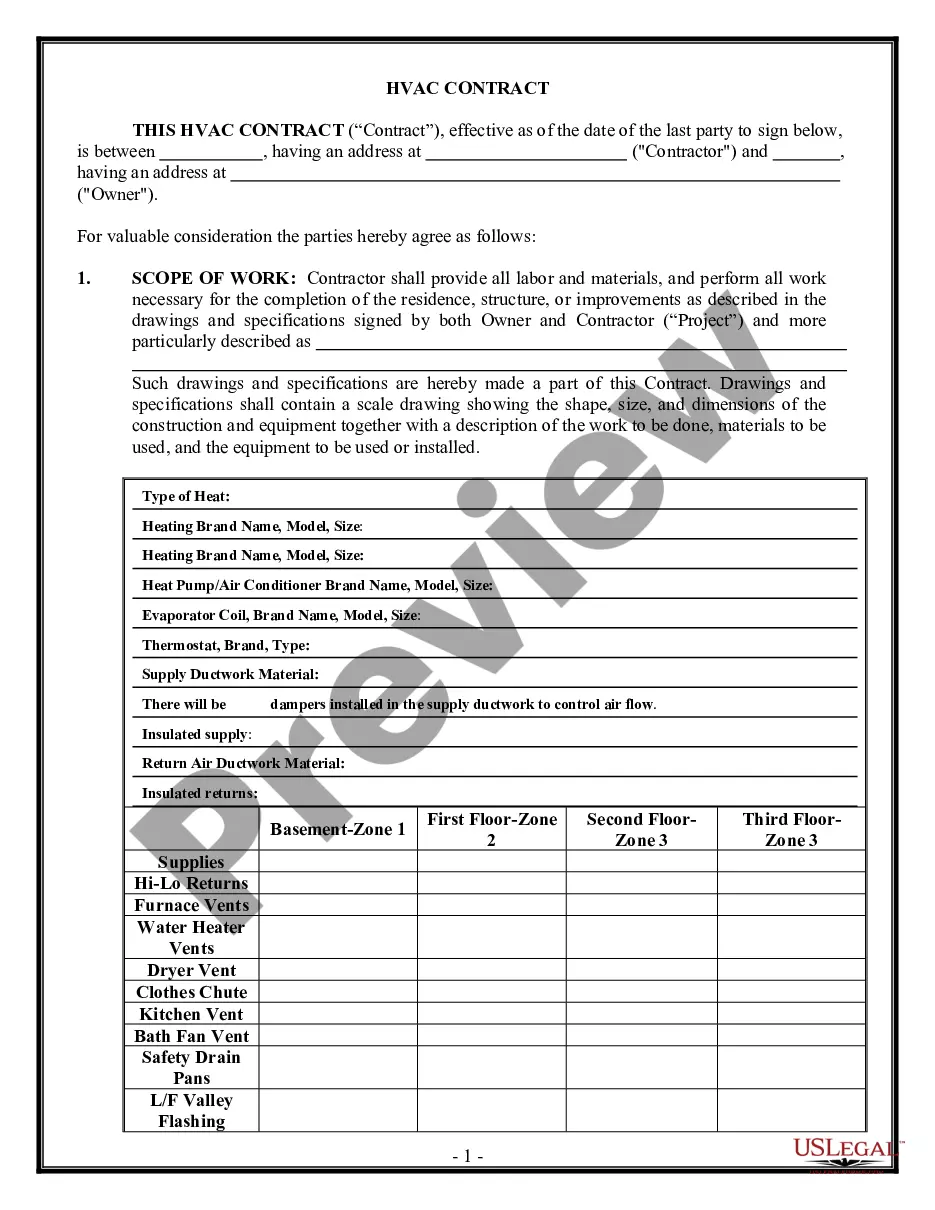
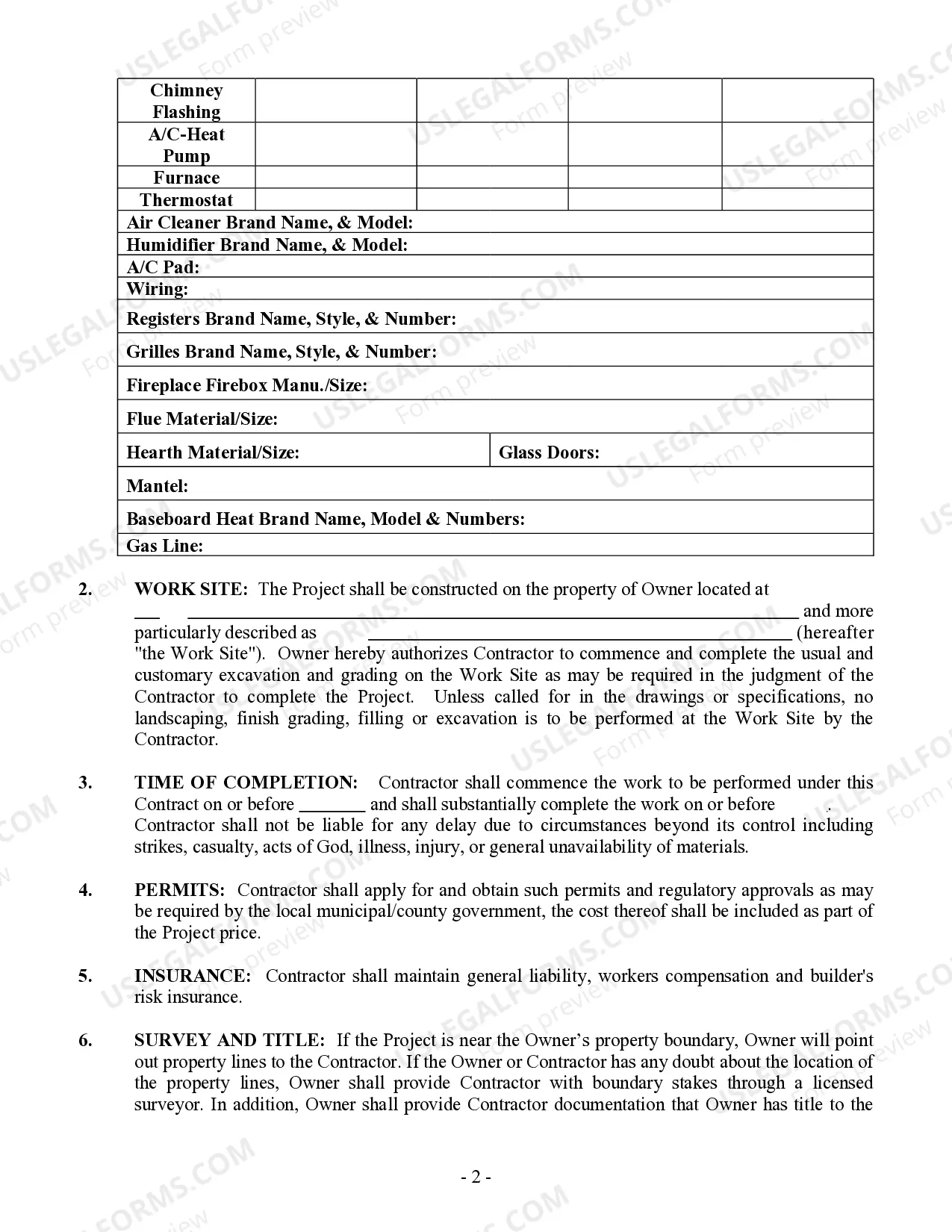
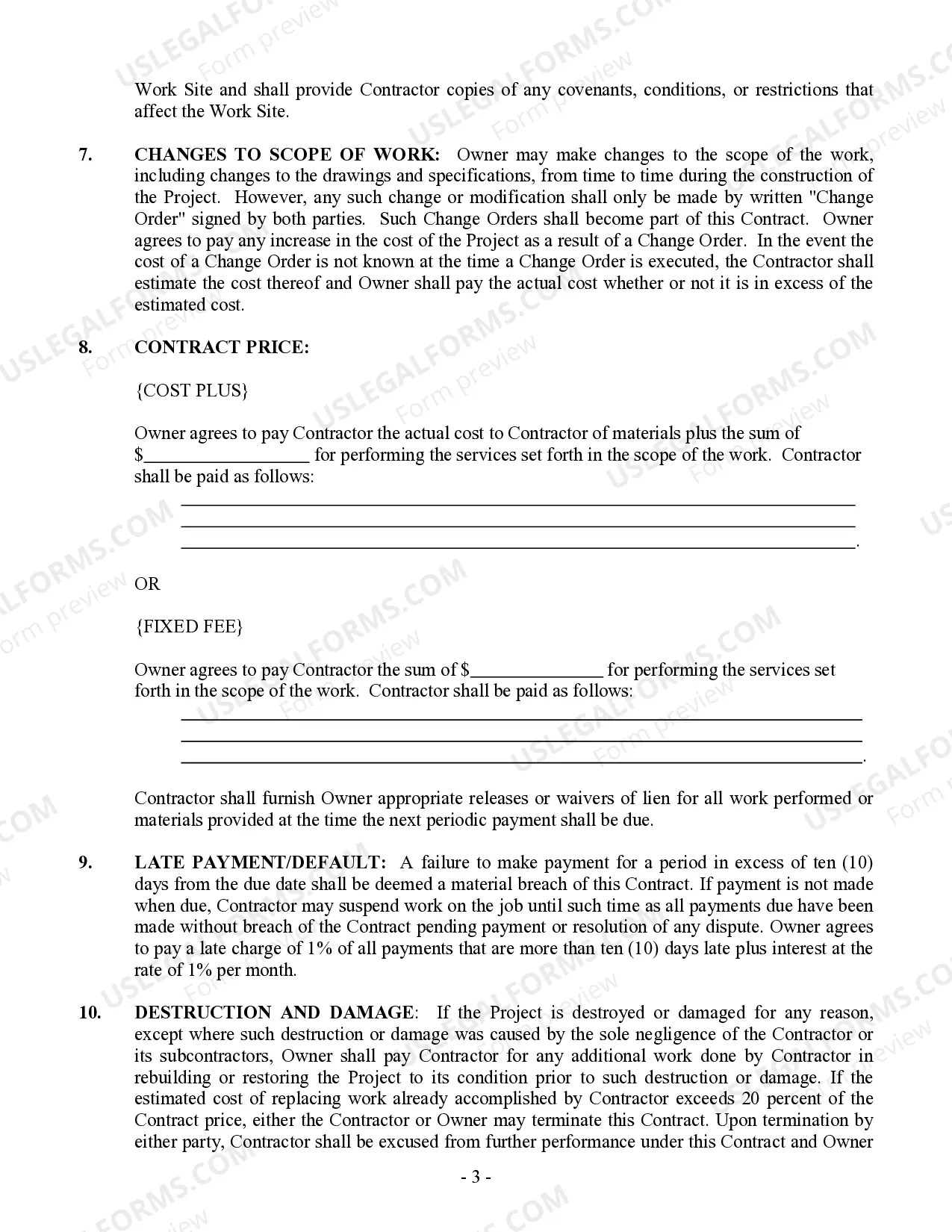
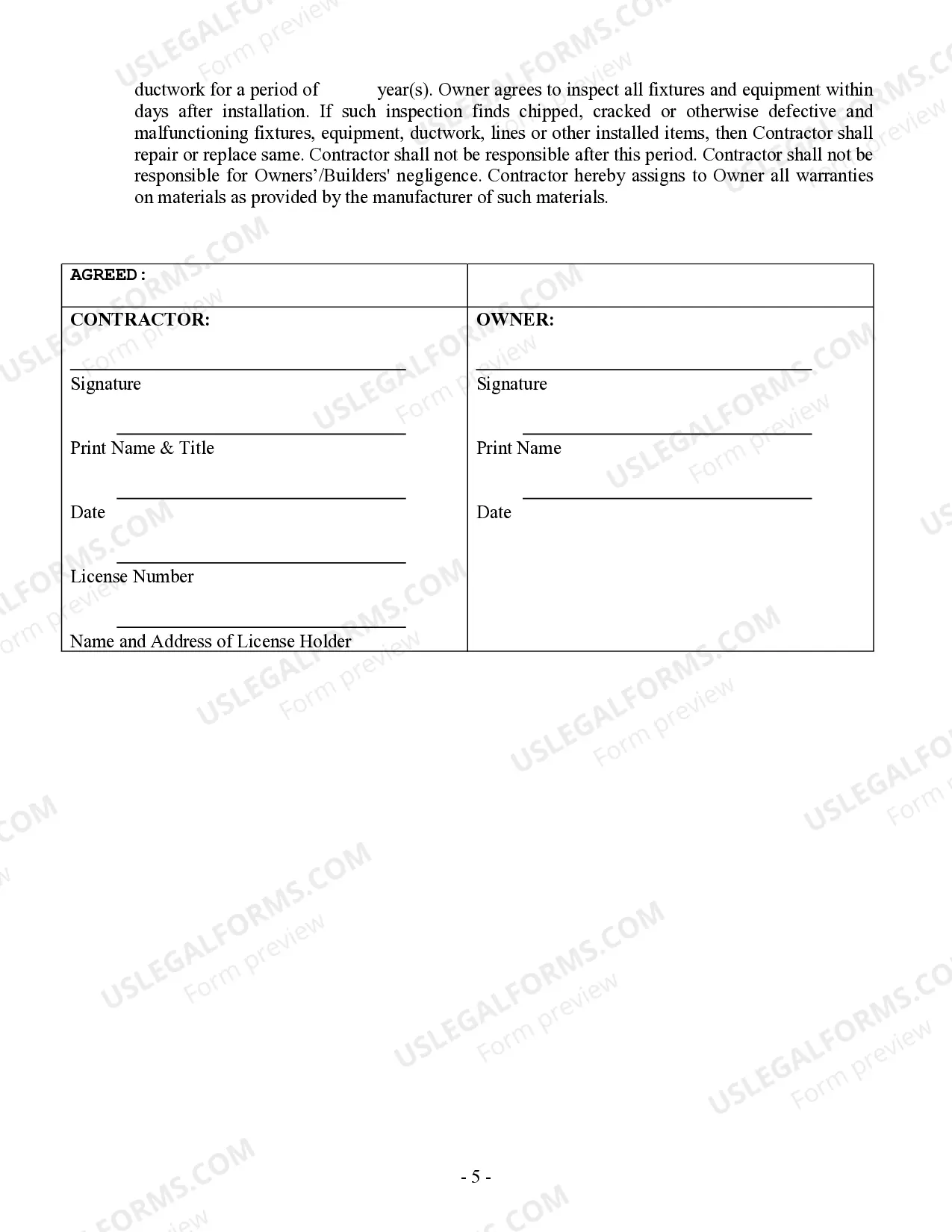
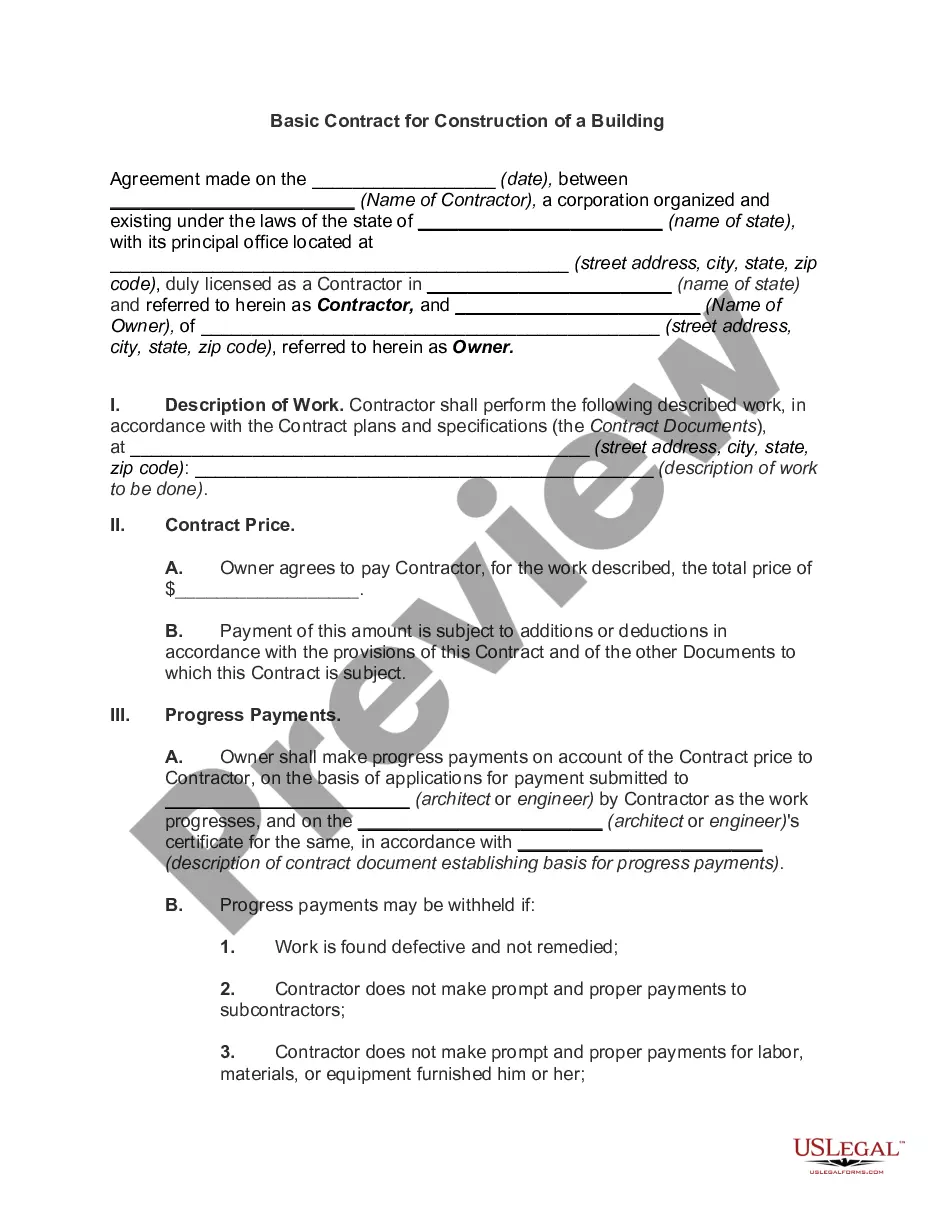
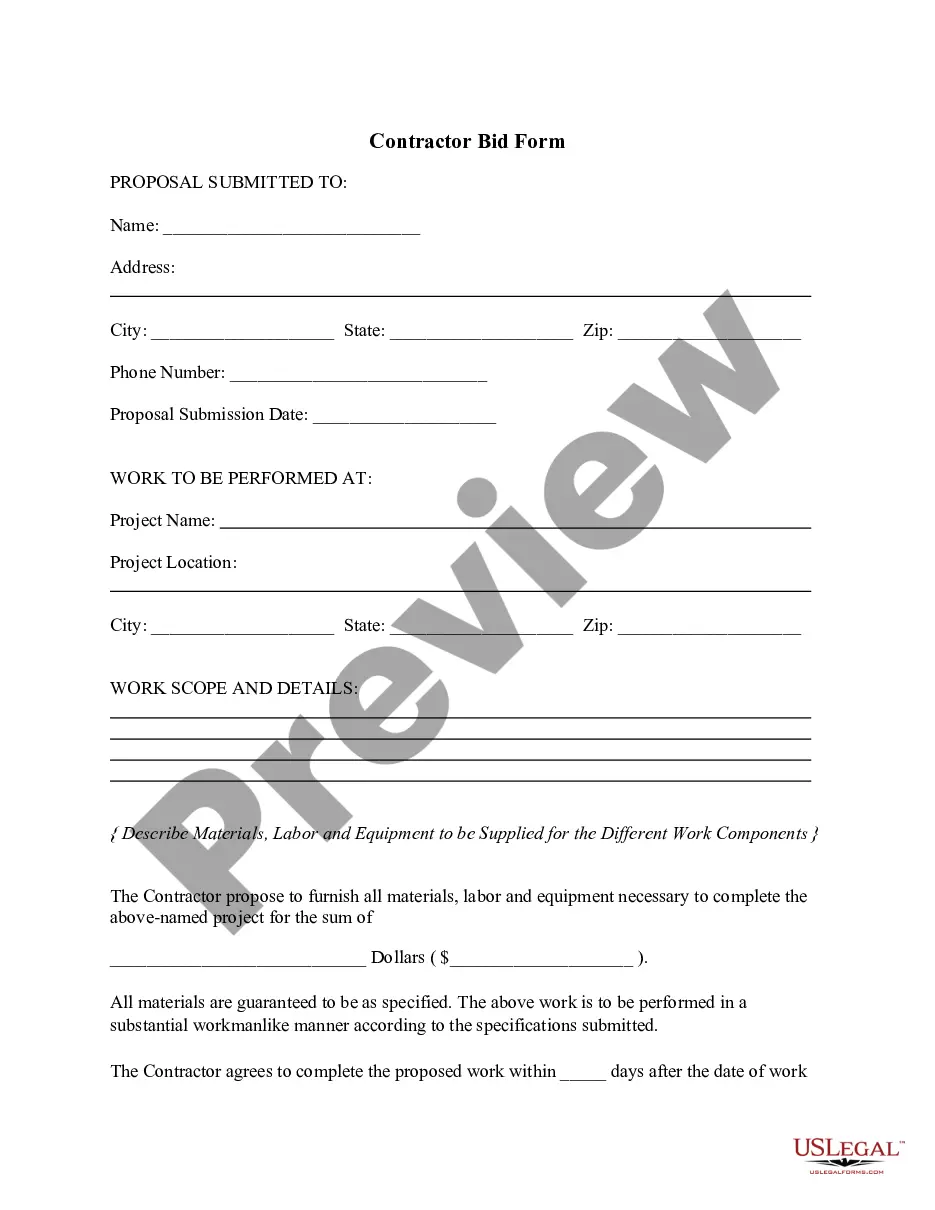
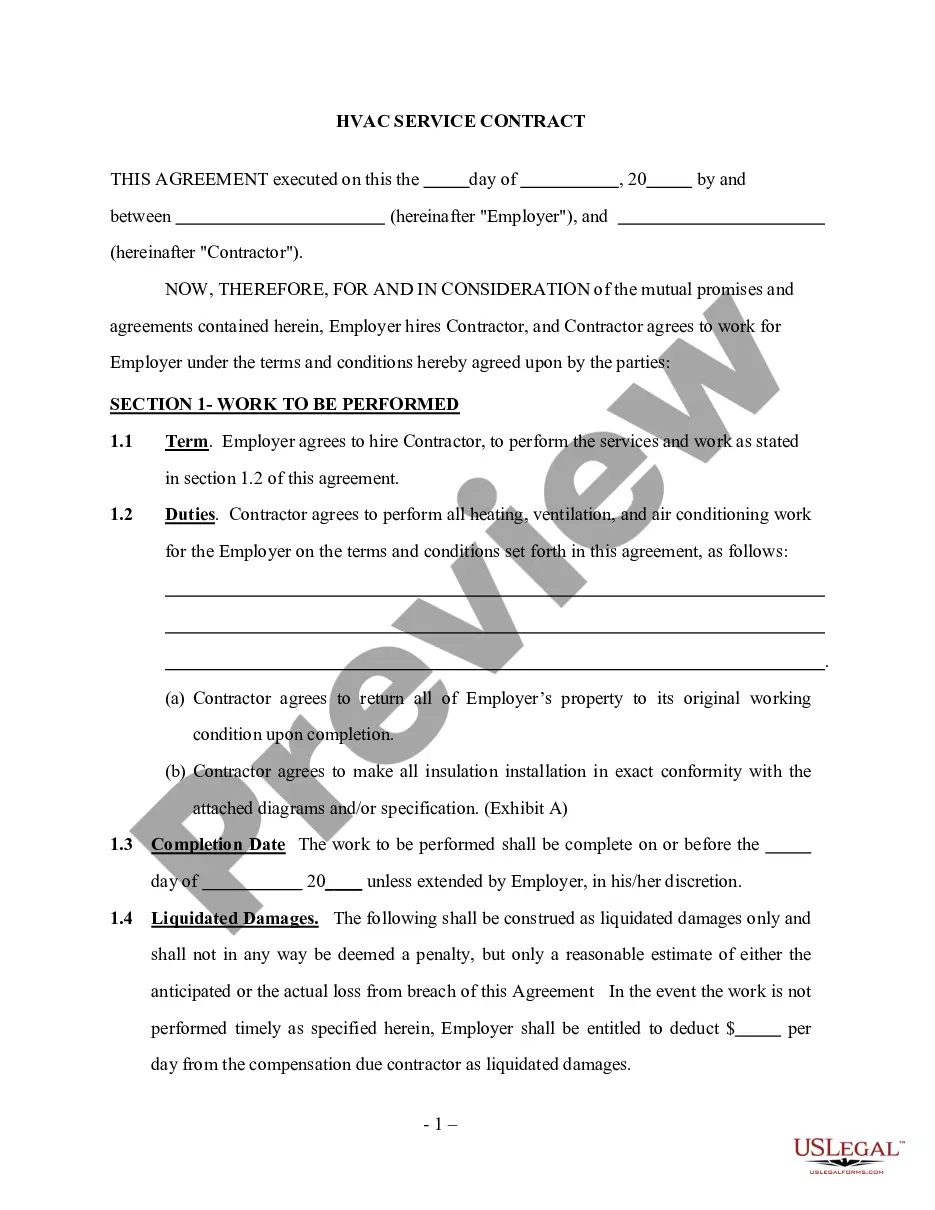
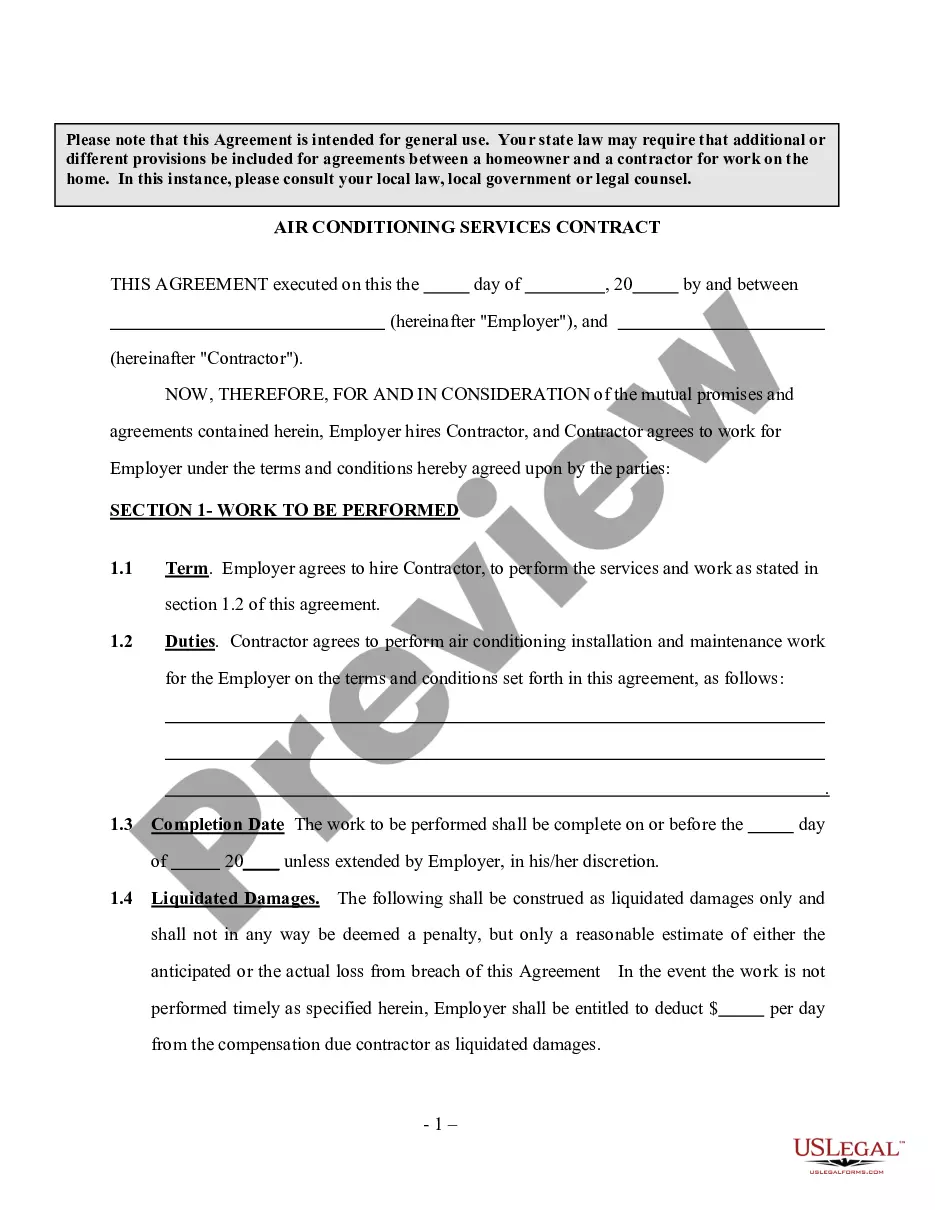
The HVAC Contract for Contractor is a legally binding document used between HVAC contractors and property owners in Ohio. This contract outlines the terms of the working relationship, including payment arrangements, project scope, change orders, and insurance obligations. It is specifically designed to ensure compliance with Ohio laws, making it a crucial tool for both parties involved in HVAC projects. Unlike generic contracts, this form is tailored to address unique aspects of HVAC services, thus providing clarity and protection for both the contractor and the property owner.
Key parts of this document
- Permits: Outlines the contractor's responsibility to obtain necessary permits.
- Insurance: Specifies required insurance types such as general liability and workers compensation.
- Changes to Scope of Work: Details how modifications to the project should be documented and agreed upon.
- Destruction and Damage: Provides provisions for damage to the project and terms for termination of the contract.
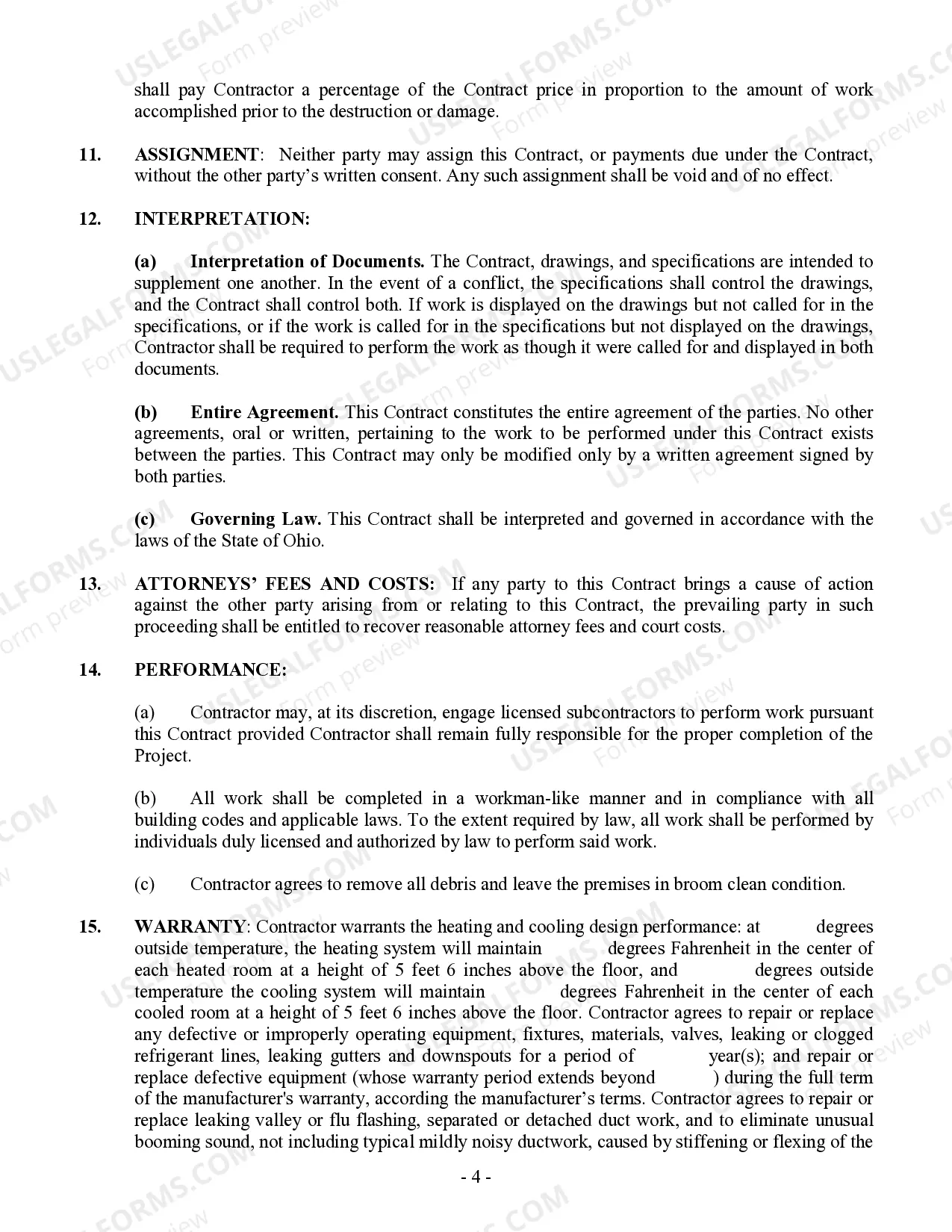
- Assignment: States that the contract cannot be assigned without written consent from both parties.
- Governing Law: Clarifies that the contract is governed by the laws of Ohio.
Situations where this form applies
This contract should be used whenever an HVAC contractor is engaged for installation, repair, or maintenance work within a property in Ohio. It is especially essential when significant work is anticipated, such as new installations or complex repairs that may involve multiple changes to the agreed scope. The form provides clarity on expectations, financial responsibilities, and legal protections, making it invaluable for both contractors and property owners.
Who can use this document
- HVAC contractors who need a formal agreement with property owners.
- Property owners hiring HVAC services and wishing to establish clear terms.
- General contractors overseeing HVAC work as part of broader construction projects.
- Business owners managing HVAC installations or repairs in their commercial properties.
How to complete this form
- Identify the parties involved: Fill in the names and addresses of the contractor and property owner.
- Specify the project details: Clearly outline the scope of work and any specific requirements.
- Enter payment terms: Choose between cost-plus or fixed fee payment arrangements.
- Include insurance information: Provide details on the insurance coverage that the contractor will maintain.
- Review and sign: Both parties should read the contract thoroughly and provide signatures to finalize the agreement.
Does this form need to be notarized?
Notarization is not commonly needed for this form. However, certain documents or local rules may make it necessary. Our notarization service, powered by Notarize, allows you to finalize it securely online anytime, day or night.
Get your form ready online
Our built-in tools help you complete, sign, share, and store your documents in one place.
Make edits, fill in missing information, and update formatting in US Legal Forms—just like you would in MS Word.
Download a copy, print it, send it by email, or mail it via USPS—whatever works best for your next step.
Sign and collect signatures with our SignNow integration. Send to multiple recipients, set reminders, and more. Go Premium to unlock E-Sign.
If this form requires notarization, complete it online through a secure video call—no need to meet a notary in person or wait for an appointment.
We protect your documents and personal data by following strict security and privacy standards.

Make edits, fill in missing information, and update formatting in US Legal Forms—just like you would in MS Word.

Download a copy, print it, send it by email, or mail it via USPS—whatever works best for your next step.

Sign and collect signatures with our SignNow integration. Send to multiple recipients, set reminders, and more. Go Premium to unlock E-Sign.

If this form requires notarization, complete it online through a secure video call—no need to meet a notary in person or wait for an appointment.

We protect your documents and personal data by following strict security and privacy standards.
Mistakes to watch out for
- Failing to specify the exact scope of work, leading to potential disputes.
- Not obtaining necessary permits before starting the project.
- Neglecting to include change order procedures, which can result in confusion over project modifications.
- Forgetting to include insurance clauses, leaving parties exposed to liability.
Why use this form online
- Convenient access to templates drafted by licensed attorneys.
- Ability to edit and customize the form to suit specific project needs.
- Instant download, eliminating delays in project initiation.
- Secure storage for completed documents, ensuring easy retrieval when needed.
What to keep in mind
- The HVAC Contract for Contractor is crucial for defining the relationship between HVAC contractors and property owners.
- Clearly outline the responsibilities and expectations for both parties to avoid disputes.
- Utilize the form to comply with Ohio's legal requirements for HVAC contracts.
Looking for another form?


Form popularity
FAQ
Most general contractors are looking at about a 35% margin and so they need to a mark-up of 54%, or 1.54. Subs can often get a profit margin of 50%, so they need a mark-up of 100% or 2x, as the table on the right makes clear.
You shouldn't pay more than 10 percent of the estimated contract price upfront, according to the Contractors State License Board.
Payment Schedule In Your Contract Before any work begins, a contractor will ask a homeowner to secure the job with a down payment. It shouldn't be more than 10-20 percent of the total cost of the job. Homeowners should never pay a contractor more than 10-20% before they've even stepped foot in their home.
Unless there are custom or specialty orders for materials, the contractor cannot ask for more than 10% upfront before work starts.
The state of Ohio does not require a specific handyman license to perform minor repair work on residential property. However, you must possess a contractor specialty license to perform work in specialized trades such as refrigeration, hydronic, electrical, HVAC, and plumbing.
A: It's not uncommon for contractors to ask for a down payment up front to secure your spot on their schedule or purchase some of the job materials in advance. Asking for more than half of the project cost up front, though, is a big red flag.I recommend tying payments to progress made during the job.
Do You Need a License in Ohio to Become an HVAC Technician? You don't need to have an Ohio HVAC license to work on residential properties. However, you do need a license from the Ohio Construction Industry Licensing Board to work on commercial buildings.
In Ohio, contractors need to be licensed by the state only if they work in five specific trades. These commercial contractor licenses are handled by the Ohio Construction Industry Licensing Board for the following trades: Electrical. Plumbing.
Go to Small Claims Court. Small claims court is a legal venue for homeowners who feel they are owed money back from a contractor. Hire an Attorney. File a Complaint with the State. Pursue a Bond Claim. Post Reviews.