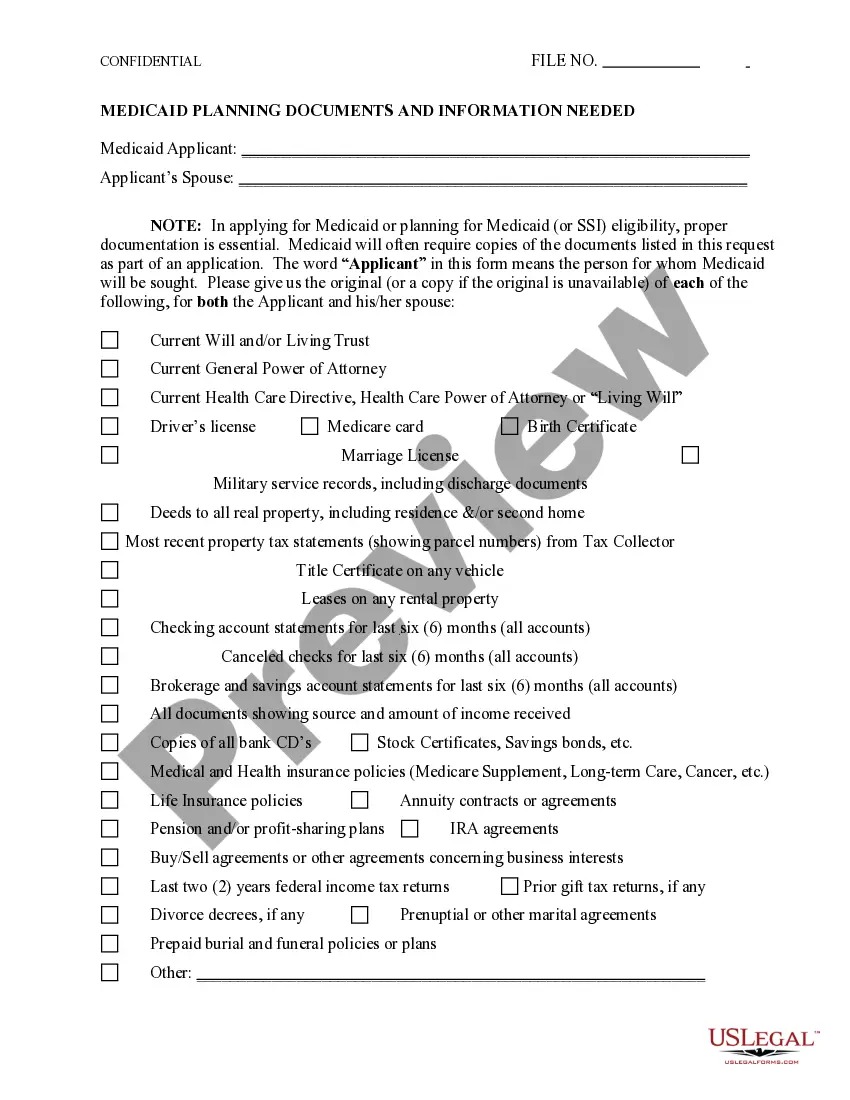
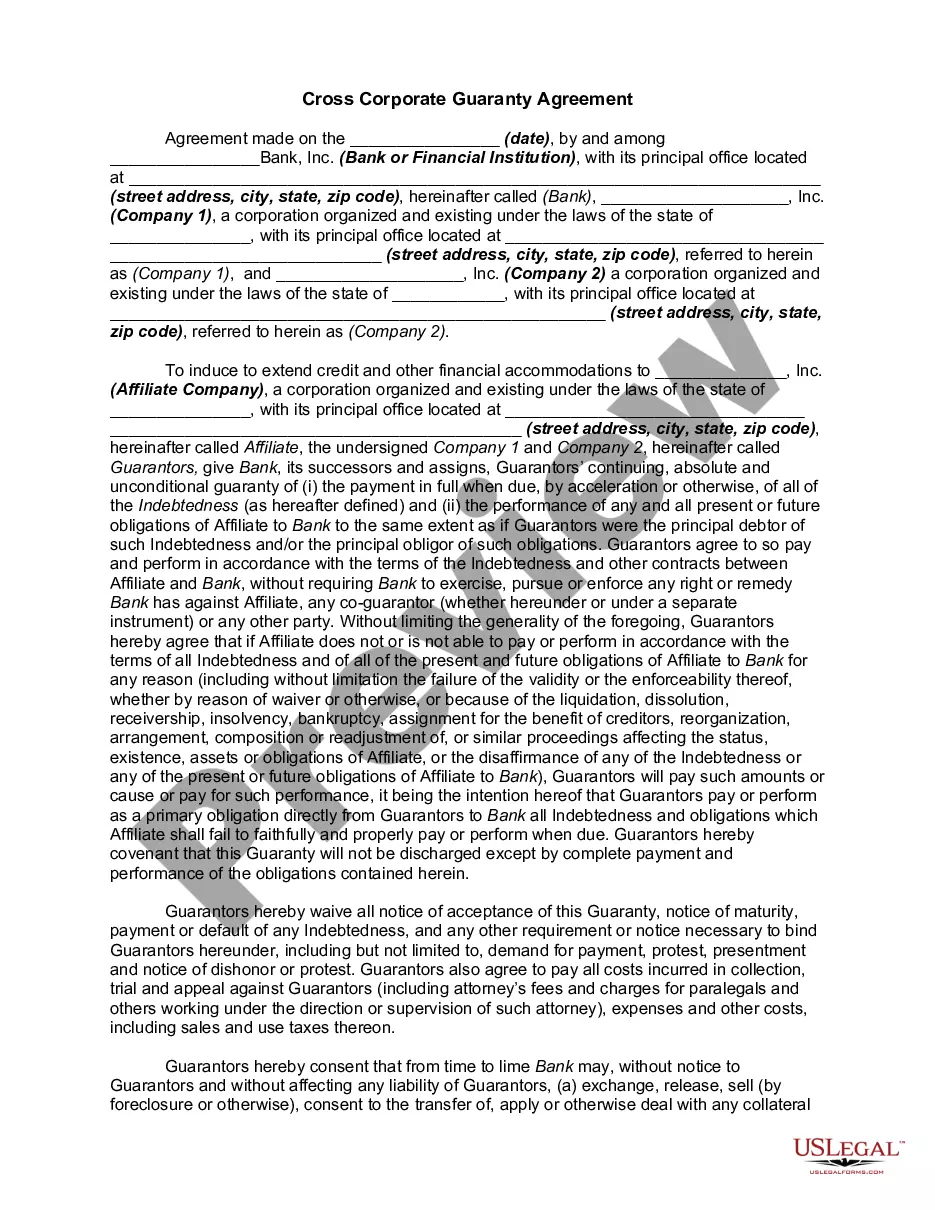
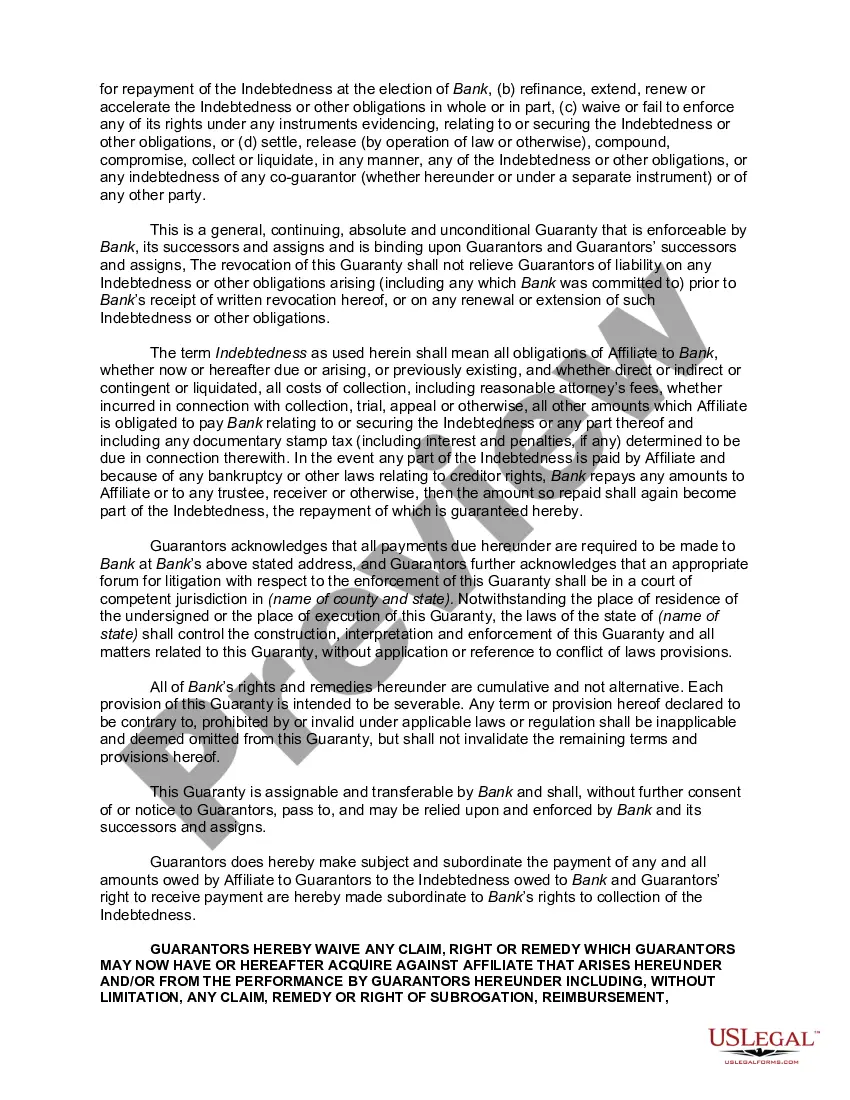
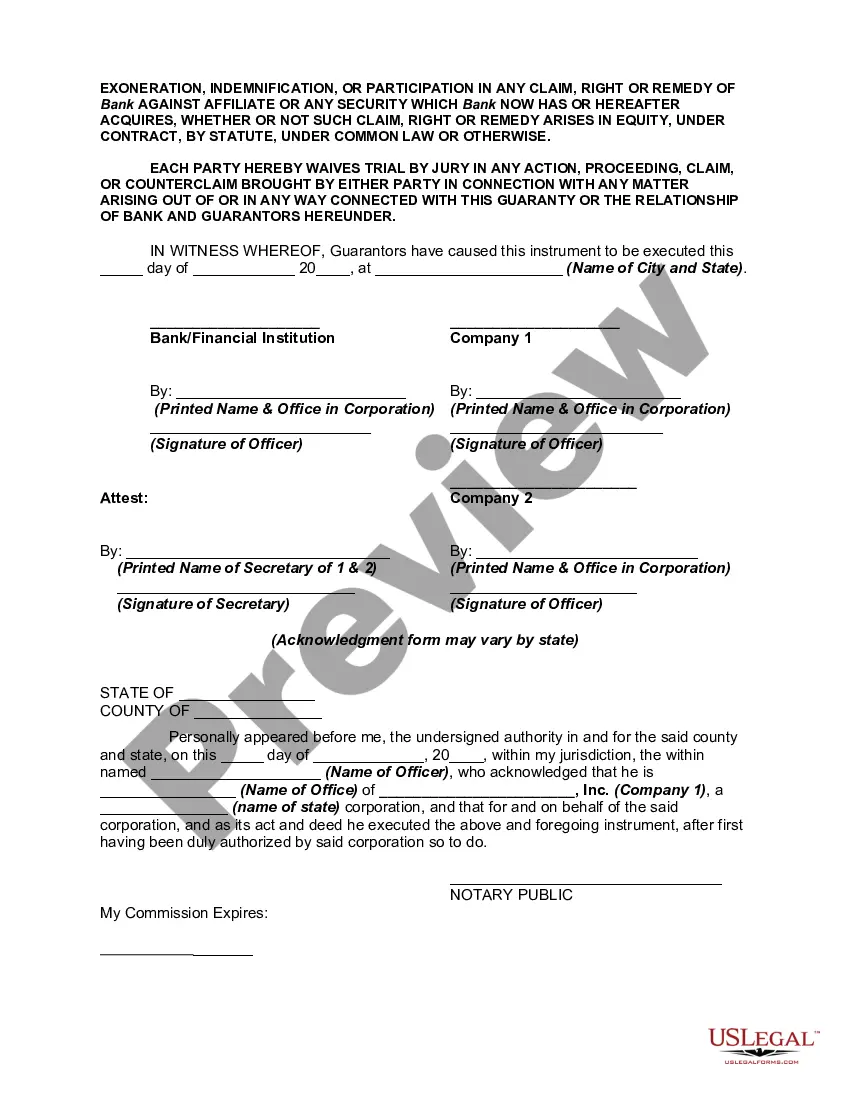
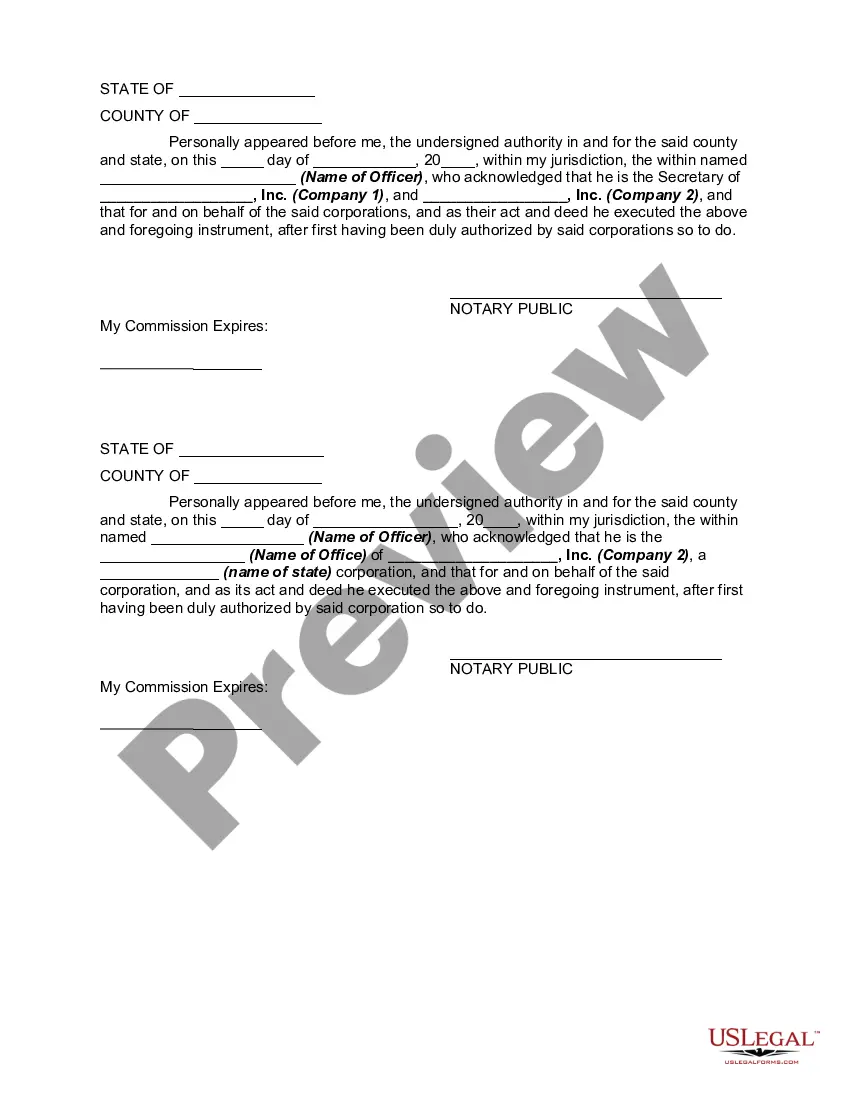
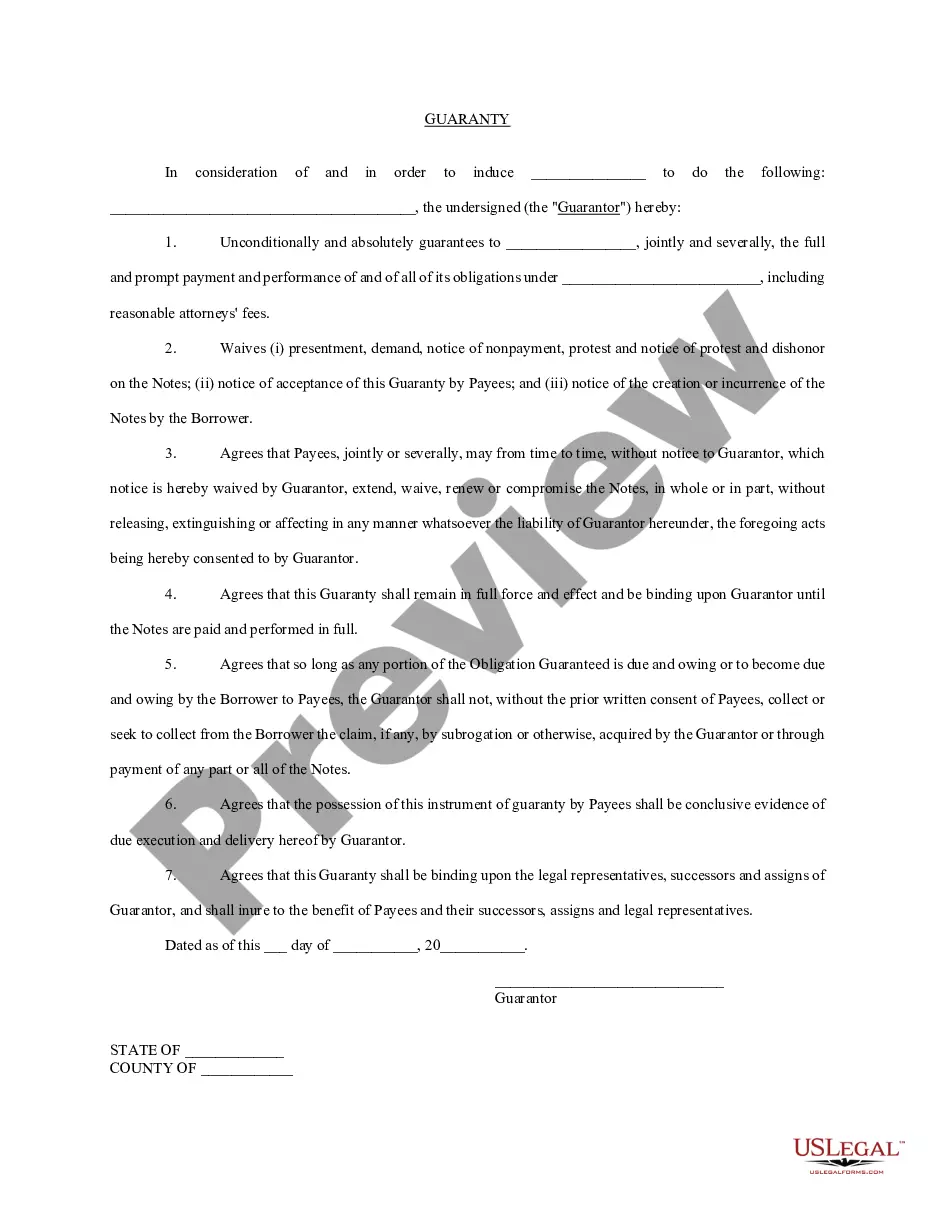
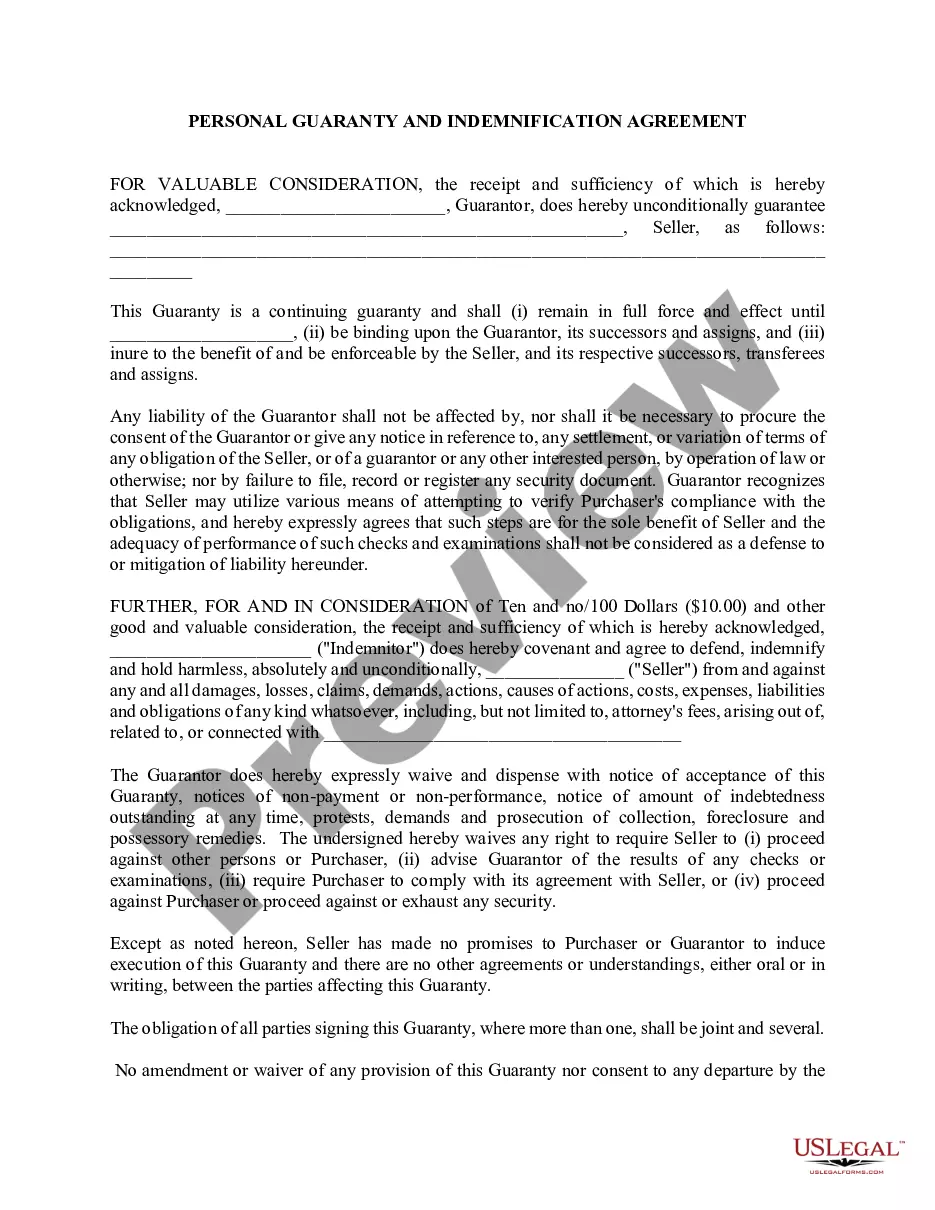
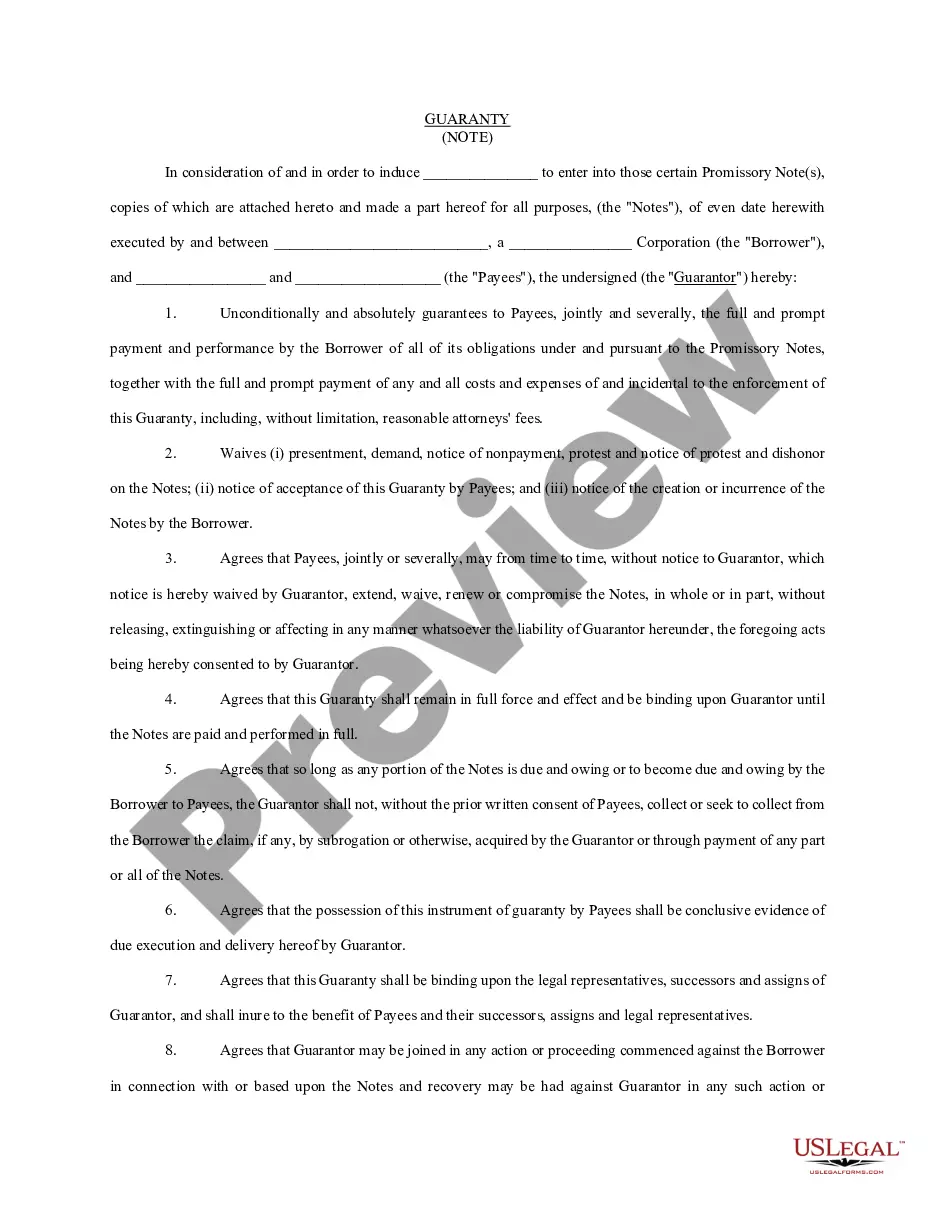
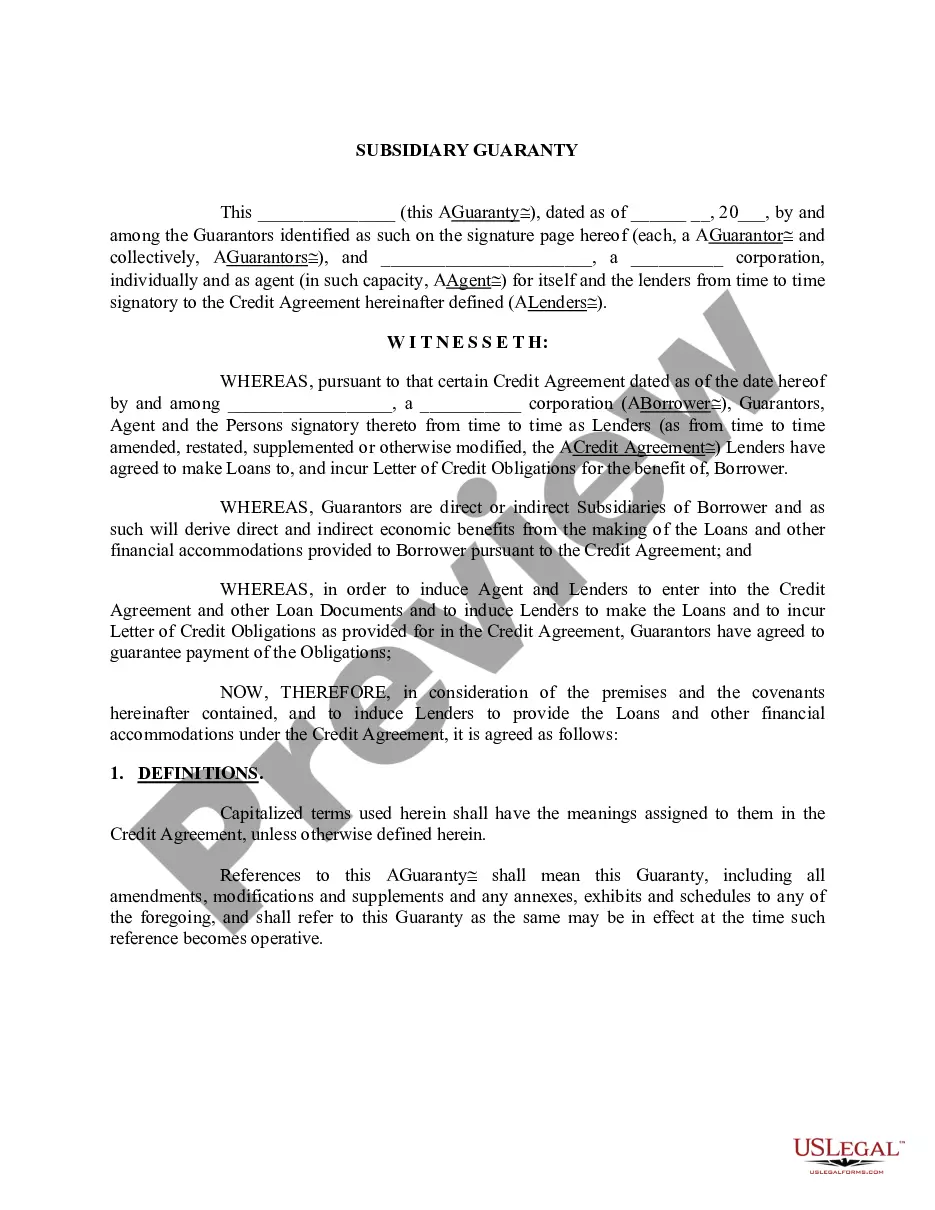
In this guaranty, two corporations guarantee the debt of an affiliate corporation.
Nevada Cross Corporate Guaranty Agreement
Instant download
Description
Free preview
Get your form ready online
Our built-in tools help you complete, sign, share, and store your documents in one place.
Built-in online Word editor
Make edits, fill in missing information, and update formatting in US Legal Forms—just like you would in MS Word.
Export easily
Download a copy, print it, send it by email, or mail it via USPS—whatever works best for your next step.
E-sign your document
Sign and collect signatures with our SignNow integration. Send to multiple recipients, set reminders, and more. Go Premium to unlock E-Sign.
Notarize online 24/7
If this form requires notarization, complete it online through a secure video call—no need to meet a notary in person or wait for an appointment.
Store your document securely
We protect your documents and personal data by following strict security and privacy standards.

Make edits, fill in missing information, and update formatting in US Legal Forms—just like you would in MS Word.

Download a copy, print it, send it by email, or mail it via USPS—whatever works best for your next step.

Sign and collect signatures with our SignNow integration. Send to multiple recipients, set reminders, and more. Go Premium to unlock E-Sign.

If this form requires notarization, complete it online through a secure video call—no need to meet a notary in person or wait for an appointment.

We protect your documents and personal data by following strict security and privacy standards.
Looking for another form?

How to fill out Cross Corporate Guaranty Agreement?
US Legal Forms - one of the largest collections of sanctioned forms in the USA - offers a broad selection of sanctioned document templates that you can download or print.
While navigating the site, you can find an extensive array of forms for commercial and specific purposes, organized by categories, states, or keywords.
You can quickly locate the most recent forms such as the Nevada Cross Corporate Guaranty Agreement in just seconds.
Check the form description to confirm you have selected the correct template.
If the form does not meet your needs, utilize the Search field at the top of the screen to find one that does.
- If you already possess a monthly subscription, Log In and obtain the Nevada Cross Corporate Guaranty Agreement from the US Legal Forms repository.
- The Obtain button will appear on every form you view.
- You can access all previously retrieved forms from the My documents section of your account.
- To utilize US Legal Forms for the first time, here are some simple steps to get started.
- Ensure you have selected the correct form for your city/region.
- Use the Review button to scrutinize the form's details.
Form popularity
FAQ
The two primary types of guarantors are individual guarantors and corporate guarantors. An individual guarantor is a person who provides a personal guarantee, while a corporate guarantor is a business entity that assumes the obligation in a Nevada Cross Corporate Guaranty Agreement. Each type of guarantor carries specific legal implications and responsibilities, making it essential to consider your situation carefully.
To provide a corporate guarantee, the company must formally agree to cover the obligations of a borrower. This typically involves drafting a Nevada Cross Corporate Guaranty Agreement that outlines the terms and conditions of the guarantee. It is advisable to consult with legal professionals or platforms like uslegalforms to ensure the agreement is comprehensive and protects the company's interests.
No, a personal guarantee is not the same as collateral. A personal guarantee involves an individual taking on the responsibility to repay if the borrower defaults, while collateral refers to tangible assets that can be claimed by the lender. In a Nevada Cross Corporate Guaranty Agreement, using a personal guarantee can help secure financing without offering physical assets, which can be a strategic benefit.
Being a guarantor can carry potential risks, such as assuming financial responsibility if the primary borrower defaults. This could affect your credit score and financial standing. Additionally, the obligations of a Nevada Cross Corporate Guaranty Agreement may require you to address debts that you did not originally incur. It's essential to fully understand these implications before agreeing to act as a guarantor.
A cross corporate guarantee is a financial arrangement where companies within a corporate group agree to guarantee each other's debts. This structure operates under a legal framework, such as a Nevada Cross Corporate Guaranty Agreement, ensuring that if one entity faces financial difficulties, the others will cover the obligations. Such an agreement strengthens the overall financial position of the group, making it more resilient in uncertain economic conditions.
A guaranty agreement serves to protect lenders by ensuring that a third party will fulfill the payment obligations if the primary party defaults. This legal document establishes a committed relationship between the guarantor and the creditor, providing reassurance. In the case of a Nevada Cross Corporate Guaranty Agreement, such an agreement enhances the credibility of companies within a corporate group and facilitates smoother financial transactions.
The primary purpose of a cross guarantee is to provide a safety net for creditors by ensuring that multiple companies within a group back each other's obligations. This arrangement can lead to better financing options and reduced borrowing costs. By employing a Nevada Cross Corporate Guaranty Agreement, companies can showcase their solidarity and financial strength, which can make them more appealing to potential investors and lenders.
A cross company guarantee functions by having multiple companies within a group guarantee each other's debts. This means if one company defaults, the others will step in to take responsibility. For businesses operating under a Nevada Cross Corporate Guaranty Agreement, this structure enhances trust among creditors and can simplify the borrowing process across the companies involved.
An example of a corporate guarantee would be when Company A promises to cover the debts of its subsidiary, Company B, in case of default. This arrangement is often formalized through a Nevada Cross Corporate Guaranty Agreement, ensuring that creditors have a reliable source of payment. Such guarantees can strengthen the financial standing of the subsidiary and encourage lenders to provide funding.
A guarantee is a promise by one party to assume the debt obligations of another party if they fail to meet those obligations. On the other hand, a corporate guarantee specifically involves a corporation taking on another company's debt. In the context of a Nevada Cross Corporate Guaranty Agreement, the corporate guarantee offers added security, as it legally binds the corporate entity to cover the financial responsibilities of its subsidiaries or related companies.