Nevada Marital Domestic Separation and Property Settlement Agreement for persons with No Children, No Joint Property or Debts where Divorce Action Filed
Overview of this form
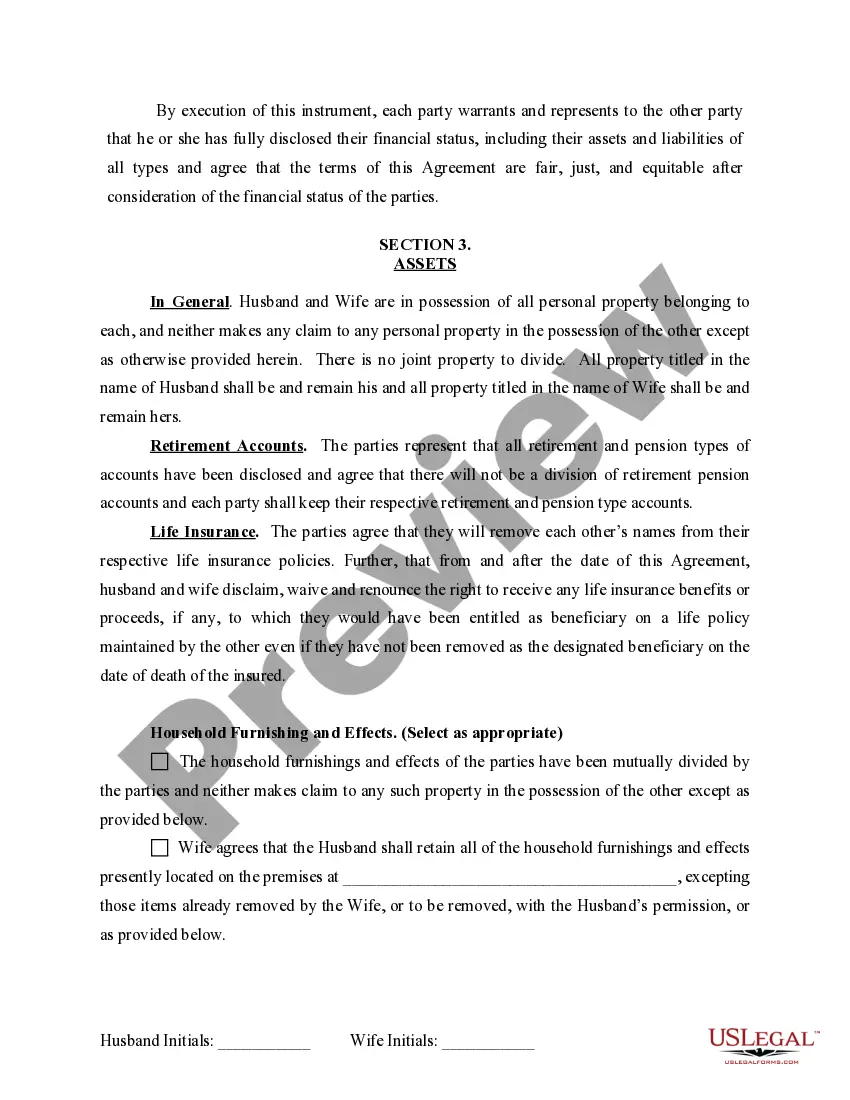
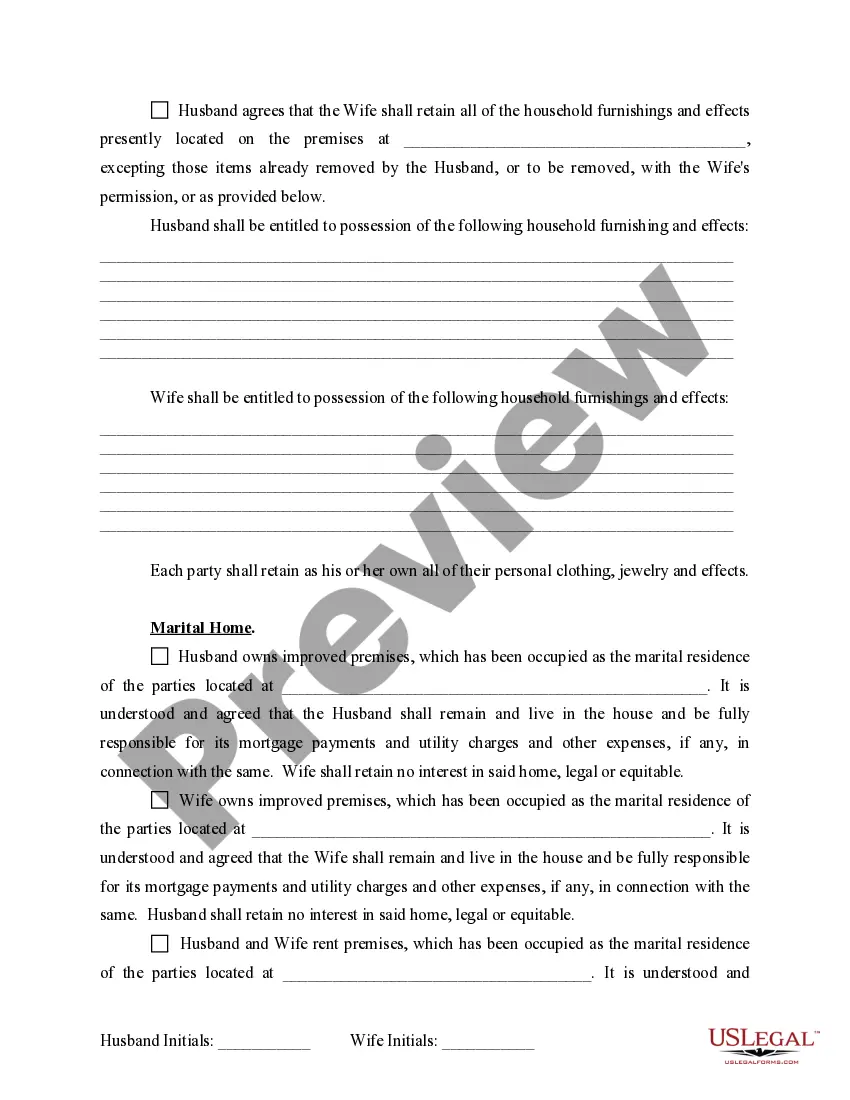
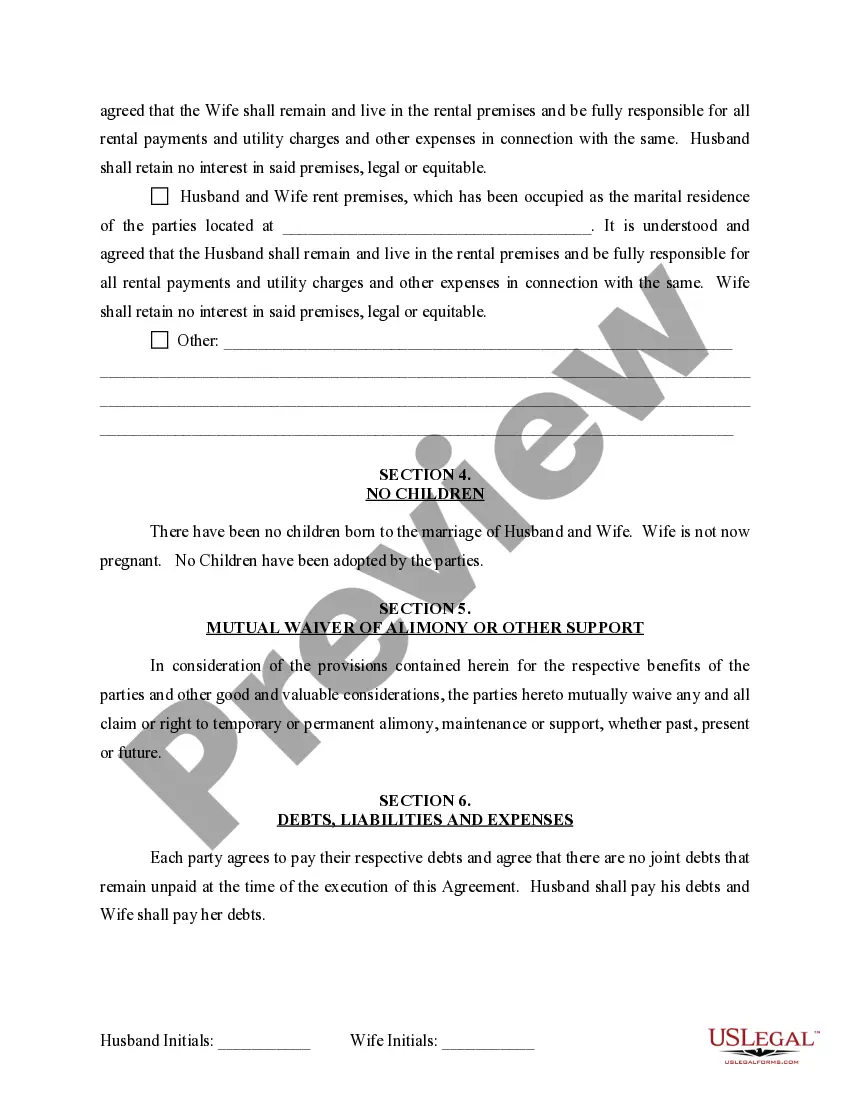
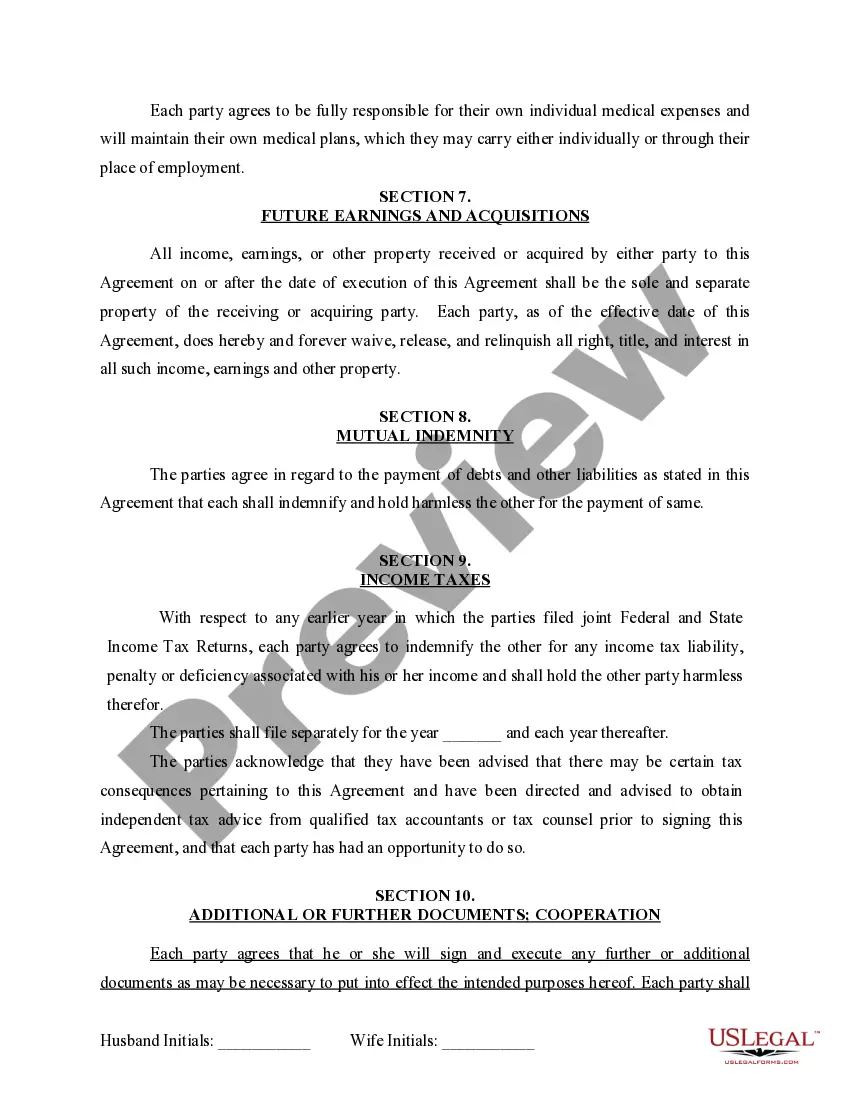
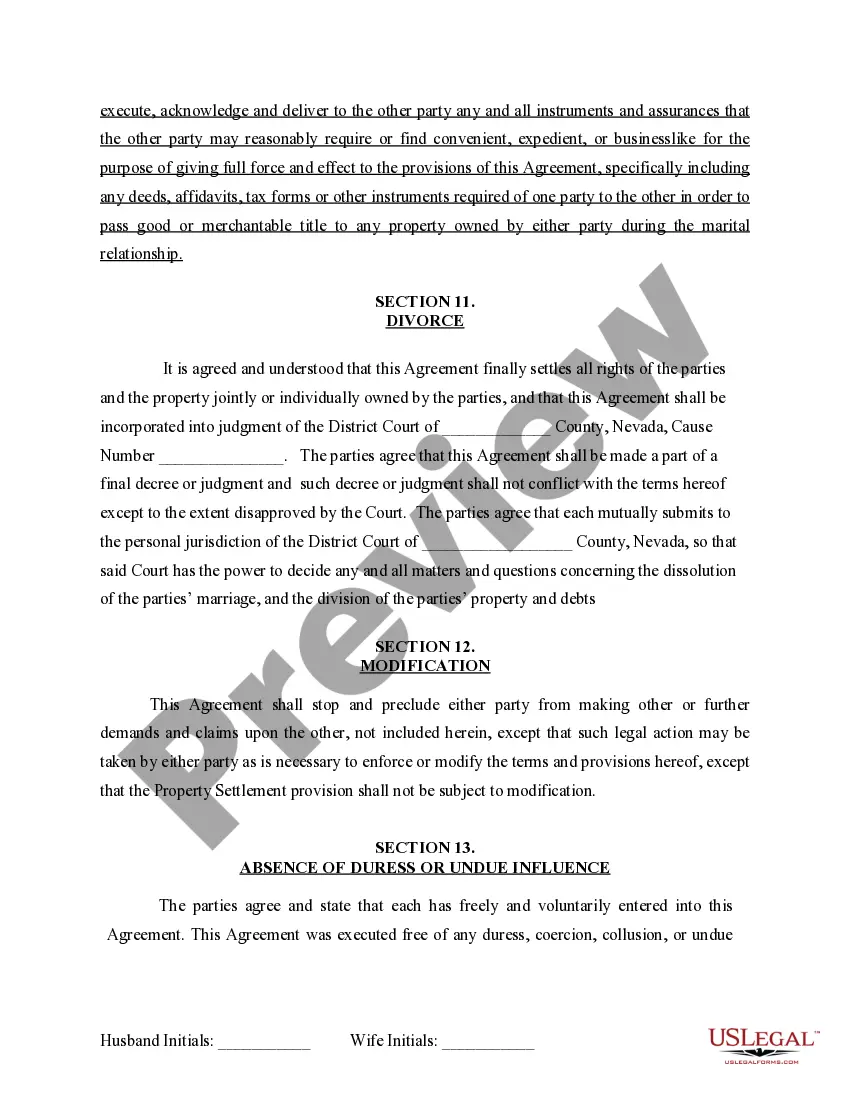
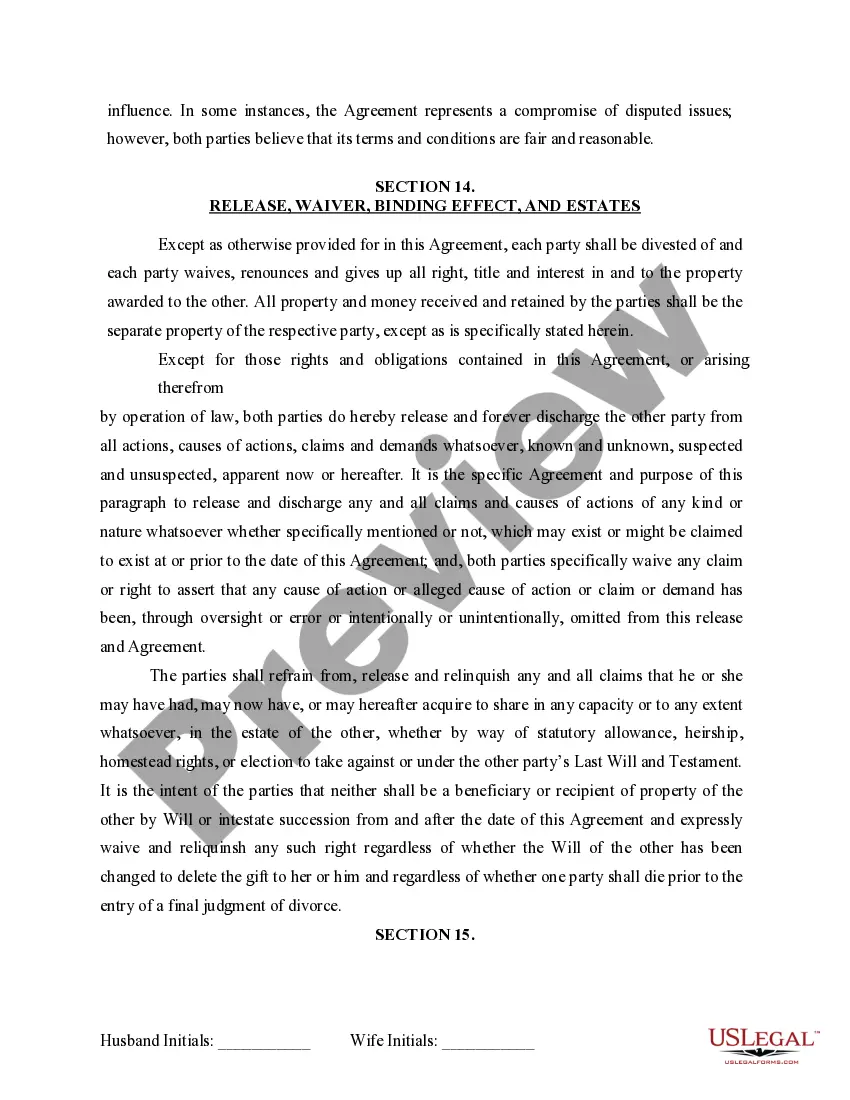
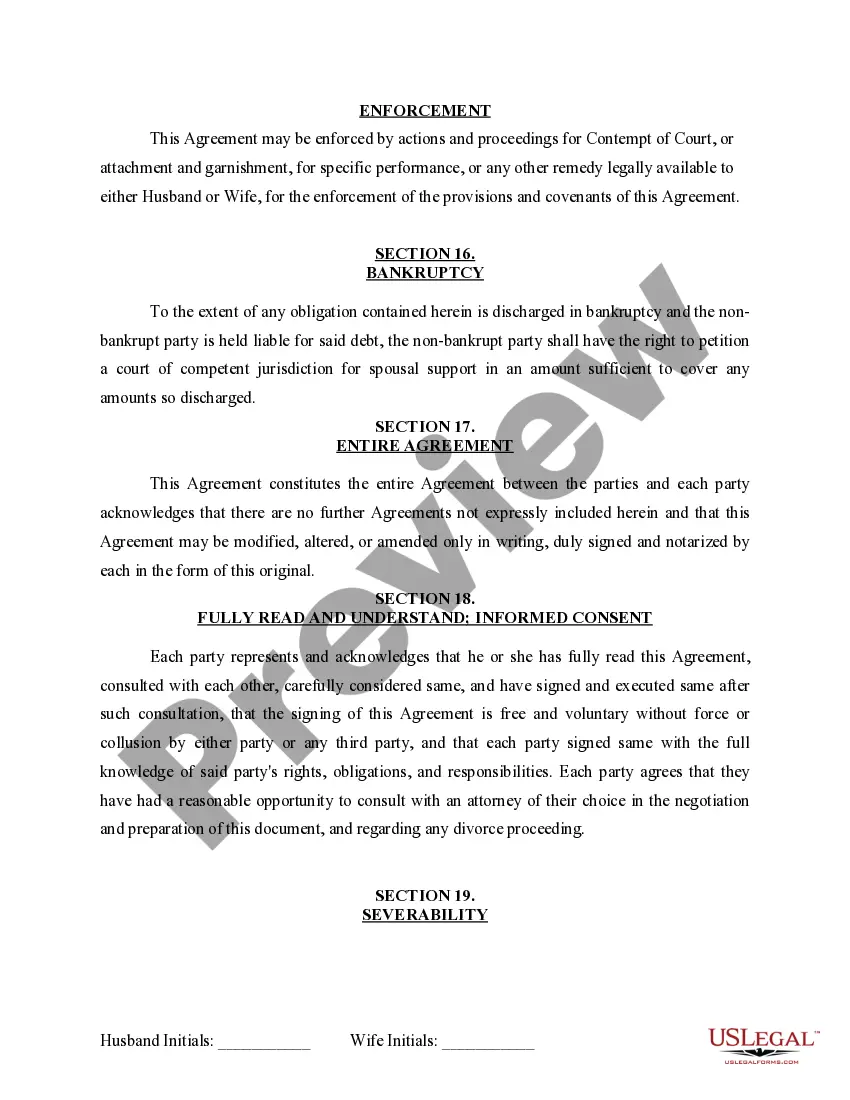
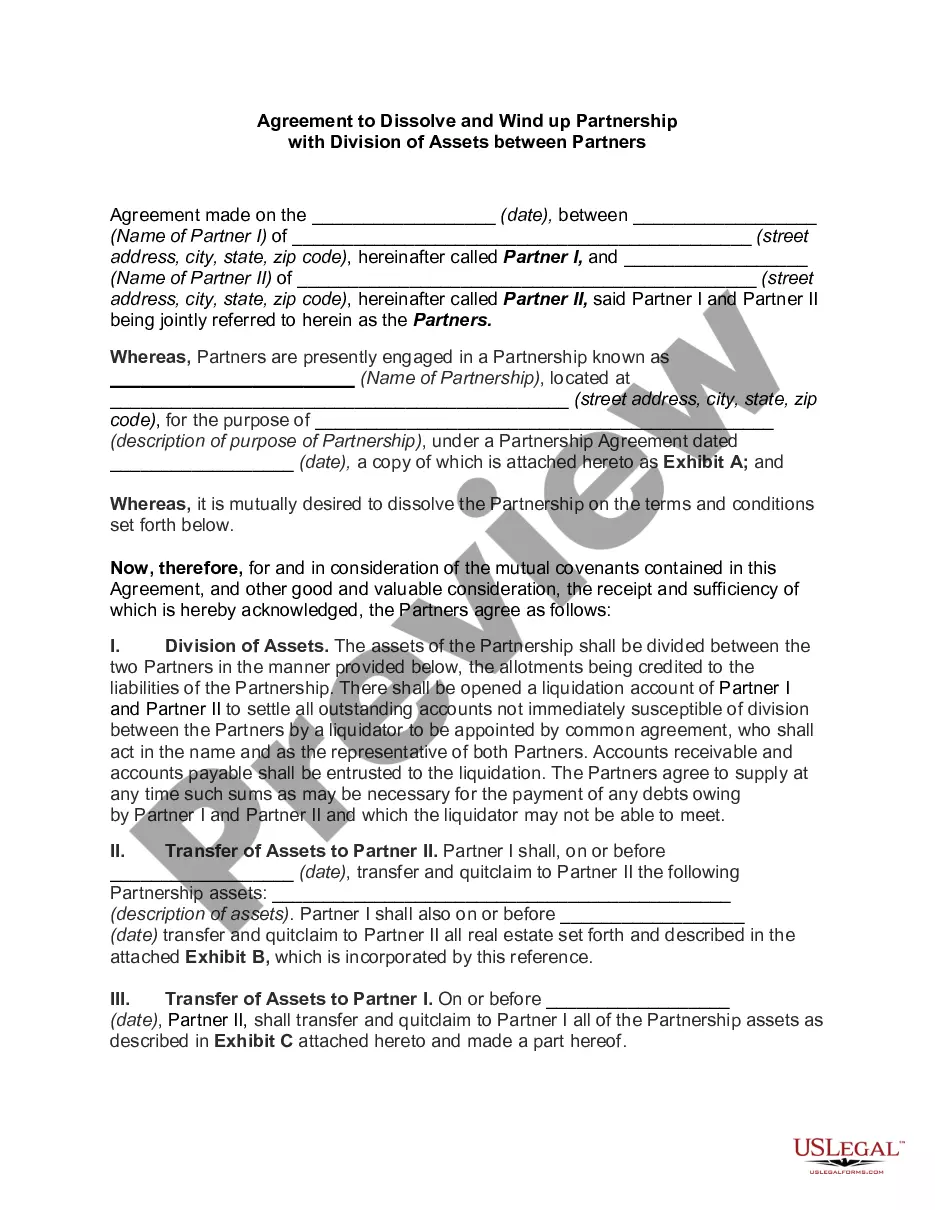
The Marital Domestic Separation and Property Settlement Agreement for persons with No Children, No Joint Property or Debts is a legal document used by couples seeking to settle their divorce proceedings amicably. This agreement is specifically designed for spouses without children or shared debts and property. It details the division of individual assets and liabilities, ensuring that both parties understand their rights and obligations as they proceed with their divorce.
Main sections of this form
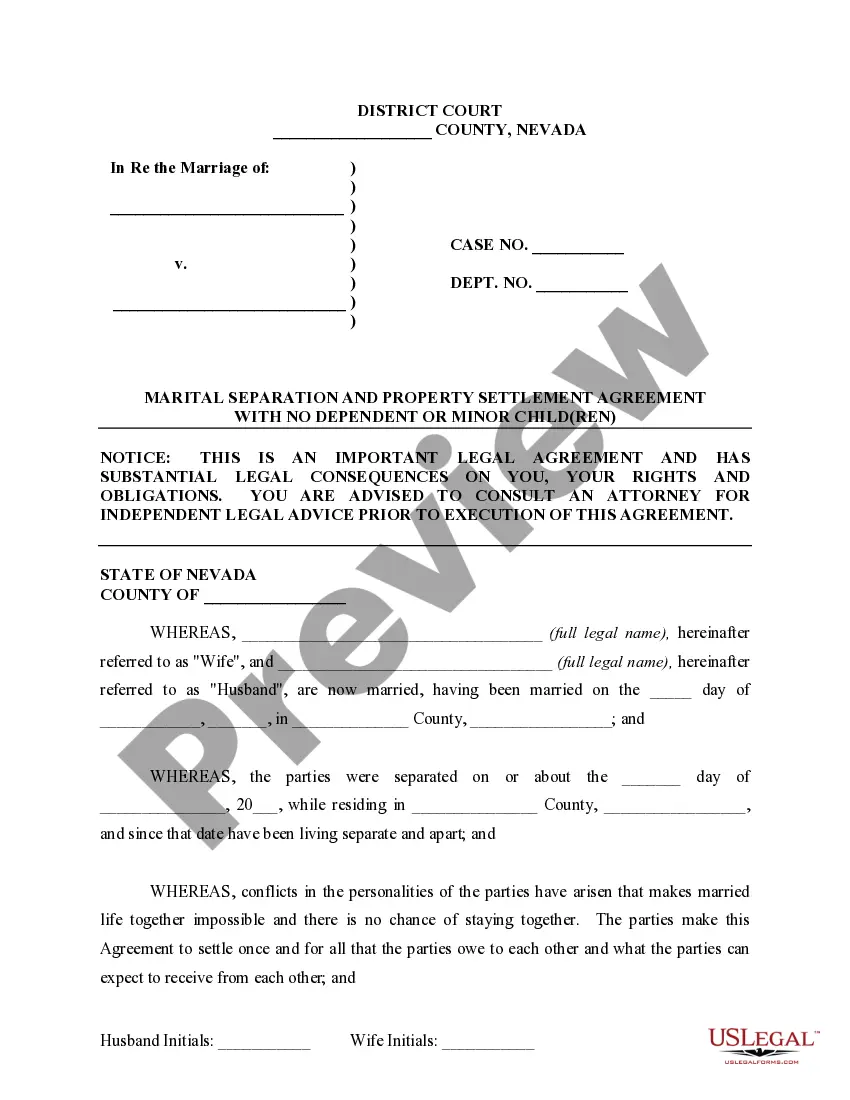
- Separation relinquishment of marital rights: Both parties agree to live separately and independently.
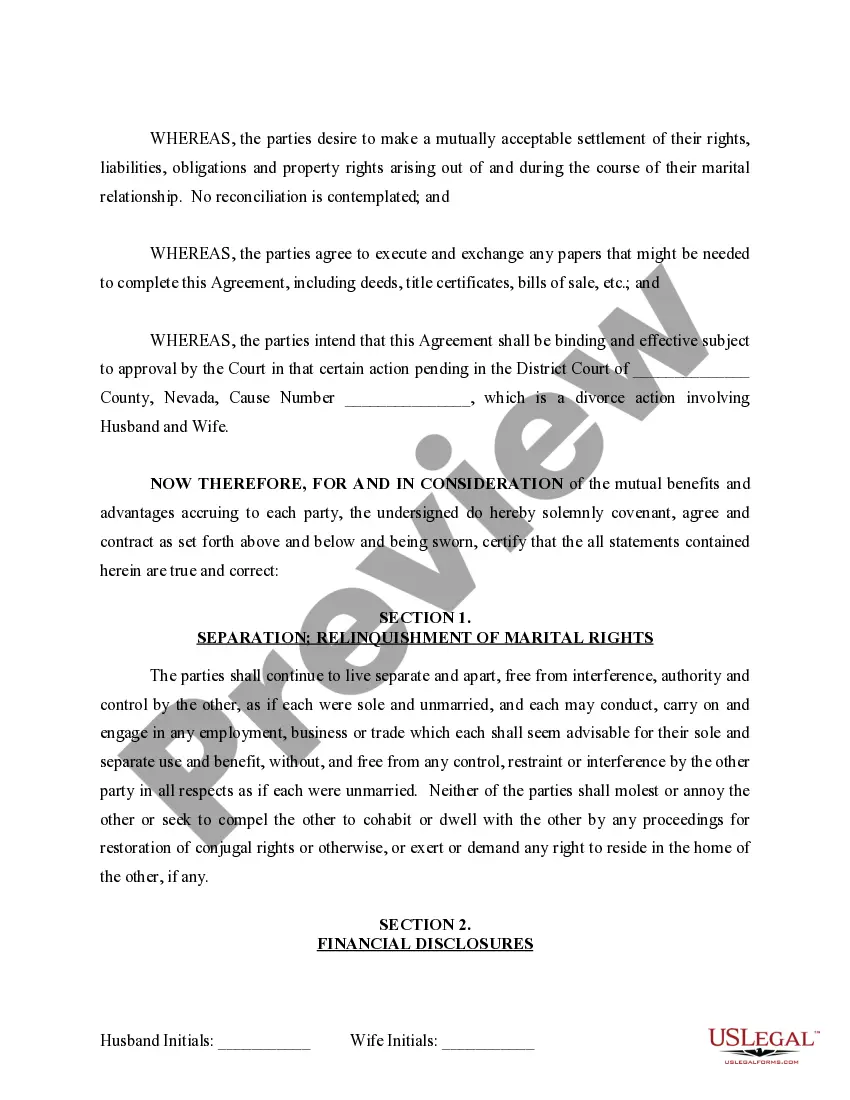
- Financial disclosures: Parties must fully disclose their financial situations, including assets and debts.
- Asset division: Outlines how personal property, retirement accounts, and other assets are handled.
- No alimony: Both parties waive any rights to spousal support now and in the future.
- Indemnity clauses: Each party holds the other harmless from financial obligations incurred individually.
- Finality of agreement: Stipulates that this agreement will be incorporated into the divorce decree once approved by the court.


When to use this document
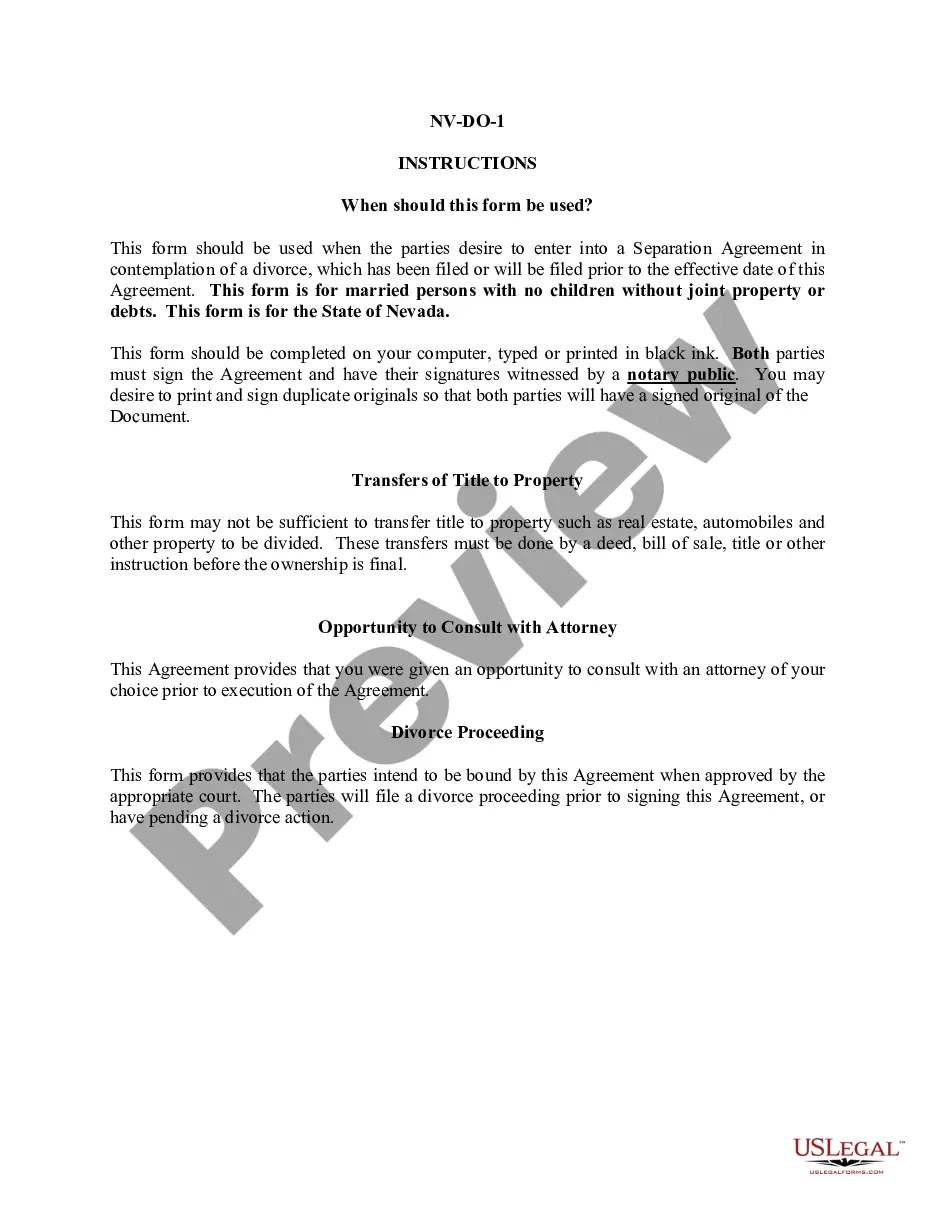
This form should be utilized when married couples without children or shared property or debts want to formalize their separation in anticipation of divorce. It is ideal for those who wish to detail their asset division and responsibilities without prolonged disputes. This agreement serves as a foundational document during the divorce process in Nevada.
Who can use this document
- Married couples planning to divorce.
- Couples without children.
- Individuals who do not own joint property or share debts.
- Residents of the State of Nevada.
Instructions for completing this form
- Identify the parties: Fill in the full legal names of both husband and wife.
- Specify the property: Clearly outline the division of personal assets and the status of debts.
- Include financial disclosures: Each party must provide a complete disclosure of their individual financial situation.
- Enter dates and signatures: Ensure the document is signed by both parties and dated appropriately.
- Notarization: Arrange for both parties to sign in the presence of a notary public to ensure legal validity.
Notarization guidance
Yes, this form must be notarized to be legally valid. Each party's signature must be witnessed by a notary public to ensure authenticity and binding effect in court.
Get your form ready online
Our built-in tools help you complete, sign, share, and store your documents in one place.
Make edits, fill in missing information, and update formatting in US Legal Forms—just like you would in MS Word.
Download a copy, print it, send it by email, or mail it via USPS—whatever works best for your next step.
Sign and collect signatures with our SignNow integration. Send to multiple recipients, set reminders, and more. Go Premium to unlock E-Sign.
If this form requires notarization, complete it online through a secure video call—no need to meet a notary in person or wait for an appointment.
We protect your documents and personal data by following strict security and privacy standards.

Make edits, fill in missing information, and update formatting in US Legal Forms—just like you would in MS Word.

Download a copy, print it, send it by email, or mail it via USPS—whatever works best for your next step.

Sign and collect signatures with our SignNow integration. Send to multiple recipients, set reminders, and more. Go Premium to unlock E-Sign.

If this form requires notarization, complete it online through a secure video call—no need to meet a notary in person or wait for an appointment.

We protect your documents and personal data by following strict security and privacy standards.
Common mistakes
- Failing to fully disclose financial information.
- Omitting essential details about asset division.
- Not notarizing the agreement where required.
- Signing without consulting an attorney.
Advantages of online completion
- Convenient access to a professionally drafted legal form.
- Edit and customize the document to fit specific needs.
- Time-saving by avoiding visits to legal professionals for standard forms.
- Reliable legal guidance integrated within the form.
Legal use & context
- This agreement is legally binding once accepted by the court as part of the divorce proceedings.
- The terms agreed upon will dictate the responsibilities and rights of each party after the divorce is finalized.
- It's important to consult a legal expert to ensure that the settlement complies with state laws and adequately protects each party's interests.
Looking for another form?
Form popularity
FAQ
Your divorce settlement agreement should cover everything that is important to you, including custody of your children, child support payments, alimony, and the separation of your property, such as your family home, vehicles, and other assets.
Marital Settlement Agreements, reached between the parties in writing and signed by the parties, become legally binding when approved by the court at the time of the final court hearing.Once approved by the court, such post judgment stipulations do become legally binding and enforceable between the parties.
You and your spouse are free to decide the terms of your separation. You may do this informally through a written agreement or you may request that your agreement becomes an official court order. Separation agreements that are recognized by the court are referred to as maintenance orders in Nevada.
A marital separation agreement does not have to be filed in court to be legally binding on the husband and wife. The agreement is basically like a contract between two people. As long as the husband and wife are legally able to enter into a contract, they can make a marital separation agreement.
#1. Start with the Basics. #2. Include the Details. #3. Confirm Your Agreement. #4. Identify and Divide Assets and Debts. #5. Create a Parenting Plan for Custody and Visitation. #6. Agree on Child Support and Spousal Support (Alimony) #7. Polishing Your Agreement. Conclusion.
There are many factors to consider, including assets, incomes, living expenses, inflation, alimony, child support, taxes, retirement plans, investments, medical expenses and health insurance costs, and child-related expenses such as education.
A separation agreement may be set aside and determined to be unenforceable if a party can show that the agreement was not signed voluntarily, that its terms are unconscionable, or that it was obtained as the result of fraud, duress, or undue influence.
Divorce and property settlement are not one and the same. Separated parties can have a property settlement without getting divorced and parties seeking to divorce do not necessarily have to have a property settlement.De facto couples have 24 months from the time of separation to institute Court proceedings.
A fair settlement should include ample parenting time for each parent. An equitable visitation agreement may not give parents equal custodial time, but it should provide for frequent and continuing contact with each parent.