Nevada Paternity Law and Procedure Handbook
What this document covers
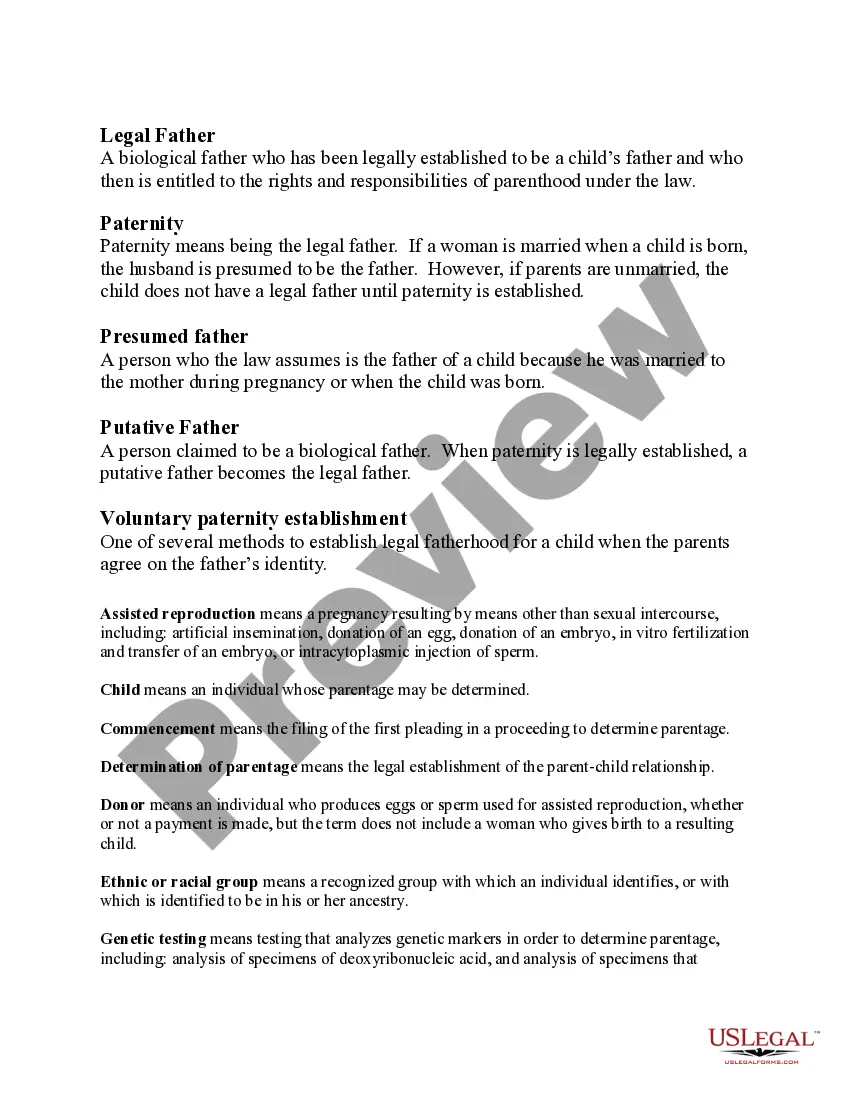
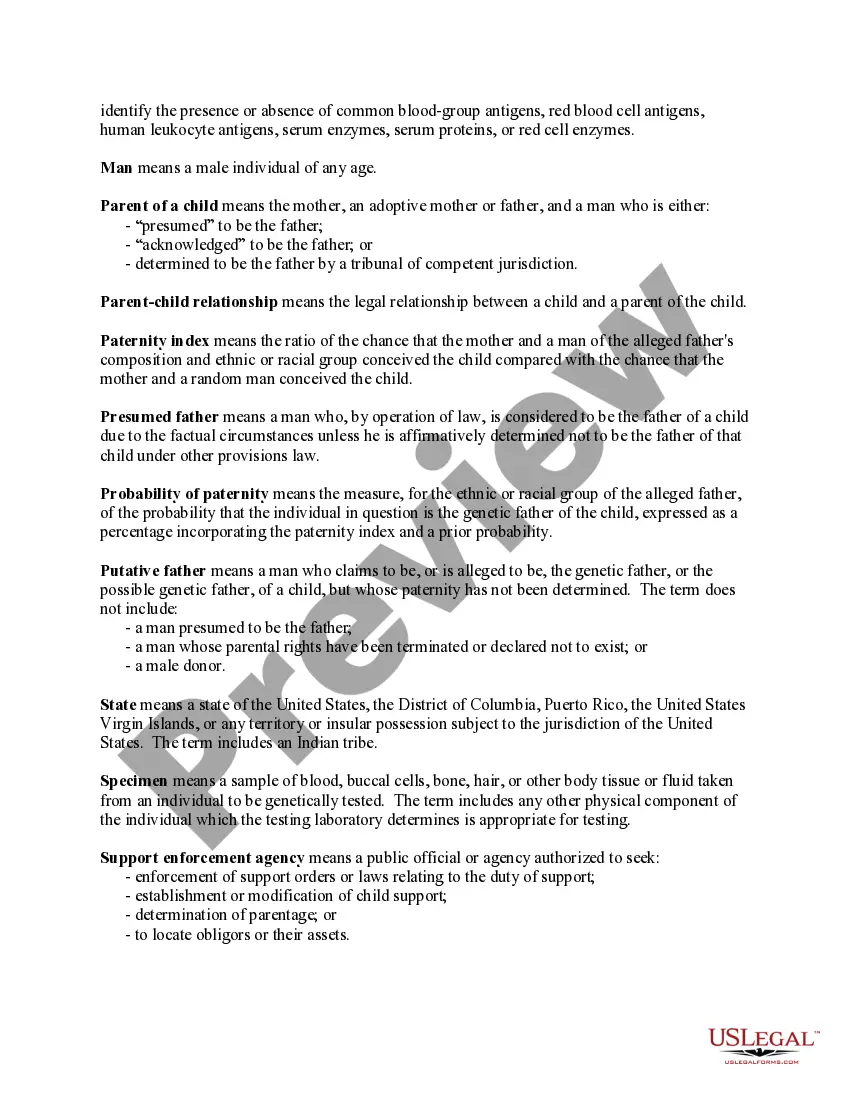
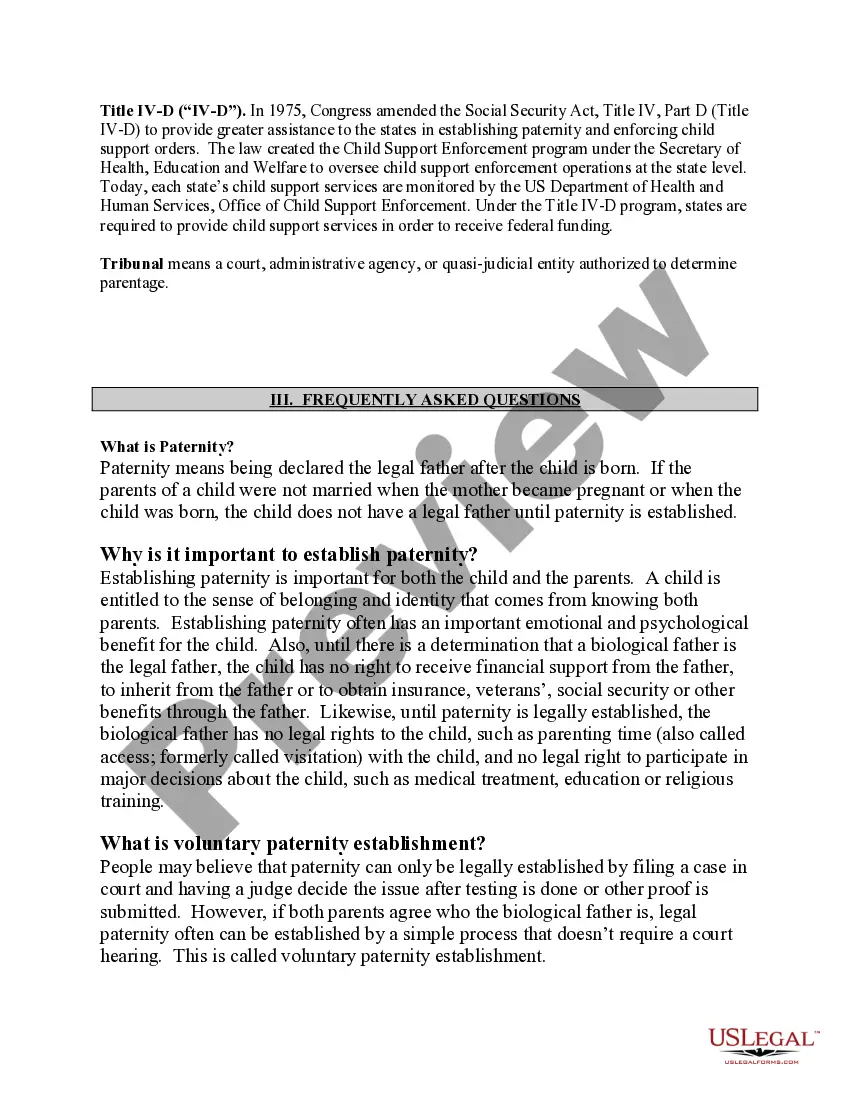
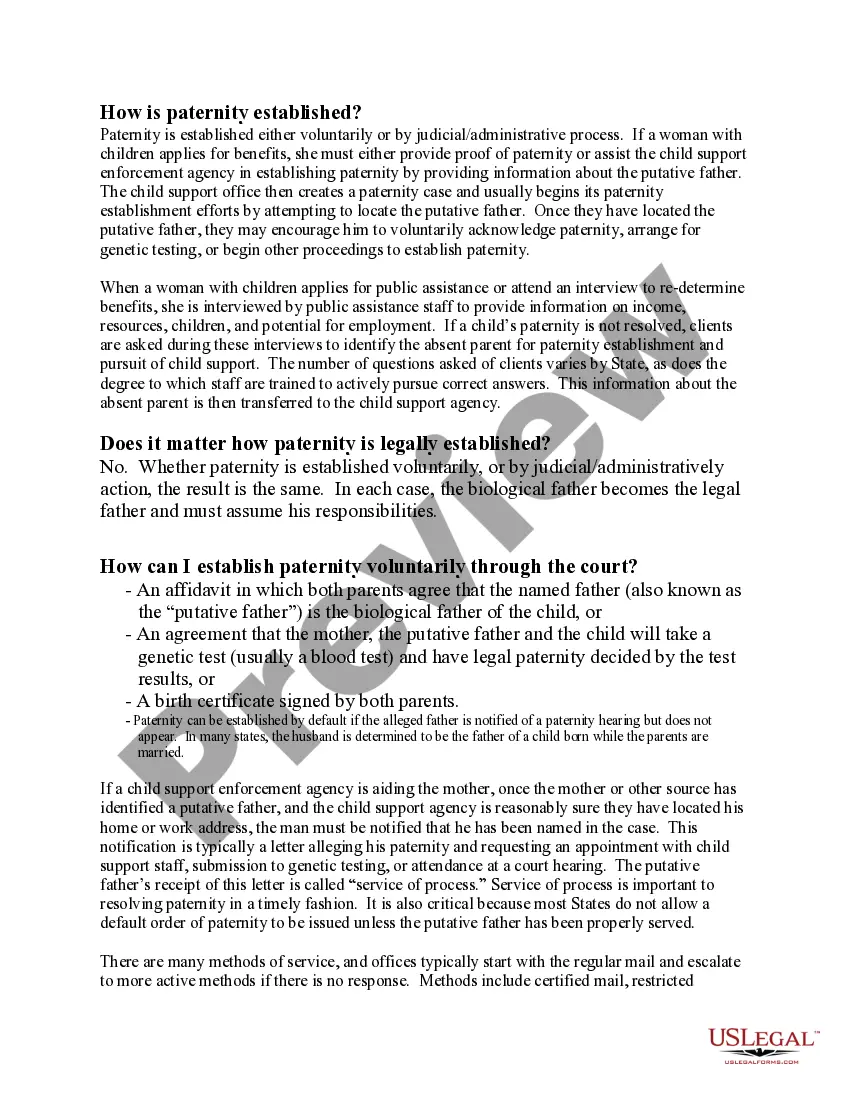
The Paternity Law and Procedure Handbook is a comprehensive guide that outlines the laws and procedures for establishing paternity in the United States. This handbook is designed to help individuals understand the legal process of affirming paternity, especially when parents are unmarried. It differs from other legal documents by providing detailed explanations tailored to each state, including resources for voluntary establishment of paternity and how court actions can be pursued when necessary.
Main sections of this form
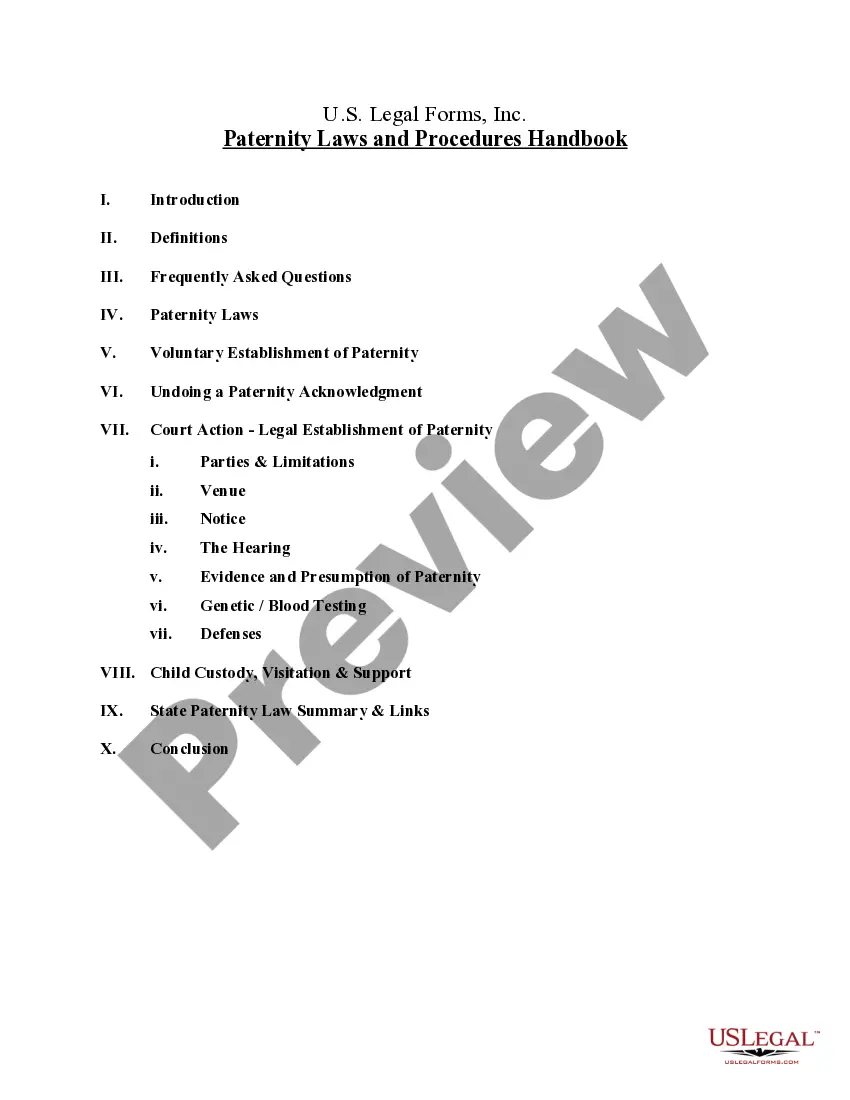
- Introduction to paternity laws and rights.
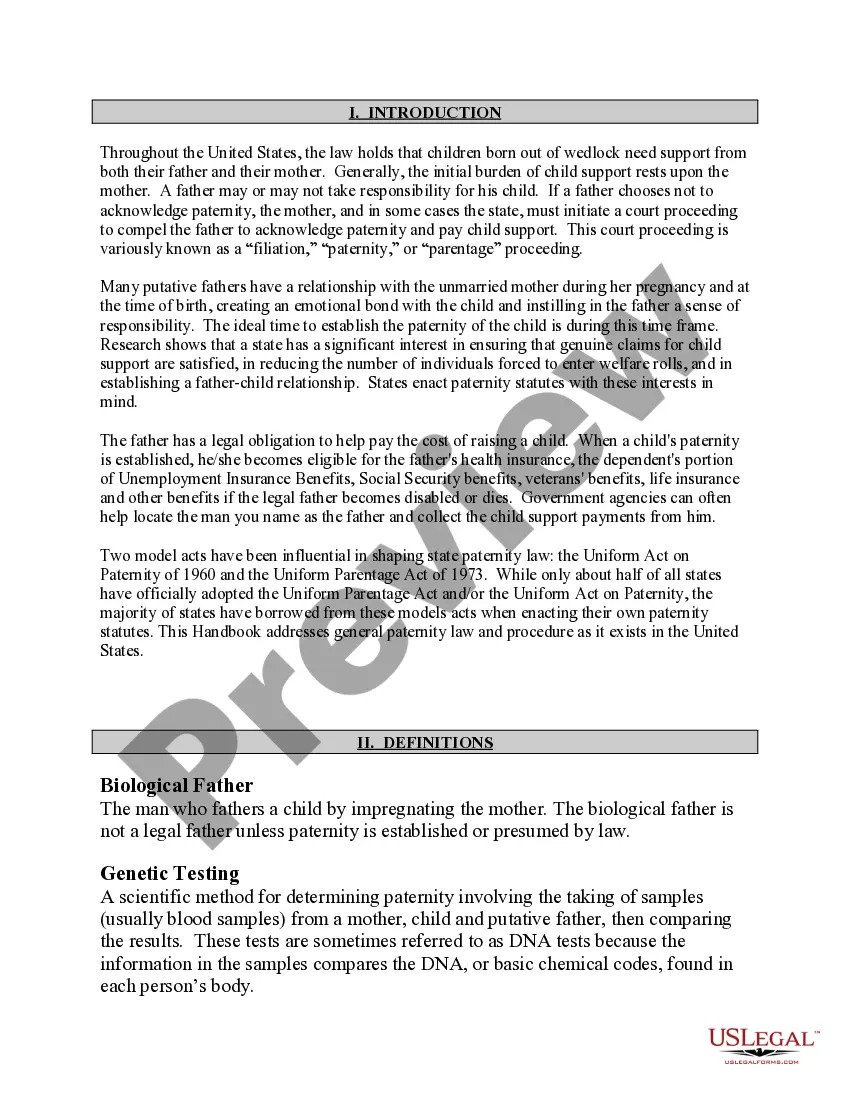
- Definitions of key terms like biological father, legal father, and genetic testing.
- Frequently asked questions regarding the importance of establishing paternity.
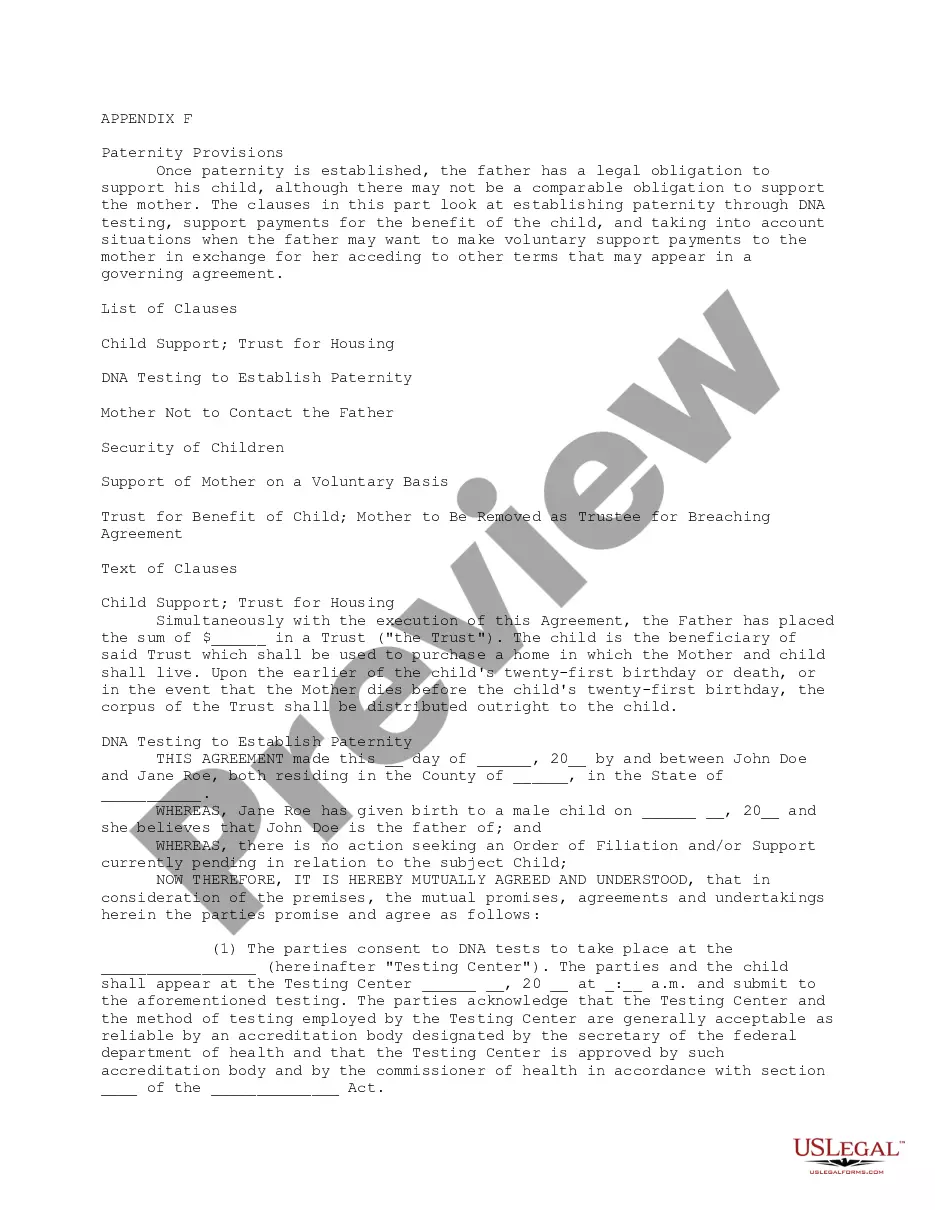
- Procedures for voluntary and court-established paternity.
- State-specific summaries addressing local laws and resources.
- Detailed conclusions emphasizing the importance of understanding paternity laws.

Situations where this form applies
This handbook should be consulted in situations where paternity is uncertain or contested. It is particularly useful for unmarried parents looking to establish legal parenthood for their children, ensuring that the child has access to benefits such as financial support, healthcare, and inheritance rights. It can also be beneficial for those entering a legal proceeding regarding child support or custody issues.
Intended users of this form
- Unmarried parents seeking to establish paternity.
- Parents involved in child support or custody disputes.
- Individuals needing to clarify their rights and responsibilities regarding child support.
- Family law practitioners or counselors guiding their clients through paternity law.
How to complete this form
- Review the definitions and key terms outlined in the handbook.
- Determine the appropriate procedure for establishing paternity based on your circumstances (voluntary or court action).
- Complete any required forms or affidavits as instructed in the handbook.
- Seek legal counsel if necessary to navigate complex situations or disputes.
- Submit your documentation to the relevant authorities or court as needed.
Notarization guidance
Notarization is not commonly needed for this form. However, certain documents or local rules may make it necessary. Our notarization service, powered by Notarize, allows you to finalize it securely online anytime, day or night.
Get your form ready online
Our built-in tools help you complete, sign, share, and store your documents in one place.
Make edits, fill in missing information, and update formatting in US Legal Forms—just like you would in MS Word.
Download a copy, print it, send it by email, or mail it via USPS—whatever works best for your next step.
Sign and collect signatures with our SignNow integration. Send to multiple recipients, set reminders, and more. Go Premium to unlock E-Sign.
If this form requires notarization, complete it online through a secure video call—no need to meet a notary in person or wait for an appointment.
We protect your documents and personal data by following strict security and privacy standards.

Make edits, fill in missing information, and update formatting in US Legal Forms—just like you would in MS Word.

Download a copy, print it, send it by email, or mail it via USPS—whatever works best for your next step.

Sign and collect signatures with our SignNow integration. Send to multiple recipients, set reminders, and more. Go Premium to unlock E-Sign.

If this form requires notarization, complete it online through a secure video call—no need to meet a notary in person or wait for an appointment.

We protect your documents and personal data by following strict security and privacy standards.
Mistakes to watch out for
- Failing to understand the differences between voluntary and court-established paternity.
- Not providing all necessary documentation or information during the establishment process.
- Ignoring timelines for contesting paternity or acknowledgment forms.
- Assuming verbal agreements substitute for legal acknowledgment of paternity.
Benefits of using this form online
- Convenient access to legal forms and information from anywhere at any time.
- Easy download and edit options to ensure your form can be tailored to your specific circumstances.
- Reliable resources developed by licensed attorneys, ensuring compliance with legal standards.
- Streamlined processes that facilitate faster resolution of paternity issues.
Quick recap
- Establishing paternity is crucial for securing legal rights and responsibilities.
- Both voluntary acknowledgment and court procedures can lead to legal paternity.
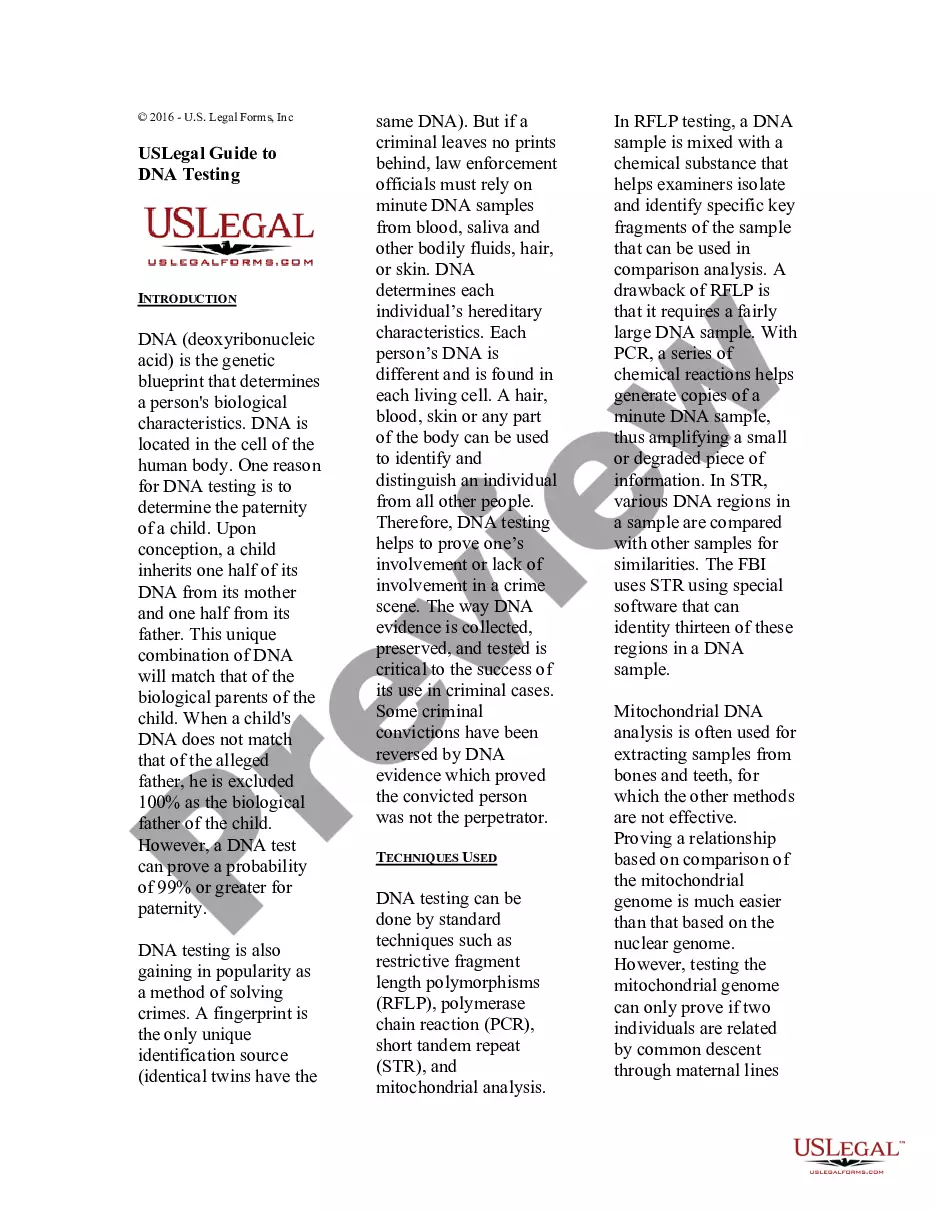
- Understand the genetic testing process and its implications for paternity acknowledgment.
- Be aware of state-specific regulations that may affect the paternity establishment process.
Looking for another form?
Form popularity
FAQ
If there is a valid, court-approved custody order in force, denying visitation is illegal and can have serious legal repercussions for the parent who denies visitation.However, the custodial parent must still take specific steps before denying visitation, such as notifying the appropriate authorities.
The first is by signing a "Voluntary Declaration of Paternity," which is often done at the hospital right after the child's birth. If it wasn't signed at the hospital, both parents can sign the form later in person at the Office of Vital Records or at the Southern Nevada Health District.
In most states, the biological parent must show that the absent parent has not seen or contacted the child for at least four months);
In Nevada, fathers have the same rights as mothers when it comes to their children. These rights include custody and visitation after the break-up of a Nevada marriage or domestic partnership. A father's rights do not depend on being the biological father of a child.
Nevada courts prefer that parents share joint custody of their children regardless of whether the parents are divorced or never married. But judges will award primary physical custody to one parent over the other if it is in the child's best interest.
Typically, a child will not be asked to voice a preference about custody decisions in Nevada until he or she is at least 12 years old.
In cases where parents can't agree, a judge will decide visitation and custody based on the child's best interests.Both parents are bound by the terms of a custody order. If your child refuses to go to visits with the other parent, you could still be on the hook for failing to comply with a custody order.
Birth certificate. If a birth certificate declares the father and he signs it, this is a legally binding qualification of paternity. DNA test. Court order.
There is no law in Nevada that mandates the court must favor the mother over the father. However, in practice, it is not uncommon that mothers obtain primary physical custody of minor children more often than fathers.